Up next in 10


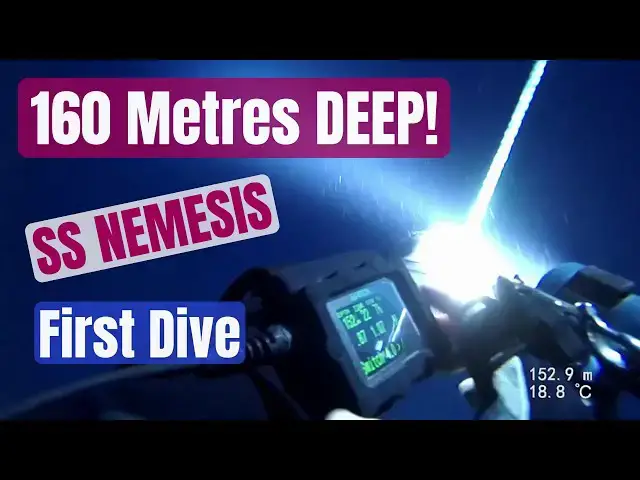
This video is an exclusive interview with Rus Pnevski one of the key participants in the Sydney Project team's first dive on the SS Nemesis in 160 metres. He explains in detail the aims of the project and the technical complexities of diving such a deep wreck that lies so far offshore in extremely tidal conditions.
During the dive Rus also experiences an extremely rare double cell failure and talks through how he responded, including his approach to the use of a bailout rebreather.
*Highlights*
00:00 Introduction
06:25 History of the SS Nemesis
08:45 Background to the dive
11:50 The boat
14:30 One knot of current on the site!
17:30 Shotting the wreck
19:10 Supervising the dive
24:14 Support divers & spare gas
27:30 Bailout plan
29:50 A double cell failure and rebreather switch
38:23 Dive computers
44:45 Bailout principles
53:05 Approach to PO2
59:55 Team diving
*Support what I Do*
If you'd like to support what I do then please consider joining my channel 👉 http://bit.ly/4kMVqCB
You may also wish to buy me a coffee! 👉 https://buymeacoffee.com/d33puk ☕☕☕
#technicaldiving #wreckdiving #closedcircuitrebreather
Show More Show Less View Video Transcript
0:00
I'm sure we've all seen in the news the epic achievement down under where the team from Sydney Project have dived SS Nemesis in 160 metres
0:12
First dive on that wreck. And I'm really, really pleased that we've got a member of the team here, Russ, to tell us all about it
0:20
So, Russ, tell us about your dive, please. Thanks, Tom. Thanks for having me
0:26
and I'm hoping that I'm able to share some of the experience and some of the sort of diving technical details with your audience
0:33
and hopefully we can all sort of share in the epic dive
0:37
that just happened in Sydney or off the coast of Wollongong, which is sort of a little bit south of Sydney about two weeks ago
0:45
So I'm involved with a group called Sydney Project. I've been with Sydney Project for about seven or so years now
0:52
It's a group that was founded back in the early 2000s. sort of late 90s, early 2000s, so well before my time in diving
1:01
And I guess our core sort of goals as part of the group are to dive
1:07
and document wrecks around Australia, particularly in deeper waters, particularly over that sort of 100-metre mark
1:15
And we've done a few sort of different projects, and this has probably been one of our biggest projects
1:19
that we've just achieved, which is to be the first people to ever dive the SS Nemesis, which lies in 160 metres of water
1:27
about 24 kilometres off the coast of South Sydney or Wollongong, Port Kimbler
1:33
And a little bit of history behind the Nemesis and how it became a sort of a project for us in particular
1:40
So it was only found, the actual wreck location and the wreck itself was only found last year
1:46
by a company doing a mapping project sort of on the sea floor
1:52
And so they're in contact with Heritage, and they said, look, we've pretty much got an anomaly, which we believe is a wreck
1:59
You guys would be interested in. And they did a bit of a scan of it
2:03
They dropped some cameras on it and took some ROVs on it, and they soon pre-figured out that they believed it was the SS Nemesis
2:11
And so from there, we've worked with Heritage before to document and map various wrecks around the coast of Australia
2:17
some of the dive sites that I've been personally involved with with Heritage was the midget submarine
2:24
off the coast of Sydney which is involved in World War II here in Australia, a big part of our maritime
2:31
war history, as well as some deeper wrecks in about 140 120 metres of water as well off the coast of Burmuguwe
2:38
we did that about six years ago and we've worked closely with Heritage before for
2:43
a few of those projects and we've mapped out and helped them survey these various wrecks and helped identify them
2:50
And they essentially, they're not divers themselves. They're very focused on the archaeological
2:54
and the historical side. So they're always very happy for us to help them
3:00
particularly in the deep diving aspect. That's where our skills lie in our group
3:05
And we try to do a bit of photogrammetry and help them in that sort of aspect
3:11
And they got in contact with us and sort of showed that, you know, the nemesis, what they believed was the nemesis
3:20
was out there and we started planning the dive to achieve it
3:26
And I've seen there was a few when the dive sort of went
3:30
across all the social media and went sort of across sort of various news agencies, people would sort of ask
3:37
oh, why would you do such a dive to 160 metres? You know, it's so dangerous
3:41
We have ROVs and et cetera. And I think what a lot of people didn't realise is
3:46
There's actually a 3D map of the Nemesis already that Heritage did
3:51
You can find it on the internet. And we actually used that to plan out our dive and figure out where we were going to see and what we were going to do
3:59
But the biggest aspect of that was that the ROV doesn't always get the data and the footage that you need that humans can
4:08
And I think a big aspect of ROV sort of operations in all aspects is that it will never be able to achieve, I guess, the finite things that a human can achieve
4:22
And I guess the other side of it is also, and particularly I think what your audience will resonate with, is that there's also that human exploration aspect
4:30
We can always, you know, send an ROV to the moon or to Mars or, you know, other sort of, you know, systems
4:37
but it's always that aspect of sending a human being there that is some part of that exploration aspect
4:45
which I think is what we all dive to these deep wrecks for
4:50
is to achieve that sort of human exploration aspect of the dive as well
4:55
not just to help in aspects where the ROV can't. And so, yeah, we started planning that dive quite early on
5:04
We already had a plan for some deeper wrecks as well in about 180 metres
5:09
And we were trying to, we essentially kind of took the dive plan for that
5:13
And it was a dive that I personally planned. So the 180 metre one
5:18
and we kind of used the same gases and the same sort of similar sort of run times
5:23
to achieve this dive. It wasn't too far from, you know, 160 metres
5:29
And we kind of took the same sort of plan and we kind of achieved it through that
5:37
Okay. I mean, I'll tell you what, mate, you don't have to persuade me that it needs human beings to go down and look at stuff
5:45
You know, I'm absolutely brought in that. And I think everyone else does as well
5:49
So, you know, the fact is we want to go and do this stuff
5:53
we want to be the adventure and you're absolutely right people see stuff or you know give a context
5:58
to a wreck or whatever that you don't necessarily get if you send uh you send a machine down so so
6:03
so i get that i'll tell you what though the the idea that that you were planning 180 and you kind
6:08
of fell back and did your 160 instead you know that's uh that's uh that's that's that's really
6:15
impressive itself so so so so you know you've obviously you know this great opportunity you
6:20
You know, this wreck has become available. I know there's a lot of history. In fact, do you want to tell us about the history of the SS Nemesis
6:26
for the people who don't know? Yeah, definitely. So the SS Nemesis sank in 1904, so just 121 years old
6:36
She was a coal freighter, steel and wood, so about half steel, half wood
6:43
And she was doing the run from Melbourne to Newcastle transporting coal
6:48
And I think she floundered in heavy seas off the coast of Wollongong in 1904
6:54
I can't remember the exact date. But, yeah, so she sank in heavy seas, all loss of life
7:01
I think it was just over 30 people that lost their life on that. And when Heritage did find it
7:07
they believed that the stern snapped off during the sinking. And that was one aspect that they wanted us to look at as well
7:15
So they actually asked us if we could look at finding the stern because they believed
7:20
that that was involved in the sinking. And we couldn find it We barely had enough time to sort of I think I just surveyed the entire lap of the wreck and just enough time to pretty much cover all of it but I didn have enough time to have a real good investigation
7:36
to find where the stern was. And what we did notice was that the bow and the stern were quite collapsed
7:46
They were both heavily damaged. And so the superstructure in the bridge in the middle
7:50
which is what you might see on some of my footage, is what was kind of like the big structure that was left
7:57
And then the front and the stern, like I said, are quite heavily damaged with coal still on the seafloor
8:03
surrounding both those locations as well. So, you know, you guys are the first people to see this
8:11
for 121 years, really. You know, the first actual human eyes rather than an R&E
8:18
when it was found. So that's, I mean, I've been in a privileged position
8:24
of doing that on quite a few dives, and I know that is an incredible thing
8:29
especially when, you know, you've got lots of life and you've got, you know, a mystery surrounding it and everything
8:34
You know, you must have felt that experience. Yeah, absolutely. It was quite an amazing feeling to have
8:41
I mean, we, so a bit of background, I guess, for the dive itself
8:46
We had an attempt on it about a week and a half prior to the actual successful dive on it
8:52
And we all went from, most of us are from Sydney. And so we drove from Sydney about an hour and a half to Wollongong South
9:02
And we got to the wharf at about 4am in the morning. And just in that moment, there's a wind warning, strong wind warning that was released by our weather, our national weather system for the rest of the day
9:14
and we don't think we can successfully dive it today. So we went home and we're all a bit disappointed
9:22
and we're all ready for it to go. And then about a week and a half, or about a week later
9:26
we realised that the weather was extremely good during the week on a Wednesday
9:31
I was the only family and I realised I was the only person that was not available
9:35
during the week. Everyone else was. And because we've got quite a good sort of team with us
9:39
we've got not only our bottom divers, we've got support divers, a supervisor
9:43
a diving doctor, a paramedic who's also a technical diver. And so we've got a whole number of people who are helping us achieve this dive
9:50
And I would say that these dives like this, as you would know, and as the guys who are probably watching this would know
9:56
they're impossible without the support network that is available to achieve this
10:00
And so when I realised I was the only person that couldn't make this, I flew back to Sydney from Melbourne and got a lift with my dive gear
10:09
specifically to achieve this dive and then flew back to Victoria, back to Melbourne to get some of my stuff
10:17
And so we had a – and then that day, that Wednesday in particular
10:22
was absolutely perfect. The conditions were great. There was no wind, almost no swell, and particularly later in the afternoon
10:33
we could see through the forecast, the conditions were only getting better, which is something that is crucially important to dive like this
10:40
to plan out. You can't just plan like, oh, great, you know
10:43
it's a one-hour, two-hour deco. It's six hours decompression, and you have to almost look
10:49
into the future and go, you know, getting into the water is the easy part
10:53
It's getting out of the water with all our gear. That's the most difficult part. So what it's going to look like in six, you know
11:00
eight hours' time when we're getting out of the water, let's say worst-case scenario, someone had to do a bit
11:05
of extra deco for whatever reason. can we safely get these people out of the water when they've had the most amount of decompression
11:12
stress on their body um and get them out safely back onto the boat uh and so the conditions were
11:19
only looking better and um and luckily we were able to go out there and um and achieve the dive
11:25
and um and yeah it's quite a quite a surreal feeling to uh to be able to do that and so um
11:31
yeah and then um yeah yeah it's perfect so so yeah i mean so let's talk about what does
11:37
what does six hours of decompression look like in Australia? I know what long periods of decompression look like in the UK
11:47
So I guess let's talk about the technicalities of the dive. So you're going out on a boat
11:54
And my understanding is you use a boat that's mainly used for fishing. Is that right
11:59
Yeah, that's correct. Yeah, so I was trying to find a boat. So a bit of context, Samir
12:05
who founded the team back in 2003. He's kind of sort of the lead in the group
12:11
And then I've managed to sort of be involved quite a lot
12:15
over the number of years with a lot of our DPED projects. And so me and Samir usually plan out these dives
12:22
and figure out which boats to use. I think I had three boats lined up that I was looking at
12:27
that people weren't too comfortable in using for various reasons, insurances, indemnities, that sort of thing
12:33
which is quite understandable. you know if something goes wrong especially for a dive like this people are liable and so and
12:39
Samir luckily was able to find this fishing charter which we've we've used fishing charters
12:44
before for a lot of our deeper wrecks and these guys were willing to take us out so we went out
12:50
it took us about an hour and a half to leave from Wollongong to get to the dive site we got there
12:55
so we left at about so we got there about 4am I think we left around five or six got to the dive
13:03
site at 7.30, so just after sunrise, and I think we started the dive at about 11.00
13:08
That's when we got into the water, the actual descending, leaving the surface
13:12
So it took a bit of time to set up the shot line. So when we first got there, we threw the shot line in, and we had a bit of a northerly current
13:22
which is sort of unusual, I guess, for that part of the world
13:28
Along the coast of the east coast of Australia, we have what's called the EAC, which is the the eastern Australian current, and that normally goes north to south
13:34
and can get quite strong at times. Even Heritage, when they did that ROV survey on it
13:42
they even told us, they gave the warning and said, hey, we had massive currents on this wreck because it's so far out from the coast
13:50
Just be careful when you go do it. You know, you're probably going to have some pretty strong currents
13:56
Luckily, we were able to use some software to do a bit of a current prediction
13:59
that's usually our worst sort of enemy or nemesis, pun intended, is the currents that are involved with dives like this
14:08
because they're quite difficult to predict. But luckily we sort of estimated the current to be about 0.7, 0.8 of a knot
14:16
which is for us our limit was one knot. There's a comfortable sort of even with scooters
14:22
That was sort of we didn't want to have anything more than a knot because the amount of gear we were carrying
14:26
and um and yes i mean i'll just stick in there i'll just stick in there i mean that is to me
14:34
you know given you know i would consider a knot of current or even you know 0.7 to be to be a
14:40
really strong current and even with a scooter to be really hard work so you know i have to say that
14:45
that's that's that's pretty impressive i mean we always you know around this country around the
14:50
British Isles you know we always dive with much less than that So it really interesting to kind of hear that you guys are willing to do dives in that current I know Is it because you just do not get slack The water moves all the time Yeah it look anything if you looking at less than or not
15:07
you're pretty good, I think, in this country. We've been out of dive sites where it's been four knots of current
15:13
and we've lost, like, actual shot lines where you see the buoy itself
15:20
get dragged underwater and never to be seen again. and that is, we try to do a 180-metre dive about a few years ago now
15:28
a couple of, I think it was 2023, was when we did that
15:33
try to do the 180-metre dive and we put the shot line into the water
15:37
and the heavy weight on the bottom of the shot line and the anchor was dragging on the bottom and I said
15:42
what do you mean it's dragging? It's like over 20 kilos, how is that dragging? They're like, no, no, it's dragging and so we said
15:48
oh, look, we'll try and put it into the wreck this time and try and shot it. and um we did that and yeah we got it onto the wreck because the only the thing that was resisting
15:57
the current was the the actual boil on the surface and that just got dragged underwater
16:01
and it just disappeared and i've never seen that before um but that that current was something else
16:06
and we said all right we're going around going home because this is completely unachievable at
16:12
the moment and um so less than or not is uh is pretty good particularly that aac that i've been
16:19
that I mentioned. It's a pretty strong current. And so when you've got like less than an hour
16:25
you've kind of like, oh, this is as good as it is going to get. A particular 26 kilometres out
16:31
it gets worse the further you're away from the coast. So that far out and you're like, yeah, this is going to be
16:37
this is just what you've got to deal with. And so even with a squid, it can be a little bit difficult
16:43
We try and gear up as much as we can before we jump in
16:48
So that way that you kind of jump in and when the boat positions you next to the shot line, you can sort of be ready to go there
16:57
Even still with the double rebreathers that I'm using and other gear that I'm using, it can be quite difficult
17:03
You might have the scooter along the surface for about a good 10 minutes before you get to the shot line
17:08
Just because by the time you jump in and you're getting all your gear sort of set up and comfortable, you've reached a bit of a distance away from the shot
17:15
and you have to go, all right, sweet, grab the scooter, take a bearing and go straight with the scooter
17:19
for a good 10 minutes on the surface. So that's one of the reasons why it took us that time
17:26
on the surface between throwing the shot line in and getting everything set up to be on the wreck
17:34
And we had a few dramas actually the first time we threw it in
17:38
So we saw the wreck on the Echo Sounder and it's because of that sort of bridge and superstructure
17:44
and with the bow and the stir collapsed, on the Echo, there isn't a great amount of target to hit
17:52
And so we positioned the boat to throw the shot line in
17:57
And by the time we threw it in and got everything set up and by the time it hit the bottom, we realised �
18:03
we also connected our deco station, which is kind of like �
18:07
if you imagine you've got the main shot line, which is a single line and a big boiling on the end
18:12
and then we'll normally bring the buoy into the boat and we connect up a deco station
18:18
and that kind of looks like two long ropes that go down to 30 metres with a bit of a weight on them
18:23
and they're connected to metal bars and there's a metal bar that sits every three metres
18:30
from 12 to zero. So there's 12 metres, you can imagine you've got two ropes
18:35
metal bar in between at 12, metal bar between at nine, six, three and the metal bar at zero on the surface
18:42
and then there's two other big boys that connect onto that metal bar on the surface
18:49
Yeah, so do you release the decompression station where the last diver is up beyond it
19:02
and then you float in the current? Yeah, that's exactly right. So we've got a setup where the supervisor will tell the support divers to get in the water when we're at the 30-metre mark
19:19
So they'll have a dive schedule of all of our stops and what time we'll be at those stops
19:26
And around the 30-metre mark, when we're scheduled to be there in plus five or so minutes, the support divers will get in and they'll do a headcount at 30 metres
19:34
They'll make sure all the divers are there. For this one, it's quite easy. there's only four divers, so do a head count of four
19:41
Sweet. We will disconnect the shot line at the – sorry, the deco station at the bottom with those two lines with the weight
19:47
So we'll disconnect that. The support divers will just go back to the surface. They'll disconnect the deco station at the surface
19:55
and the whole station just floats off. And we float off with the current. So do you have a connection at the bottom and at the top as well
20:02
Yeah, correct. Yeah, yeah. Yeah, we've got two connections at the bottom and the top
20:07
Why do you have one at the top, by the way? Just so that the shot line doesn't drift too far off the main shot
20:14
doesn't create too much of a drag, I guess. And it was just a way that helps the trapeze sort of be set up in the water nicely
20:22
because we've got cylinders set up on the deco station for emergency as well
20:26
So it just helps the support divers continuously dive on the station and be sort of just there, ready to go
20:33
So it's like a big target on the surface. It's three big boys, and that way it's just connected up, easy to go
20:38
There's two connections. Two is one, one is none, as the saying goes
20:42
So it's just easier just to have the two connections and then disconnect them both at the same time when we're ready
20:48
and that way we're just off. Yeah. Ready to go. It's kind of interesting
20:56
So it's a bit of a control system from the supervisor's point of view as well
21:01
They're able to give that final call of being like, hey, disconnect. because in case they wanted to keep the deco station connected
21:07
to the main shot for whatever reason, as a supervisor, they've got the situational weakness of the whole sort of aspect
21:13
of the dive from the surface. If there was a problem for whatever reason, they were like, hey
21:17
we're not comfortable disconnecting the divers for whatever reason from the main shot. We'll just keep them on the main shot
21:22
They can make that call as well. It's not up to the divers to disconnect. It would be up to the supervisor to make that call
21:28
Okay. Interesting. So if you leave the top one attached and there's a strong current
21:34
do you not end up with all the divers on the bottom dragging the station
21:37
kind of sideways? Not entirely, and it's usually done at the same time
21:43
So when that head count is done, the divers – so when that support diver
21:47
comes down and meets the divers, they'll do that head count. The divers will prevent disconnect, and it's only going to be about
21:53
let's say, a couple of minutes before the diver – before that support diver goes from 30 to zero and disconnects and it's pretty comfortable after that
22:01
So there isn't a whole lot of time between the two disconnection points. It happens quite concurrently, maybe two minutes, if that
22:08
between how long it takes the support diver to leave from 30 to zero before they disconnect
22:13
And how long did it take you to get from your first decompression stop to 30 metres to get onto that lazy shot system
22:21
I think it took us about an hour and a half from memory. It was about 80 or 90 minutes was when we met that support daughter So our first stop I think was somewhere around 84 metres I think
22:34
I believe. It was somewhere around there. And then it took us about an hour and a half to get to 30 metres
22:40
and disconnect. So we would normally try and have our lazy shot system
22:48
our break point, at the first deco stop so that you're never decompressing
22:52
in current. So I guess you must have had an hour and a half then sat in kind of a knot of current hanging on to the shot line
23:00
Yeah, exactly right. So we had about an hour and a half just doing deco off the main shot
23:06
And, yeah, it was pretty comfortable, though. Like it wasn't, I wouldn't say really any sort of, it wasn't too, like I've definitely done deco in stronger current off a single shot where you're really like flagging off the deco, off the shot line
23:23
We didn't experience any of that and it was pretty comfortable. But, yeah, you're doing about an hour and a half off the main shot
23:30
before you hit that station, before you're able to disconnect. And I guess with between 84 metres and that first stop
23:42
sorry, between 84 metres as the first stop and 30 metres, I reckon if we had, if we try to do, if we have like longer lines
23:50
it would also create sort of snag hazards. And even still, you see those decompression lines begin to sort of entangle
23:57
in each other as well. And the 30 metres isn't too bad
24:01
Like, we've done it numerous times, and it seems to work. Yeah, I guess that's the thing is, you know, everyone's condition is different
24:08
aren't they? As long as it works for you and for your team, that's absolutely the main thing
24:13
So interesting the idea that you have support divers. I mean, around the UK, support divers have completely gone
24:21
Even, you know, I don't think we've had anyone do a 160-metre dive recently
24:26
but certainly, you know, 130, 140 are done, you know, not super regularly
24:32
but certainly, you know, relatively common. And we just don't bother with support divers anymore
24:38
We're interested to know what, obviously you've described you use yours for doing the headcount, communicating with the surface
24:44
for getting rid of the – for disconnecting the decompression station. What else would you use your support divers for
24:54
Yeah, it's a great question, Dom. So we've – the support divers are actually quite crucial
24:59
to the way the rest of the dive sort of runs as well
25:02
So they're in that emergency aspect. So if we consider any SMB, any SMB that hits the surface to be emergency
25:12
So if you've lost the shot line, the main shot on the bottom, and you've had to shoot an SMB
25:18
you will have support divers meet you at the 30-metre mark at your scheduled time at 30 metres
25:23
So for us, it would be that hour and a half. And the support divers will bring you emergency open circuit gas
25:28
in case you need it. So we carry enough open circuit gas to get us a dive
25:34
Well, for most of the guys, they had enough open circuit gas
25:37
to get them to 30 metres because at 30 metres, on that deco station, they have the rest of the gas
25:44
which is the 40% oxygen, the Nitrox 40. They had it at that 30-metre mark and then the Puro 2
25:51
at the 6-metre mark for their bailout open circuit. Now, if a diver was to have a problem on the bottom
25:57
and they lost the main shot, they obviously haven't got enough gas to get them to the surface
26:01
They've only got enough gas to get them to the 30-metre mark and spend a bit of time with the 30-metres while they wait
26:06
for the support diver. So the support diver will actually dive down the SMV until they hit 30 metres and they'll wait for that diver to be at that stop and give them the 40% and then keep giving them cylinders, taking away their cylinders they've used and just keep feeding them cylinders until they finish their decompression
26:25
So we have cylinders that are left on the deco station ready to go for the guys that need it
26:30
if they've had a problem on decode, if they've had a problem on the bottom
26:33
they've made it back to the shot line, they've aborted on their main system
26:37
and they've gone onto open circuit bailout. And then we've also got cylinders on the boat
26:43
with the support divers in case the diver has had a very bad day
26:48
They've not only had an abort on their main system, they've had to go to open circuit bailout
26:53
and they've lost the main shot. They've shot an SMB and they're just doing blue water decode
26:57
on their own, bowed out, which is a pretty bad, hey, they're going to have at least someone to keep them
27:05
to make sure, you know, hey, you're okay, and here's some extra gas and here's some extra cylinders
27:10
and we'll take the cylinders away from you that you already used and we'll let you sort of decompress for the rest of the time
27:17
So the support of us are definitely crucial in that aspect. We also use them to collect the gears that we don't need
27:23
So any bottom stage cylinders that we don't need. So, for example, I think I planned out the dive to have about five different mixes from 160 to, well, sorry, you've got to remember this is from a 180-meter dive
27:37
So the original plan was from 180, so from 180 to 30, I think there's five different gases that I planned out
27:43
The bottom being 585, so 5% oxygen, 85% helium, and then the other rest of the mixes on the way up
27:50
the way I planned it out was to have I made it in a way that the gas switches were done
27:58
at depths that were easy to remember in an emergency situation and it just so happened to be that those switch depths
28:06
were also roughly where roughly about a whole cylinder's worth of gas or just a bit more
28:14
than a whole, sorry, a little bit less than a whole cylinder's worth of gas so you had enough gas to get you
28:18
to the next switch point per LE80 cylinder. And those switch depths were the first stop
28:25
which is for 180-metre divers, about 99 metres. For this diver, it was 84
28:31
So there's enough gas to get a diver from 160 to 84
28:36
They'll then switch to another gas from 84 metres up to 60 metres
28:40
So the second switch point was 60. And the next switch point was 45
28:46
and then the luck, the second, the switch point after was 30
28:50
And those follow the technical diver career. So if you remember mod three at 100, mod two at 60, mod one or mod 1.5 at 45
29:01
and then your advanced open water at 30, you could just easily remember those switch steps
29:05
and you weren't having to, you know, in an emergency situation, you went, what was this, what's this, you know, mix that is
29:12
you just were easy to remember and easy to switch to. And then me myself, I carried a second rear-weather
29:20
so I actually didn't really rely on open circuit. I had two LE 80 cylinders for the open circuit option
29:29
and I had a second side-mount rear-weather that I used as my bailout rear-weather, which I actually needed
29:34
My primary system decided to have a problem three hours in. for the first time in 10 years that my JJ CCR let me down
29:44
and I switched to my secondary weather three hours in and carried on with the rest of decompression
29:50
Mate, you've got to tell us a bit more about that because people will want to know what happened, what's your
29:59
what's your bailout rebreather? You know, just talk through that, mate. It's, you know, absolutely fascinating
30:05
I'll tell you what, it's one of the things you never see this kind of stuff in kind of, you know, most of the reporting around this and everything
30:11
So absolutely fascinating to get this level of detail. So please tell us
30:17
Yeah, definitely, definitely. I'm more than happy to share it, and I'm hoping that me sharing it is
30:22
if it helps someone, you know, for any of us to learn from
30:26
I'm definitely all about even sharing any mistakes, you know, that if I made or whatnot, I think it's a great learning experience
30:33
for everyone to be able to share some of the stuff that I sort of had
30:40
and sort of what can happen. So my JJ had two self-falues, three hours into decompression
30:52
I noticed the first one quite early on pretty much. um so i had on the descent um i noticed one the cell number three spike a little bit um when i was
31:02
sort of going down uh i hit 160 and had a bit of hpns um which stabilized pretty quickly and the
31:10
cell stabilized itself um i sort of noticed that it kind of went a little bit out of um out of the
31:15
logic but nothing too drastic and it sort of stabilized into the rest of the dial when i hit
31:20
the bottom i was like okay might have just been a bit of a cell spike um on the descent um you know
31:25
whatnot and um i was also i was also switching to the second loop periodically on the descent as well
31:31
and i will just caveat by the way that um i've uh diving dual reboots is definitely um i won't say
31:39
that i'm the authority on it at all this has been done a long time before i even got into diving
31:44
but I will say that the guys that I have spoken to
31:48
are quite experienced in this. Even they have said there isn't like a one way how to do it
31:54
and it's not the silver bullet that I think certain instructors or dive companies make it out to be
32:02
I think that if a diver was to double into the double rebitter sort
32:06
of world or the jewellery of the world, that I would definitely say
32:10
it's a tool for a job, for a very specific job and it's definitely not a solution in most of the dives
32:15
until you get to the point where carrying that many cylinders is just not feasible
32:20
And that's where I think you can sort of start looking at a dual rebreather because the task loading
32:27
that a dual rebreather creates for a diver is just massive. It's probably about tenfold having a second loop
32:33
and it's not as easy as the silver bullet that a lot of people may think it is
32:40
and sort of, I guess, and the consequences if something goes wrong
32:45
are also significantly worse. You know, at best, obviously the most dangerous part
32:53
for a second loop is the descent. And if the dealy or the gas supply for that second loop is compromised
33:01
isolated or disconnected in whichever way, that's when you're going to have a problem
33:05
which is why you need to sort of verify the second loop hasn't been flooded on the descent
33:09
So I'll switch at 50 metres at 100 and then I'll switch again at 160 to that second loop to make sure that it was working and it was validated
33:19
But the problem with that is at best if something went wrong, I would have a flooded rebreather
33:25
At worst, if I was to switch at a point where the loop was quite negative, I could give myself a negative pulmonary edema, which is where essentially the rebreather sucks the gas out of your own lungs
33:38
And so the consequences of that, of a second rebreather, are far worse if something goes wrong than OpenCircubella
33:47
So I would caveat that if anyone would consider a second rebreather was to really do a risk ysis and say, like, am I doing the dives that are really, you know, verified to use a second loop
34:02
And what are my other options before deciding on that? But in this case, no, it was beneficial
34:08
I mean, I could have carried on with the rest of my deco on open circuit with no problems, and that was fine
34:13
but it was nice to do it on a second loop. And so for the dive itself, I had that cell number three failure
34:21
not failure, sorry, sort of spike on the bottom, towards the bottom, and then sort of stabilised on the bottom
34:27
and I carried on with the dive and was fine. I got back to the main shot, and so I had a set point of 1.0
34:33
on the bottom and my procedure is to go 1.3 as soon as I hit the shot line and begin my ascent
34:40
so between 1.0 on the whole bottom there isn't and 1.3 there isn't a whole lot of extra deco I
34:46
think it's like less than five minutes that you get of deco time but 1.0 is has a bit more fat
34:54
than 1.3 for any spiking and so I run 1.3 on the bottom and then as soon as I hit the shot line I
35:00
I go to 1.3 on the ascent. And it took us nine minutes to get down, nine minutes on the bottom
35:06
That was the profile and six hours up. So I hit the shot line, went to 1.3, and I think when I hit my first stop
35:14
that cell number three began to spike high again. It began to go a little bit higher
35:19
And I went, okay. And it got to the point where it was �
35:23
What does a little bit higher look like, mate? In numbers, what are we talking
35:28
Yeah. So I believe it gets voted out at about 1.49, 1.5
35:35
when you have a set point of 1.3 for the other cells. So the other cells are about maybe 1.25, 1.3
35:43
and this cell number three was reading about 1.48 or so. And it was on that cusp of getting voted out and voted back in
35:51
which was quite annoying because I would rather have just been voted out
35:57
because what would happen on the JJ is that cell number one and two were 1.25
36:04
Cell number three was about 1.48, and it was still within the parameters of being in the verification process
36:12
So my deco would, the average of my set point was greater than 1.3
36:19
even though the cell one and two were reading 1.25, which meant that my deco was considered higher
36:27
So the JJ uses all three to calculate the PO2 for decode
36:33
Yeah, so it takes the average of all three, as long as all three are within the verification process
36:41
So if cell 1 and 2 are 1.25, cell number 3 is 1.45
36:48
the average of that is, I believe, is 1.35. So therefore, your decode is not 1.3
36:55
which means it's 1.35 which means that your TTS your time to surface on the shear water
37:02
is was showing 40 minutes shorter than my placebo uh shear water which was on my second unit which
37:10
was one point which was told to be 1.3 i had a hard point of you know this set point that i'm
37:16
diving is 1.3 so it's actually showing 40 minutes less um just that 0.5 ppo2 difference and what
37:22
the other aspect was it was also not letting the solenoid fire because the JJ thought I had a set point of 1 and so it wouldn let the the solenoid fire um so now we got two problems you got um not only do you have a set point that is
37:39
not firing we also got a TTS that is 40 minutes shorter but you know that cell one and two
37:46
are probably showing the correct uh PPO2 and cell number three is but are you diving are you diving
37:53
a slate on this or are you using your computer to manage your deco i've got uh three computers
38:01
that are managing the deco three separate computers okay yeah so yep so you've got you've
38:06
got one computer that is a complete placebo computer that's like you know off the it's not
38:11
running the cells it's just doing your kind of like your slate sort of your dive and the others
38:16
who are uh in the into the actual um cells and they're showing what they're doing the deco off
38:21
the cells. So you've got a Shearwater that's part of the JJ
38:25
and what's your other one that's wired into the unit? Have you got a
38:28
Nerd or is this the one on your one? It's a Nerd, is it
38:35
Yes, I've got the JJ Shearwater on the actual as a controller. I've got the Nerd
38:40
in the JJ as well. So those two are off the JJ and then I've got
38:44
a third Shearwater that's on the TREV, which is the sidemount unit
38:48
And that's in bailout CCR mode so that's been told that hey whatever your cells are reading don't include that because those
38:55
cells are random they're they're on a second unit they're doing whatever the hell um the tier
39:01
is doing at the time uh but it's been told that hey be on standby mode you're doing deco off
39:08
whatever the jj is reading the jj is 1.3 but in reality the jj has a problem right and you've got
39:15
the first two cells that are 1.25 the third cell 1.45 the jj thinks it's a set point of 1.35
39:22
so it's going sweet you've got a bit of extra ppo2 your deco is shorter and also you don't need a
39:28
solenoid to be firing in reality real-time ppo2 is actually probably closer to 1.25
39:35
um so i had to make the decision and i said okay what am i going to do this is what i'm going to do
39:41
I'm going to manually add my PPO2 until cells one and two hit 1.3
39:47
And I'm going to ignore the deco on the JJ entirely because it's going to think
39:52
that when I put my cells to 1.3, cell number three is going to be like 1.5
39:57
or something, you know, and it's going to think that my average is now 1.4
40:03
which is higher than 1.3. So my deco is going to be even shorter
40:07
I'm just going to ignore the two computers on the JJ, and I'm going to run the deco off the TREB shearwater
40:13
which is what I started doing, and it would fluctuate. So as soon as the JJ computer, if it had all three cells
40:22
in the voting logic, it would be about 40 minutes shorter. Occasionally, cell number three would just get voted out
40:29
and I would see the deco just drop, and it would increase by 40 minutes
40:33
And I was like, this is just creating a lot of task loading, and so I'm like, all right, I need to focus on two things
40:39
run my ppo2 manually do the do the deco off the t-reb and it's all going to be sweet and then uh
40:47
three hours in sun number two started having a problem too started spiking a little bit too
40:52
and i would go vertical a little bit like if i was like sort of talking like looking at someone
40:57
and i would go sort of vertical it would spike and then as soon as i went into trim it would go back
41:03
to whatever it was within a matter of seconds i've never seen it before i've never sort of seen that
41:07
happened before and it started going in my head i was like this is just like this is just not
41:12
getting this is just getting too uncomfortable um i'm not very happy with what's going on it's a bit
41:18
of an unknown situation and i think at that point i decided um that and at this point cell number
41:24
three was dying it spiked high initially and then it just started dropping it just dropped to it
41:29
began to be completely voted out and um so i had one cell failure completely and the second cell
41:35
started playing up and i went all right i'm not too happy with this situation i'm going to go
41:39
to my second loop went on to the t-rebb which was again still doing the decompression that it
41:46
thought of 1.3 and um and i just continued with the with the on the t-rebb and i made the the
41:52
t-rebb the computer live so i switched it off bailout ccr mode and just say hey you are now
41:57
live and whatever the cells you read uh whatever the deco which you can do on the chi waters
42:03
you can take them from bailout CCR back onto live mode and so I went, yep, sweet
42:10
TREB is back online and I just disregarded everything on the JJ
42:15
and the whole computer started voting out so shortly after I went to the TREB, that second cell
42:22
just got voted out completely and I remember looking at the computer and I had one cell was 1.2 1.1
42:29
a second cell was 0.7 the third cell was like 0.2 it was just all over the shop i had complete voting out logic
42:37
um the thing was going off a christmas tree and it was just flashing at me and i went i was ready
42:41
off the loop by that point and i went right time to call it a day on the jj um first time in a
42:47
decade that it's had a problem like that and um and doing further investigation uh after die because
42:54
i wanted to figure out what the hell was going on um realized that the two cells that had failed
42:59
cell two and three um i had done maybe three dives in those cells that was the third dive so
43:04
like they were pretty reasonable um and but they were from the same batch and they were actually
43:10
um not as old as the as the cell number one which i believe was actually the one that was
43:15
showing the real time deco so cell number one was the one that was um it was fine uh but these two
43:22
cells were from the same batch i found some some of the electrolyte fluid leaking on the actual
43:28
membrane um so they've actually got a little bit of that fluid on them and now when i put a
43:32
multimeter on them they're showing about 0.01 um like millivolts they're completely dead um so i
43:39
had essentially two bad cells from the same batch um so if that's a lesson learned to anyone is try
43:44
not to have cells from all from the same batch um and they were uh yeah they're completely dead and
43:50
so um but luckily i had that second loop option that was able to um that i was able to sort of
43:56
to the rest of Deco with. But like I said, I could have had an open circuit solution as well
44:02
if I really wanted to and if I had a real bad day. But luckily the TREV was able to come to the solution
44:11
and I was able to continue on with Deco. Like I was just on a second review there and there was no problems
44:20
It must have been super irritating having the JJ flashing at you all the way out
44:24
yeah but um oh nice nice good yeah great work and i guess you know shows the benefits of having
44:34
you know as you did you know having that system there when you need it whatever your whatever
44:39
your emergency system is you know if it works you know that's brilliant isn't it and you know
44:44
i guess good skills for managing it yeah definitely i mean um you know i think uh i've
44:53
always planned my dives off bailout and I think every as most of us probably would as well and I think that a smart decision I do know that sometimes I heard of people who say you know oh like if I going to have a problem on my rebate it going to be in the first you know two minutes
45:06
and I'll know about it pretty quickly. I don't need to carry that much bailout. And look, yeah, look, sometimes, you know
45:10
you'll find out a problem about your rebate pretty quick, but it just goes to show that it took three hours for this problem
45:17
to become a genuine thing. and don't count for it showing up in the first two minutes of a dive
45:26
You know, you can have failures hours into a dive and be prepared that, you know, you may have a problem
45:35
you know, hours into deco, you know, an eye ring blows or something like that and, you know, you've got to be prepared
45:42
to make the dive and finish the dive on a redundant system
45:47
and be prepared that that re-weather may fail. And like I said, I've always relied on the JJ
45:56
For all my dives, I've had over 2,000 hours on the JJ
46:01
and I've never had a problem with it. And this is the first time I decided on what was probably
46:07
my biggest project. It decided to have a problem and I was lucky to have
46:13
that second re-weather. and I will say that it probably took me about 18 months
46:20
to train on the second loop and I did a series of dives
46:24
up to 80 metres on the second loop, carrying a second loop, carrying all the gear that I would carry on this dive
46:32
and I even did a dive where I bailed out from 80 metres purposefully from the JJ onto the second loop
46:39
to see what it would be like to do an 80 metre ascent dive
46:43
on a second loop and it works completely fine. It was great. But you definitely need to train up for it and spend a lot of hours
46:51
And I would spend many, many hours in just six metres, 10 metres of water, up to 20 metres of water off the shoreline
46:57
into Sydney, just practising with that second loop, practising all the different problems that you would have
47:02
on two separate re-breathers and putting a lot of time and effort into that to make sure that if the situation
47:11
did ever happen that i was comfortable having to manage multiple problems on multiple re-readers
47:16
and i've made it so that um the so my system is having a side mount unit so i my loops aren't
47:24
connected in one i have to physically take a loop out of my mouth and put it into the second one
47:29
um which there's pros and cons from various um re-reader to re-reader systems that people
47:34
people are diving um but this is just the way that i do it doesn't necessarily mean it's the best way
47:38
but it's sort of the way that I dive it and I've made it so that I'm able to share the oxygen
47:43
cylinders between the two re-weathers so I can manually plug in my JJ02 into my T-REV and vice
47:50
versa so that way if one of them did fail I wasn't just going to have a very heavy paperweight
47:56
on my back or on my side I could still have some sort of source of gas from the JJ
48:01
into the T-REV or vice versa if the T-REV decided to have a bad day I could still have plenty of O2
48:06
So in total, I had five litres of O2 between the two rebreathers. Also, we've got those cylinders on the shop line as well
48:15
That's absolutely fascinating. I'll tell you what, you know, great story there
48:19
And I mean, I think the reality is whatever type of rebreather you died, at the end of the day, they're just pieces of technology, aren't they
48:26
And like any piece of equipment, you know, they have things in them that are weaker
48:31
And, you know, things, as you've quite rightly said, you know, things can go wrong
48:35
And, you know, we all know that cells in rebreathers are probably the single biggest weakness in any rebreather because, you know, because effectively, you know, you know, tons of weird gluey stuff, aren't they
48:52
And, you know, it does. Yeah, correct. You know, that's why there's three of them, because, you know, the manufacturers, they aren't that reliable
49:00
You just had a really, really bad day at the office to get two of them go down, didn't you
49:06
Yeah, I did. Yeah. I've seen cells fail before as a singular cell
49:11
You know, like, oh, this is a bit bad, but it's manageable. But to have two of them fail at the same time and literally see the JJ computers just, like, be flashing for three hours, just of, like, voting logic failed, voting logic failed, and just see it just flashing
49:28
You're like, oh, this is really shit. And you just turn the computer around
49:32
You're like, oh, I'm just – you're done. Like, your day's over
49:36
I'm using the other one. And you just have to ignore that computer and go, you know
49:40
like, yeah, that one's gone. And I actually honestly thought for a lot of deco on my mind
49:48
I was like, have I just, did I flood the JJ somehow when I was, you know
49:52
because you're switching loops and whatnot and, you know, you're doing various things
49:57
That's another big sort of negative on the double reboot is, particularly one that hasn't got a single mouthpiece
50:06
is that you're switching loops. And I can tell you that taking something out of your mouth
50:10
at 160 metres of water and putting something else back in and then going, oh, I think when I switch to this
50:16
I hope it's not, I don't breathe in water. I think it should be good. It's quite an interesting feeling
50:21
But in my mind, I was like, did I just flood the JJ somehow
50:25
because I'm having a full self-failure. and um but then when i realized um i thought i had all sorts of thoughts in my mind about what
50:34
was going on in that um in that electronics i was like oh it's either you know got water in it
50:40
somehow or there's uh condensation on those two cells or whatever the hell is going on
50:46
and i was quite surprised when i took it out it was it was quite dry it wasn't too bad um
50:51
you know for condensation um and i was like okay it's actually it's pretty pretty good there's
50:55
hardly any condensation unit. And then when I looked inside the cells, particularly cell two and three
51:00
I saw a bit of that liquid, and then I quickly realised that that wasn't condensation
51:05
That was actually electrolyte fluid, and then those two cells were completely gone
51:09
And so, as you say, a bit of bad luck, but also a bit of a learning point and a bit of a lesson
51:16
about having cells, I guess, from the same batch and also seeing cells fail high initially
51:24
So both these two cells failed high before they died. As maybe the divers will know, that cells will tend to fail low quite early on
51:35
If they do fail, particularly with condensation, they'll be a little bit slower to read
51:39
But seeing cells fail high, it was like, oh, okay, something weird is going on
51:44
But it's a leading point, I guess, for anyone that hasn't had a malfunctioning cell
51:49
and I think if you Google search, you know, cells failing high
51:54
which is what I did, one of the first things that comes up is that cells that fail high tend to have a manufacturing fault
52:00
or have some sort of fault inside them where something has gone wrong
52:07
and so that was interesting to see them fail high and then on my, because I downloaded that dive
52:16
to see the actual millivolt percentage as well is to see like the initial sort of spike and then that very sort of parabola graph that
52:23
just went down and it just goes it just sort of dies off for those two cells and it goes down And so definitely something that I haven seen before But I was glad that the concept was proven of carrying that second loop
52:40
and being able to finish the dive successfully on that second loop
52:44
And, yeah. Guess all that effort and money and time that you spent getting up to speed
52:51
with it kind of came you know became useful that day uh and yeah definitely yeah no so so that's
53:00
that's really nice interesting one of the point you kind of made there um certainly the kind of
53:06
people i dive with it's it's really common to accelerate decompression with um pushing po2 up
53:12
so we would we would routinely you know whatever depth we're doing we'll push the uh you know hit
53:18
DK stops typically. PO2 will go up to 1.5. By the sounds of things, that's not something you guys do
53:26
Actually, no, it is. So my profile, for most dives, like, shallower than 100
53:35
I'll just dive 1.3 from the surf, like, from about 20 or so metres
53:39
to change set point all the way down, all the way up, 1.3
53:43
when I start diving deeper than 100 I'll run 1.0 from um from like roughly the surface
53:50
all the way down all the way along the bottom 1.0 change to 1.3 as soon as I hit the shot line and
53:56
begin my ascent and do most of deco 1.3 and then about 18 meters or so change to 1.4 and do the
54:03
rest of uh deco from 1.4 from 18 meters up okay yeah so yeah a little bit higher as well yeah
54:10
Yeah, and what's sort of, interesting, what sort of CNS numbers do you get out or do you just not bother looking at them
54:17
No, so I think we were close to about 200% or just over actually, 200% on that CNS
54:25
I was going to do air brakes. I spoke to some Mitchell about sort of air brakes and the data that and sort of about sort of what the process was or what he was, what his thoughts were
54:41
So my job, my actual job that I do is I'm a military driver in the Royal Australian Navy
54:48
And so we do air brakes for any extended period of time where we have O2 stops
54:54
And so I kind of know that roughly what the military does is about every 25 minutes
55:00
we'll do a five-minute air break, which is what I think people normally do
55:04
in the civilian world as well for air breaks. And I was considering doing that
55:10
I had it ready to go, to be honest. I had it all ready to go. And I think when I was on my second loop, I was like, you know
55:18
if no one else was doing air breaks, it was only I was going to consider doing an air break
55:22
and I went, you know what, I've just had like the first river they go down on my second loop
55:27
you know, I'm like, I'm just not going to like just confuse my computers. I had a whole plan
55:33
Like I had, um, my plan was to do, uh, so at three hours I was going to hit a hundred percent CNS
55:39
on the clock. And then I was, I had air programs in open circuit on all three computers. And I was
55:46
going to go bail out open circuit air on all three. So that way all three computers were tracking
55:50
that I was doing an air break, physically switch to a little cylinder of air
55:54
that I was going to get a support door to bring down to me, which they actually did bring it down to me
56:00
And I was going to go, yep, switch all computers to open circuit
56:04
do a five-minute air break, go back to the loop, switch all computers back to closed circuit mode
56:09
and do the rest of deco on the loop, and then do that every 25 minutes for five minutes
56:15
And I think when I had that problem in the first review, I went, you know what
56:19
no one else is doing an air break my computer is already doing all sorts of random shit so i went
56:26
i'm not going to task like myself any further i'm just going to go stick it all in the loop
56:30
just go with this just the ppo2 of what it is so 1.4 and just um and and just you know and just
56:36
sort of um have that alarm of high cns on the computer and just sort of deal with it that way
56:42
Like I've done, last time I did the 140-meter dive, which is about six years ago, I had 160% CNS on that dive
56:52
and that was four hours deco. So in my mind, I was like, you know, yep, it's an extra two hours deco
56:58
but I'm pretty comfortable on the shot line. I'm not working hard
57:04
CO2 production is one of the biggest contributors, if not the biggest contributor to a CNS oxygen toxicity hit
57:09
and um and i was like you know i'm not working hard hard um i'm pretty comfortable um i'm gonna
57:17
crack i'm gonna continue on with just no air brakes um because at this point in time there's
57:23
been other issues that i've experienced in the dive where if i just add anything more to this
57:28
profile it's just going to be a confusing you know cluster and it's just going to be
57:33
random computer numbers going everywhere and i just don't want to keep it simple
57:37
and I remember telling the support driver, like, hey, I actually don't need that air cylinder
57:41
You can take it back up. And I just – but, yeah, if someone was to consider an airbrake
57:46
from Simon's words, he said, you know, he would never ping someone for considering an airbrake
57:53
I know a lot of guys don't do them at all for a lot longer deco
57:56
than I do. But I wouldn't say it's a negative if you were considering
58:01
doing an airbrake. but yeah, it's something that I sort of was considering
58:08
and then I went, you know what, this is just too much for now. I'm just going to do it all in a loop
58:13
Yeah, it's interesting actually that, so what you talk about there is kind of process of dynamic risk management, isn't it
58:18
You are, you're monitoring what's going on during the dive. You're deciding what's important, you know, what you can, you know
58:24
how you reduce one risk by, you know, maybe slightly increasing another one
58:30
you know, if you believe that is a thing. But it's really interesting to kind of, you know, you've talked us through your kind of mindset through the dive
58:38
You know, you've got all this stuff happening and you're obviously having to make choices and make decisions and everything
58:43
So really interesting to kind of hear that process. So I guess going back to the change of rebreather, three hours, what depth were you at three hours
58:55
yeah uh at three hours i believe i was at um i'll have to look at the profile again
59:05
but i believe i was about maybe 12 meters or so it was pretty shallow at this point maybe 12 or 9
59:13
maybe maybe even 9 um it was it was quite shallow i think i had about an hour and a half at three
59:18
metres, probably half of that at six. So you're looking at about just over two hours, 20
59:29
probably another half hour, maybe more at nine. So, yeah, it's probably about 12 from memory
59:37
probably about 12 metres or so. Yeah. Yeah, no, that's what I'd have kind of guessed
59:44
So not a bad depth. You're on the trapeze. you drifting in the currents
59:50
so that part of things is quite nice, I guess. One question for you, do you dive as buddy teams
59:59
or do you dive as instructors? individuals? No, we definitely dive as buddy teams. So we decided to dive as a four for that
1:00:07
dive, but within the four, we also had our individual sort of buddy as well. So John and I
1:00:13
were diving together. And so John was diving at GUE configuration JJ, and he had plenty of gas as
1:00:21
well. And then the other two guys were also diving open circuit bailout as well. And John was pretty
1:00:28
close to me for most of the dive. I was kind of a little bit sort of in the lead, a little bit in
1:00:32
front of him, and he would scoot up pretty close to me in case there was a problem with either of us
1:00:37
And I pretty much had, if you're watching the Parallelens footage, all the Parallelens footage
1:00:42
that you may have seen on social media and whatnot, that was off my camera. So that was
1:00:47
off my side of my face, off my mask. And you actually even see John's focus light
1:00:53
that little square light. You'll see it kind of like in a lot of that footage. and he was just showing me that he's there with me
1:01:01
He hasn't got a problem, that he's okay. And that way if there was sort of any ambiguity in that light
1:01:07
I could see it quite clearly on the dive. It was like, all right, sweet, I can turn around quickly and see John
1:01:14
and if he's got a problem or he would obviously see if I had a problem
1:01:19
because I was a bit in front of him and he could help me out if I really needed to
1:01:24
And that's the way we sort of did it. Samir and Dave, who were the other three guys, they partnered up as well
1:01:30
and they kind of dived a similar profile. They had open circuit bailout between them two
1:01:37
So three guys had open circuit bailout and John and I �
1:01:41
John had open circuit and I had the double, the second loop. So what open circuit gases are the – I think you said you're carrying
1:01:49
two cylinders and a bailout. What were they carrying? You said to get them to 30 metres
1:01:57
Yeah, exactly right. So I think I said one of the five gases. I might have got that right. It was four gases
1:02:02
So the bottom mix was 585%. So 5% oxygen, 85% helium. The second one was 1475
1:02:13
The third one, if I've got my phone somewhere, I think it was like 2355
1:02:19
and the fourth one was 26 something. I'll have to confirm. I can send you those profiles
1:02:28
But I pretty much made a calculation for if anyone at home is doing for the calculations off that I did it in a way that where those switch depths were
1:02:40
So the switch depths were the first stop at 84 metres, the second at 60, 45 and 30
1:02:47
All those switches were within the isobaric candidate fusion sort of parameters
1:02:52
So I calculated, I made sure that the increase in nitrogen partial pressure wasn't more than 20% or, you know, for each switch depth where that risk of isobaric cannon diffusion exists
1:03:08
And so those were in line with the calculations to make sure that none of us suffered from that when we did those switches
1:03:16
And we had enough gas to get probably two divers comfortably up to 30 metres and 30 metres for a bit of time before they needed that 40% O2 gas
1:03:29
So between all four of you, you had enough gas to get two divers from the bottom to the point where you were getting your support? Yeah
1:03:37
Correct, yeah. So actually you could probably, if you had to stretch it
1:03:42
there was probably enough gas to get, I think, if a diver breathed quite conservatively
1:03:47
you could probably do one cylinder per diver. So I think John carried, I believe, the deep
1:03:55
he had three cylinders. Samir had four. So, and then Dave had two
1:03:59
So, yeah, he probably had enough gas to get two and a bit divers, yeah
1:04:04
between each depth. I'm not trying to give you the Spanish Inquisition here
1:04:12
but it's just people are interested in this kind of stuff. I've got to say, what breathing rate did you calculate your bailout on
1:04:20
I believe mine was 22 litres a minute for my emergency. Okay
1:04:28
And that was pretty standard across the team, was it? Yeah, that's pretty standard across the team
1:04:33
My normal rate is significantly lower than that. before I was just doing a casual dive
1:04:39
And so I did 22 litres a minute for all the gases
1:04:43
so including from the bottom all the way up. So obviously you'd hope by the
1:04:50
after maybe the second switch, you were maybe a little bit more calm
1:04:54
you know, to, and that rate would go down significantly. But I kept it as 22 litres a minute across the board for all gases and I think that was probably enough gas to have almost like a cylinder pretty much a cylinder at every sort of point on the dive
1:05:13
Yeah, no. So really interesting, you know, these kind of tactics, you know
1:05:17
it's interesting to hear how different people do these kind of things. The approach we adopt is a bit different to yours
1:05:24
but it's interesting to kind of, you know, at the end of the day, the only way of judging whether it's the right approach or not is to do it
1:05:32
for real isn't it and then and then see what happens um but um it's it's about you know approach
1:05:38
to risk and um you know what you're willing to accept and all those kind of things so really
1:05:42
interesting and other people you know people listening to this i'm sure will find it absolutely
1:05:47
fascinating to hear your strategy so thanks a lot for sharing it in such depth i mean i'm aware that
1:05:52
we've kind of we've run over um a bit russ but it's been it's been a fantastic discussion so so
1:05:58
What I'd just like to do, mate, if you're happy, is can you just kind of close up and say, you know, just give us a few final thoughts on this dive
1:06:06
And also, I mean, clearly you've got a great team and I'm sure that 180-metre dive still needs doing as well, which I guess is on your agenda
1:06:14
Tell us, what have we got to look forward to from the team
1:06:19
yeah so i think we're going to try and do a bit more than nemesis and get a bit more of a
1:06:26
of a look at it again and try and map it out a bit more and do a bit more photogrammetry on it
1:06:33
as well so you might see us dive at nemesis again in a short while we've got that 180 meter dive
1:06:41
coming up hopefully which i think if we do achieve would be a miracle because the last time we did it
1:06:48
those currents were just so strong and i went oh god if we ever do this it'll be a be one of those
1:06:53
one in a thousand sort of attempts um so we've got uh those two sort of projects coming up uh i
1:06:59
think we might try and hit the south coast of new south wales again so those 140 meter 130 meter
1:07:03
dives we did about six years ago um we'll try and maybe potentially do them again i think we might
1:07:09
try and make a little documentary um to see if we get sort of some funding from um from various
1:07:14
government agencies to sort of help with our projects. So we make a little documentary about the Nemesis
1:07:20
and so you guys might see that pop up as well and sort of show a bit more
1:07:24
of the whole dive from the whole perspective, not just what happened on the dive
1:07:31
We've got some great drone footage. We've got, you know, footage of the whole procedure of us going out there
1:07:37
because as you guys would know it not just the dive and the six hours of deco that you do It all the hours getting the boat ready getting out there setting up the shoreline setting up the deco station getting all the divers out of the water
1:07:49
So we're trying to showcase a lot of the hard work that goes into people behind the scenes, the support crew, the support divers, the supervisor, the medics and the doctors that help us achieve these dives
1:08:01
And, yeah, so got sort of those few things to look forward to
1:08:07
and definitely that same feeling that I got of seeing that wreck
1:08:12
when you hit that 160-minute line, that sort of that depth. And I will say that when we were first descending
1:08:21
you might even see it on the Paralyns camera, I initially thought because I didn't believe that we knew
1:08:27
that Shotline wasn't on the actual wreck. And when I first saw the sand, I went, oh, no, we're not
1:08:34
like the thing's not on the wreck. and I remember just looking, I could sort of see a shadow
1:08:39
of my peripheral vision and I remember just sort of looking up a bit and I could see that black image against that dark blue background
1:08:45
and I realised it was the wreck and it was probably the best feeling
1:08:49
It's just indescribable just getting to the bottom. HPNS put aside, that's also there so you're kind of like
1:08:57
oh, I had a bit of disturbances when I got to the bottom, which went away pretty quickly, but getting to the bottom
1:09:05
and then just seeing that wreck right in front of you. And I think I was sort of the first person sort of in line
1:09:10
I had the other three guys behind me and just sort of being on the bottom and just seeing that shadow and that shape appear right in front of you
1:09:16
with over 30-minute visibility. I definitely want to experience that again. And so I think going to the Nemesis again would be a great feeling
1:09:24
and then replicating that same feeling with the dive we've got planned
1:09:29
in 180 metres as well. Mate, that's absolutely, absolutely awesome. So, you know, obviously wish you all the best of luck
1:09:38
And what I would say is, you know, please stay in touch. Obviously, you know, it's fantastic to hear what you guys are doing
1:09:44
and the way you do it and all those kind of things. So, you know, hopefully, you know, we'll be doing this again
1:09:49
when you've done that 180-metre dive. Yeah, looking forward to it, mate, and I appreciate you having me on today
1:09:57
And hopefully when we achieve that and we can do another interview and talk about the next dive that we've got
1:10:03
yeah mate that would be awesome well okay well i'll draw things to a close there but but thank
1:10:09
you very much for your time and good luck thanks tom thanks for coming me appreciate it cheers
1:10:13
cheers now bye
Sports