Up next in 10


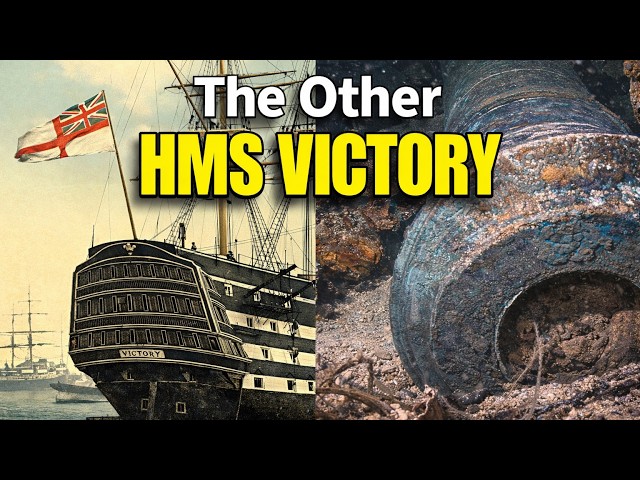
There were at least two ships called HMS Victory. Everyone knows Nelson's. Almost nobody knows the previous one — a 100-gun first-rate warship that vanished in a storm on 3 October 1744, taking Admiral Sir John Balchen and over a thousand men with her.
For 264 years, she was lost. Then in 2008, Odyssey Marine Exploration found her — 60 nautical miles west of Alderney, in 78 metres of water, with over a hundred bronze cannons still scattered across the seabed.
On 13 September 2020, I dived the wreck. This video covers the full story: the ship's construction in 1737, her role as Channel Fleet flagship, the storm that sank her, the discovery, the legal battle over salvage rights — and what it's like to drop onto the remains of the oldest first-rate warship ever found on the seabed.
#HMSVictory #ShipwreckDiving #RoyalNavy #MaritimeArchaeology #DeepWreckDiver #Shipwreck #TechnicalDiving #ScubaDiving #BritishNavalHistory #englishchannel
━━━━━━━━━━━━━━━━━━━━━━
*CHAPTERS*
00:00 The Other HMS Victory
01:12 Britain’s Most Powerful Warship
02:42 Admiral Balchen’s Final Mission
03:40 How Victory Was Lost in 1744
05:08 The Discovery of HMS Victory
09:23 Planning the Dive
11:52 Diving HMS Victory
15:38 Controversy 1: Human Remains
18:54 Controversy 2: Human Impact
25:21 Controversy 3: A Site That Is Still Changing
━━━━━━━━━━━━━━━━━━━━━━
*ABOUT THIS CHANNEL*
Deep Wreck Diver explores shipwrecks, submarines, and sunken aircraft from around the world - combining technical diving with detailed wreck identification and historical storytelling. Every dive uncovers a piece of history lost to the depths.
━━━━━━━━━━━━━━━━━━━━━━
*Kit I Use*
Note, some of these are affiliate links so help support making my videos:
- Gloves are Ansell Alphatec 87-063 - https://amzn.to/4jDHhX4
- Main torch is an Orcatorch D630 - https://amzn.to/4jlT4tA
- Backup torch is an Orcatorch D710 - https://amzn.to/4jhddRk
- Drysuit is an O-Three Ri200 - https://www.othree.co.uk/drysuit-range/ri-2-100-drysuit/
- CCR is an AP Diving Inspiration (XPD) - https://www.apdiving.com/
- Backup computer is a Shearwater Perdix v2 - https://amzn.to/42FXZOW
- Reels are by Kent Tooling - https://www.divingproducts.co.uk/
- Cameras are Paralenz Vaquita
- Video light is NiteScuba NSV60 - NiteScuba NSV60 - https://s.click.aliexpress.com/e/_onHEKQZ
- Phone housing is Divevolk Seatouch 4 Max - https://s.click.aliexpress.com/e/_omJlNKL
- Stickers for gear by Dive Signs - https://www.divesigns.com/
━━━━━━━━━━━━━━━━━━━━━━
*Strobes*
I use two different strobes (also affiliate links)
-- Prozhaozhu 3000 Lumen Diving Strobe - https://s.click.aliexpress.com/e/_c3Qb99tF
-- Prozhaozhu 4000 Lumen Diving Strobe - https://s.click.aliexpress.com/e/_c3KmWqCN
- Jon clip - https://s.click.aliexpress.com/e/_oDqq0RW
━━━━━━━━━━━━━━━━━━━━━━
📱Follow My Socials!
Instagram 👉 https://www.instagram.com/deepwreckdiver/
Facebook 👉 https://www.fb.com/DeepWreckDiver
Buy Me A Coffee 👉 https://buymeacoffee.com/d33puk
Email 👉 [email protected]
Show More Show Less View Video Transcript
0:00
HMS Victory is the most famous warship
0:03
in British naval history. You can go to
0:06
Portsmouth. You can walk her decks. You
0:09
can stand on the exact spot where Lord
0:12
Nelson fell. But that's not the victory
0:15
I dived.
0:17
15 years before Nelson was even born. 60
0:21
years before Trafalga, another HMS
0:24
victory sailed into a storm in the
0:27
English Channel and vanished without
0:30
trace. There was no distress signal, no
0:34
survivors, and no sign of it found for
0:37
over 200 years.
0:40
So, in this video, I'm going to walk you
0:42
through the history of the 1744 victory.
0:46
how it was lost, how it was forgotten,
0:49
how it was found, what's down there, and
0:53
the three huge controversies that
0:55
surround this wreck. Now, I've dived it
0:58
twice, and on those dives, we found huge
1:02
bronze cannon, personal artifacts, and
1:05
even human remains. This is the story of
1:09
the lost HMS Victory. In 1726,
1:14
the Admiral T comm commissioned the most
1:16
powerful warship Britain had ever built.
1:20
She would carry up to 110 bronze cannon.
1:24
The last British first rate ever armed
1:27
entirely in bronze. Her name was
1:30
Victory.
1:32
The order from above was clear. The
1:35
surveyor of the Navy told the master
1:38
shipwright of Portsmouth to build a
1:40
upper works low and snug.
1:44
He didn't. He built a tall. He built a
1:48
heavy three full gun decks, the largest
1:52
and most powerful cannon in naval
1:54
warfare packed onto her upper decks.
1:59
She was launched in February 1737
2:03
and almost immediately there were
2:04
problems. She required refits just to
2:08
pass her sea trials. But by 1740
2:12
victory was flagship of the channel
2:15
fleet and the man standing on her
2:18
quarter deck was Admiral Sir John
2:21
Balcon.
2:23
He was 74 years old. He'd served the
2:26
Royal Navy for 60 years.
2:29
He'd been captured twice by the French,
2:32
court marshaled twice, and exonerated
2:35
both times. And he was one of the most
2:37
experienced fighting officers in British
2:40
naval history.
2:42
He'd been pulled out of retirement for
2:44
one reason.
2:47
Britain was at war. The War of Austrian
2:50
succession,
2:52
also known as the War of Jenkins ear, a
2:56
British Mediterranean convoy was
2:58
blockaded in the River Targus at Lisbon
3:01
by a French fleet. If that convoy was
3:05
lost, Britain might lose the war. Balcon
3:09
was given victory and a fleet of over 30
3:12
warships. His orders, break the
3:15
blockade, rescue the convoy, get home.
3:20
He did all three and reached Lisbon in
3:24
late August 1744,
3:27
freed the convoy, escorted it to
3:29
Gibraltar, then chased the retreating
3:32
French fleet all the way to Cadis. The
3:36
mission was a complete success. On the
3:39
return voyage in early October, the
3:42
fleet entered the English Channel.
3:45
On the 3rd of October 1744,
3:48
a violent storm hit and the fleet was
3:51
scattered.
3:52
Over the following days, every other
3:55
warship battered, damaged, but a float,
3:59
limped into spithead.
4:01
Victory never arrived.
4:04
1150 men gone. No survivors, no distress
4:10
signal, nothing.
4:12
In the days that followed, some wreckage
4:15
marked with the name Victory washed
4:18
ashore on Oldeny, Gernzi, and Jersey,
4:21
parts of the Channel Islands.
4:23
Supposedly, guns were heard near the
4:26
cascets, a notorious group of rocks
4:30
northwest of Alden, which is known as
4:32
the graveyard of the English Channel.
4:36
As far as the Admiral team were
4:37
concerned, they had their explanation.
4:41
Victory must have been driven onto the
4:43
cascets and someone must have been
4:46
responsible.
4:47
They decided it was the lighthouse
4:49
keeper on Olden and he was caught
4:52
marshaled, accused of failing to keep
4:54
the lights going between the 1st and 5th
4:58
of October. And for over 250 years, that
5:02
was a story. Victory hit the rocks
5:05
because the light went out.
5:08
But when the wreck was finally found in
5:10
2008, it wasn't near the casket. It was
5:14
over 100 km, 60 nautical miles away. So
5:19
the lighthouse keeper was innocent and
5:22
always was. The evidence now points to
5:25
something else entirely, something the
5:28
Admiral T never wanted to admit.
5:31
Probably Victory's design killed her. A
5:35
topheavy ship overloaded with bronze
5:38
cannon. Built taller than it was ever
5:41
meant to be. Caught in a storm. It was
5:45
never going to survive. For over 260
5:49
years, nobody knew where victory was.
5:52
The search always focused near the
5:55
Channel Islands because that's where
5:58
everyone assumed it was. But they were
6:01
looking in the wrong place.
6:03
In 2008,
6:05
a Florida-based salvage company called
6:09
Odyssey Marine Exploration
6:11
was running a large scale sonar and
6:14
magnetometry survey of the Western
6:17
English Channel.
6:19
Over 4,000 square nautical miles of
6:22
seabed and roughly 60 nautical miles
6:26
from those cascet rocks, they found
6:29
something. A large elliptical mound on
6:32
the seafloor.
6:34
Bronze cannons scattered across the
6:37
surface. Over a hundred of them, iron
6:40
ballast, a 9 m rudder, and red brick
6:45
pieces. Exactly what you'd expect to get
6:48
on a first rate warship.
6:51
To confirm the identification, the
6:54
Ministry of Defense gave Odyssey
6:56
permission to raise two bronze cannon,
7:01
a 12 pounder and a 42 pounder.
7:05
That 42 pounder is the key. Only first
7:08
rate warships carried guns of that
7:11
caliber in the first half of the 18th
7:14
century. And cast near the brereech is
7:18
the royal crest of George I.
7:21
This had to be HMS Victory.
7:25
There were also rumors of gold coins on
7:27
board.
7:29
Gold supposedly being used by the
7:33
admiral, the fleet commander. Whether
7:35
that's true has never been confirmed.
7:39
And it matters because of course this is
7:41
treasure and everybody's going to want a
7:44
piece of that.
7:46
In 2012, the UK government transferred
7:50
ownership of the wreck site to the
7:53
Maritime Heritage Foundation. The
7:55
understanding was that they would work
7:57
with Odyssey to survey, excavate, and
8:01
eventually salvage artifacts for display
8:04
in British museums. In theory, a rescue
8:08
operation, but that's not what happened.
8:11
By 2018,
8:13
the government reversed course. The
8:16
decision came down. Victory would be
8:19
left in situ. No excavation, no salvage.
8:24
Leave it where it is.
8:27
The Maritime Heritage Foundation
8:29
challenged that in court. a judicial
8:33
review in 2019
8:35
arguing that the wreck was at risk from
8:38
all sorts of things, troller damage,
8:41
erosion, and illegal salvage because it
8:45
sat in one of the busiest shipping lanes
8:47
in the world.
8:49
The government's position was that an
8:50
untouched wreck 80 km offshore could be
8:55
managed and protected as it was. And so
8:59
nothing happened.
9:01
The wreck has been untouched ever since
9:05
over,00 men still down there. 100 bronze
9:09
cannons still on the seabed and no
9:13
agreement on what the right thing to do
9:15
is. Should it be brought up or should it
9:18
be left alone? And that's what I went to
9:22
find out. Now, the reality of diving
9:25
this wreck is that it's 45 miles
9:28
offshore in a busy shipping lane in 78
9:33
meters of water.
9:35
That means you can't just turn up. You
9:38
have to get everything to line up. And I
9:41
mean everything. First of all, you need
9:44
neat tides. Then you need light winds
9:47
and a flat sea. You also need slack at
9:51
lunchtime because you've got a 4 and a
9:54
half hour transit each way just to get
9:57
to sight and you're going to be in the
9:59
water for nearly 3 hours.
10:02
Of course, you also need divers who are
10:05
qualified and current at that depth.
10:10
78 m is deepix territory. There's a load
10:14
of decompression. There's no margin for
10:17
error. And then to make the team
10:19
complete, you need a boat and a skipper
10:23
willing to make the run.
10:26
More in kind of hope than anything else.
10:29
I booked the date for this dive nearly
10:32
12 months in advance.
10:35
The 13th of September, 2020. I picked it
10:39
on the calendar. I looked at the title
10:41
predictions and I gambled that the
10:44
weather would cooperate. That's how far
10:47
ahead you have to plan for a dive like
10:50
this. And as the date got closer, the
10:53
weather looked really good. Light winds,
10:56
flat sea,
10:58
the tide and slack were exactly as we
11:01
wanted them. Every box was ticked except
11:05
one. I was running out of divers.
11:08
People were dropping like flies. And I
11:11
was staring at a trip that might not
11:13
happen. Not because of the sea, not
11:16
because of the conditions, but simply
11:19
because I couldn't fill a boat. And if I
11:21
couldn't fill a boat, the economics
11:24
weren't going to work. Fortunately,
11:27
right at the last minute, I got enough
11:29
people together. We were going.
11:33
At that point, only two groups of divers
11:35
had ever visited this wreck. a team led
11:38
by Ian Taylor from Portland and the
11:41
famous Darkstar technical diving team.
11:45
We were going to be the third. Now, I
11:48
was fortunate enough to go back again in
11:50
2022, but that first dive in September
11:54
2020,
11:55
that was the one. It was an absolutely
11:58
blinding, blinding dive. And you can see
12:01
that here from these photos, which were
12:04
all taken on that first dive. We were
12:08
incredibly lucky. There was ambient
12:10
light down at 80 mters. The visibility
12:13
was incredible. I I don't know what
12:15
number it was, 20, maybe more than 20 m.
12:19
It was just amazing. And, you know, just
12:22
not what you expect in the middle of the
12:24
English Channel. So, it was just a
12:28
fantastic thing to be part of. I mean,
12:30
you can see here from this photo, which
12:32
really clearly shows how good the
12:34
visibility is. You can see I'm not using
12:36
I took this photo. I'm not using any
12:39
video lights. This is purely ambient
12:42
light. And you can see there um my buddy
12:44
Fran um she's however far she is away
12:47
there, 5 6 7 m. You can see she's
12:50
illuminating the fish. But if you have a
12:52
look in the back left hand side, you can
12:54
see another diver who's even further
12:56
away. So it was just incredible. And
13:00
then obviously if you put on video
13:01
lights, you get photos like this. You
13:03
can see the um you can see the color.
13:06
You can see obviously those cannon down
13:09
there. And it was just incredible. You
13:12
amazing to think that you're on this
13:15
nearly 300y old wreck that has been
13:19
dived a small handful of times. So
13:21
moments like this make it all
13:23
worthwhile. All the, you know, the the
13:26
timeout, the uh the decompression that
13:29
you know you're going to have to do, the
13:30
cost obviously. So it was it was
13:33
fantastic. And then you know here you go
13:35
another example. This is a one of those
13:38
cannons just sticking vertically out of
13:40
the seabed. Now this is on top of the
13:42
mound.
13:44
The the entire seabed is flat apart from
13:46
this big mound of sand which has clearly
13:48
got all the wreck underneath it. And I'm
13:51
sure if you could clear that sand away
13:53
there would be all sorts of interesting
13:55
things there. But you know, as you see
13:56
there, you know, cannon just sticking
13:58
out the top of it and something saw
14:00
quite a few like this. This is actually
14:02
uh from the second dive. This is Will
14:05
here. This photo taken by Rick Eton. You
14:08
can see there he's illuminating a couple
14:10
of the cannon that have got the lifting
14:12
straps on them. This is another photo
14:15
showing the the crest that I talked
14:18
about. So, this hasn't been, you know,
14:20
we haven't cleared any the concretion
14:21
off or anything like that. It may have
14:23
been done by others. And you can
14:25
probably see there's a lifting st on
14:27
that one. But what you can see is the
14:29
crest that stands out super clearly. You
14:33
know, incredible to think that that was
14:34
done all those hundreds of years ago.
14:37
Now, you may recall from my
14:38
introduction, I said the fact that
14:41
gunfire had been heard in the Channel
14:44
Islands and there was a suggestion that
14:46
that came from Victory. Well, one of the
14:48
interesting things there, as you can
14:49
see, that cannon clearly has a champion
14:51
still in it. So, if any of the guns on
14:54
Victory were fired, we can say for
14:56
certain it wasn't that one. We talk
14:59
about the artifacts that we found down
15:02
there. And this is a piece of lead. That
15:04
is another one of those artifacts. They
15:06
used to drape those pieces of lead over
15:08
the top of the guns to keep So, they
15:11
would have them primed with powder and
15:13
shot and everything in them. Then they
15:15
put a piece of lead over the the touch
15:17
hole and that just kept it dry and meant
15:19
that when they needed to fire it uh they
15:21
knew it was going to work. Fascinating
15:24
and a great kind of connection with the
15:27
all those people who this wreck was
15:30
their home but also their place of work
15:32
in the sense that it was a fighting
15:34
platform. At the beginning, one of the
15:36
things that I said I was going to do is
15:38
talk about some of the controversies
15:40
about HMS Victory. So, let's go on to
15:43
the first one, which is uh human
15:45
remains. It's this is one of the very
15:49
very few wrecks where I've actually seen
15:53
human remains on, which is which is
15:55
incredible given the number of wrecks
15:57
I've dived, the number of wrecks on
15:58
which people have lost their lives. So,
16:00
it's a really interesting question. The
16:02
first one is, did I actually see human
16:04
remains? Well, I think what you can see
16:07
in this photo here is is two really
16:09
obvious pieces of of human beings. In
16:12
the top left there, that looks like a
16:14
long bone, so maybe a leg bone. And in
16:17
the bottom there is a skull, which is
16:20
quite a sobering thing to see on a dive.
16:23
And and when you see it, you don't
16:25
actually, or I didn't anyway,
16:27
immediately realize that was a skull. It
16:29
took me a while to kind of come to terms
16:31
with that. And if you see on the on the
16:33
right hand side there, in fact on this
16:35
photo there's also a couple of pieces of
16:36
wood as well. Now now the kind of
16:38
question is I guess how those uh how
16:42
that organic matter um you know bones
16:46
and also wood how come it survives down
16:49
there so long and it doesn't survive on
16:51
other wrecks that are much much younger.
16:53
The the view is that these were buried
16:56
under sand and therefore
16:58
they were protected from the kind of
17:01
things that causes decay. But what has
17:04
happened is sometime relatively recently
17:07
the sand has been cleared off and that
17:08
has exposed all these kind of things.
17:12
So here is another photo of that skull
17:15
that we've seen already. I I think it's
17:16
pretty clear. And this we also believe
17:20
is a piece of skull as well. And uh
17:23
obviously you can see a couple of hermit
17:25
crabs there for scale. Uh you you may
17:28
not think that's skull. Um I don't know
17:30
what else it could be, but but we
17:32
certainly do. And there you go. There's
17:34
there's another piece of of skull. Now
17:35
the interesting thing is we saw these on
17:38
the first dive and although we looked
17:41
for them on the second dive, we didn't
17:43
see them. They were two years apart. So,
17:45
I don't know what happened in those two
17:47
years, whether we had missed them or
17:50
whether they had been moved or they'd
17:52
been decayed or whatever. But in my
17:54
view, the presence of human remains and
17:56
the fact that we didn't see them on the
17:58
second dive shows that this wreck is
18:00
dynamic and changing. Stuff is happening
18:03
all the time on it. And I'm going to
18:04
come back to that uh in a bit more. The
18:07
other thing obviously to consider maybe
18:09
is how do I feel about diving a wreck
18:12
which has human remains? And that's uh
18:14
that's kind of an interesting one. I'll
18:17
be honest, it it doesn't really bother
18:18
me, although I can understand why it
18:20
would bother other people. I,
18:24
you know, take fairly pragmatic view on
18:25
this. These are dead people. They aren't
18:29
going to scare anyone um in terms of
18:32
respect. Yeah, clearly we shouldn't mess
18:34
around with them, but they have been on
18:36
the seabed for 300 years. And therefore,
18:40
you know, they're not This isn't a
18:41
cemetery. This isn't a graveyard. This
18:44
just happens to be a place where there
18:45
are lots of of bones and stuff around.
18:48
What should we do about it? That's a
18:49
really good question and I'm going to
18:51
come back to that one later on because
18:54
the second controversy is really about
18:57
the human impact. Now, me going there
19:00
has a human impact. I would say a
19:03
relatively small one, but clearly we put
19:05
shot lines down there. We're finning
19:07
over the wreck. You know, those kind of
19:09
things. So, there is a bit of an impact
19:10
of diving it. Maybe the fact that I'm
19:13
publicizing what it's like is going to
19:15
have a little bit of an impact, but I
19:17
would say there are much bigger human
19:19
impacts. And you can see there in this
19:21
photo that is obviously something from I
19:25
would say maybe a fishing vessel or
19:28
maybe it's a bit of rubbish. I don't
19:30
know. But it's ended up on the rec site.
19:33
And there's another one you can see
19:34
there. That's a wine bottle. Uh it's got
19:37
a label on it, so it's not original, but
19:40
it is on the rec site. Where did it come
19:42
from? Maybe it was chucked over from a
19:44
boat. Maybe it's a piece of rubbish. Uh,
19:46
who knows?
19:48
Um, this is probably more relevant. You
19:52
can see there that is a a fishing pot.
19:56
So, and we certainly on the first dive
19:59
we saw lots of um things like this,
20:02
ropes and fishing equipment on on the
20:05
wreck. So somebody is using it for
20:07
catching animals and we saw loads of
20:09
lobsters and congers and crabs and stuff
20:12
down there. So that's that's no
20:14
surprise. Fishermen have got to earn a
20:15
living and potting is is a good way of
20:18
doing that. Here is a uh one of those
20:21
cannons and you can see there's a rope
20:24
um around the cannon. You can see
20:25
there's a load of wood there as well. So
20:28
that wood I would say has probably been
20:30
exposed fairly recently otherwise it
20:32
would have gone. and perhaps that rope
20:35
which is obviously fairly new is one of
20:37
the reasons why it has been exposed. Uh
20:42
there you go again. You can see uh same
20:44
I think the same cannon. You can see the
20:45
bit of rope wrapped around it. Now I
20:48
believe I went back to that cannon on
20:50
the second dive and I don't think that
20:53
rope was there. So it been pulled up or
20:58
whatever but it wasn't there. So, so for
21:00
me what that shows is there is active
21:02
human activity on the on the rec site.
21:06
There's also this of course and you can
21:08
see there those two cannons. I think
21:10
it's fairly reasonable to say that those
21:12
cannons when the ship went down they
21:14
didn't end up beautifully parallel to
21:17
each other like that. Uh they also
21:19
didn't end up with lifting straps. And
21:20
you can probably see there's there's two
21:22
at the the end and there's two on the on
21:25
the barrels. So, somebody has gone down
21:28
there and put those lifting straps on.
21:30
Anecdotally,
21:32
um I am told that it was Odyssey Marine
21:35
who were the the company who found the
21:37
wreck and obviously who salvaged two of
21:39
the guns. There's another photo of um
21:43
those same guns. And you can see really
21:45
clearly the lifting straps around there.
21:47
Lifting STS also now covered in sand.
21:50
So, I would say those lifting shops have
21:53
been down there a long time, which I
21:55
think probably ties in with the it was
21:58
Odyssey Marine who put who put them on
22:00
there because that would be at the time
22:02
of this photo was taken maybe 14 or 15
22:04
years earlier. So, plenty of time for
22:06
that sand to build up. Now the other
22:09
interesting thing is uh one of the the
22:12
second dive I did I had a tracking
22:14
beacon put on me and this uh diagram
22:17
here shows where I went on the wreck
22:20
which you can see is pretty much
22:22
everywhere but also around the wreck as
22:24
well. So the wreck is the big red lump
22:25
in the middle um or slightly right in
22:28
middle I guess and off to the right hand
22:30
side there is a sand bar um and that
22:33
that runs for for quite a long way. But
22:35
what I also did, as you can see on this,
22:37
is I went off to the left hand side, um,
22:40
which is which is west of the wreck. And
22:42
when I I went there, because I've been
22:44
told that there were objects on the
22:46
seabed. And when I went there to have a
22:48
look at those objects on the seabed, I
22:51
uh had some video on the front of my
22:53
scooter. And this is the video that you
22:55
can see here. So, this is me just on the
22:59
top of the mound here. So, you can see
23:01
those two guns that I've I've shown you
23:03
photos already. They're they're right on
23:05
the edge of the mound. What I'm going to
23:06
do now is go onto the flat seabed to the
23:10
west of the mound. And this is me
23:12
looking for those objects that I've been
23:14
told were there. You can see I'm off the
23:17
mound now because the ground is
23:19
completely flat. Although there is
23:21
plenty of those little fish there. Now,
23:24
obviously doing this, I was a bit
23:25
nervous because I I wasn't running a
23:27
line and I knew that I, you know, I
23:29
wanted to be able to find my way back to
23:31
the mound because that's where the shot
23:32
is and that's where the lazy shot is and
23:34
the and the decompression station,
23:35
everything. So, every now and again, I
23:38
was just kind of taking a little glance
23:40
just hoping that I could still see the
23:42
strobes. Fortunately, visibility was
23:43
really good. But you can see here I'm
23:46
heading out and and basically I'm
23:47
looking for something on the seabed.
23:49
Now, I expected it to be guns and I've
23:52
been told it was guns, but nobody at
23:54
this point had been out here and
23:56
physically looked at them. So, that's
23:59
what I've been asked to do and uh and
24:01
just to find out. So, it was it was a
24:02
bit of a mystery. And the good news is I
24:06
think very shortly. There you go. I've
24:07
seen one of the guns. It's not one of
24:09
the big ones. It's one of the smaller
24:10
ones, but there's clearly uh it's there
24:14
on the seabed. It didn't land there. And
24:16
you you'll see as we move on these that
24:18
they've all got sts on. So the view is
24:22
basically that these were on the top of
24:25
the mound and have been moved here onto
24:27
the seabed. You can see there you go.
24:29
Really good example there of a cannon
24:31
with a couple of strops on. Once again,
24:34
old, you know, these are old STS, but
24:36
but they're clearly STS. So, the whole
24:38
purpose of this excursion off the uh off
24:42
the mound was to find these cannons and
24:44
to prove that they'd been moved off,
24:47
which I think I have done. So,
24:51
you know, what I've just done there is
24:52
looked at uh you know, the human impact
24:55
on this site. I think one of the views
24:58
you may recall taken by the MOD is that
25:01
this site is static and will not change
25:05
and therefore it can be left in peace
25:07
without any problems. Hopefully, I think
25:09
what I've shown with these uh these
25:12
clips and these videos is that this site
25:14
is not static. It is changing all the
25:16
time. Uh that brings me on I guess to
25:19
the the next um controversy which is
25:22
about the sight stability.
25:25
And that kind of ties in with a point
25:27
I've just made.
25:29
A good example of this I think is this
25:31
thing here which is a cauldron.
25:34
Um it's it's difficult really to get the
25:37
sense of scale of that but I think you
25:38
can see it looking at those congerels
25:40
that are in it. I mean this is a really
25:42
big thing. Maybe a meter and a half
25:44
across. You can see it's all uh is
25:48
battered, but you can see there's those
25:49
big rivets in there. And this supposedly
25:52
was uh used for cooking. Now, the first
25:56
photo of this that Odyssey Marine took,
26:00
I believe shows it the other way up.
26:03
There's a picture for Rick from the
26:05
second dive showing it upside down. So,
26:08
that has clearly uh moved. Well, it's
26:11
clearly, you know, 180°. When I first
26:15
dived it, it was in a different position
26:18
to when I dived it on the second dive.
26:20
So, my view is that is moving around on
26:23
the seabed. And I guess at some point it
26:26
will probably move off the site or will
26:29
be further damaged or something like
26:31
that. So, you know, I guess for me these
26:35
are important things. So, what is a a
26:37
really historically significant wreck?
26:40
If you were to ask me what do I think
26:41
should be done, I think that this should
26:44
be uh should be brought up. I think as
26:47
many of these artifacts as possible
26:48
should be recovered, brought up to the
26:50
surface and then done something with
26:53
because if they get left down there,
26:55
they will eventually get trashed and
26:57
lost forever. But hey, I'm not an
26:59
archaeologist. I'm just a diver who goes
27:02
and uh visits shipwrecks. And one of the
27:06
things I'm very much hoping to do is to
27:08
go back and dive HMS Victory again. I've
27:12
tried in 2023. I've tried in 2024. I've
27:16
tried in 2025. Hopefully 2026 will be
27:20
the year I get to go back to it again.
27:22
So, just need the that weather cuz I've
27:24
got the uh I've got the boat and
27:26
everything else booked. If you would
27:27
like to see what it was like to dive
27:29
Victory, I've got the full dive video
27:31
from my 2022 trip that is available. and
27:35
it's here. You should just be able to
27:37
click on it and go and watch it.
27:39
Otherwise, I'm Dom Robinson, Deep Wreck
27:43
Diver. As always, I hope you've enjoyed
27:46
my video. I hope you'll give us a like.
27:48
I hope you give us a subscribe. Drop us
27:50
a comment, of course. But most of all,
27:53
what I hope you'll do is go and watch
27:55
another one of my videos.
Sports