0:00
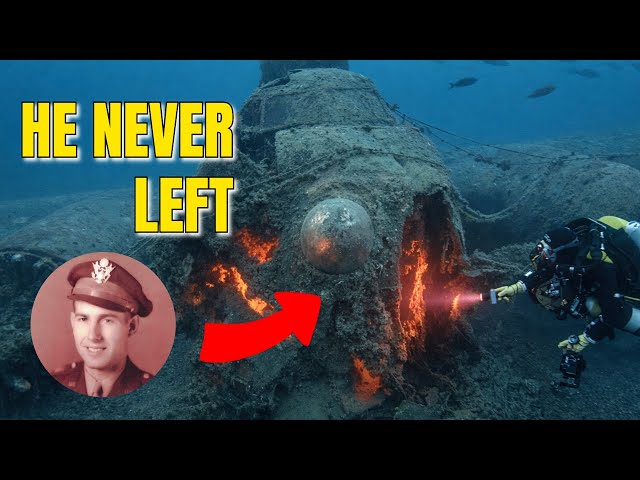
For 80 years, this B17 flying fortress
0:04
carried a dead man. His name was Ernest
0:08
Veno, a young American airman whose job
0:11
was to guide the bomber across miles and
0:14
miles of hostile territory.
0:17
Navig, what's the ETA for our target?
0:20
About 11 minutes. He was killed
0:22
instantly when the aircraft was hit by
0:25
flack on a bombing mission over Europe.
0:28
In a heavy bomber, the navigator sat in
0:31
the nose, surrounded by glass and thin
0:34
aluminum. It was one of the most exposed
0:37
positions in the aircraft. With nowhere
0:40
else to place him, the crew laid his
0:42
body in the narrow tunnel beneath the
0:44
pilot seats and kept flying.
0:48
When I first dived this aircraft, he was
0:50
still there. His body had remained
0:56
lying exactly where the crew placed him
0:58
in the final minutes of the flight.
1:02
For decades, he remained there until
1:05
sometime after my dive, a formal
1:08
recovery operation took place. His
1:11
remains recovered, identified, returned
1:15
home, and buried where he belonged.
1:19
The footage you are seeing now comes
1:21
from after that recovery. The dive I'm
1:24
talking about came before it. By this
1:28
stage of the war, American heavy bombers
1:30
were operating at the very edge of their
1:32
range. Most launch from large Allied air
1:36
bases in southern Italy. long prepared
1:39
runways built specifically for four
1:42
engine aircraft flying deep into
1:46
When bombers were damaged over the
1:48
Balkans or central Europe, getting back
1:51
was almost impossible.
1:54
Crews looked for anywhere they could
1:55
still reach, and the island of Viz
1:58
became one of those lifelines.
2:00
Located on the eastern side of the
2:02
Adriatic, damaged bombers could use it
2:05
to avoid a long and dangerous sea
2:07
crossing. By mid 1944, it had been
2:11
turned into a forward Allied air base.
2:14
An emergency airirst strip had been
2:16
carved out of the island and been
2:18
brought into use just months before this
2:20
aircraft was lost. So why did this B7
2:26
Because viz was never a safe airfield
2:29
for a heavy bomber. The strip was short
2:32
and rough, built for emergencies, not
2:35
for damaged 4 engine aircraft arriving
2:38
heavy and compromised. For a B7 in that
2:42
condition, a wheels down landing was a
2:44
serious gamble. If anything went wrong
2:47
on approach or touchdown, the aircraft
2:50
could break apart, collapse its
2:52
undercarriage, or burn with the crew
2:56
Ditching near shore was different. It
2:59
allowed the pilot to control the
3:01
touchdown, keep the aircraft afloat, and
3:04
get the crew out quickly with rescue
3:06
close by. That's why this aircraft did
3:09
not attempt the runway. It was still
3:11
flyable, but it wasn't safely landable.
3:15
And that choice seemed to be a really
3:18
good one. Although the impact was hard,
3:21
the aircraft stayed afloat. Every
3:23
surviving crewman got out uninjured.
3:28
Local boats reached the scene and tried
3:30
to tow the aircraft back towards shore,
3:32
but it was too badly damaged. As it
3:35
finally sank, the nose went first and
3:38
struck the seabed, causing the damage
3:41
that we can still see today.
3:44
The rest of the aircraft followed,
3:46
sliding down the slope behind it. And
3:50
that explains exactly why we see the
3:52
wreck as it is today.
3:55
This isn't an aircraft scattered by
3:57
violence. It's a wreck laid out by
4:01
gravity. Now, that's a huge difference
4:04
from one of the other videos that I've
4:05
got on this channel, the B24 Lady Luck,
4:09
which is absolutely smashed to bits by
4:12
comparison. I'm going to talk about the
4:15
reasons why later on, but first of all,
4:18
let's have a look up close at this B7.
4:22
And you can see here, this is looking in
4:24
through the window into the cockpit.
4:26
It's absolutely incredible. You can see
4:28
the controls. You can see many of the
4:31
gauges. You can even see some of the
4:34
padding from the seats in which the
4:36
pilots would have sat. this level of
4:39
detail after this amount of time.
4:41
Absolutely incredible. One of the other
4:44
interesting things is that both windows
4:46
are open. And the reason for that is
4:49
because that was how the pilots escaped
4:51
from a ditched aircraft.
4:54
Moving up there, you can see the upper
4:56
turret with its two machine guns pointed
4:59
towards the stern. That little bit there
5:02
which is open, that's where the life
5:04
rafts would have come out.
5:13
And then up here, this hatch you can see
5:16
at the top which is missing the glass.
5:18
That's where the majority of the crew
5:20
would have escaped from
5:54
moving towards the stern now or the rear
5:57
of the aircraft. You can see it does
6:00
actually have a bit of damage there. And
6:02
that would have been done during the uh
6:04
the impact. It kind of broke apart a
6:07
bit. That area there that just down to
6:09
the left, that's where the two mid
6:12
gunners would have been with their 50
6:14
caliber machine guns pointing out either
6:16
side. And those would have been
6:18
jettisoned before the aircraft came into
6:20
ditch. It was part of the formal
6:22
ditching procedure. Heading towards the
6:25
rear of the aircraft. Now this is the
6:27
deepest point just about 70 m and you
6:31
can see there the rear turret. Once
6:34
again two 50 caliber machine guns on
6:37
there. The gunner would have looked out
6:39
of that window and covered you know
6:42
quite a significant arc. Obviously a
6:44
really important job to keep the
6:47
fighters away from the back of the
6:48
aircraft. These aircraft flew in
6:51
formation. So the gunners would have
6:54
worked together between multiple
6:56
aircraft. They established defensive
6:59
zones and they would cover each other.
7:01
So they would all try and help each
7:03
other out. Obviously that's not what got
7:06
this B7. It was hit by flack. As you can
7:10
see, we're moving forward again past the
7:12
huge tail on the left hand side over the
7:15
top of the, you know, monumental
7:16
stabilizers and carrying back towards
7:19
the cockpit. You can see there's uh a
7:22
hole on the left hand side there. There
7:24
was a small door there to allow entry
7:27
and exit to the aircraft. And then
7:29
moving forward, we can see the waste gun
7:31
position. Again, as I've already said,
7:34
the guns were ditched. But as you can
7:36
see, when you look inside, you can see
7:39
how much stuff there is still in there.
7:41
You can see the mount just on the bottom
7:42
left hand side there. Absolutely um
7:46
incredible, you know, to see how much of
7:49
this is preserved. Okay, there's a bit
7:50
of the skin has gone, but frankly, most
7:53
of the structure is still there, which
7:56
is just incredible. One of the things
7:59
you may have noticed when we were
8:00
peering inside there was the Sperry ball
8:03
turret. It's still there underneath the
8:06
aircraft. And I've slowed down the piece
8:09
of footage looking in through the window
8:11
and also zoomed in a bit. And you could
8:13
just see where the ball or where the top
8:16
of the ball turret is there. So you can
8:18
see a little bit inside it coming out
8:21
and moving forward. You can see we're up
8:23
on the wing onto the starboard wing. You
8:25
can see there the hole to the left.
8:28
That's once again that's where all the
8:30
crew escaped from. That little box shape
8:33
once again on the left as I've already
8:35
said. That's where the life rafts came
8:37
from. There would have been one on
8:38
either side gone out over the wings. The
8:41
crew would have come out of that radio
8:42
operator's hatch onto the wings and
8:45
moved onto the life rafts apart from the
8:48
pilots who came out of the the windows.
8:51
And you can see them about to do it in
8:54
this piece of training footage. Now, all
8:57
I can say is that those windows aren't
8:59
very big. And I can imagine exactly how
9:03
challenging it must have been trying to
9:04
get out of them, especially if the guys
9:07
were wearing the full clothing that they
9:09
would have worn on a a bomber mission
9:11
over Germany when they've got, you know,
9:13
all the big heavy clothing and all that
9:15
kind of stuff. But they must have done
9:17
it because they all got out okay, even
9:19
though those windows do look really
9:21
small. Another interesting thing from
9:24
this angle is you can see how smashed
9:26
the nose is. And I've already said
9:28
that's what took the brunt when it hit
9:30
the seabed. And you can see there the
9:32
bombardier and navigator's position
9:34
which is right in the nose. Both
9:36
completely smashed, both completely
9:38
gone. And in here is where the body
9:43
would have been. Now it's not here when
9:45
this video was taken because it has been
9:48
recovered, but we are going to have a
9:50
look in here. And you can see the tunnel
9:52
where Ernest's body remained for all of
9:57
Now, one of the things people sometimes
9:59
ask me is, "How do I feel about diving
10:02
wrecks where people have died?" I'll be
10:06
honest, it doesn't bother me. Death is
10:09
part of life. We all routinely go to
10:13
places where people have died and
10:16
frankly where there are still bodies.
10:18
So, I've done any number of battlefield
10:20
tours. I've been to places like the SO
10:23
and Normandy and there are still bodies
10:26
there. There are still people missing
10:28
and almost certainly if you go to the SO
10:31
for instance, you're walking relatively
10:33
close to the remains of somebody.
10:36
To be honest, I don't really have a
10:39
problem with that because I think the
10:41
mere fact that you're there is part of
10:43
the process of remembering those people.
10:46
Me diving this wreck or not diving this
10:49
wreck is never going to bring Ernest
10:51
back to life. But the mere fact that
10:54
you're listening to me talking about him
10:56
now means that he's not as forgotten as
10:59
he might have been otherwise. People
11:01
will probably know that I'm an
11:02
exmilitary helicopter pilot. I flew on
11:07
Obviously, none of them were anywhere
11:09
near as dangerous or as risky or really
11:12
as important as what Nest and tens of
11:15
thousands of his comrades were doing. It
11:18
does mean though that I feel a sense of
11:19
kinship with them. And I think maybe I
11:23
get a sense of how they would feel if
11:26
this was my B7 and I'd been in there.
11:30
Would I be pleased that people were
11:31
still coming to visit me and remember
11:33
me? Yeah, I think I probably would be.
11:36
On the other hand, I know there'll be
11:38
loads of people who feel very
11:39
differently, and I guess that's the
11:41
thing. We all have our own opinions.
11:44
We're all entitled to them, and it's
11:48
I think it's also worth talking about
11:50
the recovery operation that took place.
11:52
This is something that the Americans
11:53
take really seriously, and where
11:56
possible, they always try to bring home
11:58
their aviators. So there's an
12:01
organization called the Defense P MIA
12:05
accounting agency and they go around the
12:08
world uh and try to locate, recover,
12:11
identify service personnel missing from
12:14
past wars. Obviously that's a time
12:17
consuming, expensive process, but
12:20
they're aware of the significant number
12:22
of World War II heavy bomber wrecks that
12:25
lie around Viz. and they they I think
12:29
are slowly working their way through
12:30
them. They started off in uh with a B24
12:33
that's a lot shallower than this. I
12:35
think in about 40 m and they then moved
12:38
on and they they've done this one. I'm
12:41
not sure whether they've got any plans
12:42
for doing any of the others, but I think
12:45
one of the problems is that the depth in
12:48
particular makes this sort of thing
12:49
really difficult. This one's 70 m and
12:53
quite a lot of the other bombers are
12:55
much deeper. So the B24 lady luck that I
12:58
mentioned earlier on that's 90 odd
13:03
to do work at those depths to dive at
13:05
those depths is risky and dangerous and
13:09
very expensive and it's I'm not really
13:12
clear you know when we say there's a
13:14
body on this wreck. I don't think
13:16
there's very much. I don't think they
13:20
but I guess it's important to them and
13:23
where they can, they'll do as much of it
13:25
as possible. Ultimately, they have to
13:28
balance the cost, the risk against, you
13:32
know, how good it is to bring somebody
13:35
What I want to do now is quickly return
13:37
to something I've mentioned already, the
13:40
B24. So, I've talked about the B24 Lady
13:43
Luck, which is the subject of another
13:45
one of my videos. And if you haven't
13:47
seen it, obviously uh I think you'll
13:49
really enjoy it. And I'll put a link in
13:50
the description and above. But the B-24
13:54
is really interesting because what it
13:55
shows is a very different sort of crash
13:58
site to this one. And more importantly,
14:00
a very different tale. On this B7,
14:04
all of the crew who were there for the
14:08
landing survived. The only casualty
14:12
occurred, you know, when they were
14:14
actually on the mission. The B24 is very
14:17
different. All 10 crew members were
14:20
alive at the start of the landing
14:22
process. Only one of them survived. And
14:26
that is down to the differences between
14:29
the way that the B-24 and the B17
14:32
performed when they landed on water. And
14:34
it's an absolutely incredible thing,
14:37
especially considering that the Rex are
14:39
only a few miles apart. They landed at a
14:43
very similar time, you know, in
14:45
relatively similar circumstances. And
14:47
the reason is that the B-24 were
14:50
notoriously poor at ditching. They had a
14:52
high wing and a slabsided fuselage,
14:56
which meant that even a wellexecuted
14:58
ditching often ended violently.
15:01
Instead of skimming across the surface,
15:03
the nose dug in and basically the
15:06
aircraft broke apart very violently into
15:12
By contrast, the B17 had a low wing and
15:16
a big surface area. And what that meant
15:18
is that you could ditch it much more
15:21
smoothly. And because of that, they were
15:24
far more likely to stay intact and even
15:27
float as we saw in these uh in this
15:30
situation. So, it's incredible. Two
15:32
aircraft, very similar size, very
15:35
similar roles, completely different
15:37
performance when ditched. And this was
15:40
obviously all about design rather than
15:43
crew skill or anything else. The B-24
15:47
was designed to carry more bombs. And it
15:50
could carry significantly more bombs
15:52
than a than a B7 uh depending on the
15:55
range and the amount of fuel, but you
15:57
know, up to twice as much uh bomb load,
15:59
which when you consider that they had
16:01
the same crew, they were a similar sort
16:03
of size. That's why the American High
16:06
Command was, you know, preferred the
16:09
B-24 to the B7. What was the trade-off
16:12
for that? Well, the trade-off was the B7
16:14
was probably more survivable and it was
16:18
definitely more survivable when it came
16:20
to ditching on water. So really
16:23
interesting thing there that the uh
16:25
Americans prioritized
16:28
this ability to I guess deliver effect
16:30
to the enemy over their own crews
16:36
Nothing shows that better than the two
16:39
wrecks that we see here on the seabed in
16:41
viz. the completely intact B17 in which
16:48
survived the landing versus the B-24
16:52
Lady Luck. You know what a name where
16:56
everybody survived up until the moment
16:58
of the impact and then only one person
17:01
lived to tell the tale. It's a
17:04
fascinating contrast and as a diver an
17:08
absolute privilege to be able to witness
17:11
these things and to understand exactly
17:14
what happened. I mean the simple fact is
17:17
these wrecks don't need drama adding to
17:19
them. Everything that matters is already
17:23
here. You can see the damaged aircraft.
17:26
You can see how the crew made the
17:31
We can talk about the navigator who
17:33
never made it out and the aircraft that
17:36
carried that moment with it for decades.
17:41
The evidence was preserved here in the
17:43
sea. We can see how the aircraft was
17:46
ditched, how the crew escaped, and
17:50
understand why it lies exactly as it
17:53
does today. I think I'd also like to
17:56
thank the work of those who came later
18:00
because they've closed one part of the
18:03
story. The aircraft though still remains
18:07
where it fell, silent.
18:10
But the man who guided it across the sky
18:12
is no longer here. He's home.
18:16
Probably back where he belongs.
18:20
For me, I think dives like this really
18:23
matter. Not necessarily for the depth,
18:26
not for the difficulty, but because I
18:30
feel that they connect us directly to,
18:35
you know, really important events,
18:38
real decisions that were made by real
18:40
people under pressure. And so I think
18:44
it's fair to say this isn't just a B7 on
18:47
the seabed. It's not just a beautifully
18:51
preserved wreck. It's not just an
18:54
incredible dive, although it is all of
18:56
those things as well. It's actually the
19:00
last chapter of a journey that began in
19:03
the air and ended right here.
19:10
I'm Dom Robinson, Deep Wreck Diver. I
19:14
hope you've enjoyed this video and I'll
19:16
look forward to seeing you on the next