Up next in 10


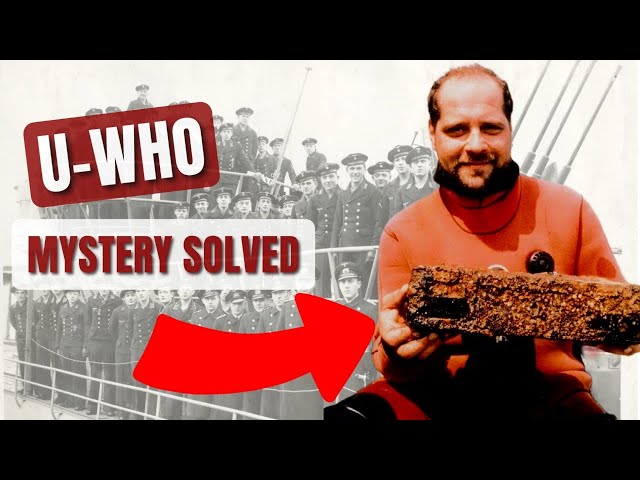
Seventy metres down. Pitch black. You're looking at a submarine with no markings, no identification… and no explanation for why it's here. What happened next became the bestselling book Shadow Divers — and it started with a series of dives that Richie Kohler himself calls… completely bonkers.
In 1991, a fishing captain named Bill Nagle handed a set of coordinates to a small group of deep wreck divers off the coast of New Jersey. He told them there was something on the bottom. Something big. When they got down there, they found a submarine. A German U-boat. But here's the problem — there shouldn't be one there. Allied records said no U-boat was ever sunk in that location. The history books were wrong.
So now you've got an unidentified submarine, sitting in seventy metres of water, and no paper trail to tell you what it is.
To identify this boat, they had to go inside it. Seventy metres. On air. Narcosis so thick you can barely read your own gauges. Hours of decompression. Corridors designed for men half your size — before you strap on doubles and a stage bottle. And this is the early nineties. There is no technical diving industry. No courses. No standards.It took six years. It cost lives. And when they finally recovered a tagged piece of equipment from deep inside the wreck, they had their answer — U-869. A boat that the German Navy's own records said was sunk off Gibraltar. She wasn't. She was here.
Richie Kohler was one of those divers. And I sat down with him to hear the full story — how they found her, how they identified her, and what it was really like to dive a wreck that rewrote history.
━━━━━━━━━━━━━━━━━━━━━━
*SHADOW DIVERS*
I think every technical diver should read this book!
Shadow Divers: The True Adventure of Two Americans Who RIsked Everything to Solve One of the Last Mysteries of World War II - Shadow DIvers - https://amzn.to/4dn2p2w
━━━━━━━━━━━━━━━━━━━━━━
*CHAPTERS*
00:00:00 – The Mystery Submarine at 70m
00:06:20 – Deep Air and Early Tech Diving Limits
00:12:40 – First Dives and Early Discoveries
00:19:00 – Artifacts and the First Real Clues
00:25:20 – Inside the Wreck: Human Reality
00:31:40 – Narrowing Down the U-Boat Identity
00:38:00 – Research, Archives, and Enigma Clues
00:44:20 – Tragedy and the Cost of Exploration
00:50:40 – The Final Push for Identification
00:57:00 – Confirmation, Theories, and What Really Happened
━━━━━━━━━━━━━━━━━━━━━━
*ABOUT THIS CHANNEL*
Deep Wreck Diver explores shipwrecks, submarines, and sunken aircraft from around the world - combining technical diving with detailed wreck identification and historical storytelling. Every dive uncovers a piece of history lost to the depths.
━━━━━━━━━━━━━━━━━━━━━━
*Kit I Use*
Note, some of these are affiliate links so help support making my videos:
- Gloves are Ansell Alphatec 87-063 - https://amzn.to/4jDHhX4
- Main torch is an Orcatorch D630 - https://amzn.to/4jlT4tA
- Backup torch is an Orcatorch D710 - https://amzn.to/4jhddRk
- Drysuit is an O-Three Ri200 - https://www.othree.co.uk/drysuit-range/ri-2-100-drysuit/
- CCR is an AP Diving Inspiration (XPD) - https://www.apdiving.com/
- Backup computer is a Shearwater Perdix v2 - https://amzn.to/42FXZOW
- Reels are by Kent Tooling - https://www.divingproducts.co.uk/
- Cameras are Paralenz Vaquita
- Video light is NiteScuba NSV60 - NiteScuba NSV60 - https://s.click.aliexpress.com/e/_onHEKQZ
- Phone housing is Divevolk Seatouch 4 Max - https://s.click.aliexpress.com/e/_omJlNKL
- Stickers for gear by Dive Signs - https://www.divesigns.com/
━━━━━━━━━━━━━━━━━━━━━━
*Strobes*
I use two different strobes (also affiliate links)
-- Prozhaozhu 3000 Lumen Diving Strobe - https://s.click.aliexpress.com/e/_c3Qb99tF
-- Prozhaozhu 4000 Lumen Diving Strobe - https://s.click.aliexpress.com/e/_c3KmWqCN
- Jon clip - https://s.click.aliexpress.com/e/_oDqq0RW
━━━━━━━━━━━━━━━━━━━━━━
📱Follow My Socials!
Instagram 👉 https://www.instagram.com/deepwreckdiver/
Facebook 👉 https://www.fb.com/DeepWreckDiver
Buy Me A Coffee 👉 https://buymeacoffee.com/d33puk
Email 👉 [email protected]
Video deThe wreck of USCG Tampa has finally been found.
Show More Show Less View Video Transcript
0:00
70 m down, pitch black, a submarine with
0:05
no markings, no identification, and no
0:09
explanation for why it's there. What
0:12
happened next became the best-selling
0:14
book, Shadow Divers?
0:17
>> No government, no expert, no military
0:20
source could answer the simple question,
0:23
"What is this? And why is it off Point
0:26
Pleasant, New Jersey?" To identify this
0:28
boat, they had to go inside it. 70 m
0:32
down on air. Narcosis so thick they
0:37
could barely read their own gauges.
0:40
Hours of decompression.
0:42
This is the early '9s. There's no
0:44
technical diving industry, no courses,
0:47
no standards.
0:49
>> Nitrox was in its infancy. There were no
0:52
diving computers. No one was diving try
0:56
and no one was diving rebreather. The
0:58
concept of using uh anything other than
1:00
air for decompression was voodoo.
1:04
>> It took 6 years. It costs lives.
1:07
>> And so we now had three fatalities that
1:10
had occurred on this boat.
1:12
>> Eventually they recovered a tagged piece
1:15
of equipment from deep inside the wreck.
1:18
They had their answer. U869,
1:22
a boat that everybody believed had been
1:24
sunk off the coast of Gibralta.
1:27
>> At that moment, only two people in the
1:30
whole world knew this was positively a
1:33
World War II German.
1:36
>> Richie Cola was one of those divers. And
1:38
in this video, he explains to me how the
1:41
U869 was identified and what it was like
1:45
to be part of one of the most seinal
1:47
moments in technical diving history.
1:49
Welcome, Richie. I am so looking forward
1:52
to this story because when I was
1:54
learning to dive and when I was starting
1:56
to get into technical diving, this is
1:58
the book we all read.
1:59
>> First off, that was quite an
2:00
introduction and thank you, Dom. I
2:02
really, really enjoy doing these videos
2:05
with you. Um, you do a knockup job of
2:07
it. Um, you're a positive spin on
2:11
technical and shipwreck diving world and
2:14
love you for it, brother. So, I'm happy
2:16
to be here. Um, as for the U869 and the
2:20
shadow diving story being a seminal
2:24
part, I all agree that it was a part,
2:27
but you have to realize um, in the fall
2:30
of 1991 when this German yubot was first
2:34
located off the coast of New Jersey in
2:36
the United States, there were technical,
2:40
even though it wasn't really called
2:41
technical diving at the time, it was
2:43
just diving or deep diving. there was
2:46
deep divers doing uh the Lucatania or
2:48
starting to get ready to go to the
2:50
Lucatania. Uh uh Kevin Gur had already
2:53
gone to the Britannic uh around the same
2:56
time. So technical diving in in its
2:59
infancy was occurring in different
3:01
places around the world with different
3:03
groups and because there was no internet
3:06
because there were no international
3:08
diving conventions for us all to get
3:10
together and share tech and share ideas
3:13
and information. We were all operating
3:16
in a vacuum. So the story of Shadow
3:18
Divers was literally operating in that
3:22
vacuum in the fall of 1991.
3:25
And and and a small synopsis of the
3:27
story was I belonged to a group of
3:29
divers uh called the Atlantic Wreck
3:31
Divers. Uh the genesis of that group was
3:35
because in our area of the eastern
3:38
seabboard of the United States, there
3:40
were lots of diving clubs and there were
3:42
lots of uh commercial diving boats going
3:45
out to shipwrecks, but they were only
3:47
going out to shipwrecks in in the 30
3:50
maybe 40 m range. They didn't want to
3:53
take anybody deeper. And so our group
3:56
wanted to find artifacts. One of the
3:57
things that we love to do, we wanted to
3:59
find ver shipwrecks. We wanted to go out
4:01
there and find artifacts and recover
4:03
them. Um because in the late 80s and
4:07
early 90s, it was a remarkably different
4:10
time than what we're living in now. I
4:13
like to call it the wild west of
4:16
shipwreck diving and artifact recovery.
4:19
We have a different social outlook and
4:22
and the laws are also being enacted or
4:26
enforced differently now than they were
4:28
back then. So, the ability for scuba
4:30
divers to go out in the Wild West and
4:33
find shipwrecks and take stuff was
4:35
really different. And, you know, I I'm
4:38
not saying it was better. I'm not saying
4:39
it was worse, but it was certainly
4:41
different. And so the Atlantic Recre
4:42
Divers formed as a group so that we
4:44
could as a group of 10 men charter our
4:47
own boat and go wherever we wanted to go
4:50
regardless of depth, regardless of diff
4:52
uh distance offshore for the sole
4:55
purpose of diving shipwrecks, finding
4:57
artifacts and recovering.
5:00
And it was in this theme that a another
5:03
dive boat was going out to look at an
5:06
unknown mark. And in the fall of 1991, a
5:10
captain named Bill Nagel, took his dive
5:12
boat, the Seeker, uh, to a fishing mark
5:16
that had been given to him by a local
5:17
fishing captain. And when the first team
5:20
went down, they saw what was at first
5:22
due to the narcosis. Let's let's rewind
5:26
a little bit. This was 1991.
5:29
There were no diving computers. There
5:31
were no commercially available and no
5:34
one was diving rebreathers. No one was
5:36
diving a try. Nitrox was in its infancy
5:42
and many of the training agencies that
5:45
now teach nitrox were against it. They
5:48
were telling people that nitrox was
5:50
going to hurt people. So the concept of
5:52
mixed gases, the concept of using uh
5:55
anything other than air for
5:57
decompression was voodoo. It was no no.
6:00
It was actually in the late '80s when we
6:03
started just carrying oxygen to
6:05
decompress on but not taking any benefit
6:08
of it. Just looking at it as a benefit,
6:10
not not reducing your decompression. So
6:12
this was the infasy and very very
6:14
rudimentary beginnings of what we now
6:17
call technical diving. So these guys go
6:20
down to this wreck in 70 plus meters of
6:22
water. They're on air. It is cold. It is
6:26
a very turbid dark environment much like
6:29
the English Channel uh um you know in
6:32
the late in the year when it when it's
6:34
all stirred up and at first many of them
6:37
thought it might have been a barge and
6:39
they thought this because of the rounded
6:40
edges and the amount of debris uh the
6:43
way that they saw it in their minds
6:45
their nitrogen addled minds they thought
6:47
it was a barge but one diver named John
6:50
Chatteran found an angled hatch and had
6:53
as he had been diving another submarine
6:56
called the U853, which has exactly the
6:58
same hatch. He believed, "Oh my gosh,
7:01
this must be a submarine." And then when
7:03
he peered down in the hatch, he saw what
7:05
he believed to be a torpedo. Now, at
7:08
this dive, he did not have a camera. So,
7:10
he's coming up and telling people, "I
7:13
saw an angled hatch. I saw a torpedo."
7:15
And they're like, "Yeah, sure you did."
7:19
Because as anybody who's ever dove deep
7:21
air, I can't begin to tell you how many
7:24
bells I found,
7:26
diving deep air, but then went to grab
7:28
them and it's a pipe flange or it's a
7:30
bucket or, you know, it's it's just a
7:32
piece of crap and it wasn't a bell. So,
7:34
my mind is uh when you're diving that
7:37
deep on narcosis, you really got to
7:38
second guess a lot of the things that
7:40
you see. And also your memory as you
7:42
come up, you know, there there's an old
7:44
expression, been there, saw it, forgot
7:46
it. that those were deep air days. So
7:49
John Chattan comes up. He believes it's
7:51
a submarine. Other people believe it's a
7:53
barge. Um they plan another secret trip
7:56
out to the site. They go out there. Um
7:59
John now brings a camera.
8:02
He goes down. He films the torpedo and
8:05
just films around the wreck. But
8:08
tragically on that second trip there was
8:10
a fatality. One of the divers uh
8:12
succumbed on the bottom. A gentleman
8:13
named Steven Feldman. He passed out at
8:16
depth and although his buddy tried to
8:19
bring him up,
8:21
uh he couldn't he couldn't carry him up.
8:23
So he thought the next best thing would
8:26
be to tie him to the line so that they
8:29
could come down on a a subsequent dive
8:31
and recover the body. Um, unfortunately
8:34
in the current, the body was swept away
8:37
and it wouldn't be recovered uh um for
8:39
months later um inadvertently when it
8:42
was brought up in a fishing net by a
8:44
fishing boat that had been dragging in
8:46
the area. Um we don't know what happened
8:49
to Steve Felman. We can all guess that
8:52
it might have been um either carbon
8:55
dioxide CO2 from a bad regulator. It
8:58
could have been oxygen toxicity from
9:00
breathing air at 70 plus meters. We will
9:03
never know. All we know is that he
9:05
passed out and drowned underwater and
9:08
his body was recovered uh months later.
9:11
Well, um obviously when there's a
9:13
fatality, there has to be a report made
9:15
and the secret of Bill Nagel's mystery
9:18
submarine was now out. No one actually
9:21
knew where it was except Bill. But now,
9:24
the idea of there possibly being a World
9:27
War II submarine in an area that there
9:29
wasn't supposed to be a submarine was
9:32
enticing to many of the wreck divers
9:33
around the uh the region, myself being
9:36
one. So, uh, without getting into the
9:39
nuance of the story, which is quite
9:41
entertaining, um, a a a person who was
9:44
sworn to secrecy felt that I needed to
9:47
be on the next or third trip and, um,
9:51
wound up talking to Bill Nagel, who Bill
9:53
and I knew each other. I had run Andrea
9:55
Doria charters on Bill's boat and Bill
9:58
allowed me to take the place of uh not
10:01
only the fallen diver Steven Feldman but
10:04
after that fatality a number of people
10:06
that were on that trip never went back
10:08
to the yubot again as often happens when
10:11
there's a diving incident or accident
10:13
and people see that for them that's it
10:16
they're done they may not be done diving
10:19
but they're not going to go back to that
10:21
site or that depth and and inadvertently
10:24
This is exactly what happened. Providing
10:26
a few new places for other divers. I was
10:28
one of them. The problem was that uh the
10:31
gentleman that I mentioned earlier, John
10:33
Chatteran, didn't like me and didn't
10:35
like the Atlantic Rectus. We kind of
10:37
butt heads. Um I know you guys may find
10:40
this really unusual, but in the
10:42
northeast area of the United States,
10:45
even to this day, there seems to be this
10:48
Hatfield and McCoys kind of feuds always
10:50
going on in the dive community. Um, I
10:54
won't get on get into the minutiae of
10:55
the how and why. Let's just leave it as
10:58
John and I didn't like each other. And
11:00
when Bill Nagel told John that I'm going
11:02
to be on the trip, John really had an
11:05
attitude about it. So, it's funny to
11:09
jump ahead to the actual dive on that
11:11
third trip where I go out with John and
11:14
and the rest of the team. I make my
11:16
first dive. It's obviously a submarine.
11:19
There's no doubt. By this time, we're
11:21
still all diving air, but I had the
11:24
benefit of everyone else telling me what
11:26
they had seen, the layout. A gentleman
11:28
named Steven Gatau had sketched out what
11:31
he thought the wreck looked like. So,
11:32
this enabled me to have like a game
11:35
plan. And my game plan was to go into
11:37
the submarine and find something that
11:39
would identify it. Well, on that first
11:42
dive, I found what I thought was a
11:44
canteen, but it was actually an aluminum
11:46
uh can. looks like a canteen, but it was
11:49
filled with pot ash, which is to absorb
11:52
carbon dioxide. And I and I believe you
11:54
may have a photo of me actually holding
11:56
that with my dive buddy, uh, Kevin
11:58
Brennan. And and that was our first
12:00
dive. We then had a a two-hour surface
12:02
interval, and the weather had gotten a
12:05
little picked up. Yep. That's a picture
12:07
of me and two of the potach canisters
12:10
that I had brought out of the rack. They
12:12
did not have any marking on them. And it
12:14
was only after that I opened and opened
12:16
them up and realized there was a powder
12:18
inside that we realized what they were.
12:21
But um so this is the surface interval
12:24
and uh the weather picked up. Not many
12:26
people wanted to go in the water for the
12:28
second dive. As a matter of fact, only
12:30
two people went in the water myself.
12:32
>> So I've just I've just got to pick you
12:33
up on that one there, Richie. So we're
12:35
we're talking two 70 m dives
12:38
>> in a in a day and and just run me
12:41
through what your service and obviously
12:43
diving on air.
12:44
>> Well, we were we were the dive profiles
12:46
back then on air were for for I'm going
12:49
to use feet 230 ft. So do the math on
12:52
that is 70 something meters. And um
12:58
we would do 15 to 20 minutes on the
13:00
first dive. We would do a twohour
13:02
surface interval. um your decompression
13:05
for that would probably be about 90
13:07
minutes first dive.
13:10
Your second dive after two hours you
13:13
would do again another 15 minute dive.
13:15
Uh but now your uh decompression would
13:18
be about 2 hours 15 minutes 2 and a half
13:20
hours. So needless to say uh we were
13:23
>> you calculating where are those numbers
13:25
coming from by the way?
13:26
>> Okay we uh back then I was just using
13:29
Navy tables but here's the amazing
13:32
thing. The US Navy uh doesn't make
13:35
repetitive dive groups or didn't make
13:38
repetitive dive groups for dives over
13:41
220 ft. There were no repetitive group.
13:44
So, a member of our team, a guy named
13:46
Brad Sheer, who actually was, no word of
13:50
a lie, a rocket scientist, he worked for
13:52
Grumman Engineering who built the F-14
13:55
Tomcat. um he had access to computers
13:58
and created an algorithm or created an
14:02
algorithm that understood the way that
14:05
the decompression profiles and basically
14:07
he extrapolated to what our groups
14:10
should be so that we could make
14:12
repetitive dives at depths up to 250 or
14:15
240 actually. None of us had any
14:17
intention or ever would have to the best
14:20
of my knowledge dived deeper than 240 ft
14:24
on air because most of the wrecks that
14:27
we dove like the Andreadoria were in 250
14:30
foot of water. Most of us had no desire
14:32
to go to the sand. Much like the
14:34
Britannic, um just because it's in 400
14:37
feet, you don't have to go to 400 feet.
14:39
You've got all this wreckage that's high
14:41
up for you to go to. So you don't have
14:42
to go to the maximum depth. So getting
14:45
back to your point, the these profiles
14:48
were generated by in my case Brad
14:50
sheared. I'm not sure where other people
14:52
may or may not have gotten them. You
14:54
know that in a small community the word
14:55
gets around and people do have a
14:58
tendency to share information. And so
15:01
these air tables uh we call them the
15:04
thug tables because that was the
15:05
nickname of the Atlantic Rect divers
15:08
because of our skull and crossbones.
15:10
People like to call us the thugs. So,
15:13
uh, yeah. So, Brad named them the Thug
15:16
Tables. I I'll get you a picture of him
15:18
so you can because I still have my Thug
15:20
Tables.
15:21
>> Yeah. Yeah. Yeah. I mean, absolutely. I
15:23
mean, that whole idea though, isn't it?
15:25
You know, you guys are absolutely
15:27
cutting edge here. So, so there's
15:28
nothing there's no training. There's no
15:31
uh, you know, science behind it. You are
15:34
literally you know, making it up as you
15:36
go along. And you know that is abs that
15:40
is you know so you know when I say
15:41
you're at the cutting edge of of
15:43
technical diving
15:45
>> you are I mean I know other people were
15:46
doing similar things but you I guess you
15:49
were doing it in your own little stove
15:51
pipe weren't you and you were doing it
15:52
for the kind of reasons that you wanted
15:54
it for and you were yeah and that's what
15:57
you were doing
15:58
>> at this time in diving history or in my
16:01
history there were no wreck diving
16:03
classes to speak of there was no
16:05
decompression classes to speak of
16:07
decompression was covered in your basic
16:10
scuba certification and it wouldn't be
16:13
until 1985
16:16
that diveboats required advanced open
16:20
water. So at the time of this events in
16:23
1991 I only had two certification cards
16:27
a basic and advanced open water. That
16:31
was it. And that's what we dove the
16:32
Doria with. That's what I was diving the
16:35
Ubot with at this time. So, getting back
16:39
to our story, I do the surface interval
16:42
and I'm about to go back in the water.
16:44
It's just going to be me and John
16:45
Chatteran. Bill Nagel says to me, uh,
16:48
you know, don't go into the front of the
16:50
submarine. John's going to go in there.
16:52
And I'm like, well, why does John get to
16:55
go in there? He goes, John's got a
16:57
camera. I'm like,
17:01
damn it. So, I don't I don't get to go
17:04
in, you know, I had already been in the
17:06
stern. Now, I wanted to crawl in and get
17:08
into the bow section and see what I can
17:11
find. So, John goes in there, he's got
17:14
his camera. Um, and as he goes in, um,
17:18
the footage, you know, which is out on
17:20
the internet, you can you can find it.
17:23
Um, it's kind of grainy because again,
17:25
it's, you know, 1991,
17:27
but it's incredible because the remains
17:29
of cabinetry was still there. It was
17:31
plywood cabinetry and he actually had to
17:33
take his hand and go like this to push
17:35
the cabinet and it didn't fall. It
17:37
exploded. It just like literally just
17:39
turned to fragments of of particle board
17:43
and it disappeared.
17:45
Um, but the key here is that at the
17:48
conclusion of the dive, I had searched
17:50
around what I would then realize was the
17:52
conning tower and I found a speaker
17:54
tube. Um, but it again like the pottish
17:58
container, it didn't have any writing on
17:59
it. And um, I noticed that there was a
18:02
light above me and that was John. So, it
18:04
was time to go. So, I had to what we
18:06
call trip the the shot. I had to make
18:08
sure that the shot will come out of the
18:10
rack. And I'm coming up the anchor line
18:12
and John's above me. And as everybody or
18:15
anyone who knows about decompression is,
18:17
you know, we're staged apart by minutes
18:20
and and we're moving in a group like
18:21
this up the line. So, I'm not really
18:23
getting closer to him because every time
18:25
I get closer, he goes up. But I notice
18:28
that below him, hanging below him in a
18:31
net bag was crockery.
18:35
>> And you know, I knew I mean, I could
18:37
smell it, you know. I mean, I could
18:39
smell the history. And, you know, I've
18:41
never um denied I'm unabashedly a
18:45
collector of crockery and artifacts from
18:48
shipwrecks. So, I need to see these
18:51
things. But as I mentioned to you, John
18:54
and I weren't friends. We didn't like
18:55
each other. So finally, as we get to the
18:58
shallowest of our decompression stops, I
19:01
catch up to him and I reach up to look
19:04
in his bag and he and he pulls the bag
19:06
up
19:08
and he like clutches it to his chest.
19:10
And you know, it's one of those, you
19:12
know, moments. We have moments in our
19:14
lives that that you can close your eyes,
19:17
you can relive that moment. And this is
19:19
really one of those moments. I'm looking
19:21
up at him. He's looking down at me. He's
19:23
got this big green bag and it's filled
19:25
with crockery. And we're we're looking
19:28
at each other. And I think each of us
19:31
have a different feeling of of what this
19:34
moment was. Um for me it was like, "Oh
19:37
man, you're being a real prick." you
19:40
know, and for him, he's looking at me
19:41
and then he he realizes there was no
19:44
malice that I was just excited,
19:47
literally so excited to see the
19:49
artifacts. So, he kind of like lowers it
19:52
down and lets me look at it. And I take
19:55
it and I look at it and and I believe
19:57
there was three bowls and a plate. And
20:01
as I spin it around and the silts coming
20:03
out of it,
20:04
all of a sudden on the back of one of
20:06
the bowls, bold as day, I could see it
20:10
was the eagle and the swast sticker in
20:13
the year 1942. And I get goosebumps. I
20:16
mean, the hair is sticking up on my arm
20:17
right now because at that moment, only
20:20
two people in the whole world knew this
20:23
was positively a World War II German
20:27
off of Point Pleasant, New Jersey that
20:30
nobody knew about except well, we were
20:32
the only two that knew it was really a
20:34
Yubot just for that for those moments.
20:37
And you know, that's that's been a um a
20:40
a cornerstone of what would ultimately
20:43
become a lifelong friendship and
20:45
partnership between John and I is
20:47
literally cemented in that moment. And
20:50
and so obviously we finish our
20:51
decompression, we come up and uh
20:55
everybody's super excited, you know,
20:57
that wow, this is a Nazi yubo. People
20:59
are going to their books as soon as we
21:02
get home. um were trying to keep it a
21:05
little quiet because we we didn't want
21:07
to go to the press or the news until we
21:09
knew which one it was. And everybody
21:11
starts looking in the history books and
21:13
like there's one that was supposed to
21:15
have been sunk off Delaware which is
21:16
about 80 miles south of us. There's
21:19
another one that was supposed to be sunk
21:21
off New England which is 100 miles to
21:23
the north. So how did the US Navy get
21:26
the the location so wrong? you know, 100
21:29
miles this way or 60 miles that way. So,
21:32
it doesn't dawn on us that this could be
21:35
another Yubo. We're just figuring that,
21:37
you know, in the fog of war, they made a
21:39
mistake, you know.
21:40
>> Yeah.
21:41
>> So, actually, sorry, I just want to pick
21:43
up that point, Rich, because it is a
21:44
really interesting point, isn't it? I
21:46
think that lots of people assume that
21:49
people know where everything is. And you
21:51
know there is people often forget that
21:53
you know it's a war and stuff just
21:55
sometimes vanishes and and the records
21:58
are just really not that good even when
22:01
stuff is actually known to have been
22:02
sunk and they know what it is what it is
22:04
often the actual location it can be
22:07
really vague and I I know in this
22:09
particular case it's it's completely
22:11
wrong but it is a kind of more general
22:13
point isn't it? It it is and and you
22:16
know by their very nature uh submarines
22:19
of all nationalities are intended to be
22:22
secretive. That that is their very
22:23
purpose is is to sneak around, if you
22:26
will, and not be seen, not be found.
22:30
And uh and to that end, there's usually
22:32
no external markings. And so the the
22:35
very first thing is like people like any
22:37
other shipwreck. Oh, go find the bell.
22:39
Oh, go to the stern. Find the letters.
22:41
You know, uh, most people see pre-war or
22:45
post-war photos of submarines that have
22:47
the numbers written on the side of them.
22:48
Well, the first thing that happens
22:50
during war is all that's painted over or
22:52
removed. They don't want anybody knowing
22:54
what submarine or what ships going
22:56
anywhere. So, it's all supposed to be
22:58
super secretive. But the real kick in
23:00
the teeth over that next winter, 91
23:04
going into 92 was when we did go to the
23:07
US Navy. We did go to the uh Federal
23:10
German Republic uh their their um emiss
23:14
ambassadors in uh in New York City. We
23:18
told them about the find. No government,
23:21
no expert, no military source could
23:25
answer the simple question, what yubot
23:28
is this? And why is it off Point
23:30
Pleasant, New Jersey? So coming into the
23:33
summer of 1992,
23:35
we actually realized that we have an
23:38
Enigma submarine that no history book uh
23:43
there's no factual uh indication of any
23:46
kind that there was supposed to be. We
23:48
knew submarines operated in the area,
23:50
but there was no report of one sinking.
23:53
Many of the shipwrecks that I was
23:54
recovering artifacts from had been sunk
23:56
by German hubot, but none of them had
23:59
been sunk there. So this created a
24:02
problem. So that forced us to go back to
24:04
the record. As a matter of fact, many of
24:06
the experts in Germany um and one in
24:09
particular, Horse Breau, uh the late
24:11
Horse Bread, he's passed. He is the um
24:14
originator creator of what is now known
24:17
as the Yubot archive in Cooks in
24:20
Germany.
24:21
>> A great place. If you ever really are
24:24
going visiting Germany or you're doing
24:25
any research on Yubot, this is the
24:28
place. and um and it's a private f
24:31
private facility. It's not funded by the
24:33
German government.
24:34
>> He was the one who says you have to go
24:36
back to the wreck. The answer is going
24:38
to be in the wreck. And so we were
24:40
getting advice from German veterans,
24:43
from historians, archivists at uh um at
24:48
some of the uh places where we were
24:50
going and getting uh naval records,
24:52
captured naval records, uh College Park,
24:55
Maryland, um the National Archives here
24:58
in the United States, trying to access
25:00
captured German records to see what what
25:03
uh where submarines were sent, trying to
25:06
figure out where this fell through the
25:08
cracks at At the same time, we're
25:10
forensically diving the submarine. Well,
25:13
when you forensically dive the submarine
25:14
and you start to go inside, one of the
25:16
most brutal and horrifying facts is
25:19
going to kick you right in the teeth.
25:22
And I've already uh elaborated on diving
25:25
air. And I at this point I had been
25:27
diving
25:29
15 years. I've been diving a number of
25:31
different shipwrecks at depth that had
25:34
loss of life. The Andrea being one. Over
25:37
50 people died on that. It doesn't
25:39
matter that there had been fatalities. I
25:42
had never seen the human cost.
25:46
The there was no remains. But inside the
25:49
stagnant water of this sealed tomb, if
25:52
you will, um the crew was still there.
25:55
My first dive into that bow section
25:57
where John had found the dishes, um I
26:02
was horrified. I mean, literally
26:04
frightened beyond anything I had ever
26:07
seen because it was like a scene out of
26:10
a horror movie. There was human remains
26:13
strewn around the cabin in some cases.
26:16
Um, you know, intact rib cages, the the
26:19
skulls uh with the jaw hanging out or
26:22
broken off. Um, some of the larger bones
26:26
with the tattered remains of uniform on
26:28
it. Um,
26:30
it was
26:32
so scary. It was everything I could do
26:35
to close my eyes,
26:37
just keep thinking, breathe, and then
26:40
got out of there. And and you know when
26:42
I when I told this story to the author
26:44
of the book Shadow Divers, Rob Kersonen,
26:48
who understood that we only had so many
26:50
days of the year, very limited
26:52
opportunities to go this far offshore
26:54
due to the weather, uh due to timing,
26:58
many different things, all getting
26:59
together to try to get out to this site.
27:01
And there I was waiting like a kid on
27:03
Christmas morning to go make this dive.
27:05
I finally get in there and the first
27:07
thing I do is stop,
27:10
freak out, turn around and come out. And
27:15
I like to think that we listen to the
27:17
little voice in our head and and that I
27:21
was I had lost my cool. I had just I'm
27:23
not, you know, I am not I am unabashed
27:26
in the fact that I had never seen human
27:28
remains before uh like that. Um it was
27:33
grotesque. It was I was confronted
27:36
with not only my own mortality but my my
27:40
morality as a person who collects
27:42
artifacts. I'm like what do I do now? I
27:45
I'm not a grave robber. And that was the
27:48
thing that really stuck with both myself
27:50
and John. John is a veteran. He served
27:52
in uh uh Vietnam. You know, he was a
27:55
medic. uh for him the the line between
27:59
uh uh uh soldiers and and and their
28:03
graves was clearly defined. But for
28:05
someone like me who hadn't been in that
28:07
situation until that exact moment, I had
28:10
this this conf it wasn't confusion. It
28:13
was well, what do I do now? And so John
28:16
and I agreed that however we were going
28:20
to proceed, we had to proceed in a way
28:22
that we could look into the eyes of
28:25
anyone and say that we operated with
28:28
respect.
28:29
And so the first thing we said is
28:31
there's going to be no digging amongst
28:32
the human remains. There had to be a way
28:35
to find things. And so one of the things
28:37
that we wanted to do early on was to try
28:40
and find the type of submarine. We
28:43
realized that there were two types of
28:44
German yubot that had been sent to
28:46
operate off the United States, a type
28:48
seven and a type 9. And although many of
28:51
you may now know, remember this, we
28:54
don't know what we don't know back then.
28:56
So, we have to learn it. And so, we go
28:58
to the stern and we see that there's two
29:00
torpedo tubes. Well, that tells us now
29:03
that this is a type nine, but that had
29:05
to be a dive. That had to be done and
29:07
documented. And then, okay, we know it's
29:09
a type nine, but which type nine? We we
29:11
look up and we find out how many
29:13
hundreds of them had been built and that
29:15
we find out how many of them never
29:17
returned at the end of the war. We're
29:19
coming up with theories in our mind. Was
29:21
these Nazis trying to escape to the
29:23
United States? And you know, maybe Adolf
29:25
Hitler was on board. Maybe this gold
29:27
treasure. I mean, everything the world
29:29
was our oyster because there were no
29:31
answers and it was up to us to get those
29:34
answers. So part of it was we noticed
29:36
right away that the dishes that John had
29:39
gotten had a year on them and so you
29:42
know the war lasted five years so and
29:45
the Americans were involved in it for a
29:47
good three and a half to four. So if we
29:50
if we could get dishes that would help
29:53
narrow it down you know and so you when
29:56
you think about it it's like people say
29:57
to me well why did you grab you know all
29:59
of the crockery? Well you know every one
30:01
of them have the year right there. So we
30:04
found dishes uh and crockery that was
30:08
all the way up to 1944.
30:10
Well, that means it didn't sink in 43.
30:13
So the these were things that helped us.
30:16
Another problem we had was that because
30:19
the German late war building program was
30:23
stressed by their own design. Um they
30:26
were building their submarines out of
30:28
cheaper and cheaper material and steel,
30:32
stainless steel even does not last very
30:34
well underwater. And you can see that
30:36
this is the remains of a fork or a spoon
30:39
and it had the eagle and swastiker on
30:41
it. It's got a U and an R um on
30:44
officer's room which indicated what area
30:48
and what class of sailor and then when
30:50
it's buried in the mud it's in a much
30:52
better condition. So this is one that
30:54
was buried in the mud and this is one
30:56
that sat out. So I like to show people
30:58
the difference between what the salt
31:00
water will do if something's encased and
31:02
buried or not. And so needless to say,
31:06
all of the tags, the the defining things
31:10
that we had access to had degraded to
31:13
such a point where they were nearly
31:15
useless. I believe you may have a um a
31:19
schematic, a photo of the schematic that
31:21
actually helped us narrow down where
31:23
this submarine was built. Um John had
31:26
found it and recovered it and pulled it
31:28
out. And it actually says in the corner,
31:31
Desameg, there you go. It it actually
31:33
says this is a Ubot type 9C. And then
31:36
this should be one more uh photo like
31:39
that that says that's the whole thing.
31:40
That's all that's left of this schematic
31:43
which was a wiring and plumbing
31:45
schematic. But on the other side of it
31:47
actually says the word desame. So the so
31:51
this tag or the corner of the schematic
31:54
that said desame gave us two great bits
31:57
of information. one, we knew we knew it
31:58
was a type 9 C, but now it told us where
32:02
it had been built. And of the type 9
32:05
German Ubot, they were built in three or
32:07
four different facilities. So by finding
32:11
that tag or that that schematic, it
32:14
helped us narrow us down to a smaller
32:17
number of possible Ubot. And so each
32:20
forensic find, each thing we recovered
32:23
kept narrowing it down, narrowing it
32:25
down. And during this search,
32:28
John found a box. And this was probably
32:33
um another one of those pivotal moments
32:35
in the shadow divers story in which it
32:38
was cutlery. And and he didn't know it
32:41
was cutlery. He just knew it was a box.
32:43
So he puts the box in the bag, brings it
32:44
up. It's filled with mud. When he gets
32:46
up to the top, you know, there's some
32:48
pieces that look like this. But most
32:50
importantly in there was a knife. And
32:53
the knife because it had been immersed
32:55
in the mud, the wooden handle was still
32:57
there.
32:59
And in that handle was carved the name
33:03
Horinberg.
33:05
And this was not a marine knife. As a
33:09
matter of fact, the knife says that it
33:11
was part of the um Hamburg Lloyd
33:14
shipping company. So, this knife, which
33:18
was stainless steel, um, some sailor
33:21
named Hornberg probably pilered it off
33:24
of one of the training ships and carved
33:27
his name on it. Who knows why, but he
33:30
did. And this was awesome. You know, on
33:33
that day, Brad Shear came over and
33:36
slapped Chatterton on the back and said,
33:38
"You know what? You've done it. Find
33:41
Hornberg and you found the answer.
33:43
you'll know who the you So, we're all
33:45
like, "Yay, we figured it out. This is
33:47
awesome." Right.
33:49
So, John writes to uh Horse Bread Out in
33:53
uh Germany and says,
33:55
>> "So, I just I just got to pick that one
33:56
up there because that is obviously an a
33:58
really interesting thing. These days, of
33:59
course, what you do is you Google him
34:01
and then you give him a call and or
34:03
you'd send him a WhatsApp or whatever,
34:05
whereas obviously you guys are sending
34:06
letters."
34:08
>> And that is that is true. I I I I
34:10
neglected to mention that in 1992 there
34:13
you know in my business we had a fax
34:16
machine
34:19
but we you know I don't know many other
34:21
people that had a personal fax machine.
34:24
So the reality was uh most of our
34:26
correspondents
34:28
um whether I I had been writing to
34:30
people at the MOD in the UK which we'll
34:33
talk about in a little bit um we had
34:35
been writing to Germany um to both uh
34:38
the author and um archivist Axel Mesley
34:41
as well as Horse Breau but Horse Breau
34:44
was our point of contact and and so when
34:48
we wrote to him with the name Horenberg
34:50
he wrote back and uh said sorry That's a
34:54
dead end. Horrenburgg was sunk off of
34:57
Casablanca, off North Africa on the
35:00
U869.
35:03
It can't possibly be U869 because she
35:05
and then when we looked, we could see
35:07
that the U869 had been sunk by the
35:09
Illiscreet and another destroyer off
35:11
Casablanca. And we both know that
35:14
history books are never wrong. So if
35:16
they say they sank U869 off North Car
35:19
off Northern Africa, they did. So, the
35:22
knife was a fluke. Either somebody stole
35:24
the knife, either maybe Horenburg had
35:26
been on that boat, left the knife. Who
35:28
knows? But the odd thing about that
35:31
name, and it's kind of really odd, is
35:35
you know, in in America and in the UK,
35:37
we have names that are so super common,
35:39
like Smith or Jones, right? Horrenburgg.
35:44
O of the 40,000
35:47
German sailors who served on your hubot
35:50
during World War II,
35:52
one.
35:53
>> Wow. Wow.
35:55
>> One.
35:56
>> Wow.
35:57
>> So, it kind of
35:59
>> and he was radio operator.
36:01
So,
36:03
got to go back to the wreck. And, you
36:06
know, at this time now, um, it's
36:08
starting to get a little more amped up.
36:10
there are other people coming because
36:12
there's a little bit of notoriety. It
36:15
had made the news that, you know, there
36:17
was a mystery submarine. There were lots
36:18
of people very interested in our story
36:20
on both sides of the Atlantic. Um, I
36:23
started writing to a gentleman named
36:26
Robert Copic who was an archivist at the
36:29
Ministry of Defense in Scotland yard.
36:34
And um, I just start writing into
36:36
writing to him back and forth. He was
36:39
very interested. that I I have all my
36:40
correspondents and again as you you
36:43
mentioned it's letters we're writing
36:45
letters and mailing letters so weeks go
36:48
by between time and anytime I would get
36:51
that really cool air mail post and you
36:53
know it was Mr. Rob Copic. So, he had
36:56
actually in one case um
37:00
uh uh gave me a phone number and it was
37:02
kind of interesting cuz you know when I
37:05
first called him I thought I had the
37:06
wrong number because the person who
37:09
answered the phone with that very funny
37:11
English ring tone said hello mod
37:15
Scotland Yard. I thought I had the wrong
37:16
number. I didn't mean to call Scotland
37:19
Yard, you know, but uh we started
37:22
corresponding because he had um I had
37:24
gotten his name and number from um one
37:27
of the archivists that I was working
37:29
here um at College Park at National
37:31
Archives, Capture German Records
37:33
Division said that Robert Copic had
37:36
enigma decrypts. And for for our uh
37:39
people who don't know what that is, it
37:41
basically the short version, it's an
37:43
incredible story is that the British had
37:45
broken um through Bletchley Park and
37:48
other means the German codes and was
37:50
reading the German radio transmissions.
37:54
And because this was a late war loss,
37:57
there was a good chance that Robert
37:58
Copic might be able to find radio
38:00
transmissions that had been decrypted um
38:03
in our area or or in going back and
38:06
forth. So this was another source of
38:09
archival research that we were each
38:11
taking undertaking to try and answer
38:13
this at the same time that we're diving
38:15
the wreck and trying to pick up these
38:17
artifacts that'll help us.
38:19
So
38:21
it's amazing that I get a letter back
38:24
and of course the letter was absolutely
38:26
stunning
38:29
and in the letter from Robert Copic he
38:30
says it's interesting to note that U869
38:35
before heading to Cassid North Africa
38:37
was originally ordered to operate off of
38:41
New Jersey
38:43
but then uh got halfway across the
38:46
Atlantic and they said you don't have
38:47
enough fuel so go to North Africa
38:50
instead.
38:51
So now we're our heads are spinning.
38:54
It's like, well, maybe they didn't get
38:56
the order. Maybe, you know, there was
38:58
some kind of thing. But without proof,
39:01
without physical proof, it's all theory.
39:05
And to that point, there were other
39:06
Ubot. To this day, there are two other
39:09
type 9 Ubot, U879 and um U851
39:14
that are both lost off the east coast of
39:17
the United States somewhere between
39:19
Maine and North Carolina. They're not
39:22
found. They are believed to have been
39:24
sunk in ASW or anti-ubmarine warfare
39:27
attacks, but with no debris, most likely
39:30
at night and therefore um
39:32
unsubstantiated or undocumented. Of
39:35
course, they could have succumbed to
39:36
just a a tragedy that we we don't know
39:39
about, but wherever they are, they've
39:41
yet to be found. So, technically, there
39:44
was the possibility this could have been
39:45
one of three or four different Ubot.
39:48
And so, that required us to get
39:50
something physical from the wreck.
39:53
During the course of these dives, a
39:55
father and son team had joined us, Chris
39:58
and his son, Chrissy Rouse.
40:00
And by this time now um it is 1993 and
40:04
and over the winter of '92 into '93 many
40:07
of us took tryix lessons. This was the
40:11
beginning of the use of tryix. So I had
40:15
been diving for two years to this hubot
40:18
on air and where were we now about to
40:21
start to venture into open circuit try.
40:24
Well, it was obvious to me once I
40:29
started diving and watching John
40:30
Chatterton um diving Trimix and I was on
40:33
air. Um my favorite very short story is
40:36
John and I dive this together. He's on
40:40
Trix, I'm on air, he's got his camera.
40:43
We go down together because by this time
40:45
we have developed into a partnership,
40:47
dare I even say friendship kind of
40:49
forced on us by Bill Nagel. and uh um
40:52
I'm I'm going to do the the the line
40:54
work cuz he's got the the camera. So, I
40:57
tie into the wreck and I'm like, "Okay,
40:59
let's go." And he goes, "Okay." And we
41:02
do our dive. We come back up. We do our
41:04
decompression. We're back in the boat.
41:06
We're going to do our surface decomp
41:08
surface interval for our next dive. And
41:10
we're having a peanut butter jelly
41:12
sandwich. And he says to me, "Why did
41:14
you tie in and then untie and then tie
41:18
in again?" I'm like, "I didn't do that."
41:20
He goes, "Oh, no you did." I'm like,
41:23
"No, I didn't."
41:25
Sure as Plays the video, shows me
41:28
on the camera. I'm watching the video. I
41:30
tied it in. I looked at it. I untied it
41:34
and tied it again. No memory of doing
41:36
that at all. Had to watch it on camera.
41:39
And I'm still like, I can't believe I
41:41
don't remember. And that is when I'm
41:44
like, okay, I I think this Tryix stuff
41:46
might there might be something in this
41:48
for me. So, of course, I I started
41:50
diving it. Now, um, one of the things we
41:53
didn't know at the time, and nobody
41:56
mandated you had to dive Tryix, it just
41:59
became the better way. It's kind of like
42:01
today, nobody says you can't dive these
42:04
racks on open circuit, but if you're
42:06
going to be diving 100 meters between
42:08
cost, efficiency, and safety, CCR is
42:13
just a win-winwin. So, you're going to,
42:16
you know, uh, gravitate towards that.
42:18
Well, on one of these dives, Chris and
42:20
Chrissy came out with us, and it
42:23
appeared that they were diving Tryix,
42:25
but what we did not know was they were
42:27
diving air, but they were just carrying
42:31
um decompression gases under their arm.
42:33
They didn't have Tryix. And they not I
42:36
don't know whether it was whether they
42:37
were embarrassed or um they just didn't
42:40
want to know. Nobody questioned. There
42:42
was there was nobody looking out after
42:44
each other or checking what any gases
42:46
were. Again, this was in the infasy
42:48
infancy of all of these protocols. No
42:51
protocols have been set up. It was still
42:54
to a degree the wild west. You do you, I
42:56
do me. Nobody questions anybody. So,
42:59
they go in. I had dove that morning uh
43:02
with John.
43:04
Um we came up, they went down. Um I was
43:09
in the wheelhouse arguing with John and
43:11
the captain about making a second dive.
43:14
They wanted to pull the hook because
43:16
it's getting the weather's starting to
43:17
turn and they want to head in. And I'm
43:20
like, "Ah, it's not that bad." You know,
43:22
let me go. I'll make another dive. And
43:24
all of a sudden, I'll never forget, um,
43:26
either John or the captain was looking
43:28
out of the the the front window of the
43:30
boat. You got, they said, "Oh my god."
43:33
And we saw these two heads pop up in
43:35
front of the line, like in front of the
43:38
line, in front of the boat. So, we knew
43:40
that they had just done an ascent from
43:42
70 m. And uh I don't need to tell you
43:45
that that that is not good. And now
43:48
they're swimming back. And um without
43:51
getting into the entire detail,
43:52
unfortunately
43:54
um first uh Chris, we got Chrissy, the
43:57
son, on board. And uh we were trying
44:00
struggling to get uh the father on
44:03
board. His he said his legs weren't
44:04
working anymore. We were trying to strip
44:06
his gear. Unfortunately, he uh went
44:09
unconscious and died and we dragged him
44:11
into the boat. We did CPR. Um, his son
44:15
Chrissy stayed alive until the
44:17
helicopter got there. We got them both
44:19
in the helicopter. They got Chrissy into
44:21
the chamber, but unfortunately he had
44:23
passed in the chamber.
44:25
And so we now had three fatalities that
44:29
had occurred on this yubot. And so on
44:31
top of the 56 men crew, now there were
44:34
three divers that had lost their lives.
44:36
There had been a couple of near misses
44:38
where divers had um done a rapid descent
44:42
due to overweing and then coming back up
44:45
and they had to be airlifted but there
44:46
was no real decompression problem. So
44:48
there had been a series of uh let's call
44:51
them learning mistakes that were going
44:53
on with people with the advent of tryix
44:56
with the advent of even bigger tanks
44:58
because now during this process I
45:00
switched from aluminum 80s alley 80s on
45:04
my back to what we call Genesis 120
45:06
steels which were super heavy massive
45:10
steel tanks but again it gave you an
45:12
extra 40 cubic feet of gas per cylinder
45:15
so I mean that's like carrying another
45:17
alley on your back. So, of course, we we
45:19
were trying to get the most bang for our
45:21
buck. So, equipment was changing,
45:24
technology was changing, gases were
45:27
changing, but people weren't. And when
45:30
that happens, when when there's that
45:32
intersection, there's almost always
45:35
tragedy and and and that's exactly what
45:38
happened. Um the very short version of
45:41
the Rouses are uh they were highly
45:44
experienced cave divers. They always
45:46
used a line going into the submarine,
45:48
which I could talk about that. And so
45:51
the son went in because on a dive he had
45:53
seen something with writing on it. And
45:55
as I mentioned, finding something with
45:56
writing was paramount to the identity of
45:58
the submarine.
46:00
And and he was going to work on it and
46:02
his father stayed outside. Well, my
46:05
understanding is whatever their dive
46:06
plan was, uh, the son didn't come out
46:10
and so the father went in. So now you
46:12
got two people in zero visibility. And
46:15
when he found his son, he had found him
46:18
pinned where a a large piece of
46:20
equipment had fallen on him and he
46:21
couldn't extricate himself. The father
46:24
got him out. And and when they came out
46:27
of the submarine, they thought they were
46:29
heading to the stern where the anchor
46:31
was, but instead they headed almost 150
46:34
ft the wrong direction to the bow. By
46:38
this time, I believe one of them was so
46:40
low on gas, they made this terrible
46:42
decision, they said, "We're going to do
46:44
a free ascent."
46:46
Um, but somehow by the odds of uh
46:53
just incredible odds, they intersected
46:56
with the as they're doing a free ascent,
46:58
they they ran into the anchor line and
47:01
they grabbed it and they now had the
47:04
ability to ek out some kind of a
47:06
decompression plan. They had left two of
47:09
their uh decompression bottles on the
47:12
wreck. They never got back to the anchor
47:14
line where the bottles were. So, they
47:17
only had two bottles of of an
47:19
intermediate gas, something that could
47:20
have been breathed brea breathed at
47:22
depth under their arms. But that's
47:25
better than breathing nothing because
47:26
their backmounted gas was almost all
47:29
gone. And when Chrissy went to put his
47:33
rag in his mouth,
47:37
um he took two breaths, spit it out, um
47:40
and then bolted for the surface.
47:42
And anybody as a parent could probably
47:45
imagine the horror
47:48
of Chris Senior's decision-making
47:50
process at this moment.
47:54
You know, I'm looking at you right now
47:56
and you know, no matter who that is, no
47:57
matter how great a buddy they are, if
47:59
they opt to blow off all that
48:02
decompression and face what they will
48:04
face at the surface, and I don't have to
48:07
face that, I'm not sure I would follow
48:10
them to the surface. I may try to drag
48:11
them and help them down, but I don't
48:13
know if I would break that ceiling. And
48:17
so there in lies the dilemma for Chris
48:19
Senior. His decision was to join his son
48:22
on the surface. And so he came up. So
48:24
after what we calculated as 40 plus
48:27
minutes at 70 m, they came up almost
48:32
mostly with no decompression directly to
48:34
the surface.
48:37
And so you can understand the the the
48:39
explosive decompression that was
48:41
occurring in their bodies at this
48:43
moment. And everything that I just
48:45
recounted to you was shared with me um
48:48
as John was doing CPR on Chris Senior.
48:52
Um John asked me to go get a notepad and
48:56
get a statement from Chrissy and find
48:58
out what happened. And as a a young lady
49:01
who was on board that dive, Barb Lander,
49:03
was administering oxygen,
49:06
everything that we do, give him aspirin,
49:08
water, whatever we could do until the
49:09
helicopter got there. I did ask
49:12
questions and everything that I have
49:13
just shared with you was directly from
49:16
Chrissy's mouth to me about and when we
49:19
looked at his gear, we realized what
49:20
happened. Obviously, in the struggle to
49:23
uh extricate himself from the wreck, he
49:25
had torn the mouthpiece. So when he was
49:27
trying to breathe off of the the stage
49:29
bottle regulator, water was just pouring
49:32
in from the tongue. So that's why he
49:33
wasn't and and he had lost it. This is
49:35
another one of those things that once
49:37
you've the snowball effect, once you've
49:39
lost your cool, there was no ability for
49:42
this young man to to regain it. He was
49:45
spiraling out of control. And it would
49:47
appear that his father was in control
49:48
and made conscious decisions. And you
49:52
know if Chrissy would have allowed him,
49:54
you know, you could have taken
49:55
regulators, you could have buddy
49:56
breathed. There was so many alternatives
49:58
that could have worked out to less than
50:01
this tragic event. But sadly, that's not
50:05
was what to come. So after the the death
50:08
of Chris and Chrissy, it wound up pretty
50:10
much being just me and John and I
50:13
wouldn't even say a handful of people.
50:15
There was maybe one or two other people
50:17
that would continue to go out to the
50:18
wreck. And it got pretty sad. I mean, it
50:21
got really sad. We felt like the wreck
50:24
was beating Well, John felt like the
50:27
wreck was beating him. John to know John
50:29
Chatteran is to know a person who is
50:31
incredibly fix fixated on the end
50:34
result. He is a performance-based
50:37
person. He is a test pilot. He loves
50:40
trying new equipment, trying new
50:42
techniques. I'm more pragmatic. I like
50:45
letting other people see it, you know,
50:46
try it and then I watch and then I'll
50:49
adapt it if it looks good to me. He's so
50:51
we're in many ways we're kind of
50:53
opposite and he was taking this on the
50:55
chin and you know here I was being the
50:57
optimist. No, we're going to go back in
50:59
there. We're going to get it. And you
51:02
know, again, without getting into the
51:03
big story of our lives,
51:06
six years goes by in which a year and a
51:09
half I quit diving due to personal
51:11
things going on in my life with divorce,
51:13
custody of my children. I just didn't
51:16
have the mindset for this kind of
51:17
diving. And then when I started to get
51:20
back into diving, they still had not
51:23
found one thing to positively identify
51:25
this wreck. And I start going back to my
51:28
books. We we believe it to be U869 based
51:33
on the information from Robert Copic at
51:35
Scotland Yard mod. We totally believe
51:39
that U869 missed the radio signal,
51:42
continued to New York and underwent some
51:44
terrible tragedy. But we can't prove it.
51:47
We can't I can't knock on someone's door
51:50
and say, "Hey, I found your your son or
51:53
your brother or your father, but I'm
51:55
only, you know, I'm kind of sure." No,
51:58
we had to be proved positive. So, I'm
52:00
going back through all the research and
52:01
I'm going through a book called Yubot,
52:04
literally Yubot on. And in one of the
52:08
photographs, I see a tag that says U853,
52:13
which is another German submarine some
52:15
off of Rhode Island off here in New
52:17
England. And I looked down and and the
52:21
photo was credited to a friend of mine
52:23
guy named Billy Palmer. I'm like, call
52:26
Billy up. Billy, where'd you get that
52:28
tag? Oh, in the electric motor room.
52:31
There are spare parts boxes and all of
52:33
them have that. And I'm like,
52:37
you're telling me that all this time in
52:39
the one compartment we couldn't access
52:42
because debris was blocking it? There
52:45
are boxes that have the number of the
52:48
Yubot on it. And nobody in the world
52:52
ever thought to tell us to go in this
52:54
one room where there are literally over
52:58
a hundred boxes that each has the number
53:01
of the Ubot. He goes, "Yeah."
53:04
So I call Chatterton up and now we're
53:07
now it's like gas on the fire. Now we're
53:09
all hot. So we go and I mean it is a
53:12
major undertaking because this area of
53:15
the submarine you have to get through
53:16
it. The only way to get in was through
53:18
the diesel motor room and all this
53:20
equipment had fallen in. We had to use
53:22
we used a chain fall which is basically
53:24
chain would have come along to wrench
53:27
things out of the way. The minute we
53:29
cleared that there was another uh
53:31
obstruction and so John comes up with
53:34
this radical plan which I did not like.
53:36
Um, again, this was uh 90
53:42
99
53:43
and um he's going to take his tanks off
53:47
at 230 ft and swim 40 ft over the
53:51
engines and then get on the other side,
53:52
put a single tank on, work on a single
53:56
tank that's 70 m,
53:59
find a box, get it, give it to me, take
54:04
the tank off, swim over the motors,
54:06
rinse and repeat.
54:08
I There was a hundred things that could
54:10
have gone wrong. So many different
54:11
things. And as a matter of fact, during
54:13
one of them, he did. And in in in one
54:16
case, we we tried this on a shallower
54:18
submarine. We actually went to the U853
54:21
and practiced this exact deal. We did
54:24
the exact thing. We went down. He took
54:26
his tanks. He took his double tanks off,
54:29
took a single tank, swam, went around,
54:32
spent two minutes, came back. But of
54:34
course that's only 30 m. So the gas
54:38
consumption is not the same. But the
54:39
idea was the technique practicing the on
54:42
and off getting it done. And so we we
54:44
did do at least two dry runs with that.
54:47
But then of course nothing you know the
54:49
best made plans of mice and men. And so
54:52
of course on one time he goes he goes in
54:55
there um he gets snagged.
54:59
He's trying to to work in there. He's
55:00
stirring up the visibility. He's his
55:03
buoyancy is totally off because you go
55:05
from wearing a twin set to a single
55:08
tank. It was, excuse the language again,
55:10
a cluster And he comes out and
55:13
he's he's good on gas, but he didn't
55:15
accomplish anything except to get him
55:16
frustrated.
55:18
He did film and see boxes, but when he
55:20
went to touch them, they were fused. We
55:23
didn't know at the time they were
55:24
actually strapped. Makes sense. You
55:26
know, boxes on ships. They've got to be
55:29
secured. So they were actually strapped
55:31
into position, but because of the
55:33
encrustation and cro uh and growth, he
55:36
couldn't see that. So he had to come
55:38
back with a crowbar to to pry them
55:40
apart. So that's another dive. So
55:43
finally after I think it was two or
55:45
three dives, he was able to get in
55:47
there, pry one of the boxes, put it in a
55:50
bag, bring it to me. I handed it to a
55:53
dive partner who sent it up on a lift
55:55
bag. We never read it. We couldn't see
55:57
it. It was totally covered with growth,
56:00
you know, things all over it. So, we had
56:02
no idea if there was even tags on the
56:04
box. We just knew we had a box. And then
56:07
John's coming out. He gets stuck.
56:10
And then he runs out of gas on the far
56:14
side of the engine. I'm there waiting
56:17
for him to help him put on his tanks.
56:21
He comes by me, drops the now empty
56:25
aluminum 80, and swims directly over my
56:28
head right to his twin set. And I'm
56:31
freaking out cuz here he is at 70 m
56:34
inside a submarine with nothing to
56:37
breathe. And he's just like,
56:41
and of course the gas was on. Everything
56:44
worked in his favor cuz he lived. But I
56:47
was like, you know, you're going to kill
56:49
me. I can't I can't take this anymore. I
56:51
can't take the stress. Needless to say,
56:53
>> and it's it's one of the things I mean,
56:55
you've got to look at it as well, you
56:56
know,
56:58
uh you know, why why are you doing this?
57:01
And you know, that is, as you've just
57:03
said there, is an incredibly dangerous
57:04
thing. And just to kind of get that
57:07
final confirmation, I mean, that's
57:09
that's kind of a lot of people would
57:13
consider that, you know, totally
57:14
unreasonable thing to do. Ridiculous.
57:17
But, you know, I I understand it and I
57:19
think, you know, some other people
57:21
would, but it is when viewed absolutely
57:24
rationally. It's a completely bonkers
57:25
thing to do, isn't it?
57:26
>> Well, you know, top side, I argued with
57:30
John. I'm like, why didn't you give me
57:31
the out of air? I could have given you
57:33
my, you know, my other regulator. I
57:35
mean, he's like, well, I had enough gas.
57:37
I f I could see the cylinder. I could
57:39
see the tanks. And I thought to sit
57:41
there and communicate with you would
57:43
take more time than it would to swim. So
57:45
he made an executive decision and it
57:47
worked. But again, you got to think at
57:49
any moment if at that point his fin
57:51
strap had got struck stuck on there was
57:53
there's by the way this is not a benign
57:55
environment. Anyone who's ever been in a
57:57
submarine there's all danglies and
57:59
snagglies and things always just
58:02
grabbing you and and you know even under
58:04
the best of circumstances much less
58:06
trying to freeze swim um in in not the
58:10
best buoyancy cons configuration.
58:13
Uh, so I got my heart back. Um, we get
58:16
on the line, we're ascending and then,
58:20
uh, we get to our shallow decompression
58:22
stops and someone comes down with a, um,
58:27
a notepad and on the notepad it says the
58:30
yohoo has a name. It's U869.
58:34
And so at that point we knew it was
58:38
positively the U869. What we didn't
58:42
understand was why it was U869.
58:46
And and and you know, again, there there
58:48
are things that we'll never know. There
58:50
there there are things about the sinking
58:52
that are subjective. There are things
58:54
about the radio messages that are
58:56
subjective. And you know, the only
58:58
people that know can't talk in in every
59:00
case. So, we can make um you know, uh
59:04
educated guesses, if you will. Um, if
59:08
you talk about the sinking, to this day
59:09
there's still controversy about what had
59:11
happened. Um, you know, the US uh Navy
59:16
and the US Coast Guard themselves are at
59:18
odds. Uh, you know, I've interviewed the
59:20
US uh Navy commander Judson who was on
59:23
one of the vessels. There was the USS
59:25
Coiner and the USS Crow. One of them was
59:27
Coast Guard, one of them was Navy. The
59:29
Navy claimed the kill after the fact
59:32
because they said that they bombed it,
59:33
but um the Judson said no, it acted like
59:37
a wreck. No oil came up, no debris. When
59:39
you look at the condition of the U869
59:41
blown into two pieces, how do you blow a
59:43
ship into two pieces and not a single
59:46
piece of paper or a single piece of
59:47
wood? Oil. You know how much oil a fuel
59:50
oil a submarine was carrying? Nothing
59:53
came to the surface. So many other
59:56
people look at it and go, "Well, Judson,
59:58
Commander Judson was right. It was Iraq,
1:00:00
but it was Iraq submarine, but it had
1:00:02
been killed earlier." But what killed
1:00:04
it? Some people come up and say that it
1:00:06
was um a hydrogen explosion from the
1:00:09
batteries, which would account for why
1:00:11
it's blown open like a like a trick
1:00:13
cigar, why the Conning tower is blown
1:00:15
off. I mean, you guys have dove many
1:00:18
Ubot, and I don't think you've ever seen
1:00:20
them that they're blown up like this,
1:00:22
and there's different damage. The the
1:00:26
area of the Connie tower is blown open
1:00:28
and apart as if from an exter I am not
1:00:31
an explosives expert. I'm not a naval
1:00:34
architect. I'm a wreck diver. Okay? So,
1:00:36
let's leave it at that. So any theories
1:00:38
I come up with is usually smarter people
1:00:41
in in the case of um the self-inflicted
1:00:45
torpedo that was an idea that was given
1:00:47
to us early on by uh the US Naval
1:00:50
Weapons Station Earl when we had gone
1:00:52
there and shown them video and drawings
1:00:54
of the wreck. They looked at it and they
1:00:56
said, "Well, that looks like what they
1:00:57
would expect from a um a charge where
1:00:59
the torpedo goes in and blows blows the
1:01:03
pressure inward, which accounts for why
1:01:06
all the hatches are blown off. Every
1:01:08
hatch is blown open in the entire
1:01:10
submarine." And the difference in the
1:01:12
back, the hole is pressed in, which
1:01:15
would be implying that a depth charge
1:01:17
had pushed it in. So, we've got depth
1:01:20
charge damage obviously in the back and
1:01:22
then we've got some other damage up in
1:01:24
the front that that are at odds with
1:01:26
each other. So,
1:01:28
again, it's one of those things that
1:01:30
maybe when I when when I get my just
1:01:32
reward and I can meet my Captain Neyberg
1:01:35
myself one day, I'll be like, "So, what
1:01:37
happened?"
1:01:38
You know, but until then, I don't think
1:01:40
we're going to know. And then when it
1:01:42
comes to the radio, the thing that's
1:01:44
really interesting is that the knife,
1:01:47
the radio operator was Horrenburgg.
1:01:51
And so Horenburgg himself would have
1:01:54
been the one responsible for responding
1:01:56
to the new change in orders because and
1:02:00
and I know you know this Dom I've heard
1:02:03
people go, "Oh, Neyberg probably
1:02:06
disobeyed them because he wanted to go
1:02:07
to There is no way a a naval commander
1:02:11
of of 56 men is going to um basically
1:02:16
disregard
1:02:17
uh uh and disobey a direct order from
1:02:20
his superiors and go to an area a
1:02:23
thousand miles away. So, it's kind of
1:02:26
obvious they did not receive the order.
1:02:28
They didn't get it. We don't know why.
1:02:31
We don't know whether it was atmospheric
1:02:32
conditions. We don't know whether there
1:02:35
was damage to the radio system and they
1:02:37
were unaware of it. Again, another one
1:02:40
of the mysteries of the U869. But um
1:02:43
>> as as somebody who's used a lot of
1:02:46
military radio comms, I can tell you
1:02:48
radios are never as good as people who
1:02:50
don't use them think they are because
1:02:53
comms is every military in existence
1:02:57
communications has has always been the
1:02:59
problem. And you know I trying to
1:03:02
communicate I don't know even how how
1:03:03
many thousands of miles that is but yeah
1:03:05
I mean it would it wouldn't surprise me
1:03:09
in the least. You know the um what is
1:03:11
it? Okam's razor the the simplest
1:03:13
solution is normally the normally the
1:03:15
right one and the idea that didn't get
1:03:17
it and sailed over there and then
1:03:19
>> yeah I mean that seems to make a lot of
1:03:21
sense to me
1:03:21
>> they proceeded with their original
1:03:22
orders.
1:03:23
>> Yeah. Yeah. So, so that that was the
1:03:25
case and you know the takeaway of the
1:03:28
story um and the reason why I believe it
1:03:33
got such attention was that there was no
1:03:38
treasure and this is the important thing
1:03:40
for the people now listening to this. At
1:03:43
the time that we got that tag there was
1:03:45
no documentary film, there was no book
1:03:47
there was no shadow dive. All there was
1:03:50
was a small artifact, a tag
1:03:53
that would enable me to go to Germany
1:03:58
and meet with some of the families and
1:04:00
tell them not what they already knew.
1:04:03
They knew that their loved one didn't
1:04:05
come home. what I could tell them was
1:04:09
where they were and that the people who
1:04:11
found them treated them with respect
1:04:14
and that maybe we could provide some
1:04:16
answers and and you know there were some
1:04:18
things that will remain not answered and
1:04:21
then there are others that you know and
1:04:23
in many of the cases uh the family
1:04:25
members uh wanted us to u bring and and
1:04:29
I did I went down to the wreck I brought
1:04:31
a wreath down I brought letters down
1:04:33
from family members and you know it was
1:04:36
really I think it's cathartic and and
1:04:39
and really wonderful that I I got to
1:04:42
meet like the second watch officer. His
1:04:45
name was Zigg Freed Grant. I got to meet
1:04:47
his brother Hans George who was at the
1:04:49
time a 9-year-old boy who got to stand
1:04:54
with his brother on board the U869.
1:04:58
His brother took him on board this
1:05:00
submarine. his mother could only stand
1:05:03
on the dock because it was bad luck for
1:05:06
women to come on board a ship. So his
1:05:10
little brother got to see and he said to
1:05:12
me, Hans George said he thought his
1:05:15
brother was like an astronaut. He was a
1:05:18
hero. He was on like the equivalent of a
1:05:22
rocket ship. all of these shiny dials
1:05:24
and and the incredible he can remember
1:05:26
the smell of electricity and ozone and
1:05:29
oil when he got to go down into the
1:05:31
submarine and and and to be able to sit
1:05:33
with Hans George and recount that story
1:05:36
and then and then to meet Captain
1:05:39
Neyberg's son who was an infant when his
1:05:43
father died. He was an literally an
1:05:45
infant. He never he doesn't remember his
1:05:47
father. he sees photographs of him and
1:05:49
his father. And then to have met uh um
1:05:53
uh other family members um like the
1:05:56
Bront family uh of uh of and Otto
1:06:01
Britzius who was the youngest man on
1:06:03
board uh young I mean he was just barely
1:06:07
18. He his mother had to sign him in at
1:06:09
17 years old. So, he just turned 18
1:06:12
years old on board the submarine. And um
1:06:17
you know, war sucks. Let's not kid each
1:06:18
other. Doesn't matter who they are,
1:06:20
where they are. Yesterday's enemies is
1:06:22
is they they were the enemy in 1945 and
1:06:25
now they were just poor kids caught up
1:06:27
in a global conflict. None of them
1:06:30
wanted to be part of it. I I know this
1:06:32
for a fact because I've read their
1:06:34
letters. I've read their letters home to
1:06:37
their girlfriends, wives, children,
1:06:41
mothers, and you know, it's hard to read
1:06:46
a letter
1:06:48
from um Siggy to his mom and to his
1:06:51
brother where he's like talking about
1:06:53
praying to God because this doesn't
1:06:56
relate when we want to think about the
1:06:58
Germans and Nazis. We don't we don't
1:06:59
think about people saying, "I'm praying
1:07:01
to God this war will be over." Um, and
1:07:03
then we can all be together again.
1:07:05
Hopefully by Easter this will all be
1:07:07
done. I mean, this is a letter he wrote
1:07:08
to his mother before he sailed. In the
1:07:10
ca in the case of Helmet Neyerberg
1:07:13
telling his son, "I know that you're
1:07:14
scared when the bombs go off. Mommy
1:07:17
tells me that you're crying, but don't
1:07:19
worry, daddy. You'll be home soon from
1:07:21
from the sea in his submarine." I mean,
1:07:23
it brings tears to your heart and and it
1:07:26
brings back that moment for me that I
1:07:27
had when I was in the submarine and I
1:07:30
saw these remains and now I I I can I I
1:07:34
I have not a sense of closure, but I I
1:07:37
know that in my eye my mind I did the
1:07:40
right thing. I acted in a way that I
1:07:42
could hold my head up high and and know
1:07:44
that we did the right thing for the
1:07:46
right reason, not for money and not for
1:07:50
fame or any because there was none.
1:07:51
There was literally nothing more than
1:07:53
going to Germany, shaking hands. Um, as
1:07:56
you were showing a picture earlier, um,
1:07:58
we returned many of the artifacts that
1:08:00
we had recovered from the submarine to,
1:08:03
um, Horse Bread Out where if you, uh,
1:08:06
that that's a picture of right there.
1:08:08
That's a picture of me with the box. Um,
1:08:11
to my left is uh, Kirk Wolfinger in the
1:08:14
green sweatshirt. Uh, the man in the
1:08:16
light blue shirt with the white beard is
1:08:19
Horse Breau. Uh John Chatteran is in the
1:08:22
background with the the dark blue shirt
1:08:24
and then Rush Denoyer. Uh the two
1:08:26
gentlemen on the far right and left are
1:08:28
the producer executive producers of uh
1:08:31
the documentary called Hitler's Lost Sub
1:08:34
because when we did this and identified
1:08:37
it positively it became international
1:08:39
news got picked up and then both NOVA
1:08:42
which is a public television uh concern
1:08:46
here in the United States partnered with
1:08:48
Dariegel in Germany and produced an
1:08:50
incredible two-hour documentary film
1:08:53
called Hitler's Lost
1:08:55
in which they took our our stories, our
1:08:58
video and and and publicized it. And I
1:09:02
thought that was it, Dom. I thought that
1:09:05
this story
1:09:07
would was that was as far as it would
1:09:09
ever go. I thought that, okay, I got
1:09:12
this opportunity to to be in part of a
1:09:14
television show and I did something
1:09:16
really cool. But, you know, it's funny
1:09:18
how
1:09:19
people take notice when when you do
1:09:22
things and somehow someway
1:09:24
that got me here. And along that way,
1:09:26
I've worked on television. I've done
1:09:28
some incredible things. I'm still very
1:09:30
fortunate to work with incredibly
1:09:32
talented people. And it all stems from
1:09:36
that. And and you know, it it is self-s
1:09:40
serving to say this about myself, but I
1:09:43
can certainly say it about John. Um,
1:09:46
character is what you do when no one's
1:09:48
looking. And somehow I like to think
1:09:51
that that was recognized because
1:09:54
I can't explain it any other way,
1:09:56
friend.
1:09:58
No, I mean that is an absolutely amazing
1:10:02
story and I, you know, bit of a fanboy
1:10:05
here. I have I I have read the book.
1:10:07
I've read um you know several of the
1:10:09
books um about the um you know about
1:10:13
some of the events and you but hearing
1:10:16
it from you is
1:10:19
is really fascinating and understanding
1:10:23
I think as well the the way you know the
1:10:26
decisions that were made and and how
1:10:28
they were made and going back that 30
1:10:32
years ago into time as well you know to
1:10:34
kind of understand what the world was
1:10:35
like then as well. I mean absolutely
1:10:37
fantastic that you were you know able to
1:10:40
meet some of those people who were so
1:10:42
closely connected with the crew as well
1:10:45
and you know because
1:10:47
>> some of the images some of the images
1:10:48
you showed you know I I kind of glossed
1:10:51
over the research is like on we made a
1:10:53
number of trips um to uh Washington DC
1:10:58
to Chicago where there is the U505
1:11:02
museum it's a captured German type 9
1:11:04
yubot once we knew it was a type 9. We
1:11:07
kept going back to Chicago cuz nothing
1:11:09
trains you better for where you're going
1:11:11
than to look at one that's still intact.
1:11:13
Um to some degree that was very helpful.
1:11:16
Um but of course trips to Germany and in
1:11:18
many of them I started interviewing
1:11:21
German Yubo commanders because I thought
1:11:23
well they got to know right they these
1:11:25
are the guys. And so there's a picture
1:11:27
of me working uh alongside um Captain
1:11:30
Lieutenant Eric Admiral. he retired as
1:11:32
an admiral. Um, top, that's Eric Topp,
1:11:35
and I got to spend two days with him at
1:11:37
his home where he shared not only his
1:11:40
own anecdotal stories of being a Yubo
1:11:43
commander, but he looked over all of our
1:11:45
data, he shared with me this incredible
1:11:48
award that he received, which is the
1:11:49
Knight's Cross of the Iron Cross signed
1:11:52
by none other than Adolf Hitler. Um,
1:11:55
what a what an incredible piece of
1:11:57
history right there. But more
1:11:59
importantly, um, getting to meet him.
1:12:01
And then there's, I think, another
1:12:03
picture of me with Hans Rousing at his
1:12:05
home. That's, I believe, me and John
1:12:07
Chatteran interviewing him and and going
1:12:10
over some of the the the details of our
1:12:12
investigation and our findings. Now, the
1:12:15
thing that is important about Hans
1:12:17
Rousing is that not only was he a Yubo
1:12:20
commander, but he was at um, BDU West.
1:12:23
In other words, he was one of the um
1:12:27
officers who's in charge of uh Yubo
1:12:31
command. And so at the late war, you
1:12:34
know, he couldn't remember
1:12:37
exactly Captain Neyberg or 869 per se,
1:12:40
but he understood the operations. And
1:12:43
one of the things that he said to me,
1:12:44
which was bone chilling, and I've read
1:12:47
it in other places, but it's another
1:12:48
thing to hear it from a man. He he
1:12:52
basically said, "We knew we were
1:12:54
suffering grievous losses, but we had no
1:12:58
choice. Even though we would send a
1:13:00
submarine out and we would lose 56 men,
1:13:03
that one submarine
1:13:06
would occupy dozens of ships, dozens of
1:13:10
aircraft, hundreds of hours of allies.
1:13:14
And if we didn't send our submarines
1:13:15
out,
1:13:17
then that resource would be used against
1:13:20
us. So in other words, understanding the
1:13:23
sacrifice that these Yubot men were
1:13:25
going to make was required, was
1:13:29
expected. Not that their lives had no
1:13:31
value, but it was an extending game to
1:13:35
prevent more Allied superiority from
1:13:38
coming in on the German homeland. And
1:13:41
and again, it's one thing to read that
1:13:43
dom. It's another thing to listen to a
1:13:45
man who lived it, who made that those
1:13:48
decisions, who sent those boats out, you
1:13:51
know, I'm sure
1:13:52
>> and who'd been there himself as well.
1:13:55
And
1:13:55
>> Exactly. Exactly.
1:13:56
>> You know, both those two men that you've
1:13:58
just talked about there, you know, were
1:14:00
really well-known skippers. I mean, Eric
1:14:03
Top in particular, but I mean,
1:14:05
>> and obviously, you know, they're both
1:14:08
dead now clearly, but the fact that you
1:14:10
had the opportunity to, you know, to
1:14:12
meet those people, I mean, that is
1:14:14
absolutely it must be incredible to to
1:14:17
have been able to do that, you know, I'm
1:14:19
so jealous, frankly.
1:14:21
Well, you know, I I I am sure that that
1:14:24
that down the road you're you're you
1:14:26
know, I really believe that that people
1:14:28
who apply themselves there will be
1:14:31
reward for uh you know, doing the right
1:14:34
thing at the right time for the right
1:14:36
reason. And that's that's all I can tell
1:14:38
you is that and and also when it comes
1:14:41
to interviewing and meeting people like
1:14:44
this and listening to their story, um
1:14:47
it's enrichening because you know the
1:14:49
human condition is not changed. Dom
1:14:54
3,000 years and we're still killing each
1:14:56
other. Okay. We started with sticks,
1:14:59
then swords, you know, torpedoes. Now
1:15:02
it's drones. you know, it the condition
1:15:06
doesn't change. It's a sad it's a sad
1:15:09
testament. Um, and you would like to
1:15:11
think that we would learn. And one of
1:15:13
the things that I'm trying to do is
1:15:14
learn from history. And if there's
1:15:15
anything that the shadow diver story
1:15:18
tells us is is that history is a work in
1:15:20
progress.
1:15:22
>> Just as I was finishing that up with
1:15:24
Richie, I was interrupted by my son. So,
1:15:27
it kind of ruined the last bit of the
1:15:29
interview. I never got really to say to
1:15:31
Richie what an incredible interview that
1:15:35
was. How brilliant it was to take us
1:15:37
right the way back into one of the
1:15:39
seinal moments of diving history of
1:15:41
technical diving history. Something that
1:15:44
I think a whole load of us, you know, we
1:15:46
were brought up on. Frankly, I'm sure
1:15:48
you'll all agree with me. It was
1:15:50
incredible hearing it from Richie
1:15:52
himself, being taken all the way back
1:15:54
there, understanding decisions, the
1:15:56
process of research, and the opportunity
1:15:59
to meet the people that he did while he
1:16:02
was doing some of his TV stuff. Anyway,
1:16:04
I hope you've all enjoyed it as much as
1:16:06
I did. As you know, I'm Dom Robinson,
1:16:10
Deep Wreck Diver, and as always, I will
1:16:14
look forward to seeing you on my next
1:16:16
video.
Sports