Up next in 10


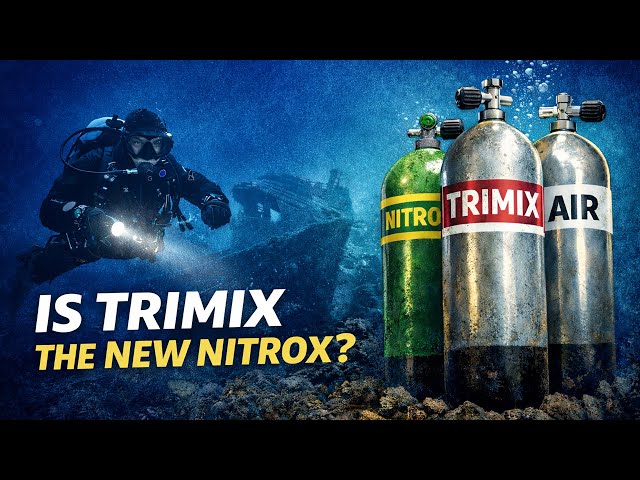
Once upon a time, nitrox was “dangerous tech gas” that normal sport divers weren’t supposed to touch. Now it’s just… sensible. In this video I’m asking whether trimix diving is about to go through the same cultural shift.
Using BSAC’s new Deeper Diver course as a case study, I look at how helium is being reframed from a badge of technical identity to a risk‑management tool for deeper dives, especially on wrecks in the 35–50m range.
We’ll cover:
– What BSAC Deeper Diver actually is (and what it isn’t)
– How it extends the existing Sports Diver qualification to 50m
– How its approach to trimix compares to PADI, TDI and GUE
– Why gas density, narcosis and CO₂ matter more than raw depth limits
– Where I think the course gets it right… and where it really doesn’t
This isn’t a “how to” trimix video and it’s not course marketing. It’s a thought piece about education, culture, and how we think at depth. Nitrox became normal when the mystique was stripped away and divers were simply taught to understand it. Deeper Diver is trying to do something similar for helium – without forcing anyone into a fully technical system.
Full transparency: my name appears in the BSAC Deeper Diver instructor manual, which is exactly why I think it’s important to be openly critical as well as supportive of its intent.
━━━━━━━━━━━━━━━━━━━━━━
*Highlights*
00:00 Is Trimix the new Nitrox?
02:50 What is the Deeper Diver course?
05:00 What does it allow?
Show More Show Less View Video Transcript
0:00
Try mix has always been treated as
0:03
something other in diving. It's
0:06
something technical. It's something
0:08
specialist. It's something you can only
0:11
touch once you've crossed an invisible
0:13
line. But Bezac's new deeper diver
0:16
course does something genuinely
0:19
different. And I think it mirrors what
0:22
happened when nitrox first became
0:24
mainstream.
0:25
Now, if that comparison holds, this
0:29
course could quietly change how we think
0:32
about helium and who gets to use it. In
0:36
this video, I'm going to do five things.
0:39
First, I'll explain what the Bezac
0:41
Deeper Diver course actually is and what
0:44
it isn't. Second, I'll explain how it
0:48
extends what divers are already
0:51
qualified to do at sport diver level all
0:54
the way down to 50 meters.
0:57
Third, I'll compare it to how Tryix is
1:00
taught by other agencies, Paddyy, TDI,
1:03
and GU because that context really
1:06
matters.
1:08
Fourth, I'll explain why I think this
1:11
represents a genuine cultural shift,
1:14
similar to what happened with Nitrox in
1:17
the early '9s. And finally, I'll talk
1:20
honestly about what I don't like about
1:22
the course, because obviously no
1:25
training program should be above
1:27
criticism. If you're someone who
1:29
regularly dives beyond 30 or 40 m, this
1:32
one's worth sticking with. I think it's
1:35
easy for us to forget now, but nitrox
1:37
was once deeply, deeply controversial in
1:41
the late 80s and the very early 90s. It
1:44
was viewed as dangerous, experimental,
1:47
and not suitable for normal divers.
1:50
What changed wasn't the gas. It was how
1:53
divers were taught to think about it.
1:56
Nitrox all of a sudden stopped being
1:58
framed as a way to go deeper and started
2:01
being framed as a way to reduce risk,
2:04
less nitrogen loading, more safety
2:07
margins. And here's the crucial part I
2:10
think people forget. Nitrox didn't
2:12
become normal because everyone did
2:14
checkout dives. Most Nitro
2:17
certifications are academic only. You
2:20
learn gas analysis, maximum operating
2:23
depths, oxygen exposure, and planning.
2:26
And then you apply that knowledge to
2:29
dives that you're already qualified to
2:31
do. Today, even very, very junior divers
2:35
routinely use nitrox, and nobody
2:38
considers that technical diving or
2:40
unsafe or risky. It happened because the
2:44
thinking was normalized. Bezac's deeper
2:48
diver course feels to me like an attempt
2:50
to do the same thing. This is a
2:53
theoryled course. It consists of four
2:55
modules covering deeper diving
2:58
physiology, narcosis, cognitive
3:01
impairments, gas density, work of
3:04
breathing, decompression theory,
3:08
planning, redundancy, and decision
3:11
making.
3:12
Only after that knowledge is in place,
3:15
do the divers have the option of
3:17
progressive depth extending dives in 5 m
3:21
increments up to a maximum of 50 m.
3:26
Of course, that progression is
3:27
deliberately conservative. No big jumps,
3:30
no stacking multiple depth increases,
3:33
and no rushing experience. For me,
3:36
that's a really important part of the
3:38
conversation. A bezac sports diver is a
3:41
slightly unusual qualification. It
3:43
doesn't directly align to many other
3:46
agencies equivalent, but they are
3:49
qualified to plan and execute
3:51
decompression dives and can do depth
3:53
progression up to 40 m using air and
3:56
nitrox.
3:58
Historically, Bezac has always permitted
4:01
the use of air and then nitrox down to
4:04
50 m. So that's not new. But what is new
4:08
is our understanding. We now know more
4:10
about narcosis and cognitive
4:13
impairments. We know about gas density,
4:15
work of breathing, carbon dioxide
4:18
retention, and how performance degrades
4:21
at depth. The Bezac deeper diver course
4:23
doesn't suddenly give permission to go
4:25
deeper. It extends the qualification
4:28
gained at sports diver by giving divers
4:31
the understanding and the knowledge to
4:34
choose between air, nitrox and try mix.
4:38
Air and nitrox remain permitted. What
4:41
the course does is gives people the
4:44
information and the education to say
4:46
that there may be better options and
4:49
here's how to understand the risks. It
4:52
doesn't mandate helium. It educates
4:55
divers and that educational intent I
4:58
think is at the heart of this course.
5:00
Bezac explicitly allows tryix during the
5:03
progression dives but within strict
5:06
guard rails. Oxygen stays sensible so no
5:10
less than 20% no danger of hypoxic
5:14
mixes. Helium is capped no more than
5:17
40%.
5:19
Partial pressure of oxygen stays
5:21
conservative with a maximum of 1.4 four
5:23
bar. This is not hypoxic trrimix. It's
5:27
not about extreme depth. It's about
5:29
recognizing that narcosis and gas
5:32
density become increasingly important
5:35
factors the deeper that you go. In this
5:38
course, helium is being framed the same
5:41
way as nitrox was as a riskmanagement
5:44
tool, not a badge of technical identity.
5:48
Other agencies such as TDI and Paddyy
5:52
treat try as explicitly technical.
5:55
They're multiple gas courses with
5:58
switches and twin sets. And these are
6:01
excellent courses, but they're designed
6:04
to create technical try mix divers,
6:07
which is which is fantastic. But the
6:08
Bezac deeper diver course isn't trying
6:11
to do that. They have other courses for
6:12
that. It's targeting divers who are
6:15
already going slightly deeper. and
6:18
saying, "Let's improve how you think,
6:21
plan, and choose gas." Now, you might
6:24
say, "Well, isn't that what GU does as
6:27
well?" And it's absolutely a good point.
6:30
GU does normalize helium, but once
6:33
again, within a full technical system.
6:36
To access Helium in GU, you must pass
6:39
fundamentals to a high standards. You
6:41
must have their fixed equipment
6:43
configuration. you must use standard
6:45
gases and commit to a strict team-based
6:48
approach. I mean, that system works
6:50
extremely well for them, but it is kind
6:52
of all or nothing. The Bezac Deeper
6:55
Diver course isn't doing that. It's
6:57
offering something different. It's
7:00
giving understanding without requiring
7:03
the total system adoption. So, if you're
7:05
a Bezac deeper diver and you want to
7:07
stick Triix into your 12 L cylinder or
7:10
your 15 or your twin set, you can do any
7:14
of those things. You don't have to have
7:16
a twin set. You don't have to have a
7:18
decompression stage. You just have to
7:21
understand that putting helium in is
7:24
probably going to give you a slightly
7:26
more of a decompression penalty. And
7:28
when you do your planning, you need to
7:29
make sure you've got enough gas for
7:31
that. Now, there will be people out
7:33
there who consider this course to be
7:35
absolute heresy. They will think that
7:38
Triix can only be used in a GU
7:41
configuration twin set or you can only
7:44
dive Tryix if you've got a stage
7:46
decompression gas or you can only do it
7:49
if you're in a team or wearing a
7:51
rebreather or or whatever else it is.
7:53
And you know what? It's entirely fine to
7:55
have those views. Wouldn't it be dull if
7:57
everybody was the same? All I'm going to
7:59
say is 20 well maybe 30 years ago people
8:03
felt exactly the same way about nitrox
8:06
nowadays it's not a conversation
8:09
anybody's ever going to have and I think
8:11
that's where we're going to end up with
8:13
this we all know that depth changes
8:17
decision making it becomes more
8:19
difficult the consequences are more
8:21
significant you get task fixated coms
8:25
are degraded so this course is targeting
8:28
these failure modes directly by focusing
8:32
people on the knowledge of the
8:34
physiology, the planning and the
8:36
judgment before anything else. Now, one
8:40
thing I need to be honest about, my name
8:42
appears in this manual and I think it's
8:44
especially important that because of
8:46
that, I'm honest about the po parts of
8:48
the course I don't agree with. The first
8:51
issue is the entry level. deeper diver
8:55
currently sits a dive leader and
8:57
personally I think that's a mistake.
9:00
A sports diver is already trained and
9:03
qualified to do decompression diving.
9:05
There's nothing in the dive leader
9:07
syllabus that materially changes or
9:10
advances the understanding that has been
9:12
gained at sports diver level. There's
9:14
lots in there about leadership and
9:16
supervision skills which are really
9:18
valuable, but they're not related.
9:21
They're not part of what's happening
9:24
when you go to do deeper diving. A dive
9:26
leader is effectively the same
9:28
qualification as dive master in other
9:31
agencies. So for me, if a diver is
9:35
qualified to do decompression, they
9:37
should at least have the option to learn
9:39
why helium might make that diving safer.
9:42
The second issue, and I think this is
9:44
one that a lot of Bezac members will
9:46
have uh issue with, is the 45 course
9:50
pack. This is a four module theory
9:52
course. When you compare that to other
9:55
BAC courses with significantly more
9:57
content, it doesn't compare.
10:00
Particularly, I think that's important
10:02
if your aim is to educate and normalize
10:05
and make things safer. None of that
10:07
undermines the core idea, but I think
10:10
they are things that should have been
10:11
addressed. And obviously, there's still
10:13
time to do both of those and to to
10:16
change them, and I hope Boozak will. Now
10:18
moving back to where I started. Nitrox
10:21
became normal when education replaced
10:24
Mystique. Deeper Diver is attempting the
10:27
same thing with helium. It doesn't force
10:30
divers to use it. It teaches them why
10:33
they might want to. And that for me is
10:36
the whole point of it. As I've already
10:38
mentioned, I don't think it put it's
10:40
perfect, but I do strongly believe the
10:44
educational intent behind it is a really
10:47
important thing and one that I hope
10:50
other organizations and other agencies
10:52
will pick up on. If in 20 or 30 years or
10:55
possibly less, helium is just another
10:58
sensible tool for deeper divers. The
11:00
same way nitrox is today for well,
11:03
pretty much all diving. I think this
11:05
course will have done exactly what it
11:07
set out to do. And if we're still
11:09
arguing about it by then, for me,
11:12
something's gone badly wrong. I hope
11:14
you've enjoyed hearing my thoughts on
11:16
the Bezac Deeper Diver course. For those
11:18
who aren't Bzac members, you may have
11:20
found it quite interesting what a small
11:23
British training organization is doing,
11:25
how it's trying to do things a bit
11:27
differently. For Bzac members, please uh
11:30
what I would say is it is different.
11:32
It's not something that the organization
11:34
has done before. In my view, you should
11:37
get behind it and you should support it.
11:39
For people who've enjoyed this video, I
11:41
hope you'll have a look at some of my
11:42
other ones. I've got plenty more
11:44
containing my musings on a whole variety
11:46
of different subjects related to diving
11:49
or particularly technical diving. But
11:51
for now, that's it. I'm Dom Robinson,
11:54
Deep Wreck Diver, and I will look
11:57
forward to seeing you on my next video.
#Sports