Up next in 10


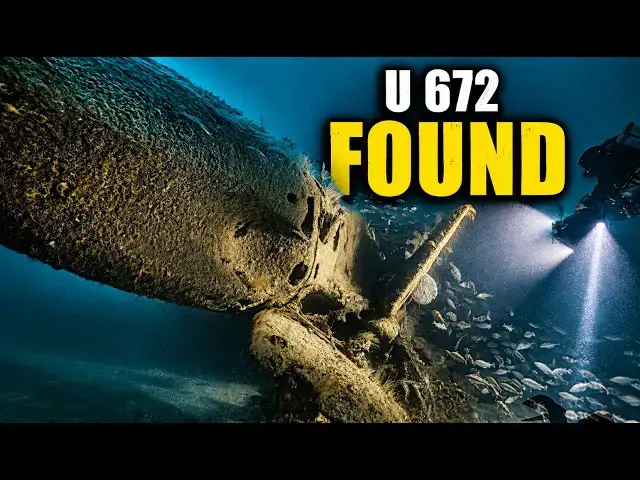
An unidentified submarine had been sitting on the seabed in the English Channel for decades, charted as a First World War sailing vessel. Then, in July 2026, Ian Taylor and the Skin Deeper team dived it and discovered something very different.
It was a German U boat.
A few weeks later, the Gasperados headed out aboard Integrity with Abyss Charters to see if we could identify it. The first attempt ended with a missed wreck and a very long look at an empty seabed. The following day, Guy Trees and I finally reached the submarine in 70 metres of water.
What we found pointed strongly towards one particular boat, U 672, a Type VIIC submarine lost in July 1944.
The problem was that according to the accepted historical record, U 672 was lost nearly 40 nautical miles away.
In this video I follow the evidence from the wartime records to the seabed, including research by Innes McCartney, the unusual position where U 672's entire crew was recovered, and the physical features we found on the wreck.
Those clues include the early ball float Schnorchel, the absence of later rescue dinghy containers, distinctive casing openings, and the remains of the extraordinary German Aphrodite radar decoy system.
I also speak to German U boat historian Axel Niestlé, who has spent decades studying German submarine losses and construction details. His assessment of the evidence gives us a very high degree of confidence that this wreck finally has its correct name.
U 672.
Huge thanks to Ian Taylor and Skin Deeper for sharing their discovery, to my fellow Gasperados, Axel Niestlé and Michael Lowrey for the research that helped make the identification possible, and to Ivor Farrell and Abyss Charters aboard Integrity.
Also
* Guy Trees for his epic thumbnail picture
* Steve Mortimer and Noel Rees for some video
━━━━━━━━━━━━━━━━━━━━━━
*Chapters*
00:00 Solving another U boat mystery
01:53 How many unidentified U boats are left?
03:22 Skin Deeper discovers a submarine
04:23 Why U 672 became the prime suspect
05:11 The position of U 672 was wrong
06:40 The survivors provide another clue
08:39 First attempt to dive the wreck
10:13 We try again
11:18 The submarine appears
13:21 Identifying a Type VIIC
14:38 The wartime story of U 672
16:02 The Schnorchel that became a vital clue
17:53 How Axel identifies individual U boats
19:17 Finding the Schnorchel
20:37 Dinghy containers and other clues
21:24 The distinctive casing openings
22:43 The mysterious Aphrodite cylinders
25:09 Why were all the hatches closed?
25:50 HMS Balfour attacks U 672
27:57 All 52 men survive
28:27 Axel explains the final attack
30:39 How divers are rewriting U boat history
31:42 Can we prove this is U 672?
32:39 Axel's verdict
32:44 Identification at sea using Starlink
33:05 Who discovered and identified the wreck?
36:38 The mystery is finally solved
━━━━━━━━━━━━━━━━━━━━━━
*ABOUT THIS CHANNEL*
Deep Wreck Diver explores shipwrecks, submarines, and sunken aircraft from around the world - combining technical diving with detailed wreck identification and historical storytelling. Every dive uncovers a piece of history lost to the depths.
━━━━━━━━━━━━━━━━━━━━━━
*Kit I Use*
Note, some of these are affiliate links so help support making my videos:
- Gloves are Ansell Alphatec 87-063 - https://amzn.to/4jDHhX4
- Main torch is an Orcatorch D630 - https://amzn.to/4jlT4tA
- Backup torch is an Orcatorch D710 - https://amzn.to/4jhddRk
- Drysuit is an O-Three Ri200 - https://www.othree.co.uk/drysuit-range/ri-2-100-drysuit/
- CCR is an AP Diving Inspiration (XPD) - https://www.apdiving.com/
- Backup computer is a Shearwater Perdix v2 - https://amzn.to/42FXZOW
- Reels are by Kent Tooling - https://www.divingproducts.co.uk/
- Cameras are Paralenz Vaquita
- Video light is NiteScuba NSV60 - NiteScuba NSV60 - https://s.click.aliexpress.com/e/_onHEKQZ
- Phone housing is Divevolk Seatouch 4 Max - https://s.click.aliexpress.com/e/_omJlNKL
- Stickers for gear by Dive Signs - https://www.divesigns.com/
━━━━━━━━━━━━━━━━━━━━━━
*Strobes*
I use two different strobes (also affiliate links)
-- Prozhaozhu 3000 Lumen Diving Strobe - https://s.click.aliexpress.com/e/_c3Qb99tF
-- Prozhaozhu 4000 Lumen Diving Strobe - https://s.click.aliexpress.com/e/_c3KmWqCN
- Jon clip - https://s.click.aliexpress.com/e/_oDqq0RW
━━━━━━━━━━━━━━━━━━━━━━
📱Follow My Socials!
Instagram 👉 https://www.instagram.com/deepwreckdiver/
Facebook 👉 https://www.fb.com/DeepWreckDiver
Buy Me A Coffee 👉 https://buymeacoffee.com/d33puk
Email 👉 [email protected]
Show More Show Less View Video Transcript
0:03
So, Dom, what did you see?
0:06
>> Well, after a little bit of uh uh
0:10
scootering, we uh we got on the sub. One
0:14
of the things I love most about wreck
0:16
diving is solving mysteries.
0:19
Finding something on the seabed is
0:20
exciting, but finding out what it is,
0:23
working through the history, comparing
0:26
what you can actually see underwater
0:28
with records that might be more than a
0:31
hundred years old, and eventually being
0:34
able to put a name to a wreck is for me
0:38
one of the best bits of diving. It's a
0:40
classic thing when the when the shot
0:42
isn't on the wreck, you kind of you look
0:43
for fish. And uh we didn't see any fish.
0:46
We saw a a large octopus.
0:49
>> Oh.
0:49
>> And then after the octopus, we saw some
0:51
fish. And then we came straight onto the
0:53
bow. And obviously the great thing about
0:57
uh submarines is they've got that lovely
0:59
kind of really sharp knifeike bow. So
1:03
that was the first thing that we came on
1:04
to. It was really nice actually,
1:06
especially, you know, cuz we at that
1:08
point weren't overly confident we were
1:10
going to find it. And then and then we
1:13
got on it and we we went along it. Now,
1:16
submarines are particularly interesting
1:19
because unlike merchant ships, there
1:22
were a very finite number of them. We
1:25
know which German Ubot existed. We know
1:28
the fate of actually the vast majority
1:31
of them. And over the past few decades,
1:34
divers, researchers have identified
1:37
almost all the German Ubot lying in the
1:40
English Channel. There really aren't
1:43
many mysteries left, which makes it
1:46
rather special when another one suddenly
1:48
appears. And that's exactly what
1:51
happened in this video. The the channel
1:54
is full of submarine wrecks, both from
1:56
the first first world war and the second
1:57
world war. But due to the efforts of
2:00
scuba divers during the last say 30
2:02
years when scuba diving became very
2:04
popular and the technical means were uh
2:07
giving the opportunity to go down to
2:10
depths which had before unable to to
2:13
reach. So uh most of the wrecks now to
2:18
be located or to be known in the channel
2:20
have been identified.
2:23
>> Now that's Axel Nissle. He spent about
2:26
four decades researching German yubot
2:30
losses and has examined an extraordinary
2:33
number of wartime photographs and
2:35
records. And as you've just heard, there
2:39
are very few new boats left in the
2:41
English Channel that haven't already
2:43
been found and identified.
2:46
So when an unidentified German submarine
2:50
turns up, there simply aren't that many
2:53
possibilities.
2:55
And because of Axel's expertise and
2:57
knowledge, he's one of those people that
2:59
you want looking at the evidence.
3:02
This particular wreck presented a very
3:04
interesting mystery because there was
3:08
one missing Uboat that should have been
3:10
somewhere in this general area. Except
3:14
according to the official records, it
3:16
wasn't. It was nearly 40 nautical miles
3:19
away.
3:22
The story began on the 25th of July,
3:24
2026.
3:26
Ian Taylor and the Skin Deeper team went
3:29
out to investigate a wreck that they
3:32
thought might be an undived steam ship.
3:36
The wreck itself wasn't new. It'd been
3:39
known to the UK hydrographic office for
3:42
years and had been tentatively
3:45
identified as an American sailing vessel
3:48
called the Hildigard, which was lost in
3:51
1917.
3:53
But when Ian and his guys reached the
3:55
bottom, something became immediately
3:58
obvious. This wasn't Hildigard. It
4:01
wasn't even a steam ship. It was a
4:03
submarine. They couldn't establish
4:06
exactly which submarine it was, but they
4:09
believed it was probably German and
4:12
probably from the Second World War. They
4:15
told us what they'd found and were
4:17
really happy for the Gasperados to go
4:20
out and to see if we could identify it.
4:23
As soon as I looked at where the wreck
4:25
was, one particular Yubot came to mind.
4:29
U672.
4:32
The reason was a piece of research I'd
4:35
read some time before.
4:38
Many people will be familiar with Inis
4:40
McCartney. He's one of the most
4:43
well-known yubot researchers probably in
4:46
the world and he's done a huge amount to
4:49
bring together the archaeology of the
4:51
German submarines around the British
4:53
Isles and associate them with the
4:55
wartime records. In his doctoral thesis,
4:59
he went through the official records of
5:01
yubot losses and compared what the
5:04
wartime and post-war documents said with
5:07
what divers were actually finding on the
5:09
seabed.
5:11
U672 presented an interesting problem.
5:15
It was supposed to have been lost at 50°
5:19
3 minutes north 2° 30 minutes west.
5:24
That was the position in the Royal Navy
5:27
records associated with an attack from
5:30
July 1944.
5:33
But Inis couldn't find a submarine
5:36
anywhere near that that matched the
5:37
description of U672.
5:40
And he concluded that there must have
5:42
been a simple reversal of two numbers in
5:46
the longitude in the official postwar
5:48
list. So, the intended position wasn't
5:51
2° 30 minutes west. It was 3° 20 minutes
5:57
west.
5:58
That might sound like a small
6:00
transcription error, but it isn't. It
6:03
moves the submarine more than 30
6:06
nautical miles west in the English
6:08
Channel, which means that our
6:11
unidentified German submarine suddenly
6:14
becomes a lot more interesting because
6:17
the wreck that Ian Taylor found was very
6:22
close to that location.
6:25
It was 37 miles from the traditionally
6:28
published loss location of U672,
6:31
but only about five from the revised
6:35
position from the uh reconstructed
6:37
historical records.
6:40
Aligned with that was another piece of
6:42
evidence.
6:43
After U672 was scuttled, her crew were
6:47
recovered in the water. Now the position
6:50
recorded in the Admiral T records for
6:52
those survivors was about 50° 1 minute
6:56
north 3° 20 minutes west
7:01
basically once again very close to the
7:04
corrected area. When these people were
7:07
taken on on board a rescue ship, it
7:10
turned out that they were submariners
7:12
which had um according to their
7:14
statement scuttled their boat. And these
7:17
were the crew, the complete crew of 672.
7:20
And the position they were picked up uh
7:23
was uh somewhat different from the
7:25
position which is in the historical
7:27
records about the submarine the under
7:29
submarine attack. Usually this is a a
7:32
difficult situation because we have one
7:35
minute in in uh in latitude and in
7:38
longitude between the two different
7:40
positions which is in the British
7:42
channel quite a distance. And it's
7:45
almost impossible to assume that a crew
7:48
was floating for some 40 miles during
7:50
the night with with a drift. Um, and
7:54
usually, uh, they they scuttled the boat
7:56
early on the 19th and they were just
7:58
discovered a few hours later. So, a
8:01
position difference in that size is is
8:03
unlikely.
8:04
>> It's almost impossible to explain how 50
8:08
men in small rubber dingies could have
8:10
traveled something like 40 mi west in
8:12
the English Channel. So, it makes far
8:15
more sense that the attack position was
8:18
wrong.
8:19
>> [sighs]
8:19
>> So before we even dive the wreck, I had
8:22
quite a high level of confidence that
8:25
U672
8:26
was a strong possibility.
8:29
But a possibility isn't identification.
8:32
We had to get down there and find some
8:34
evidence. And first we actually had to
8:37
find the wreck. We were diving from
8:40
Integrity operated by Abyss Charters out
8:44
of Plymouth with owner Iva Farrell as
8:47
our skipper. The first attempt was on
8:50
Saturday the 15th of August and we'd
8:52
picked quite a weekend to do it. There
8:55
were big spring tides and in this part
8:58
of the English Channel, well any part of
9:00
the English Channel, that's really
9:02
important.
9:03
The slack water can be very short, so
9:06
the timing has to be right. And if you
9:08
get it wrong, the current can turn what
9:11
should be a relatively straightforward
9:13
wreck dive into uh something that's very
9:16
different. Unfortunately, we got the
9:19
slack wrong. The shot wasn't on the
9:21
wreck. My buddy didn't have a scooter,
9:25
but I did. So, when we got to the bottom
9:28
of the shot and found it wasn't on the
9:29
wreck, I took a distance line and
9:32
started scootering up current following
9:35
the drag marks looking for the wreck. I
9:38
carried on until my reel was empty.
9:41
That's 60 m. But there was absolutely
9:43
nothing there. And at that point, there
9:46
was basically nothing else I could do.
9:49
So I canned the dive, turned around,
9:51
came back up, and that was it really.
9:56
End of the first attempt.
9:58
It was uh an interesting experience, but
10:02
we were all very keen to go and give it
10:05
another go the next day. We knew there
10:07
was a submarine.
10:09
We had a strong feeling that it was
10:12
U672.
10:13
So the very next day, we uh gave it
10:16
another go. This time I went in with Guy
10:20
Trees and Guy had a scooter. Once we got
10:25
down, unfortunately, the shot wasn't on
10:27
the wreck again, but this time we were
10:29
definitely on slack.
10:32
So Guy and I headed away from the shot
10:36
across what is basically a completely
10:38
featureless sandy seabed.
10:44
And for a while there was nothing. Then
10:48
I saw an angler fish. That's got to be a
10:50
pretty good sign because angler fish eat
10:53
other fish. So there's got to be some
10:54
around and fish by and large inhabit
10:58
wrecks.
10:59
Next thing I saw was an octopus on a bit
11:03
of rope. Once again, both good
11:05
indications that we're somewhere close
11:07
to a wreck. Then I saw fish. A lot of
11:10
fish. And if you do enough wreck diving,
11:14
you know that if you see a lot of marine
11:16
life, there's going to be a wreck
11:17
nearby. And then all of a sudden, out of
11:21
the gloom, the bow appeared. We'd found
11:24
it. And that's a great feeling having
11:27
scooted around on the seabed for quite a
11:29
long time. It was about 40 meters away
11:32
from the shot. It was lying on its port
11:35
side just as Ian had told us.
11:38
>> I depend on the divers. Without the
11:41
divers, I couldn't do anything because I
11:42
wouldn't locate any submarine wrecks on
11:44
the ground. So whenever an an
11:47
unidentified submarine wreck turns up, I
11:50
I really get excited because it's it's
11:52
it's work work to be or a mystery to be
11:56
solved. And this is is I love it.
12:00
We'd laid a distance line from the shot
12:03
to the wreck. So uh the other divers
12:06
could find it. Unfortunately, by the
12:09
time they got down and they they went a
12:12
bit of a way along the distance line,
12:14
none of them had scooters and they were
12:16
all worried about what might happen with
12:18
the currents. So, they aborted their
12:20
dive, got back to the shot, ascended
12:23
safely, which meant that only two of us
12:26
got on the wreck, and therefore the
12:28
responsibility was on us really to get
12:31
as much information about it as we
12:33
possibly could. At 70 mters, you don't
12:37
have a huge amount of time. Maybe 30
12:39
minutes, 30-ish minutes on the bottom,
12:41
and we'd already burnt quite a lot of
12:43
that looking for the wreck. That gave us
12:46
about 20 minutes to go over it, get as
12:49
much as we possibly could. Initially, we
12:52
started at the bow because that's where
12:54
we arrived. We then traveled mainly
12:57
along the port side, which was the side
12:59
closest to the seabed. We were looking
13:01
for everything we possibly could that
13:04
had fallen off it. We then went to the
13:06
stern, had a look at the proper and then
13:10
came back along the starboard side to
13:12
the past the conning tower and then
13:14
headed back to the bow. So, it was a
13:16
pretty quick once round. The first thing
13:20
was really obvious. This was a type 7C.
13:24
I've dived type 7C before boats before,
13:27
including U 1021 off the north coast of
13:30
Cornwall and U 1063, which is relatively
13:34
close to Plymouth. Once you've dived
13:36
these boats, you really recognize the
13:39
features. So, I knew almost instantly
13:43
that this was a type 7C.
13:46
>> Most of them were out in the open
13:48
Atlantic. And there was one other boat
13:51
671
13:53
which was known sunk in a different
13:55
position in the channel. There were just
13:58
five survivors. So always with survivors
14:01
on the on the surface. Uh you you know
14:04
much more about a submarine loss instead
14:07
of when boat went missing or it was sunk
14:10
with all of its crew all hands gone.
14:12
>> But those were the most common German
14:15
submarine of the Second World War. They
14:18
built hundreds of them.
14:20
So knowing the type wasn't conclusive,
14:24
what we needed were additional details.
14:27
And it's worth knowing that although
14:30
they were the they built hundreds of
14:32
type 7C's, each of them was uh slightly
14:36
different.
14:38
U672 was built in Hamburg.
14:41
It was laid down in Christmas Eve 1941,
14:45
launched in February 1943,
14:48
and commissioned in April 1943.
14:53
Throughout the war, it only had one
14:55
commanding officer, Oelu Tenant Zi
14:59
Ulavetsz.
15:01
He was actually born in Copenhagen in
15:03
1916, so was half Danish. Before taking
15:07
command of U672, he'd already gained
15:10
considerable yubot experience as a watch
15:13
officer aboard U564.
15:16
Once he took command, he spent the next
15:19
few months preparing it and the crew for
15:21
operational service. Successfully
15:24
completed three war patrols, but must
15:27
have been extremely disappointed that
15:29
they didn't manage to sink a single
15:31
Allied ship. What did happen though was
15:33
they got attacked several times. most
15:36
seriously by a Sunderland flying boat
15:39
from 423 Squadron of the Royal Canadian
15:42
Air Force. It depth charged U672.
15:46
And actually, in a surprising twist, the
15:49
aircraft was very nearly destroyed when
15:52
one of those depth charges detonated
15:54
prematurely.
15:56
U672 limped back into Suzair on the 12th
16:00
of May, 1944.
16:02
It needed repairs from that attack. And
16:04
while it was there, it received
16:06
something that would become one of the
16:08
most important clues on the wreck more
16:11
than 80 years later. It was a snorkel.
16:15
By 1944, the balance of power in the
16:19
submarine war had changed dramatically.
16:22
Allied radar and aircraft had made it
16:25
almost impossible for German submarines
16:27
to spend large periods of time on the
16:30
surface. The snorkel allowed a yubot to
16:34
remain submerged at periscope depth
16:36
while drawing air down into its diesel
16:39
engines. It meant that the yubot could
16:41
recharge its batteries without fully
16:44
surfacing. U672's first attempt to leave
16:48
port after receiving the snorkel wasn't
16:51
a success, and it returned shortly
16:53
afterwards to uh have some repairs done.
16:57
and it then sailed again on the 6th of
16:59
July 1944.
17:01
It was her fourth patrol, but would be
17:04
the last.
17:06
D-Day had taken place about a month
17:09
earlier, and the English Channel was
17:12
packed with Allied shipping and vessels,
17:15
and protecting all of that was an
17:17
enormous anti-ubmarine effort. Aircraft,
17:21
destroyers, frigots, radar, Azdic. For a
17:26
German Ubot trying to operate in the
17:28
channel in the summer of 1944, this was
17:31
an incredibly hostile environment.
17:34
Almost immediately, it was attacked
17:36
north of Roskoff.
17:38
Four depth charges were dropped. It
17:40
survived, but 5 days later, U672's luck
17:45
ran out. I'll come back to that final
17:48
action shortly because first, we need to
17:51
return to the wreck. type seven
17:53
seabboards uh to an normal
17:57
user would look all the same but there
18:00
were differences uh between individual
18:03
building yards and individual building
18:05
batches and what I have done during my
18:08
time in the last four decades I have
18:11
seen about 100,000 photographs of hubot
18:14
of German yubot during the war and I
18:17
compiled lists giving details for
18:20
individual batches or individual
18:22
building yards and that gives me the
18:25
opportunity to distinguish between
18:29
uh the the great mass of submarines or
18:32
type 7C submarines.
18:35
And what I'm always looking for is just
18:38
these details.
18:40
>> So that's really the key to the whole
18:42
identification.
18:43
You might think that two 7C boats are
18:47
identical, but Axel knows the minor
18:50
differences between them. based on where
18:52
they were built, when they were built,
18:54
and all those kind of things. He can use
18:57
the information that we find or we found
19:00
on this wreck. And with those details,
19:03
he can narrow down the identity to a a
19:06
very small number of Ubot, which in
19:09
conjunction with other information
19:11
allows you to identify with a very high
19:14
probability of success.
19:17
And one of the most important things we
19:19
wanted to find underwater was the
19:21
snorkel. We found it. You've already
19:24
seen it. The upper section had broken
19:26
away from its normal position and was
19:28
lying on the seabed. We could also see
19:31
the design of it,
19:34
particularly the distinctive ball float
19:36
arrangement.
19:38
U672 was fitted with her snorkel in the
19:42
spring of 1944 and that meant it had an
19:45
early type of snorkel head. Later
19:48
systems were different. They were better
19:50
basically. So we're looking for an early
19:52
snorkel installation of exactly the type
19:56
that we would expect on U672.
19:59
I focused on the snorkel system because
20:02
uh year 627 was a boat which was fitted
20:05
with a snorkel in spring 1944
20:09
and at that time only a specific type of
20:12
snorkel was in use. the so-called ball
20:15
float snorkel head which is different
20:17
from from later uh types and uh there
20:22
was no no radar um radar anti-raider
20:26
mats fitted to the snorkel head which
20:28
were fitted later on. So if the snorkel
20:31
head is without these items, you can
20:34
certainly say that it's an early snorkel
20:36
boat. There was another clue at the bow.
20:39
Or more accurately, there wasn't
20:42
something there that you would have
20:43
expected from a later boat.
20:46
Specifically, dinghy containers.
20:49
They started fitting external rescue
20:51
dinghy to most boats in late 1944, but
20:56
U672 was lost in July before that
21:00
modification became standard. There are
21:02
no dinghy containers on this wreck,
21:05
which is again exactly what we would
21:07
expect.
21:09
I had hoped to look underneath the keel
21:11
for another construction feature that
21:13
could potentially help identify this.
21:16
Unfortunately, the wreck is lying on its
21:19
port side, and that area is buried in
21:21
sand. So, that wasn't going to help us.
21:25
But toward the stern, there's something
21:27
much better. There are a series of
21:29
openings in the outer casing and these
21:33
varied between different yards and
21:35
different production batches.
21:37
On our wreck, there are three
21:39
distinctive rectangular openings
21:41
followed by a smaller circular opening.
21:44
We can compare them with wartime
21:46
photographs of U670 which was built in
21:49
the same yard and is part of the same
21:52
batch as U672.
21:55
When you look at the wartime photograph,
21:57
even from some distance away, you can
22:00
see those same three rectangular
22:01
openings and the smaller circular
22:04
opening at the end. This is a remarkably
22:07
good match, but once again, not absolute
22:10
proof on its own.
22:13
There's another characteristic though
22:15
that puts this wreck in exactly the
22:17
right production group. The propeller is
22:20
steel, and that's consistent with
22:22
wartime German production as shortages
22:25
increasingly forced the use of
22:27
substitute materials.
22:30
Disappointingly, we couldn't see any
22:32
surviving armaments, but pretty much the
22:35
whole outer casing around the conning
22:37
tower has disappeared, so the absence of
22:40
guns today isn't particularly
22:42
surprising. What was surprising was the
22:46
pile of steel pressurized cylinders that
22:49
I found just after the conning tower.
22:53
When I showed them to Axel, he knew
22:55
immediately what they were. They were
22:58
hydrogen cylinders associated with a
23:00
German radar decoy system called
23:02
Aphroditi.
23:05
By 1943, radar had become one of the
23:08
greatest threats facing German hubot.
23:11
Allied aircraft and warships could find
23:13
submarines at distances where visual
23:16
detection would have been impossible.
23:19
So the Germans developed a number of
23:21
devices intended to create false radar
23:24
targets. Aphroditi was remarkably
23:27
simple. You filled a balloon with
23:30
hydrogen. You suspended a load of strips
23:33
of material beneath it and those could
23:36
reflect radar.
23:38
The balloon would then be released to
23:40
create a false target while the
23:42
submarine attempted to escape in a
23:44
completely different direction. The
23:47
hydrogen for those balloons was carried
23:49
in high pressure steel cylinders after
23:52
the conning tower. More than 80 years
23:55
later, they're still there on the
23:57
seabed.
23:59
1943 when radar became the major the
24:02
major problem for the German Ubot when
24:05
uh these boats usually still operated on
24:07
the surface most of the time in the pre-
24:10
snorkel times uh the Germans were
24:14
looking for for solutions to in a way to
24:17
irritate attacking aircraft and that's
24:20
why they developed several kinds of
24:22
decoys and one of them was a decoy named
24:26
in in German Aphrodite which was nothing
24:29
else than a balloon with a line on it.
24:33
And uh to this line they had attached
24:35
aluminium strips. Uh and these aluminium
24:39
strips gave a kind of of radar echo a
24:42
false echo. And these balloons they
24:45
lifted up to 150 meters or so. They
24:48
could be easily discovered both from
24:50
aircraft radar and and ship shipbor
24:52
radar. And the Germans believed that
24:55
these decoys decoys would work to to
24:58
build
25:00
a forest of false echos. And now so the
25:04
real yubot just could escape underneath
25:07
of that.
25:09
There was one other thing about the
25:10
wreck which initially seemed strange to
25:13
me. Every hatch we could see was closed.
25:17
That's bizarre or was bizarre to me
25:19
because we know that U672 was abandoned
25:23
and deliberately sunk by her crew. So,
25:26
in my view, it was reasonable to expect
25:29
to find open hatches.
25:31
But that isn't how the crew actually
25:34
scuttled her. And to understand that, we
25:36
need to go back to what actually
25:38
happened on the day it was sunk. It was
25:42
submerged in the English Channel when it
25:44
was detected using Azdic by the British
25:47
frigot HMS Balfur.
25:50
Balfur attacked using a weapon called
25:52
Hedgehog, which is very different from
25:55
conventional depth charges. Instead of
25:57
being dropped behind a ship and detonate
26:00
at a preset depth, Hedgehog fires
26:03
forward a pattern of small explosive
26:06
bombs.
26:08
Unlike depth charges, they're contact
26:10
weapons. If they missed the submarine,
26:13
they didn't explode.
26:15
That meant if the attacking ship heard
26:17
detonations, it was a very strong
26:20
indication that something had been hit.
26:23
Balfur fired 24 hedgehog projectiles and
26:26
three of those exploded.
26:29
Inside U672, the crew heard the
26:32
explosions and discovered that the
26:34
submarine was taking on water.
26:37
The damage wasn't enough to destroy the
26:39
boat instantly, but it was serious.
26:42
U672 went down and remained submerged
26:46
while the crew tried to deal with the
26:48
flooding.
26:49
Balfur eventually lost contact, but from
26:52
their perspective, they knew they had
26:54
hit something, but didn't know exactly
26:57
what had happened beneath them. From the
27:00
German perspective, the situation was
27:02
was really bad. The boat was damaged.
27:06
Water was coming in and they knew there
27:08
was no realistic prospect of getting it
27:10
back to France. So the skipper made the
27:13
decision to abandon her. They came back
27:16
to the surface at night. The crew
27:19
launched the lifeboats, got into them,
27:21
and the [snorts] engineering officer
27:23
prepared to sink U672.
27:25
He opened all the flooding vents. All
27:28
the crew got out through the conning
27:30
tower and the engineering officer who
27:32
was the last man out closed the hatch
27:35
behind him.
27:37
That detail matters because we can see
27:40
that on the wreck, we can see all the
27:42
hatches closed. So rather than
27:45
contradicting what we see on the wreck,
27:48
it actually supports it. And then with
27:51
the crew safely clear, U672 disappeared
27:55
beneath the surface.
27:57
Remarkably,
27:59
every man survived and all 52 members of
28:02
them were eventually recovered and
28:04
became prisoners of war. Now, there's
28:07
very, very few submarine wreck stories
28:09
where you can say that. Nobody died with
28:12
U672 and her commander Ulavatz survived
28:16
not only the sinking but the war. He
28:19
lived to the ripe old age of 85, dying
28:23
in Copenhagen in 2002.
28:27
British side it looked totally
28:28
different. The commanding officer of HMS
28:31
B for he got under submarine contact
28:33
which is usually a ping on the AIC uh
28:37
so-called now sonar system and so he
28:40
immediately went into attack. What he
28:43
used in this attack was a a weapon
28:45
called hedgehog which just is being made
28:48
of 24 small rockets which are fired
28:51
forward from the attacking ship and they
28:54
they just explode on contact either with
28:57
a target or with a sea ground
29:00
and uh after some 14 seconds they
29:04
recorded three detonations
29:06
and another mass of detonations a few
29:10
seconds later. So the difference in in
29:12
in these detonations to them uh made
29:17
them believe that the first three hit a
29:19
kind of target which was above sea
29:21
ground and the rest exploded on the sea
29:23
ground. Uh so they searched for the
29:27
submarine or for the contact thereafter
29:28
but they couldn't reestablish any
29:30
contact with with the target and so they
29:34
sooner or later left the area because
29:36
they were under orders to continue their
29:38
operations. However, the commanding
29:40
officer of course was convinced he sent
29:42
a submarine because he said, "Well, we
29:44
have hit something and this could not
29:46
have been anything else like a
29:47
submarine." And so it went off. Usually
29:51
uh without these uh um without these
29:55
survivors being picked up, the
29:57
admirality would have considered this
29:59
attack as a
30:03
well not as a promising attack because
30:05
what was lacking was uh reestablishing
30:08
contact oil on the surface or at best
30:12
the captain's head. Nothing was present
30:14
at that. So they would have come to the
30:16
result that the attack was could have
30:18
been a submarine w but without any
30:20
result. And this is simply showing the
30:24
difficulty in assessing anti-ubmarine
30:27
contexts correctly because at that time
30:30
you just couldn't dive down there and
30:32
check whether there was a wreck or not.
30:34
You simply did not have the time and the
30:36
the opportunities to do so.
30:39
U672 is also a good example of how our
30:43
understanding of yubot losses has
30:44
changed since the war. At the time, an
30:48
escort might get a contact, attack it,
30:50
hear explosions, and then lose contact.
30:53
Had they sunk a yubot, damaged one, or
30:56
attack something else entirely? After
30:59
the war, intelligence officers had to
31:02
match hundreds of attack reports with
31:04
German records of missing submarines.
31:07
inevitably a lot of them were wrong.
31:10
That changed when people started
31:12
reaching the rerecks. Suddenly you could
31:15
look at what was on the seabed. You
31:17
could compare it with the history and
31:21
that is exactly what people like Axel
31:24
Nissle and Inis McCartney have been
31:26
doing for decades.
31:29
Inis identified an error in the accepted
31:32
position of 672.
31:34
And now we have a type 7 C wreck in
31:37
almost exactly the area his research
31:40
suggested.
31:42
So can we be absolutely certain that
31:44
this is U672?
31:46
The short answer is no. In an ideal
31:49
world, we'd have a set of numbers
31:52
stamped into a bronze screw or prop. We
31:55
don't have that. So, the identification
31:57
of this wreck as U672 doesn't rest on a
32:01
single thing. It's a type 7C. It's got
32:05
the correct snorkel. It doesn't have the
32:08
later dinghy containers. The holes in
32:10
the casing match ones that we know
32:13
similar submarines built in the same
32:15
yard have. The wreck position fits in
32:18
with what we think we know. where the
32:20
survivors were picked up. That error in
32:24
the transcription of the attack report.
32:27
So, it's a load of evidence. We also
32:30
know that there's no other possible u
32:33
votes in this area. When Axel put that
32:36
all together, this was his conclusion.
32:39
>> In this case, we are almost certain with
32:41
90 95% that the identity is correct.
32:44
>> Another great thing was that the
32:46
identification happened remarkably
32:48
quickly. Once our decompression had been
32:51
complete and we were back on board
32:53
integrity, we sent the key images to
32:55
Axle using Starlink and within hours,
32:59
our unidentified submarine had a number
33:02
U672.
33:05
The first dive on the wreck that we
33:07
currently know about was made by Ian
33:08
Taylor and the Skin Deeper team. They
33:11
discovered what they'd thought to be a
33:13
merchant ship was actually a German
33:15
submarine and shared what they'd found
33:17
on social media. They gave us the
33:20
details and the gasperados returned and
33:23
gathered the evidence.
33:31
ating the record of 672 is a major step
33:34
forward in terms of confirming its loss,
33:37
confirming its its wreck position and
33:40
just making way for other discoveries in
33:42
the channel area elsewhere.
33:47
>> So, Dom, what did you see?
33:51
>> Well, after a little bit of uh uh
33:54
scootering, we uh we got on the sub,
33:57
which was really really nice. Uh
34:02
>> it's a classic thing when the when the
34:03
shot isn't on the wreck, you kind of you
34:05
look for fish and uh we didn't see any
34:08
fish. We saw a a large octopus.
34:10
>> Oh.
34:11
>> And then after the octopus, we saw some
34:13
fish and then we came straight onto the
34:15
bow. And obviously the great thing about
34:18
uh submarines is they've got that lovely
34:21
kind of really sharp knifeike bow. So
34:24
that was the first thing that we came on
34:26
to. It was really nice actually,
34:27
especially, you know, cuz we at that
34:30
point weren't overly confident we were
34:32
going to find it. And then uh and then
34:35
we got on it and we we went along it and
34:37
there's actually more of the casing
34:40
there than I thought there was going to
34:41
be. Um on the port side, which is the
34:44
the side that's resting on the seabed,
34:46
we I think I'm I'm pretty certain I
34:49
found the remnants of the uh top of the
34:52
snorkel. So where the um you could see
34:56
where it opened to let the air in and
34:57
everything.
34:58
>> Yeah.
34:58
>> Um my understanding is that will be
35:00
really useful for identifying it.
35:03
>> So so uh that was good. From there I
35:05
kind of went back on the seabed and was
35:08
looking for some sort of gun. There's no
35:10
deck gun. I couldn't see any sort of
35:13
anti-aircraft gun, but what there were
35:14
was these really interesting tubes. Um
35:17
and I've got some good video of those.
35:19
And once again, I'm hoping that Michael
35:21
and Axel will be able to give us some
35:23
information on what they are, and maybe
35:25
they'll be helpful. Uh, we then went to
35:27
the stern, had a look at the prop. I did
35:30
have a bit of a go at scraping some of
35:32
the prop with my knife, but um, might be
35:35
wrong, but they they almost look as
35:37
though they are iron the props. Okay.
35:40
Uh, which which was interesting. Um, and
35:42
then came back along the top of it. Um,
35:45
looking for bits and pieces. Uh, one of
35:48
the things that was interesting is all
35:49
the hatches are closed as far as I could
35:52
tell. I had a particular look at the one
35:54
on the top of the uh the fin on the
35:55
conning tower closed. Um,
35:58
>> life rafts.
35:59
>> Uh, I did look at for life rafts in the
36:01
bow. Didn't see any life rafts. So, it
36:03
does look as though they've gone. I
36:04
mean, if this is use 672, u it would
36:08
appear to me that they've they've got
36:09
off they've got out they've closed all
36:11
the hatches and maybe that's in order to
36:14
prevent anybody getting back in it or,
36:16
you know, maybe prevent divers getting
36:18
in it or something like that. I don't
36:20
know. But um and then from there, yeah,
36:22
went back um scooted back to the shop,
36:24
came up and uh I mean, I'm guessing
36:27
nobody else got on it, which is which is
36:29
pretty disappointing, but you know, I
36:31
guess at least we did. So hopefully
36:32
we've got enough to idea.
36:34
>> Great stuff. Get out your suit and have
36:35
a look at your video.
36:37
>> Thanks. What a fantastic result and some
36:40
great teamwork in an area of diving
36:42
where frankly that isn't often the case.
36:46
Lots of people, different disciplines,
36:49
different information bringing it
36:51
together to get one success.
36:55
U672
36:56
successfully completed three patrols at
37:00
a time of the war when that was far from
37:02
given. It never sank an Allied ship,
37:06
which a lot of people might consider to
37:08
be extremely unsuccessful. On the plus
37:11
side, and I'm sure they felt this way,
37:13
all the crew survived, and that was
37:16
definitely something that didn't happen
37:18
very often. For more than 80 years,
37:21
history had recorded it as being in the
37:24
wrong place.
37:26
While the wreck itself had been mistaken
37:28
for a sailing ship, now we know what it
37:31
is. And for me, that's one of the best
37:34
things about wreck diving. Finding the
37:36
clues, going back into history, and
37:39
occasionally, not often as I would like,
37:42
but occasionally solving a mystery that
37:45
has been sat on the seabed for decades.
37:48
There's very few unidentified German
37:50
Ubot left in the English Channel. What I
37:53
can absolutely say is that U672 is no
37:57
longer one of them. Thanks very much as
38:00
always for listening. I hope you've
38:02
enjoyed this story. I'm Dom Robinson,
38:05
Deep Wreck Diver, and I'll look forward
38:07
to seeing you on the next one.
38:38
Heat up here.
Sports