Up next in 10


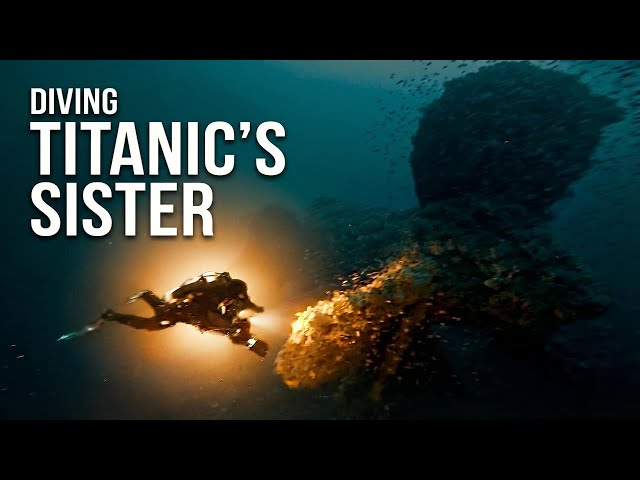
The HMHS Britannic — Titanic's lesser-known sister ship — lies at 120 metres in the Aegean Sea. In this dive, we go straight to the stern: the site of one of maritime history's most haunting footnotes.
When the Britannic sank on 21st November 1916, her massive bronze propellers were still turning. Survivors had already lowered themselves into lifeboats — and those lifeboats drifted straight into them. Thirty people who had survived the initial sinking were killed in minutes.
One of those caught in the chaos was Violet Jessop — a nurse who had already survived the Titanic disaster four years earlier. She was pulled under, struck her head on the keel, and surfaced alive. The propellers you see in this video are the same ones that nearly ended her remarkable story.
At 120 metres, the HMHS Britannic is the world's largest diveable shipwreck. This is the first of three videos I'm making from this expedition. We start here — at the stern — because to understand what this ship was, and what she cost, you have to start where it ended.
Thanks to Henry Castellanos for organising this incredible trip and Dr Jorge Burgueno for some of the video!
AP Inspiration overlay courtesy of @EricStott - https://www.youtube.com/playlist?list=PLO1a9t5K-YjzAfxiGYF1qLBgmynxB24Pk
📌 Part 1 of 3 — HMHS Britannic Expedition 2026
━━━━━━━━━━━━━━━━━━━━━━
*CHAPTERS*
00:00:00 HMHS Britannic!
00:02:45 Dropping Onto the Wreck
00:06:30 First Sight of the Stern
00:11:10 The Propellers Up Close
00:16:40 What Happened Here in 1916
Show More Show Less View Video Transcript
0:00
Today, we're diving the Britannic.
0:03
Absolute bucket list wreck. One I've
0:06
been looking forward to for a very, very
0:08
long time.
0:10
I know it's going to be great, and I
0:11
haven't even got in the water.
0:13
Where is it? Sweet.
0:14
>> in 10 seconds. I will give you my
0:16
signal, okay?
0:24
So, in three, in two,
0:27
in one, go.
0:39
I can't begin to tell you how excited I
0:41
am at this particular moment of this
0:44
dive.
0:45
You can see there that I'm starting the
0:48
descent onto the Britannic.
0:51
One of the
0:53
best-known shipwrecks in the world.
0:57
Certainly the largest, most intact
1:01
shipwreck that can be dived without
1:03
needing to be in a submersible or
1:05
something like that. This is a wreck
1:07
that is associated with some of the
1:09
best-known names in
1:11
diving and and technical diving. So, all
1:14
the way from Jacques Cousteau in the
1:16
1970s,
1:17
Kevin Gurr in the '90s when it was, I
1:21
guess, first dived in the modern era,
1:23
people like Leigh Bishop, John
1:25
Chatterton, Richie Kohler, Evan Kovacs,
1:28
all those kind of people. Absolute
1:30
legends.
1:32
I wouldn't put them myself in that
1:33
category, of course, but today I'm going
1:36
to join them in diving the Britannic.
1:39
It's
1:41
it's just incredibly exciting.
1:44
You can see what's happened is that
1:47
we've dived off the rib we're using Kea
1:50
Divers
1:52
on the island of Kea in Greece.
1:54
They brought us out here on a pair of
1:57
ribs. There was four divers in total
1:59
plus some safety divers.
2:02
Now one of the interesting things about
2:04
diving the Britannic is that it's
2:07
mandatory to have a a guide with you. So
2:10
there's actually three of us as divers
2:12
and George who is the guy you can see in
2:15
the orange drysuit, he was our guide.
2:18
With four of us on that rib, space was a
2:20
bit tight. So the way that we managed
2:23
that was to put two divers in first of
2:25
all. That was George and Greg. And then
2:28
the second pair of divers which was
2:30
Henry and myself
2:31
got in as quick as we could afterwards.
2:34
The first pair of divers waited on the
2:36
line as you've seen.
2:38
And then when we joined them, you've
2:40
seen already George had a quick check,
2:42
made sure everyone was okay, and then
2:44
started the descent down to the wreck.
2:47
I guess one of the other interesting
2:48
things that you'll have probably noticed
2:51
is that I've got two working video
2:53
cameras on this dive. I've got my
2:55
parallel lens on my helmet on the side
2:57
of my head and then I've got a GoPro
3:00
mounted on the front of my scooter and
3:02
you saw me turning it on and moving my
3:04
video lights out on the arms and
3:06
everything ready for the dive.
3:08
And what I'm going to do through the
3:10
dive is I'm going to switch between the
3:13
parallel lens and I'm going to and then
3:15
occasionally show you some GoPro footage
3:17
as well. So you can see there I've just
3:19
switched to the GoPro footage. I think
3:22
it'll be pretty obvious when that
3:23
happens because all of a sudden you
3:25
won't see my hands, you won't see the
3:27
front of the scooter, you won't see the
3:28
video lights or anything like that. But
3:30
I think what you'll probably do is
3:33
get more of a feel for what's going on.
3:36
The other thing of course to mention is
3:37
I've got my inspiration handset on the
3:41
the left hand side and that will run all
3:43
the way through so you can see my PO2s,
3:45
you can see the TTS, you can see the
3:46
depth, you can see the dive time, all
3:49
that kind of stuff. And I know loads of
3:51
people are all
3:52
always interested in that. So hopefully
3:54
it will give you the sense of what's
3:56
happening with the dive. And as always,
3:58
I just want to say thank you to Eric
4:00
Stotts, who is the man who created
4:03
effectively the system for getting
4:05
information from my handset into
4:08
telemetry overlay and then putting it on
4:10
the screen where you can see it. I'll
4:11
put a link to all his gear to his
4:14
channel rather in the comments.
4:16
So if you're interested in doing this
4:17
yourself, that's how you can find out.
4:20
The plan for this dive was to go and
4:22
visit the stern, in particular the
4:23
props, and you're going to see those
4:26
a bit more later on. It's also I think
4:29
an opportunity for George to have
4:31
another look at us, us to have a look at
4:33
the system and get ourselves familiar
4:35
with it because we're going to be doing
4:37
a few more dives on the Britannic.
4:39
And one of the things I think that's
4:40
probably interesting to note at this
4:42
point is how long the descent is taking
4:45
us.
4:46
In some of my other videos, you may have
4:48
seen me scootering down as quickly as I
4:50
possibly could to get to the to the
4:52
wreck, whereas in this one, it's
4:54
actually taking a reasonable amount of
4:57
time.
4:59
Now, I think that's just the way that
5:00
George likes to do it. He's relatively
5:03
concerned about oxygen spikes and those
5:05
kind of things, which is absolutely
5:07
right and proper. I think it's also part
5:10
of his thing is just to allow people
5:12
to not feel flustered. They can get down
5:15
in their own time so that when they
5:16
arrive at the wreck, they're not in a
5:19
particularly
5:20
bad way. So, that makes that makes a lot
5:22
of sense. And as always, you know, when
5:24
you're diving somewhere else and you're
5:26
diving with someone else,
5:28
it's important to understand their
5:29
procedures and adapt to them. So, that's
5:32
what's going on. The other thing that
5:34
you might have noticed is actually quite
5:35
a lot of line in the water.
5:38
And I think that's
5:40
because
5:41
one of the things that they have to do
5:43
when they shot the wreck is have line
5:46
for the seabed, which is about 120 m.
5:49
They probably have a bit more so 130 m
5:52
of line which is great if you miss the
5:54
wreck, but if you hit the wreck and as
5:57
we'll see in this particular case that's
5:58
what's happened.
6:00
The top of the wreck is 85 90 m so you
6:03
end up with 30 odd meters of spare line
6:06
in the water.
6:08
And that's another thing that's making
6:09
this descent slow. We're not going
6:12
vertically down, we're going down at an
6:14
angle.
6:15
So the distance is much further and
6:17
therefore you're going it's going to
6:19
take you longer to get to the wreck.
6:23
There's a few things that Britannic is
6:25
very famous for. One is having
6:28
unpredictable currents.
6:30
So the wreck lies in the middle of a
6:32
shipping channel.
6:34
A really busy ship shipping channel and
6:36
the currents pick up and die down.
6:40
You know, for reasons that nobody can
6:42
completely predict. On this trip we did
6:44
three dives. Two of them we had really
6:47
strong currents near the surface and
6:50
nothing at the bottom.
6:52
This one wasn't like that. We had a
6:55
little bit or a bit a bit of current on
6:57
the bottom, but pretty much nothing on
6:59
the deco so
7:01
so that made it quite a nice
7:02
introduction to the wreck.
7:04
The other thing was
7:06
the shipping
7:08
and it was emphasized over and over
7:11
again to us
7:13
that we couldn't drift. We couldn't do
7:16
our decompression while we're drifting
7:17
and the whole setup for diving the
7:19
Britannic is done in such a way so that
7:22
divers stay on the shot line. Anybody
7:25
who's seen any of my lazy shot videos,
7:27
this is completely the opposite of that.
7:31
We're going to stay on the shot line
7:32
come what may and the reason is
7:35
basically because
7:37
the
7:38
they're concerned that in this busy
7:39
shipping channel if you start drifting
7:42
There is a real risk of a
7:45
big ship going through the top of the
7:47
deco station. And obviously
7:50
that would potentially kill all the
7:51
divers that are
7:53
decompressing there.
7:55
When we go diving, Kea Divers and the
7:58
local
7:59
controller of this area put a exclusion
8:03
zone around the dive site so that ships
8:05
know they have to go, you know, move to
8:08
the side of it. If we're drifting and
8:10
we're drifting at several knots,
8:12
that isn't going to work, which is why
8:14
the authorities, Kea Divers,
8:17
everybody is so concerned that we don't
8:20
start drifting. And the whole
8:22
decompression setup is designed to avoid
8:24
that. I'm going to talk about it a bit
8:25
more at the end of the video. And it's a
8:28
it's a really interesting system. I've
8:29
never seen anything like it before. I
8:32
was,
8:33
you know, a little bit skeptical. You
8:35
know, I was certainly interested to see
8:36
how it was going to work. Actually, it
8:39
worked really well.
8:40
Didn't so much need it on this dive
8:41
because there was very little current
8:43
near the surface, but the two other
8:45
dives that we did later on and that I'm
8:47
going to push videos out about later on,
8:49
actually the current became really
8:51
strong on the deco.
8:53
George, who's done this wreck
8:56
an awful lot of times,
8:58
said, "Yeah, the current was strong, but
9:00
he's actually experienced it much
9:02
stronger than we had it." And if that's
9:04
the case, then doing several hours of
9:06
deco would be a particularly challenging
9:09
experience. I think possibly one of the
9:11
the reasons why Britannic is still
9:15
considered to be such a challenging
9:17
dive,
9:18
100 m, 120 m
9:21
in fairly nice waters.
9:23
Okay, it's it's a bit colder maybe than
9:25
some of the other dives we're used to,
9:26
but certainly this is warmer than I than
9:29
I'm
9:30
normally have. That aspect of it wasn't
9:33
particularly challenging, but the bit at
9:35
near the surface, so the the
9:36
decompression decompressing in strong
9:39
currents, and getting in and out of
9:42
relatively small boats,
9:44
not ones that are purpose-designed for
9:45
this sort of stuff, that for me
9:47
certainly made the dive
9:50
pretty challenging, and I don't think I
9:52
was the only person who felt that way.
9:56
The good news is, after that long
9:57
descent, we have finally arrived at the
10:00
wreck.
10:02
It almost doesn't look like a wreck. It
10:03
almost looks like a seabed,
10:07
but you can see there is the kind of the
10:09
edge there.
10:11
It's
10:12
pretty difficult to describe how
10:15
incredible this moment feels, because
10:18
all of a sudden, in this one glimpse, as
10:21
you can see here, you get the magnitude
10:24
of the scale of this thing.
10:26
I'm afraid I'm not going to be able to
10:28
do much better than just say it is
10:31
really, really big. In fact, so big it's
10:35
almost difficult at this moment in time
10:37
to believe that you're on a shipwreck. I
10:39
mean, you can see there it disappearing
10:41
off into the distance. There's George.
10:43
You can see the You probably saw the
10:45
shot line sort of heading down to to lie
10:47
on the wreck, and it just seems to go on
10:50
for absolute ever.
10:54
All of us, I think, felt the same way,
10:55
which is
10:57
the the challenge involved in describing
11:00
something like this. You probably need
11:02
to be a poet or a you know, a well-known
11:05
author or something like that, just to
11:07
kind of
11:09
explain exactly how big it is. I'm
11:11
afraid I'm neither of those things. I'm
11:12
just a diver. I'm also a diver, I think,
11:15
who's realizing that he's got a problem
11:17
with one of his video lights, which is a
11:19
a bit irritating.
11:21
Um the one on the left, unfortunately,
11:24
I don't think I managed to get it on.
11:25
So, I You have to make do with one video
11:28
light.
11:29
The The good news is, as you can see,
11:31
there is so much ambient light down on
11:33
this wreck that actually don't really
11:36
need a video light although it will be
11:38
quite handy in a bit when I I do some
11:40
close-ups on some stuff.
11:42
In the sort of an effort to make up for
11:44
that you've probably seen that the the
11:46
torch on my left hand has also got a
11:49
video light mode so I'm going to be
11:51
using that to illuminate it.
11:53
As we go over the whole here you can see
11:54
a few things. One is there's the remains
11:56
of some previous shot lines on the
11:58
wreck. The other thing is starting to
12:03
you realize that they are everywhere
12:05
because of course this was a massive
12:08
passenger ship and all of these
12:09
portholes would be to cabins or living
12:13
spaces
12:14
something like that because where we've
12:16
landed is
12:18
I guess maybe 25%
12:21
further forward than the the stern. So
12:24
this is the back quarter of the ship
12:26
that we're going to see. Just up to my
12:28
left hand side here is the first class
12:30
promenade deck and our last dive of the
12:33
trip we actually scooted all the way
12:35
along there. It was probably the best of
12:37
the three dives but each of them was
12:39
great in its own way so I think it's
12:41
going to be the video that I released
12:43
last as well. So if if you want to see
12:45
that you're going to have to hang on and
12:47
watch a few of my other ones.
12:48
The other thing to note as as I go along
12:50
the top of the promenade deck here as
12:52
you look out to the left hand side there
12:53
you can see the lifeboat davits.
12:57
And but just before we get to those
12:58
you've probably seen the the plaque on
13:00
the on the side there. That is the
13:03
famous one left by Kevin Gear to
13:06
commemorate Jacques Cousteau.
13:08
It was put there in 1997 so it's been
13:11
down there 29 years
13:13
and you have a look at it it's really
13:15
clean. Now somebody may have come back
13:17
and cleaned it since then.
13:18
Anecdotally I also gather that it's
13:20
fallen off that part and has been picked
13:22
up and put back on there.
13:24
But whatever has happened to it it's in
13:26
really good order and and looks really
13:28
nice. And and I think it's important
13:30
that we as divers remember those
13:32
milestones, remember those pioneers,
13:35
frankly both Jack and Kevin, because
13:38
both of their achievements at the time,
13:40
given the technology and everything,
13:42
were were incredible.
13:44
You'll probably see here that
13:46
George is keeping us moving. He's the
13:49
the person who's monitoring the TTS on
13:50
the dive. He's making sure that we all
13:53
get back to the shot line, and that
13:55
nobody ever stays, that we've all got
13:57
the right amount of deco, and if
13:58
anything goes wrong, he's going to take
14:00
care of us as well. So, he's got he's
14:02
got a load of responsibility, which is
14:03
why, as you can see here, he's just
14:06
keeping an eye on everybody. So, he just
14:07
just checks back to make sure that we're
14:09
all following him.
14:10
Now, the plan for this dive was to do
14:13
what we're doing here, which is which is
14:14
to drop down a bit further forward of
14:17
the stern, and then drop over the side
14:20
and go to the props, which which I'm
14:21
going to do in a second. You can see
14:24
there I that's Greg in front of me with
14:26
his GBM, generic breathing machine,
14:29
front mounted, or chest mounted, I
14:31
guess, rebreather. He's diving in a side
14:34
mount configuration. Henry has got the
14:36
same rebreather, but he's diving it with
14:39
a pair of uh
14:41
uh twins uh twin 12 liters.
14:44
And interesting talking to those two
14:45
about the different strategies that they
14:47
use, and the way they configure them,
14:49
and all those kind of things.
14:51
Really quite an eye-opener for me,
14:52
because I'm much more used to people
14:54
diving back mount rebreathers. Chest
14:57
mounts aren't something that are
14:58
particularly
15:00
big in the UK. So, absolutely
15:03
fascinating to see the way they use
15:06
them. Also, they are manual CCRs, so
15:09
they are maintaining the PO2 themselves.
15:11
There's a needle valve, which is uh an
15:14
adjustable valve that effectively allows
15:18
a trickle of oxygen through the
15:19
rebreather, and you can adjust that and
15:22
uh depending on your own metabolic rate.
15:25
Anyway, enough of that because you can
15:26
see just coming up through the gloom
15:28
there the first of the propellers. This
15:31
is the
15:33
port prop. So Britannic had three props.
15:37
It had a three-bladed one on the port
15:39
and starboard and you can see one of
15:41
them here and then a four-bladed one
15:44
just in front of the rudder and we're
15:45
going to see that in a minute as well.
15:48
One of the things we wanted to do was
15:50
get a photo of ourselves with the prop.
15:53
So Greg and Henry are both IANTD
15:56
instructors. They've got a flag with
15:58
them. They wanted a photo with that by
16:00
the props.
16:01
And you know, frankly, why not?
16:05
The only thing with doing something like
16:06
that, of course, is that you have to
16:08
talk about it and agree it before the
16:10
dive because if you try and do it
16:11
underwater, it's just going to be an
16:13
utter utter cluster.
16:16
So we did that.
16:18
The other issue with it is that
16:20
it's also going to be slightly
16:22
problematic because it's no matter how
16:25
good you are and how efficient you are,
16:26
it's going to use it a relatively
16:28
reasonable chunk of your bottom time. So
16:31
what I'm doing here is I'm I'm sat by
16:33
the prop and I'm waiting for the guys to
16:35
come up to me. Henry is going to give
16:37
his GoPro to George. Greg as you can see
16:42
here is
16:43
and myself are both getting into
16:45
position for the photos.
16:46
And
16:48
once that transfer has happened, Henry
16:49
can come over. We're going to get the
16:52
picture all sorted.
16:55
Not much really for me to do other than
16:56
to wait here.
16:59
The other interesting thing perhaps you
17:01
can see is just as I'm looking at now in
17:03
the in the lower left, you can actually
17:05
see the rudder. You can see the
17:07
four-bladed prop.
17:09
Now my understanding is that during the
17:10
sinking
17:12
one of the famous things that happened.
17:14
So nobody actually died on the wreck,
17:16
but they let the lifeboats get away a
17:18
bit early and when that happened
17:21
two of the lifeboats were dragged into
17:22
the propellers, actually this one, the
17:25
port propeller.
17:26
And they were they were pulled in and
17:29
really sadly 30 people died. It's not
17:32
known exactly how many of them were in
17:34
those lifeboats, whether some of the
17:35
other ones were were people who weren't
17:37
in lifeboats or whatever, but yeah, 30
17:40
people really sadly died and this prop
17:43
that we're right next to was the cause
17:46
probably of the majority of those.
17:48
The other fascinating event associated
17:51
with this prop is that there's a lady
17:54
called Violet Jessop who was one of the
17:57
nurses on Britannic and she was in one
18:00
of those lifeboats and
18:02
as the
18:04
lifeboat was being dragged towards the
18:06
prop she jumped overboard and she later
18:10
wrote in her memoirs that she was hit on
18:12
the head by by one of those
18:15
by one of the blades of the prop. Now
18:17
she survived and actually her story is
18:19
incredible. But later on in life she
18:22
discovered she had a skull fracture or
18:24
she'd had her skull fractured and she
18:26
always associated it with the impact
18:29
from this prop, the port prop on
18:31
Britannic.
18:32
Her other claim to fame is that she was
18:34
also on the Titanic when it sunk
18:38
and served aboard Olympic as well. So
18:41
she has spent time on all three of those
18:44
ships. In fact, I think she was on
18:45
Olympic when it collided with HMS Hawke
18:49
as well.
18:50
So I guess you could say she was a very
18:52
lucky lady to survive all those three
18:55
incidents and
18:56
have fascinating stories. I guess the
18:58
other option is to say that she was
19:00
really unlucky because she was always
19:02
well on ships when stuff happened to
19:04
them. But she lived I think until the
19:07
ripe old age of 83, died in 1971.
19:11
Interestingly enough, the year that I
19:12
was born.
19:13
And if you're interested in learning
19:15
more about her, she wrote her memoirs,
19:17
which is called Titanic Survivor, but
19:20
also there's a whole load of stuff
19:22
online about Violet Jessop, I think,
19:24
because of her link with those three
19:27
incredible shipwrecks, the Titanic
19:31
and the Britannic, but also her
19:33
involvement with Olympic, which of
19:34
course is the one that survived and had
19:37
a long and
19:38
fruitful life until it was scrapped, I
19:40
think, in the 1930s.
19:42
The the good news is my discussion of
19:46
Violet and the talk about the prop has
19:48
allowed us to get through the taking of
19:50
the photo. You can see George is handing
19:53
the camera back over to Henry there.
19:55
There's There's Greg. Unfortunately,
19:58
photos aren't quite done because Henry
20:01
also wanted a photo of himself or some
20:04
video of himself by the prop. So, that
20:06
is the next item on my agenda to get
20:09
that uh to get that on. George,
20:11
meanwhile, is is is keen to crack on.
20:13
So, you'll probably see him heading over
20:15
to left, but but me and Henry are going
20:16
to spend a a couple of minutes trying to
20:18
get a photo for him. While I'm kind of
20:22
moving into position, if you have a
20:23
look, this This shot shows really well
20:25
the prop, the four-bladed prop with the
20:28
rudder below me there.
20:29
I've just come past it, and then I'm I'm
20:31
turning back and telling Henry that he
20:33
needs to needs to get in position for
20:35
the for the photo. The other prop, the
20:38
starboard one, is of course on the other
20:40
side of the rudder, on the other side of
20:42
the four-bladed prop.
20:44
I don't go down I didn't go down to it.
20:47
Um
20:48
it's one of those things There's a whole
20:49
load of stuff that I would quite like to
20:51
do if I was to come back to Britannic,
20:54
and one of the things is is to go back
20:56
and and get right down to the bottom.
20:58
So, we we never actually went down to
20:59
the seabed on any of the three dives.
21:03
And I think you could say, "Oh, you
21:05
should have done that." And you're
21:06
absolutely right. There's a whole load
21:08
of stuff that we should have done.
21:10
And I think that's probably something
21:12
you're going to hear through all of my
21:13
three videos. Me going, "Ah, yeah, I'd
21:16
like to come back and see some more of
21:17
this." Or I'd like to spend some more
21:19
time here or whatever. This shot though,
21:21
you can see that is the the stern of the
21:24
Britannic with obviously the prop going
21:25
underneath it.
21:27
I'm trying to encourage Henry to to get
21:29
round the other side of the of the prop
21:32
and to shine his his torch on it cuz I
21:34
think that will give us the best
21:36
possible result. It's it's something he
21:38
likes to do on
21:40
um shipwrecks is is just to get his his
21:43
prop photo. So,
21:45
I'm he's a guy who's who's done all the
21:46
organizing, put huge amount of work in
21:48
it. So, I'm really keen to do that.
21:50
Unfortunately, Greg has just kind of
21:52
photo bombed as a bit there, but the
21:55
good news is he's moved out of the way.
21:56
And there you go. I think that's quite a
21:58
nice
22:00
bit showing showing Henry with the with
22:03
the prop. What you You see I've got my
22:05
torch on it at the moment.
22:07
But once I turn it off like that, I
22:09
think that that produces a really nice
22:12
bit of
22:13
video and a really nice image. And
22:15
Henry's taken a couple of screenshots of
22:17
these and and run it through an AI
22:19
thing.
22:20
And it's absolutely sorted out the
22:22
colors. So, so that worked really nice.
22:24
He got his
22:25
He got his prop photo.
22:27
And once again, you can see here looking
22:29
down at the four-bladed prop with the
22:32
rudder to the right-hand side of it. You
22:34
can see George is up there by the stern
22:36
wondering why we're why we're not
22:38
coming, why we're not getting on. But
22:41
we've done the photos now, so so that's
22:42
really nice. And you can see there I'm
22:44
just getting down to get a bit of uh
22:46
footage of that four-bladed four-bladed
22:48
prop. I've got my my torch on it there.
22:52
There you go. I think that's uh
22:54
I think that's really nice. Absolutely
22:56
clearly see it. You can see the rudder.
22:59
And and looking up, you can see the the
23:01
counter-stern there, which
23:04
Yeah, I've dived some big wrecks. I've
23:05
seen some
23:07
beautiful sterns on wrecks,
23:10
and this this really
23:12
really stands out in my memory because
23:15
it's all there. It's all intact. It's
23:17
never been salvaged. It's not collapsed
23:19
in any way. It is The only thing that
23:22
has changed, really, is it's got all
23:25
this kind of marine growth on it, but
23:26
other than that,
23:28
it's not dissimilar to the day it went
23:31
down.
23:32
And it's a real privilege to dive a
23:34
wreck that is intact and as big as this.
23:39
I guess the the thing is that at some
23:42
point this is going to change. It is
23:43
going to collapse. It's going to turn
23:45
into
23:47
It's going to become very similar to all
23:48
those other wrecks that I dive, but
23:50
right now it isn't.
23:53
What you can see is is I'm just coming
23:55
round the side of of the stern.
23:58
And that's going to take me on to the
24:01
rather epically named poop deck. One of
24:03
the things that I asked before we did
24:05
this dive was whether there are any sign
24:09
of the bridge gear on the after docking
24:11
station.
24:13
Um George wasn't 100% certain, so I
24:15
should try to try to have a look, and
24:18
you'll see me doing that as I go over
24:20
here. So, this is a kind of specialist
24:23
specialist part of the ship, so all the
24:25
Olympic class
24:26
ships had them. In fact, most big ships
24:29
had them, so it was effectively a
24:32
station that ran the the width of the
24:35
boat, the beam of the boat, and on there
24:37
would be um
24:39
devices or controls that would assist
24:41
with the docking, so telegraphs and
24:44
helms and those kind of things, but I
24:46
had a quick look. I couldn't see
24:47
anything. That doesn't mean that they
24:49
they're not there, just means I didn't
24:52
I didn't see them, and none of the other
24:53
guys saw anything as well. It's one of
24:55
those, you know, yet another one of
24:57
those things. If I was to go back and I
24:59
was going to spend more time in the
25:00
stern, I would probably go down the
25:02
bottom and then come up the aft docking
25:04
station to try and see. I mean, another
25:07
thing I would love to do, oh man, how
25:09
would I love to go inside the Britannic.
25:12
You can just see there there is a large
25:14
opening.
25:16
It's one of a huge number that I saw
25:18
during the during the dives and they are
25:19
so inviting. I would have loved to have
25:22
gone inside them.
25:23
Lace them line, see what I could see.
25:26
Unfortunately, another one of the
25:29
uh restrictions when you dive the
25:31
Britannic, not only do you have to have
25:32
a guide, not only you're not allowed to
25:34
drift dive, but also you have to
25:37
uh or you're not allowed to penetrate
25:39
unless you have absolutely specific uh
25:42
clearance to do that. The only um thing
25:44
you can do is the promenade deck
25:46
promenade deck, which I'm going to do on
25:48
one of the one of the later dives.
25:51
Now, what I'm showing here is one of the
25:54
the cranes on the on the stern. I think
25:57
there was uh four
25:59
in this kind of area. That there's just
26:01
one of them. Obviously, it's on the port
26:02
side.
26:03
And I guess they were probably used for
26:05
loading cargo in and out. I'm not really
26:08
sure. Yeah, hopefully somebody will
26:10
watch this video and tell me what those
26:12
what those are for. There's another one
26:14
that we're going to see uh on the right
26:16
in a minute.
26:18
I think it's the nature of diving a
26:20
wreck of this scale and at this depth is
26:22
that your bottom time is so limited
26:26
that you have to be really selective
26:28
about what what it is that you're going
26:30
to see. And particularly for people like
26:32
us who've never dived it before,
26:34
we are we're just trying to get it into
26:37
our heads the layout of the wreck,
26:39
what's what's there. This is the
26:41
entrance to the promenade deck promenade
26:43
deck and you can see there's an anchor
26:45
there from a a previous dive with a load
26:48
of chain uh hanging down. So, I guess at
26:51
some point somebody should should should
26:53
come and get that, but
26:55
the reality is is that our dive is
26:57
nearly done. You're probably seeing my
26:58
TTS there is is getting close to 100
27:01
minutes. We're heading back along the
27:04
outside of the promenade deck. The the
27:07
davits for the the two
27:09
or life boat davits that I mentioned
27:10
earlier on are there. Obviously, one of
27:12
the big improvements that was made to
27:14
Britannic and Olympic after the Titanic
27:17
disaster was that they all carried an
27:20
awful lot more lifeboats.
27:22
With the Britannic, they they weren't
27:24
actually needed because it only had
27:26
about 1,000 people on board, only 1,000
27:29
people. That's still a huge number, but
27:31
far less than Titanic, which had, I
27:33
think, 2,200, 2,300 people when it was
27:37
on board. The Britannic was making its
27:40
way back into It was to pick up wounded,
27:43
so all the people on board were medical
27:45
personnel, ship's crew, those sorts of
27:48
things. There weren't any wounded people
27:51
on board, weren't any wounded soldiers.
27:53
In fact, one of the reasons that it's
27:55
sank so quickly
27:57
was that they had all the port holes and
28:00
all the windows open cuz they were
28:02
airing it all out ready to take on more
28:04
passengers.
28:06
Uh you know, that's that's very sad and
28:09
you know, I guess they should have known
28:10
they were in waters where submarines
28:12
were known to operate. The Burdigala had
28:15
been sunk a week before by a mine,
28:18
although they did think it was a
28:19
submarine. The fact is there was a it
28:21
was a high threat environment, I guess,
28:24
and maybe they should have been better
28:25
prepared. Anyway, they weren't and the
28:28
good news for us is we get to enjoy this
28:30
epic epic wreck. Although, not get to
28:33
enjoy the epic wreck anymore on this
28:36
dive because, as you can see, George has
28:38
taken us back to
28:40
the shot line.
28:41
One of the interesting things you might
28:42
have seen when we put our strobes on, we
28:45
were about at
28:47
meters. Here we are at 84. No sign of
28:50
the strobes. It's not until I look all
28:52
the way up there, you can see the
28:53
strobes. So, what's actually happened is
28:56
the guys above, when they're setting up
28:58
the deco station, there was a bit of, I
29:01
think, wind or or whatever, maybe a bit
29:03
of current up up shallower that has
29:06
pulled the shot line up away from the
29:08
bottom. So, all our strobes have gone
29:10
this much further up above the bottom.
29:13
So, when we were coming back to the
29:14
shot, we couldn't actually see the
29:16
strobes. It was only when I did what you
29:18
saw me do there, which is which is to
29:20
look up, that I actually saw them.
29:23
And I think this this confused us all
29:25
quite a lot. It's like, where are our
29:27
strobes? And one of the divers, I think
29:30
George was was telling him to go up. And
29:33
it was like, well, where's my strobe?
29:34
And then eventually George pointed up
29:36
and it's like, oh, yeah, yeah, there it
29:38
is. Um so, it was it was a really
29:40
slightly bizarre. I have had similar
29:43
things happen on other dives. I don't
29:45
know. I guess I just wasn't expecting it
29:47
on this one. But anyway, there you go.
29:50
Now, the more eagle-eyed amongst you may
29:53
have noticed that I've managed to switch
29:56
from high set point to low set point.
29:59
So, my PO2 is dropping. I don't know how
30:02
that happened.
30:03
It must have been uh
30:05
I must have hit the the middle button on
30:08
my handset and held it, which is what
30:09
you need to do to change the set point,
30:11
but probably while I'm messing around
30:13
with scooters and all those kind of
30:14
things. But as I'm ascending now, you
30:17
can probably see the the PO2 is starting
30:19
to drop. Well, it would drop anyway on
30:21
an ascent cuz the pressure is reducing.
30:24
But what should be happening is the
30:26
solenoid is kicking in to maintain it at
30:28
1.3. Actually, because I've told the
30:31
unit that the the set point is 0.7. I
30:34
didn't tell it deliberately. I I told it
30:36
by accident. So, the the PO2 is rising.
30:39
The solenoid is not doing anything about
30:41
that. And you can see that my PO2 is
30:44
falling down and down. I'm slightly
30:46
preoccupied, as you can see here, I am
30:48
sorting out strobes. I'm putting
30:51
everything away, so I simply haven't
30:53
noticed that my PO2 is falling.
30:56
There should have been
30:58
audio alarm, and there should have been
30:59
a flashing HUD indicator as well.
31:02
Uh for whatever reason,
31:05
I've missed both of those things, but
31:06
you can see, I think now that I've I've
31:09
picked it up, and I'm I'm finally
31:11
starting to do something about it.
31:13
I've pressed and held the middle
31:14
button, so the set point has gone back
31:16
up to 1.3, and instantly the solenoid
31:19
starts firing, starts chucking oxygen
31:22
back in, and is starting to sort out the
31:26
problem. You probably saw that my TTS uh
31:29
went up to about 145 minutes. That was
31:33
based on the the PO2 as it was at that
31:36
time, but because the solenoid is is
31:39
pushing the PO2 back up again, that is
31:42
dropping the TTS, and
31:44
that's good news, because
31:46
I'd much prefer to do, as I've got here,
31:48
112 minutes of decompression, rather
31:51
than 145 that I would have had to do
31:54
with that low PO2.
31:56
The other thing to talk about is the
31:58
relatively short run time. So, the total
32:01
run time is going to be just over 2
32:03
hours for this dive.
32:05
You might say, well, actually, you know,
32:06
why are you doing nearly three or two
32:08
and a half or whatever? And the reason
32:10
is because we weren't entirely concerned
32:13
about how everybody would cope with the
32:16
uh water temperature.
32:18
A couple of the other guys were finding
32:20
it quite cold on some of the warm-up
32:22
dives. So, even though they'd got
32:23
additional layers on, and they they'd
32:25
got heating systems on, and all those
32:26
sorts of things, they were still finding
32:29
it relatively cold. And clearly,
32:32
being cold during decompression is a
32:34
really bad thing. It's not only is it
32:38
uncomfortable, but you actually off-gas
32:41
much less well when you are cold. So,
32:44
it's actually really good safety reasons
32:46
for for being warm.
32:48
The other thing that's going on at the
32:49
moment as you can probably see I'm I'm
32:51
putting my PO2 up to 1.5. I've done that
32:56
on the
32:57
handset on my inspiration. I've just
32:59
done it on my Shearwater, so they're
33:01
both tracking each other. And once
33:02
again, you can see that's probably
33:04
accelerating the deco like that has
33:06
knocked off about 10 minutes off my TTS,
33:09
which once again is is really welcome.
33:13
The other guys were doing similar things
33:15
on their rebreathers.
33:17
Clearly no set point on a
33:20
manual CCR, so they were
33:22
making it happen manually.
33:25
George down below on his Liberty, he he
33:28
could do the same as me.
33:29
He interestingly enough runs slightly
33:31
more conservative gradient factors
33:33
than any of others any of us were
33:35
running, and therefore that's why I
33:38
think if you have a look you can every
33:40
now and again you can see him further
33:41
down. There you go. See him further down
33:43
the line than me.
33:45
Now, the other thing I said I'd talk
33:47
about is the deco trapeze. I'm going to
33:49
show you it
33:51
in a bit. But the first thing to kind of
33:53
note is that they the bottom of the
33:55
system looks a lot like a lazy shot. So,
33:57
you've got the main shot line that goes
33:59
down to the wreck. Then in their system
34:02
here they have about a 20 m line that
34:06
that that comes off, and that's
34:08
typically where you would normally on a
34:10
drifting lazy shot you would have your
34:12
tags.
34:13
In this case, what they have is a 50%
34:17
nitrox so that you can just see that
34:18
underneath the diver, and it's there's a
34:21
weight there as well just to keep the
34:22
whole thing
34:24
held down.
34:25
What there is above that is something
34:28
that looks a well, it's a triangle. The
34:30
triangle is made up of
34:33
two ropes that come out at about 45°
34:36
from the the main shot line, and then in
34:39
between those is a scaffolding bar, so
34:42
your your classic decompression trapeze.
34:45
To keep the scaffolding bar in position,
34:49
the lazy shot, so the rope that we're
34:52
looking at the moment is attached to the
34:53
middle of it, and there are also two
34:56
ropes that hang vertically down with
34:59
with chains on.
35:00
There's also two buoys on the surface
35:03
that are attached to each end of the
35:06
scaffolding bar, and you can see here
35:09
this is I I'm on the actual shot line
35:11
looking back. You can see the
35:13
scaffolding bar. You can see the the two
35:15
ropes that form the triangle. You see
35:17
the two ropes that go up there that are
35:19
going to the buoys, and then hanging
35:22
below those are the two ropes that have
35:24
got the chain on. There's also the rope
35:26
that the diver's holding on, which is is
35:28
just there to deal with a lot of
35:30
current. But, so I'm going to cover that
35:32
this uh system in a bit more detail in
35:34
another video. I I don't have
35:36
particularly great uh footage of it from
35:38
this one, but just to give you a feel.
35:40
And that whole thing is there just to
35:41
make sure that the divers can decompress
35:45
in the currents without drifting.
35:48
But, for me, my my dive is over, as you
35:50
can see I've cleared all my
35:51
decompression. I've got up to surface.
35:53
It's a beautiful day. There's two boats
35:56
there waiting to pick us up. The one
35:58
there with all the guys on is waving to
36:00
me and telling me that's that's where I
36:02
need to go. So, I'm going to let go of
36:04
the station. I'm going to There's a bit
36:06
of current, not too much, but a little
36:08
bit. I'm going to start to to drift
36:10
backwards towards the boat, and
36:12
as always at the end of any dive,
36:15
obviously looking forward to get on
36:16
getting back on the boat,
36:18
and really sharing the story of of of
36:21
what we've just had, and kind of trying
36:23
to trying to take it all in, cuz it's
36:26
been absolutely incredible, incredible
36:29
experience.
36:31
You can see there George on the boat. He
36:34
got some video footage of me and I'm
36:36
sure you can see there that I am looking
36:39
absolutely chopped to bits.
36:43
How was mate? Oh, brilliant.
36:47
Really really special. We need to We do
36:49
it do it better, eh? Yeah.
36:52
That was
36:54
absolutely
36:55
incredible.
36:57
When people say it's a big
36:59
shipwreck,
37:01
you know what?
37:03
It's a big big shipwreck.
37:05
There you go. That's the Britannic, all
37:08
done. Time to head back.
#Sports