Up next in 10


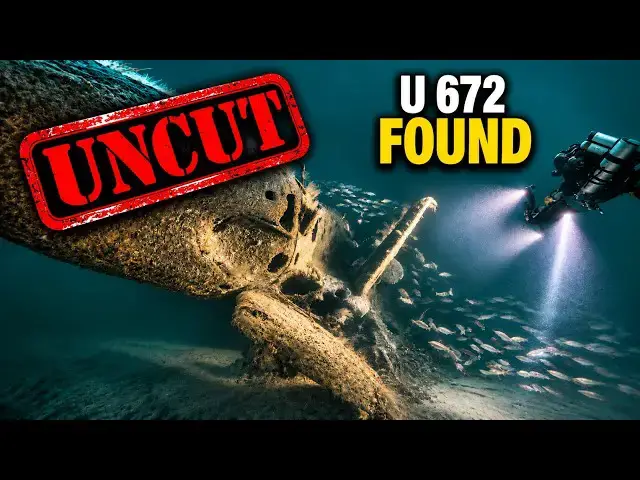
This is the full dive on U 672.
My original film about the #Gasperados identification of this German U boat became one of my most watched videos, but quite a few people pointed out that I had not actually shown the complete dive.
So this time you can follow the dive pretty much as it happened.
The shot misses the wreck and Guy Trees and I arrive at around 70 metres to find nothing but a grapple, drag marks and a featureless seabed.
We line off and start searching.
At first there is nothing. Then we find an anglerfish, followed by an octopus sitting on a piece of rope. More fish begin appearing and eventually, out of the gloom, the unmistakable bow of a Type VIIC German U boat appears.
From there I take you around the wreck and explain what we were looking for as we gathered the evidence needed to help identify it as U 672.
You will see the Schnorchel head lying on the seabed, the conning tower, the extraordinary Aphrodite radar decoy cylinders, the stern torpedo tube, the steel propeller and the closed conning tower hatch.
I also talk about what happened after the original U 672 video was released.
Families of two men who served aboard the submarine contacted me, including the family of her commander, Ulf Lawaetz.
Another crew member survived the sinking, became a prisoner of war, later married an English girl and remained in Britain. His descendants are now all English, creating a remarkable family connection to a German U boat lost in the Channel more than 80 years ago.
There are chapters below, so you can skip ahead if you want to go straight to the wreck.
U 672 was a German Type VIIC U boat lost in the English Channel in July 1944. Remarkably, all 52 members of her crew survived
Original U 672 identification film:
https://www.youtube.com/watch?v=HagGoyUAtrk
━━━━━━━━━━━━━━━━━━━━━━
*THANKS*
Thanks to
* Steve and Barbara Mortimer for their leadership of the Gasperados
* Ian Taylor and the other Skin Deeper divers who were the first people on U 672 since it sank
* Abyss Charters
* Dr Axel Niestle and Michael Lowrey
━━━━━━━━━━━━━━━━━━━━━━
*CHAPTERS*
00:00 Why I am showing the full dive
03:32 The dive begins
06:02 The shot misses the wreck
10:39 The first clues appear
12:18 We find U 672
14:00 Exploring the wreck
16:59 The Schnorchel and identification clues
18:54 The Aphrodite radar decoy system
22:17 Exploring the stern and propeller
25:09 Families of the crew get in touch
30:46 Leaving U 672
35:46 Decompression and the journey back
38:50 Back at the surface
━━━━━━━━━━━━━━━━━━━
*ABOUT THIS CHANNEL*
Deep Wreck Diver explores shipwrecks, submarines, and sunken aircraft from around the world - combining technical diving with detailed wreck identification and historical storytelling. Every dive uncovers a piece of history lost to the depths.
━━━━━━━━━━━━━━━━━━━━━━
*Kit I Use*
Note, some of these are affiliate links so help support making my videos:
- Gloves are Ansell Alphatec 87-063 - https://amzn.to/4jDHhX4
- Main torch is an Orcatorch D630 - https://amzn.to/4jlT4tA
- Backup torch is an Orcatorch D710 - https://amzn.to/4jhddRk
- Drysuit is an O-Three Ri200 - https://www.othree.co.uk/drysuit-range/ri-2-100-drysuit/
- CCR is an AP Diving Inspiration (XPD) - https://www.apdiving.com/
- Backup computer is a Shearwater Perdix v2 - https://amzn.to/42FXZOW
- Reels are by Kent Tooling - https://www.divingproducts.co.uk/
- Cameras are Paralenz Vaquita
- Video light is NiteScuba NSV60 - NiteScuba NSV60 - https://s.click.aliexpress.com/e/_onHEKQZ
- Phone housing is Divevolk Seatouch 4 Max - https://s.click.aliexpress.com/e/_omJlNKL
- Stickers for gear by Dive Signs - https://www.divesigns.com/
━━━━━━━━━━━━━━━━━━━━━━
*Strobes*
I use two different strobes (also affiliate links)
-- Prozhaozhu 3000 Lumen Diving Strobe - https://s.click.aliexpress.com/e/_c3Qb99tF
-- Prozhaozhu 4000 Lumen Diving Strobe - https://s.click.aliexpress.com/e/_c3KmWqCN
- Jon clip - https://s.click.aliexpress.com/e/_oDqq0RW
━━━━━━━━━━━━━━━━━━━━━━
📱Follow My Socials!
Instagram 👉 https://www.instagram.com/deepwreckdiver/
Facebook 👉 https://www.fb.com/DeepWreckDiver
Buy Me A Coffee 👉 https://buymeacoffee.com/d33puk
Email 👉 [email protected]
#U672 #UBoot #WreckDiving #TechnicalDiving #DeepWreckDiver
Show More Show Less View Video Transcript
0:00
The first video I made about our
0:02
identification of U672 had a fantastic
0:06
response. In fact, it's turned into one
0:08
of my most watched videos ever.
0:11
But quite a few people pointed out one
0:13
thing.
0:14
I never actually showed the full dive
0:17
sequence.
0:18
And that's relatively unusual for me.
0:20
It's one of the things I pride myself on
0:23
that I show you, you know, what the full
0:25
dive is like, you know, warts and all,
0:27
so you get to see, you know, pretty much
0:29
everything.
0:31
What this means is that this time on
0:34
this video I am going to show you
0:36
exactly what goes on. So that will
0:39
include the bit at the beginning where
0:42
the shot misses the wreck, we land on a
0:44
fairly featureless seabed, and then had
0:46
to line off and start searching.
0:50
That doesn't sound pretty exciting, and
0:52
of course it isn't, but it is the
0:54
reality
0:55
of what it's like when you do this kind
0:57
of diving.
0:58
You don't always drop straight onto the
1:00
wreck. Sometimes you have to
1:03
think about where you are, you have to
1:05
look at the seabed, you have to follow
1:07
the cues
1:09
and hope that you're heading in the
1:11
right direction. Sometimes you do,
1:13
sometimes you don't.
1:15
But that's one of the key things I think
1:17
I'm going to show you in this video.
1:19
I'm going to talk you through what we
1:21
were seeing,
1:22
how we started picking up signs that the
1:24
wreck was close by, and then what it
1:27
actually feels like when after searching
1:29
across an empty seabed something
1:31
suddenly appears out of the gloom and
1:34
you realize you found it.
1:36
Something else I'm going to cover in
1:38
this video is the two families who have
1:41
come forward to me since I released the
1:43
video saying that one of their relatives
1:46
served on U672.
1:48
And that includes her commander or the
1:51
family of her commander Olaf Lavetz.
1:53
Another families also got in touch and
1:57
their grandfather father
2:00
actually once he released from prisoner
2:02
of war camp, he married an English girl
2:05
and his descendants, of which they're
2:07
quite a few, are now all English,
2:09
although with a very German surname,
2:12
which I have to say is is a remarkable
2:14
connection, an incredible story
2:17
when you consider it all starts in a
2:19
German U-boat lost in the Channel more
2:21
than 80 years ago.
2:23
One of the things I would say is if
2:25
you're watching this video and there's
2:27
bits that you kind of lose interest in,
2:29
don't forget you can skip the search and
2:31
go straight to to different bits using
2:34
the kind of the chapters on the bottom.
2:37
I also going to link to the original
2:38
U672 video
2:40
which tells us the full identification
2:42
story, has that incredible interview
2:45
with Dr. Axel Nisley, and I'm also going
2:47
to put a a link to a playlist of other
2:50
submarine dives if you want to see more.
2:53
But for now, you can see I've been
2:55
getting kitted up.
2:57
Uh my buddy Guy Trees has just jumped in
2:59
the water in front of me and here I am
3:02
just getting in as well.
3:04
You'll see as I go through that I'm
3:05
switching between the different cameras.
3:07
I've got a power lens on the left, a
3:09
power lens on the right. I've got a
3:10
GoPro on my scooter which you're going
3:13
to see me turn on a bit.
3:15
At some point my overlay from my
3:18
Shearwater dive computer's going to kick
3:20
in and I'm going to talk about that as
3:22
well.
3:23
So loads of different things going on.
3:25
I hope you will enjoy this dive. I hope
3:29
you'll enjoy the fact that I'm showing
3:30
you the the full thing.
3:33
What you can see at the moment is I've
3:34
just started going down. There's Guy in
3:37
front of me. He's diving a JJ. He's got
3:41
his Suex scooter.
3:43
One of the lessons that we'd learned
3:44
from the the dive the day before is how
3:48
useful scooters
3:50
are because this area is really tidal
3:53
and because of a number of factors we
3:56
had to dive it on spring tides. So those
3:59
are when you when you get the strongest
4:01
uh
4:02
So those of us with scooters, we made
4:04
sure that we had them, we made sure they
4:06
were working. And as you can see, that's
4:08
us going in.
4:10
Now it's actually pretty uh slack at the
4:12
moment, which is great, and it stays
4:15
that way for most of the dive.
4:17
Unfortunately, the guys who got in
4:20
afterwards
4:21
uh when they got to the bottom and they
4:23
saw that we'd lined off, as you're going
4:24
to see us doing in a second, they
4:27
decided based on what they'd experienced
4:29
the previous day that they weren't
4:31
willing to risk uh filling off. They
4:33
didn't have scooters. So in the end,
4:35
only Guy and myself actually got on the
4:37
wreck, which is a bit sad, but
4:41
I guess the good news is at least
4:42
somebody got on it. And by getting on
4:44
it, we were able to identify it, which
4:47
is the whole point really of doing this
4:49
kind of diving.
4:51
Uh not entirely sure what happened
4:53
there. I
4:55
had to do something with the shot line.
4:57
You probably saw the bit of blue string
4:59
that I've got wrapped around my uh left
5:01
wrist. That's the waster. And the whole
5:04
purpose of that is when we get on the
5:06
wreck is to tie the
5:08
main shot line to the wreck so that it
5:11
doesn't get pulled off by the current or
5:13
anything like that.
5:15
As it turns out, I'm not going to use
5:17
that because when we get to the bottom,
5:20
there isn't going to be a wreck there.
5:21
So I never get to I never get to tie it
5:23
on.
5:25
What else is going on? You see uh we're
5:27
about 50 m here. It's getting a bit
5:29
dark. I've turned on my torch. You see
5:33
Guy there in front of me.
5:36
I think he's probably uh just having a
5:38
quick look at something on his unit,
5:41
just sorting things out, but I've caught
5:42
him up, which is quite nice.
5:44
Another interesting thing about him, I
5:46
think relatively unusual, is you can
5:48
also see he's got uh three stages.
5:51
He's got uh two on his left-hand side
5:54
and he's got uh the one behind. In fact,
5:56
what he's doing there is he's putting
5:57
his uh strobe on the
6:00
on the shot line.
6:02
I have cracked on straight to the
6:04
bottom. and as you can see here, there
6:06
is nothing but a grapple and some drag
6:10
marks in the sand.
6:13
And that means it's time to put the
6:15
distance line on. The the drag lines in
6:17
the sand are actually really good
6:19
because
6:20
before I'd left the surface, I'd seen
6:24
the sounder image. I'd seen
6:27
certainly on the surface it looked to me
6:29
as though the shot had gone in next to
6:31
the wreck and actually looked as though
6:32
it hooked into the wreck. So when I got
6:34
down and saw this, I was really
6:37
quite surprised. But it's a situation
6:39
I've encountered before. You can see
6:41
there I have just clipped on my reel
6:44
and I'm going to follow that drag line
6:46
back up because if we dropped it on the
6:49
wreck and you follow the drag line, it
6:51
kind of it makes sense that you should
6:54
end up on it. What I haven't done is I
6:56
haven't put my strobe on the shot line.
6:58
You may ask why. That's obviously what
7:01
we normally do. Well, the reason is
7:03
because I'm going to line off and I'm
7:05
going to line back, so I don't really
7:07
need the strobe because I know that that
7:10
I've got a line that takes me back to
7:11
the shot line.
7:12
Plus, of course, I've seen that guy has
7:14
put his strobe on, so I know there's
7:16
that option as well. So
7:18
here we go. It's always a bit of a pain
7:22
when you're trying to line off with a
7:24
scooter.
7:25
People who cave dive, I'm sure will tell
7:27
me that they do it all the time and
7:29
they're absolutely right. It's not
7:31
something that I do particularly much
7:33
and therefore I wouldn't say I'm
7:34
particularly great at it. The other
7:36
thing you can see that's going on there
7:38
is I've somehow managed to get the
7:40
string wrapped round the handle of my of
7:43
my reel. [snorts] This isn't a actually
7:46
a distance line reel really. This is my
7:49
my second
7:50
delayed surface marker buoy reel, so
7:53
it's it's not designed for doing this,
7:55
although it works perfectly well at it
7:57
as you will you'll see. It's a Kent
7:59
Tooling reel for those of you who are
8:01
interested in such things.
8:03
Brilliant
8:05
bombproof kit.
8:07
All my reels are made by Kent Tooling.
8:09
If you have no idea who they are,
8:11
they're a little firm in the UK, in
8:13
Kent. They, uh, their website diving
8:15
products, there'll be a there's a link
8:17
in my, uh, description of my video as
8:20
there is in all my videos. Uh, they sell
8:22
some really, really cool high super high
8:25
quality stuff. So if you if you want to
8:27
see what all the fuss is about, go and
8:29
have a look at them. They're super
8:30
popular with
8:32
the people I dive with. Now one of the
8:35
interesting things is that bit there
8:36
where I kind of took the loop off the
8:39
handle of the reel.
8:41
At the time that seemed to take an
8:42
inordinate amount of time. Looking back
8:45
on the video, it was kind of over in the
8:48
blink of an eye. Absolutely incredible
8:50
how time seems to behave differently
8:53
when you are at depth and when you've
8:55
got an issue.
8:56
Um, but hey, there we go. It's nice.
8:58
That's one of the reasons that I
8:59
actually started taking videos was so
9:01
that I could go back and review my dives
9:04
and I could see things like that and and
9:07
realize actually
9:08
although they seem to be, uh, take ages
9:11
to sort when you're at depth, when you
9:13
look back at them later you you realize
9:15
that they're not.
9:16
Now the other thing you can probably see
9:18
here is is guys with me. He's got his
9:20
torch. He's got his scooter and we're
9:22
both kind of looking out. There is no
9:25
longer that drag mark in the sand. And
9:28
actually you can see the sand here is is
9:30
quite hard, which I think is is why if
9:33
there was a drag mark, it's um, it's no
9:36
longer it's no longer visible. So what
9:38
I'm doing
9:39
is [snorts] I think I know the direction
9:42
that the the drag marks were in. So I'm
9:44
just following. And as you can see, I've
9:46
got my distance line wrapped round my
9:48
handle again there. So you know, once
9:51
again not particularly good drills, but
9:54
sorted out pretty, uh, pretty quickly.
9:57
And and we're carrying on. The viz is
9:58
actually pretty decent, which is
10:01
definitely a big help. But there's
10:03
there's nothing to see on the seabed,
10:06
which is definitely not a
10:08
not a help. So around about this point,
10:10
what you're thinking is how far am I
10:13
going to go? How committed am I to this
10:16
search? Because we have been down for or
10:20
we've been in the water for six minutes.
10:21
We've probably been on the bottom, you
10:23
know, maybe two at this point. There's
10:26
no there's nothing there's no sign of
10:27
anything. There's no fish. There's no
10:30
debris. There's nothing else on the
10:32
seabed.
10:34
So you got to go, oh, how long am I
10:37
going to give it? And then something
10:38
like this happens. You can see that that
10:40
is a anglerfish.
10:43
It's on the seabed in a featureless
10:46
area. It kind of in my head I think, why
10:49
is that anglerfish here?
10:52
And the reason anglerfish are anywhere
10:53
is always the same because there's food.
10:56
And what do anglerfish eat? They eat
10:59
fish. And where do fish by and large
11:02
tend to like to live? They like to live
11:05
near wrecks. So in my head that
11:07
anglerfish down there is a indication
11:12
that perhaps we [clears throat] are
11:13
somewhere close to a wreck.
11:16
Having traveled over quite a bit of
11:18
featureless seabed, that for me is a
11:22
real [clears throat]
11:23
kind of a plus because it's it's just
11:26
given me that extra motivation because,
11:29
you know, to to kind of to carry on
11:31
searching because the longer you search,
11:32
the more committed you are to deco. And
11:35
nobody likes doing deco. So
11:37
I'm kind of confident or I'm kind of a
11:39
bit more hopeful that maybe we're going
11:42
to find something if we if we carry on
11:44
going.
11:46
So off we go. There's a
11:49
guy is off to my right. He's he's
11:51
sticking with me. There's there's not a
11:52
whole load of communication between us.
11:55
I think we're probably mentally tuned.
11:59
And then we come across this. And what
12:01
is this? Well, two things. First thing
12:03
is it's a piece of rope and the second
12:05
thing, there is an octopus on the piece
12:08
of rope.
12:09
So same question again. Why is the
12:11
octopus there? Why the rope there? And
12:13
then bump. [snorts] You can see straight
12:17
in front of us there. That is the bow.
12:20
And it's absolutely unmistakably a
12:24
submarine bow.
12:26
No other ships have bows that are that
12:30
knife-like.
12:32
The submarines did it because they
12:34
needed to move through the water.
12:37
They needed to get as much speed as they
12:40
possibly could because they didn't have
12:41
big engines. They didn't, you know,
12:43
particularly when they were running
12:45
underwater on batteries, so they had to
12:47
be super streamlined.
12:49
What am I doing here? Well, you can see
12:50
that we've reached the wreck. I want the
12:52
other guys to hopefully get on the
12:54
wreck, so uh I've put my put my distance
12:57
line through that that kind of handy
12:59
hole there. I'm going to clip it off and
13:02
I hope that means that they can uh they
13:04
can get back to it.
13:06
In terms of distance, how far away is
13:08
that? Well, I don't know. It's it's kind
13:10
of always difficult to say. It's
13:12
probably taken us 3 minutes to get to
13:14
it, but we have been scootering.
13:17
So I don't know. I I guess that's
13:19
probably 40 or 50 m, which is quite a
13:22
long time,
13:24
particularly I would say if you're
13:25
finning, particularly if there's any
13:27
sort of of current.
13:30
The other guys got down. They saw the
13:32
distance line. They decided not to
13:34
follow it.
13:35
They probably gave up. I in in my head,
13:38
having spoken to them later on somewhere
13:41
round about where the angler fish is, I
13:42
don't think any of them saw the angler
13:44
fish. Uh certainly none of them saw the
13:46
rope. None of them saw the octopus. And
13:49
radius pointingly, none of them saw this
13:52
um the bow.
13:54
Which is a real pity because it isn't
13:56
absolutely
13:58
a wonderful thing. It's completely
14:00
intact. Of course, this submarine never
14:03
really took any battle damage. It was
14:07
um attacked by hedgehog um
14:10
anti-submarine weapons which
14:12
uh
14:13
when they hit the submarine, they
14:14
explode, but they don' have big charges
14:17
in them, so they don' create big
14:19
explosions in the same way that say a
14:21
depth charge does.
14:23
Then these the the crew of this brought
14:25
it up to the surface. They They all got
14:27
off into life rafts and everything and
14:29
then they scuttled it. So
14:31
this is about as intact a submarine as
14:34
you are going to get.
14:36
Since then it has suffered damage due
14:39
to, you know, time and corrosion and of
14:42
course fishing activities.
14:44
But other than that, it's exactly as it
14:47
is the day it went down. And to dive
14:50
this is a real privilege. It's also a
14:52
real privilege to know we're only the
14:54
second set of divers to get on here.
14:57
The first set of divers
14:59
were
15:00
Ian Taylor and his Skin Deep crowd. They
15:03
were
15:04
They thought they were diving the wreck
15:06
of a steel hulled sailing vessel. They
15:09
got on it, found it was a submarine,
15:11
which was, as I say, very unexpected.
15:14
And to be honest, they they weren't
15:15
particularly interested in it. They
15:19
They gave us the marks. They said if you
15:21
want to go and identify it, go and crack
15:23
on. And And obviously this is this is
15:25
what we did. This was our second dive.
15:27
The first dive we didn't manage to get
15:29
on it at all.
15:32
One of the What I'm doing here is I am
15:35
going underneath the hull. So the
15:36
submarine's lying on its port side. I'm
15:39
going to the bottom and what I'm trying
15:40
to do is look for something called
15:42
balcony.
15:44
Balcony is a a listening device that was
15:46
fitted
15:47
underneath later model Type VII C
15:50
submarines, which is what this is kind
15:52
of the workhorse of the
15:55
German
15:56
Kriegsmarine in the Second World War.
15:58
They built a huge number of these
16:00
things, vast numbers of them lost as
16:01
well. But as they They didn't really
16:05
improve the design much during the war,
16:07
but what they did was added new bits to
16:09
them. And that balcony, the listening
16:12
thing, is one of the things that they
16:13
added.
16:15
We had a I thought that we knew what
16:17
submarine this was before we went down.
16:19
So we'd been given a a load of things to
16:21
look for by uh Axel Nießley and Michael
16:24
Lowry, two incredibly um knowledgeable
16:27
submarine historians, German submarine
16:30
historians. So they said, look, you need
16:32
to go to this place and look for this
16:33
and this place and look for this. And
16:35
one of the things they asked us to do
16:36
was to go um underneath the bow and to
16:39
have a look and see if we could see the
16:41
balcony, which unfortunately we couldn't
16:44
because it was it was covered by
16:46
[snorts] sand.
16:48
The the um U-672 did have balcony, so it
16:51
is there. It's just that we we couldn't
16:53
see it.
16:54
One of the other things that later Type
16:57
7C submarines had is this thing that's
16:59
lying on the seabed here.
17:01
That [snorts] is the head of the
17:04
snorkel.
17:05
Snorkel, incredibly important device for
17:08
the Germans towards the end of the
17:09
Second World War because what it allowed
17:11
them to do was to use the diesel engines
17:16
while they were submerged.
17:18
So they could stick this snorkel head up
17:20
above the water. It would open up. Air
17:23
could be sucked in into the submarine,
17:25
feed the diesel engines, which would
17:27
allow them to charge their batteries
17:30
whilst submerged, so they didn't need to
17:32
expose themselves to allied radar,
17:35
allied air attack, those kind of things.
17:38
It's uh they're normally fitted on the
17:40
port side of the conning tower on this
17:43
type of submarine. And you can see I'm
17:45
just having a look at the conning tower
17:46
there. You've seen I've had a look at at
17:48
the two periscopes. There's also that
17:51
round um aerial which is uh I think uh
17:54
for direction finding. The other thing
17:56
you can see is there is a shed load of
17:59
fish as I just go here to the rear of
18:02
the the conning tower. And I think that
18:04
probably explains why that angler fish
18:06
was around, why that octopus was around.
18:09
And what I'm doing here is I'm looking
18:11
in um amongst this mess of debris
18:14
because there's probably all sorts of
18:16
interesting things in here. There would
18:19
have been an anti-aircraft gun or a
18:22
couple of anti-aircraft guns on the rear
18:24
of the the Conning Tower, what they call
18:27
the the Winter Garden. I'm I'm hoping to
18:30
identify them
18:32
by looking in and amongst these things
18:34
because once again those guns are really
18:37
quite helpful for people like Axel
18:39
Nielsen to
18:41
identify the the submarine.
18:43
Different submarines have different
18:44
fittings.
18:46
One of the interesting things is you can
18:47
see there's a whole load of cylinders
18:49
there
18:50
which which kind of confused me because
18:51
I've not seen those uh before. It turns
18:55
out that those are a form of decoy
18:57
system. So those cylinders had hydrogen
19:00
in in fact they still have hydrogen in.
19:03
They were used for a radar decoy system.
19:06
Effectively they would fill balloons if
19:08
they needed to escape. They would send
19:10
up all these balloons with radar strips
19:13
on the bottom that would give off false
19:15
signals and hopefully uh
19:17
lure attackers away from from the
19:20
submarine and allow them to escape. So
19:23
that was that was absolutely
19:24
fascinating. I saw them all and I was
19:26
like what on earth are these things? And
19:28
then when I showed them to Axel he was
19:29
like ah yes that's that's what they are.
19:32
I was like brilliant.
19:34
It's why it's so useful having somebody
19:36
like him involved in this kind of
19:38
process, this identification process.
19:40
There you go you can you can see them
19:42
again a big pile of uh cylinders.
19:46
The Germans called this Aphrodite. I
19:48
have no idea where that comes from
19:51
but it's quite an interesting
19:53
interesting name. This is the back deck
19:55
of the submarine. So this is where the
19:57
Winter Garden would have been. You can
19:58
see there's uh
20:00
all sorts of pipes and tubes and stuff
20:02
there including I think the one that was
20:04
the
20:05
intake and the exhaust for the diesel
20:08
engine. So that's that's looking forward
20:10
at the back of the Conning Tower.
20:12
And once again you know I'm just getting
20:14
a whole load of video here
20:17
hoping that once we get to the surface
20:19
and I share it to Axel there is enough
20:21
here for him to go oh yeah, this is
20:23
definitely
20:25
you know, submarine name. I mean, I'm
20:27
hoping it's U 672 because that's the one
20:29
that we've kind of we've pegged that it
20:32
might be.
20:33
That analysis came from the fact there
20:35
isn't that many World War II German
20:37
submarines that are missing in the
20:39
Channel.
20:40
U 672 was was known for certain to be
20:43
here and Innes McCartney in his thesis
20:47
identified that the Royal Navy sinking
20:50
position for it was was probably
20:52
incorrect and his view was it was
20:55
30 or 40 miles further west, which is
20:57
pretty much bang on where this wreck
21:00
was. So we already had a kind of good
21:02
feeling that that we that we got it
21:04
right.
21:05
And the story with U 672 is because all
21:08
the crew survived
21:10
because in particular they
21:13
escaped from it in pretty good order. So
21:15
they were able to
21:17
wait at the bottom till the attackers
21:19
had gone away. They then surfaced,
21:22
brought the submarine up to the surface.
21:24
They all got off it into their lifeboats
21:26
and then drifted around in the English
21:28
Channel. But because of that,
21:31
I think it's fairly
21:33
reasonable to believe that the skipper
21:37
of the submarine knew where he was and
21:40
his interrogation report gives a
21:42
different position to the to the Royal
21:44
Navy one. And I think you have to
21:47
probably give the submarine commander
21:50
the benefit of the doubt, particularly
21:51
in this case because he was he was super
21:53
experienced. He had
21:56
done nearly a year on war patrols, you
21:58
know, actually
22:00
war patrols on submarines, which was
22:02
super unusual at this time of the the
22:05
Second World War. Most of the
22:07
experienced submariners had been killed
22:09
by this point. So to have someone like
22:11
him commanding this submarine well, the
22:13
the crew were exceptionally fortunate.
22:15
You can see there that that I'm looking
22:16
at the stern of the sub. You can see the
22:18
stern torpedo tube. That's that kind of
22:21
cutaway. Just got a torch in it there.
22:24
There's the kind of hydroplanes and just
22:26
forward of those is going to be the
22:28
starboard, the propeller, and there was
22:30
the two rudders that we saw earlier on.
22:33
German submarines different to uh
22:36
British submarines that they had two
22:38
rudders.
22:39
What you can see I'm doing here is I've
22:41
had a look at that prop and it doesn't
22:43
look as though it's brass or it's
22:44
bronze. So I'm I'm scratching away at it
22:47
and you can probably maybe just about
22:50
make out that there's loads of black
22:51
stuff coming off it, which means that
22:54
that is a steel prop.
22:57
Towards the end of the Second World War,
22:59
Germans running
23:01
low on raw materials, so they didn't
23:04
make things more durable than they had
23:06
to be. Clearly that's why you make a
23:08
submarine prop out of bronze because you
23:10
want it to last for a long time.
23:11
The Germans I think knew that their life
23:14
expectancy on their submarines wasn't
23:15
great, so therefore they they didn't
23:18
mess around and they they gave them
23:20
steel props.
23:22
Now one of the things with Guy is he's
23:24
got a really nice camera setup and I
23:27
judged that this is a good opportunity
23:29
to get some photos. I do like posing for
23:33
for the odd photo or two, so
23:35
I've suggested to Guy that he might want
23:37
to do that.
23:38
I'm going to get in position and use the
23:40
video lights on my
23:42
scooter to to kind of illuminate the
23:44
prop.
23:45
Hopefully he's figured out what I'm up
23:47
to.
23:48
And he probably saw I just had a quick
23:49
glance over there and it's I'm not sure
23:52
he has, but he is going to in a minute,
23:54
so.
23:55
And I do end up with
23:57
a couple of really nice photos
24:00
of me illuminating the
24:02
the props. That's going to
24:05
It's going to take place in a minute.
24:07
It's always difficult when you're being
24:09
photographed because you want to look at
24:11
the photographer
24:12
to check that he is actually doing
24:14
something, but at the same time you know
24:16
that by looking at him
24:18
you run the risk of
24:21
ruining the photo by pointing your
24:23
lights at him and those kind of things.
24:26
One of the things that you may have
24:27
noticed is that I'm continually using my
24:29
scooter to hold position on the
24:32
um on on the prop. And the reason for
24:35
that is because the current is starting
24:37
to pick up
24:39
and I'm starting to be pushed back from
24:42
the sub, so back towards the bow, back
24:44
towards where the um
24:47
uh
24:48
the the distance line is, which is
24:49
actually quite good because it's it's
24:51
the way I'm ultimately going to to want
24:53
to go. So you probably see every now and
24:54
again I'm just having a quick check over
24:56
at Guy to make sure he is actually doing
24:58
something. But because he's off the
25:00
wreck, I know he's getting into position
25:02
for a for a photo.
25:05
So I guess the other thing to talk about
25:07
is the um the two relatives who got in
25:10
touch with me.
25:12
They they
25:13
have all seen my stuff on social media,
25:15
which is which is really nice. And
25:18
they've
25:19
you know, whether it was YouTube,
25:20
whether it was Facebook, whether it was
25:22
Instagram, or whatever, I've had a whole
25:24
series of messages. I mean the Kluge
25:26
family, who are the the the guy who
25:29
ended up in the uh in the UK,
25:32
I've had about three or four different
25:34
messages from different members of that
25:36
family. I think he had seven children
25:39
and many of those children have
25:40
themselves had
25:42
um children. So he's he's got a huge
25:44
number of um descendants in in the UK,
25:48
which is just kind of crazy, isn't it?
25:50
You think about it, he went to war
25:52
against his country, tried to
25:55
I I guess beat us into submission. Um
25:59
uh you know, he was only a young man, he
26:00
was only 19, so I I guess
26:03
you know, he he probably was just
26:05
trying to have a big adventure like many
26:07
young men do, but
26:08
so he was, you know, fighting against
26:10
his country. He then became a prisoner
26:12
of war.
26:13
At the end of the war, he decided to
26:15
stay in the UK. I guess there probably
26:17
wasn't much for a young man in Germany
26:20
in 1945, 1946.
26:23
He met an English girl.
26:24
They fell in love. They had children.
26:27
And I have to say I I think that
26:31
it's a it's a lovely story and I'm I'm
26:34
so pleased that the Kluge family got in
26:36
touch with me and told me about it.
26:39
Now you probably see I'm back at the the
26:42
Conning Tower here and one of the things
26:43
that I was
26:45
um really keen to know is what was the
26:48
status of the main hatch and you can see
26:50
it's just gone underneath me there.
26:53
The other thing you can see about it is
26:54
it's closed which at the time struck me
26:57
as a bit odd. I I thought why would you
27:00
bother to close a hatch when you were
27:02
scuttling a submarine?
27:03
But once again Axel told me that that
27:06
was pretty well documented that it's
27:08
what happened and it was part of their
27:11
procedure for for scuttling a submarine
27:13
so
27:14
I guess that ties in quite nicely which
27:16
is
27:17
which is really good.
27:19
The
27:20
other relatives who got in touch with me
27:22
were the um and I'm probably going to
27:25
massacre the name
27:26
the
27:27
relatives of the skipper of Corvettes.
27:30
He had two daughters. He was obviously
27:33
much older than um that than Kluge who
27:36
was who was just a a crewman. He was
27:39
much older. He'd actually joined the
27:40
Navy before the Second World War. He'd
27:43
served in
27:44
a destroyer. He'd taken part in the
27:46
Norway campaign. His destroyer had
27:48
actually been sunk and he'd then
27:52
had been in command of some uh naval
27:55
infantry during the the German capture
27:57
of Norway which is you know just another
28:01
incredible part of the story. He then
28:03
transferred to submarines. He served as
28:06
a watch officer with a very famous
28:10
submarine skipper and then he was given
28:12
command of his own submarine U-672 which
28:15
he commissioned from brand new so he
28:17
took it through all the training process
28:19
and then he took it to war.
28:22
He didn't sink any ships. I guess at
28:24
this stage of the war the main success
28:27
for any German submarine commander was
28:29
not necessarily to sink ships but was
28:31
was simply to remain alive because the
28:33
odds of that were absolutely horrendous.
28:36
And they
28:38
obviously got sunk in July 1944, so just
28:41
a month after D-Day, but he saved all
28:44
his crew.
28:45
And
28:46
he after the war, he went back to
28:48
Germany. He had a successful
28:51
[clears throat] career in I think a
28:53
cigar factory.
28:55
And as they had two daughters, they had
28:58
grandchildren. He passed away in
29:00
2002. So, you know, not that long ago at
29:03
the age of 85. I think he'd he'd had a
29:06
good life. Certainly, it would appear he
29:09
was he was much loved by his family.
29:13
And
29:14
one of the really fascinating things is
29:16
is on the
29:18
there was a kind of memorial card for
29:21
his funeral. And on the memorial card,
29:23
it had details of his life. It asked for
29:26
donations to the German equivalent of
29:29
the Royal National Lifeboat Institute.
29:31
So the thing for sailors at sea.
29:34
And in the top left-hand corner was
29:37
some
29:37
a little insignia.
29:40
And the little insignia was a
29:43
palm leaf and a machete.
29:46
And I looked at it and I thought there's
29:47
got to be a story behind that. So I
29:49
looked it up.
29:51
And it was all to do with the
29:54
course that he was commissioned on. In
29:56
fact, it had the number 36B underneath
29:59
it as well.
30:00
So 36 was 1936.
30:03
B was there was two intakes in the
30:05
German Naval Academy that year, the A
30:07
course and the B course.
30:09
The B course as part of their training
30:12
actually went to the Caribbean.
30:14
And
30:15
because they they went to the Caribbean
30:17
for their training, they decided to
30:19
adopt the insignia of a palm leaf and a
30:22
machete.
30:23
And it's incredible
30:25
the 80
30:27
you know, how many years
30:29
afterwards that was still appeared on
30:32
the
30:33
the the funeral.
30:34
It still appeared at the funeral, which
30:36
I think probably shows how much that
30:38
meant to him.
30:39
What you've probably also seen is me
30:42
giving Guy the signal that our time here
30:45
is done.
30:46
We've got 80 minutes TTS. The current is
30:49
picking up.
30:50
I think we've got everything that we
30:52
need to off the wreck, so it is time to
30:55
head back. I'm not going to leave my
30:57
reel on the wreck, but I even though I
30:59
haven't seen any other divers, I don't
31:01
know what's going on, so I just make the
31:03
decision that I'm going to leave the the
31:06
distance line from the
31:09
from the shot line to the sub in case
31:11
there's anybody still around they can
31:14
they can they can get on the wreck. So
31:15
what I'm going to do is is put the the
31:17
reel through a couple of times and then
31:19
I'm going to tie it off so so that line
31:21
is is left there. If you've seen some of
31:24
my one of my other videos very famously,
31:27
I reeled back to the shot line and then
31:30
cut it and just as I did that a load of
31:32
other people arrived and they never
31:33
managed to get on the wreck. So that was
31:36
a good lesson for me never to do that
31:38
again. So what I always do now is what
31:42
I'm doing here, which is sacrificing my
31:47
a bit of string.
31:48
It's going to be it's going to be left
31:50
on the wreck and but I do know that if
31:52
anybody else does come down they're
31:54
going to be able to get on it. Although
31:56
I have to say it is it's pretty unlikely
31:58
at this point. And there you go, there's
32:00
just a a couple of loops around there to
32:02
keep it tight and stop it from drifting
32:04
away. Once again, this is one of those
32:06
things that
32:08
seems to take ages, but when you look
32:10
back on it it it doesn't really. If
32:13
you're looking at my TTS, you'll
32:14
probably see when I started this I had
32:17
86 minutes TTS. I've now got 87. So so
32:20
to doing that there looking out for the
32:22
other divers has cost me seven minutes
32:25
of decompression. But hey, I'm a I'm a
32:28
nice guy, so there we go. Now of course
32:30
what we have to do is get back to the
32:33
shot line. I'm just going to clip my
32:35
reel on because I certainly don't want
32:38
to lose that. Those are There's a lovely
32:41
reels as I mentioned and they're quite
32:42
expensive. So,
32:44
the good news is I've got a nice bit of
32:45
string that's going to take me all the
32:47
way back, although it is a little bit
32:48
caught there. I'm just checking that Guy
32:51
knows that I'm coming back and I can see
32:53
that he's managed to get himself wrapped
32:55
up a bit in the um in the distance line.
32:59
So, I'm going to go down there and sort
33:01
him out, sort himself out. It's one of
33:03
these things that that is a little
33:05
thing. I'm sure he could have sorted
33:06
himself out in due course, but having me
33:09
there to to do it for him, well, that
33:11
makes uh that makes quite a big
33:13
difference.
33:16
There we go. Just checking he's okay and
33:18
checking that he knows that I 'm going
33:20
back
33:22
and uh and there we go. So, that's good
33:24
news. But once again,
33:27
arrived at the bow at 80 minutes,
33:29
leaving at 91. This is only 67 m, so not
33:34
especially deep.
33:36
But if you were a lot deeper, then that
33:38
would have been far more problematic.
33:40
You can see I'm just kind of confirming
33:42
the guy's with me there, which which he
33:44
is, which is fantastic.
33:46
And we can all uh we can both head back.
33:49
Round about this point, I I know that
33:51
nobody else has got on the wreck because
33:52
I haven't seen any other divers.
33:55
I would have expected to see another
33:56
distance line if other people had got on
33:58
it.
33:59
So, that those are the kind of clues.
34:00
And then when we get back to the shot
34:02
line, the
34:03
ultimate clue is going to be that there
34:05
isn't any other strobe line. There's
34:06
only the one that Guy left.
34:09
On the way back, I'm keeping an eye out
34:10
for that anglerfish.
34:12
Um don't see him. Maybe he's we spooked
34:15
him or maybe you know just didn't see
34:17
him, whatever, but
34:19
what there is is quite a lot of sand
34:20
waves down here. And there we go.
34:23
That's back at the
34:25
back at the shot. There you go. You can
34:26
see there is uh Guy's strobe up there.
34:29
Now, one of the things uh that's going
34:31
to be interesting is
34:34
is there going to be a laser shot? Did
34:36
the other guys who were meant to put
34:38
that in, did they get in and put it in?
34:40
Uh I don't
34:42
Once again, we're going to uh, we're
34:43
going to find that in a bit.
34:46
I'm sitting there. I'm going to wait for
34:47
Guy to take off his strobes.
34:54
It's interesting. He uses a double
34:56
strobe system like me.
34:59
I don't know if he got that idea from me
35:01
or whether it was an idea that he came
35:03
up with
35:04
from somebody else or whatever, but I I
35:05
do I I love having a double strobe. It's
35:08
just gives you that confidence if one
35:10
fails
35:12
that you uh, you're still going to be
35:13
able to to to get back. But anyway, so
35:15
he's taken it him off and you know, once
35:17
again, you can see this is not far off
35:19
leaving the bottom. When you consider
35:21
that we turned round at the 80 minutes
35:23
TTS point, it's now 96 now.
35:26
I think that shows
35:28
um,
35:29
you know, actually how much additional
35:31
time there was on the end of the dive to
35:33
do bits and pieces, you know, recover
35:35
the reel, get back to the shot line,
35:38
remove your strobes. These things do all
35:40
take time.
35:41
Now, I have fast forwarded a bit here.
35:43
You can see the depth has changed and
35:45
the reason I'm doing that is just to
35:47
show you that the lazy shot is in. So
35:50
the
35:51
that's a good indication that some other
35:52
people have at least got in and they
35:54
did.
35:55
Um, they put the lazy shot in, which is
35:58
really good of them because
36:00
for us now, we're going to be carrying
36:01
it in a really strong current and being
36:04
able to do it on the lazy shot is just
36:06
really reassuring.
36:08
What else can you see there? You can see
36:09
I've got my um, in that bag there.
36:12
That's got my
36:13
dive oak, which I'm going to use to
36:15
watch uh, videos on the on the
36:17
decompression stops. So I'm I'm very
36:19
pleased about that because it made my
36:20
decompression more pleasant. And then
36:22
you can see we've got two tags there.
36:24
That one is mine, the little one, and
36:26
the one that looks like Bart Simpson.
36:28
That is Guy's.
36:29
No idea what he's got it why he's got a
36:31
Bart Simpson tag, but I have to say I do
36:33
quite like it a lot.
36:35
There you go. You can see the current's
36:36
picked up by the strain on the lazy
36:39
shot. There you go. He pulls it and we
36:41
are off. We're going to deco without any
36:43
current and it is going to be absolutely
36:46
wonderful because
36:48
of course, drifting decompression is far
36:51
superior than trying to hang on in a
36:53
howling current, especially when it
36:55
springs, especially when it's in this
36:57
area
36:59
of the uh of the coast. So we're going
37:01
to drift along quite happily in the
37:03
current, not noticing anything, doing
37:05
our decay, being nice and chilled and
37:07
relaxed.
37:08
Couple of other things to mention. Um
37:10
the first thing is you can see that I
37:13
have been diving with the Halcyon
37:16
Symbius HUD. It's on the right hand side
37:18
of my mask. I I love it to bits. There's
37:21
not much else I can say uh other than
37:23
that.
37:24
The other thing I've got on this dive is
37:26
the Garmin X50i
37:29
and I've done a video about that, so I
37:31
will stick a link above me to to that.
37:34
Really interesting computer, some
37:36
uh you know, lots of nice features,
37:38
screens brilliant, four buttons great. I
37:41
had a couple of um wobbles with some of
37:44
the ways it does decay, but we we got
37:46
there in the end. So really interesting
37:48
computer.
37:49
What else? I was watching videos on my
37:54
Dive Folk, which if you've never done
37:56
it, is a great experience and a really
37:58
good way to make decay go faster. You
38:00
can see me there operating the two
38:02
buttons on the Symbius on the on the
38:06
HUD.
38:07
It has only got two buttons, but each of
38:09
those buttons can be used with a long
38:11
press and a short press, which means
38:13
effectively it's got four buttons.
38:15
Looks great in your eye line. If you've
38:18
if you like me and you've got kind of
38:19
old eyes, particularly good for those
38:21
because well, certainly for me anyway, I
38:24
have no problems at all in focusing on
38:26
it. And in fact,
38:27
since this dive, I've also managed to
38:29
get it PO2 integrated as well, so I can
38:32
get my live PO2 readings on it, which is
38:34
fantastic. And that's going to be the
38:35
subject of a video
38:37
down the line. Another one of those ones
38:39
that I've I've promised to make and I
38:41
will do because it is such an innovative
38:43
product, it it does deserve a a video in
38:47
the same way that I've done them for all
38:48
those other dive computers.
38:50
So fast forward again because frankly
38:52
nobody wants to watch an hour or so of
38:54
decompression and here we are at the end
38:57
of the dive. Just come up the uh lazy
39:00
shot. You can see there is our dive
39:02
boat. That's um integrity operated by
39:06
Abyss Charters out of Plymouth.
39:08
Ivor the diver is the skipper.
39:11
I'll be honest, this isn't his bread and
39:13
butter
39:14
but you know good good on him for uh for
39:18
agreeing to take us out and being an
39:20
important part of the success of
39:23
of this dive well these these couple of
39:26
dives because you know we've we've
39:28
solved the mystery and Ivor is as much
39:30
part of that team as everybody else who
39:33
is on the boat and obviously everybody
39:36
else who's in the water. So it's been a
39:38
real team effort. We've we've solved the
39:40
mystery of U-672.
39:43
I hope you've enjoyed watching this uh
39:45
longer dive. If you wonder what I'm
39:47
doing, I'm using my scooter to get back
39:49
to the boat. I hope you've enjoyed this
39:52
full dive on the U-672
39:56
uh which I didn't show on the previous
39:58
one. You've seen what it was like for me
40:00
all the way through.
40:01
You can see there returning back to the
40:03
boat there's uh a few uh people on the
40:05
boat so those are the the the guys who
40:07
put the lazy shots in. There's uh Steven
40:10
Barbara Mortimer and Steve didn't uh
40:12
decided not to do the dive. Barbs is the
40:15
person who's done a lot of the work in
40:16
terms of the research and all that kind
40:18
of stuff and done a lot of the
40:19
organization and everything and she's uh
40:22
our very capable
40:24
uh deck hand. There you go. You can see
40:25
I'm just going to get myself back on the
40:28
dive lift. Always makes me laugh when
40:30
people sort of take the mickey out of
40:32
dive lifts and go oh you should be um
40:35
hauling yourself up over the side of the
40:36
boat with a spine ladder or or something
40:38
ridiculous like that.
40:40
These things are brilliant. What's also
40:43
brilliant is is when you get to the top
40:44
of them you know gravity suddenly
40:46
appears is a vengeance and you have all
40:48
these people here who are here, you
40:50
know, trying to help us get off all the
40:53
bits and pieces, you know. There's uh
40:56
there's the scooter going.
40:57
Uh they're going to get my shoulders off
40:59
in a second and and that's brilliant. So
41:01
that's uh Ivor on the right and that's
41:04
James Gregory, another one of the divers
41:06
uh on the left. Done loads of diving
41:08
with James uh including things like the
41:10
Tampa and stuff earlier on this year. So
41:13
anyway, there we go. That's the dive,
41:17
the full dive. I hope you've enjoyed it
41:19
and as always, I'm Don Robinson,
41:23
deep wreck diver, and I shall look
41:24
forward to seeing you on my next video.
Sports