Up next in 10


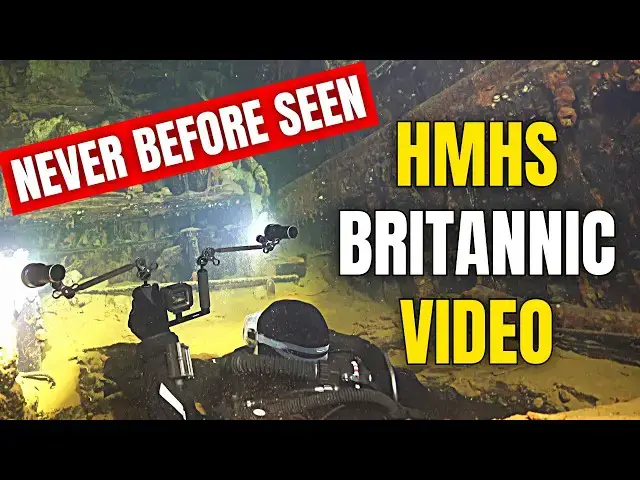
Legendary technical diver Richie Kohler shares never-before-seen footage from his dives on the HMHS Britannic. This exclusive footage has never been published on the internet until now.
In this interview, Richie reveals incredible dive footage from the Britannic wreck, the Titanic's sister ship that sank in 1916. Watch as he takes us through rarely seen areas of this historic shipwreck lying at depth in the Aegean Sea.
Key Topics Covered:
• Exclusive never-before-seen Britannic dive footage
• Inside look at the wreck of Titanic's sister ship
• Technical diving insights from Richie Kohler
━━━━━━━━━━━━━━━━━━━━━━
*Inside the Britannic by Simon Mills*
You can purchase "Inside the Britannic: Uncovering the wreck of the Titanic's sister ship" by Smon Mills here 👉 https://amzn.to/46X6bwf
━━━━━━━━━━━━━━━━━━━━━━
*Thanks*
A massive thanks to the Greek Government, Simon Mills, Kea Divers, Richie Kohler and the other members of the team.
━━━━━━━━━━━━━━━━━━━━━━
TIMESTAMPS:
0:00 Introduction
01:49 Tip of the bow
02:13 The bell 🔔
03:09 Medical equipment
03:21 Starboard promenade @ 120m
04:46 Cabinetry
05:22 Hallway of Death
05:56 Scotland Road
06:24 Engine Room
06:58 Scotland Road Exit
07:29 Engineers Ward Room
07:57 Printing Press!
08:30 Grand staircase
08:52 Where the shot lands!
10:07 Fireman's tunnel
10:18 Boiler room No. 6
11:32 Stoking/furnace Indicator
13:02 Piles of plates ❤️
14:36 Plate recovery
16:12 Pantry & binoculars
17:34 Katy Kohler
19:20 Toilets
20:33 In between the engines!
25:03 Turkish baths
27:32 First photo of
29:06 Entrance to Turkish baths
31:59 Q&A - where is it?
━━━━━━━━━━━━━━━━━━━━━━
*Kit I Use*
Note, some of these are affiliate links so help support making my videos:
👉 Gloves are Ansell Alphatec 87-063 - https://amzn.to/4jDHhX4
👉 Drysuit is an O-Three Ri2-100 - https://www.othree.co.uk/drysuit-range/ri-2-100-drysuit/
👉 CCR is an AP Diving Inspiration (XPD) - https://www.apdiving.com/
👉 Backup computer is a Shearwater Perdix v2 - https://amzn.to/42FXZOW
👉 Reels are by Kent Tooling - https://www.divingproducts.co.uk/
👉 Phone housing is Divevolk Seatouch 4 Max - https://s.click.aliexpress.com/e/_omJlNKL
👉 Stickers for gear by Dive Signs - https://www.divesigns.com/
*Video Gear*
I use the following gear (also affiliate links)
👉 Action Camera is Insta360 Acep Pro 2 - http://bit.ly/4nkMEwA
👉 Helmet mounted cameras are Paralenz Vaquita
👉 Video light is LetonPower Sealion L24 (10% off!) - http://bit.ly/4nFLCva
*Strobes*
I use two different strobes (also affiliate links)
👉 Prozhaozhu 3000 Lumen Diving Strobe - https://s.click.aliexpress.com/e/_oBMRF3X
👉 Prozhaozhu 4000 Lumen Diving Strobe - https://s.click.aliexpress.com/e/_oCTEses
👉 Jon clip - https://s.click.aliexpress.com/e/_oDqq0RW
━━━━━━━━━━━━━━━━━━━━━━
📱Follow My Socials!
Instagram 👉 https://www.instagram.com/deepwreckdiver/
Facebook 👉 https://www.fb.com/DeepWreckDiver
Buy Me A Coffee 👉 https://buymeacoffee.com/d33puk
Email 👉 [email protected]
#Britannic #RichieKohler #TechnicalDiving #ShipwreckExploration #Titanic #WreckDiving #DeepDiving #MaritimeHistory #CCRDiving #underwaterarchaeology
Show More Show Less View Video Transcript
0:00
Hello again everybody and welcome to my Deep Wreck Diver YouTube channel. Uh
0:05
loads and loads of people uh were fascinated by the interview I did a few weeks ago with Richie Cola about the
0:11
incredible exploits he's had um on the Britannic. I'm really pleased that um
0:17
he's really kindly agreed to release some more footage of uh of his adventures and this footage has never
0:24
been seen before online. So, it's uh it's fantastic and I want to thank you so much, Richie, for doing this and for
0:30
showing what you've got to uh to everyone. Well, let's give props for it. A lot of the footage is uh from the team, not
0:36
just myself. So, you've got to thank Simon Mills, the owner of the shipwreck. He's uh our partner, if you will, in a
0:43
lot of these uh videos that we took. Um, I gotta thank Barry McIll, Stewie, uh,
0:49
uh, Stewie Andrews, obviously, Evan Kovac, my wife Katie, Eduardo Pavilla,
0:55
Richard Stevenson, uh, Perry Brandice, and George Vanderos. I think that's everybody. I don't think I forgot
1:01
anybody. Those are the guys that we have to thank for all of this footage and for
1:06
allowing me to share it with you. Um, I am going to give a caveat. I we are showing you guys some footage, stills
1:13
and video that haven't been seen publicly before. And I know you guys want more, but I'm going to just start
1:19
out by saying we're hoping to get this film into a documentary. So, we're holding back a lot of the really good
1:25
stuff, but I think you're going to be happy with what we're going to share today. Oh, I can absolutely guarantee that.
1:30
Having seen it, obviously, I've had a bit of an exclusive preview and I know the stuff that we've got here is really,
1:36
really good. And I can only imagine how good the good stuff is cuz this is pretty awesome, Richie. So, um, should
1:42
we should we crack on then and let's have a look got for us? Starts off with some guys going down the shot line here.
1:49
Yeah, you know, uh, if we just get down to the rusty bits right away. You know, it's nice to see that big blue water.
1:56
So, here you are. That's the very tip of the bow. Or, um, actually, I believe that's a funnel. I apologize. Um, that
2:03
that Nope, that was the tip of the bow. Uh, I should put my glasses on. So, we're at the tip of the bow now. You've
2:09
seen the anchor up in the haw pipe. And, um, some of these are exterior uh, photos right there. You can see I don't
2:16
know if you know what that is. I'm sure you do, but uh, that's the crow's nest bell sitting upright in uh, a little bit
2:23
of clearing around it to to see the shape more clearer. Um, and this is an idea again of that incredible
2:29
visibility. It can be dark down there, but you know, it's not uncommon to get 30 40 meter visibility as you're seeing
2:37
here. Um, one of the things I like when we travel outside the wreck is obviously with your lights on the colors that just
2:44
pop out at you and and the scale, you know, I mean, obviously, as you know, we
2:50
can never have enough light and and here's a a good example. That's Baza, Barry McIll. You can always tell by
2:57
those iconic fins of his uh about to enter into an area inside the shipwreck.
3:04
And here's some areas uh you know showing medical that's medical supply
3:09
box. Um in this video clip you'll see the remains of a oil or gas lamp and
3:15
other things that are just laying where they fell you know so many years ago.
3:21
So, what we're looking at now is uh the shot had landed out in the sand and uh
3:27
Evan and I are swimming over to the wreck and what you're looking at at the on the seafloor is a mound of shell.
3:34
It's like these oyster shells that have grown, lived and died and then fell and made a mound that you have to swim over.
3:41
And so below me in this shot is the is the seafloor and I am about to rise up
3:48
into the prominade. So right now I'm going through a window opening and bang
3:54
I am now on the lower or starboard side
3:59
prominade deck where those Victorian nurses and doctors wounded soldiers and
4:05
sailors walked along these these very decks. The wood's gone. What you're looking at down there is just the
4:11
caulking that that's there. So this is a now a shot of Evan um taking of me on
4:18
setting the strobe back there. You can actually see me setting a strobe because we're going to actually go in through
4:23
this doorway and we find ourselves in in a small um baking area. What we're
4:30
looking at through one of those doors is actually a range. You you will see a um
4:35
a stove in a minute. And uh right there there's a a sink in front of me and there's a stove and then like a turtle I
4:42
pop up into the scene here through the doorway. You can see some of
4:47
the uh cabinetry on the wall there. Um, and it's just gives you that idea of
4:53
what's going on. And and here we are on the low side of the wreck looking through the entirety the 100 ft or 30
5:01
meters up and looking out another window on the port side. That was what that light was right there. Gives you an idea
5:08
of how expansive these open wardrobe areas are. Evan shining his light down in here.
5:14
That is one of the uh uh areas where the elevators were. Um this is him and I
5:19
going down a a long corridor which I nicknamed the hallway of death.
5:26
I did that because of all of the cables that were hanging down as we're swimming through here. You see all those uh
5:33
cables? It's like we are actually swimming and just kind of going back and
5:38
forth around these cables as we're going down this long long corridor. This is
5:44
one of those instances where there wasn't supposed to be a watertight bulkhead. There was supposed to be a
5:50
doorway and there wasn't one. Um the the camera angle now has shifted to a
5:56
different area. This is now what we call Scotland Road. Um this is absolutely one
6:02
of my favorite dives. Um it was once again true pioneering, true exploration.
6:09
Um, Evan's in the lead on this dive and because there's no no line on the
6:14
bulkhead to his right, that's how I know this is the actual original footage um
6:20
of that area. Um, so yeah, that's uh that would would bring us into the
6:26
engine room. Unfortunately, I can't show you any of the engine room footage. Simon has asked that we kind of hold on
6:32
to that because um even on Titanic there is no known footage of an intact Olympic
6:39
class engine room. And so that footage for us is you know kind of the real
6:45
thing that we want to be able to share um with a media group so that we have an
6:51
exclusive for them to make a documentary film. So, this is Scotland Road on the
6:56
way out of the engine room and um I am poking my camera up into this is me
7:04
because Evan is is on his way out. I poke my camera up into this room and to
7:10
the left you can see uh a a electrical switchboard of some type, breakers. Um,
7:18
and then when I finally get my bearing and I'm able to swing my camera in the right perspective, you're going to see
7:24
what's called the engineers's mess. You can see this beautiful tile floor and the remains of tables, the ward room
7:32
tables that the engineers would seat at to take their, you know, their meals and stuff like this. As Evan and I um exit
7:41
down Scotland Road and then come back up to head out the E door, eh shell deck door, um I look in this one room and I'm
7:50
um amazed to see, as you're going to see in a second, uh the the only
7:57
printers press printing press on board Britannic. And you know, it's kind of
8:03
surprising because on some of the blueprints, this was supposed to be a potato storage room. So when I shine my
8:09
light in there and I didn't see any potatoes, you know how hungry I get underwater. I was shocked to see this.
8:15
And that is, believe it or not, a turn of the century printing press that they would use on Britannic to uh make the
8:22
daily menus and uh whatever they needed printed. So now the the film has gone
8:28
back to the area of the of uh the the grand staircase that was part of the uh
8:34
skylight dome you saw. And um then for a brief moment we were looking at a little bit more of uh that China. And this is
8:43
uh what it looks like when Evan and I are exiting the wreck again from that very low position leaving the prominade.
8:49
I'm at 120 mters here. Um, and our shot had landed um, probably 20 meters away
8:57
out in the sand. So, we tied it off to a funnel and that's why you see me coming
9:02
out in S. And we talked about this in our last video that where the shot lands
9:08
dictates your dive profile. On that dive profile, I had to go to 120 meters. But
9:13
if the shot had landed on top of the wreck, well, then I got away with, you know, 95 meters. So, and here's those
9:20
shots of of the most important people in the dive team, which in this case is the
9:25
support divers. Um, you can see uh Katie right there is the support diver on this
9:30
project. and uh taking away our our deep bailout. There's the the
9:36
Starfish Enterprise um deco station,
9:43
which is uh obviously paramount to safety and comfort for us during these long deos. And again, as I mentioned,
9:50
because I saw the potato room, I get hungry on deos. So, I've been known to have a a a little snack here and there.
9:57
And I think that's Evan uh giving us a goodbye because he was the primary uh shooter on this. So now we're up at the
10:04
bow and what we're uh about to do is we've went through the fireman's tunnel uh which Richie Stevenson found way back
10:13
I think like in 99 or maybe 2006 or something like that. Um
10:18
and what we are we actually are in the boiler room. Boiler room number six here. And you and you can see the
10:23
catwalks above us. And what we're about to do is is try to um move in between
10:30
the two boilers so that we can get to the aft side of the compartment and then
10:36
gain access to the next door to the next compartment. So this is a film clip that
10:41
was given to us by Simon for uh you know allowing you guys to get an idea of how
10:46
stagnant the environment is, how tight everything is in the boiler rooms. Um, they did not have us technical divers in
10:53
mind when they designed the boiler rooms on these ships. But the bright spot is again, you know, the wreck is so intact.
11:01
Here's a an artist's rendering of what it would look like, what we were doing and going through those boilers. So, you
11:08
get an idea which way we would be going to get to the watertight doors. Um, it looks a lot nicer in this cartoon image
11:15
than it does in the real dive footage for obvious reasons. Um, but I think
11:20
that we've got a couple of great still shots too of some of the equipment in there that had never been seen before
11:26
furnace indicators. Um, as well as gauges, um, instructions, uh, bronze
11:33
plaques that have in English, of course. There you can see one of the, uh, furnace indicators. This is the top side
11:40
of it with a little cage lamp right there. And it's covered with silk. But when we get underneath it and we kind of
11:46
look up, you can actually read what it says. And I know that we have another still image of that. So you're you're
11:52
you're looking and there it is. You can see what that furnace indicator looks like. So above each of the boilers would
11:58
be one of these furnace indicators that would let the firemen know whether or
12:03
not they should light that boiler. So when that would light up, that would indicate that the the engineer needs you
12:10
to bring more boilers online. They need more steam. And if of course if they were swollen
12:15
down then they would shut them off and damp them up. And so it's incredible because there are no um historical
12:23
photos of these compartments. At the time that they were built, it wasn't considered important to, you know, take
12:30
the photograph of the inside of a Greyhound bus engine. If you look at it the way that they must have looked at it
12:37
then it this was just commonplace equipment. But here we are over a hundred years later um elated to see
12:45
these fixtures still in place. And for people like you and I who dive shipwrecks that have been broken to
12:51
pieces and we may see some of these pieces uh twisted into the wreckage, it's really important that you know the
12:58
context of what they are and how they operated and what they did. Let's have a look what we got here. So
13:03
So tell us what this is, Richie. So, uh, um, a couple of years back in 23, uh,
13:09
Barry McIll and Stewie Andrews were tasked with trying to find a way into a
13:15
kitchen pantry area and they succeeded. I mean, look at this. These are piles of
13:20
of secondass Bradford pattern crockery that I mean, there's literally hundreds
13:28
of pieces of crockery, not just here, but on the other side of this and on
13:33
other shelves. is just stacked up. Yet, when you realize that Britannic uh had the capability of carrying over 3,000
13:41
people on board that had to have a couple of meals a day, think about all
13:46
the crockery they had to have on board. But I think the really important thing about this particular video and this
13:53
particular find is that we were trying to prove that some of Britannic's more
14:00
illustrious uh opulent history or pedigree was still on board. And the
14:06
finding of the secondass Bradford pad in China, uh, Bradford pattern, I think is the proper pronunciation, um, proves
14:14
that there were things that directly relate to, let's say, Titanic and the White Star line. Although she was
14:20
conscripted and outfitted for war and turned into a hospital ship, these items still hearken back to what she was
14:27
designed to be, a beautiful passenger liner. Absolutely. You've recovered some of
14:33
these plates, haven't you, Richie? I've seen pictures of them. That is correct. We were um uh
14:38
ultimately given permission by the ship's owner and of course by the effort, the Greek effort, the Ministry
14:44
of Antiquities uh to recover not just some of these dishes, but they wanted a a a very varied selection of crockery.
14:53
Uh, we recovered these dishes. We recovered cups. We recovered chamber pots. We recovered silverware. Um, we
15:01
recovered a sink. We recovered uh various uh food uh storage uh
15:08
containers. Um, as well as other uh items that directly hint towards her
15:14
mission as a hospital ship. Fantastic. And these identical plates to
15:20
this were on the Titanic, correct? That's my understanding is that this was all of them have on the back of it the
15:27
white star line and on the center crest um is the uh oceanic steamship navig
15:34
oceanic steamship and navigation company logo which is the same as saying the
15:40
white star line. It was the predecessor of the white star line. So these are really rare. Um, my understanding is
15:47
that uh there's a few out there. Um, and they can actually be found on other
15:53
white star liners as well, but I think the the most important aspect of them is that they weren't removed from
16:00
Britannic. And so that leads us to think, well, what else is on board Britannic that has a direct connection
16:08
to her pedigree as a passenger liner? And I think that might move us on to
16:13
here we go another another area I think of kind of of interest. Okay. So u again deep inside the wreck
16:19
we we located not one but a number of pantry areas and this is another video.
16:24
Thank you Simon Mills for us uh being able to share it. So that's my wife Katie. Um and as you can see she's got
16:30
her collection bag and we from this area we collected those bean pots. We
16:36
collected um some other bits of crockery, but uh one of the most significant things that came out of this
16:42
was um you know, you've got experienced wreck divers, Barry McIll, Evian Kovac,
16:50
Stewie Andrews, all of us go in this room, we are wowed by all the crockery.
16:55
My wife goes in this room, sees the binoculars. Five guys swam over them just totally
17:02
like kids in a candy store looking at all the good stuff. And she found this one iconic item, which by the way, she
17:10
was uh asked by the effort by the antiquities people, the archaeologist to
17:16
recover it. And so, not only did she get to be the person who found the binoculars, but she was the one who in
17:23
this video clip. It's it we're not showing you the actual recovery, but that's what she's about to do is to
17:28
recover those binoculars, which was pretty cool. I'm just going to put it out there, a question for you as well, Richie. Uh,
17:35
you know, how many how many women have done what Katie is doing here? You know, gone deep inside Britannica.
17:40
Katie follows in a very small uh footstep of women. Um, Polly Tapsson,
17:46
Christina Campbell, um, Brits. The first women were Brits to dive Britannic. Um, I I can guarantee
17:54
she's the first American woman to ever go inside. Uh, so, you know, there's an honor in
18:01
that. But, you know what? I don't think any of us do it to get in the Guinness World Book of Records. That ain't what
18:06
any of us are doing this for. Um, it's nice when you get recognized because by
18:12
your peers that you're doing some really uh cool or or um important work. And for
18:20
her um as as a woman to be, as you mentioned, in in an arena that's
18:25
predominantly not all, you know, there's a lot of women doing some really great technical diving out there. You know, I
18:31
could drop names off the top of my head right now. Jill Hinrich, Becky Kagan, Sabine Cacao, uh uh just just to name a
18:38
few right off the top of my head that are doing some really really uh technical dives, deep dives, important
18:44
cave diving, shipwreck diving, etc. Um and making a difference um but they're,
18:50
you know, smaller in number to us bald-headed bloss. You're absolutely right. So when you see uh you know Katie
18:57
knocking it out of the park and like I said uh in in one way outshining the boys you know she saw something we
19:04
didn't see and believe me she's not going to let us forget it.
19:10
I think the last thing that we're going to share now Richie which is some of your some of the pictures. So uh there
19:15
we go. Let's start off start off with that one then. So you know when when people uh ask how
19:21
intact is she? I mean, this this is one picture that really drives it home. Um, this is not an incredibly stagnant area.
19:28
This there's water flow through here, but when you look at it and you see these toilets still mounted to the floor
19:34
and the lenolum in place, I mean, it you know, it kind of looks like it just needs a little dust up. Yeah. And you're
19:41
ready to do your business. So, yeah, it's it's like you don't see this in shipwrecks that often. and and you know,
19:50
so you're out of uh direct sunlight, of course, and you're out of a a heavy flow. That's why there's no marine
19:56
growth in here. Um but at the same time, you know, there's great visibility as
20:02
you can see from the photo. Uh and and this is just one of many areas that are incredible uh because they're so intact.
20:10
Here we go. Tell us about this one. I know you're particularly proud. You're particularly pleased with this shot,
20:16
you know. kind of pe people always ask me like what's one of your favorite dives and
20:21
I'm going to say well in in the last five years um two of my favorite dives
20:26
this is one of them is is probably my favorite is like I wanted to from the first time that I ever saw the open door
20:34
and on the side of the ship that entered into edeck I always wondered about that
20:40
door because the door opens inward and that means that it was most likely actually definitely used by the engineer
20:47
who escaped from the engine room. So when the all clear abandoned ship went,
20:52
but the men had to stay in the engine room and keep the steam up and keep the power supplied because the hydraulics
20:59
and the electronic winches needed to launch the lifeboats. Once that uh was
21:04
done, once all of the uh nurses and doctors and crew uh unessential crew was
21:11
off, the engine the black gang, these guys down in the engine room now had to
21:17
get out. They had a choice. They can climb. Can you imagine climbing six or seven of those decks to climb up to get
21:23
out and then on a leaning or listening ship and then have to climb down the side? Nope. These guys weren't stupid.
21:30
They came up one or two deck levels and then they got on e deck and they ran
21:36
down Scotland Road and they opened this shell door and they just jumped right into the ocean. And that's how the these
21:43
guys escaped. So for me and Evan to go in that door, swim to the center line of
21:49
the ship, go forward about 30 meters and enter into this room. Seeing this was
21:56
the highlight. It was one of my best dives, best memories. We were hooting and hollering. And as I I mentioned to
22:03
you before we started filming this, when you look at this image, this is in every way the in every shape
22:11
and form a a a playground for the technical diver. Um it is just like what
22:16
we here in America call a jungle gym where, you know, little children climb all over things. Well, we're not
22:22
climbing on it, but we're swimming through not one, not two, but seven of these decks with catwalks and ladders
22:30
and and stairwells. And on the port side, or in this perspective, we're looking aft. So, that that column is the
22:38
center line of the ship. And to my right is the port engine, which is still
22:43
bolted in place with all of the steam pipes, all of the fittings, all of the oilers, gauges that you can still read.
22:51
electrical fuse boxes. And then of course on the starboard side, same thing. Starboard engine still in place.
22:58
And you just it's mindboggling because I have been diving shipwrecks most of my
23:04
adult life and I use adult, you know, with with air quotes, but uh I've never
23:10
seen an intact engine room from a naturally occurring shipwreck. not a a a
23:17
um a ship that was sunk on purpose. Of course, I'm talking about a a 100-year-old victim of disaster. We
23:26
never see this ever. And so to have this opportunity, we were elated. We had no
23:31
idea what we would find. We didn't know if all of these catwalks would have rotted away and fallen to the seafloor
23:37
inside the wreck. We didn't know if the engines collapsed. But to see everything intact like this was wonderful. And I
23:44
think it's also important and goes back to why it was so important that Simon
23:51
Mills and the Greek effort did allow us to document this because one day this
23:57
photo and the videos will be all that's left because we know this is not going
24:03
to stay like that forever. There's going to be a day the engine's going to break free and it's going to fall down and all
24:09
this will be gone. Another thing that's a little interesting techy thing, the engine rooms on the White Star Liners,
24:16
these engine spaces were the largest individual compartmentalized space on a ship
24:25
prior to the advent of the aircraft carriers. So when aircraft carriers came
24:30
into play, all of a sudden they had a requirement for having a much larger area in between watertight pockets.
24:37
Because when you think about it, this is one of the largest single compartmentalized rooms, if you will.
24:42
Yes, it's filled with machinery and and stuff, but you're still in one of the largest interior rooms of a ship that
24:49
had ever been built at that point. Okay. Now, now, now we're going to get into scary stuff. So, this is this is the
24:56
second favorite dive. So, um, for many years, uh, going back all the way to
25:03
2006, um, locating this room, which is called the Turkish baths, which is basically a
25:10
steam room, which again hints back to the fact that this was not just a hospital ship. She was actually an
25:16
opulent passenger liner. And so opulent passenger liners have things like swimming pools and steam rooms. Well,
25:23
this was a Victorian steam room. And what we're looking at is the tiles in what's called the cooling room. Now in
25:30
2006, um I didn't even know about these things and I was becoming educated by
25:36
people like Simon Mills and Park Stevenson and they really wanted to know if this room existed on Britannic and so
25:43
in 2006 2009 2015 guys were uh being tasked with trying to find a way in and
25:51
everyone was telling us that the way was blocked. It it had collapsed. there was no way to get into that. And so in 2023,
25:59
uh Evan and I decided to take another look. We had never actually looked. We had trusted other people that had been
26:06
tasked, but had never found the way in. And I said, "You know what, Evan? Why don't we try something a little
26:12
different?" And everybody prior to us had always gone to the very lowest side of the wreck and then tried to find
26:18
their way in that way. I said, "Why don't we do it the way the passengers would go? Let's act like we're going
26:23
down the staircase and follow the staircase. So, in other words, we looked at it in a in from a diving perspective
26:30
in an unconventional way where from a diving perspective, you would probably want to take the shortest path. We
26:36
actually took a little bit of a longer path and yet it brought us to an intact
26:42
hallway and at the end of that hallway was a door and there was a ballistrate
26:48
from one of the from the grand staircase laying across this doorway and all of I mean immediately I just looked at Evan
26:55
I'm like oh my god that's it that's the door and we understood why everyone else
27:01
never found it was because they would come in too low and they would be on the wrong side of the stairs. farewell. And
27:08
long story short, uh um Evan, um we're going to show you a couple of more images, but Evan went in, he was the
27:14
first person in. I followed him in, and these two images capture what is
27:20
probably one of the most intact areas because of how anorobic it is. This shot
27:27
that he took, what you're looking at is to your right is the floor. Above you,
27:33
that is the port side wall. and you're looking straight back to a doorway that would lead to a hall that would then
27:41
give you an option to go through a watertight door to the swimming pool or to the actual steam rooms. And so what
27:47
you're looking at is wood frames with concrete and tiles still embedded in the
27:53
ceiling and on the walls around you. Well, when I say the ceiling, I mean a wall. That's a wall, but now it's a
28:00
ceiling. So these tiles are above your head and the wood frames are there. As you can look, you're seeing the wood
28:06
framework of doorways and walls and it's and and you can see the remains of the chase lounges and it's like nowhere else
28:14
can you see wood inside the shipwreck. So you realize that there's no oxygen in this environment and that any decay has
28:21
been arrested because no microbes, nothing can live with no oxygen. And then that P green, that that ghostly
28:29
haze, that's the best it ever was. No one had ever been in this room, and
28:34
that's the best condition of visibility we'd ever seen in it. And subsequent dives to go in there have never been any
28:41
better than this. So, and and as of course, you could see there's wires hanging down and all the
28:48
boogeyman stuff that you really don't want to do and know about because and
28:53
that's the doorway. That's the hallway that we found. And uh at the bottom of it, you can see that all around it, the
29:00
silt has been ramped up. In other words, a hundred years of silt has created a
29:05
mound against the walls and and silt obviously has fallen through the doorway. But the problem is that as a
29:12
diver tries to slip in or does slip into that very narrow opening, you have to uh
29:18
get rid of one of your bailouts. You're never going to fit in there with two bailouts. You've got to take your other
29:23
one and slip it around. Uh, hold your camera over your head, feet first in, and then I follow Evan down. And then I
29:32
usually would go in and hang at the doorway and be his uh his lighthouse, if
29:38
you will, his breadcrumb, so that when the visibility goes to all heck, there's a hand in the doorway to help get you
29:45
out through that doorway. Because you're when he comes out, you can't see the doorway. There's just a cascade of silt
29:52
coming down, zeroing out the visibility. You only know where the door is because there's just a cloud of chocolate milk.
29:58
So you you have to go into the the rustcoled chocolate milk and then kind of braille your way out. And if you have
30:05
like we do a system, you have a buddy that's in the doorway that's there to help you fit through, take your camera,
30:12
get get you out of the room. And uh Evan's pretty adapt at it. So, um, a lot
30:17
of these images, I believe that might be a still grab from my GoPro, but the images that you saw inside, um, the
30:24
Turkish baths, um, are, you know, again, the these images that, uh, you're
30:30
looking at are all in Simon Mills's book. And if you want to, you know, you want to see more, you need to, uh, get a
30:37
copy of this book because that's where these are coming from. These are all in Simon's book
30:43
um that we took. Um obviously the video is some stuff that we're kind of holding on to. As I said earlier, uh we really
30:50
want to be able to give um a a media uh u client the ability to have the the uh
30:59
premiere, if you will, of these images of us being the very first people to get into these rooms. But these still
31:05
images, I think, also convey to the diving audience exactly what it is we're
31:10
seeing, where we're going, u um and and what it's all about. And I have to say,
31:16
Richie, it's absolutely incredible of Simon to allow us to use the a load of the images and everything. And for those
31:23
of you who uh want to see more of them, then there's a link in the description to Simon's book. And you know, I'd
31:30
encourage anybody who's interested in the Britannic. I mean, it's it's got to be a must have for them. I think the other thing I'd just like to say
31:36
obviously is a big thanks to you, Richie, for coming on and taking the time to talk us through this and to show
31:42
us all the amazing videos and the amazing images. What I would also say is
31:48
uh on our various social media channels, we said to people if you have any questions for Richie, then he would
31:54
answer them. And uh that's probably you've probably noticed that hasn't happened in this video. There is another video once again that I'm going to link.
32:00
It'll be up here somewhere. and down here that will um be where that where
32:06
that happens. But other than that, I just want to say a massive thank you, Richie. And for everybody out there,
32:12
hopefully please do all the usual stuff. Like, subscribe, leave a comment, say thank you to Richie, and of course, go
32:18
and do exactly the same on his YouTube channel as well. I'm sure he really appreciate that. Other than that, thank
32:24
you all, and I hope to see you on the next video.