0:00
Olympic Titanic's big sister is often
0:04
described as the only civilian ship to
0:06
sink a submarine in the First World War.
0:10
It's a brilliant story. It's dramatic.
0:16
but it quietly erases at least three
0:19
other ships and a submarine wreck that
0:23
I've dived myself. In this video, we're
0:26
going to dig into Admiral T files,
0:29
German yubot records, and modern wreck
0:32
evidence, and rebuild the real list of
0:37
civilian ships that sunk submarines in
0:40
World War I. By the end, you'll see why
0:43
Olympic was unique, but absolutely not
0:49
To understand where the myth comes from,
0:51
we need the big picture.
0:54
In World War I, German hubot were deadly
0:58
and sank vast numbers of ships. They
1:02
also took heavy losses, but usually not
1:05
to merchant vessels. Most that never
1:08
came home were lost to mines, depth
1:11
charges, and purpose-built naval
1:14
vessels, destroyers, sloops, patrol
1:17
craft, even sometimes vessels disguised
1:22
as merchants that carried concealed
1:26
Civilian and merchant ships weren't
1:28
designed as yubot hunters. They were
1:31
cargo carriers, collers, ocean liners,
1:34
coastal steamers. often unarmed or
1:39
lightly armed with obsolete weapons and
1:42
usually they were on the receiving end
1:44
of an attack. So when a civilian ship
1:48
does defeat a submarine, it really
1:50
stands out. And when that ship is RMS
1:54
Olympic, sister to Titanic, the story
1:57
takes on a life all of its own.
2:00
Somewhere along the way, only ocean
2:03
liner turned into only civilian ship.
2:07
What we're going to do is reconstruct a
2:10
few of these encounters. We're going to
2:12
crosscheck British claims with German
2:15
records and when we can bring in the
2:21
Once we do that, the only civilian ship
2:25
version simply doesn't survive. Our
2:28
first forgotten new boat killer isn't
2:30
glamorous at all. The SS British
2:33
Transport was a hardworking British
2:36
steamer of just over 4,000 tons.
2:40
On the other side of this story is U49,
2:43
commanded by Captain Lieutenant Richard
2:46
Harmon, a very successful yubot captain,
2:50
credited with 39 ships and over 86,000
2:55
The submarine sailed with another one on
3:01
By the morning of 11th September, it's
3:03
on station in the Bay of Bisque and
3:06
doing exactly what it's supposed to be
3:08
doing. It torpedoes and sinks the
3:11
British steamer Vienna. And the master
3:15
is taken prisoner and brought aboard
3:20
Several hours later, U49 comes across
3:26
another steamer, another ordinary
3:29
vessel, the British transport under
3:32
Master Alfred Pope. At about 1,600
3:36
hours, the submarine surfaces a mere 50
3:40
yards from the steamer. That's point
3:44
British transport was armed and the gun
3:47
crew scrambled to their 4.7 in gun, but
3:51
U49 dived just before they could get a
3:56
A few minutes later, U49 surfaces
4:01
several miles away. Now, both ships open
4:04
fire, but the gunfire is ineffective on
4:09
At some point during this engagement,
4:12
the British transport loses visual
4:14
contact with the Ubot. U49 hasn't gone
4:17
away. It wants another victim. 4 hours
4:20
later, just before 2100 hours, two
4:24
torpedoes streak past British transport
4:30
That tells us U49 has been tracking her,
4:34
trying to get into a killing position.
4:37
Then comes the moment described in the
4:40
Admiral T's reported destruction of
4:42
submarines report. At about 9:20, the
4:48
crew of British Transport see a luminous
4:50
patch of disturbed water on the port
4:55
The ship is turned towards it. As they
4:58
close, the shape of a submarine becomes
5:01
visible under the surface.
5:04
The collision is brutal.
5:06
Everyone on board feels the heavy slam
5:10
as the bow impacts into the yubot,
5:15
followed by some horrendous grinding
5:17
noises that last a couple of seconds.
5:20
The ship's speed drops perceptibly under
5:25
As British transport passes over,
5:28
officers on the deck see the submarine's
5:31
bow briefly clear of the port bow of the
5:34
British transport. It lifts out of the
5:37
water and a hatch between the foremost
5:40
gun and the conning tower is seen to
5:42
open and me men begin to emerge.
5:46
They hear shouting from the submarine.
5:48
The British transport doesn't know for
5:51
certain, doesn't know what's happening.
5:53
So, the crew fire two rounds at very
5:56
close range. The second round is
5:59
believed to be a hit. They see flame and
6:05
and then nothing else.
6:08
When the British transport finally
6:09
reaches port, examination of the side of
6:13
the hull reveals scratches and scoring
6:16
on the plating consistent with striking
6:19
a hard metal object. That's not the sort
6:23
of marks you get from your own anchor or
6:27
From the British side, this looks and
6:29
feels like a kill. From the German side,
6:37
U49 never makes another report after
6:39
sinking Vienna. She doesn't sink any
6:44
There's nothing else heard from her
6:45
within a patrol area, and no other
6:49
plausible cause presents itself.
6:52
her assigned patrol line, the time of
6:54
Vienna's loss, the long pursuit of
6:57
British transport, the torpedo attack,
7:00
and the ramming at 9:20 p.m. Those line
7:06
Modern analysts rate this as a very
7:09
probable loss. The history books record
7:12
that U49 was rammed and sunk by the
7:16
steamer SS British transport on the 11th
7:22
With that collision, Germany loses one
7:24
of its most experienced Yumboat
7:26
commanders. Hartman and his entire
7:29
veteran crew go down with the boat. And
7:32
the British have a solid case of a
7:35
civilian steamer taking a fight to a
7:38
yubot and winning. British transports
7:42
master Alfred Pope is awarded the DSO,
7:45
the Distinguished Service Order. His
7:48
chief and second officers and the Chief
7:51
Engineer receive the DSC, the
7:54
Distinguished Service Cross.
7:57
Months before Olympic meets U 103, a
8:01
completely ordinary merchant steamer has
8:04
already hunted down. Well, maybe not
8:07
hunted down, certainly rammed a Yubot
8:09
after surviving a torpedo ambush. A
8:13
civilian ship with a largely civilian
8:15
crew scoring a very real kill.
8:19
Already the only civilian ship claimed
8:22
for Olympic doesn't hold up. Now to the
8:26
famous one, RMS Olympic, the first of
8:29
the Olympic class liners, sister to
8:33
Titanic and Britannic. In peace time,
8:36
she's the epitome of luxury. Panled
8:39
lounges, grand staircases,
8:43
silver service in the dining saloon.
8:46
War strips that all away.
8:49
She's requisitioned as a troop ship.
8:53
The fine woodwork is covered over or
8:56
removed. The carpets go. Cabins are
9:00
converted into troop dormitories. And
9:02
her white hull turned into a dazzle
9:05
painted gunarmed giant.
9:11
She receives several 6-in guns and
9:16
And later in the war, she even carries
9:20
Underneath all of that, she's still an
9:23
ocean liner built for speed and comfort.
9:27
She's not a warship. By 1918, though,
9:30
she's a veteran. She's made dozens of
9:33
Atlantic crossings, carrying thousands
9:36
of Allied troops, dodging mines and
9:39
Ubot, occasionally sighting periscopes,
9:42
and getting the odd torpedo scare. On
9:46
12th of May 1918, she's in the English
9:49
Channel heading east with American
9:51
troops on board. A prime high value
9:55
target. She's part of a wider system of
9:59
escorted convoys. She's zigzagging to
10:01
make life harder for you.
10:04
Lurking ahead though is U 103,
10:08
a German submarine on patrol looking for
10:11
exactly this kind of prize. The captain
10:15
of U 103 lines up for a torpedo attack
10:18
from a favorable angle.
10:21
Things don't go to plan. The accounts
10:23
differ slightly on the exact sequence,
10:26
but the core is generally consistent.
10:29
The lookouts on Olympics bridge and up
10:32
in the crow's nest spot the submarine.
10:35
They either see the periscope, the hull
10:38
just a wash, or the track of a failed
10:41
torpedo. But in that moment, the captain
10:45
and his officers make the same
10:48
instinctive choice as the British
10:52
They go for the attack. Olympic guns
10:55
open up. Shell splashes bracket the
10:58
yubot, forcing her captain into an
11:03
Does he dive and break off or press the
11:07
The ideal textbook firing position is
11:10
gone. Then comes the turn. A ship over
11:19
turns to swing towards the Ubot.
11:23
It's impossible to imagine what it must
11:25
be have been like on U 103's bridge or
11:29
in the conning tower at this moment.
11:32
What have been a giant silhouette, a
11:34
distant target is now a rapidly growing
11:37
wall of steel. The bow wave is foaming.
11:41
The gun's firing. The collision happens
11:45
at around seven or eight knots. Not full
11:48
speed, but with the kind of mass that
11:51
Olympic has, it doesn't need to be. The
11:55
port side of Olympic strikes a
11:57
submarine. Her huge propellers and the
12:00
curve of a hull tear into the pressure
12:05
The German boat is fatally hauled.
12:09
She sinks and the surviving crew abandon
12:12
ship. U 103 never returns from the
12:16
patrol. German records accept the loss
12:19
and the timing and location match
12:24
Allied destroyers later pick up
12:26
survivors. So this isn't a disputed fog
12:30
of war. Maybe it's a confirmed kill.
12:34
Olympic though isn't unscathed. Her hull
12:37
plates are dented. Parts of the bow
12:39
structure are twisted. She needs repairs
12:43
in dock before she can resume service.
12:46
But she has just done something no other
12:48
ocean liner has ever done or ever will
12:51
do. She has deliberately rammed and sunk
12:58
The story spreads quickly.
13:00
I mean, there are cheering troops on the
13:02
deck. There's press coverage. And later
13:05
on there's even a commemorative plaque.
13:09
The captain is decorated and Olympics
13:13
wartime image shifts from this luxury
13:17
ship turned workhorse to yubot killer.
13:22
And that is where the myth begins over
13:25
time. only ocean liner to sink a yubot,
13:29
which is true, mutates into only
13:33
civilian ship to sink a yubot, which
13:36
you've already seen is false. British
13:39
transport gets lost from the story.
13:42
Maybe it doesn't have the glamour.
13:46
It doesn't have the Titanic connection.
13:48
It doesn't have the big ship drama. So
13:52
part of what we're doing here is simply
13:55
putting Olympic back into her proper
13:57
context. She's absolutely unique as an
14:01
ocean liner that sank a submarine, but
14:04
she's one of only several civilian or
14:07
merchant vessels that achieve the same
14:10
feat. Once you recognize that, the whole
14:13
narrative of helpless merchants versus
14:16
all powerful hubot becomes a little bit
14:20
more complicated. British transport
14:23
wasn't even the first. Months earlier,
14:26
another civilian vessel had already
14:28
claimed a yubot. On the 21st of May
14:33
the French steamer Molier was sailing in
14:37
convoy a few miles north of us.
14:41
That's the western gateway to the
14:43
English Channel. It's a busy, dangerous
14:47
choke point and a favorite hunting
14:49
ground for submarines. A submarine had
14:52
already torpedoed one ship from the
14:55
convoy in which the Molè was traveling
14:58
and was trying to cross between the two
15:00
columns to fire again, likely using a
15:04
stern torpedo. Molier was slightly out
15:07
of line and cighted a periscope just
15:09
ahead. It altered course and rammed.
15:14
There was a heavy shock. A torpedo was
15:17
seen running harmlessly past another
15:19
steamer in the convoy. A rush of bubbles
15:22
broke the surface and then nothing else.
15:26
Molier limped back to breast with a
15:29
large hole and several dents in her bow.
15:33
For years, modern sources credited her
15:39
But when you dig into patrol orders,
15:41
positions, and the sequence of sinkings,
15:44
that doesn't add up. UB36 was lost, but
15:49
it should have been home by then.
15:51
Instead, the pattern of ships sunk and
15:54
the way the attack unfolded point to a
15:57
different boat and a different type of
16:01
UC 36 was a UC2 mine layer with a stern
16:06
torpedo. Exactly the sort of maneuver
16:09
described in the Mllair reports.
16:12
There are no unexplained sinkings in
16:15
UC36 patrol area after this ramming. Put
16:19
simply, Molier, a French civilian
16:22
steamer in a convoy almost certainly
16:25
finished her. So, we've already heard of
16:27
two rammings before Olympic, but there
16:30
was another. The fourth confirmed case
16:33
is SS Queen Alexandra and the German
16:40
This was another type UC2 mine laying
16:43
submarine. It sailed from Ostend at 4:40
16:48
a.m. on the 2nd of May, 1918
16:52
with orders to lay mines off Bologna and
16:54
New Haven and then operate against
16:57
shipping in the eastern and central
17:00
English Channel. We know she reached her
17:02
patrol area. The French found a fresh
17:05
minefield off Bologna on the 4th of May
17:09
and the Royal Navy swept up seven mines
17:12
off New Haven on the 8th of May. After
17:15
that, she disappears.
17:17
In the early hours of 9th of May, 1918,
17:21
three days before Olympics encounter
17:23
with U 103, the SS Queen Alexandra is at
17:27
sea in the channel under Captain Angus
17:30
Keith, escorted by the patrol vessel
17:35
At 12:45 a.m. British time, lookout spot
17:39
a submarine close under the bow. The
17:42
Queen Alexandra goes for it, ramming at
17:45
full speed. P33 also sightes the
17:49
submarine and hears the collision.
17:52
It searches briefly, drops a boy to mark
17:55
the spot, and returns at 4:30 a.m. By
17:59
then, there's a large patch of oil and
18:02
acid stretching for about 7 miles down
18:05
tide. Classic signs of a submarine
18:08
broken open. The ramming position sits
18:11
squarely inside UC78's assigned patrol
18:15
area. Now, the Royal Navy initially
18:17
believed the victim was UB78,
18:20
but that boat had already been mined off
18:23
Folkston in April. Once you fix that
18:26
error, UC78 is the only candidate. From
18:30
the German side, UC78 never reports back
18:36
All 29 crew are listed as lost.
18:39
Once again, you put together the
18:41
evidence, the patrol orders, the
18:44
minefields off Bologna and New Haven,
18:47
the time and place of the collision, and
18:50
UB78's earlier loss.
18:53
Modern analysts rate it as very probable
18:56
that Queen Alexandra rammed and sank
18:58
UC78 in the early hours of 9th of May
19:04
So even before Olympic drives her bow
19:07
into U 103, another civilian steamer has
19:11
already destroyed a Yubot in the channel
19:14
using the only real weapon she had, her
19:21
the confirmed record looks like this. SS
19:25
Molier rammed and sunk UC 36 in May
19:31
SS British Transport Ramden sank U49 in
19:36
September 1917 and Queen Alexandra 3
19:40
days before Olympic almost certainly did
19:46
Olympic rams and sinks at U 103 in May
19:51
Four different civilian or merchant
19:53
ships, four Ubot destroyed. Yet, the
19:57
popular story only remembers the famous
20:00
liner. Things get even more interesting
20:03
when we look at some of the claims and
20:06
look at Rex themselves.
20:08
One long-standing one is that the
20:11
merchant ship SS Brainil rammed a
20:14
submarine off the Lizard Peninsula in
20:18
The Admiral T was skeptical at the time.
20:21
Brail didn't get official credit. Her
20:23
crew didn't get the prize money. But
20:26
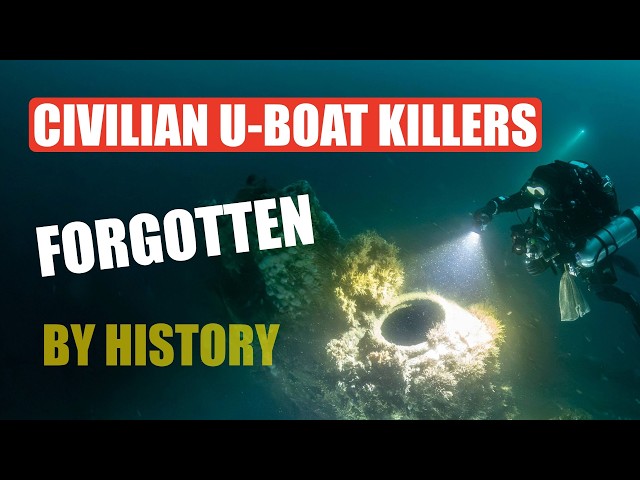
you're looking at the wreck of that
20:28
submarine now. This is U95.
20:32
The Gasperados team dived to 75 m,
20:36
scrubbed the props, and confirmed the
20:41
Other members of the team filmed
20:43
significant damage to the pressure hull
20:45
forward of the conning tower that seems
20:48
to match Bray Neil's account of the
20:50
collision. The dramatic story of Bri
20:53
Neil ramming a Ubot suddenly looks a lot
20:57
more plausible when you line up the log
20:59
books with the steel on the seabed. It's
21:03
a great example of how research, wreck
21:07
diving, and a bit of rust forensics can
21:10
help solve a 100-year-old mystery.
21:13
Brainail isn't the only encounter that
21:15
needs a second look. There was also a
21:17
famous report by SS Thais that it rammed
21:21
U6 in 1915. It was a great headline and
21:25
an important one at that particular
21:27
point in the war, except that U6
21:29
survived that year and was lost
21:32
somewhere else entirely. Stories lit
21:34
like this show how easy it was in
21:36
wartime to overclaim submarine kills.
21:39
Unless you can match German records,
21:42
wreck evidence, log books, patrol areas,
21:48
some of these kills quietly dissolve
21:50
under scrutiny. What's actually true?
21:53
Well, we can say with confidence that
21:56
four ships were definitely sunk by
21:59
civilian or merchant vessels and almost
22:02
certainly a fifth. Olympic
22:05
was the only ocean liner though. But she
22:09
wasn't the only civilian ship. And out
22:11
on the seabed, wrecks like U95
22:15
remind us that every claim has to
22:17
survive a number of tests. The documents
22:21
and the steel war creates situations
22:25
that would sound implausible in peace
22:27
time. Passenger liners used as rams.
22:32
Cargo steamers turning it into impromptu
22:35
submarine hunters and fleeting decisions
22:39
on a dark bridge deciding the fate of
22:41
dozens of men below and above the
22:45
surface. These incidents sit right on
22:47
the edge between chaos and intent.
22:51
Ordinary ships crewed by mostly ordinary
22:54
people stumbling into extraordinary
22:58
moments that history has almost
23:01
forgotten. If this story of rammings and
23:05
chance encounters has grabbed you,
23:08
there's another collision worth your
23:12
a British submarine lost in a peacetime
23:15
accident that should never have
23:16
happened. And if you want to keep going
23:18
down the periscope rabbit hole, there's
23:21
a whole playlist of submarine videos on
23:24
this channel. From yubot wrecks to
23:27
experimental designs waiting for you to
23:30
dive in next. For those with an interest
23:32
in Titanic or Olympic, then I think
23:35
you're going to love the interviews I've
23:37
done with famous American diver
23:40
where he shared exclusive video from
23:43
inside the wreck of Britannic
23:46
120 m down in the AGNC.
23:50
It's absolutely amazing and this is just
23:52
a taste of what he's given me. I hope
23:55
you've enjoyed this video. I'm Dom
23:57
Robinson, deep wreck diver, and I look
24:00
forward to seeing you on my next video.