live_tv
Livestream Starting Soon
00
Hours
:
00
Minutes
:
00
Seconds
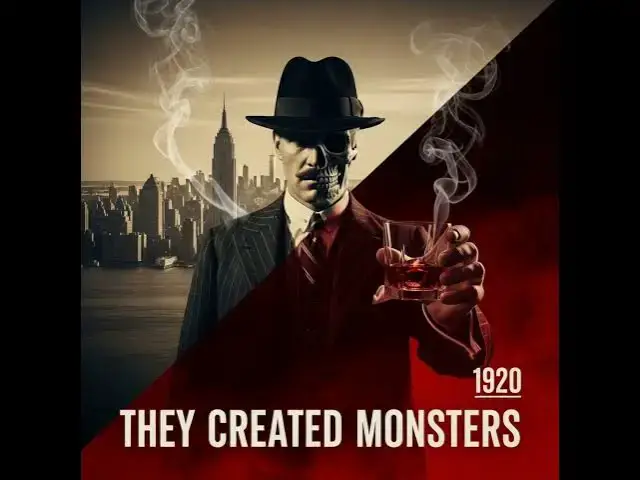
Up next in 10

The U.S. government made one law—and accidentally built the most
powerful criminal empire in Western history.
This is the complete, uncensored origin story of New York's Five
Families. From the desperate Black Hand extortionists terrorizing
immigrant neighborhoods, through the bloody Castellammarese War,
to Lucky Luciano's revolutionary restructuring of American organized
crime—this episode reveals how Prohibition transformed scattered
street gangs into a shadow government that would control crime
for the next century.
Inside this episode, you'll discover:
🔴 The assassination technique that made Joe Masseria believe he
was literally bulletproof—and why that belief killed him
🔴 The secret alliance between Italian and Jewish gangsters that
the old "Mustache Petes" never saw coming until it was too late
🔴 What really happened on the "Night of the Sicilian Vespers"—
Show More Show Less View Video Transcript
0:00
The year is 1920. A single piece of
0:04
paper signed into law by men who
0:06
genuinely believed they understood human
0:08
nature was about to unleash something
0:10
truly monumental. Something that would
0:13
create the most powerful criminal empire
0:15
the western world has ever seen.
0:20
And that single piece of paper, Daniel,
0:22
was the 18th amendment. Prohibition, the
0:25
noble experiment, as they called it,
0:27
right? A moral crusade to save America
0:30
from the evils of alcohol, to protect
0:32
families, to build a more righteous
0:35
nation.
0:36
Exactly, Jesse. What they actually
0:39
built, though, was a monster. Because
0:42
here's the thing those politicians in
0:44
Washington never quite grasped. You
0:46
simply cannot legislate human desire out
0:49
of existence. You can only drive it
0:52
underground into the shadows into the
0:55
waiting arms of men who had no use for
0:58
laws, for morality or for limits.
1:02
Men who, you know, saw opportunity where
1:05
others just saw sin. It's a classic case
1:08
of unintended consequences, but on a
1:10
grand, terrifying scale. They tried to
1:13
dry up the country, and instead they
1:15
watered the roots of organized crime
1:17
like nothing before. Precisely. Welcome
1:21
to Mafia Crime Secrets. I'm Daniel and
1:23
tonight we're going to dive into a story
1:25
that many historians might gloss over.
1:28
Not because they don't know it, but
1:29
because the complete truth is often
1:31
messier, bloodier, and more damning than
1:33
any textbook wants to admit.
1:38
It's the story of how the Italian mafia
1:40
transformed from scattered neighborhood
1:42
gangs into this shadow government that
1:46
would control American crime for the
1:48
next century.
1:50
It's truly the birth of the five
1:52
families.
1:54
And friend, as Daniel said, you're about
1:56
to learn secrets that men literally died
1:59
to protect. But before we get to the
2:02
immediate impact of prohibition, we have
2:04
to set the stage. We need to understand
2:06
the world before.
2:09
That's right, Lily. Before we talk about
2:11
what prohibition created, you need to
2:13
understand what already existed in the
2:15
shadows of America's cities. Because the
2:17
mafia didn't just pop up in New York out
2:19
of nowhere. It started in the
2:21
sunbleleached hills of Sicily, in the
2:23
desperate poverty of southern Italy.
2:28
It's a world where the government was
2:30
often the enemy, where justice came from
2:33
family bonds, and where silence
2:36
was truly the only law that mattered.
2:39
That concept alone, oma, is just so
2:43
deeply ingrained.
2:45
And the word mafia itself, you know,
2:47
it's shrouded in mystery. Some say it's
2:50
from the Arabic mahias, meaning
2:52
aggressive boasting. Others claim it's
2:54
from a Sicilian term for boldness or
2:56
bravado. There's even that romantic
2:58
theory tying it to the 1282 Sicilian
3:01
Vesper's uprising. Morte alrancia Italia
3:04
Anela. Death to the French is Italy's
3:07
cry.
3:09
Whatever its true origins, by the 1800s,
3:11
the mafia had essentially become an
3:13
invisible government in Sicily. A
3:15
network of Koska criminal clans that
3:17
controlled everything from agriculture
3:19
to politics. All through a chilling
3:22
combination of corruption, intimidation,
3:24
and calculated violence.
3:27
These weren't just common criminals,
3:29
though. That's an important distinction.
3:32
They were, in a way, businessmen of the
3:34
shadows. They understood that real power
3:38
doesn't just come from a gun. It comes
3:40
from relationships, from favors owed,
3:43
from making yourself indispensable to
3:46
people who officially might despise you.
3:50
And so when waves of Italian immigrants
3:53
started flooding into America between
3:54
1880 and 1920, we're talking over 4
3:57
million people, they brought their
3:59
skills, their dreams, their recipes, and
4:02
some of them definitely brought the old
4:03
ways with them. It was inevitable
4:07
indeed. And in the crowded tenementss of
4:10
New York's Lower East Side, in Little
4:12
Italy and East Harlem, a reign of terror
4:14
truly emerged in the 1890s that would
4:17
plant the seeds of everything that was
4:19
to come. They called it La Manona, the
4:22
Black Hand.
4:24
The Black Hand. I mean, even the name is
4:27
just sinister. And it wasn't a formal
4:30
organization, was it? It was more of a
4:33
brutal method, an extortion racket that
4:36
prayed on successful Italian immigrants,
4:38
business owners, merchants, anyone who
4:41
had managed to scrape together enough
4:43
money to be worth robbing.
4:47
The technique was simple in its cruelty.
4:49
A victim would receive a letter, always
4:51
featuring the same ominous imagery, a
4:54
black handprint, sometimes a skull,
4:56
sometimes a dripping knife. The message
4:58
was explicit. Pay us or we destroy
5:01
everything you've built. Pay us or your
5:04
business burns. Pay us or your children
5:07
disappear.
5:08
And most victims paid. The few who
5:11
didn't, well, they became examples.
5:14
Bombs detonated in storefronts. Bodies
5:16
appeared in alleys. Children were
5:18
kidnapped and sometimes tragically
5:20
returned in pieces. The message was
5:23
unmistakable. There is no protection
5:26
except the protection you buy from us.
5:30
It's horrifying to think about and the
5:32
police were basically useless, right?
5:35
Either they were corrupted or they were
5:37
just indifferent to what they saw as
5:39
immigrant onim immigrant violence. To
5:42
wider American society, these were just
5:45
Italians killing Italians. Nobody
5:48
important, nobody worth protecting. That
5:51
abandonment must have been so profound
5:53
for the immigrant community.
5:55
It taught them a very harsh lesson,
5:57
Jesse. The only law that protects you is
6:00
the law you create yourself. And that
6:02
vacuum of legitimate protection is
6:05
exactly where certain men began to rise
6:07
above the chaos. Men they called omin
6:10
respectati, men of respect. History
6:13
would give them a different, more
6:14
colorful name, the mustache pets.
6:18
The mustache pets. These were the oldw
6:21
world Sicilians who truly brought
6:22
traditional mafia structure to America.
6:25
Men like Jeppi Joe the boss Maseria who
6:28
arrived in New York around 1902 and
6:30
began building a criminal empire through
6:33
a combination of gambling, extortion,
6:35
and sheer murderous ambition.
6:39
Maseria was a survivor, short, squat,
6:42
perpetually suspicious. There were
6:44
whispers in the underworld that he was
6:46
bulletproof because he dodged so many
6:49
assassination attempts. I mean, legend
6:51
has it that once gunmen unloaded
6:54
multiple rounds at him on a busy street,
6:56
and he just calmly removed his hat,
6:58
examined the bullet holes, and walked
7:00
away unharmed. That's a reputation, you
7:03
know. Bulletproof or just incredibly
7:06
lucky, that reputation made him
7:08
untouchable. By the 1910s, Maseria
7:11
controlled much of the Italian criminal
7:13
activity in Manhattan. He demanded
7:15
tribute from every racket operating in
7:17
his territory. He settled disputes with
7:19
the absolute authority of a feudal lord.
7:22
Cross him and you didn't face a trial,
7:24
you faced a grave. But Maseria wasn't
7:28
alone in his ambitions. Across town,
7:30
another power was rising. Salvatore
7:33
Maranzano, tall, educated,
7:35
sophisticated, had arrived from Sicily
7:38
in 1918 with a fundamentally different
7:40
vision for what American organized crime
7:43
could become.
7:45
So where Maseria was crude, Maranzano
7:48
was cultured. That's quite a contrast.
7:51
He actually devoured books about Julius
7:54
Caesar and Roman military structure like
7:56
he was planning to build an empire, not
7:59
just a criminal enterprise.
8:01
Exactly. He saw himself not as a mere
8:04
gangster, but as a Caesar in waiting. So
8:06
you have two kings with vastly different
8:08
styles. One city, the stage was
8:11
absolutely set for war. But first,
8:14
America was about to hand them a gift
8:15
beyond imagination. A golden mistake, if
8:18
you will.
8:20
And that golden mistake arrived on
8:22
January 17th, 1920. The Volstead Act
8:26
took effect at midnight. The
8:27
manufacturer, sale, and transportation
8:29
of alcoholic beverages became illegal
8:32
throughout the United States of America.
8:34
In theory, this should have destroyed
8:36
the liquor business. But in practice, it
8:39
just handed that business worth hundreds
8:41
of millions of dollars annually to
8:43
anyone willing to break the law.
8:45
It's almost comical in its irony, isn't
8:48
it? The Temperance Crusaders never
8:50
understood that Americans didn't just
8:52
stop wanting to drink, they just stopped
8:54
being able to drink legally.
8:57
And when you criminalize a desire shared
8:59
by millions across every social class,
9:01
you don't eliminate that desire, you
9:04
create an underground economy. And in
9:06
1920, no one, absolutely no one, was
9:09
better positioned to run that economy
9:11
than the men who had spent decades
9:13
operating in the shadows. The math was
9:16
intoxicating, quite literally.
9:19
Within months, the criminal landscape of
9:21
America transformed utterly. Small-time
9:24
racketeers became millionaires. Street
9:26
thugs became businessmen. and the
9:28
Italian gangs of New York suddenly found
9:30
themselves sitting on top of the most
9:32
profitable illegal enterprise in
9:34
American history. A case of decent
9:36
whiskey might cost $15 to produce or
9:39
smuggle into the country. That same case
9:42
could sell for $80 or more in a
9:44
Manhattan speak easy. Multiply that
9:47
margin by millions of thirsty Americans
9:49
and you're looking at profits that would
9:51
make legitimate industrialists weep with
9:53
envy.
9:56
That's an insane profit margin. But it
9:59
wasn't just about selling booze, was it?
10:01
That's what most people don't really
10:03
grasp about prohibition era organized
10:05
crime.
10:07
No, it was about infrastructure. Moving
10:09
illegal alcohol at scale required
10:11
capabilities few criminals possessed.
10:14
You needed smuggling networks, ships
10:16
from Canada, the Caribbean, Europe. You
10:18
needed trucks, warehouses, distribution
10:20
chains, and crucially, you needed
10:23
political protection. police, judges,
10:25
port officials, all on the payroll. It
10:28
became a criminal corporation
10:29
essentially.
10:31
And most importantly, you needed to
10:33
control violence. Because in an illegal
10:36
market, you can't sue your competitors.
10:38
You can't call the police when someone
10:40
steals your shipment. The only contract
10:42
enforcement that exists is the threat of
10:44
death. This reality forced the evolution
10:47
of organized crime.
10:50
Violence as contract enforcement. That's
10:52
a stark way to put it, but undeniably
10:55
true. The scattered neighborhood gangs
10:57
of the Blackhand era just couldn't
10:59
handle operations of this scale, could
11:01
they? Not at all. What emerged instead
11:04
was something far closer to a criminal
11:06
corporation with defined territories,
11:09
clear hierarchies, strategic planning,
11:11
and even primitive forms of human
11:13
resources management. Joe Maseria
11:16
understood this transformation
11:17
instinctively. He began consolidating
11:19
power throughout the early 1920s.
11:22
absorbing smaller gangs, eliminating
11:24
rivals, building a network that
11:26
stretched across Manhattan, Brooklyn,
11:28
and beyond.
11:30
His operation became the template for
11:32
modern organized crime. The rackets
11:34
provided daily income, numbers running,
11:37
lone sharking, labor racketeering. These
11:39
were stable, relatively low-risk
11:41
enterprises that kept cash flowing
11:44
during lean times. The bootlegging, of
11:46
course, provided explosive growth, the
11:48
kind of money that could corrupt entire
11:50
cities. by judges own politicians
11:54
and the muscle provided security. An
11:57
army of young men, many of them born in
12:00
America, hungry for the wealth and
12:02
respect that legitimate society would
12:04
never offer them. And among those young
12:07
men were the future kings of the
12:09
underworld, the ones who would truly
12:11
revolutionize things.
12:13
Exactly. They called themselves the
12:15
Young Turks, a generation of Italian and
12:18
Jewish gangsters who saw the world very
12:20
differently than their oldworld bosses.
12:23
Men like Charles Lucky Luciano.
12:26
Luciano's story is almost the American
12:28
dream filtered through a funhouse
12:30
mirror. Born Salvator Lucania in Sicily
12:32
in 1897. He arrived in New York as a
12:35
child, grew up in the streets of the
12:37
Lower East Side, and by his teenage
12:39
years had already served time for
12:41
narcotics.
12:43
But he wasn't just an ordinary
12:45
streethood, was he? Luchiano was a
12:47
thinker, a networker, someone who
12:50
understood that in America, ethnic
12:52
loyalty was useful, sure, but it was
12:54
also limited. The real money, the real
12:57
power came from cooperation across
13:00
tribal lines.
13:02
His closest allies weren't just
13:03
Italians. They included Meer Lansky, a
13:06
Jewish criminal genius who would become
13:08
known as the mob's accountant. Benjamin
13:10
Bugsy Seagull, a charming psychopath
13:13
with movie star looks and absolutely
13:15
zero regard for human life. And Frank
13:17
Costello, the smoothtalking prime
13:19
minister who could corrupt a politician
13:21
before the man even realized he'd been
13:23
bought.
13:25
Together, these men formed a multithnic
13:27
alliance that the old mustache pets
13:29
found threatening, confusing, and
13:31
ultimately fatally dangerous. They
13:34
worked under Maseria because at the time
13:37
you had to work under someone, but they
13:39
watched. They learned and they waited.
13:41
They had a vision.
13:45
And that vision, what lucky Luchiano
13:48
understood, was something Maseria and
13:50
Maranzano could never grasp. The old way
13:54
of doing business was a death sentence.
13:56
The Sicilian model depended on absolute
13:59
loyalty to a single boss, on blood feuds
14:02
that lasted generations, on ethnic
14:04
purity that excluded potential allies.
14:07
It was a system designed for a small
14:10
Mediterranean island, not for a vast
14:12
American marketplace.
14:15
The wars were the problem, weren't they?
14:17
Every few years, ambitious bosses would
14:19
challenge established powers, and the
14:21
resulting bloodshed would just bring
14:23
heat from law enforcement, destabilize
14:25
business operations, and kill off talent
14:27
that could have been generating profits.
14:29
It was inefficient, to say the least.
14:32
Lutziano saw a different path. What if
14:35
instead of eternal warfare, the major
14:37
crime bosses formed a federation? What
14:40
if they divided territories rationally,
14:42
settled disputes through negotiation
14:44
rather than assassination, and presented
14:46
a united front to both law enforcement
14:48
and the outside world?
14:51
What if they stopped acting like feudal
14:53
lords and started acting like corporate
14:55
executives? It was revolutionary. It was
14:58
blasphemy to the old guard. And it would
15:01
require eliminating everyone who stood
15:03
in the way. But first, Luchiano needed
15:06
to survive the coming storm.
15:10
The coming storm? You mean the
15:11
Castellamares war? By 1930, the tension
15:14
between Joe Maseria and Salvator
15:16
Maranzano had become unbearable. Both
15:19
men controlled vast criminal empires.
15:21
Both believed there was only room for
15:23
one boss of all bosses, and both had
15:26
armies of loyal killers ready to die for
15:28
their cause.
15:30
The trigger was territorial. Maranzano
15:33
had been organizing Sicilian immigrants
15:35
from the town of Castellamari del Gulfo,
15:37
a region in Sicily with deep mafia
15:39
traditions. These Castellamari's
15:42
gangsters resented Maseria's attempts to
15:44
tax their operations and control their
15:47
activities.
15:49
So in early 1930, Maseria made his move.
15:53
He demanded that Maranzano's key allies,
15:56
including a rising young boss named
15:58
Joseph Banano, pay tribute or face
16:00
elimination. When they refused, bodies
16:04
started dropping. The Castellamarizes
16:06
War had officially begun.
16:09
For the next 15 months, New York became
16:11
a brutal battlefield. Car bombs, ambush
16:14
shootings, bodies turning up in rivers,
16:16
in alleys, in the trunks of burnedout
16:19
automobiles. The newspapers reported
16:21
dozens of deaths. But the true toll was
16:23
certainly higher. Many victims just
16:25
vanished. Their fates known only to the
16:27
men who killed them.
16:30
Maseria initially had more resources,
16:32
but Maranzano had better strategy and
16:35
critically a secret weapon. He had
16:37
recruited Luciano. Lucky Luciano was
16:40
technically Maseria's man. But by 1931,
16:43
he had grown disgusted with his boss's
16:45
paranoia, his old world prejudices, and
16:48
most importantly, his inability to see
16:50
that the war was destroying everyone's
16:53
profits.
16:54
Manzano made Luchiano an offer. Help
16:57
eliminate Maseria and you'll become my
17:00
partner in building a new order.
17:02
Luchiano agreed. But as we know, he had
17:05
his own plans brewing beneath the
17:07
surface. He was playing a much longer
17:09
game.
17:11
And that game came to a head on April
17:13
15th, 1931. Joe Maseria sits in Nova
17:17
Villa Tamaro, a Coney Island restaurant,
17:19
finishing a large Italian meal with his
17:21
trusted lieutenant, Lucky Luciano. They
17:24
play cards, they drink wine, they talk
17:26
business,
17:29
and then at some point, Luciano excuses
17:32
himself to use the restroom. While he's
17:34
gone, four gunmen burst through the
17:36
front door. They empty their weapons
17:38
into Joe Maseria. The boss, who claimed
17:40
to be bulletproof, takes at least six
17:42
rounds and dies slumped over the table,
17:45
still clutching the ace of spades. The
17:48
imagery of that is just so potent.
17:51
By the time police arrive, Luchiano is
17:54
conveniently back at the table, shocked
17:56
and bewildered, unable to provide any
17:59
useful information about the killers.
18:01
The shooters. Legend says they included
18:04
Bugsy Seagull, Albert and Estazia, Joe
18:07
Adonis, and Veto Genovves. All future
18:10
powers in their own right. Joe, the
18:13
boss, was dead. Salvator Maranzano had
18:16
won the war. Or so he believed.
18:20
In the aftermath of Maseria's death,
18:22
Salvator Maranzano moved quickly to
18:24
consolidate power. He summoned every
18:26
major Italian crime boss in New York to
18:28
a meeting hall in the Bronx. Hundreds of
18:31
men attended. Some sources say over 500,
18:34
representing every significant racket in
18:36
the city.
18:38
There, Maranzano declared himself Capo
18:40
Dutyic Capi, the boss of all bosses. He
18:43
announced a new structure for organized
18:45
crime, modeled on the Roman legions he
18:47
so admired. The chaotic landscape of
18:50
dozens of small gangs would be
18:52
reorganized into five major families,
18:55
each with its own boss, underboss, and
18:58
hierarchy of captains and soldiers.
19:01
The five families, that's it. And
19:04
Manzano would rule above them all,
19:06
collecting tribute, settling disputes,
19:09
commanding absolute loyalty. It was
19:11
brilliant organizational design. Really,
19:14
it would endure for nearly a century.
19:17
But Maranzano himself, he'd be dead
19:19
within six months because Lucky Luciano
19:22
never intended to serve another master.
19:26
Maranzano made a fatal error. He
19:28
underestimated the young men he had used
19:30
to win the war. Within weeks of his
19:32
coronation, Maranzano became paranoid.
19:35
He correctly sensed that Luciano,
19:37
Castello, Genevves, and their allies
19:39
represented a profound threat to his old
19:41
world vision. He began planning a
19:43
preemptive strike, a mass assassination
19:45
that would eliminate the young Turks and
19:47
secure his power permanently.
19:52
But he made one critical mistake. He
19:54
talked to the wrong people. Word reached
19:57
Luciano that he was targeted. Luciano
19:59
didn't wait. September 10th, 1931.
20:03
Maranzano is in his real estate office
20:05
on Park Avenue, a supposedly legitimate
20:07
front for his criminal empire. He's
20:10
expecting a visit from Luciano, who is
20:12
supposedly coming to pay tribute.
20:15
Instead, four men arrive, claiming to be
20:18
IRS agents investigating tax violations.
20:21
Manzano's guards let them in. Within
20:24
minutes, Manzano is stabbed multiple
20:26
times and shot for good measure. The IRS
20:29
agents just walk out calmly, leaving the
20:32
boss of all bosses bleeding out on his
20:34
office floor. It's so cold, so
20:37
calculated.
20:40
And according to one version of the
20:41
legend, never fully confirmed, but
20:43
repeated so often it has become gospel,
20:46
the night of Maranzano's death saw a
20:48
nationwide purge. 40, 50, perhaps 60
20:51
mustache pets across the country were
20:53
allegedly killed simultaneously,
20:55
eliminating an entire generation of oldw
20:58
world leadership in a single coordinated
21:00
strike. It was known as the night of the
21:02
Sicilian vespers.
21:04
Historians debate whether this night of
21:07
the Sicilian vespers actually occurred
21:09
precisely as legend describes. The
21:11
evidence for a nationwide massacre is
21:13
thin, but the symbolic truth is
21:15
undeniable. The old order was dead. The
21:18
Luciano era had begun, and it ushered in
21:21
the most successful criminal
21:22
organization in American history.
21:26
What Lucky Luciano built in the
21:28
aftermath of the Castellamar's war would
21:31
become just that. He kept Mananzano's
21:34
five families structure. It was too
21:36
elegant to discard. But he eliminated
21:38
the position of boss of bosses. That
21:41
title, he understood, had caused too
21:43
many wars, attracted too much ambition,
21:46
created too many targets.
21:50
Instead, Luciano created the commission.
21:53
This was a ruling body, a board of
21:55
directors for organized crime, if you
21:57
will. The bosses of the five families
21:59
would sit together as equals, making
22:01
decisions through consensus rather than
22:03
dictatorial command. Disputes between
22:05
families would be arbitrated. New
22:07
proposals would be debated. And
22:09
critically, no boss could be killed
22:11
without commission approval. It's like a
22:14
criminal United Nations. The five
22:16
families, as they emerged from this
22:18
reorganization, truly became the
22:20
bedrock. The Luciano family, later
22:23
Genevvesi, with Lucky himself at the
22:25
helm. The Mangano family, later Gambino,
22:28
controlling the waterfront. The Galliano
22:31
family, later in charge of the garment
22:33
district. The Profacei family, later
22:36
Columbbo in Brooklyn. And the Maranzano
22:38
family, later Banano, inherited by a
22:41
barely 30-year-old Joseph Banano.
22:45
Beyond the five families, the commission
22:47
included representatives from other
22:49
major cities, Buffalo, Chicago, Los
22:52
Angeles. It was a national organization,
22:55
a shadow government operating in
22:57
parallel to the legitimate authorities.
23:00
And it worked. For the next 20 years,
23:03
the commission maintained relative peace
23:05
among the families.
23:07
Wars still occurred, of course, but they
23:09
were smaller, more controlled, subject
23:11
to review and sanction. The profits from
23:14
prohibition and the rackets that
23:15
replaced them after prohibition's repeal
23:17
in 1933 flowed steadily upward. It
23:20
really proved Luciano's vision of a more
23:22
corporate approach.
23:25
And when prohibition finally ended in
23:27
December 1933, the gangs didn't just
23:30
disappear, did they? They had become too
23:32
wealthy, too organized, too embedded in
23:35
American life. They just diversified.
23:37
The infrastructure built for
23:39
bootlegging, the smuggling routes, the
23:41
corrupted officials, the distribution
23:43
networks was easily adapted to new
23:46
products. Narcotics, gambling, lone
23:48
sharking.
23:50
Absolutely. The money accumulated during
23:53
prohibition was laundered into
23:55
legitimate businesses, real estate,
23:57
restaurants, waste management,
23:59
construction, and the political
24:01
connections, those proved more valuable
24:04
than anything else. By 1936, Lucky
24:07
Luciano controlled a criminal empire
24:10
worth tens of millions of dollars
24:12
annually. He lived in the Waldorf
24:14
Towers, held court at the best
24:16
restaurants, and was recognized and
24:19
feared throughout the underworld. He was
24:21
in effect the secret emperor of American
24:24
crime.
24:27
And it all traced back to a single
24:29
moment of legislative hubris, the belief
24:32
that you could outlaw human desire and
24:34
not create a monster. The irony is just
24:36
palpable. What was intended as a moral
24:38
cleansing birthed an unstoppable
24:40
criminal machine.
24:43
What you've heard tonight is truly the
24:44
foundation, the birth of something that
24:46
would shape American history for the
24:48
next century. The creation of an
24:50
invisible empire that would corrupt
24:52
institutions, elect presidents, and kill
24:55
anyone who threatened its existence. But
24:57
this is only the beginning.
24:59
The five families would go on to war
25:01
among themselves for decades. They would
25:04
infiltrate industries, own politicians,
25:07
and extend their reach into every corner
25:09
of American life. They'd produce legends
25:12
like Carlo Gambino, the quiet dawn who
25:15
ruled through whispers, and John Gotti,
25:17
the teflon dawn who loved the spotlight
25:20
until it destroyed him. And yes, they
25:23
would produce monsters, men whose
25:25
capacity for violence remains almost
25:27
impossible to comprehend.
25:30
All of it traces back to those desperate
25:32
streets, to those men who saw
25:34
opportunity where others saw sin, to
25:36
that fateful decision to make alcohol
25:38
illegal. Prohibition lasted only 13
25:41
years. Its consequences, however, endure
25:44
to this day. The five families still
25:46
exist. Their structure, the hierarchy
25:48
Luciano built, the rules he established,
25:51
the commission he created, remains
25:53
fundamentally intact nearly a century
25:55
later.
25:57
And the lessons they learned during
25:58
prohibition, those lessons were passed
26:00
down through generations. How to
26:02
corrupt, how to silence, how to build
26:05
power in the shadows. This has been
26:08
Mafia Crime Secrets. We've told you
26:10
things tonight that powerful people
26:12
would prefer stayed buried. Remember,
26:15
the history you learned in school is the
26:17
history that someone allowed you to
26:19
know. The real history is written in
26:22
blood.
26:23
Next time on Mafia Crime Secrets, we're
26:26
going to dive into the truly terrifying
26:28
Murder Inc. years. We'll explore Albert
26:31
and Estasia and the most efficient
26:33
killing machine organized crime ever
26:35
produced. how one man turned
26:37
assassination into a business and how
26:40
the consequences are still being felt
26:42
today.
26:44
Until then, watch the shadows because
26:46
someone in those shadows is always
26:48
watching you. Good night.