Up next in 10


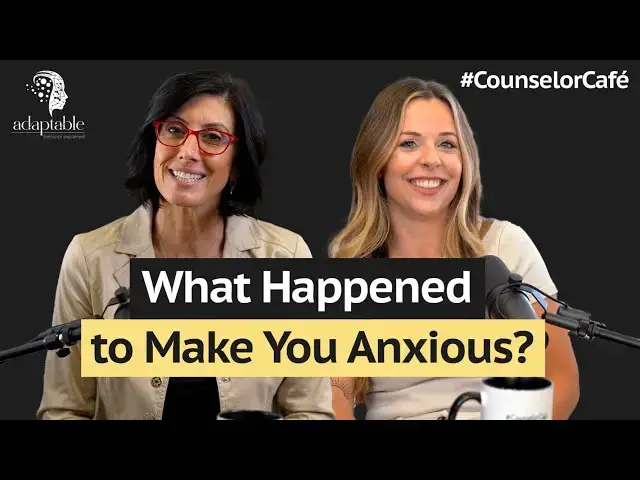
Welcome to Adaptable | Behavior Explained! In this episode, Kelly interviews Jamie Castillo, owner of Find Your Shine Therapy in Tempe, AZ, and author of "What Happened to Make You Anxious?" They discuss the importance of self-awareness and personal exploration. Jamie shares her own experience with anxiety, highlighting the subtle signs and deeper roots that led her to write her book. Discover how anxiety, often seen as a negative force, can be a helpful messenger, urging us to address underlying issues and embrace personal growth. Tune in for insightful conversations on mental health and the nuanced nature of anxiety.
I'm Kelly O'Horo, Attachment based EMDR Therapist, EMDRIA Consultant, and Advanced Trainer. I'm a mom of 5, Nonna of 5, wife, and a healer. I have the honor of spending my workdays walking along side people while they brave their healing journeys. I try to live with the generous assumption that we're all doing the best we can with what we know. Therapists are teachers for the "life stuff" and "emotional vocabulary" that may not have been learned due to gaps in our care givers capabilities. In the last 15 years I've learned that people are freaking amazing, resilient, and inspiring. Most importantly, we are hardwired for connection and for healing!
I hope to bring an authentic, compassionate, and unpolished approach while we explore a variety of topics such as parenting, marriage, relationships, dating, trauma, attachment, adoption, depression, addiction, anxiety, and love! There's a why for all behaviors and an explanation that makes perfect sense as emotion is at the root of it all.
-- Links --
https://linktr.ee/kellyohorolpc
https://youtu.be/rLnARKekvgo
https://www.emdria.org/find-an-emdr-therapist/
Show More Show Less View Video Transcript
0:06
hi everyone I'm Kelly ooro and this is
0:09
adaptable Behavior explained Welcome to
0:12
our show today I'm excited to have you
0:14
here and to introduce a new series
0:17
called counselor Cafe where I have
0:19
chosen to interview other therapists so
0:21
that we can talk about important
0:24
Concepts and things that are plaguing
0:26
people in the world today and I'm really
0:29
excited especially to have Jamie
0:31
Castillo here who is the owner of finder
0:34
shine Therapy in Tempe Arizona and also
0:37
author of this awesome book what
0:39
happened to make you anxious which we
0:41
will be talking about in Greater detail
0:43
on our show today so um therapists
0:46
become therapists because we're
0:47
interested in our craft and we're
0:49
interested in how humans work and I
0:52
don't think I've met a single counselor
0:53
who hasn't had stuff in their history
0:56
that they're more eager to explore so
0:59
part of what makes us more uh aware and
1:02
awake about helping others is really
1:04
knowing and being aware about what's
1:06
going on with us and what motivated us
1:08
to become a therapist so on that I'm
1:10
going to kick Jamie off here tell me a
1:12
little bit about yourself maybe on that
1:14
note you know a little bit something
1:16
gritty about anxiety perhaps since you
1:18
are an
1:20
expert sure thank you so much for having
1:22
me I'm really happy to have this
1:24
conversation it's so important um and in
1:27
terms of my journey you know like you
1:29
mentioned as therapists we are really
1:31
encouraged to do our own work in the
1:33
journey to become a therapist so that we
1:35
can show up for our clients better and
1:38
so in my journey I started unpacking
1:40
some of my own anxiety and uh really
1:44
realized that there's a lot in my
1:46
history that uh contributed to how I
1:49
felt as a a budding therapist and in
1:53
particular I experienced a lot of fear
1:56
around being incompetent sounding dumb
2:00
um and you know when I really unpacked
2:02
that in therapy I realized this actually
2:05
comes from somewhere even though I
2:08
didn't have a a blaringly obvious trauma
2:11
that that caused it um and so that's
2:14
sort of what what prompted me to to do
2:17
my own work and to start um writing this
2:20
book awesome well that that's really
2:23
interesting and I thank you for your
2:24
vulnerability about that I I always tell
2:27
my therapists as I'm teaching and and
2:29
we're doing consultation and Staffing if
2:31
there's something that's in their way
2:33
you know typically it's our counter
2:35
transference and a funny phrase around
2:38
our office is your is showing you
2:40
know we better get your cleaned up
2:41
so that it's out of your way because
2:44
otherwise you're in the way of your
2:45
client so I I have even more respect
2:47
hearing about that and I think it's a
2:49
great uh screening question when you're
2:51
looking for a therapist of your own
2:53
asking them you know do you do your own
2:55
work and are you actively seeking those
2:57
additional help because that's what
2:58
keeps us Sharp it's what keeps us aware
3:00
so thank you for sharing about that I
3:03
really appreciate that vulnerability um
3:05
so tell me you said that's what made you
3:07
start to write the book tell us a little
3:09
bit about the book what we can expect to
3:11
find in it as well as for you the
3:13
purpose for the reader absolutely so I
3:17
learned early on that it was an
3:20
impediment to call myself a trauma
3:22
therapist and to be marketing to people
3:26
who'd experienced trauma
3:28
because are there are certain types of
3:31
trauma that everybody identifies as
3:33
traumatic right and we talk about those
3:36
sometimes they're referred to as big tea
3:37
traumas where people will say if I've
3:40
been through something like abuse or
3:42
assault or um car accidents car yes
3:47
these these big things shootings abuse
3:50
yes Etc that everyone doesn't deny right
3:53
would look at that and say that is
3:55
traumatic those people would likely seek
3:58
out trauma therapy right and so for for
4:02
many of us though it's it's more about
4:05
little underlying things that did happen
4:08
or didn't happen that don't necessarily
4:10
rise to the level of a big te traumatic
4:12
event but that still impact us today and
4:15
so for me doing my own work meant
4:19
exploring what those littl te traumas
4:21
were and and honoring them and being
4:25
able to say no that doesn't rise to the
4:27
level of a a life-threatening experience
4:30
but it certainly impacted me and still
4:32
impacts me and I have an obligation as a
4:35
therapist and as a mom and as a partner
4:37
and as all of these things to look at
4:39
that and to explore that um and and to
4:42
unpack it that's so so true and really
4:46
poignant I appreciate that so much so
4:49
thinking about trauma and symptoms of
4:51
trauma you know I understand anxiety as
4:54
a symptom of trauma I mean it's
4:55
something that's unresolved that we
4:56
haven't yet identified it's originating
4:59
origin of it of its roots and what
5:01
happened like you talk about in the book
5:03
on how to sort of find our way to those
5:05
moments that created the anxiety and our
5:07
nervous systems so let's talk about
5:09
anxiety what how would most people
5:11
understand anxiety is a symptom and what
5:14
are some things that are obvious that we
5:16
all know about anxiety that people can
5:19
really point to but you know which will
5:22
help us to better talk about things that
5:24
most people don't understand as anxiety
5:26
symptoms certainly so for me if somebody
5:30
had asked me are you an anxious person I
5:32
would have said who me no absolutely not
5:35
I'm fine right and for me it was I I
5:38
first noticed it when I was sitting in
5:41
uh my internship for graduate school and
5:45
we I was at an internship site where I
5:47
was providing therapy as an intern and I
5:51
was surrounded by people much more
5:52
experienced than me so therapists who'd
5:55
been doing it a lot longer and every
5:58
time it was sort of a roundt Ted
5:59
Staffing right so we'd go around and it
6:02
was one person's turn to talk or to
6:04
staff a case and I noticed that as it
6:08
would get closer to me my anxiety would
6:11
just rise and rise and rise and and that
6:14
looked like typical symptoms right so my
6:16
heart might beat a little bit faster my
6:19
Palms might get sweaty I might just feel
6:21
sort of keyed up and and those were
6:24
classic signs of anxiety um and and when
6:27
I unpacked that I I really
6:30
found out that there was something
6:32
deeper in my history that had happened
6:34
that created this
6:37
overwhelming kind of ridiculous fear of
6:41
speaking in front of other people and
6:42
sounding
6:43
incompetent and so those were the
6:46
symptoms that that sort of keyed me off
6:49
to knowing okay there's something here
6:51
going on it doesn't seem like other
6:53
people are experiencing this amount of
6:56
anxiety in this room but I think for for
6:59
a lot of people you know those classic
7:01
symptoms can show up but also more
7:04
inconspicuous symptoms like so before
7:07
before we dig into that I want to just
7:09
kind of pull back a little bit because I
7:11
want to make sure that we talk a little
7:12
bit about the fact that anxiety is not a
7:15
bad thing it gives us the energy we need
7:18
to motivate us to avoid failure to
7:21
finish things to not want to uh be
7:24
incomplete with something to get that
7:26
last assignment done to try to do a good
7:29
job so a lot of times people paint
7:31
anxiety as if it's always bad all the
7:33
time and stress is really actually
7:35
really important in small doses not
7:39
acute and all the time and pulled back
7:41
and I know I know that you know that but
7:43
I want to make sure that our viewers
7:44
know that
7:45
because we need anxiety to motivate us
7:48
and I don't I I don't know about you but
7:50
I don't know a person with a master's
7:51
degree or higher that wouldn't probably
7:53
meet criteria for generalized anxiety
7:55
because it helps to motivate success and
7:58
so we're talking today more about those
8:01
symptoms that are so not ecological like
8:03
you just shared where you're getting
8:05
ready to present and you're overwhelmed
8:08
with this fear of sounding like you
8:10
don't belong there and you're not going
8:12
to be competent if you say something or
8:14
it's not going to be correct and that's
8:16
the stuff that throws us into that
8:17
freeze State and ultimately that noisy
8:20
voice in our head that says you're not
8:22
enough you're not smart enough strong
8:25
enough competent enough and that's where
8:27
we can really dig in and so so from
8:29
there uh let's talk about those more
8:32
innocuous symptoms those ones that not
8:35
everybody would understand as anxiety
8:37
that perhaps could Point them to further
8:41
exploring those roots does that sound
8:44
okay with you definitely yeah you make a
8:46
good point about anxiety that fits the
8:48
facts of the situation so if I have a
8:51
presentation coming up and I feel a
8:53
little anxious about it that's going to
8:54
prompt me to prepare and that's helpful
8:58
and when I'm sitting in a meeting with
9:00
my colleagues and it feels like there's
9:02
a lion about to attack me in terms of
9:05
what's going on in my body that's
9:07
disproportionate and that doesn't fit
9:08
the facts and that's worthy of
9:10
intervention so yes the more
9:12
inconspicuous symptoms of anxiety in my
9:15
mind can a lot of times it comes across
9:18
as irritability right when people tend
9:20
to have a short fuse or I feel like I I
9:22
just don't have capacity I don't have
9:24
tolerance
9:26
for much at all and I and I come across
9:30
really irritable um that's an indicator
9:33
to me that there's some anxiety going on
9:35
because when I'm worried
9:38
about things related
9:41
to to survival and livelihood it's
9:44
really hard to to have capacity for
9:46
anything else those are really
9:48
fundamental things that my brain is
9:50
trying toow us down they impede our
9:52
thought they impede our action and it
9:55
shows up as a reaction as opposed to a
9:57
response that's measured in realtime
9:59
ecological safety and so I I think that
10:02
that is a great you know segue into I
10:06
kind of want to share a client story so
10:08
that as people are listening they they
10:11
understand that we are all impacted by
10:15
triggers in our environment and some of
10:17
them are so not obvious as far as how
10:20
they are rooted in our history and in
10:22
our past and how they have informed are
10:25
presenting issues today so I had I had
10:27
this client awesome woman High achiever
10:31
very successful strong marriage
10:34
beautiful home you know just all the
10:35
things and when we first started talking
10:37
you know I said let's dig into your
10:39
history and she's like oh my childhood
10:41
my childhood was per honestly it was
10:43
perfect it's almost embarrassing and we
10:45
get to talking and you know they went to
10:47
church and there was always food on the
10:48
table and her parents showed up to
10:50
everything and she was the valedictorian
10:51
I mean just all the things that would
10:53
make someone go nothing's wrong with
10:56
them why would they be complaining about
10:58
anything and and what she understood in
11:00
herself was you know more irritability
11:03
than she wanted uh impatience some
11:06
symptoms that that look like ADHD and
11:09
probably are ADHD as well as anxiety But
11:12
ultimately there are things that were
11:14
bugging her about herself and there they
11:15
weren't these Global sweeping problems
11:18
that were in infringing on her ability
11:21
to be an awesome productive person but
11:24
she she didn't have patience for a lot
11:26
of compassion she didn't have patience
11:28
for a lot of you know people needing her
11:30
and things like that and so we dig and
11:32
we dig and we spend some time figuring
11:34
out what what happened you know what
11:36
happened that created this IM impatience
11:39
in your nervous system and you know
11:42
eventually we discover that she's a baby
11:45
and when she's a baby her grandfather
11:48
passes
11:49
away and her mom checks out not because
11:53
her mom's a bad mom but because her mom
11:55
is dealing with an extraordinary grief
11:57
experience and and the baby feels that
12:00
you know in my own story my mom had a
12:02
miscarriage when I was like two and she
12:06
checked out so even just an experience
12:09
that happens to our mothers creates this
12:11
instability of support where we don't
12:14
understand where they went why aren't
12:16
they there for us and so we learn things
12:17
like I can't count on anyone or I have
12:19
to make sure everybody's okay or I need
12:22
to double check and and fix all the
12:25
problems because if people have a
12:27
problem they leave me and it's so
12:29
interesting these adaptations that are
12:32
really anxiety
12:34
driven but are super socially supported
12:38
oh she's so helpful she's such a good
12:39
little girl she helps her sibling so
12:42
much she gets straight A she's never got
12:45
a problem in class you know so these are
12:46
the kinds of things where it's they're
12:47
not bad adaptations but they can be a
12:50
problem when they are done too much or
12:52
they're motivated by this sense of angst
12:55
and and something's going to go wrong if
12:58
I don't or I'm not going to be seen as a
12:59
good enough person if I don't so can you
13:02
think of some other examples that would
13:04
match those underlying kind of more of a
13:06
small te experience which really turn
13:09
into a an extraordinary presenting issue
13:13
that is so longlasting for sure thank
13:16
you for sharing that it's it's so common
13:19
right and I think people really discount
13:21
their experiences and say well I don't
13:23
need therapy I my childhood was great
13:25
and that was a similar story for me too
13:28
I had had a good childhood there were
13:30
some adverse experiences in there but
13:32
nothing that I said oh I would
13:35
definitely need therapy for this I was
13:36
traumatized by this but for me it was
13:41
being the youngest in a really high
13:43
achieving family and uh having two older
13:46
brothers that were maybe not technically
13:50
genius level but but I I saw them as
13:53
Geniuses they were so smart and I have
13:56
memories of sitting around at the dinner
13:58
table
13:59
and my parents talking about things and
14:02
my brothers chiming in and talking about
14:04
things that were way too sophisticated
14:06
for me to understand at that age and so
14:08
I would check out and they would all be
14:11
having these robust conversations about
14:15
politics big fancy words that are out of
14:17
your vocabulary because they're not
14:18
appropriate for your age yes exactly and
14:21
so I sort of internalized I I can't keep
14:24
up with this conversation I'm not smart
14:26
enough I'm not capable I'm just going to
14:28
zone out and and there it is play with
14:30
my food right exactly and so had you
14:33
asked me is that a trauma memory I would
14:36
have
14:36
left as most of us would like the dinner
14:39
table was fine right it was fine I was
14:41
just the youngest um but it's it's about
14:44
what we internalize what we take and so
14:46
in those examples yes if I'm perfect if
14:48
I do everything the right way maybe I'll
14:51
get the attention or the praise that I
14:53
need that I'm not getting because my
14:55
mom's checked out that makes so much
14:57
sense so do you have any sections that
15:00
you can share with us from your book
15:02
that are just kind of show stoppy so
15:05
that a person purchasing it can tell us
15:08
what
15:09
they this section could tell us what
15:12
they can expect when they read your book
15:14
so the
15:15
book the premise of the book is that
15:18
anxiety is a helpful messenger the more
15:21
we try to outrun it the the more we try
15:24
to extinguish it and get it to to go
15:26
away the louder it becomes
15:29
and sort of a metaphor for that would be
15:31
if you're in a burning building but you
15:33
don't realize it's burning and
15:35
somebody's shouting to you saying hey
15:36
you're in a burning building and we
15:38
don't hear them and we carry on because
15:40
we we're not listening to them that
15:43
person is not just going to say well
15:45
okay and walk away and go the other
15:46
direction that person is going to say
15:49
hey you're in a burning b they're going
15:50
to get louder they're going to get more
15:52
pronounced they're going to get more
15:53
creative with how they try to convey
15:55
this message to you because there's real
15:57
danger and anxiety does the same thing
16:00
when we ignore it when we extinguish it
16:01
when we suppress it it says I'm going to
16:04
get creative and I'm going to get louder
16:06
and I'm going to cause more symptoms
16:08
because there's a threat here right
16:10
problem is oftentimes it's interpreting
16:13
threats that aren't actually real
16:15
threats so when I'm sitting in my
16:17
perception it's the perception of threat
16:19
based on those things that we talked
16:20
about in history right so when I'm in
16:23
the meeting with my colleagues it's not
16:25
threatening they're very supportive I
16:27
can say something and it will be well
16:30
received and if I say something dumb it
16:32
won't matter it it's a very
16:34
compassionate environment but it was
16:36
like my anxiety was saying danger danger
16:38
danger danger if you say something dumb
16:40
you won't be accepted you won't fit in
16:43
you won't be a good therapist one day
16:45
all of these things that were very
16:47
important to me and so I had to learn to
16:50
rather than suppress it outrun and say
16:52
that's stupid that doesn't make sense
16:53
stupid anxiety go away I had to say this
16:56
has information for me and it's pointing
16:59
me to hey this experience in your past
17:03
was big it was meaningful and we can't
17:06
let it happen again because it felt
17:07
really bad and so as soon as I tuned
17:10
into it and said hey anxiety okay what
17:12
do you have for me hey messenger what
17:15
data are you trying to red flag and
17:17
dashboard me so that I don't ignore it
17:20
exactly and I can with it lean in so the
17:24
premise of the book is designed to help
17:27
you a start
17:29
to befriend your anxiety start to say
17:32
rather than running away from you I'm
17:34
going to turn toward you and I'm going
17:35
to listen and I'm going to see what
17:37
information you have for me which is
17:38
that can take a long time that's a hard
17:40
thing to do because anxiety sucks it's
17:42
uncomfortable we don't want to but we
17:44
want to be thinking about it like it's
17:45
our friend like it's a messenger and so
17:47
part of I think the work and and what
17:49
you so beautifully describe in your book
17:51
is let's lean in and get close to it and
17:53
befriend it so that we understand what
17:55
are you trying to tell me like like
17:57
someone who's got our back as opposed to
18:00
you know the part of us that's
18:01
sabotaging our world it's like if I slow
18:03
down and listen in I've got good
18:05
information I can lean into and and
18:07
explore greater my whole self and my
18:09
whole story exactly awesome so and then
18:11
we let anxiety guide us to the little T
18:14
traumas the the things in the past that
18:17
you wouldn't readily identify as big
18:21
traumatic incidences but the place where
18:23
anxiety was born as a way to help you
18:26
avoid some distressing or or threatening
18:30
situation in the future and then we get
18:32
to look at that and dig around in that
18:35
and help resolve that so that anxiety
18:37
doesn't have to work so hard it doesn't
18:39
have to be the person in the outside of
18:41
the burning building
18:43
screaming it can say it's safe to move
18:47
forward I can rest I can I can ease up a
18:49
little and then the presentation the
18:52
benefit of that is that we get to live
18:53
with less anxiety right which is
18:55
everyone's goal we lean in and then it
18:57
can lessen yeah is there anything you
18:59
want to share directly from from your
19:01
lovely words that drives that home well
19:05
uh I do have one section where I talk
19:06
about how do you know if you need to
19:09
revisit a memory or not so sometimes
19:11
people clients will come in and they'll
19:13
say well yeah this happened but I just
19:16
don't really know if I need to go back
19:17
there and so I talk a little bit about
19:21
uh the disconnect between knowing
19:23
something to be true and something
19:24
feeling really true and you've talked
19:27
about this a lot and you're an expert in
19:30
this area but the disconnect of you know
19:33
I know something wasn't my fault but I
19:35
just feel guilt and shame about it as if
19:37
it were my fault or I know that I'm
19:40
competent I know that I'm capable but I
19:42
just feel so impostor yes yes the
19:47
impostor syndrome the sphere of failure
19:49
and so the book in that section helps
19:52
you identify ways in which you know
19:54
something to be true about yourself
19:56
others or the world
19:59
but it doesn't feel true and that's a
20:00
good indicator that there's work to be
20:02
done there aw and the good news is
20:05
there's work that's effective to help
20:07
people uncover unpack and get to the
20:10
roots of their issues and fully resolve
20:12
them resolve them for once and for all
20:15
you know I talk in other episodes about
20:16
EMDR therapy which is such a robust
20:19
beautiful therapy that really does
20:21
address the roots of stored
20:23
maladaptively encode memories that are
20:26
plaguing us today and so you know as
20:28
EMDR therapists we know that it works to
20:31
effectively change the way we relate
20:34
with our presenting symptoms namely
20:37
anxiety in this this show and I love
20:39
that a person can read this book and
20:41
really do a lot of pre-work yes to get
20:44
to and and in conjunction with their
20:46
work to go see you know a bottom-up
20:48
therapist like EMDR or somatic
20:50
experiencing or any other
20:52
mindfulness-based approach that
20:53
addresses the somatically stored and
20:55
cellularly stored information that we
20:57
have that we all have that could
21:00
potentially be you know causing us
21:02
problems today so I'm so grateful that
21:04
you wrote this book and that you put the
21:07
time and love and authenticity into it
21:09
because it's such an awesome book I
21:10
highly recommend you pick up this book
21:13
if anxiety bothers you or someone that
21:15
you know or love it would be just a
21:17
great uh thoughtful thing to share uh
21:19
you can get it on Amazon and we'll put
21:21
that link in the uh section below and
21:23
the the comments below but I just really
21:26
appreciate you coming today and I thank
21:29
you for being here and uh really get
21:32
this book if you have a book uh list
21:34
that you're looking to grab and I just
21:37
want to thank all of you for tuning in
21:38
to our episode today and don't forget to
21:41
lead with love it'll never steer you
21:45
[Music]
21:57
wrong
22:02
[Music]
Mental Health
Anxiety & Stress
People & Society
Counseling Services