0:00
Why don't you tell your audience about
0:03
>> We are really Thank you for bringing
0:05
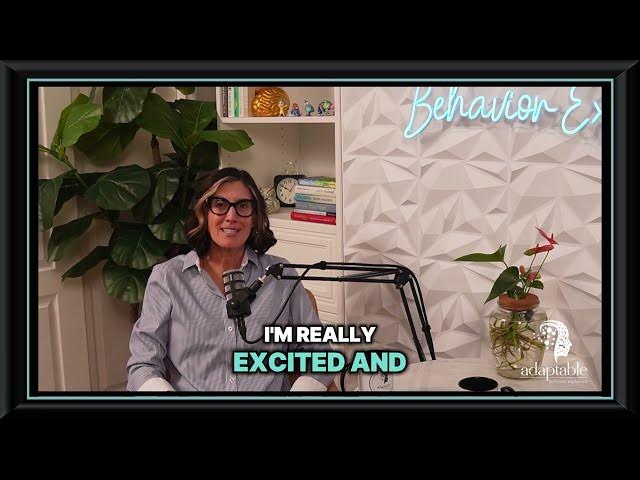
that up. I'm really excited and we had
0:07
no plans to end up being seen by as many
0:10
people as we are, but we hit over
0:12
100,000 people a couple of weeks ago and
0:14
I'm just elated that that many people
0:16
are taking in what we're saying and
0:19
gaining hopefully nuggets of wisdom
0:22
related to human behavior and
0:24
relationships and the the condition of
0:26
our species and and ultimately how
0:29
amazingly resilient and adaptable that
0:31
we actually are. And I am so lucky to
0:34
sit side by side with clients all day
0:37
long and really be at the front row of
0:39
their resilience and their adaptability.
0:41
And that's that's really what prompted
0:42
me wanting to do this show is people
0:44
need to understand how amazing all of
0:47
our fantastic and creative adaptations
0:50
are that we have to do to survive our
0:52
environments, whether they are
0:53
generational or whether they are from
0:55
our family systems. And that's really
0:56
what the show started as. And it's
0:59
really exciting to me that so many of
1:01
you are benefiting from it. and have
1:03
said you want more. So, thank you for
1:07
>> Great. So, I'm just going to have a
1:08
couple questions for you today and just
1:11
>> how you got to where you are today and
1:13
where you want to go in the future. And
1:15
really on the theme of being adaptable,
1:18
you've made some adjustments from season
1:20
1 to season two now to season 3. Before
1:22
we talk about season 3, could you just
1:25
share with the audience what was your
1:28
vision when you started season 1? Why
1:30
did you even start this in the first
1:31
place? And now qualify it and that
1:34
social media is not really our bag,
1:36
right? It's not like we do this because
1:39
we're seeking likes or subscribers or
1:41
monetization. This was a side gig. So,
1:44
just talk a little bit about what you
1:46
>> Um, well, as an EMDR therapist, for
1:49
those of you who've been following
1:50
along, one of the concepts around that
1:53
kind of therapy is that we help to
1:55
resolve memories that are maladaptively
1:57
encoded in people's trauma stories. And
1:59
in order to do that, we're basically
2:01
like plucking out a weed of bad
2:03
information and planting in a new idea
2:06
that's related to adaptive information
2:08
so that our experiences can now be
2:11
encoded with more up-to-date
2:12
information. And what I found myself
2:15
doing day over, you know, day in and day
2:17
out was explaining some of the same
2:19
concepts really repetitively. And I just
2:21
thought it would be more efficient if
2:24
everybody could just watch this video
2:26
and then come back to their next session
2:28
about codependency or about boundaries
2:30
or about attachment and then they could
2:32
come back more prepared. And I really
2:34
wanted it to be something that we could
2:37
allow people from our practice to be
2:40
better prepared and more efficient with
2:42
their therapeutic experience.