Up next in 10


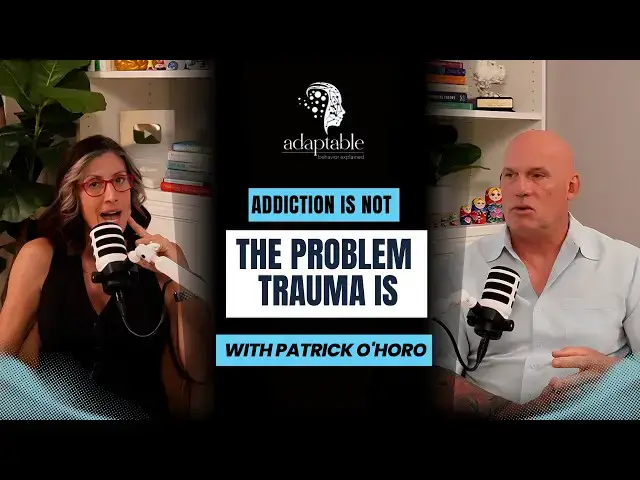
Welcome to Adaptable | Behavior Explained! In this episode, we take a deeper look at addiction and what’s happening beneath the surface with Patrick O'Horo. Rather than being the core problem, addiction is often explored as a coping response to unresolved trauma, emotional pain, and nervous system dysregulation. Together, we discuss how healing changes when we move beyond behavior and address the underlying trauma driving it.
I'm Kelly O'Horo, Attachment based EMDR Therapist, EMDRIA Consultant, and Advanced Trainer. I'm a mom of 5, Nonna of 5, wife, and a healer. I have the honor of spending my workdays walking along side people while they brave their healing journeys. I try to live with the generous assumption that we're all doing the best we can with what we know. Therapists are teachers for the "life stuff" and "emotional vocabulary" that may not have been learned due to gaps in our care givers capabilities. In the last 15 years I've learned that people are freaking amazing, resilient, and inspiring. Most importantly, we are hardwired for connection and for healing!
I hope to bring an authentic, compassionate, and unpolished approach while we explore a variety of topics such as parenting, marriage, relationships, dating, trauma, attachment, adoption, depression, addiction, anxiety, and love! There's a why for all behaviors and an explanation that makes perfect sense as emotion is at the root of it all.
-- Links --
https://linktr.ee/kellyohorolpc
https://youtu.be/rLnARKekvgo
https://www.emdria.org/find-an-emdr-therapist/
Show More Show Less View Video Transcript
0:06
Hi everyone. I'm Kelly O'Hora.
0:09
And this is Adaptable Behavior
0:11
Explained. Hi there everybody. Welcome
0:13
back to Adaptable. I'm Kelly O'Hora and
0:15
I'm here with my guest Patrick O'Hora
0:17
who is an LAC and EMDR therapist. Um
0:20
you're going to want to watch last
0:22
week's episode if you did not yet see it
0:24
because it will very much roll into
0:27
today's episode more nicely. Uh but we
0:29
just had so much to talk about that we
0:31
ran out of time. And so let me give you
0:33
a little bit of a background. Patrick,
0:34
when most people think about addiction,
0:37
they think in terms of diagnoses, of
0:39
substances, of labels and behaviors. And
0:43
from a trauma-informed perspective,
0:46
especially drawing from Gabor Maté's
0:48
work who really revolutionized the way I
0:51
thought of addiction early in my career,
0:54
I very much came from it was in the book
0:57
addiction means this. If you drink more
0:59
than this many drinks a day and this
1:01
many times a week, then it falls into a
1:02
specific category because we need to
1:04
know how to label someone for a lack of
1:07
a better word so that we understand how
1:08
to treat them.
1:09
>> So well, I think there's two components,
1:12
right? Which label means identify.
1:14
>> Right.
1:14
>> So how do I identify you? Do I identify
1:16
you as a patient? Do I identify you as a
1:18
victim? Do I identify you as a
1:20
perpetrator or an abuser?
1:22
>> And as the and as the problem. And
1:24
that's where a lot of times even in
1:25
diagnoses, people say they have
1:28
substance abuse disorder or substance
1:30
abuse or misuse or things like that. And
1:32
how we categorize for the sake of our
1:34
chart and our insurance purposes,
1:36
there's criteria that we have to map
1:38
behaviors up against. And so where the
1:41
medical model meets actual treatment in
1:44
real time doesn't usually consistently
1:46
jive. And especially if you subscribe to
1:50
treatment in the way that I do and
1:52
Patrick does, which is
1:54
behaviors that are addictive, misuse,
1:56
overuse in nature with substances or
1:59
really I call them the two muches,
2:00
really anything that we do that's out of
2:02
balance with a healthy standpoint gets
2:05
labeled as something. And when I think
2:07
about the two muches, they are
2:10
99%
2:11
the product of symptomology of
2:14
unresolved nervous system
2:16
nervous system issues and trauma that
2:19
hasn't been resolved and the nervous
2:20
system is just rattled. And so people
2:23
then use things, behaviors to help
2:27
mediate the brain and what our bodies
2:30
are dealing with. And so one of the
2:32
biggest shifts that Maté Gabor Maté, if
2:35
you haven't watched him and you're
2:37
interested in this topic, it's going to
2:39
blow your mind. You're going to love it
2:41
because he really encourages us to see
2:44
addiction not as a primary problem but
2:46
as a secondary issue
2:48
um and it's the solution. And it's a
2:51
very effective solution for a nervous
2:53
system that has otherwise been not
2:55
addressed. And so addictive behaviors
2:58
regulate the nervous system. They numb
3:01
the pain. They soothe anxiety. They
3:03
create relief. They create connection,
3:06
although faulty connection typically.
3:08
It's just now a paired behavior and
3:11
sometimes a sense of control in the
3:13
situation that was otherwise absent. And
3:16
so when we think about that and those
3:18
things that were often times missing
3:20
earlier in life, we have to change the
3:22
way we show up with our clients and and
3:24
also with people that you love that are
3:27
dealing with this. It's not, you know,
3:29
why can't you stop? We start asking
3:32
questions more like, how did this help
3:34
you to survive?
3:36
So tell me a little bit from your
3:38
perspective how given the conversation
3:41
that we had in our last episode and how
3:43
that marries into this conversation.
3:47
>> Yeah, the
3:49
the visual that I had as you were
3:50
speaking is that [snorts] addiction
3:54
or the labels of addict
3:56
uh
3:57
if if I have somebody that's on a
3:58
bicycle and they just fall over all the
4:01
time and we look at them and we say
4:04
you know, that's that's the problem.
4:06
That's the behavior, right? You're
4:07
you're falling down.
4:09
And we don't look at
4:12
what's what's wrong with the bike, the
4:14
machine, right? We just assume
4:15
everybody's got a bike and it's but a
4:17
bike if it's not moving, it falls over.
4:20
It's just physics. Maybe maybe that
4:22
person needs a third wheel. Maybe their
4:25
chain's broken. Maybe somebody took
4:26
their pedals, right? It's like how do we
4:28
look at instead of just looking at the
4:30
behavior
4:31
>> metaphor, maybe they're missing a foot.
4:33
>> Maybe they're missing a foot, right? So
4:35
if if we look at that I I know it's a
4:37
silly analogy, but if we look at that
4:39
and we move beyond why is that person
4:41
falling over on their bike all the time
4:44
and we go back to what fundamentally was
4:47
was missing. So what I like about
4:49
Gabor's perspective is twofold. That
4:53
addiction isn't due to a
4:56
corrupted pleasure-seeking behavior
4:59
but that it's a manifestation of
5:01
treating pain.
5:02
>> Mhm.
5:03
>> And so
5:04
>> That's where it starts.
5:04
>> Mhm. So if we look at if we look at you
5:07
know, what what pain are we trying to
5:09
heal?
5:11
I think the question
5:13
as opposed to saying what's wrong with
5:14
the behavior is what's right about the
5:16
behavior.
5:17
>> Yeah.
5:18
And when you think about how trauma
5:20
shows up in people's lives, especially
5:22
in our early attachment trauma
5:25
let's talk about how those previously
5:29
experienced life events show up in our
5:32
addiction patterns or in our addiction
5:34
behaviors. What comes up for you?
5:37
>> Well, I think first off, I just look at
5:40
the environment that we're in.
5:43
You know, oftentimes you know, I'm a
5:45
child of the '70s. So you know, we were
5:47
told this is your brain on drugs and if
5:49
you take a drug, you know, you're going
5:51
to become a drug addict. Your body is
5:54
predisposed to become addictive.
5:56
>> Mhm.
5:57
>> If you follow the AA model, right?
5:59
They'll say some of us are just born
6:00
defective, which I don't subscribe to
6:02
either. But, you know, if you take the
6:04
wrong drug, uh if you're out partying
6:06
and you take the wrong drug, you're just
6:08
going to become hooked and you're going
6:09
to become an addict. And so,
6:11
>> whole gateway drug with marijuana came
6:13
from.
6:13
>> Yeah, and I think a lot of people have
6:15
looked at that model and when they see
6:17
somebody struggling with the
6:19
consequences of addiction or addictive
6:21
behavior, whether that's a chemical
6:22
dependency or a process dependency,
6:25
that we look at them and say, "Well, why
6:27
don't you just stop doing that thing?"
6:29
Or
6:31
you did this to yourself because you
6:32
sought pleasure-seeking in the first
6:35
place, right? So, it's kind of the the
6:36
cricket in the in the ants.
6:38
>> in fact, they're typically seeking
6:40
relief from how they already feel.
6:42
>> W- Right. And so, that's where
6:44
>> accident, it works.
6:46
>> Right. So, that's where I go back to
6:47
kind of like the rat city experiments,
6:50
right? So, just to qualify that for
6:52
everyone, you know, when when we looked
6:54
at uh chemical dependency and addiction
6:57
behavior, if we tested in rats, you
6:59
could put a rat in a cage and you could
7:01
give them water and food and sustenance
7:03
or you could give them a bottle full of
7:05
a stimulant and they will take that
7:07
stimulant until they die. And so, that
7:09
really correlates with our
7:12
human perspective of oh, if you take
7:14
these drugs, you'll become chemically
7:16
hooked and you will do that until you
7:18
die.
7:20
But, somebody uh was was smart enough to
7:22
say, "Well, let let me change the
7:23
experiment." And so, they created a
7:25
place called Rat Park.
7:27
I think it was Bruce Alexander, if I'm
7:29
getting that right. But, uh Rat Park was
7:32
where they created an environment where
7:34
the rats could They had all the food
7:36
they wanted. They had all of the things
7:38
to keep them stimulated from an activity
7:40
perspective. They could procreate. There
7:41
was plenty of mates and mating habits.
7:44
>> They have the attachment and this match.
7:45
>> so they had all of their needs met and
7:47
then they could
7:49
they could put the nutrients or they
7:50
could put the drugs and then the drug
7:51
addiction was actually very very low.
7:54
Right? Rats didn't choose to become
7:56
chemically addicted because they weren't
7:58
seeking relief from the suffering of
8:01
isolation in a cave cage like you know,
8:05
no no coupling, no connection, no
8:07
stimulation, no activity.
8:08
>> Nothing that's biologically part of how
8:10
we're affectively wired was missing in
8:12
that circumstance and because of that
8:15
they didn't seek
8:16
>> seek it.
8:16
>> the relief of it. Which is so in kind
8:20
with what we see in humans.
8:21
>> So I mean I know that there's there's
8:23
caveats when we look at things like
8:24
opioids and benzodiazepines and things
8:27
like that and their relationship with
8:28
GABA and physical dependency, even
8:30
alcohol can have a physical dependency.
8:32
So that's not what we're talking about,
8:33
right? What we're talking about is the
8:35
behavioral aspects and components of
8:38
classical addiction or abuse of a drug
8:41
or a process. And so when we take that
8:44
factor out then when we can look at a
8:47
client and they come in and they say I
8:48
struggle with this
8:50
addiction or this behavior.
8:53
Instead of saying, well, that's clearly
8:55
wrong. Let's give you a framework to no
8:57
longer do that. I self-identify as
9:00
someone that's defective or broken or
9:02
does something bad.
9:04
And sit there and say, well, what's the
9:05
good thing about this? Like when you
9:07
when you do use the substance or you do
9:08
do this process, like what do you get
9:10
from it? What is great about it?
9:12
>> are the positive feelings now associated
9:14
with that? And in the next episode I'm
9:17
going to go in more deeply to how all of
9:19
those work, but it's I have found that
9:22
some of the most interesting and and
9:24
honestly fun work to do with people
9:26
because they don't understand how that's
9:28
coupled.
9:29
>> I recently I'm working with a client
9:31
that is is working on some sexual
9:34
process issues and just seeking of
9:37
comfort and you know, is it deviant? Is
9:40
it an appetite issue? Like what is the
9:42
cause of this? And you know, ultimately
9:44
we've been able to you know, the
9:46
conceptualization of this person's
9:49
story and how connection is manifested
9:53
in in his life. And
9:55
>> does not receive consistent attunement
9:58
and connection and an and an available
10:01
nurturing mother enough of the time,
10:04
there's a deficit. There's a neediness
10:06
and there's a gap and that is just part
10:08
of what happens when we don't have
10:10
really secure attention and love from us
10:13
primarily the mother. And so what
10:16
happened to you? That's the question we
10:17
want to start asking.
10:18
>> And sometimes, you know, there's whether
10:21
it's whether it's a chemical or a
10:22
process addiction,
10:24
I think it's in the questions and not
10:26
like what are the behaviors? Let me map
10:27
them out. Do they correlate to some
10:30
you know, matrix that says where you are
10:32
or how we treat you, but actually
10:34
looking at looking at the good
10:36
components of it and then the
10:37
predecessor lived state. Like often
10:40
times what I'm checking for also is, you
10:43
know, I'll hear a client say, "Well, I
10:44
was I'm bored." You know, when do you
10:46
see this activity happening? When you
10:49
when you see you need to use porn or
10:51
masturbate or seek
10:53
couple connection or use a drug and
10:56
they'll say boredom and I think boredom
10:59
really needs to be broken down
11:00
>> It's an
11:01
>> to a nervous system state.
11:02
>> It's honestly like an an absence of
11:05
tolerance of calm. It's a an it's a
11:08
phobia to being calm, which is what ends
11:11
up being labeled boredom. I can't
11:14
tolerate not having something to do. I
11:15
can't be slow enough and be totally
11:18
present in my body not doing something
11:21
then I have to immediately pivot towards
11:23
something else. So, while I agree with
11:25
you that it's not a pleasure seeking
11:27
circuit, initially it does end up
11:29
compounded with that. It's essentially
11:33
>> like a pleasure-seeking behavior.
11:34
>> Yes, but it starts as a relief-seeking
11:37
behavior, almost always. I won't say
11:40
always. There are some people that just
11:41
happen into a addictive behavior because
11:44
of time and place, and then they just
11:45
can't get enough of it, and it wasn't
11:47
necessarily from, you know, the trauma
11:49
story of their early years, but it
11:51
certainly isn't the most common, and
11:53
it's not the norm. We But even then, we
11:54
want to look backwards.
11:56
>> But even then, like let's, you know, a
11:57
previous example in the past episode we
11:59
were talking about cigarettes, right?
12:01
Nicotine. And, you know, in my own
12:03
story, there was a component of there
12:05
was a very social aspect of of going to
12:08
the smoke break and having connection
12:09
and getting to to meet and talk to
12:11
people and just identifying who your
12:13
tribe was.
12:14
>> My experience in doing feeling state
12:16
addiction protocol is the number one
12:19
uncoupling emotion we have to do
12:22
first for smokers is connection. The
12:25
first feeling they most identify with is
12:28
connection, and I'll talk more about
12:29
that in the next episode because of what
12:32
you're just saying right now.
12:33
>> Mhm. But the same can be said for a lot
12:35
of process or chemical addictions, which
12:38
is that
12:39
that preceding state of boredom.
12:42
Boredom is a I I think is just a higher
12:45
level classification of I don't know
12:46
what to do with feeling X, Y, or Z. Of
12:49
anxiety, of listlessness,
12:52
right? Whatever that is. You know,
12:54
boredom is is lack of knowing what to do
12:56
next. If I look at a little kid and
12:57
they're like, "I'm bored."
12:59
What other feeling state is going with
13:01
that? That antsiness, that need to move
13:03
their body,
13:05
uh their disconnection from what
13:06
everybody else is doing. So, boredom is
13:09
a classification to me of I don't know
13:11
what to do next. But what's the
13:13
underlying feeling state? Is that an
13:14
anxious, depressed, disconnected, and
13:17
aloneness?
13:18
>> Yeah. And I've seen a
13:21
such a significant increase in this
13:24
problem even much, much younger because
13:27
kids are on tablets and phones and games
13:31
and TV and they don't That's That's what
13:35
parents are doing when they don't want
13:36
to entertain their kids or they don't
13:38
want to listen to their kids with
13:40
whatever their bored stuff is or they
13:42
don't have the capacity or the bandwidth
13:44
to like provide opportunities that are
13:46
otherwise stimulating. And so this is
13:48
the default and I am seeing in like
13:50
teens and adults such a chronic state of
13:53
inability to be present. It's just a
13:57
reflex to pick up some distraction and
13:59
it's it's so powerful and it's designed
14:02
that way. I mean, it delivers the most
14:04
immediate dopamine hit and I see it all
14:07
the time.
14:08
>> Well, it's it's two-fold.
14:09
>> our kids when we were raising them. Like
14:11
we would let them have video games and
14:12
then when we'd take them away, they were
14:13
just like
14:15
it was so nuts and this is before I knew
14:16
anything about this. I was like, they
14:18
are bad, this is bad, we must remove it
14:20
because I've never seen action. Like
14:21
they're so
14:22
>> I think this is just another
14:23
manifestation too of you know, building
14:25
upon like Bowlby and Ainsworth, right?
14:28
This this strange experiment with with a
14:31
with attachment styles and that was, you
14:33
know, the parent leaving a room. But
14:36
parents are leaving the room as soon as
14:37
they get on their screen.
14:39
>> Absolutely.
14:40
>> don't know it. They don't even realize
14:42
that.
14:43
>> then looking at how the child learns to
14:45
get attention, you know, where you know,
14:48
that seen it so many times that the
14:49
still face experiment or I think her
14:52
name is Molly Wright, the 7-year-old
14:54
that did the TED Talk
14:55
>> Oh my gosh. Oh my gosh.
14:56
>> We'll we'll pin it.
14:57
>> So put that link in the description of
14:59
that talk. It's one of the best ones
15:00
I've
15:00
>> But we have two aspects, right? Of the
15:02
parents' inability to harness theirs and
15:05
then what the child learns about
15:07
attention
15:08
and then attention-seeking behavior and
15:10
then what is the parent doing but what
15:12
they do.
15:13
So they now give the child a tablet or
15:15
something to, you know, address that.
15:18
Well, why not just give them nicotine?
15:19
Why not just give them Right. Or, you
15:21
know, there was you know, even with the
15:23
stimulants with you know, my kid has
15:25
ADHD or ADD. So stimulant, stimulant,
15:28
stimulant and then you know, they're
15:29
maturing into adults who have no
15:32
tolerance to handle the
15:36
their lived emotional state.
15:38
>> Right. I was a child of that story and
15:39
we didn't know what it was, you know,
15:41
when you're 50, everybody who had
15:43
something there was no label for it or
15:44
way to work around, but I was the kid
15:46
that was constantly being redirected to
15:48
stop talking and my mom had me in every
15:50
sport she could possibly find because
15:53
otherwise I drove her crazy with my
15:54
inability to like
15:56
>> Mhm.
15:56
>> be still,
15:57
not be bored and so she pivoted that,
16:00
you know, or diverted my behavior into
16:02
things that I think very much served me,
16:05
but we didn't have video games when I
16:06
was a kid. We didn't have the computer.
16:08
We didn't have all of those things that
16:09
would have been probably cheaper and
16:11
easier for her to
16:13
you know, give me as a distraction so
16:14
that I wasn't constantly needing
16:15
something from her, you know, so
16:17
>> Yeah, but all my books were covered with
16:18
doodles, right? Like you're constantly
16:20
drawing or doing something to to to deal
16:23
with that.
16:24
>> the classroom? Oh, 100%. There was never
16:26
me just sitting and listening. I was
16:28
always doing something else.
16:29
>> Well, I know Dr. Daniel Amen's doing
16:31
more research and and and talking about
16:34
this as well.
16:36
>> So much.
16:37
>> Both from the from the ADHD, what's
16:39
going on in the brain. I know he
16:41
classifies like seven different types of
16:43
ADHD, but then just looking at how we're
16:47
you know, how we're actually coding kids
16:50
nervous systems
16:51
>> Right.
16:51
>> tablets. And
16:54
I think the last thing I saw on him is
16:55
like, you know, 8-years-old. Like if you
16:57
can keep them off
16:58
>> Right. Like 100%.
16:59
>> 100% till they're like 8-years-old, like
17:01
there's just no reason to do that. And I
17:04
think as parents and grandparents or
17:06
caregivers, we also need to think about
17:09
like we're not giving ourselves that
17:11
drug, but it kind of is. Like if I give
17:13
that kid a tablet to
17:15
calm their nervous system
17:17
so that I can calm my nervous system is
17:19
like giving that kid a cigarette
17:22
to get them to chill out so I can chill
17:24
out.
17:24
>> Ouch.
17:25
>> Right? And being the child that was
17:27
given the cigarette so I would calm
17:29
down, I'm going to go ahead and say
17:31
maybe you don't want to do that.
17:33
>> Right.
17:33
>> Right? And so if we think about the
17:34
tablet as a drug
17:36
>> It's so hard. Like we had our grandkids
17:37
that last weekend and we, you know, we
17:39
were like this has been a long time
17:41
since we've had this many people that
17:43
need us for this much time.
17:44
>> and the detox that it takes
17:46
>> a slight I do I do recall a little bit
17:48
of a detox experience, but I just said
17:50
we're just not going to do that this
17:51
weekend. We're going to just take a
17:52
break from that. But I mean the demand
17:54
on us was high.
17:56
>> And also noticing within me how I had to
17:58
watch my behavior because I'm modeling
18:00
it, right? Monkey see, monkey do. So
18:02
>> you're just as guilty as any of us on
18:04
jumping on a phone when you're bored or
18:05
whatever else. So I totally get that.
18:08
>> told me I was born guilty. That's how
18:10
that goes. [laughter]
18:12
>> But I was thinking about like the demand
18:13
and I think, you know, I I I tell my
18:15
kids and and in-laws, my
18:17
daughters-in-law, but like it's a lot
18:19
easier to be great at this stuff in 24
18:22
and 48-hour spans. It's really hard to
18:25
do it all the time. And so parents also
18:28
cut yourself some slack because it is
18:30
just so hard to keep up with the needs
18:32
and it's also hard to be the only bad
18:34
guy on the street that doesn't allow
18:35
your kids to have all of these access
18:37
points. So it's an it's a challenging
18:39
time to be a parent right now.
18:41
And as I say that
18:44
we just we just have to reach the bar
18:47
and in order to keep our kids' brains
18:49
the way they need to be so that we're
18:50
not setting [snorts] them up for this
18:52
problem, but
18:52
>> Circling back to the addiction topic and
18:55
even just thinking about adults
18:57
is there's so many adults that identify
19:02
their behavior again chemically or
19:04
processed as some type of an addiction
19:07
and they have a core underlying belief
19:09
of whether that's shameful or not
19:11
shameful to them.
19:12
>> And identity.
19:13
>> Or acceptable in identity. There's a lot
19:15
of components, but something why we
19:18
wanted to circle back is your use of the
19:19
words sustained.
19:21
>> Mhm.
19:22
>> And and that's often the challenge is
19:24
that I can I can handle my affect, I can
19:27
handle my current window of tolerance,
19:30
and I can manage
19:31
like if I see pains like balancing
19:33
plates. Some of us can get very, very
19:36
good at balancing a lot of pain
19:38
>> Mhm.
19:39
>> until it becomes one plate too many. And
19:41
in order to avoid all of the plates
19:43
crashing down,
19:44
>> Right.
19:45
>> now I need to do that. And that's the
19:46
cycle that we see all the time with that
19:48
I'm having a hard time staying the
19:50
course of of not going back to that
19:53
process or that chemical.
19:55
>> Which becomes a coping strategy.
19:57
>> It is a coping strategy.
19:58
>> I mean, it it's a band-aid on a broken
20:00
ankle coping strategy, but also
20:03
especially those who started those
20:05
behaviors so young, there's deeply
20:07
rooted pathways that has been reinforced
20:10
that this is effective. And so it's a
20:12
lot harder to change those pathways
20:14
without doing some specific addiction
20:16
protocols for the brain to develop new
20:18
pathways of of behavioral change. And so
20:20
>> Which is classical conditioning.
20:21
>> Yeah, there's there's that, but but I
20:23
think when you think about like we
20:25
cannot just focus on abstinence and
20:27
behavioral change and white knuckling it
20:29
or controlling behavior because it
20:31
misses the most important part, which is
20:34
really getting to the underlying reason
20:36
that someone needs to use in the first
20:38
place. And if we don't address the
20:40
environment that we are in, we don't
20:43
address helping people have the kind of
20:45
care and connection and support they
20:48
need,
20:49
addressing
20:50
people with more compassion,
20:53
curiosity, understanding. Those are the
20:55
things that we're often missing in
20:58
treatment centers, in the addiction
21:00
model, and in family systems when we
21:03
talk about this.
21:03
>> As practitioners, I I often what we miss
21:06
in the interviewing
21:08
and conceptualization component. Just
21:10
tell me about the the best time when you
21:12
got high or drunk or did this thing.
21:14
>> And it gets locked in.
21:16
>> And it gets locked in but and and not
21:18
even from like a a protocol perspective
21:20
but from a curiosity perspective of how
21:23
did this enter your life and tell me all
21:25
the good things about it because the the
21:28
narratives will emerge and then it's
21:30
about okay, how do we find productive
21:32
ways
21:33
or more adaptive ways to get that need
21:36
met without the classic substance.
21:39
>> hard even when we figure that out, it's
21:41
very hard to get those positive feelings
21:44
that are state dependent and
21:45
behaviorally coupled uncoupled without
21:49
doing honestly some EMDR on it. They
21:51
just don't want to uncouple because it's
21:53
like pathway works, pathway works, brain
21:55
goes that way, what fires together wires
21:57
together and it's just something that I
21:59
see so frequently.
22:01
But [snorts] but what and I'll talk
22:02
about this more in our next episode but
22:04
one thing that I I love so much when I
22:07
get to do this work with somebody is
22:09
when somebody's truly ready. They're
22:10
like I get it, I see it, the natural
22:12
consequences do not the negative natural
22:15
consequences are not strong enough to
22:16
override the positive feelings that have
22:19
been coupled in the behavior and so I
22:21
just I get it, I see it. I just don't
22:23
want it to win and and you know, when I
22:25
get to do that work with people and who
22:27
are truly like ready to not have it have
22:28
such a stronghold on their choices, it
22:31
uncouples so much faster than trauma
22:34
memories uncouple. It's fascinating.
22:36
>> Yeah. I'll give you an I'll give you an
22:38
example
22:39
that was
22:40
pretty profound for me was was working
22:42
with a client. I get brought into an
22:45
intensive so he's seen a bunch of
22:46
different clinicians who all had
22:47
different perspectives
22:49
and and also habits,
22:52
right of of of habits and how they
22:55
viewed behavior and conceptualized cases
22:58
and how they treated it and I kind of
22:59
came in as a newbie into this
23:01
this situation and there was [snorts] a
23:04
a middle-aged male, very financially
23:06
successful, very professionally
23:08
successful,
23:10
beautiful family, you know, from all the
23:12
key indicators,
23:14
and
23:15
identified as a cocaine addict.
23:19
And so his MO was everything's really
23:22
great, and then all of a sudden out of
23:24
nowhere, he goes and does like a 3-day
23:27
bender
23:28
and just blows his life up, and then
23:32
the the family requires that he do
23:33
something about it, and then he spends
23:35
all, you know, months and months and
23:36
months, he'll either go to some level of
23:38
treatment or care.
23:40
Well, that's what I That's what I That's
23:42
where I was like, "Hey, if if I can, you
23:44
know, I'm I'm I'm curious cuz we kind of
23:47
looked at, you know, what do you get out
23:48
of this behavior? What are you seeking?"
23:50
And what I proposed was I don't think
23:52
you're addicted to cocaine. I think
23:54
you're addicted to chaos. I think
23:56
there's
23:57
There's a part of him, right? There was
23:59
a part of him that was so anxiously
24:02
pursuing perfection and stability and
24:05
balance, and when it was so balanced,
24:10
he There was a part of him that had to
24:11
blow it up so that he could fix it.
24:15
Have something to do. And and so then
24:18
when when I was able to share that with
24:20
him and we went back to his childhood,
24:23
right? He was never comfortable cuz
24:25
stability meant he was on a trapdoor.
24:28
Like a in a hangman's noose.
24:30
And so if he could just blow it up, and
24:33
then he had all of the faculties to
24:35
manage everything, and then those parts
24:37
of him realized that like now I can do
24:39
something. I'm in the control, and it's
24:41
familiar, and I know how to navigate
24:44
this.
24:45
But it wasn't working. And so, you know,
24:47
we we often want to be very curious
24:49
about
24:50
the
24:51
preceding and antecedent behaviors and
24:54
consequences of these process or
24:57
chemical addictive behaviors because
25:01
we get too focused on
25:03
>> on their getting high, right? And even
25:05
the the the concept of their getting
25:07
high.
25:08
You know, we don't look at somebody in a
25:09
stupor and go, "Man, they got low."
25:12
Right? We go, "They got high. They They
25:14
must be uh They want this high." And
25:16
often times they want They don't. They
25:18
want the the nail pulled out
25:20
>> Right.
25:21
>> of their paw.
25:22
>> Right.
25:22
>> Right? I'm I'm suffering this pain.
25:24
>> Right.
25:25
>> And this temporarily removes that pain.
25:26
And yeah, the pain comes back and it's a
25:29
cycle and I don't like it, but I can't
25:31
just suck up this pain
25:33
>> Mhm.
25:33
>> all the time.
25:34
>> Right.
25:34
>> It's kind of like the mouse and the lion
25:36
kind of thing. Like if we can just pull
25:38
pull the thorn out and figure out what
25:39
that thorn is. And so really looking at
25:41
those affective states before and after
25:45
is what can kind of help us figure out
25:47
what they're actually trying to
25:48
self-treat.
25:49
>> Right. And that's actually such a
25:51
perfect place for us to pause today's
25:53
episode because it's a beautiful segue
25:55
into next week's show related to how do
25:58
we heal this? What do we do with it? How
26:00
do we handle the unresolved trauma that
26:04
precedes these behavioral choices? And
26:07
And also the reason that the natural
26:09
consequences of those choices are just
26:11
not enough to change behavior in a
26:14
person.
26:16
Usually, you know, people say they need
26:17
to get to their rock bottom. I'm like,
26:19
not not not the way.
26:21
>> Well, and that's that's the opposite I I
26:23
believe that treatment starts with
26:25
compassion and grace.
26:26
>> Right.
26:26
>> And that doesn't start with you put
26:28
yourself in this situation.
26:30
>> Right.
26:30
>> Judgment and shame.
26:32
>> Yeah, that's that's the wrong approach.
26:34
So if we can just get curious about
26:37
you know, nobody chooses suffering.
26:39
>> Right.
26:40
>> And if they are suffering or they do
26:42
have these maladaptive behaviors, then
26:44
they were already suffering. So what's
26:45
the root of that suffering? And it's
26:47
often
26:48
>> Yeah, the opposite of addiction is not
26:50
abstinence, it's connection. Whether
26:51
that's connection to capital S self,
26:54
right, or or to my system. Or maybe it's
26:56
just rooted in I couldn't get connection
26:58
into my system, therefore I can't get
27:00
connection into myself, and now I'm an
27:02
adult who should be able to tolerate
27:04
being alone,
27:05
but I can't.
27:06
>> Right, that needy insatiable thing, so.
27:08
Well, I love all of this so much. I
27:10
really appreciate your continued
27:12
contribution to this conversation, the
27:16
candor and the vulnerability that you're
27:17
so willing to share with our viewers.
27:19
They're very lucky to have you as one of
27:21
our guests, and I'm grateful to your
27:23
time for your time, and and just for
27:25
your for your own personal work towards
27:27
and on this topic, and your willingness
27:30
to get gritty with yourself, and you
27:32
know, learn learn the the things that
27:34
happen in your patterns and all of those
27:36
things. I'm grateful to to you for that.
27:38
>> name is Patrick O'Horan, and I do not
27:40
identify as male.
27:41
>> [laughter]
27:41
>> I appreciate that. Um here's some things
27:44
I want to leave you with from last
27:46
episode and this episode. Addiction is
27:48
not a character flaw, it's an
27:51
adaptation. And the real question isn't
27:53
why the addiction, but why the pain.
27:55
What happened? The connection, the
27:57
safety, meaning those things are not
28:00
luxuries. They are protective factors,
28:02
and healing happens in relationships,
28:04
not in isolation, not through judgment,
28:06
not through shaming, and not through
28:08
abandonment. Uh Patrick, thank you again
28:10
so much for bringing your wisdom and
28:12
your steadiness and your personal
28:14
humanity to this conversation. I really
28:16
appreciate you, so thank you.
28:18
>> Sure.
28:18
>> If this episode resonated with you,
28:20
please make sure to share it or
28:22
subscribe. This is a conversation that
28:24
is so necessary for people who struggle
28:27
with this concept or who loves someone
28:29
who struggles with this concept, because
28:31
if we can meet them with more grace and
28:32
understanding, there's a greater
28:34
likelihood that they'll be willing to
28:36
explore this issue in themselves. If you
28:38
found it helpful, make sure that you
28:40
share it, and it helps contribute to
28:42
these conversations and help people get
28:44
more access to them, those who need it
28:46
the most. And remember, until next time,
28:49
don't forget to lead with love. It'll
28:51
never steer you wrong.
28:55
>> [music]
29:01
[music]
#People & Society