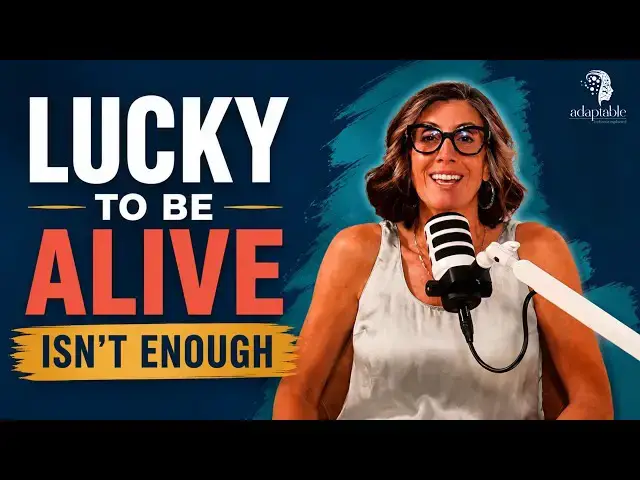
0:06
Hi everyone. I'm Kelly O'Hora.
0:09
And this is Adaptable Behavior
0:11
Explained. Welcome back to Adaptable
0:13
Behavior Explained. I'm your host, Kelly
0:15
O'Hora, and today we're going to talk
0:17
about a form of trauma that is
0:19
incredibly common, deeply misunderstood,
0:22
and often minimized, even by people who
0:24
are experiencing it. We're talking about
0:28
If you have ever survived a heart
0:30
attack, a pulmonary embolism, a stroke,
0:33
a diagnosis for disease like cancer, a
0:36
traumatic accident like a car accident,
0:38
or any other type of serious injury, and
0:41
then wondered, "Why don't I feel okay
0:43
even though it's over and that I
0:46
This episode is for you. Because when we
0:48
survive something, it doesn't
0:50
automatically mean that our nervous
0:51
system knows that we're safe or that our
0:53
brain has been updated with today's
0:57
So, here's what I want you to hear
0:59
clearly. You can be profoundly
1:01
traumatized by something your body lived
1:03
through, even if everyone tells you,
1:06
"You're lucky to be alive."
1:08
Medical trauma isn't just about what
1:09
happened to you. It's about what your
1:12
brain and body learned throughout the
1:14
process of the situation. So, in this
1:17
episode, you're going to learn why
1:18
medical events are often stored as
1:20
trauma in the brain, how the brain
1:22
categorizes threat to life and keeps you
1:25
braced waiting for the other shoe to
1:26
drop, why so many people feel like
1:29
they're waiting for the other shoe to
1:30
drop, and the grief that comes when your
1:32
body can't return to what it once could
1:35
And then we're going to talk about the
1:36
good stuff. How EMDR therapy helps the
1:39
brain update after medical trauma or an
1:42
So, let's get to some basics here. Why
1:45
are medical events traumatic?
1:48
Here's the truth. Trauma isn't defined
1:50
by an event. It's defined by how
1:52
overwhelmed or helpless or powerless we
1:55
felt at the time something happened.
1:58
Medical trauma often includes a sudden
2:02
loss of our bodily autonomy. Even when I
2:05
tore my ACL, I couldn't sit down to go
2:08
to the bathroom without help at first,
2:10
and I was so angry about it. So, we
2:13
really minimize or under-report how we
2:16
are emotionally impacted by certain
2:18
things. Invasive procedures can put us
2:20
in that sense of helplessness,
2:23
um uncertainty, waiting for diagnoses or
2:26
doctor's report or test results to come
2:28
in. And then, lack of control over
2:31
outcomes or timelines that we have to go
2:33
through when we're dealing with these
2:34
things. So, some examples of medical
2:37
trauma that might happen to you or
2:39
someone you love or know are things like
2:42
heart attacks, pulmonary embolisms,
2:47
diagnoses for different illnesses or
2:49
diseases, um autoimmune diagnoses,
2:53
emergency surgeries, going to the ICU
2:55
for something serious. And then, things
2:58
that most people would consider trauma
3:00
like traumatic injuries from accidents
3:02
or falls. Chronic illnesses with
3:05
unpredictable flare-ups are another one
3:07
that I often see in my offices or my
3:09
office. And so, when your life is
3:11
threatened, your brain does exactly what
3:13
it's designed to do. It sounds the
3:15
alarm. And so, now we're going to talk a
3:17
little bit more about the brain threat
3:19
and why we sometimes stay braced when
3:22
we've been through something really
3:24
Our brains are prediction machines or
3:26
prediction engines. Once a biological
3:29
threat happens, the brain says, "This
3:32
nearly killed us. I will not let that
3:34
happen again." So, it stays on high
3:36
alert, and sometimes we even kind of
3:39
inaccurately think about things that we
3:41
do as reasons that we can prevent it or
3:44
keep ourselves safe. So, that part of
3:47
our brain can stay on high alert, and it
3:49
can look like hyper-vigilance to bodily
3:51
sensations. These are the people that
3:53
are like chronically saying, "What's
3:55
this? What does that mean? Something's
3:56
wrong." And they make a bigger deal out
3:58
of something than is necessary because
4:00
they're looking for those threat cues.
4:02
There can be anxiety about symptoms or
4:04
medical appointments. "What's the doctor
4:06
going to say? When is it going to
4:07
happen? What if it's too long? How do I
4:09
get in sooner?" And then there can be
4:11
panic when the body feels off. And for
4:13
those of you who've been following me
4:14
for a while, panic is part of the grief
4:17
system or the loss system. And so we
4:19
start to kind of freak out about what
4:21
might be going wrong that will put us in
4:23
imminent threat. Uh we can also have
4:26
difficulty relaxing or trusting that our
4:28
body is okay, which kind of creates a
4:31
self-fulfilling prophecy in that we
4:33
become more nervous and anxious when
4:35
we're worrying about something not being
4:37
okay or something bad coming. And then
4:40
constantly waiting for something bad to
4:42
happen creates stress like I just talked
4:45
about. So there's a there's a feeling
4:46
that some people describe as that
4:48
waiting for the other shoe to drop. And
4:50
that's basically a braced nervous system
4:53
that's on high alert or vigilant. So
4:55
your brain hasn't updated yet with the
4:58
fact that the issue is over, it's being
5:01
treated, you've got your outcome given
5:03
to you, you're healed even, there's no
5:05
more medical reason for you to have any
5:07
physical response. So now we're going to
5:09
talk a little bit about the
5:11
powerlessness and the fear or the loss
5:14
of control that often happens during one
5:16
of these medical crises.
5:18
Medical trauma is uniquely powerful
5:21
because you can't outrun it, we don't
5:24
ever choose when it's happening, we
5:26
can't fight it, we need our bodies to be
5:28
in existence, so we we have to work
5:31
through it. And often there's so much
5:34
powerlessness because there's nothing we
5:35
can do, we can't fix it. Someone else is
5:38
making the decisions. Usually medical
5:40
providers are telling us what our
5:41
options or choices are. And so then we
5:43
have to make choice points that don't
5:44
maybe line up with being in control.
5:47
And so, our body is doing things without
5:49
our permission. And healing timelines
5:51
can be unclear and sometimes in more
5:54
dire situations endless, where there's
5:56
not any potential hope for it to be
5:59
And so, this powerlessness creates
6:02
chronic stress in our bodies. It creates
6:05
anxiety, often times hopelessness or
6:08
fear of the future of the life that we
6:10
once imagined for ourselves. And we can
6:13
go into some resentment or feelings of
6:15
betrayal by our own bodies. And then,
6:18
when we get through with all of those
6:19
complicated emotions, there's often
6:22
grief that we are doing everything in
6:24
our darn power to avoid feeling.
6:27
But, I can tell you that grief is how we
6:28
move through to get back to a place of
6:32
So, we have to grieve the body that we
6:34
once had or our state of being that we
6:37
were once able to adapt. And this is the
6:41
piece that does not get talked about
6:42
enough. And if you think about it,
6:44
medical doctors aren't trained in this
6:46
area. So, they're giving you data or
6:49
points of fact or statistics around
6:51
whatever's going on, but they're not
6:53
usually talking to us about the
6:55
emotional toll and turmoil that happens
6:58
related to medical issues. And sometimes
7:01
healing doesn't mean that we get to go
7:03
back to the way it used to be.
7:05
So, if your body can't do what it once
7:07
did, maybe it tires more easily, maybe
7:11
it functions differently and you have to
7:12
learn other ways to respond or react to
7:15
the situation or your environment, or
7:17
accommodate things that you used to be
7:19
able to do or get more help than you
7:21
want to ask for, there's real loss
7:24
there. And that's something that most of
7:26
us end up having to face at some point
7:28
in our life. And grief isn't weakness.
7:31
Grief is a natural, biological,
7:34
affective circuit that we're wired to
7:36
have, and it's an important aspect of
7:39
our human condition to pay attention to,
7:41
Because unprocessed grief can keep our
7:44
experience, our trauma, the medical
7:46
situation that we were talking about
7:48
stuck as if it's still happening even
7:50
when the threat has passed.
7:52
So the good news is there is therapy
7:54
that can help with this and it's some of
7:56
the most powerful and exciting work that
7:59
I like to do in my own practice because
8:01
EMDR therapy helps heal medical trauma.
8:05
And it's super powerful especially if
8:08
the event or the scenario that happened
8:13
Because trauma memories are often stored
8:15
as sensations in our body. We get stuck
8:18
with images or visuals that we can't
8:21
seem to unlock. There are emotions that
8:24
happened at the time of an event that
8:26
seem to stay on like they're live and
8:30
with those things come beliefs like I'm
8:32
not safe or I'm damaged or my body will
8:35
fail me. And in medical trauma the brain
8:38
often hasn't received the updated
8:40
messages like this is over. I survived.
8:44
I can heal. My body's okay. I can be
8:47
okay or I can learn or I can adapt.
8:50
These are all more functional thoughts
8:52
that we can have about our situations if
8:55
we work through the emotional
8:57
experiences that often times got stuck
9:00
in trauma time based on what happened at
9:03
the time of the event.
9:05
So with EMDR therapy we can update the
9:09
brain or kind of defrag the system. And
9:12
so through bilateral stimulation and
9:14
other forms of taxation of memory EMDR
9:18
allows our nervous system to reprocess
9:20
the traumatic medical memories and the
9:23
shock of the situations that happened,
9:26
the pain that is often associated with
9:28
issues and incidents and it helps to
9:30
integrate our current medical reality.
9:33
It brings down our hypervigilance and it
9:35
helps us to restore trust in our body
9:38
because our bodies are so magnificent
9:41
and they can really heal from so many
9:43
things. Now, I realize that not all
9:46
illnesses can be healed from and not all
9:48
diseases are curable. And it doesn't
9:52
change EMDR doesn't change that point of
9:55
fact, but what it can help us to do is
9:58
help us to change our relationship with
10:03
It can help us to grieve what was, what
10:05
we wanted, what we imagined and shift us
10:08
into a perspective that is no longer
10:10
about survival, but more about presence
10:13
and acceptance. And I [clears throat]
10:15
know that's not the answer that some of
10:17
you want to hear depending on what you
10:19
have gone through, but if bad things are
10:23
going to happen and we don't have any
10:24
control about that, then wouldn't it be
10:27
better if we could get to a place of
10:29
peace with our circumstances as they are
10:33
And so our brain can learn that was
10:36
then, this is now and I can adapt a more
10:39
functional way to think about whatever
10:42
it is that I've been through. And so
10:45
EMDR doesn't erase what happened, it
10:48
helps us to live without constant fear.
10:50
It helps us to respond instead of react.
10:53
It helps us to feel more at home or
10:55
present in our body.
10:57
And it helps us to grieve what was lost
11:00
while honoring what remains and is still
11:02
present for us to experience.
11:05
And the healing means that our body no
11:07
longer has to scream to be heard. The
11:09
dashboard of unawareness gets to quiet
11:12
down and be more settled.
11:14
So, let's recap. Medical trauma is real
11:18
and it's valid and it's often under
11:20
reported and minimized. And the brain
11:22
stays braced after life-threatening
11:24
events because we're biologically wired
11:26
to try to protect ourselves and our
11:28
survival response happens. And then the
11:31
powerlessness and uncertainty can
11:36
And then grief is often part of the
11:40
EMDR helps our brain to update and
11:43
integrate safety of now or acceptance of
11:46
current circumstances. So if your body
11:48
has lived through something
11:49
overwhelming, you're not broken, you're
11:52
adaptive. And when you think about what
11:53
it's been through, it deserves the time
11:56
and the love and the honor and the
11:58
respect about what it's had to deal
12:00
with. And so do you. So if this episode
12:03
resonated with you, please make sure to
12:05
share it with somebody that could
12:07
benefit and subscribe to our channel or
12:10
leave us some comments about how you've
12:11
experienced this or maybe if you need
12:15
some more resources to find an EMDR
12:17
therapist in your area, we can give you
12:19
a hand with that. Thank you so much for
12:21
tuning in. And if you are someone who's
12:23
going through one of these examples that
12:25
I talked about, please know that you're
12:27
not alone and there is hope.
12:30
Thank you so much and until next time,
12:32
don't forget to lead with love. It'll
12:33
never steer you wrong.