Up next in 10


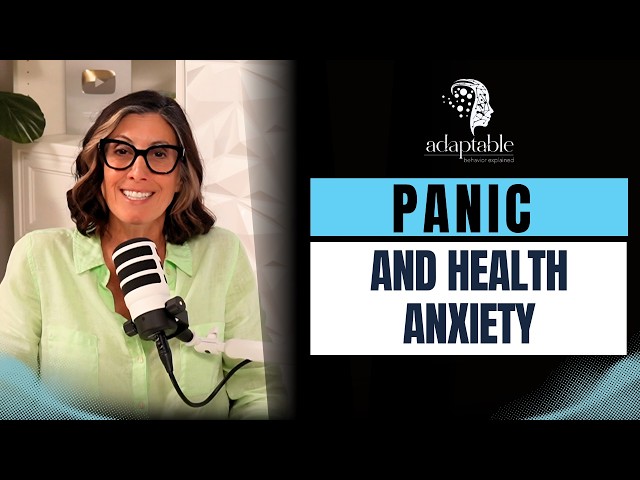
Welcome to Adaptable | Behavior Explained! This episode explores the connection between panic attacks, health anxiety, and how EMDR therapy can help, breaking down how the nervous system can become stuck in cycles of fear and symptom monitoring, why panic can feel so overwhelming in the body, and how EMDR may help people process the underlying experiences and triggers that keep anxiety active.
I'm Kelly O'Horo, Attachment based EMDR Therapist, EMDRIA Consultant, and Advanced Trainer. I'm a mom of 5, Nonna of 5, wife, and a healer. I have the honor of spending my workdays walking along side people while they brave their healing journeys. I try to live with the generous assumption that we're all doing the best we can with what we know. Therapists are teachers for the "life stuff" and "emotional vocabulary" that may not have been learned due to gaps in our care givers capabilities. In the last 15 years I've learned that people are freaking amazing, resilient, and inspiring. Most importantly, we are hardwired for connection and for healing!
I hope to bring an authentic, compassionate, and unpolished approach while we explore a variety of topics such as parenting, marriage, relationships, dating, trauma, attachment, adoption, depression, addiction, anxiety, and love! There's a why for all behaviors and an explanation that makes perfect sense as emotion is at the root of it all.
-- Links --
https://linktr.ee/kellyohorolpc
https://youtu.be/rLnARKekvgo
https://www.emdria.org/find-an-emdr-therapist/
Show More Show Less View Video Transcript
0:06
Hi everyone, I'm Kelly O'Horo and this
0:09
is Adaptable Behavior Explained. Hi
0:12
friends. Today we're talking about
0:14
something that confuses a lot of people
0:16
and honestly it confuses a lot of
0:18
therapists too and that's the difference
0:21
between panic and health anxiety. Have
0:23
you ever thought to yourself, what if
0:25
this is a heart attack or what's wrong
0:27
with me? Or what if doctors missed
0:29
something? Or what if the sensation
0:31
means something that's seriously wrong
0:33
and also experienced sudden waves in of
0:36
intense like physical distress that feel
0:38
unbearable? You might have wondered
0:40
which one you're dealing with. Well,
0:42
panic and health anxiety often overlap,
0:45
but they're not the same process in the
0:47
nervous system. And knowing the
0:49
difference matters not just for your
0:50
understanding, but for healing. So today
0:53
we're going to talk about why panic and
0:55
health anxiety get confused and
0:57
primarily how the fear system and the
1:00
panic or grief system play different
1:02
roles. What health anxiety actually is
1:05
and how to tell which loop you're in. We
1:07
know we've got this noisy part in our
1:08
brain that will spin on repeat when
1:10
we're obsessing about something that
1:12
could potentially be wrong with us and
1:14
we're afraid and we don't know what that
1:15
is. And some of us might even jump into
1:18
webmding ourselves which is never a
1:20
healthy loop to get into. And we're also
1:22
going to talk about how treatment
1:23
approaches differ. Of course, because
1:25
I'm an EMDR therapist and this how I
1:28
treat patients, how this can really help
1:30
these symptoms. So, let's talk about
1:32
first why panic and health anxiety get
1:34
confused. Panic and health anxiety look
1:37
similar on the surface because they do
1:39
share physical sensations. Both of them
1:41
can involve that racing heart, chest
1:44
tightness, sometimes dizziness,
1:46
sometimes shortness of breath, maybe GI
1:49
distress like we have gas or
1:51
gastrointestinal issues, a sense of
1:54
alarm or vigilance and but what the body
1:57
is responding to is different in each
1:59
case. Panic is often sudden, intense,
2:03
and it's body driven. Whereas health
2:05
anxiety is often persistent, cognitive
2:07
and vigilance driven. This is like in
2:10
our mind as opposed to physicality. One
2:12
is about loss and the other is about
2:14
prediction of threat. The body may feel
2:17
the same but the nervous system question
2:20
is really different and this is how you
2:21
can kind of tell the difference for
2:23
yourself. As we talked about in the
2:25
previous episode about panic, panic
2:27
comes from what Yak Pankep calls the
2:29
panic and grief system. And most people
2:31
don't know that. Most people think that
2:33
panic is about fear. Um but the system
2:36
activates in us this loss, separation,
2:40
attachment, rupture or threats to our
2:42
safety through disconnection. So when
2:44
this system fires, the body isn't
2:46
asking, am I about to die? It's asking,
2:49
am I alone? Am I unsafe? Or am I without
2:51
support or am I going to lose that
2:53
support? And that's why panic attacks
2:55
can feel catastrophic even when there's
2:57
no danger. Uh there's ancient mamian
3:00
alarms that are meant to prevent loss of
3:02
connection because let's face it, we
3:04
can't live well alone if we're young. We
3:07
need others to survive and we depend on
3:10
that for our very survival. So panic is
3:13
the body responding to loss, not the
3:16
mind misinterpreting danger. Now health
3:19
anxiety lives in the fear system. Health
3:22
anxiety is often called illness anxiety
3:24
is different. Health anxiety activates
3:27
that fear system which is about
3:29
anticipating danger. Uh the core fear is
3:33
what if my body is failing and I don't
3:35
catch it in time. What if this ailment
3:38
actually means something more terminal
3:41
like cancer? Health anxiety is driven by
3:44
hypermon monitoring the body. It's
3:47
interpreting neutral sensations as
3:49
potentially dangerous or problematic.
3:51
And it kind of also has in the
3:53
background reassurance seeking or
3:55
avoidance of doctors or over reliance on
3:57
doctors. Um this is like googling
4:00
symptoms and medding and co-piloting or
4:03
chat gpting whatever your current issues
4:05
are and then like finding facts to
4:07
justify the way that you feel. There's
4:09
also a tremendous difficulty tolerating
4:11
the uncertainty of it. And this is
4:13
because the nervous system here is
4:15
scanning for future threat. It's not
4:17
responding to attachment loss. Health
4:20
anxiety asks, "What if something's
4:22
wrong?" And panic asks, "What if I'm not
4:24
safe or I'm supported or if I'm alone?"
4:29
So, the bad news is they feed each
4:31
other. Panic and health anxiety totally
4:33
feed each other. And this is where
4:34
things get tricky and why so many people
4:37
get stuck with this. A panic attack can
4:39
trigger health anxiety. That sensation
4:42
was terrifying. What caused it? What's
4:43
wrong with me? And health anxiety can
4:45
trigger panic. What if this sensation
4:47
means something serious and it creates
4:49
this loop, the body loop, the body
4:51
sensations, the panic response, fear
4:54
interpretation, increased vigilance, u
4:58
and then another panic response in
5:00
response to the constant spinning. And
5:03
at this point, fear is maintaining
5:05
panic, but fear didn't necessarily start
5:07
the panic in the first place. So, health
5:09
anxiety can keep panic alive and like
5:11
thriving even when panic began because
5:14
of grief. And so this can spin. And for
5:18
people whose loss started because of
5:21
illness, those things get really
5:23
tightened. So let's say you lost a a
5:25
partner, a parent to an illness
5:28
prematurely. Now you're kind of dress
5:31
rehearsing the tragedy that what if this
5:33
happens again to someone else that I
5:34
love or to myself? And so it's hard to
5:37
tell which one you're dealing with when
5:39
this is happening. You know, I've had
5:41
clients that have had these these
5:43
propensities because of their own loss
5:45
and they do end up really myopically
5:47
focused on health consequences because
5:50
they don't want to miss something in the
5:51
future. And if you think about it, we
5:53
are thinking about what we might miss
5:55
because it gives us an illusion of
5:57
control. If we become overly aware and
5:59
responsible about something, proactively
6:02
addressing our health, then maybe we
6:04
will catch something in time and it
6:06
won't end in the same negative fate that
6:08
perhaps what we experienced before did.
6:11
So, if this is something that happens to
6:13
you, here's some orienting questions
6:14
that you can ask yourself if you're
6:17
running into this because panic tends to
6:20
sound like something terrible just
6:22
happened. I can't handle this. I'm not
6:25
okay right now. I need to stop this
6:28
immediately. I've got a bolt. I've got
6:30
to get away. Whereas health anxiety
6:32
tends to sound more like, what if this
6:34
is something serious? What if this gets
6:36
worse? What if no one catches it in
6:38
time? I need certainty before I can
6:41
relax. And both are valid and both are
6:44
treatable, but they require sort of
6:46
different entry points for healing in
6:48
order to address this cause and effect
6:51
scenario. And this distinction matters
6:53
because we need to know one as the
6:56
client, you need to know like your
6:57
history and what probably predicted or
7:00
predicated your kind of presenting
7:02
issues so that you can better explain to
7:04
your your therapist if you're going to
7:06
get treatment for this what's going on
7:07
and why you sort of see this as having
7:10
happened to you. And then also as
7:11
therapists, if you're listening, you
7:13
need to understand the difference and
7:15
the cause and effect loop and how these
7:17
cycles do really predict and also feed
7:20
off of one another. So when panic is
7:23
primary, treatment often focuses on the
7:25
nervous system regulation. Um processing
7:28
loss or grief or attachment trauma.
7:31
Reprocessing early panic experiences can
7:33
be really helpful. And EMDR therapy is
7:36
especially effective here because we can
7:39
really resolve the maladaptively encoded
7:41
memories and and really fully grieve the
7:44
experience that happened that maybe
7:46
wasn't able to happen at the time
7:47
because of shock or survival. Whereas
7:50
when health anxiety is primary, the
7:52
treatment often includes like tolerating
7:54
uncertainty. It's sitting with yourself
7:56
in the unknown, reducing your need for
7:59
reassurance and reassurance seeking and
8:01
just being with yourself in that moment.
8:03
It can have, you know, more cognitive
8:05
and behavioral strategies as part of the
8:08
treatment because exposure to
8:10
uncertainty rather than bodily thread is
8:12
part of it. And then when both are
8:14
present, which is really unfortunately
8:16
very common, treatment must address both
8:19
loops, not just the symptoms. You can't
8:21
think your way out of grief and you
8:23
can't reprocess uncertainty without
8:25
first addressing the fear. And so what I
8:28
love is that EMDR is a really beautiful
8:30
fit for these presenting issues because
8:33
it's particularly helpful when panic
8:35
attacks trace back to earlier losses. I
8:37
always teach my therapists when you have
8:40
a client that presents with panic, ask
8:42
them when they first had their panic
8:43
attack, what was happening in their life
8:45
at the time of the first event. Usually
8:48
there was some kind of loss, whether it
8:50
was parents divorcing or a loss of a
8:52
family member or something going on that
8:55
really was, you know, that might have
8:57
upside down their life. Body sensations
8:59
are tied to helplessness or abandonment
9:02
or that grief. And early panic
9:04
experiences created lasting networks
9:08
basically that the other shoe is going
9:09
to drop and I've got to be always on
9:11
alert that it's going to happen to me
9:12
again. Someone logically knows that
9:15
they're safe. They can look around their
9:17
life and they can say, "I know that this
9:19
isn't now and this this isn't my life."
9:21
But their body just will not buy it. It
9:22
won't agree. So EMDR helps the nervous
9:25
system to update that old information so
9:28
that the body no longer needs to sound
9:30
this alarm. That threat is now. PTS
9:33
symptoms and all of these trauma
9:34
response symptoms are really a time
9:36
orientation issue. The body thinks that
9:39
now is then. And when we're triggered in
9:41
the in the sensory stimulus or the
9:43
environment now, we're alerted to past
9:46
unresolved memories that are not fully
9:48
encoded accurately. And so it doesn't
9:51
eliminate the uncertainty. It just helps
9:53
to resolve what's already been carried
9:55
for way too long. So, if you've been
9:57
struggling to figure out whether you're
9:59
dealing with panic, health anxiety, or
10:01
both, I hope that this brings you some
10:03
clarity rather than confusion. I hope
10:06
that it validates your experience a
10:07
little bit and that you realize you're
10:09
you're not alone. This is common and
10:11
your symptoms make sense, especially if
10:13
you're someone who realizes that your
10:15
threat perception got a little bit wonky
10:18
during the time of trauma in your life.
10:21
Your nervous system is not broken and
10:23
there's nothing that's wrong with
10:26
wanting relief from these symptoms. It's
10:28
just important that you understand which
10:30
system is activated because it helps us
10:32
respond with compassion instead of fear.
10:35
And that's both for yourself and to
10:37
others. And it also helps us triage as
10:39
therapists kind of what angle we need to
10:41
look at this and in what way we need to
10:43
treat this. So, if this resonates for
10:46
you, please consider reaching out to an
10:48
EMDR trauma therapist who understands
10:51
panic and health anxiety and trauma
10:53
through that nervous system lens,
10:55
especially a well-trained EMDR
10:57
clinician. Because when panic is rooted
10:59
in loss or attachment wounds, then this
11:02
is really the best way to approach.
11:04
Thank you so much for listening to
11:05
Adaptable. If you found this episode
11:08
helpful, please make sure to subscribe
11:10
or share it. If you are a watcher of our
11:12
show and you haven't yet subscribed,
11:14
please do so. And until next time, don't
11:17
forget to lead with love. It'll never
11:19
steer you wrong.
People & Society