Up next in 10


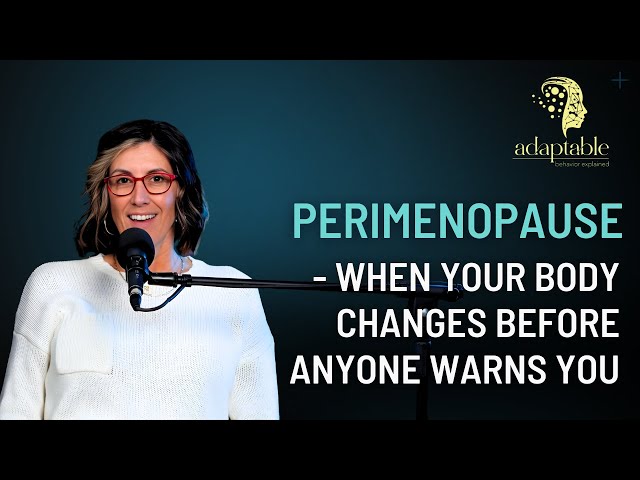
Welcome to Adaptable | Behavior Explained! This episode explores perimenopause, a neurological and emotional transition that affects the brain, nervous system, and relationships long before most people are warned. Often showing up as anxiety, brain fog, emotional reactivity, sleep disruption, or feeling “not like yourself,” these changes are frequently misunderstood or dismissed as stress. We unpack why they happen, how hormones affect the brain, and how understanding your body can replace fear and shame with clarity and compassion.
I'm Kelly O'Horo, Attachment based EMDR Therapist, EMDRIA Consultant, and Advanced Trainer. I'm a mom of 5, Nonna of 5, wife, and a healer. I have the honor of spending my workdays walking along side people while they brave their healing journeys. I try to live with the generous assumption that we're all doing the best we can with what we know. Therapists are teachers for the "life stuff" and "emotional vocabulary" that may not have been learned due to gaps in our care givers capabilities. In the last 15 years I've learned that people are freaking amazing, resilient, and inspiring. Most importantly, we are hardwired for connection and for healing!
I hope to bring an authentic, compassionate, and unpolished approach while we explore a variety of topics such as parenting, marriage, relationships, dating, trauma, attachment, adoption, depression, addiction, anxiety, and love! There's a why for all behaviors and an explanation that makes perfect sense as emotion is at the root of it all.
-- Links --
https://linktr.ee/kellyohorolpc
https://youtu.be/rLnARKekvgo
https://www.emdria.org/find-an-emdr-therapist/
Show More Show Less View Video Transcript
0:06
Hi everyone, I'm Kelly O'Horo and this
0:09
is Adaptable Behavior Explained. Hi
0:12
everybody. Thanks so much for tuning in.
0:14
Today we are going to talk about
0:16
something that impacts millions of women
0:18
and it's rarely explained clearly. I
0:21
know as a pushing 50-year-old woman, I
0:24
didn't know any of this stuff until it
0:26
started happening to me. So, we're going
0:28
to talk today about perry menopause. So,
0:31
for all of you men who are not
0:33
interested in this topic because your
0:35
lady is not currently at that space, you
0:37
may want to unplug or I don't know, stay
0:40
tuned because it's happening. If you're
0:41
going to be with a female, this is going
0:43
to happen to her at some point. And I
0:45
think education is key. So, welcome to
0:47
adaptable today. For many women,
0:49
pmenopause feels like losing the rule
0:52
book to your own body. I know for me
0:54
when it started, I was like everything
0:56
was so predictable. full 28 day cycle. I
0:58
knew why I was acting crazy and
1:00
irritable about a week beforehand. And
1:02
all of a sudden, you start experiencing
1:04
mood changes, sleep disruption, anxiety
1:07
when you would not have felt it, super
1:09
irritable or angry at times when I
1:11
wouldn't have felt it or even with
1:12
people that I never feel frustrated
1:14
with. And that was super unfamiliar. Uh
1:16
there's major changes in libido, brain
1:19
fog, and then of course all of these
1:21
impact your relationships because you
1:24
don't know what's going on. And clearly
1:25
the people in relationship with you,
1:27
they're noticing changes and there's not
1:30
anything that seems very obvious. And
1:32
honestly, sometimes the most distressing
1:35
part isn't really the symptoms. It's
1:38
hearing people say things like it's
1:39
probably just stress or you've got too
1:41
much going on or you're not setting good
1:42
boundaries or you're too young for that.
1:45
And those are the kinds of things that
1:46
make you wonder what the heck is going
1:48
on. And because our bodies are so
1:50
complex and the hormone changes are so
1:53
complicated, we don't oftenimes know. So
1:56
today we're going to talk about what
1:57
pmenopause actually is, what to expect.
2:00
So if this is something that's happening
2:02
to you or you're wondering, you know,
2:04
this is this is for you. How it affects
2:06
and impacts your identity, your
2:08
relationships, and how really
2:10
understanding it and educating
2:12
yourselves, not endurance, is the path
2:14
forward. You know, having a present mind
2:16
awareness is really essential with
2:18
anything that we're out of control of
2:20
and just taking each moment by moment as
2:23
opposed to having expectations or
2:25
changes about what you want to happen.
2:28
So, now we're going to just dive in.
2:30
What is pmenopause for those of you who
2:32
aren't sure? This is the transition
2:34
phase before we hit menopause. When
2:37
hormones begin fluctuating, they become
2:39
more unpredictable and sometimes it can
2:41
be really dramatic. According to Dr. Dr.
2:43
Louise Newsen. Perry menopause can begin
2:46
as early as the mid to late 30s. It's
2:49
most commonly beginning in around the
2:51
40s and it can last anywhere from 4 to
2:54
10 plus years, which to me was the most
2:56
frightening thing. I thought this crap
2:59
that's happening to me could last for 10
3:00
years. It's so unfair. So, it's not
3:03
really a brief phase. It's neurological.
3:05
It's hormonal. It's emotional. And of
3:08
course, there's that relational
3:09
transition that happens because we're
3:11
changing. And during menopause, our
3:13
estrogen and our progesterone fluctuate
3:16
and that's unpredictable, which of
3:17
course impacts our mood. It impacts our
3:20
energy levels. It impacts our libido.
3:23
Like we talked about, the brain, not
3:25
just the ovaries, are deeply affected.
3:28
And so, our symptoms can come and go.
3:30
Things can be supern normal one month
3:32
and then really fluctuate and change the
3:34
next month. And many women don't realize
3:36
they're in pmenopause because, you know,
3:39
periods are still regular. I know that
3:41
was happening for me every 28 days like
3:43
clockwork things were going normal but
3:46
symptoms don't match what they were
3:47
taught about menopause because it is
3:49
that prephase this isn't actually
3:51
menopause so pmenopause is often
3:54
misdiagnosed misunderstood and
3:56
oftentimes minimized and so let's talk
3:59
about common signs and symptoms so that
4:02
maybe you don't miss them when they
4:04
start happening to you or someone you
4:05
love Tamson Fidal often talks about
4:08
women feeling blindsided by pmenopause
4:10
cause not because it's rare but because
4:13
again no one prepared us for this. No
4:14
one prepared us to understand that this
4:17
is something that could come and because
4:19
things are you know going along just
4:21
fine and normal. You don't see it
4:22
coming. So symptoms can affect things
4:25
like physical sensations and physical
4:28
body aches and pains, night sweats and
4:30
hot flashes. This is when I knew this
4:33
was fully happening. And I come from a
4:35
background where I really wanted to just
4:37
honor the body, understand what the body
4:40
can do. It's been doing this forever. It
4:42
knows how to handle this. It knows what
4:44
to do. And I really tried to just let
4:46
everything ride until I was like six
4:49
months into this phase and I'm barely
4:51
sleeping because I'm waking up so many
4:53
times a night with these sweats and
4:55
these hot flashes. And it's like your
4:57
own personal summer. It's so crazy when
4:59
it happens to you and there's just
5:01
nothing you can do. And so then I'm so
5:03
tired. So, there's the fatigue that
5:05
doesn't resolve with rest and chronic
5:08
fatigue that ends up kind of happening,
5:09
at least if you end up, like I did, with
5:11
all these hot flashes. The exhaustion
5:14
was just killing me. You can end up with
5:15
joint pain, weight redistribution. That
5:18
was another thing I started to notice is
5:20
like, I'm not doing anything different.
5:22
I'm not overeating. I'm not getting any
5:24
less exercise. But all of a sudden,
5:26
things started to shift and be different
5:28
and texture started changing. And I just
5:31
was like, what is going on? I'm too
5:32
young to look like this. It that's the
5:35
story that I told myself. Headaches can
5:37
happen. Heart palpitations. Sometimes
5:39
people would attribute the heart
5:41
palpitations to like a thyroid imbalance
5:43
or anxiety. And this is something that
5:45
can happen in pmenopause. We end up with
5:47
like cognitive issues, you know,
5:50
forgetfulness, brain fog, memory lapses.
5:53
This is happening with some of my
5:55
friends. I've noticed like I don't know
5:56
what I was going to say. It's just gone.
5:58
And that's something that started to
5:59
happen in my friend group because we're
6:01
all, you know, currently going through
6:02
this phase. And then there's difficulty
6:04
concentrating that can happen. Finding a
6:07
word. Uh I make a joke where I say when
6:10
I can't find a thought, I'll tell people
6:12
like the library man is up there. He's
6:14
got to look through the files to figure
6:16
out where did we put this because I
6:17
cannot find it. Because sometimes just
6:19
finding a thought that you absolutely
6:21
know can be difficult. There's emotional
6:23
and nervous system issues because
6:25
remember emotions are chemical and
6:28
hormones affect emotion tremendously and
6:32
the nervous system is now reacting to
6:34
the emotional shifts and so it's it's
6:36
taxing. It's it's overwhelming and so
6:39
there can be increased anxiety or even
6:41
panic which for those of you who are
6:43
unaware panic is part of the grief and
6:45
loss system. So I think part of that
6:47
panic is like what's happening to me?
6:49
Where am I going? and and I'm losing
6:52
myself. And I think that can be part of
6:53
that panic. Of course, irritability or
6:56
rage. This is the one that most likely
6:58
impacts relationships. But then it's the
7:00
up and down, the mood swings that you
7:02
might experience as these hormones
7:04
become so unpredictable. And that feels
7:06
so frustrating when it's happening to
7:08
you, but also to the people around you.
7:11
Again, we have these emotional
7:13
sensitivity, things that would normally
7:14
bother you or wouldn't bother you,
7:16
perhaps start to bother you, and just
7:18
feeling really unlike yourself. I talked
7:20
about sleep, difficulty falling or
7:22
staying asleep. That's something I
7:24
noticed, too. I started waking up around
7:26
2:00 or three in the morning, even when
7:27
I wasn't having a hot flash, and I'm
7:29
like, I don't have to pee. I was super
7:31
tired. Why am I suddenly awake? Early
7:34
waking is another thing that shifts.
7:36
Nighttime anxiety where normally you
7:38
wouldn't have necessarily been worried
7:39
and now you start having more anxiety.
7:41
nighttime specifically
7:43
sexual and relational changes due to
7:46
decreased libido desire vaginal dryness
7:49
or discomfort starts to happen reduced
7:52
arousal or more difficulty to achieve
7:55
arousal sometimes pain with sex is one
7:58
of the symptoms that people will
7:59
experience and you know many people are
8:01
then diagnosed with anxiety disorders or
8:04
depression or ADHD without anyone asking
8:07
about hormones or checking what's
8:09
happening in the body And so I think
8:11
this is important and I hope that if you
8:13
didn't know this about pmenopause, your
8:15
interest is peaked because we've got to
8:17
check the physiology as well. So what's
8:20
actually happening in the brain and the
8:22
nervous system during this phase? Well,
8:25
I'm not a hormone specialist, but
8:27
estrogen plays a major role in serotonin
8:30
regulation. Dopamine, again, serotonin
8:32
is our happiness factor. Dopamine is our
8:35
motivation factor. So all of these
8:37
emotions are are totally impacted by the
8:40
hormone changes because of estrogen
8:42
change. Sleep cycles are impacted by
8:44
that temperature regulation becoming too
8:47
hot, not being able to get cold
8:49
affecting your stress response. And then
8:52
when estrogen fluctuates, the nervous
8:54
system becomes more reactive. It's up,
8:56
it's down, it doesn't know what to
8:58
handle. And so it's just really
9:00
frustrating. And so this means we've got
9:02
less resilience to stress. we have
9:05
increased overwhelm where normally we
9:07
would have been able to handle certain
9:08
things now I can't more emotional
9:10
intensity reduced tolerance to the
9:12
overload and and a lot of women say and
9:14
I hear this I hear this from clients
9:16
often times is like I used to be able to
9:18
handle everything and now I can't and I
9:21
don't know what's happened to me and
9:22
it's not a personal failure it's a
9:24
physiological shift you know the human
9:27
body is only capable of so much and when
9:29
that stuff starts to change we can't
9:32
really do anything about it really
9:35
without intervening medically. So, perry
9:38
menopause lowers our nervous systems
9:40
margin of error. It doesn't have as much
9:42
capacity or room to tolerate the things
9:45
that it once was able to. And so, like I
9:47
talked about a little bit before related
9:49
to the panic and the anxiety, we can
9:51
have some identity loss and there's
9:54
emotional grief during menopause that
9:57
can happen. you know, this young,
9:58
vivaceious, potentially fit, able to
10:01
carry more muscle, more energy, better
10:03
sleep, all those parts of ourselves that
10:05
are different now because of hormonal
10:08
change can be something we have to
10:10
grieve and that can be really hard. And
10:12
so, one of the last discussed aspects of
10:15
pmenopause really is that grief. We're
10:18
grieving the body that felt predictable
10:20
and understandable and the energy that
10:24
we used to have, the emotional
10:25
regulation that you relied on to handle
10:28
life's stressors and that version of
10:31
yourself that coped more easily and
10:33
could handle things that now create
10:35
overwhelm. There's there's grief in
10:37
that. Fidel talks about this openly and
10:40
how pmenopause can feel like waking up
10:43
in a body that you don't recognize. And
10:45
then you know as that happens it
10:47
triggers emotions in us like shame,
10:50
self-doubt, insecurity, fear of aging, a
10:54
sense of invisibility, you know, and and
10:56
as time goes on faster as we age because
11:00
of more of our lifetime being behind us.
11:03
I've noticed in myself that even
11:05
happens. I I'm like I look in the mirror
11:07
and I and I can't believe I'm like how
11:08
am I almost a half a century old? I
11:10
don't feel like I've done enough yet to
11:13
have had that be my story. Yet, here we
11:15
are more than halfway through life for
11:17
most of us. And that's really strange.
11:19
It can be overwhelming. And for some
11:21
people, there becomes as we age,
11:23
especially in women, kind of a sense of
11:25
invisibility. It's not vanity, it's
11:27
identity disruption. And so, I think
11:28
that that's something that we really
11:30
don't talk about. And we need to change
11:33
that. Now, we're going to talk about how
11:35
all of those things in the individual
11:37
when happening to women with pmenopause,
11:40
how it impacts our relationships. And I
11:42
think that this is something that's
11:44
really important to understand. It
11:46
doesn't happen in isolation. We are not
11:48
in a box when we're in relationships.
11:50
So, our changes individually do impact
11:53
the interconnectedness in a
11:55
relationship. And so some of the common
11:57
relational impacts that happen while in
11:59
pmenopause are reduced sexual desire.
12:03
Sometimes because of the inability for
12:04
arousal, sometimes because of exhaustion
12:07
and fatigue, sometimes because your body
12:09
just doesn't work the way that it used
12:11
to. And so there's increased
12:13
irritability or conflict because of the
12:16
disconnection that not being intimate
12:18
can create. There can be less tolerance
12:20
for emotional labor or overwhelm and
12:23
need for more rest and more boundaries.
12:26
And partners might say things like,
12:28
"You've changed," or "You're not like
12:30
you used to be." And they are right, but
12:32
it's not in the way that implies blame
12:34
or something that is, you know, of
12:36
fault. Often times, what's needed is
12:38
education for partners. And that's part
12:40
of why I wanted to do this show. I think
12:42
a lot of men don't really understand
12:44
what's happening as their partner
12:45
changes. And so we want to reframe these
12:48
symptoms as physiological, right? Like
12:50
you're not mad at your partner when
12:52
they're pregnant and we know their
12:53
emotions are all over the place. And so
12:56
we need to not be mad at them when their
12:57
hormones are all over the place during
12:59
pmenopause as well. Doesn't mean it's
13:01
not frustrating. Doesn't mean it's not
13:03
exhausting, but there's a reason for it.
13:06
Um, so we want to reduce the
13:07
personalization for that experience
13:11
because this isn't about trying harder.
13:13
It's about adapting together and
13:15
changing how we've related, how we
13:17
communicate and what actually works. So
13:20
what actually help pmenopause is not
13:23
something to endure quietly. We need to
13:25
give voice to these things that are
13:27
happening and really try to have
13:29
compassion for ourselves and for our
13:31
partners while it's happening. And so I
13:34
want to give you guys some support that
13:36
might be useful for you if you're going
13:38
through this um or if you have a partner
13:39
that's going through this. Everything
13:41
starts with education and understanding
13:43
what's happening because that will
13:45
reduce fear. It reduces shame and
13:47
understanding the medical side of
13:49
things. So Dr. Louise Nuen, she talks
13:52
about individualized care. This might
13:54
include hormone therapy, lifestyle
13:56
changes or both. And you know a lot of
13:58
people are nervous about introducing
14:00
hormone replacement therapy depending on
14:03
their family history and propensities
14:06
for cancer. But I know that when I was
14:08
going through this, because I was one of
14:09
those people, I was like, I don't want
14:11
to add anything to my body that didn't
14:12
start there. And my naturopathic doctor,
14:15
she said, honestly, because you're so
14:17
young and your estrogen is measuring at
14:20
like zero, there's potential for cancers
14:22
when your estrogen is so low. Below 52
14:25
years old, we really do need more
14:26
estrogen than you're measuring. So, it's
14:28
it's actually better for you to not have
14:30
this happen quite so young. And so,
14:32
again, education is really important.
14:35
getting some nervous system support,
14:37
prioritizing your sleep, stress
14:39
reduction, sleep hygiene, making sure
14:42
that you're still moving. Gentle
14:44
movement is really important, but maybe
14:46
you modify from like the heavy lifting
14:48
that you used to do to something more
14:50
like yoga. And then I think that often
14:53
times people in this phase end up
14:56
learning how to set boundaries because
14:57
they don't have a choice. They've maybe
14:59
they've overfunctioned. They've been
15:00
caretakers their whole lives and now
15:02
it's like I can't do that anymore
15:05
because I'm not I'm not okay. And so we
15:07
have to kind of learn to put our oxygen
15:09
mask on first. So if you had
15:11
codependency propensities in the past,
15:13
this becomes an era of life where you
15:16
really do have to learn how to set
15:18
boundaries or you don't have much
15:19
capacity to tolerate life's demands. The
15:22
relational communication is huge. And I
15:24
hate to say this, but if you weren't
15:26
good at communication in your
15:27
relationship before, this phase does not
15:30
make it easier. So sometimes we might
15:32
need to add therapists and in as part of
15:34
our transition. And I think life
15:36
transitions, these are good times to
15:38
have therapists. Have that objective
15:41
third party that can help you see your
15:43
blind spots. And so naming the
15:45
transitions, sharing your needs clearly
15:49
is really part of this. It's like here's
15:50
how I'm feeling. Here's what's happening
15:52
for me. And here's what I need from you
15:55
or what I need to even do with your
15:57
support for myself. So reducing
15:59
self-lame is really critical during this
16:01
phase because it is so powerless. And
16:03
when we're powerless, we we really need
16:06
to not be in a bunch of shame and we
16:08
need to also be able to just be more
16:11
present and accept what is happening in
16:13
the now. Another thing that transitions
16:15
during this is our sexual experiences
16:18
and our sex lives. And so we kind of
16:20
need sexual re-education. Recognizing
16:23
like that there's slower arousal time
16:25
for women during this phase because of
16:26
our hormone reduction. So different
16:28
touch that is more gentle and is more
16:30
patient is helpful. Less pressure that
16:33
you know there's going to be an outcome
16:35
that typically would have been more
16:36
predictable in the past. Potentially
16:38
that's not just how it works anymore.
16:40
And that's not to say that men don't
16:42
experience the same thing as the age you
16:43
know and I'll do another show about
16:45
that. But we're talking today about
16:47
women in pmenopause. But this change can
16:50
be frustrating because maybe what my
16:52
partner used to do to create arousal and
16:54
and help me achieve something that was
16:56
beneficial for both of us doesn't work
16:58
anymore. So we have to talk about how
17:00
that needs to change. So more curiosity,
17:03
less judgment is important because your
17:05
body isn't failing, it's just changing
17:08
and it's changing how it responds to
17:10
things and it can be retaught and you
17:12
can learn what's effective now. So we
17:14
want to reframe the idea of pmenopause.
17:17
It's not an ending, it's just a
17:19
transition. It's not the beginning of a
17:21
decline. It's just a shift. So, for many
17:24
women, it becomes a time for clearer
17:26
boundaries, uh, reduced people pleasing,
17:29
like I talked about, greater selfrust,
17:31
autonomy, knowing what I need, knowing
17:33
how to talk about it, and as a result of
17:36
that, transparency becomes deeper
17:38
authenticity. What can feel
17:40
destabilizing initially can become
17:43
really liberating with support. The goal
17:46
isn't to get back to normal, but to
17:48
build a new normal that's sustainable.
17:51
And so it's important again, we start
17:53
with education. We start with some
17:54
acceptance. We get the support we need.
17:57
We learn how to communicate. And those
17:59
are the things that are going to make
18:00
this transition or season more tolerable
18:04
and recognizing that it is just a
18:06
season. It will change. So if you are in
18:09
pmenopause or think that you might be, I
18:12
really want you to hear this. You're not
18:13
imagining it. You aren't weak. You're
18:16
not failing. Your body is just
18:18
communicating to you and it deserves
18:20
curiosity and care and support, not
18:23
shame and dismissal. Perry menopause is
18:26
not a personal problem. It's a
18:27
biological transition that deserves
18:29
social and relational understanding,
18:31
which was the other reason I wanted to
18:33
do this show. So, thank you so much for
18:36
tuning in to Adaptable today. I really
18:39
appreciate your time. Something I did
18:41
want to ask for for those of you who are
18:44
listeners is most of our watch hap hours
18:47
happen by people that are not subscribed
18:49
to the show. So if you're enjoying our
18:51
episodes, even if you're just enjoying
18:53
clips or or shorts, please go to YouTube
18:56
and subscribe to the show. That helps
18:58
the algorithm and it helps get our
18:59
information to people. And then also, as
19:01
our shows drop on Thursdays, you won't
19:04
miss the next one. And if it's something
19:05
that can be helpful, please give it a
19:07
like and a share. So again, thank you so
19:09
much for tuning in today. You're not
19:11
alone. And until we meet again, don't
19:14
forget to lead with love. It'll never
19:16
steer you wrong.
#Anxiety & Stress
#Women's Health
#People & Society
#Family & Relationships