Up next in 10



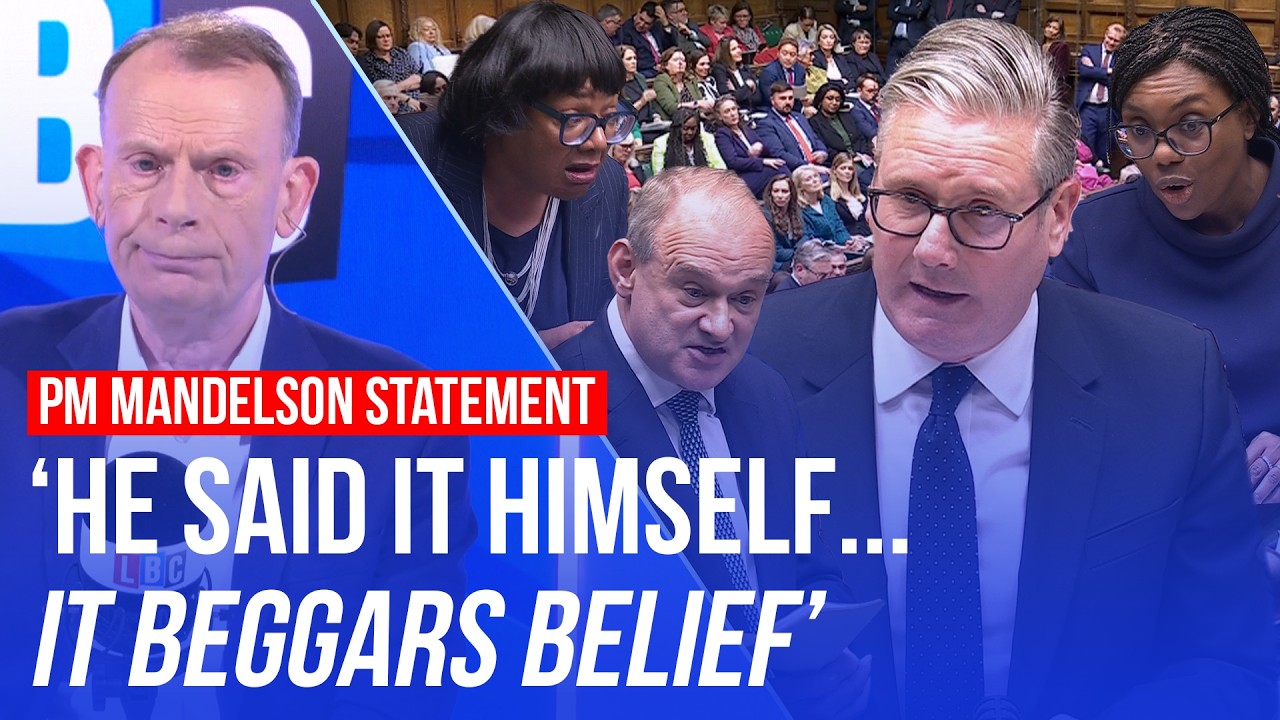
Andrew Marr is joined by a panel to discuss the Prime Minister's address to the Commons over the Mandelson vetting scandal. Joining Andrw is Nick Thomas-Symonds, Paymaster General and Minister for EU Relations, Former Deputy Cabinet Secretary Helen MacNamara and Guto Hari, Former Downing Street Director of Communications under Boris Johnson. Keir Starmer says officials made a "deliberate decision" not to tell him that Peter Mandelson had failed security vetting for the job of US ambassador. Addressing MPs, the prime minister rejected the suggestion that No 10's desire to appoint Mandelson overrode security concerns. Starmer also told MPs he would not have appointed Mandelson if he knew vetting had been denied. Last week, it emerged that vetting officers advised against Mandelson's appointment, but the Foreign Office overruled the recommendation. After the news emerged, the prime minister effectively sacked the department's most senior civil servant Olly Robbins. Listen to the full show on the all-new LBC App: https://app.af.lbc.co.uk/btnc/thenewlbcapp #andrewmarr #LBC #keirstarmer #starmer #mandelson #politics #ukpolitics #debate LBC is the home of live debate around news and current affairs in the UK. Join in the conversation and listen at https://www.lbc.co.uk/ Sign up to LBC’s weekly newsletter here: https://l-bc.co/signup
Show More Show Less View Video Transcript
0:00
Let's begin with the good
0:02
The Prime Minister said sorry, properly, for the catastrophic misjudgment of appointing Peter Mandelson
0:09
as our ambassador in Washington. At the heart of this, there is also a judgment I made that was wrong
0:17
I should not have appointed Peter Mandelson. I take responsibility for that decision
0:22
and I apologise again to the victims of the paedophile Jeffrey Epstein
0:27
who were clearly failed by my decision. Now let's move on to the not-so-good
0:34
His defence again and again and again was that the Foreign Office hadn't told him
0:39
important things about the vetting process. All those people had kept him in the dark
0:45
and it was unforgivable, a word he used repeatedly. But the longer he went on
0:50
the more the mood of incredulity in the Commons bubbled up until this moment
0:55
Mr Speaker, I know many members across the House will find these facts to be incredible
1:08
To that, to that, to that I can only say they are right
1:15
It beggars belief that throughout the whole timeline of events, officials in the Foreign Office saw fit to withhold this information
1:26
The Tory leader, Kemi Badenokh, on the day she needed it, pulled out one of the best performances she has given
1:33
listing a series of key questions to which, mostly, she did not get clear answers
1:38
On the 4th of February 2026, the prime minister told me from the dispatch box that the security vetting he had received had revealed Mandelson's relationship with Epstein
1:50
How could he say that if he had not seen the security vetting
1:55
And as the prime minister stuck doggedly to his script, it just got worse and worse
2:00
For many people, it sounded a bit like the worst days of the previous conservative governments
2:04
Here is Sir Keir on this very day, four years ago, confronting Boris Johnson
2:11
Allegra Strachan laughed at breaking the rules. She resigned. The Prime Minister then claimed he was furious at her behaviour and accepted her resignation
2:23
Professor Neil Ferguson broke the rules. He also resigned. The Prime Minister said that was the right thing to do
2:31
The former health secretary broke the rules. He too resigned. The Prime Minister tried to claim he sacked him. Why does the Prime Minister think everybody else's actions have consequences except his own
2:48
Sir Ed Davey, leader of the Liberal Democrats, who often sounds like a relative Starmer ally on the opposition benches, found this parallel unignorable
2:57
Back in 2022, the Prime Minister rightly accused Boris Johnson of expecting others to take the blame while he clung on
3:07
That was not acceptable then, and it's not acceptable now. Now, I am not saying that Keir Starmer is anything like Boris Johnson
3:17
They're very different people, different strengths, different weaknesses. Am I saying this crisis over the vetting of a US ambassador is as serious as party gate
3:27
Again, no. The thing about Partygate is that the rest of us, most of us, were playing by the rules
3:33
We were living constricted lives and burying our loved ones without the gatherings we wanted
3:38
and they were making whoopee. Their behaviour felt, to much of the rest of the country, like a punch in the guts
3:45
This is different, but it is about judgement and it is about blame
3:50
The person who put the boot in most successfully today was the former Labour MP who's fallen out with Starmer
3:55
but remains the mother of the Commons, the long-serving Diane Abbott. She reminded the Prime Minister that Mandelson had been fired twice before
4:03
because of his relationship with the very rich. As he insists on saying, nobody told me
4:10
Nobody told me anything. Nobody told me. The question is, why didn't the Prime Minister ask
4:18
In the end, handing this most important of all diplomatic posts to Peter Mandelson was a crazy misjudgment
4:28
And not simply in hindsight. We knew about his business connections, his Epstein connection and his past scandals at the time
4:36
It was an error which Keir Starmer and Keir Starmer alone is responsible for
4:42
He used to say you don't blame your officials. He used to believe in taking the rap
4:47
Now, there is a lot else to be said about the way his government is working, or not working
4:52
about national defence, about growth, about morale. And in the end there are more important things than the detailed processes being argued about today If and when the Prime Minister goes it should be after a verdict after developed vetting if you like on judgment grip and national direction
5:13
Let's hear first tonight from the government with Nick Thomas-Simmons, the Paymaster General
5:17
and the man in charge of our relations with the EU. Nick, great to have you on the show
5:22
One of the key questions I felt we didn't get a clear answer from from the Prime Minister
5:26
was the evidence given by Simon Case, a very senior civil servant, top of the tree
5:33
when he said in black and white, if you're going to make a political appointment
5:38
give us the name and then we will do the vetting ahead of the appointment
5:42
And the Prime Minister ignored that. Why? Well, first of all, good to join you, Andrew
5:47
Well, look, that is one option within the process at that time
5:53
the appointment was made subject to the vetting process. And indeed, when Sir Chris Wormald, former Cabinet Secretary
6:03
actually gave evidence to the Foreign Affairs Secretary, just let me just finish this point
6:08
he said when you are making an appointment from outside the Civil Service, which is what this was
6:14
of course it was perfectly reasonable to do it in the way it was done, but it was done subject to that developed vetting
6:19
But that is one change we have now made to the process. that it has to be done before the appointment is announced
6:24
Well, you say it was subject to the vetting. Clearly it wasn't subject to the vetting because he failed the vetting
6:30
Now, no one told the Prime Minister we are told, come on to that maybe, but, you know, the process was not followed
6:35
Due process was definitely not followed. But you see, this is where the problem is in this situation, isn't it, Andrew
6:40
And I feel this quite personally as well, because I actually opened the debate in the House of Commons on the Humble Address
6:46
And whenever I go and open Commons debates, or indeed I give statements to the House
6:51
I always have officials in. I go through all the details. Now, I don't think it was my Cabinet Office officials in any sense who were misleading me
7:00
They were giving me the information that they had. And indeed, it's been work from Cabinet Office officials in recent weeks that has brought this situation to light
7:08
But the truth is, we didn't know that the recommendation from the UK Security Vetting Service was not to grant the clearance
7:18
And, of course, we then obviously couldn't know either that Foreign Office officials are taking that decision
7:23
But we have now suspended the ability of officials to do that from last week
7:27
You say we because you're defending the Prime Minister. But there is a curious lack of curiosity about all of this, isn't there
7:34
Why, as Diane asked, did he not ask the questions? But he did ask questions when there was the Cabinet Office due diligence report that was produced in December 2024
7:44
Much later. That was December 2024. and there were questions asked. Those questions, they've not as yet been published as part of the Humble Address
7:51
because the Metropolitan Police has requested that we don't, but questions were then asked
7:56
If you look at September of last year, when Peter Mandelson was effectively sacked by the Prime Minister
8:02
again asked the then Cabinet Secretary, Sir Chris Wormald, to look at the process and indeed was asking questions again around the Humble Address
8:10
And Downing Street has repeatedly asked the Foreign Office questions about this
8:13
And nobody will tell him the truth. And why do we think that was? Has he not created a system inside Whitehall, the Prime Minister, where officials believe they should not tell him things he doesn't want to hear
8:26
Well, look, the former permanent undersecretary of the Foreign Office is giving evidence to the Foreign Affairs Select Committee tomorrow, so obviously it's for him to speak for himself
8:35
But for me, as one of the ministers who has been in the House of Commons talking about this, I feel this quite personally, that when every effort was made by me or indeed by other ministers across the government to get the facts established around this
8:50
that persistently now, time after time, whether it was when the humble address was put forward
8:55
when reviews were ordered by the Prime Minister, this still wasn't brought to our attention
8:59
Why not? Was it malice? Was it laziness? Why were they not telling you
9:03
But that is a question tomorrow for the former permanent under-secretary of the Foreign Office
9:08
I can't comment on motivation, but what I can comment on is the fact questions have been asked around this
9:14
and this particular fact has been withheld throughout. The reason I asked the question is I suspect it was because they thought
9:19
A, that they were following the rules that had been laid down for them. And second, that they thought the Prime Minister wanted to appoint Peter Mandelson
9:27
under all circumstances and at all costs. Because after all, as I said, he knew the risks at the time
9:33
We all did. Well, no, on this particular issue, I mean, the Prime Minister is a former director of public prosecutions
9:41
I've met many senior politicians in my time, but someone who is deeply concerned by national security is unquestionably Keir Starmer
9:48
And the idea that had he known about that recommendation, that he would have continued with the opponent
9:55
I think it's frankly preposterous, as he himself said today. But he knew that he must have known that Global Council was involved with the Chinese
10:01
He must have known about the Russian connection, because that had been published beforehand
10:05
He certainly knew about the connections with Epstein. There was an awful pile of evidence there including of course Peter Mandelson two previous resignations from the government But there was as I say the Cabinet Office Due Diligence document which has been published
10:18
It's in the public domain. It was published in the first tranche of documents as part of the Humble Address
10:22
You can look at it. I mean, people listening and watching this can look at it. It does mention Global Council
10:28
The Prime Minister then did, or the Prime Minister's staff on his behalf, certainly then put questions about that to Peter Mandelson
10:33
As I say, they are not in the public domain yet. But questions were asked on the basis of that document
10:39
OK, what about the charge that we had from Ed Davis just now that after saying to Boris Johnson
10:45
you're the guy who blames everybody else, you never take responsibility yourself
10:50
Keir Starmer is doing exactly the same thing. I don't accept the comparison at all
10:53
Boris Johnson had a fixed penalty notice for his own behaviour during the Covid pandemic
10:58
This was a once-in-a-century pandemic where people across the country were expected to follow rules
11:05
where in Downing Street they were not. I'm not saying for a moment this wasn't a very important public appointment
11:12
and the Prime Minister has taken responsibility for getting it wrong, but he's not comparable to that situation
11:17
I think we would both agree that the Prime Minister is an honourable man
11:21
and I think we can both agree, by looking at him, that he's a very angry man as well at the moment
11:26
Does there come a point in this when he looks in the shaving mirror and thinks, do you know what, I've had enough, this is not working
11:32
No, that is absolutely not where the Prime Minister is. And I think you only have to look at recent weeks where he's taken absolutely the right judgment for the country
11:40
in terms of not getting involved in the offensive war against Iran
11:45
Look around us, even this week we can see the National Health Service starting to improve
11:49
both on waiting lists and ambulance response times as a consequence of the investment this government's put in
11:53
So Keir Starmer is making the right judgments for the country. All right. Nick Thomas-Symons, thanks very much for coming in on what is certainly a busy day
12:00
Thanks a lot. Cheers. Well, let's turn now to talk a bit more about the role of civil servants during political crises
12:06
with someone who worked at the heart of Downing Street during the Covid years. Helen McNamara, Deputy Cabinet Secretary from 2020 to 2021, now co-host of the podcast In The Room
12:17
Helen, thank you very much indeed for coming in. Let me ask you, first of all, about this theory that, because it is only a theory
12:23
that the civil service, Whitehall, understood that the prime minister was determined to appoint Peter Mandelson
12:30
and that therefore everybody was basically telling him what he wanted to hear
12:34
I think this is a really bad situation. You can hear from Mr Thomas Simmons and from the prime minister in the House
12:39
how strong the feelings are. I do think I would just like to say that a minister of the crown
12:46
has just left hanging the accusation that a civil servant was ignorant or malicious
12:51
And I don't think that's acceptable. I think that, you know, tempers are raised and things are frayed
12:56
But I think that's really a really serious thing to say. I mean, the reason I said it is that I can't see a sort of innocent reason why Olly Robbins would not have told the prime minister what the prime minister needed to know
13:09
particularly after the prime minister had gone out in public and said all due process was followed
13:13
And therefore, I assume that it happened because Olly Robbins thought he was doing not only the right thing, but also what the prime minister wanted him to do
13:21
And that's like the ridiculousness of the situation. And I'm sorry, I totally appreciate it must sound completely mad from the outside. How do you have this difference of opinion? And Ollie will go before the committee tomorrow, and I'm sure he'll do his best job of explaining why he did what he did. I've known him for a number of years. I'd be amazed to discover that Ollie Robbins was acting in anything other than what he thought was the public interest
13:42
So my best explanation of what has happened here is that Olly Robbins' perspective is that the proper process was followed
13:50
Because as much as there are lots and lots of people out there pronouncing very strongly that developed vetting is a pass-fail exercise
13:57
it's not really actually in practice. And that what has happened here very clearly is that, as you would expect
14:04
somebody with Peter Manilson's character, background and history, when you go through a security vetting process, there are a lot of questions
14:09
The people doing that security vetting have said, we're really not sure about this
14:14
At that point, back in January and February 2025, the civil service was under no illusion that what the prime minister wanted was this man to become the American ambassador
14:24
And what they did is what is normal in these circumstances, which is mitigate the risks
14:30
So it's again, it's like it's much more normal than it appears
14:33
You can't unlive his life for him. So what you do if it's your job is to make sure that you're not taking a security risk
14:39
So you put all manner of mitigations around it, which are, you know, on the basis of particular risks, which unfortunately nobody can talk about
14:46
And then the proper process has been followed. So we're in this ridiculous situation where we have this very, very, very massive row
14:53
Effectively, on one side, the prime minister thinks the proper process, he doesn't agree with the process
14:58
And on the other side, you've got a permanent secretary who thinks, well, hang on a second. I was following the process as I understood it
15:03
And the process I had been given by you. Well, the process that has been the process for a long time
15:07
And the other thing I think is often lost in this is that there is a good reason why you do not tell other politicians or political appointments information about each other during a developed vetting process Of course you don That would be wildly improper It would be toxic Yeah Helen this is as we discussed a deeply human story as well
15:28
Lots of people listening to this show are going to hear the words Ollie Robbins again and again and again
15:32
but don't really know who he is. Just tell us a little bit about the man. Well, I mean, apart from anything else
15:38
Ollie is quite a private person. So the fact that he is going through this now
15:42
is not a very nice thing. He has been a civil servant most of his life
15:47
People will know him from the Brexit years where he faced an awful lot of opprobrium
15:52
from people who thought that he was somehow not on their side during that point
15:57
He is a deeply authentic civil servant to his fingertips, I would say
16:01
Has tons of integrity. He's got deep and deep experience on national security
16:07
constitution, the operation of the state, relationships between ministers and civil servants
16:11
This isn't somebody bungling. This is a very, very serious person who was doing, I'm sure, what he thought was his job to the best of his ability
16:19
A straight, honourable and informed guy. Do you think he's been hung out to dry or thrown under a bus
16:27
Yeah. And I think that what would be acceptable? Well, I don't think it is. No. And I think actually what would be nicer and better for all of us
16:34
And also we'd actually understand is apparently all these questions were asked. Great
16:38
well when the humble address papers are finally published we will be able to see the audit trail
16:43
where we can all make our own decision about who is telling the truth whether questions really were
16:47
asked and answered and what has happened but at the moment we're kind of still all operating in
16:52
the dark and that is that is corrosive to trust too so let's stop having a ridiculous argument
16:57
about some tiny narrow bit of whitehall process which effectively is what this is let's get this
17:02
once and done and then we can move on with things that actually matter to the country a nation
17:07
breathes a sigh of relief. Helen McNamara, thank you very much. Let's get the thoughts now from Gitto Harry
17:12
the former director of communications under Boris Johnson. First of all, Gitto
17:17
you must have had a kind of flashback when Keir Starmer is being
17:21
accused of dropping other people under the bus, blaming the officials, never taking responsibility
17:25
himself, because that was exactly what he said about your former boss. Well, yeah, only to a point
17:31
I can hear Keir Starmer setting himself up for the fall that he's
17:35
now heading potentially towards. I have some sympathy for Olly Robbins. He was given a hospital
17:41
pass. He starts a new job, having already heard the prime minister announce the appointment of a
17:49
very controversial guy to be our chief diplomat. Now, as far as I'm concerned, if Keir Starmer had
17:55
made the case, do you know what? The American people chose an odious weirdo to be their president
18:00
So we're doing the same. And so we have to find somebody who's well-placed to mark that man
18:05
And that person is not going to be a career civil servant. That person is not going to be a person
18:10
Then he could make that story. But for him to feign this outrage, I didn't know
18:16
I was shocked to discover it really doesn't work. Now, I also have a problem with, and actually, I don't know where the fault lies here
18:24
but this will be the key to all this. I find it hard to believe that someone like Ollie Robbins or any senior civil servant
18:30
would not have, even if you think they're selfish, covered their own backsides by telling somebody in Number 10
18:36
I believe, I'm sure he would have had a conversation, maybe a verbal conversation
18:41
And so that's where incredulity kicks in for me. I couldn't agree more. Just explain to people a little bit
18:47
because you were there during some of the toughest days for Boris Johnson. Right now, as we're sitting here, Number 10 are kind of unrolling the barbed wire
18:54
and fixing bayonets and putting on tin helmets. What's it like in the middle of this kind of crisis
18:59
when your man is dangling. It's gruesome. And Helen reminded us all these people are human beings
19:04
You know, nobody treated Boris like a human being. Nobody's treated Olly like a human being
19:08
Even Keir Starmer, I feel sorry for, occasionally, though not very much because he's so sanctimonious
19:13
which, you know, nobody accused Boris of being. Nobody elected Keir Starmer for the vision
19:20
for the excitement, for the irrepressible belief in Britain, for the drive, for the energy
19:24
They picked him because he said, I'm boring, but I'm straight, and I do process and there will be an end to the chaos
19:31
What do we have? Four directors of communications, my old job, gone
19:36
Vacancy at the moment. Two chiefs of staff, vacancy at the moment
19:40
Two deputy prime ministers, absolute carnage. The chief diplomat to Washington. This is not, this is not sort of competent, boring government
19:49
This is extraordinarily incompetent. People who work for Boris Johnson at the time
19:54
we laugh about how we age well. When you look at the level of incompetence that these people are capable of, and it's
20:01
down to Keir Starmer. But the key moment for me is when I realized, because Boris Johnson played this line that's
20:06
being played at the moment, imagine what would happen if you lose me
20:10
You might get somebody worse. Now we all know what happened. I was going to say, he wasn't wrong
20:15
He wasn't wrong. And that's what's helping Keir Starmer. But there also comes a point, because we know how to end it for Boris, where people think
20:22
I don't care anymore who comes next. I'm going to roll the dice
#news