Up next in 10



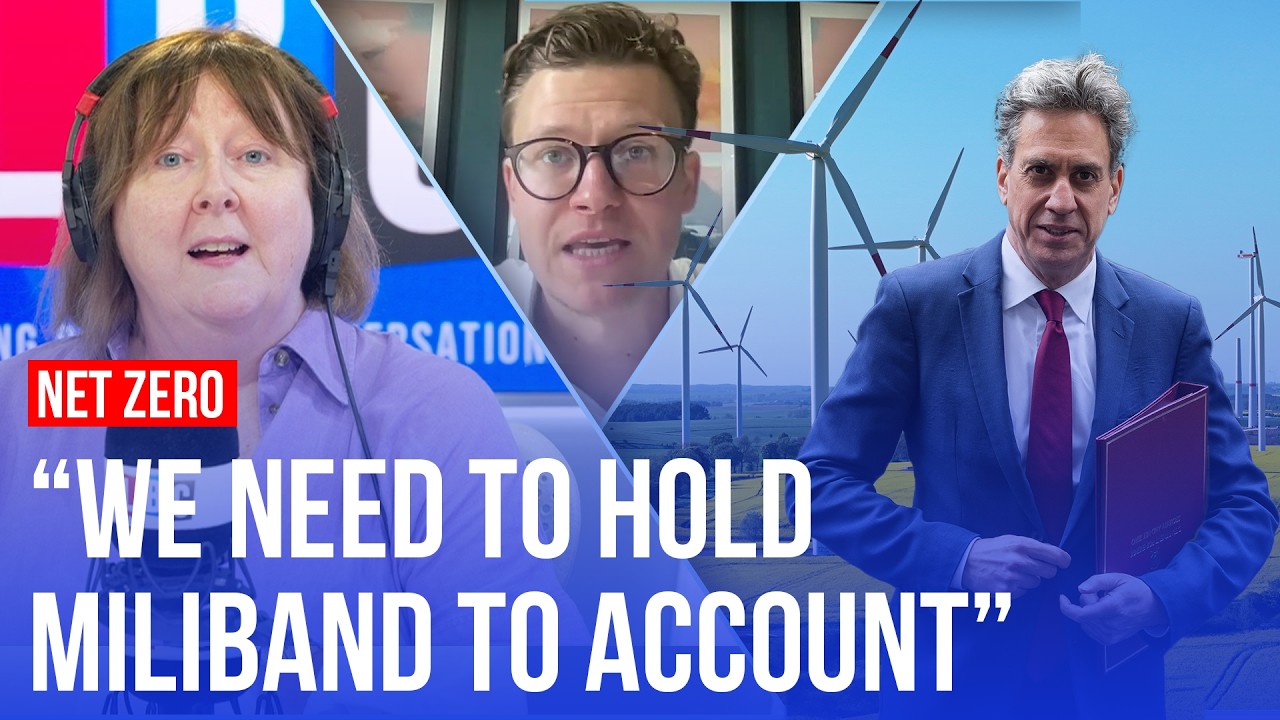
Sir Keir Starmer's fragile authority has suffered a further blow with the resignations of Defence Secretary John Healey and Armed Forces minister Al Carns over the long-delayed defence investment plan. It has appeared that the Prime Minister has chosen welfare over defence. Will Britain pay the price, or will he be able to plunder from Net Zero's £63bn 'war chest' to fund increased spending on the country's armed forces? Max Anderson, Head of Communications for the Conservative Environment Network, joins Shelagh Fogarty to discuss. Listen to the full show on the all-new LBC App: https://app.af.lbc.co.uk/btnc/thenewlbcapp #Welfare #shelaghfogarty #LBC #ukpolitics #edmiliband #netzero #keirstarmer #defence #JohnHealey #uknews #news #ukpolitics #politics LBC is the home of live debate around news and current affairs in the UK. Join in the conversation and listen at https://www.lbc.co.uk/ Sign up to LBC’s weekly newsletter here: https://l-bc.co/signup
Show More Show Less View Video Transcript
0:00
And if you're confused about what net zero is, essentially it's money to make renewable energy happen much more quickly and at scale much more quickly in this country
0:12
So it's about the pace of change. And that's why many people come to net zero and say, yes, it's a good thing
0:18
But the pace is already too punitive for many businesses. And if we are looking for an extra few billion here and there, that might be the place to look
0:27
Max Anderson joins me, head of communications for the Conservative Environment Network
0:31
Is it the place to look, Max Anderson? So I think you are right that there is a lot that can be looked at here
0:39
As you rightly say, we need to work at the pace. We need to look at the money that we're using and whether or not we're investing it wisely
0:47
I think we do need to be aware that if we talk about security in the defence of the realm
0:52
energy security does play a role in that. So the rollout of renewables, for example, will ensure that we have more domestic clean energy
1:00
And I do think as well, additionally, there are better funding pots that we can go off the money for, as we said, and as you said previously, welfare is certainly part of that
1:12
But the money that's being dedicated towards climate action at the moment is not the most efficient
1:18
There is certainly a lot of streamlining that can be done. At the moment, the government is taking an approach that is quite statist and relying on taxpayers' money rather than trying to encourage or create the space for private investments
1:33
That is certainly there, but for some reason not being the priority
1:38
What would it look like if they moved away from the statist approach, as you call it
1:44
I think the first thing they can look at very, very simply is Great British Energy
1:48
That's about £8 billion in the coming years. It might be more, might be less, depending on what this government decides to do
1:58
and whether or not Keir Starmer's government lasts for much longer. But that's certainly one area that the government seems to want to invest into offshore wind
2:08
to solar panels, which almost feels a bit unnecessary because we have so much private investment that wants to go into these funding to fund all these energy projects So pull away Great British Energy not really necessary and allow for the private investment to come through by cutting red tape
2:29
by streamlining regulations and make it easier for these people who do really want to invest, who see the opportunities here, to take advantage
2:38
Do you think the fact that, or do you think what you've just said there about energy playing a role in national security, gives somebody like Ed Miliband a bit of a whip hand here
2:51
I mean it does certainly to an extent and I think we have to be extremely conscious when having these
3:00
conversations not to be like net zero it's time to scrap it we need to focus all on
3:08
defense funding because as you say it's in the round what I think we have to do though
3:14
is hold Ed Miliband's account and make sure that the money that he is spending to ensure
3:19
our energy security is the most efficient means to do that. And as I've already pointed out
3:24
I don't think that is the case. And that is the concern. So we need to make sure that the money
3:30
that DESNES is using, the money that is being given, that is incredibly valuable and important
3:34
for ensuring the security of this country is being spent well. But again, as I kind of go
3:41
back to the original point, yes, DESNES can be streamlined, as all departments can be
3:46
But the welfare budget has been increasing at a rapid rate in the last two years
3:51
So if we're looking for, if we're comparing where the best funding might come from when looking for the defence investment plan
4:00
probably welfare is the better place. But that's not to say that Densiners can't be made more efficient
4:05
Yeah, I mean, and welfare, it's a small word to describe a huge amount of public spending, isn't it
4:10
It isn't just about whether you're in work or out of work. It isn't just about whether you need extra support for children
4:15
It's about pensions. It's about all kinds of aspects of life, isn't it
4:19
Yeah, there is. It is a significant amount of funding that is being used here
4:27
And this is the other thing as well when we looking and we talking about net zero it not just about the rollout of clean energy which again is important for our security but it also about adaptation It also preparing for what will happen with climate
4:44
change. We only saw a couple of weeks ago how bad the heatwaves were, how much a heatwave can
4:51
affect this country in terms of its productivity, in terms of its health. And the Climate Change
4:56
Committee was quite clear that I think it was something like 95% of homes are not prepared
5:02
for heatwaves, which is incredibly disconcerting to hear about. Why do you think we are, I mean, everywhere you look at the moment, I was thinking this the other
5:12
day, everywhere you look, we have aspects of our life that I certainly used to just take for granted
5:18
as functioning, you know, maybe not always brilliantly, but functioning just don't seem
5:25
to be functioning now we the whole thing the whole thing seems to be falling to pieces
5:29
i hate to be too negative but it does feel a bit like that doesn't it when you look at the
5:35
problems that we have and how unable we seem to be to land on solutions effective quick solutions
5:41
or even long solutions i think there's two things to say about this because you you can first of all
5:47
talk there's so many issues that you could potentially point to um with what's going on
5:52
in current society when having this conversation, but we'll try and keep it focused
5:57
with talking about basic infrastructure when dealing with, let's say, a heat wave or flash flooding
6:03
I think the one thing that is noticeable is as the world is obviously changing
6:08
as climate change is taking effect, we're seeing heat waves become more common
6:12
We're seeing flash floods become more common, which means that they're more on our minds
6:16
It means that there's greater strain placed on our infrastructure, which is why we need to adapt and prepare for this
6:21
And this is why we can't just completely raid the net zero budget and pretend that it's money that we don't need, because if we're just looking at the fundamental importance of adapting, let alone building up our domestic energy production, it's important
6:36
So that would probably be why. But also I think then if you're looking at a kind of wider approach, I think there is a lack of long term thinking really embedded in the heart of government
6:48
when it comes to most issues at the moment On that you know you landed on welfare not uniquely I know but I just looked at the figures here I mean the amount we spend every year is
7:01
just extraordinary. And again, it takes in a lot. This isn't just about people struggling to work
7:05
by any means. Since Labour took office in July of 24, welfare spending has risen by roughly 19
7:12
billion from about 314 billion to 333 billion and the nhs that's a year the nhs annual bill is 122
7:23
million there or thereabouts um so it is the by far the biggest pot isn't it it's incredibly
7:32
unsustainable if we continue as a country to just endlessly fund welfare and pretend that these
7:40
problems can just be solved by chucking money at it through the welfare budget. Major reform is
7:45
needed to help get people off benefits and into employment that we're not seeing. But there is
7:53
also another point here is that when we saw all these resignations taking place, there was a clear
7:59
finger being pointed at Keir Starmer and his inability to stand up to his MPs and making the
8:05
difficult decisions. Cutting welfare and making reform to welfare is difficult, particularly for
8:10
Labour MPs and what they believe in. And it will be difficult for any of his
8:16
successors if indeed there is a successor. Of course, but the thing is that the Prime
8:23
Minister is meant to be there to make the difficult decisions. He's meant to be there to stand up for the good of the nation. We are at the moment facing incredible challenges where
8:33
the economy is not growing in the way we want it. The world is in a more dangerous place than it has
8:38
ever been um difficult decisions need to be made these problems require tough decisive decision
8:46
making and frankly i think that's all the nation wants is they want decisions and feeling like this
8:51
this country is moving should be frankly in any direction left or right they just want something's
8:57
being done and i think if starman wants to stay on he's got to start making some tough decisions
9:03
that starts by tackling welfare take it by the scruff of the neck one way or another yeah thanks
9:07
very much, Max. Good to talk to you. Max Anderson, Head of Communications for the Conservative
9:11
Environment Network
#news