0:00
Spring of the conversation, Inzaman Rashid, who's an international journalist
0:03
and Monocle's golf correspondent, and joining us now from Dubai. Can you update us on the tit-for-tat shelling from last night
0:10
Where do we find ourselves this morning? Morning to you, Inzaman. Morning, Nick
0:13
Yeah, look, I'd see this probably now as a major escalation in this conflict
0:18
because over the last 10 days, we've seen, as what you've branded, tit-for-tat fighting between the US and Iran
0:25
But since Iran targeted Kuwait's international airport last week, killing people, dozens and dozens being injured as a result
0:33
It's really kind of ramped up, this fighting in the region. Yes, we know that Israel has continued to target Hezbollah
0:41
targets inside of Lebanon, and Hezbollah has retaliated by targeting northern Israel
0:47
But it's always been Iran's red line that if Israel was to target Beirut
0:52
then they would retaliate. It's something that they've said consistently. it's been part of the memorandum of understanding that the US and Iran have been working towards
1:01
And clearly yesterday, it was too much for Iran to sit back and to watch Beirut be targeted by
1:07
Israel. And so they carried out these strikes late last night. And then we saw the Israeli
1:13
retaliation come in the early hours here in the region. And now we are effectively in a situation
1:19
where Israel and Iran are now exchanging rocket fire. I think the big question is, is does this broaden out
1:27
Does this go into all war We haven seen the tit fighting do that as of yet And I think that probably a sign that US President Donald Trump wants to get out of this conflict He wants to get a deal He needs to get out of the conflict in fact And I think
1:43
Iran do as well, but we're now in a situation where it's pretty precarious, and I think it
1:48
depends on what the next steps are, whether from Israel or Iran, in terms of what retaliation looks
1:54
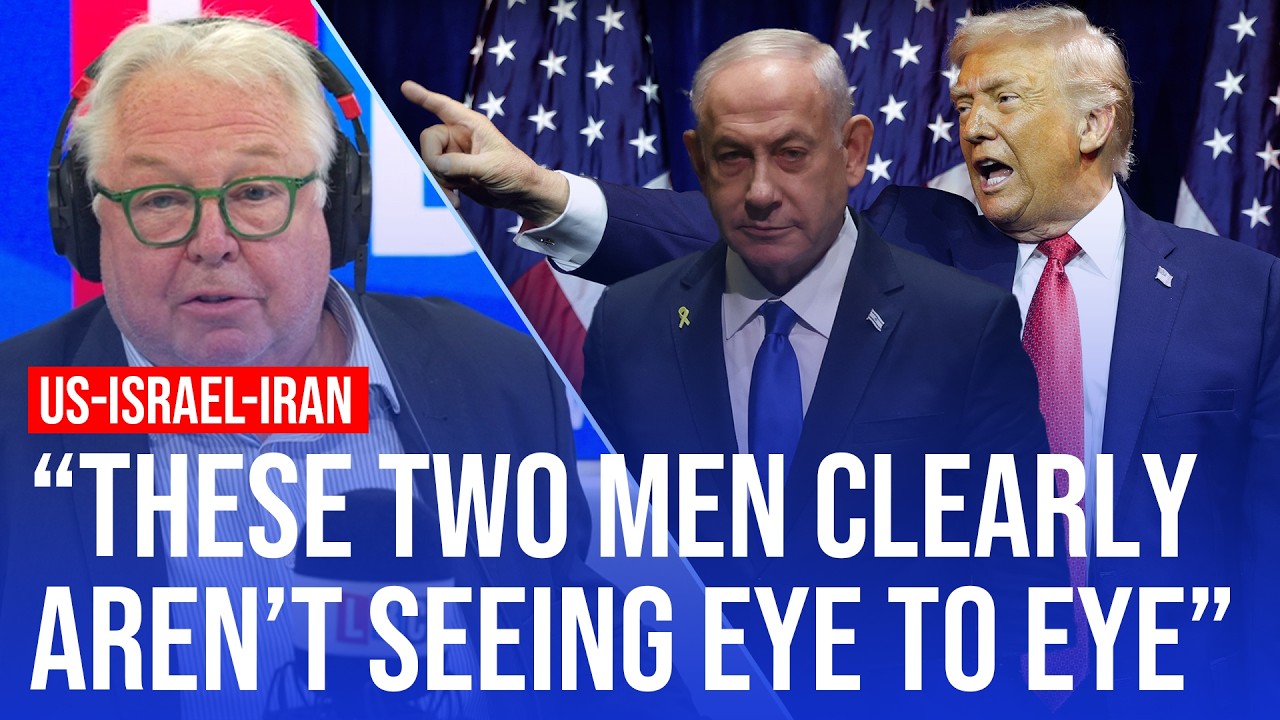
like. And Inzamam, how do you interpret this then as a relationship between the two men
1:58
Trump and Netanyahu? Well, as your reporter Helen was saying, it's been fraught given that
2:04
phone call that President Trump had directly with Benjamin Netanyahu saying to him not to attack
2:11
Beirut. He didn't do then, but then Israel went and attacked Beirut yesterday and that was without
2:17
apparently US permission. Now, President Trump had a phone call directly with Benjamin Netanyahu
2:24
telling him not to retaliate to these Iranian strikes. I think what's hugely telling is that clearly the pressure has mounted on Netanyahu
2:33
and he's carried out these strikes in retaliation to the Iranian strikes
2:38
And I think we're in a situation now where these two men are definitely not singing off the same hymn sheet
2:44
There is real concern. And I think the US and Israel will probably have a more fraught relationship going forward in this conflict
2:51
What President Trump had said is that Israel will have to deal with whatever deal we make with Iran
2:58
Benjamin Netanyahu will just have to suck it up and deal with whatever deal we make Remember Israel wants to get ground troops into Iran It wants to get its hands on that enriched uranium which is called dust because of the attacks from the US and Israel
3:11
last year. But we're now in a situation where these two men clearly just aren't seen eye to eye
3:15
Really appreciate your report this morning. Thank you. Inzamam Rashid, International Journalist, Monocles, Gulf correspondent, talking and joining us from Dubai, 13 after 7. This is Richard Pater
3:23
who's director of BICOM. That's the Britain-Israel Communications and Research Centre, an independent body researching and providing ysis about Israel and the region
3:31
And joining us from Jerusalem. Thank you for your time. Mr. Peter, can you give us an indication
3:36
What is it ultimately that Benjamin Netanyahu wants? What would bring his side of hostilities to an end? Good morning
3:43
Good morning. Thank you for having me on. Well, as you say, it's not such a good morning here in Jerusalem
3:47
We've already had three alerts, sirens this morning. Listen, I think the bottom line is that Israel is looking for peace and tranquillity
3:57
in the region ideally. They're looking to break that linkage that is only a recent development
4:02
that is allowing Iran to have that stranglehold over the residents of northern Israel
4:07
who have been continuously battered by Hezbollah rockets. And this is unfortunately a failure
4:13
to an extent of the negotiations going on so far that Israel is not part of, obviously
4:18
between the US and Iran. But if you listen to the Lebanese officials
4:23
they're very keen to move forward with peace with Israel. certainly that's the vibe and the feeling here in Israel as well
4:29
that there are no territorial ambitions with Lebanon, but Iran is holding that process back by bolstering their lead proxies But coming back to this what does peace look like then would you say for Mr Netanyahu Richard Well I mean Israel is looking for the US to take a stronger line with Iran
4:50
that the overall deal with Iran looks like a removal of their enrichment
4:55
obviously an opening of the Hormuz, and a breaking of the stranglehold that they hold over their ring of fire
5:01
strategic approach around Israel. but the IDF would withdraw from sites in the Lebanon
5:07
I think that's the ideal plan, that once you have a bolstered Lebanese armed forces
5:12
backed hopefully by both US and British training and investment, then Israel has a vested interest to see a strong Lebanese armed forces
5:21
replace them in Lebanon, that the Israeli IDF is overstretched as it is
5:26
and has no long-term ambitions to remain in Lebanon. Richard, lastly, might I ask you
5:31
how do you interpret relations between the two men, President Trump and Benjamin Netanyahu
5:35
I mean, this is the soap opera that operates, kind of occupies Israeli intention
5:41
I think it was, so far it was kind of, it's a good sign that Israel is able to say no
5:46
to President Trump on occasion. Israel cannot stand silently sitting on its hands
5:52
when it's attacked by such a range of ballistic missiles. So I think there are still, there are convergent interests
5:58
but I think, broadly speaking, they're pulling in the same direction. but a little bit of bandwidth between the two is no bad thing necessarily
6:05
Grateful for your time, Richard. Richard Pater, thank you, Director of Biocom, the Britain-Israel Communications Research Centre
6:10
joining us from Jerusalem