0:00
It is going to be a reflective week for the Labour Party
0:04
because of course it is a year ago this week that something very, very unusual happened
0:09
A Labour opposition was returned to government with not just a majority, but with a stunning majority
0:16
a resounding majority, albeit one built on the lowest, smallest share of the vote, the most slender margin
0:23
of popular support we've seen for any incoming government since universal suffrage
0:28
And therein, I think, lies a lot of the problems that we've seen for this Labour government
0:33
This landslide, which was a mile wide and an inch deep, and a bit of the mind for Labour MPs
0:40
many of whom sat on very, very slender majorities, knowing that this was
0:45
if ever there was the phrase, lending your votes, ever was opposite, it was here
0:51
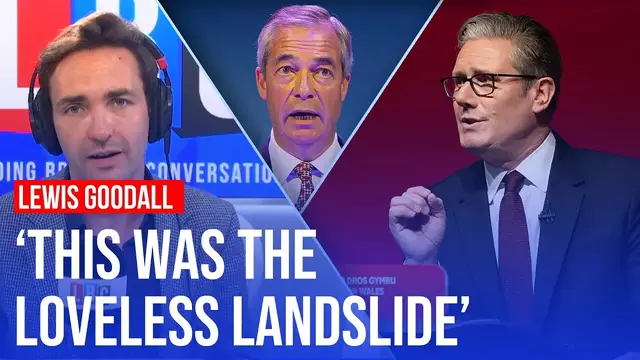
This was called the loveless landslide. And there has been a feeling, and it's always there with Labour government
0:56
So they're always just looking over their back. It's a party that very often doesn't have the self-confidence, often, of the Conservative Party
1:02
It is not the natural party of government, or often it does not perceive itself that way in the British system
1:09
And very often it has felt that so acutely with this Labour government
1:14
The paradox that we have had over the last year a parliament which has been more progressive more left more left MPs a more progressive parliament than we ever had in our history
1:26
The Conservative Party has never been more marginal. The Reform Party, despite its dominance of the airwaves, having only four or five MPs
1:34
depending on which set of arguments they've had with each other that week. This progressive parliament for the ages, and yet the paradox which sits at the heart of British politics
1:43
which is that Keir Starmer and his government has so often felt like it lacks authority
1:49
as if it lacks commanding, it lacks the ability to be commanding
1:54
Why is that? How to explain that paradox that we have a progressive parliament
2:01
this, as I say, most progressive parliament that we've seen in our history, and yet almost all of the ideological running of this parliament seems to be happening on the right
2:11
and at that, the radical right at the hands of Nigel Farage
2:15
Well, one of the bits, the components of that explanation, as I say
2:19
is the fact that this was a huge majority, but one that was achieved on a relatively small percentage of the vote
2:25
There was no huge endorsement from the British public at large for this Labour Party
2:30
Indeed, it barely increased the percentage of the vote that Jeremy Corbyn got in 2019
2:35
Part of it is about just the fact that any government would have found it incredibly difficult to deal with the terrible inheritance that it was left Some of which was the Conservative Party fault
2:45
Some of which was wider global structural factors about the British economy, about geopolitics that any government would be struggling with
2:53
But there is a third element too for my money. And that is, of course, Keir Starmer himself
2:58
There are a suite of different profile pieces that we're seeing in the newspapers this weekend with an almost plaintive prime minister, a prime minister who is in reflective, ruminative mood
3:10
And in many ways, they speak well of him in the sense that he is accepting. He's made mistakes on all manner of things
3:15
The Rose Garden speech, which was, in his own words, far, far too pessimistic, too gloomy
3:20
The welfare bill. The Island of Strangers speech, which he said he hadn't read properly because he was busy with other things, not least personal problems
3:27
grooming gang speech, which he labelled as a problem of the far right, only to go back on it
3:31
Winter fuel, of course, the original sin of this government, from which in many ways it has not
3:36
been able ever to recover the political agenda. This is an admirable honesty from the Prime
3:41
Minister. And yet, it begs an obvious question that we're going to try and get to in the show
3:46
today, which is what does it say on any and each of those things about his political judgment? And
3:51
not just his political judgment but his political compass And I think if you speak to a lot of Labour MPs This is ultimately where they think this government despite the fact they think it doing plenty of good things and lots of good Labour things that ultimately where it is going wrong that it lacks a political centre of gravity Keir Starmer has always insisted there
4:11
would be no such thing as Starmerism. He is not an ideological character. Many people like that
4:17
They want a Prime Minister to just get on with the job in hand. But there is a cost to that too
4:22
which is that in an age which is being defined by big political ideas
4:27
where political ideas are being contested each and every day on social media
4:32
digital life, television, radio, a government which lacks a strong sense of political compass and character
4:39
can find itself buffeted along by the political winds and the political seas
4:45
And I think that more than anything else, that rudderlessness, is the ultimate root of many of this government's problems
4:53
When you've got ministers coming on shows like this and people like me are saying
4:57
what is this government about? They are not easily able to crisply say
5:02
And ultimately, all roads on that must lead to the prime minister himself
5:07
a political sphinx, Keir Starmer, an unusual figure, someone who wears his ideology lightly
5:15
his politics more likely than any prime minister I can think of, certainly in the post-war period