Up next in 10

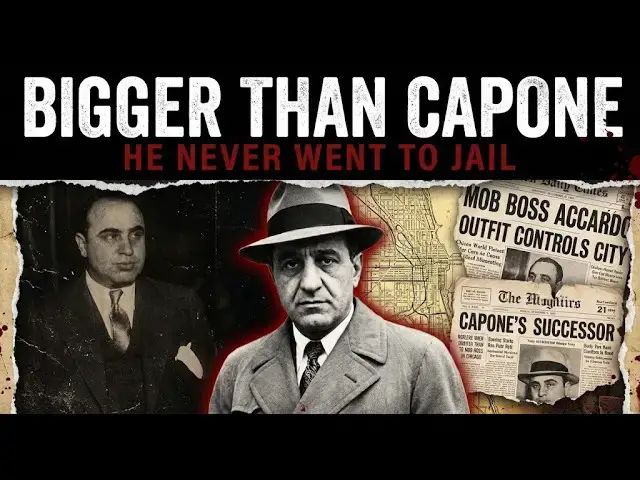
Al Capone died in his pajamas, a hollowed-out shell of a man. But while Capone took the headlines, another man took the throne—and kept it for fifty years without a single day in prison.
Chicago in the 1920s was a city at war, fueled by Prohibition gold and blood. While the world watched Al Capone's custom suits and public smiles, a young enforcer named Tony Accardo was watching the mistakes that would eventually destroy the legend. Accardo, known to the streets as 'Joe Batters,' realized the ultimate truth of power: the man who talks is the man who falls.
From the bloody garage of the St. Valentine’s Day Massacre to the secret counting rooms of Las Vegas, this is the untold story of the architectural genius who reshaped the Chicago Outfit into a global corporate empire. While other bosses died in rain of bullets or behind bars, Accardo died at home, in bed, at the age of 86.
This is the documentary of the man who outlasted the FBI, the IRS, and every rival who dared to step into his shadow. This is the story of the Real Godfather.
⚠️ HISTORICAL DISCLAIMER: This documentary reconstructs events from historical records, court documents, oral histories, and investigative journalism. Some dialogue and scenes are dramatized based on documented accounts. Sources listed below.
📚 Sources & Further Reading:
→ The Outfit (Gus Russo)
https://www.amazon.com/Outfit-Role-Chicago-Empire-1928-1991/dp/1582342792
→ Capturing Al Capone (FBI Records Vault)
https://vault.fbi.gov/al-capone
→ Tony Accardo: The Man Behind the Outfit (Chicago Tribune Archives)
https://www.chicagotribune.com/history/
→ The Rise and Fall of the Chicago Mob (National Crime Syndicate)
https://www.nationalcrimesyndicate.com/
→ Organized Crime in Chicago (Chicago Crime Commission)
https://www.chicagocrime.org/
🏷️ Hashtags:
#TrueCrime #MafiaHistory #ChicagoOutfit #TonyAccardo #Documentary #AlCapone #MobHistory
-~-~~-~~~-~~-~--~-~~-~~~-~~-~--~-~~-~~~-~~-~-
⚠️ Content Disclaimer:
This video is created for educational and informational purposes only. We do NOT glorify, promote, or encourage any form of criminal activity.
All visuals, audio, and materials used in this video are either:
✔ Created using AI tools, or
✔ Sourced from royalty-free platforms with valid licenses.
No copyrighted content belonging to others has been used without permission.
❤️ Support the Channel:
If you enjoy learning about real-life crime stories, history, and social issues, don't forget to:
✔ Like the video
✔ Subscribe to the channel
✔ Share your thoughts in the comments
Your support helps us keep creating more valuable content!
🔧 Tools I Use to Grow This Channel:
I personally use vidIQ to optimize my videos, find trending keywords, and grow my YouTube channel faster. Try it for free and see the difference!
💼 Contact & Copyright:
If you believe any part of this video violates your rights, please contact me directly via YouTube. I fully respect copyright laws and will respond promptly.
-~-~~-~~~-~~-~--~-~~-~~~-~~-~--~-~~-~~~-~~-~-
-
Show More Show Less View Video Transcript
0:03
never wanted you to know his name
0:08
Al Capone died in his pajamas January 25th, 1947
0:14
a stroke
0:14
took what syphilis had been slowly eating for years
0:18
he was 48
0:20
his mind was gone long before the rest of him followed
0:23
he died in a mansion on Palm Island
0:26
Florida surrounded by family
0:29
surrounded by nothing that mattered anymore
0:32
the empire he built had been taken from him
0:34
a decade earlier
0:36
the city he once owned had forgotten his face
0:40
the name still made headlines
0:42
but the man behind it had been hollowed out
0:45
like a Jack o lantern left on the porch
0:48
too long seven years
0:50
that's how long Al Capone actually ran Chicago
0:54
seven years of headlines seven years of newsreels
0:58
seven years of flash bulbs and custom suits
1:01
and a public persona so loud
1:03
it practically
1:04
begged the federal government to come looking
1:07
and they came looking now
1:09
here is a different No. 50
1:12
50 years that is how long another man
1:15
controlled the Chicago Outfit
1:17
same organization same city
1:21
same brutal machinery of profit and violence
1:24
but this man's face never appeared on a magazine cover
1:28
his name never LED a newscast
1:30
he was never convicted of a single serious crime
1:34
he never spent a night in prison
1:36
his name was Antonino Leonardo Accardo
1:40
the streets called him Tony
1:42
his friends
1:43
the ones who survived long enough to have an opinion
1:46
called him Joe Batters
1:48
the events in this documentary are real
1:52
the words we've done our best
1:54
to stay true to the record
1:56
where the record is silent
1:58
we've used informed interpretation
2:01
court transcripts FBI surveillance logs
2:05
and the accounts of those who were there
2:07
form the spine of what you're about to hear
2:10
to understand Tony Accardo
2:12
you have to understand what he saw as a young man
2:16
because what he saw
2:17
taught him the only lesson that ever mattered
2:20
the man who talks is the man who falls
2:24
he was born on April 28th, 19 0 6
2:28
the West Side of Chicago his parents
2:31
Maria and Francesco R C a
2:34
R do
2:35
had come from Castelvetrano Sicily
2:38
a small town dusty
2:40
Catholic poor
2:42
the kind of place where ambition meant leaving
2:45
Francesco worked as a shoemaker
2:48
the family lived in a neighborhood
2:49
where Italian was spoken more than English
2:52
and where the boundary between honest labor
2:55
and the other kind was not always clearly drawn
2:59
Tony was one of six children
3:01
he was quiet he watched
3:03
people who knew him as a boy
3:05
would later say the same thing
3:07
almost word for word he listened more than he spoke
3:11
he dropped out of school
3:13
before finishing the fifth grade
3:15
this was not unusual for boys in that neighborhood
3:18
at that time what was unusual was what came next
3:23
by the age of 14 Tony Accardo was running with a crew
3:27
small time stuff at first
3:30
petty theft
3:31
errands for older men who needed packages delivered
3:35
and no questions asked he was reliable
3:38
he was calm under pressure
3:40
and he possessed a quality
3:42
that the men above him recognized
3:44
almost immediately
3:46
he did not need to be the center of attention
3:49
in a world full of men who wanted to be seen
3:52
Tony Accardo wanted to be useful
3:55
that distinction would save his life
3:57
more times than anyone could count
4:00
Chicago in the 1920s was a city at war with itself
4:05
prohibition had turned alcohol into gold
4:08
and gold attracts men willing to kill for it
4:12
the north side belonged to Dean O'banion and later
4:15
Bugs Moran the South Side belonged to Johnny Torrio
4:20
who had handed the keys to a young man from Brooklyn
4:23
with a scar on his face and a talent for spectacle
4:27
Al Capone Capone
4:29
understood something about America
4:31
that most criminals missed
4:33
the public would forgive almost anything
4:36
if you gave them a good show
4:38
he tipped generously
4:40
he spoke to reporters like they were old friends
4:44
he opened soup kitchens during the depression
4:47
he wore suits
4:48
that cost more than most men earned in a year
4:51
and he smiled always smiling
4:55
the cameras loved him Tony Accardo watched all of this
4:59
he was in his early 20s now
5:01
working his way up through the Capone organization
5:04
not as a strategist not as a deal maker
5:08
as an enforcer a man who handled problems
5:12
that required a certain directness
5:14
according to multiple historical accounts
5:17
it was during this period
5:19
that Acardo earned his nickname
5:21
the story and it has been told many versions
5:25
goes something like this Capone witnessed a
5:28
Cardo handle a situation with a baseball bat
5:32
the details vary depending on who's telling it
5:36
some accounts are more graphic than others
5:39
what matters is the result
5:41
Capone reportedly looked at the young enforcer
5:44
and said something along the lines of
5:46
this kid's a real Joe Batters
5:49
the name stuck for the rest of his life
5:52
men who knew him well called him Joe Batters
5:54
to his face usually behind his back always
5:58
but here's what the nickname obscures
6:01
Acardo was not simply muscle
6:03
he was muscle that thought
6:05
he watched how Capone operated
6:07
and he catalogued every mistake
6:09
the open cars the public appearances
6:13
the need to be loved by people
6:15
who would never love him back
6:17
the tax returns that nobody bothered to falsify
6:21
properly he watched and he Learned
6:24
February 14th, 1929 the Saint Valentine's Day Massacre
6:30
seven men connected to Bugs Moran's North Side gang
6:34
were lined up against a wall
6:36
in a garage on North Clark Street
6:38
and shot to death
6:39
the killers were dressed as police officers
6:42
it was efficient it was ruthless
6:45
and it was sloppy in one critical way
6:48
everybody knew who ordered it
6:50
certain investigators and historians
6:53
have placed Tony Accardo at or near the scene that day
6:57
whether he pulled a trigger
6:59
drove a car
7:00
or simply helped coordinate logistics remains debated
7:04
what is not debated is this
7:07
he was part of the Capone in a circle by that point
7:10
and the massacre was planned
7:12
by that circle
7:13
the massacre accomplished its tactical objective
7:17
Moran's gang was finished as a serious rival
7:21
but strategically it was catastrophic
7:24
the public turned the newspapers turned
7:27
the federal government
7:29
which had been content to let Chicago
7:31
sort out its own problems
7:33
suddenly had a reason to pay attention
7:36
within two years Capone was under indictment
7:40
within three he was convicted
7:42
not for murder not for racketeering
7:45
for tax evasion 11 years in federal prison
7:50
Tony Accardo drew a conclusion from this
7:53
that would govern every decision he made
7:55
for the next half century
7:57
the conclusion was not complicated
8:00
it did not require a law degree or a philosophy course
8:04
it was simple arithmetic capone was loud
8:08
capone went to prison therefore
8:10
don't be loud it sounds obvious
8:13
it was not in the world
8:15
a Cardo inhabited ego was currency
8:19
men killed each other over perceived disrespect
8:22
they bought mansions and drove Cadillacs
8:25
because visibility meant power
8:27
or so they believed
8:29
Acardo rejected this equation entirely
8:33
he understood that real power is the kind nobody
8:36
can see and the kind nobody can see
8:39
is the kind nobody can take away
8:42
with Capone in prison the outfit needed new leadership
8:46
the man who stepped forward was Frank the Enforcer
8:50
Nitti at least that's the public version
8:53
Nitti was the face
8:55
the actual strategic mind belonged to Paul the waiter
8:59
Ricker born Felice de Lucia in Naples
9:02
Rika as it was pronounced
9:05
Rika was older smarter and more patient than Nitty
9:09
he had no interest in headlines
9:11
he had every interest in money
9:13
Akardo aligned himself with Rika
9:16
this was not an accident
9:18
it was a choice made with surgical precision
9:21
Ricker represented the future
9:23
quiet calculated
9:25
business oriented nitty represented the past
9:29
volatile insecure
9:31
prone to the same kind of public
9:33
exposure that had destroyed Capone
9:36
throughout the 1930s Accardo rose steadily
9:40
he oversaw operations on the West Side
9:44
he managed relationships with corrupt officials
9:47
he demonstrated an ability
9:49
that separated him
9:50
from nearly every other man in the organization
9:54
he could sit in a room with politicians
9:57
businessmen and killers
9:59
and make all of them feel like he was on their side
10:03
he married Clarice Pozzoni in 1934
10:07
she was not Italian
10:09
this raised eyebrows in certain circles
10:12
but Acardo did not appear to care
10:15
they would remain married for the rest of his life
10:18
over 50 years
10:20
in a world where marriages were often strategic
10:23
and fidelity was optional
10:25
this was noted he kept his family out of sight
10:28
out of the newspapers out of the story
10:32
the way he kept everything
10:34
1943 changed the power structure permanently
10:38
the federal government went after the outfits
10:41
Hollywood extortion racket
10:43
a scheme to extract money from major film studios
10:47
by threatening labor disruptions
10:50
several top outfit figures were indicted
10:53
including Paul Ricker and others
10:55
they were convicted Ricker went to prison
10:59
Frank Nitti facing his own indictment
11:02
and the prospect of returning to prison
11:05
made a different choice on March 19th, 1943
11:10
he walked along the railroad tracks
11:12
near his home in Riverside
11:14
Illinois and shot himself
11:16
the outfit needed a boss not a figurehead
11:20
an actual decision maker Tony Accardo was 37 years old
11:25
he took control
11:27
and the first thing he did was nothing dramatic
11:30
no meetings in grand hotel suites
11:33
no proclamations
11:35
no reorganization for the sake of showing strength
11:38
he simply continued doing what he had been doing
11:41
running things efficiently
11:43
quietly and with an attention to detail
11:46
that bordered on compulsive
11:48
but beneath that calm surface
11:51
Arcado was reshaping the outfit from the ground up
11:55
he understood something that Capone never grasped
11:58
and that Nitti was too anxious to see
12:01
the future of organized crime was not in speakeasies
12:05
and gambling dens it was in legitimate business
12:09
or rather in the space
12:11
where legitimate business
12:12
and illegitimate money could meet
12:14
without attracting attention
12:16
under Accardo
12:18
the Chicago Outfit began investing in Las Vegas
12:22
this was the mid 1940s
12:24
the Nevada desert was mostly nothing
12:28
a few small casinos a lot of sand
12:31
but men with vision could see what it would become
12:35
and Acardo had vision the outfit began
12:38
channeling money into casino development
12:41
working alongside and sometimes against
12:44
other organized crime families who had the same idea
12:48
the arrangement was elegant
12:50
outfit money would help build or finance casinos
12:55
in return
12:56
the outfit would receive a percentage of the profits
13:00
skimmed directly from the counting rooms
13:03
before the money ever reached the official books
13:06
the IRS couldn't tax what the IRS couldn't see
13:10
Acardo also expanded the outfit's
13:12
involvement in legitimate businesses
13:15
vending machines laundry services
13:19
liquor distribution construction
13:22
the principle was always the same
13:24
use illegitimate capital to acquire legitimate revenue
13:28
streams then
13:29
use those legitimate
13:31
streams to explain the existence of the capital
13:34
it was in its way
13:36
a kind of financial architecture
13:39
and Accardo was its architect
13:41
but he was not soft
13:43
the reputation he had earned as Joe Batters
13:46
was not decorative when situations required force
13:51
force was applied precisely
13:53
without excess and always deniable
13:57
the exact details of violence
13:59
authorized by Akkado during this period
14:02
are difficult to pin down
14:04
which is of course
14:05
exactly how he wanted it
14:08
court documents and FBI surveillance logs from the era
14:12
reference decisions being made at the top
14:15
without naming the top
14:17
witnesses who might have clarified things
14:20
had a tendency to become unavailable
14:23
what is documented is the result
14:27
under Ricardo's leadership
14:29
the Chicago Outfit became
14:31
arguably the most disciplined and profitable
14:34
organized crime operation in the United States
14:38
it controlled territory from Chicago to Las Vegas
14:42
to parts of California it had relationships
14:46
according to investigators
14:48
with politicians at the city
14:50
state and federal level it operated with a level of
14:55
institutional sophistication
14:57
that most legitimate corporations would envy
15:01
Antonio Accardo's name appeared in the newspaper
15:04
approximately never by the early 1950s
15:09
Acardo made another decision
15:11
that revealed his strategic thinking
15:13
he stepped back from the day to day role of boss
15:16
not because he was forced out not because he was tired
15:21
because he understood that the position of boss
15:23
attracted attention and attention was the enemy
15:27
he installed Sam Momo Jankana
15:31
pronounced g Ian
15:32
c a
15:33
h n a
15:34
as the operating boss of the outfit
15:36
Jankana was energetic charismatic and effective
15:41
he was also in a cardo's view
15:44
expendable
15:45
in the way that front facing leaders always are
15:48
Acardo moved into the role of consigliere
15:52
senior advisor the man behind the man
15:55
this was not a demotion
15:57
it was a promotion into invisibility
16:00
Jankana made the calls Jankana took the meetings
16:04
Jancana's name appeared in the FBI files
16:08
Akado's name appeared in almost none of them
16:11
and when it did the references were vague
16:14
the Old Man the Big Tuna
16:17
another nickname earned from a fishing trip
16:21
where he'd landed a large tuna
16:23
and been photographed with it
16:25
one of the very few photographs of him that exist
16:28
from this era he reportedly hated that photo
16:31
the system worked
16:33
Jungkano ran the outfit with considerable skill
16:36
throughout the 1950s he expanded operations
16:41
he generated enormous revenue
16:44
he also gradually
16:45
began making the same mistake that Capone had made
16:49
a generation earlier he started enjoying the spotlight
16:53
Jankana was seen at nightclubs
16:56
he was seen with women
16:57
he was seen specifically with Phyllis Magaya
17:01
of the Magaya Sisters a famous singing group
17:04
he was photographed he was followed by reporters
17:08
he was in a word visible
17:11
Accardo watched this with what
17:13
multiple associates
17:14
later described as quiet displeasure
17:17
and then came the FBI J
17:19
Edgar Hoover had spent decades
17:22
publicly denying the existence of organized crime
17:26
but by the late 1950s
17:28
that position had become untenable
17:31
the Appalachin meeting of 1957
17:35
where dozens of mob figures from across the country
17:38
were discovered at a gathering in upstate New York
17:42
had embarrassed the bureau
17:45
Hoover needed results and Sam Giancana
17:48
with his nightclub habits and his famous girlfriend
17:52
was an easy target
17:54
the FBI placed Jancana under intense surveillance
17:58
agents followed him everywhere
18:00
they sat in cars outside his house
18:03
they showed up at restaurants where he was eating
18:06
the pressure was relentless and deliberate
18:09
the goal was not necessarily to build a criminal case
18:13
the goal was disruption it worked
18:16
Jankana's effectiveness as a leader was compromised
18:20
he couldn't hold meetings
18:22
without assuming they were being monitored
18:25
he couldn't travel without a tail
18:27
his temper already volatile
18:30
grew worse Acardo had seen this before
18:34
the pattern was identical to Capone
18:36
just updated for a new decade
18:39
a leader who needed attention
18:41
was a leader who attracted the wrong kind of it
18:44
according to several accounts from former associates
18:48
who later cooperated with authorities
18:50
Acardo began quietly reasserting control
18:54
not publicly not through any dramatic confrontation
18:59
he simply started making decisions again
19:02
and the people who mattered
19:04
understood whose decisions mattered
19:06
John Kahn was eventually called to testify
19:10
before a grand jury in 1965
19:14
he refused to answer questions
19:17
citing a grant of immunity that compelled his testimony
19:21
when he still refused he was jailed for contempt
19:25
after his release he left the country
19:28
he went to Mexico then other places
19:31
he was effectively in exile
19:33
whether Ricardo explicitly ordered this exile
19:37
or simply allowed it to happen
19:39
is one of those questions
19:40
the historical record doesn't cleanly answer
19:44
what is clear is that
19:46
Jankana's departure did not create a power vacuum
19:50
the outfit continued to function
19:52
revenue continued to flow
19:54
because the actual decision maker
19:57
the man who had been the actual decision maker
20:00
for 20 years was still sitting in the same chair
20:04
he'd always occupied just not one anyone could see
20:08
The 1970s brought new challenges
20:12
the federal government
20:13
had become significantly more sophisticated
20:16
in its approach to organized crime
20:19
the Racketeer Influenced and Corrupt Organizations Act
20:24
Rico passed in 1970
20:28
gave prosecutors tools they had never had before
20:32
it was no longer necessary to prove that a boss had
20:35
personally committed a crime
20:37
it was enough to prove that he LED an organization
20:41
that committed crimes Acardo adapted
20:44
he always adapted
20:46
he placed additional layers between himself
20:49
and daily operations
20:51
Joey Doves Aioopa
20:53
pronounced I o o PA
20:55
served as the operating boss through much of the 70s
20:58
and into the eighties
21:00
Jackie the lackey Serone served beneath him
21:04
each layer was a buffer each buffer was insulation
21:08
Acardo continued to live modestly
21:11
or rather he continued to appear to live modestly
21:15
his home in River Forest Illinois was comfortable
21:19
but not
21:19
ostentatious by the standards of suburban Chicago
21:24
he played golf he went fishing
21:26
he attended family functions
21:29
from the outside he looked like a retired businessman
21:32
enjoying his later years from the inside
21:36
according to FBI agents
21:38
who spent years trying to build a case against him
21:41
he remained the ultimate authority
21:43
in the Chicago Outfit
21:45
every significant decision was either made by him
21:49
or required his approval every new enterprise
21:53
every major act of violence
21:55
every political relationship
21:58
he was consulted he was deferred to
22:01
he was in the vocabulary of the organization
22:05
the man in 1978
22:08
something happened
22:09
that briefly pierced Acardo's carefully maintained
22:12
invisibility his home in River Forest was burglarized
22:17
someone broke in while the family was away
22:19
and stole jewelry and personal items
22:23
this was either extremely foolish
22:25
or extremely unlucky for the burglars
22:28
within months
22:30
several men connected to the burglary were found dead
22:33
the deaths were not subtle
22:35
they were meant to send a message
22:37
according to investigators at the time
22:41
the message was clear
22:43
Tony Accardo's home was not to be touched
22:46
Tony Accardo's family was not to be touched
22:49
Tony Accardo's world was not to be entered uninvited
22:54
the exact sequence of events
22:56
connecting the burglary to the deaths
22:58
was investigated
23:00
but never resulted in charges against Accardo
23:04
some researchers suggest
23:05
the connection was obvious to everyone involved
23:09
law enforcement included
23:11
but proving it in court was a different matter entirely
23:15
this episode revealed something important
23:18
Akado's restraint his patience
23:22
his preference for quiet
23:23
these were strategic choices
23:25
not constitutional limitations
23:28
when provoked at the personal level
23:31
the response was neither quiet nor patient
23:34
it was absolute and then the world moved on
23:38
and Akardo returned to being invisible
23:41
The 1980s
23:42
saw the outfit face its most serious legal threat
23:46
the Las Vegas skimming operation
23:48
the same system
23:50
Acardo had helped design decades earlier
23:53
was finally exposed federal prosecutors brought cases
23:58
against multiple outfit figures
24:00
including Joey Ayapa and Jackie Cerone
24:04
the trial based partly on information
24:07
from electronic surveillance
24:09
and cooperating witnesses
24:11
resulted in convictions Acardo was not indicted
24:15
let that sit for a moment
24:17
the system he helped build
24:20
the revenue stream he helped design
24:22
the organizational structure he sat atop for decades
24:27
and when the indictments came
24:28
his name was not on them this was not luck
24:32
this was the result of 50 years of disciplined
24:35
separation between the man who made decisions
24:39
and the evidence trail those decisions left behind
24:43
he had been called before various governmental bodies
24:46
over the years Senate committees
24:49
grand juries he appeared
24:52
he was polite he invoked the Fifth Amendment
24:55
his right against self incrimination
24:58
when necessary he answered harmless questions
25:01
with harmless answers he revealed nothing
25:05
there is a famous photograph
25:07
from one of these appearances
25:09
Acardo in a suit seated at a table before a microphone
25:13
his expression perfectly neutral
25:15
not defiant not nervous
25:17
not smug just present
25:20
a man sitting in a chair answering to his name
25:24
giving away absolutely nothing
25:26
it's the expression of a man
25:28
who understood that government
25:30
committees are theatre
25:31
and the best way to survive theatre
25:34
is to give a boring performance
25:36
his health declined in the 1990s
25:39
he was in his 80s now the body
25:42
that had carried him through seven decades of life
25:45
most men wouldn't survive for seven years
25:48
was wearing down heart problems
25:51
the usual inventory of age
25:54
but even in decline the structure held
25:57
the outfit continued to operate
25:59
New Front bosses managed daily affairs
26:02
and when critical questions arose
26:05
questions about territory
26:07
about money about who lived and who didn't
26:10
accounts suggest that Tony Accardo was still consulted
26:14
still deferred to still the man
26:17
he died on May 22nd, 1992
26:21
he was 86 years old he died at home in bed
26:25
his wife Clarice beside him
26:28
no handcuffs no prison cell
26:30
no dramatic standoff no bullets
26:33
he died the way he lived quietly
26:36
the funeral was held at Queen of All Saints Basilica
26:40
in Chicago it was attended by family
26:43
friends and
26:44
according to law enforcement who monitored the event
26:48
a significant number of men
26:50
whose names appeared in organized crime databases
26:53
across the country they came to pay respects to the man
26:58
to Joe Batters
27:00
to the boss who had outlasted every rival
27:03
every investigation
27:04
every shift in the landscape of American crime
27:08
50 years give or take
27:11
from the early 1940s to the early 1990s
27:16
half a century of uncontested authority
27:19
over one of the most powerful criminal organizations
27:23
in American history Al Capone gets the movies
27:26
Al Capone gets the mythology
27:29
Al Capone gets the fame Tony Accardo got the Empire
27:34
the file is closed
27:35
not because every question has been answered
27:38
but because the man who could have answered them
27:41
took those answers with him
27:43
more stories coming subscribe
#Arts & Entertainment