Up next in 10


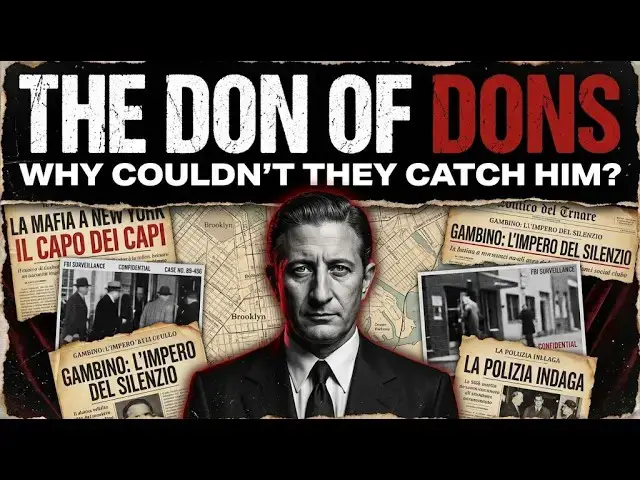
They spent 40 years trying to put him in handcuffs, but he spent 40 years building a city that would protect him. This is the story of the man who turned organized crime into a corporate empire.
From the frozen Great Lakes of Detroit during Prohibition to the neon-soaked strip of Las Vegas, Morris "Moe" Dalitz was unlike any other mobster of his era. While Al Capone and Lucky Luciano made headlines and went to prison, Dalitz made spreadsheets and infrastructure. He understood a fundamental truth that his contemporaries missed: violence is expensive, but corruption is an investment.
This video reveals how Dalitz utilized the "Cleveland Syndicate," leveraged Teamsters pension funds, and masterminded the financial systems that built modern Las Vegas. This isn't just a crime story; it is a masterclass in money laundering on a civic scale. We explore how a bootlegger transformed himself into a philanthropist, leaving historians to ask the uncomfortable question: Did he go legitimate, or did the law just stop mattering?
Timestamps:
0:00 - The Desert Doesn't Forget
0:38 - Who Was Moe Dalitz?
1:55 - The Jewish Navy & Prohibition
4:00 - Why Violence is Expensive
6:40 - The Move to Las Vegas
8:00 - The Desert Inn & Teamsters Money
12:26 - The Kefauver Hearings
14:46 - Investigating a Ghost
16:35 - Howard Hughes Buys The Strip
18:36 - From Gangster to Humanitarian of the Year
21:00 - The Longest Laundering Operation in History
22:40 - The Final Verdict
Sources & Further Reading:
- Newton, M. (2009). Mr. Mob: The Life and Crimes of Moe Dalitz. McFarland.
- Denton, S., & Morris, R. (2001). The Money and the Power: The Making of Las Vegas and Its Hold on America. Vintage.
- U.S. Senate Special Committee to Investigate Organized Crime in Interstate Commerce (Kefauver Committee) Transcripts, 1950-1951.
- FBI Freedom of Information Act (FOIA) Files: Morris Barney Dalitz (Files 62-HQ-78728).
- Schwartz, D. G. (2003). Suburban Xanadu: The Casino Resort on the Las Vegas Strip and Beyond. Routledge.
#LasVegasHistory #MoeDalitz #TrueCrime #OrganizedCrime #MoneyLaundering #Documentary
-~-~~-~~~-~~-~--~-~~-~~~-~~-~--~-~~-~~~-~~-~-
⚠️ Content Disclaimer:
This video is created for educational and informational purposes only. We do NOT glorify, promote, or encourage any form of criminal activity.
All visuals, audio, and materials used in this video are either:
✔ Created using AI tools, or
✔ Sourced from royalty-free platforms with valid licenses.
No copyrighted content belonging to others has been used without permission.
❤️ Support the Channel:
If you enjoy learning about real-life crime stories, history, and social issues, don't forget to:
✔ Like the video
✔ Subscribe to the channel
✔ Share your thoughts in the comments
Your support helps us keep creating more valuable content!
🔧 Tools I Use to Grow This Channel:
I personally use vidIQ to optimize my videos, find trending keywords, and grow my YouTube channel faster. Try it for free and see the difference!
💼 Contact & Copyright:
If you believe any part of this video violates your rights, please contact me directly via YouTube. I fully respect copyright laws and will respond promptly.
-~-~~-~~~-~~-~--~-~~-~~~-~~-~--~-~~-~~~-~~-~-
-
Show More Show Less View Video Transcript
0:00
he never needed to raise his voice
0:03
that was the whole point
0:08
he pressed his suit every morning
0:10
not because he had somewhere important to be
0:13
the suit was part of something else
0:15
a discipline a daily reinstatement of who he was
0:19
and what that required coffee
0:21
newspaper shoes checked for shine
0:24
then the short walk to daily mass
0:26
at Our lady of Grace on 13th Avenue in Brooklyn
0:30
his neighbors knew him said good morning
0:33
watched him tend his tomato plants in summer
0:36
he was courteous modest
0:39
unremarkable
0:40
in the way that only remarkable men can manage
0:44
his name was Carlo Gambino
0:46
and from the mid 1950s until his death in 1976
0:52
he ran the most powerful
0:54
organized crime family in the United States
0:58
arguably in the world
1:00
with so little visible evidence of doing so
1:03
that the FBI spent years debating
1:06
whether he was even the boss
1:08
what you're about to hear
1:10
is based on documented history
1:12
court records FBI surveillance files
1:16
investigative journalism
1:18
and the testimony of men who served under him
1:21
against him or who survived him barely
1:24
some conversations have been recreated
1:27
for narrative purposes some dialogue is approximated
1:31
but the shape of the man that shape is real
1:35
let's start from the beginning
1:37
not the version that begins with guns
1:39
and initiation ceremonies
1:42
the version that begins with a boy on a boat Palermo
1:46
Sicily 19 hundred and one
1:49
the island was at that time
1:51
a place that had been conquered so many times
1:54
by so many different powers
1:56
that its people had developed
1:57
a particular philosophy of survival
2:00
you did not trust the government
2:02
because the government had always been someone else's
2:06
you did not trust the law
2:08
because the law had always served someone else's
2:11
interests you trusted the men you knew
2:15
you trusted blood you trusted silence
2:18
everything else was performance
2:20
Carlo Gambino was born into this world
2:23
on August 28th, 19 0 2
2:26
his family was not destitute and not wealthy
2:30
they were Sicilian in the fullest sense connected
2:33
careful aware
2:35
of the invisible networks
2:36
that actually governed daily life
2:39
his father had associations with the honored society
2:43
what most people know as the Mafia
2:46
the Cosa Nostra which translates to this thing of ours
2:50
it was simply part of the landscape
2:53
by the time Carlo was in his early 20s
2:56
two things had happened that would permanently
2:58
alter the trajectory of his life
3:01
and that of American organized crime
3:04
the first was prohibition
3:07
the second was the decision made
3:09
sometime around 1921 or 1922
3:14
that he would emigrate
3:15
he arrived in the United States illegally
3:18
no passport no immigration record
3:21
he was entered as a stowaway on a ship manifest
3:25
that particular detail an unofficial arrival
3:28
in a country he would one day help reshape
3:31
carries its own kind of irony
3:34
America never officially knew he was coming
3:37
by the time it did it was far too late
3:41
he settled in Brooklyn specifically
3:43
in the community around Bath Beach and Bensonhurst
3:47
where other Sicilian immigrants
3:50
had already established the kind of insular
3:53
tightly organized neighborhood
3:55
that made the transition
3:57
from the Old World to the new one
3:59
slightly less disorienting
4:02
he spoke almost no English at first
4:05
he didn't need to he was already connected
4:08
before he left Palermo
4:09
he had been sponsored into the Mafia or
4:12
as some accounts suggest
4:14
initiated informally through his family connections
4:18
either way by the time he arrived in Brooklyn
4:21
he arrived as a man with standing
4:24
he arrived to work and for a young Sicilian
4:28
with organizational instincts
4:30
and a talent for staying invisible
4:32
there was no better moment in
4:34
American history to arrive
4:36
prohibition had created a market
4:39
worth hundreds of millions of dollars
4:41
with no legal competitor
4:43
the men who understood this earliest
4:46
who built supply chains distribution networks
4:50
and basic business infrastructure
4:52
around bootlegged alcohol
4:54
were positioning themselves
4:56
to accumulate the kind of capital
4:59
that transformed local thugs into institutional powers
5:04
Carlo Gambino understood this immediately
5:07
he went to work under the Castellano family
5:10
a Brooklyn based operation with strong Sicilian roots
5:16
he ran alcohol he invested the profits carefully
5:20
he built relationships deliberately
5:23
he was not flashy he was not violent beyond necessity
5:27
he was by all surviving accounts
5:30
extremely patient this patience would define everything
5:34
by the early 1930s
5:37
two events reshaped the underworld he was operating in
5:41
the first was the end of prohibition in 1933
5:45
which destroyed the primary revenue stream
5:48
for a generation of mobsters
5:51
who had never bothered to diversify
5:53
the second and far more significant
5:56
was the Cassilamese war
5:59
the war itself is worth understanding
6:02
because without it
6:03
Carlo Gambino might have remained a prosperous
6:06
but ultimately regional figure
6:09
The Castellammese War was essentially
6:12
a power struggle between two factions of Italian
6:16
American organized crime on one side was Joe Masseria
6:21
the reigning boss of New York
6:23
a man known as Joe the boss
6:25
who controlled significant territory
6:28
but had grown conservative
6:30
suspicious and increasingly difficult to work with
6:34
on the other side was Salvatore Maranzano
6:38
s a l v a r t I o r a Mar r a n z a no
6:42
a Sicilian born power broker
6:44
who had arrived more recently
6:46
and had ambitions that Masseria found threatening
6:50
the conflict bled into the streets across 1930 and 1931
6:56
men died in restaurants on sidewalks
6:59
in social clubs the violence was real and extensive
7:04
but the resolution of the war had less to do with force
7:08
than with a young man named Salvatore Lucania
7:12
whom everyone called Charlie Lucky
7:15
later known as Charles Luciano
7:17
who managed to end the war
7:19
by arranging the murders of both leaders
7:22
in succession what emerged from this was the commission
7:25
a governing body of American organized crime
7:29
that would set the template for everything
7:31
that followed five New York families
7:34
territories respected
7:36
a mechanism for resolving disputes
7:39
without open warfare rules
7:42
Carlo Gambino
7:43
was not a principal architect of the commission
7:46
at this stage 1931
7:49
he was still a relatively junior figure respected
7:53
known but not yet at the table
7:55
where these decisions were made
7:57
he was watching learning
8:00
cataloguing the mistakes of men who moved too fast
8:04
and talked too loudly he would not make those mistakes
8:08
the family he belonged to
8:09
passed through several hands
8:11
across the 1930s and forties
8:14
the Mangano family
8:16
as it was known through much of this period
8:19
was run by Vincent and Philip Mangano brothers
8:23
who maintained solid
8:24
control of the waterfront operations
8:27
in Brooklyn that were central to the family's income
8:31
Gambino worked within this structure
8:34
he built his own crew
8:36
he expanded his business interests
8:38
into the labor rackets
8:40
that were becoming the new foundation of organized
8:43
crime revenue
8:44
now that Prohibition's windfall was gone
8:47
and he watched Albert Anastasia
8:50
Albert Anastasia Anastasia requires some explaining
8:56
he was in almost every measurable way
8:59
Carlo Gambino's opposite where Gambino was quiet
9:03
Anastasia was thunderous
9:06
where Gambino cultivated ambiguity
9:09
Anastasia revelled in clarity
9:12
he was the man behind what newspapers called
9:15
Murder Incorporated the enforcement arm
9:18
that had carried out hundreds of killings
9:20
on contract during the prohibition era
9:24
he was terrifying in the most literal sense
9:27
men feared him not abstractly
9:29
but viscerally
9:30
the way you fear something unpredictable and very close
9:35
Anastasia was the underboss of the Mangano family
9:39
he hated the Mangano brothers
9:42
they for their part
9:43
understood that he was dangerous
9:46
in April of 1951 Vincent Mangano disappeared
9:51
his brother Philip was found dead
9:54
the conventional understanding of what
9:56
happened is that Anastasia ordered it
9:59
removed his bosses preemptively
10:02
because he believed
10:03
they were planning to have him killed first
10:06
he then appeared before the commission
10:08
and argued persuasively
10:10
that the Mangano's had been planning against him
10:14
the commission accepted this
10:16
Anastasia became boss Carlo Gambino
10:20
already the family's consigliere
10:23
its formal advisor became underboss
10:26
there is a question
10:27
that every serious account of this period
10:30
eventually has to address
10:32
what did Gambino think about all of this
10:35
the honest answer is we don't know with certainty
10:39
the FBI was watching but not closely enough
10:42
the men who might have known are dead
10:45
what we can observe is the outcome
10:48
Gambino positioned himself
10:50
adjacent to Anastasia's power
10:52
without becoming identified with Anastasia's methods
10:56
he benefited from Anastasia's rise
10:59
while maintaining his own independence
11:02
standing in the commission's eyes
11:04
whether this was deliberate
11:06
calculation or fortunate circumstance
11:09
the result was the same he was the underboss
11:12
of the most feared family in New York
11:16
and he was still in the public mind
11:19
almost entirely invisible
11:21
those years under Anastasia were productive
11:24
and dangerous in roughly equal measure
11:28
Anastasia was making enemies at a rate
11:31
that would have alarmed any serious strategist
11:34
he was reckless with money
11:36
specifically he was tolerating
11:39
and even encouraging
11:41
the sale of Mafia memberships to outsiders
11:44
who could pay the fee
11:46
but had no genuine standing in the organization
11:50
this was a serious violation of the rules
11:53
established after the Casselames War
11:56
it diluted the value of membership
11:59
it introduced unvetted men into positions of access
12:04
and it made the existing leadership look
12:06
either complicit or impotent
12:09
Vito Genovese Vito J
12:12
N o
12:12
H V
12:13
C was watching this with interest
12:16
Genovese was in some respects
12:18
the mirror image of Gambino
12:21
he was patient he was strategic
12:24
he had been exiled to Italy during the war years
12:27
under circumstances that remained partially disputed
12:31
and he had returned to New York with renewed ambitions
12:36
and deep resentment
12:37
toward those who had operated in his absence
12:41
he wanted to be the most powerful man in American
12:44
organized crime to get there
12:47
he needed to remove several obstacles
12:50
Anastasia was one of them
12:52
the meeting between Genovese and Gambino
12:56
if it happened as several accounts suggest
12:58
left no paper trail what we know is the outcome
13:03
on the morning of October 25th, 1957
13:07
Albert and Anastasia
13:08
walked into the barbershop of the Park
13:10
Sheraton Hotel in Midtown Manhattan
13:14
he sat in the chair he closed his eyes
13:17
two men came in through the entrance
13:20
they pulled their hats low
13:22
they walked to the chair
13:23
what followed took approximately 90 seconds
13:27
Anastasia died in the chair
13:30
his actual murderers were never definitively identified
13:34
the investigation went nowhere
13:37
and Carlo Gambino became boss of what would
13:40
from that day forward
13:42
be known as the Gambino crime family
13:45
he was 55 years old
13:47
the timing of what happened next matters
13:50
because it defines everything
13:52
about how Gambino operated
13:54
less than a month after taking control of his family
13:58
a disaster unfolded that devastated the visibility
14:02
of the entire commission a Palatine New York
14:07
November 14th, 1957
14:10
a state trooper named Edgar Crosswell
14:13
who had been watching a local motel with some suspicion
14:17
noticed an unusual concentration of men
14:21
arriving in expensive cars
14:23
at a rural estate
14:25
belonging to a man named Joseph Barbara
14:28
something about it struck him as wrong
14:31
he set up roadblocks
14:33
over 100 organized crime figures were caught
14:36
attempting to flee through fields and woods
14:40
Gambino was among those present
14:42
his presence there was documented
14:45
it became in the FBI's files
14:48
one of the clearest pieces of evidence
14:50
that the commission actually existed
14:53
at a time when the bureau's director J
14:56
Edgar Hoover
14:58
had been publicly dismissing the concept of a national
15:01
organized crime network for years
15:05
Apalachin was a catastrophe for the Mafia
15:09
as an institution
15:10
the exposure forced the FBI to completely revise
15:14
its understanding of what it was dealing with
15:17
congressional investigations followed
15:21
the public for the first time
15:23
had concrete evidence
15:24
of what had previously been dismissed
15:27
as exaggerated newspaper hysteria
15:30
for most of the men caught in that net
15:33
it was the beginning of accelerated federal pressure
15:37
for Gambino it was something else
15:40
he had been at the meeting
15:41
he was in the records that much was unavoidable
15:45
but his actual arrest
15:47
he was eventually charged with conspiracy
15:50
was overturned on appeal in 1960
15:54
the charges didn't stick and
15:57
because he had spent years maintaining
15:59
a separation between himself
16:01
and the operational violence of his organization
16:05
the government's case against him
16:07
as a principal organizer was harder to make
16:11
than it would have been against men
16:13
who had been more visible
16:14
he went home to Brooklyn he tended his tomatoes
16:18
he attended Mass the FBI increased its surveillance
16:23
Gambino knew this he adjusted
16:26
he stopped using telephones for anything substantive
16:30
he communicated in person in quiet locations
16:34
in short meetings that left no recording
16:37
he rotated the men he spoke to
16:40
he made himself a moving target
16:42
in the one dimension that mattered most information
16:46
meanwhile the landscape around him was shifting
16:49
in ways that required careful navigation
16:53
Vito Genovese who had been Gambino's partner
16:57
in the removal of Anastasia
16:59
was becoming a problem
17:01
his ambitions had not been satisfied
17:04
by becoming head of his own family
17:07
he wanted what Luciano had once had
17:09
primacy over all the families
17:12
he was pushing
17:13
against the boundaries of the commission's structure
17:16
in ways that made the other bosses uneasy
17:20
in 1959
17:22
Genovese was convicted on narcotics conspiracy charges
17:26
and sentenced to 15 years in federal prison
17:30
he died there in 1969
17:33
the accounts of how Genovese ended up convicted vary
17:38
some researchers suggest that certain figures
17:41
including in some versions of the story
17:44
elements sympathetic to Gambino
17:47
facilitated the government's case
17:50
by ensuring that a key informant
17:52
was in the right place at the right time
17:55
these are allegations not proven facts
17:58
the federal case against Genovese
18:01
was built through standard
18:03
investigative methods
18:04
what is documentable is the result
18:07
with Genovese removed from the board
18:10
Carlo Gambino
18:11
emerged as the most powerful figure on the commission
18:15
the man who had wanted supremacy went to prison
18:19
the man who had wanted invisibility became
18:23
quietly and without announcement
18:25
the closest thing American organized crime
18:29
had ever produced to an actual chief executive
18:33
his relationship with Meyer Lansky
18:36
Meyer Lansky
18:37
during this period is worth examining carefully
18:41
Lansky
18:42
was the financial architect of the mob's expansion
18:45
into Las Vegas and Cuba
18:48
he was not Italian not a member of the Cosa Nostra
18:52
but he operated within its orbit
18:54
through decades of business relationships
18:57
and mutual benefit
18:59
Gambino and Lansky shared certain values
19:03
both believed in the primacy of money over violence
19:07
in institutional stability over individual glory
19:11
in the long game over the short score
19:15
their exact working relationship
19:17
is imprecisely documented
19:20
what is clear is that both men understood each other
19:24
and both men thrived
19:25
during a period when louder operators were burning out
19:29
or going to prison through the 1960s
19:33
Gambino consolidated his position
19:35
in ways that were almost invisible
19:38
in real time
19:39
he placed men he trusted in key positions across
19:43
not just his family but adjacent enterprises
19:46
his reach extended into longshoremen's unions
19:50
garment district operations
19:52
garbage carting construction and the trucking industry
19:57
these weren't glamorous rackets
19:59
they were infrastructure they generated steady
20:03
enormous revenue without the kind of criminal
20:06
spectacle that attracted federal attention
20:09
his public profile meanwhile
20:12
remained almost non existent
20:14
when Mario Puzo published the Godfather in 1969
20:19
and Francis Ford Coppola's film adaptation
20:22
appeared in 1972 the character of Vito Corleone
20:27
became the public's image of what a Mafia boss
20:30
looked like elderly dignified
20:34
a patriarch a man of the old ways
20:37
Gambino saw the film he was reportedly not displeased
20:42
whether Puzo knew Gambino or drew specifically from him
20:47
is a matter of some debate
20:49
what is certain is that the cultural archetype
20:52
Corleone represented the quiet
20:55
principled boss who preferred reason over violence
20:59
who embodied old world values in a new world setting
21:03
described Carlo Gambino as accurately
21:06
as it described anyone in real life
21:09
he was by this point genuinely old
21:13
in his late 60s moving into his 70s
21:17
he had a heart condition
21:18
that had been with him for years
21:21
his physical frailty was real and documented
21:25
and yet the organization around him functioned
21:28
with the smoothness of a machine
21:31
whose designer had planned
21:32
for his own eventual absence
21:35
that planning extended to the question of succession
21:39
he chose Paul Cassellano cast a L
21:42
a H no
21:43
his cousin and brother in law
21:45
to succeed him this choice
21:48
which would ultimately produce the conditions
21:50
for Gambino's entire legacy
21:53
to be undone by John Gotti in 1985
21:57
is the one decision of his career
22:00
that history has judged most harshly
22:03
Casellano was capable business like
22:06
and genuinely shared
22:08
Gambino's preference for financial crime
22:11
over street violence
22:12
but he lacked whatever quality it was that made men
22:16
genuinely loyal to Gambino
22:19
rather than merely obedient
22:21
he would prove in the end not strong enough
22:25
but that was after
22:26
that belonged to the world that came after Gambino
22:30
in the fall of 1976
22:33
Carlo Gambino was at home in his house in Massapequa
22:36
New York he was 74 years old
22:40
his health had been declining for some time
22:43
his family was around him
22:45
on October 15th, 1976
22:48
he died of a heart attack in his own home
22:51
in his own bed
22:53
no handcuffs had ever been put on him that held
22:56
no conviction had ever been made to stick
22:59
no rival had successfully moved against him
23:03
no informant had accumulated the kind of evidence
23:06
needed to dismantle what he'd built
23:09
he had run the most powerful
23:11
criminal organization in America
23:14
for roughly 20 years
23:16
and had done so with such consistent restraint
23:19
that his obituaries in the mainstream press
23:23
were shorter than those of men
23:25
who had been far less powerful
23:27
think about what that means for a moment
23:30
the measure of Gambino's success was
23:33
in a very real sense the smallness of his obituary
23:37
every front page story he didn't generate
23:40
was a year he stayed free
23:42
every photograph not taken
23:44
was an investigation that went nowhere
23:47
every conversation never recorded
23:50
was a charge that couldn't be filed
23:53
he built power by making himself difficult to see
23:57
and in a world where visibility
23:59
almost always preceded destruction
24:02
that was not a stylistic preference
24:05
that was strategy of the highest order
24:07
the men who came after him
24:09
the gottis the public bosses
24:12
the men who understood power as a form of performance
24:15
would learn the cost of his lesson in reverse
24:18
they would demonstrate by contrast
24:21
exactly what he had understood
24:23
that in this world the man who most wants to be seen
24:27
is usually the man who ends up in a cage
24:30
or a cemetery Gambino ended up neither
24:33
he left behind a family his actual family
24:37
that mourned him
24:38
he left behind an organization that continued operating
24:42
for years under his chosen successor
24:45
and then through a violent convulsion
24:48
it never fully recovered from
24:50
he left behind the memory of a way of doing things that
24:53
once gone proved impossible to replicate
24:57
not because no one tried
24:59
but because the discipline he embodied
25:02
the specific combination of patience
25:05
intelligence
25:06
restraint and absolute comfort with invisibility
25:10
is genuinely rare in any context
25:14
in any world
25:15
some men are remembered for what they built
25:18
some for what they destroyed
25:20
Gambino is remembered for something harder to quantify
25:24
he is remembered for what he refused to become
25:27
he refused to be a spectacle
25:30
he refused to be a symbol
25:32
he refused to let the performance of power
25:34
become more important than its exercise
25:37
and so in the end
25:39
the most powerful boss in American Mafia history died
25:43
as he had lived quietly at home
25:46
surrounded by the people he actually cared about
25:50
in this life that outcome is not a minor accomplishment
25:54
it is by any honest measure
25:57
the only accomplishment that matters
26:00
if this story stayed with you you know what to do
#Arts & Entertainment