Up next in 10


They called him the Boss of Bosses before the title even existed in America.
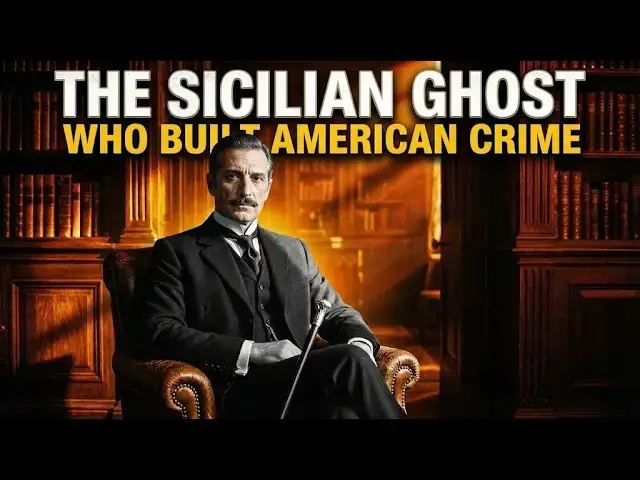
Vito Cascio Ferro wasn't just a gangster; he was an architect of a shadow empire that spanned from the dusty hills of Sicily to the tenements of New York. He supposedly invented the 'pizzo'—the protection payment that every business learned to accept—and drew the blueprint that Lucky Luciano and Carlo Gambino would later build upon.
But here is the mystery: He was arrested sixty-nine times and convicted exactly zero.
This is the untold story of the man who supposedly orchestrated transatlantic organized crime and personally murdered the greatest Italian detective of his generation. From his rise in the agrarian economy of western Sicily to his final confrontation with Mussolini’s "Iron Prefect," we explore the space between the myth and the court records.
No textbook covers this dark transition from provincial banditry to the global syndicate Don Vito pioneered.
His legacy remains a chilling demonstration that power can exist in the shadows for decades, untouchable by the forces designed to contain it.
⚠️ HISTORICAL DISCLAIMER: This documentary reconstructs events from historical records, court documents, oral histories, and investigative journalism. Some dialogue and scenes are dramatized based on documented accounts. Sources listed below.
📚 Sources & Further Reading:
→ The Honoured Society (Norman Lewis)
https://www.amazon.com/Honoured-Society-Sicilian-Mafia-Observed/dp/0141188359
→ Cosa Nostra: A History of the Sicilian Mafia (John Dickie)
https://www.amazon.com/Cosa-Nostra-History-Sicilian-Mafia/dp/1403970424
→ The First Family (Mike Dash)
https://www.amazon.com/First-Family-Terror-Birth-American/dp/0345511559
→ The Black Hand (Stephan Talty)
https://www.amazon.com/Black-Hand-Petrosino-Deadliest-Secret/dp/054463313X
→ FBI Historical Archives: The Morello Gang
https://www.fbi.gov/history
🏷️ Hashtags:
#TrueCrime #MafiaHistory #Documentary #VitoCascioFerro #SicilianMafia #OrganizedCrime #HistoryExposed
-~-~~-~~~-~~-~--~-~~-~~~-~~-~--~-~~-~~~-~~-~-
⚠️ Content Disclaimer:
This video is created for educational and informational purposes only. We do NOT glorify, promote, or encourage any form of criminal activity.
All visuals, audio, and materials used in this video are either:
✔ Created using AI tools, or
✔ Sourced from royalty-free platforms with valid licenses.
No copyrighted content belonging to others has been used without permission.
❤️ Support the Channel:
If you enjoy learning about real-life crime stories, history, and social issues, don't forget to:
✔ Like the video
✔ Subscribe to the channel
✔ Share your thoughts in the comments
Your support helps us keep creating more valuable content!
🔧 Tools I Use to Grow This Channel:
I personally use vidIQ to optimize my videos, find trending keywords, and grow my YouTube channel faster. Try it for free and see the difference!
💼 Contact & Copyright:
If you believe any part of this video violates your rights, please contact me directly via YouTube. I fully respect copyright laws and will respond promptly.
-~-~~-~~~-~~-~--~-~~-~~~-~~-~--~-~~-~~~-~~-~-
-
Show More Show Less View Video Transcript
0:00
They say he only killed one man
0:03
personally
0:04
with his own hands.
0:08
Here is what the legends say.
0:09
[clears throat] They say he invented the
0:11
pizza, the protection payment that every
0:14
business in Sicily learned to accept as
0:17
the cost of [music] staying open. They
0:20
say he could walk into any room in
0:22
Palamo and conversation would stop. They
0:25
say he brought the Sicilian way of doing
0:27
things to the streets of New York,
0:30
planted a seed, and watched it grow from
0:33
3,000 mi away. They say he was arrested
0:37
69 times and convicted exactly zero.
0:41
They say all of this, but here's the
0:43
thing about legends. [music] Legends
0:46
don't need evidence. Legends don't
0:48
require documentation.
0:50
Legends live in the space between what
0:53
happened and what people [music] needed
0:54
to believe happened. Veto Casio Pharaoh.
0:58
Don Veto Cashio Pharaoh. The man they
1:02
called the boss of bosses before that
1:05
title meant anything in America? Was he
1:08
everything the stories claim? Was he the
1:11
architect of transatlantic organized
1:14
crime? the man who drew the blueprint
1:16
that Lucky Luchano and Carlo Gambino
1:19
would later build upon. Or was he
1:22
something else entirely? A provincial
1:25
Sicilian boss whose legend grew larger
1:28
than his actual reach, inflated by the
1:31
same forces that needed him to be more
1:33
than he was. The truth, as it usually
1:36
does in these stories, lies somewhere in
1:39
the shadows between [music] the myth and
1:41
the court records. And the court records
1:44
in this case are remarkably thin. What
1:48
you're about to hear is based on
1:50
documented history. Some conversations
1:53
have been recreated for narrative
1:55
purposes. Where the record is clear,
1:58
we'll follow it. Where it isn't, and
2:00
there's a lot of empty space in this
2:02
story, [music] we'll acknowledge the
2:04
uncertainty because the uncertainty
2:07
might be the most honest thing about
2:09
Veto Casio Pharaoh. He was born in 1862
2:13
in a small town [music] in the province
2:15
of Palamo called Bicquino.
2:18
Bisquino,
2:20
a hill town, dusty streets, the kind of
2:24
place where everyone knew everyone and
2:27
certain families had been important
2:29
since before anyone could remember.
2:32
Sicily in the 1860s was not exactly part
2:36
of Italy. It had only recently been
2:38
absorbed into the new Italian nation,
2:41
and the absorption was incomplete. The
2:45
government in Rome was far away. The
2:47
law, as administered by Rome's
2:50
representatives, felt like foreign
2:52
occupation to many Sicilians. Into this
2:56
gap stepped older forms of authority,
2:59
family structures, patronage networks,
3:02
mutual aid societies that provided what
3:05
the government could not or would not.
3:08
And at the edges of these networks, men
3:10
who understood that power flows toward
3:13
those willing to use force. The word
3:16
mafia was already in use. Its origins
3:19
are disputed. Some connect it to Arabic
3:22
words meaning protection or refuge.
3:25
Others trace it to local dialects. What
3:28
matters is what it meant in practice. A
3:30
system of relationships, favors owed,
3:34
respect demanded, silence maintained.
3:37
Young Veto grew up watching this system
3:40
operate. His family was connected. How
3:43
connected exactly remains unclear. The
3:47
documentation from this period is sparse
3:49
at best. What we know is that by his
3:52
early 20s he had aligned himself with
3:55
groups operating in the agrarian economy
3:58
of western Sicily. [music] This was not
4:00
glamorous crime. This was crop theft,
4:04
cattle rustling, [music] extortion of
4:06
landowners who held vast estates and
4:09
employed peasant labor. The targets were
4:12
wealthy. The methods were direct. pay
4:15
for protection from the very people
4:17
threatening you. And somewhere in this
4:19
period, Veto Casio Pharaoh either
4:23
developed or refined an insight that
4:25
would shape organized crime for the next
4:28
century. The insight was simple.
4:31
Violence is a tool, not a goal.
4:34
According to historians who have studied
4:36
this period, what distinguished certain
4:39
Sicilian operators from common bandits
4:42
was systematization.
4:44
[music] Bandits rob and disappear. But a
4:47
properly organized protection system
4:50
creates ongoing relationships.
4:53
The payment becomes regular,
4:55
predictable, almost like a tax. And if
4:58
the payment is reasonable, if the
5:00
protected party can afford it without
5:02
going bankrupt, then the relationship
5:05
becomes sustainable. The landowner pays,
5:09
the crops aren't burned, the cattle
5:11
aren't stolen. Everyone knows the rules
5:14
and over time the payment stops feeling
5:17
like extortion and starts feeling like
5:20
insurance. [music] Did Veto Casio
5:22
Pharaoh invent this? Probably not. The
5:26
practice predates him, but the legends
5:28
credit him with perfecting it with
5:31
turning chaotic shakedowns into
5:33
something more elegant. A system where
5:36
the hand that collected the pizza was
5:38
seen almost as a service provider.
5:42
Almost by the 1890s he had risen. How
5:46
high is difficult to say. Records from
5:49
this period describe him as a man of
5:51
influence in western Sicily. Someone
5:54
whose name opened doors whose
5:56
disapproval closed them. But the picture
5:59
remains frustratingly incomplete. What
6:02
is documented is that he ran into
6:05
trouble with Italian authorities.
6:06
[music]
6:07
In 1898, he was accused of involvement
6:11
in the kidnapping of a baroness. The
6:14
evidence was circumstantial, but the
6:16
attention was unwelcome. And so, like
6:19
many Sicilians of his era, both the
6:22
legitimate and the otherwise, he looked
6:24
west America. By 1901, Vto Casio Pharaoh
6:30
had arrived in New York. Here, the
6:32
legend and the evidence diverge most
6:35
sharply. According to the mythology that
6:38
developed over the next century, his
6:40
American sojourn was transformative.
6:44
He supposedly connected with the Mllo
6:46
gang, the preeminent Italian criminal
6:49
organization in New York at the time. He
6:52
supposedly taught them Sicilian methods.
6:55
He supposedly laid the foundation for
6:58
what would become the American Kosa
7:00
Nostra. The evidence for this thin
7:04
circumstantial
7:05
[music] based largely on later claims
7:08
and retrospective analysis. What we know
7:11
for certain he was in New York. He did
7:14
interact with Italian immigrants, many
7:17
of whom were from Sicily. He did [music]
7:20
spend time in the neighborhoods where
7:22
the Molo organization operated. [music]
7:25
Everything else is inference. The Mlo
7:28
gang was real enough. Led by Guusep Mlo,
7:32
Joe SCP pay Morel Lo and his fearsome
7:36
brother-in-law Ignazio Lupo Eganh CEO
7:40
Loo Oop known as Lupo the Wolf. This
7:43
organization dominated the Italian
7:46
criminal underworld of early New York.
7:49
Counterfeiting [music]
7:50
extortion. The Blackhand letters that
7:53
terrorized Italian immigrants. [music]
7:56
Did Casio Pharaoh advise them,
7:59
collaborate with them, bring
8:01
organizational methods from Sicily?
8:04
[music] Some researchers suggest exactly
8:06
this. They point to the sophistication
8:09
of the Mlo operation, its structure, its
8:12
methods. They argue that an experienced
8:15
[music]
8:15
Sicilian hand must have guided the
8:18
development. But this argument has a
8:20
weakness. It assumes American Italian
8:24
criminals needed [music] instruction. It
8:26
assumes they couldn't have developed
8:28
these methods themselves, learning from
8:31
their environment, adapting to American
8:34
conditions. The truth may be simpler.
8:37
The truth may be that Casio Pharaoh was
8:40
one immigrant among thousands, connected
8:43
to the criminal world, but not
8:45
necessarily its architect. The legend
8:47
[music] elevated him. The legend needed
8:50
a founding father figure, and a man who
8:53
would later become powerful in Sicily
8:55
fit the narrative perfectly. We don't
8:58
know how long he stayed. Some accounts
9:01
say until 1904.
9:03
Others are less specific. [music] What
9:06
we know is that at some point he
9:08
returned to Sicily and then things
9:11
changed. The veto Casio Pharaoh who
9:14
returned from America, assuming the
9:16
timeline the legends suggest is
9:19
accurate, was [music] different from the
9:21
provincial figure who had left. Maybe he
9:23
had learned something in New York. Maybe
9:26
he had made connections that would serve
9:28
him later. Or maybe he had simply
9:30
matured, reached the age where ambition
9:33
becomes calculation.
9:35
Whatever the reason, his rise after
9:38
returning to Sicily [music] was rapid.
9:41
Within a decade, he had become one of
9:43
the most powerful men in western [music]
9:46
Sicily, not through any official
9:48
position. He held no title. He ran no
9:52
business that appeared in commercial
9:54
registries. His power was of the older
9:57
kind, the kind that doesn't require
10:00
documentation because everyone already
10:02
knows. How did he build this power? The
10:06
accounts [music] describe a man who
10:07
understood appearances. Unlike later
10:10
American bosses who would flaunt their
10:12
wealth, Casio Pharaoh cultivated the
10:16
image of a gentleman. [music] He dressed
10:18
well but not ostentatiously.
10:21
He attended church. He was seen as a
10:23
mediator, a resolver of disputes, a man
10:27
whose words settled arguments. The
10:30
violence that enforced his position was
10:32
kept at a distance. Others did that
10:35
work. His hands, if the legends are
10:37
true, remained clean, [music]
10:39
almost clean. There was one exception.
10:43
One murder he allegedly committed
10:45
personally, and it involves the most
10:47
tragic figure in this story, Jusp
10:50
Petraino. [music] Joe SCP Pro Petro.
10:55
In America, they called him Joe. He was
10:58
born in 1860 in a small town near Seno.
11:02
His family immigrated when he was a
11:05
child. He grew up on the streets of New
11:07
York, the child of immigrants in a city
11:10
that didn't exactly welcome them. And
11:13
then he became a cop. The NYPD of the
11:16
late 1800s was not kind to Italian
11:19
officers. Petraino faced discrimination,
11:23
mockery, the assumption that no Italian
11:26
could be a real American lawman, but he
11:29
was stubborn, brilliant in his own way,
11:32
and absolutely relentless. He made
11:35
himself an expert on Italian crime. He
11:38
learned the networks, the names, the
11:41
methods. He understood [music]
11:43
things that his fellow officers couldn't
11:45
grasp. The cultural codes, the
11:48
hierarchies of respect, the ways that
11:51
old country structures replicated
11:53
themselves in new world tenementss. By
11:56
1905, he was leading the Italian squad,
12:00
a specialized unit dedicated to breaking
12:03
the power of the Blackhand extortionists
12:06
who terrorized immigrant communities. He
12:09
was by any measure the most effective
12:12
Italian American law enforcement officer
12:15
of his generation. He was also
12:19
inevitably a marked man. The Black Hand
12:22
wasn't a single organization.
12:25
The term described a method extortion
12:28
letters signed with a black handprint
12:30
[music]
12:31
threatening violence against those who
12:33
refused to pay. Various groups used the
12:36
technique, but they all had one thing in
12:39
common. They feared Joe Petraino. He had
12:43
arrested too many of them, deported too
12:46
many of them, disrupted too many of
12:49
their operations, and he was getting
12:51
closer to something bigger. A systematic
12:54
understanding of how the criminal
12:56
networks in New York connected to the
12:59
power structures back in Sicily. In
13:02
1909, the NYPD made a decision that
13:06
would prove fatal. They sent Petraino to
13:09
Italy. The mission was supposed to be
13:12
secret. He was to gather records on
13:14
Italian criminals who had immigrated to
13:17
America, information that could be used
13:20
for deportations.
13:22
He traveled under an assumed name. He
13:24
told [music] almost no one of his
13:26
destination, but somehow the secret
13:29
leaked. On the evening of March 12th,
13:32
1909, Joe Petraino was shot and killed
13:35
in the Pisa Marina in Palamo. He was 50
13:39
years old. The killing was brazen, a
13:42
public square. Multiple witnesses,
13:44
[music]
13:45
though none remarkably, saw anything
13:48
clearly enough to identify the shooter.
13:51
The message was unmistakable.
13:53
Even the most dangerous policeman in
13:55
America could be reached. Even in the
13:58
heart of a major city, [music] even when
14:00
everyone was watching, no one was ever
14:03
convicted of the murder. But the legends
14:06
and some investigators point to Veto
14:09
Casio Pharaoh. [music] According to one
14:12
famous account, Casio Pharaoh was
14:14
attending a formal dinner on the night
14:16
of the killing. At some point during the
14:19
meal, he excused himself, was gone for
14:22
approximately an hour, then returned to
14:25
finish his dessert. [music] Where did he
14:28
go during that hour? The story suggests
14:30
he personally traveled to the Paza
14:33
Marina and shot [music] Petraino
14:35
himself. The dinner guests, prominent
14:38
and respectable, would later swear he
14:41
had been present the entire evening. an
14:44
alibi constructed in real time. Is this
14:48
true? Honestly, we don't know. The story
14:51
appeared in various forms over the
14:54
years, [music] growing more detailed
14:56
with each telling. Casio Pharaoh himself
14:59
allegedly confirmed it near the end of
15:02
his life, supposedly telling an
15:04
interviewer that Petraino was the only
15:07
man he ever killed with his own hands.
15:10
But the source for this confession is
15:12
murky. The interviewer's account cannot
15:15
be independently verified and the tale
15:18
has the feel of something too perfect,
15:21
too cinematically structured [music] to
15:23
be entirely trusted. What we can say is
15:26
this. Petraino's murder was almost
15:29
certainly ordered by someone with
15:31
significant power in Sicily. [music]
15:34
Casio Pharaoh by 1909 was one of the
15:38
most powerful men in the Sicilian
15:40
underworld. The motive existed. The
15:43
capability existed. The opportunity, if
15:47
he had advanced warning of Petraino's
15:49
arrival, existed. Did he pull the
15:52
trigger? Did he order someone else to?
15:55
Did he simply allow the murder to happen
15:57
when others proposed it? The questions
16:00
remain open and they will likely remain
16:03
open forever. What happened after
16:06
Petraino's death tells us something
16:08
about the state of law enforcement in
16:10
that era. The investigation went
16:13
nowhere. Italian authorities blamed
16:16
American secrecy for compromising the
16:19
mission. American authorities blamed
16:22
Italian corruption for allowing the
16:25
killer to escape. The Blackhand
16:27
operators in New York celebrated openly
16:31
[music] and Veto Casio Pharaoh according
16:34
to all accounts continued his rise. The
16:37
next decade and a half represented the
16:40
height of his power. He was by most
16:42
accounts the dominant figure in the
16:45
Sicilian mafia. Not a boss of a single
16:48
organization but a boss of bosses. a man
16:52
whose approval was needed for
16:54
significant operations whose mediation
16:57
settled disputes between rival factions.
17:00
The pizza system operated smoothly under
17:04
his oversight. Businesses paid. They
17:07
weren't destroyed. The arrangement had
17:10
achieved a kind of stability. Brutal,
17:13
unfair, parasitic, but stable. He was in
17:16
his own territory, something like a
17:19
shadow government. Politicians consulted
17:22
him. Landowners paid him respect. The
17:25
church, according to some accounts,
17:27
treated him as a benefactor. He funded
17:30
charities. [music] He attended weddings.
17:33
He was, by the standards of his world, a
17:35
pillar of the community. 69 arrests,
17:39
zero convictions. The Italian justice
17:42
system simply could not touch him.
17:44
Witnesses developed amnesia. Evidence
17:48
disappeared.
17:48
>> [music]
17:49
>> Prosecutors lost their nerve. And when
17:51
all else failed, he had alibis. Always
17:55
[music] unbreakable. He was arrested for
17:58
theft, released. Arrested for extortion,
18:01
released. Arrested for conspiracy,
18:04
released, arrested for murder, released.
18:07
The pattern continued for decades. Each
18:10
arrest added to his legend. Each release
18:13
confirmed his invincibility
18:15
until Mussolini, the fascist regime that
18:19
took control of Italy in the 1920s, had
18:22
a complicated relationship with
18:24
organized crime. In the north, Mussolini
18:28
presented himself as the force of order,
18:31
the strong hand that would crush
18:33
criminal elements. In the south, in
18:36
Sicily, this project took on particular
18:38
intensity. The man Mussolini appointed
18:41
to break the Sicilian mafia was Cesair
18:44
Mori [music] Chesar A,
18:47
the prefect of Palamo, a man who had no
18:50
patience for the nicities of law. Mory's
18:53
methods were, to put it bluntly,
18:56
authoritarian, mass arrests, [music]
18:59
indefinite detention, pressure on
19:01
families, torture. According to some
19:04
accounts, [music] he didn't need
19:06
evidence in the traditional sense. He
19:08
needed confessions and he found ways to
19:11
obtain them. The mafia of Sicily, which
19:15
had operated with near impunity for
19:17
generations, suddenly found itself under
19:20
assault from a force that didn't play by
19:23
the old rules. You couldn't bribe my you
19:26
couldn't intimidate him. He had the
19:29
backing of a dictator. [music] And the
19:31
witnesses who had stayed silent for
19:33
decades found that silence carried
19:36
[music] its own penalties. Now hundreds
19:39
were arrested. Trials proceeded on
19:42
schedules that made proper defense
19:45
nearly impossible. Convictions came in
19:48
bulk and among those swept up in Mory's
19:51
campaign was veto [music]
19:52
Casio Pharaoh. The charge finally was
19:56
criminal association, not a specific
19:58
murder, not a specific extortion. Simply
20:02
being the kind of man everyone knew he
20:04
was. The trial was by any democratic
20:07
standard a farce. But by that point
20:10
democratic standards no longer applied.
20:13
Mussolini wanted results. Mory delivered
20:17
them. In 1930 after nearly 70 years of
20:21
evading justice. [music] Veto Casio
20:23
Pharaoh was sentenced to prison. He
20:26
would never leave. The accounts [music]
20:28
of his final years are fragmentaryary.
20:31
Prison isolation. the progressive
20:34
breakdown of a man who had controlled an
20:36
empire. Some reports suggest he was
20:39
transferred multiple times, held in
20:42
facilities designed for political
20:44
prisoners rather than common criminals.
20:47
And then in the chaos of World War II,
20:50
his [music] story ends. Some accounts
20:53
say he was executed by fascist
20:55
authorities in 1943 [music]
20:58
as the regime collapsed and old scores
21:01
were settled. Others say he simply died
21:04
of illness, of neglect, of the
21:07
accumulated weight of age and captivity.
21:10
The date of his death isn't even
21:12
certain. 1943, [music]
21:15
maybe 1945.
21:17
The records from that period in that
21:19
place during that war are unreliable at
21:22
best. Somewhere in a Sicilian prison,
21:25
the boss of bosses became just another
21:27
old man who died without headlines.
21:31
>> [music]
21:31
>> 69 arrests, one conviction, and that
21:34
conviction came from a dictator who
21:37
didn't need evidence. What does that
21:39
tell you about Don Veto? [music]
21:42
Possibly it tells you he was
21:43
untouchable. That his system of
21:46
protection, alibis, intimidation,
21:49
corruption [music]
21:50
was so complete that only a force
21:53
outside the law could bring him down.
21:56
Possibly it tells you something else.
21:59
That the legends were always larger than
22:01
the reality. That the man who supposedly
22:04
orchestrated transatlantic crime and
22:07
personally murdered the greatest Italian
22:10
detective of his generation was in the
22:12
end just a provincial boss whose
22:15
mythology outgrew his actual reach. The
22:19
Sicilian mafia continued after his
22:21
death. It evolved. It adapted. It
22:25
developed new structures, new methods,
22:27
new leaders. Some of those leaders had
22:30
known him personally. Others knew only
22:33
the legend. In America, the
22:35
organizations he supposedly influenced,
22:38
if he influenced them at all, grew into
22:41
something far larger than anything he
22:43
could have imagined. The Mlo
22:46
descendants, the Five Families, the
22:49
Commission, an empire that would
22:51
generate billions and reshape American
22:54
society. Did Veto Casio Pharaoh build
22:57
the foundation for that? Or was he just
23:00
one thread in a much larger tapestry
23:03
that needed no single architect? The
23:06
honest answer, we don't know. We know he
23:09
existed. We know he held power in
23:12
Sicily. We know the authorities couldn't
23:14
touch him until an authoritarian strong
23:17
man decided to demonstrate his own power
23:20
by crushing the old order. Everything
23:23
else, the American sojourn, the Petraino
23:27
murder, the foundational role in
23:29
transatlantic crime, exists in that gray
23:33
zone where history shades into
23:35
mythology. Maybe that's appropriate. The
23:39
mafia, after all, has always operated in
23:42
gray zones in the space between
23:45
legitimate and illegitimate, between
23:48
official power and shadow power, between
23:51
what can be proven and what everyone
23:53
knows. Veto Casio Pharaoh lived his life
23:56
in that space. [music] He died in that
23:59
space and his legend continues to
24:01
inhabit that space a century later. The
24:04
Paza where Petraino died is still there.
24:08
It's a public square in modern Palamo.
24:11
Tourists pass through it. Locals sit on
24:14
benches. Nothing marks the spot where a
24:17
brave man was shot down for getting too
24:20
close to the truth. In 1909, the truth
24:24
seemed close, just out of reach. The
24:27
records Petraino sought, the connections
24:30
he was tracing, the names he was
24:33
gathering, all of it pointed towards
24:35
something larger, something that could
24:38
have brought the whole network into
24:39
view. [music] His death ensured that
24:42
clarity never came. Whoever killed him,
24:45
and the evidence points [music] toward
24:47
Casio Pharaoh's orbit, even if it
24:50
doesn't definitively reach his finger on
24:52
the trigger, [music] understood
24:54
something important. Some truths are
24:57
more dangerous than the crimes they
24:59
expose. Some questions are not meant to
25:02
be answered. Maybe that's the real
25:04
legacy of Don Veto, not the Pizzo
25:07
system, though it continues in various
25:10
forms, [music]
25:11
not the organizational methods, though
25:13
they spread across oceans. The real
25:16
legacy is the example, the demonstration
25:19
that power can exist [music] in the
25:21
shadows for decades, untouchable by the
25:24
forces supposedly designed to contain
25:27
it. 69 times they tried. 69 times they
25:32
failed until someone came along who
25:35
didn't care about the rules. Some
25:37
secrets survive the men who kept them.
25:40
Others die in prison cells during wars
25:43
that make old men's deaths unremarkable.
25:46
Don Veto's secrets, the real [music]
25:49
ones, the ones that would tell us
25:51
definitively what he did and didn't do,
25:54
went with him into whatever unmarked
25:56
grave holds his remains. What remains
25:58
[music]
25:59
is the legend. And legends in this world
26:03
have their own kind of power. If this
26:06
story stayed with you, you know what to
26:08
do.
#Arts & Entertainment