Up next in 10


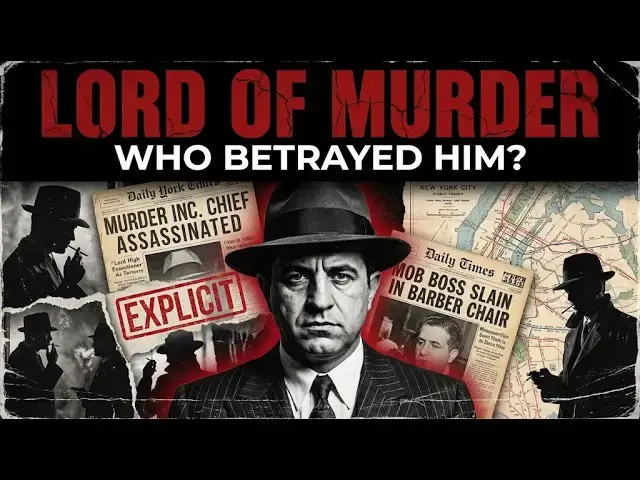
A warm towel. A flash of light. The end of an era. Albert Anastasia never saw them come in.
For thirty years, Anastasia was the most feared name in the American underworld. As the head of Murder Incorporated, he turned assassination into a corporate industry, overseeing hundreds—if not thousands—of hits with cold, executive efficiency.
But in the world of the Commission, power is a double-edged sword. When the 'Lord High Executioner' began violating the very rules he helped write, his closest allies turned into his greatest threats.
This is the untold story of Albert Anastasia, from his illegal arrival on the Brooklyn docks to his bloody reign as the boss of the family that would eventually bear the name Gambino.
Most textbooks focus on Luciano or Capone, but the true muscle behind the Mafia's rise was a man who preferred to stay in the shadows... until they caught up with him in the Park Sheraton barbershop.
Anastasia was a weapon. And weapons don't choose when they're used—or when they're discarded.
⚠️ HISTORICAL DISCLAIMER: This documentary reconstructs events from historical records, court documents, oral histories, and investigative journalism. Some dialogue and scenes are dramatized based on documented accounts. Sources listed below.
📚 Sources & Further Reading:
→ The Five Families (Selwyn Raab)
https://www.amazon.com/Five-Families-Rise-Decline-Resurgence/dp/0312361815
→ Murder, Inc.: The Story of the Syndicate (Burton B. Turkus)
https://www.google.com/books/edition/Murder_Inc/S78-AAAACAAJ
→ FBI Records: The Vault - Albert Anastasia
https://vault.fbi.gov/albert-anastasia
→ The Mafia Encyclopedia (Carl Sifakis)
https://www.google.com/books/edition/The_Mafia_Encyclopedia/Q97_9099R0kC
→ New York Times Archives: The Park Sheraton Hit (1957)
https://www.nytimes.com/times-insider/archives/
🏷️ Hashtags:
#TrueHistory #Documentary #MafiaHistory #AlbertAnastasia #TrueCrime #MurderInc #GambinoFamily #LuckyLuciano
-~-~~-~~~-~~-~--~-~~-~~~-~~-~--~-~~-~~~-~~-~-
⚠️ Content Disclaimer:
This video is created for educational and informational purposes only. We do NOT glorify, promote, or encourage any form of criminal activity.
All visuals, audio, and materials used in this video are either:
✔ Created using AI tools, or
✔ Sourced from royalty-free platforms with valid licenses.
No copyrighted content belonging to others has been used without permission.
❤️ Support the Channel:
If you enjoy learning about real-life crime stories, history, and social issues, don't forget to:
✔ Like the video
✔ Subscribe to the channel
✔ Share your thoughts in the comments
Your support helps us keep creating more valuable content!
🔧 Tools I Use to Grow This Channel:
I personally use vidIQ to optimize my videos, find trending keywords, and grow my YouTube channel faster. Try it for free and see the difference!
💼 Contact & Copyright:
If you believe any part of this video violates your rights, please contact me directly via YouTube. I fully respect copyright laws and will respond promptly.
-~-~~-~~~-~~-~--~-~~-~~~-~~-~--~-~~-~~~-~~-~-
-
Show More Show Less View Video Transcript
0:00
October 25th, 1957 room No. 4 the Park Sheraton Hotel
0:08
he never saw them come in
0:09
the towel was still warm on his face
0:12
steam curling toward the ceiling
0:15
his eyes were closed for a man who had spent 30 years
0:19
making sure he always faced the door
0:21
this was the one time he didn't
0:24
maybe he was tired
0:25
maybe he thought the barber's chair at the park
0:28
Sheraton was the one place nobody would come for him
0:31
he was wrong two men walked in
0:35
scarves pulled up over their faces
0:37
they didn't speak they didn't need to
0:40
the first bullet hit him in the back of the head
0:43
before the barber could drop his comb
0:46
Anastasia lurched forward
0:48
tearing the towel from his face
0:50
what happened next has become one of the most famous
0:53
images in organized crime history
0:56
a dying man half blinded
0:59
swinging at his own reflection in the mirror
1:02
he thought the shapes in the glass were his killers
1:05
he was fighting shadows four more bullets
1:08
then it was over Albert Anastasia
1:12
the man they called the Lord High Executioner
1:15
the mad Hatter the one man in the American underworld
1:19
that other killers were afraid of
1:21
died on the floor of a barbershop in Midtown Manhattan
1:25
he was 55 years old
1:27
the towel was still warm what you're about to hear
1:31
is based on documented history
1:33
court records FBI files
1:36
congressional testimony
1:38
and the accounts of men who were there
1:41
some conversations have been recreated
1:43
for narrative purposes
1:45
where the historical record goes silent
1:48
we've used informed interpretation
1:51
but the events the events are real
1:54
all of them to understand
1:56
how Albert Anastasia
1:58
became the most dangerous man in the American Mafia
2:02
you have to go back not to the barbershop
2:05
not to murder incorporated
2:08
not to the waterfront
2:09
you have to go back further than that
2:12
you have to go to a village in Calabria
2:14
Italy where a boy named Umberto Anastasio
2:18
was born in the year eighteen hundred and two
2:22
the exact day isn't certain
2:24
records from that part of southern Italy at that time
2:27
were incomplete
2:29
what is known is that he was one of nine brothers
2:32
that his father worked as a labourer
2:34
and that by the time Umberto was a teenager
2:38
there was nothing left for him in Italy
2:40
no work no future
2:43
no reason to stay
2:44
so he did what thousands of young Italian men did
2:48
he got on a ship
2:50
he arrived in New York sometime around 1917
2:54
he was maybe 15 maybe sixteen
2:57
he came with one of his brothers
2:59
they jumped ship entering the country illegally
3:02
no papers no sponsor
3:05
no English just two boys from Calabria
3:08
standing on the Brooklyn waterfront with nothing
3:11
but the understanding that in America
3:13
a man could become whatever he was willing to become
3:17
Umberto Anastasio became Albert Anastasia
3:21
he changed the spelling Americanized it
3:25
dropped the O for an a a small thing
3:28
but it tells you something about him
3:30
right from the start
3:32
he wasn't interested in where he came from
3:35
he was interested in where he was going
3:37
and where he was going at first was the docks
3:41
the Brooklyn waterfront in the 1920s
3:44
was a world unto itself if you didn't work the docks
3:48
you have no frame of reference for what it was like
3:52
the longshoremen's union
3:54
controlled who worked and who didn't
3:57
four men decided each morning
3:59
who got a shift and who went home hungry
4:02
the system was built on fear
4:04
favoritism and kickbacks
4:07
a man's ability to feed his family
4:09
depended on whether the right people liked him
4:12
it was in every meaningful sense
4:14
already a criminal enterprise
4:16
before the criminals even showed up
4:19
Anastasia showed up he was young
4:22
he was strong
4:23
he was terrifyingly comfortable with violence
4:27
within a few years
4:28
he'd established himself on the waterfront
4:31
not as a worker but as a force
4:33
he controlled hiring he extorted union officials
4:37
he ran loan sharking operations among the dock workers
4:41
themselves lending money at impossible rates
4:45
and collecting with his fists when payments were late
4:49
by the time he was 20 the waterfront feared him
4:53
by the time he was 25 they belonged to him
4:56
but it wasn't the waterfront that made Anastasia
4:59
what he became it was a murder
5:02
in 1921 Anastasia killed a man
5:06
the details vary depending on the source
5:09
some accounts say it was a fellow longshoreman
5:12
others say it was a dispute over territory
5:15
what matters is that he was arrested
5:18
tried and convicted he was sentenced to death
5:22
death row sing sing prison
5:25
the electric chair waiting
5:27
and then something happened
5:29
that set the pattern for the rest of his life
5:31
the conviction was overturned
5:34
key witnesses either recanted or disappeared
5:38
a new trial was ordered
5:40
and by the time the second trial rolled around
5:43
there was nobody left willing to testify
5:47
the charges were dropped
5:49
Anastasia walked out of Sing Sing a Free Man
5:52
he was 19 years old
5:55
think about what that does to a person
5:57
not just the killing not just the prison
6:00
the lesson the takeaway
6:02
Albert and Anastasia Learned at 19
6:05
that if you eliminate the witnesses
6:07
you eliminate the problem
6:09
that idea would define the rest of his career
6:12
it would define Murder Incorporated
6:15
it would define an era
6:17
but we're getting ahead of ourselves
6:19
The 1920s in New York were a free for all
6:23
prohibition had turned the city into a war zone
6:26
Italian gangs Jewish gangs
6:29
Irish gangs
6:30
all fighting for control of the liquor trade
6:34
the old Sicilian bosses men like Joe Masseria
6:38
Joe the boss ran things the way they'd always been
6:41
run through tradition through respect
6:45
through the old ways
6:47
but a younger generation was coming up
6:49
men who didn't care about tradition
6:52
men who saw the business for what it was business
6:55
Anastasia fell in with the Young Turks
6:58
his closest ally was a man named Charlie Luciano
7:02
Lucky Luciano the two of them
7:05
along with Frank Costello
7:07
Vito Genovese and a handful of others
7:10
formed the nucleus of what would eventually overthrow
7:14
the entire old order of the New York Mafia
7:17
but that revolution required blood
7:20
and blood was Anastasia's specialty
7:23
in 1931 the Castellammare War
7:27
was tearing the New York underworld apart
7:30
Joe Masseria on one side
7:33
Salvatore Maranzano on the other
7:36
two old world bosses fighting for supremacy
7:39
while the younger generation watched and waited
7:42
Luciano who nominally worked for Masseria
7:46
had already decided that both bosses needed to go
7:50
the question was timing the question was always timing
7:54
on April 15th, 1931 Luciano invited Masseria to dinner
8:00
at a restaurant in Canai Island
8:02
called new over Villa Tamaro
8:05
they ate they drank
8:07
they played cards and at some point
8:09
Luciano excused himself to use the restroom
8:13
while he was gone several gunmen entered the restaurant
8:16
Joe Masseria was shot six times
8:20
according to most historical accounts
8:22
Albert Anastasia was one of the shooters
8:25
court documents from later investigations
8:28
placed him at the scene witnesses
8:31
what few there were described a man matching his build
8:35
the exact details remain debated among historians
8:40
but law enforcement at the time
8:42
considered his involvement highly likely
8:45
five months later Maranzano was killed in his office
8:49
stabbed and shot by a team of
8:51
Jewish gangsters recruited
8:53
specifically
8:55
because Maranzano's men wouldn't recognize them
8:58
with both old bosses dead
9:01
Luciano restructured the entire New York underworld
9:05
he created the commission
9:07
5 families five bosses
9:10
rules order
9:12
a corporate structure for crime
9:14
and Anastasia
9:15
the man who had helped make it all possible
9:18
became the underboss of the Mangano family
9:21
under Vincent Mangano he should have been satisfied
9:24
he wasn't but that came later
9:27
first there was the matter of killing
9:30
not the occasional
9:31
necessary murder that every mob figure committed
9:35
something else entirely something industrial
9:39
in the early 1930s
9:41
the leadership of organized crime in New York
9:44
faced a practical problem
9:46
the commission had brought order
9:48
disputes were settled through negotiation
9:51
territory was divided
9:53
but there was still the question of enforcement
9:56
when someone broke the rules
9:58
who handled it when a witness needed to disappear
10:02
who made the call
10:04
when a message needed to be sent in the most permanent
10:06
possible way who delivered it
10:09
the answer was Murder Incorporated
10:12
the name itself was a creation of the press
10:15
coined by a reporter at the New York World Telegram
10:19
the men who ran it never called it that
10:22
to them
10:23
it was simply the enforcement arm of the commission
10:27
a group of professional killers
10:29
mostly based in the Brownsville
10:31
neighborhood of Brooklyn
10:33
who carried out contract murders
10:35
on behalf of the organized crime leadership
10:38
of the entire East Coast and Albert Anastasia ran it
10:43
he didn't pull the trigger on most of the jobs
10:47
that wasn't his role
10:48
his role was operational he received the contracts
10:53
he assigned the killers he planned the logistics
10:56
he was in the language of the organization
10:59
the Lord High executioner
11:02
the man who decided how when and where people died
11:06
his chief lieutenant was a man named Louis Butschalter
11:09
Louis Lepke they called him
11:12
Lepke ran the labor racketeering side
11:14
while Anastasia handled the muscle
11:17
below them were the trigger men
11:19
Avery Les Pittsburgh
11:21
Phil Strass his real name was Harry
11:23
but nobody called him that
11:25
happy Mayone Dasher
11:27
Abandando men who killed the way other men went to work
11:32
routinely professionally
11:34
without particular emotion
11:37
the numbers are staggering
11:39
estimates of Murder
11:40
Incorporated's body count range from 400 to over 1,000
11:44
kills during its decade of operation
11:48
400 to 1,000 the exact number will never be known
11:52
because the entire point of the operation was that
11:55
bodies were never found witnesses never talked
11:59
and connections could never be traced back to the men
12:03
who gave the orders they had methods
12:05
Pittsburgh Phil Strass
12:07
was said to have personally killed over 100 men
12:11
he used ice picks rope
12:13
guns fire
12:15
he once killed a man
12:16
and buried him in the foundation of a building
12:18
under construction the body wasn't found for decades
12:23
Abri Les who they called Kid Twist
12:26
was considered one of the most efficient killers
12:29
in the organization
12:31
he could walk up to a man on a crowded street
12:34
put a knife between his ribs and keep walking the
12:37
victim would be dead before he hit the ground
12:41
witnesses would later say they saw a man collapse
12:45
they never saw anyone near him
12:47
Anastasia oversaw all of it
12:49
he didn't lose sleep according to people who knew him
12:53
and there weren't many who knew him well
12:55
he approached murder
12:56
the way an executive approaches quarterly reports
13:00
it was output it was productivity
13:03
the question was never whether someone should die
13:06
the question was efficiency
13:08
cost risk
13:10
Anastasia wanted clean operations
13:13
he wanted no witnesses he wanted no evidence
13:16
he wanted the person to simply cease to exist
13:20
there's a story
13:21
and it should be noted that the sourcing on this varies
13:24
but it has been repeated by multiple investigators
13:27
and historians
13:29
Anastasia was watching television one evening
13:33
a news program a man appeared on screen
13:36
a civilian testifying before a committee
13:40
about something entirely unrelated to organized crime
13:44
the man was talking freely
13:46
openly cooperating with authorities
13:50
Anastasia reportedly turned to an associate
13:53
and said something to the effect of
13:55
I hate informers that man is talking too much
13:59
he needs to go according to this account
14:02
a contract was issued on a man Anastasia had never met
14:07
a man who had nothing to do with the mob
14:09
a civilian
14:11
simply because Anastasia saw him on television
14:14
and didn't like the way he talked
14:17
whether this specific story is completely accurate
14:21
historians continue to debate
14:23
what is not debated is that it was
14:26
entirely consistent with Anastasia's character he
14:30
killed on principle he killed on impulse
14:34
he killed because to him killing was the natural
14:37
response to virtually any problem
14:40
the exact sequence of what happened next
14:43
in Murder Incorporated's history
14:45
accounts differ slightly depending on the source
14:49
but the broad strokes are clear
14:51
in 1940 Abrilez was arrested on a murder charge
14:56
facing the electric chair
14:58
he did the unthinkable he talked
15:01
Kid Twist
15:02
one of the most prolific killers in Murder Incorporated
15:05
became a government witness
15:07
he gave up names dates
15:10
methods burial sites
15:12
his testimony LED directly to the convictions
15:15
and executions of several Murder incorporated members
15:20
including his former partner
15:21
Happy Mayone and Pittsburgh Phil Straws
15:25
Lepke himself would eventually go to the electric chair
15:29
the only major organized crime boss in American history
15:34
to be executed by the state
15:36
but Reles had more to say
15:38
he was prepared to testify against Albert Anastasia
15:42
himself
15:43
he had direct knowledge of murders
15:45
Anastasia had ordered he could tie the Lord
15:49
High Executioner to specific contracts
15:52
specific bodies specific decisions
15:56
the case was being built the prosecutors were ready
16:00
on November 12th, 1941
16:03
Abriles fell from a window of the Half Moon Hotel
16:07
in Canai Island
16:08
where he was being held under police Protection
16:11
he was on the sixth floor
16:14
he was supposed to be guarded by six police officers
16:17
at all times he went out the window anyway
16:21
the official ruling was that Relais
16:24
was attempting to escape
16:25
possibly climbing down bed sheets tied together
16:29
to reach a lower floor
16:31
this explanation was met with widespread skepticism
16:35
Relais was a cooperating witness
16:38
who stood to benefit from testimony
16:40
not a prisoner looking to flee
16:43
the sheets were found tied
16:45
in a manner that
16:46
investigators later described as inconsistent
16:49
with someone actually trying to climb down them
16:52
the press called him the canary who could sing
16:56
but couldn't fly
16:57
several investigations over the following decades
17:01
suggested that Relais was thrown
17:04
that the police officers
17:05
guarding him were paid to look the other way
17:08
that the order came from someone with enough power
17:11
and enough money to buy cooperation
17:13
inside a police Protection detail
17:16
no one was ever charged
17:18
the case against Anastasia collapsed
17:21
without Relais there was no testimony
17:24
without testimony there was no case
17:28
Albert and Anastasia once again
17:31
walked free because the witnesses were gone
17:33
the pattern held during the Second World War
17:37
Anastasia did something unexpected
17:40
he enlisted or rather he was drafted and he served
17:44
he became a United States citizen
17:46
through his military service
17:48
which was ironic
17:50
given that he had entered the country illegally
17:52
decades earlier his service record was unremarkable
17:57
he wasn't a hero he wasn't a disgrace
18:01
he was a soldier some historians have suggested
18:04
that his military service
18:06
gave him a veneer of legitimacy
18:08
he'd never had before
18:10
others argue it made no difference at all
18:14
the man who came back from the war
18:16
was the same man who had left
18:19
possibly worse after the war
18:21
Anastasia returned to his position as
18:24
underboss of the Mangano family
18:27
and almost immediately
18:29
the tension that had been building for years
18:31
between him and Vincent Mangano
18:34
reached a boiling point
18:36
Mangano and Anastasia had never gotten along
18:39
they were fundamentally different men
18:42
Mangano was old school conservative careful
18:47
he resented Anastasia's independence
18:50
his volatility
18:51
his habit of making decisions without consultation
18:55
Anastasia for his part
18:57
viewed Mangano as weak outdated
19:01
an obstacle the situation was complicated
19:05
by Anastasia's relationship with Frank Costello
19:09
who by now
19:10
was running the Luciano family in Luciano's exile
19:14
Anastasia and Costello were close
19:18
genuinely close
19:20
in a world where alliances were transactional
19:23
their friendship appeared to be something
19:25
approaching real Mangano saw this as a threat
19:29
an underboss maintaining an
19:31
independent relationship with the boss of
19:33
another family was a violation of protocol
19:37
it suggested divided loyalty
19:40
it suggested ambition
19:42
Mangano confronted Anastasia about it more than once
19:47
according to accounts from men who were present
19:50
during some of these confrontations
19:53
the conversations were heated
19:55
Mangano accused Anastasia of plotting against him
20:00
Anastasia denied it
20:02
but the denials grew less convincing over time
20:05
in April of 1951 Vincent Mangano disappeared
20:11
his brother Philip was found dead
20:13
shot multiple times Vincent's body was never recovered
20:17
Anastasia went before the commission
20:20
he told them that Mangano had been planning to kill him
20:24
and that he had acted in self defense
20:26
preemptive self defense
20:29
he killed the boss before the boss could kill him
20:32
the commission LED at this point by men who
20:35
owed their positions to the revolution
20:37
Anastasia had helped engineer 20 years earlier
20:41
accepted this explanation
20:44
Frank Costello vouched for him and Albert
20:47
Anastasia became the boss
20:49
of what would eventually be known as the Gambino
20:52
crime family
20:53
the Lord High Executioner now had his own throne
20:57
he ran the family the way you might expect
21:00
through fear through violence
21:03
through the absolute certainty
21:05
that disobedience would be met with death
21:08
his waterfront operations expanded
21:11
his union control tightened
21:14
money flowed the family grew
21:17
but something had changed in Anastasia
21:19
or maybe something had finally been revealed
21:22
that was always there power didn't satisfy him
21:26
it made him hungrier and more dangerous
21:29
he began making decisions that alarmed the other bosses
21:33
he started selling memberships in the family
21:36
made men the most sacred designation
21:39
in the Sicilian Mafia tradition
21:42
the honor that was supposed to be earned
21:44
through years of loyalty and service
21:47
Anastasia was selling for 40,000
21:51
$50,000
21:53
any associate with enough cash could buy his way in
21:57
it was an unprecedented violation of tradition
22:01
and it infuriated the other commission members
22:04
he entered the Cuban casino business
22:07
without consultation
22:09
stepping on territory that belonged to other families
22:12
he made moves in the Garment District
22:15
encroaching on operations run by Vito Genovese
22:19
he publicly humiliated associates
22:22
he threatened men who under commission rules
22:26
were supposed to be untouched
22:28
he was acting like a man
22:30
who believed he was untouchable himself
22:33
this is the part of the story where Albert
22:36
Anastasia's fate was sealed
22:38
though he didn't know it yet
22:40
the men who would destroy him were already in motion
22:44
Vito Genovese was the primary architect
22:47
Genovese
22:49
who had returned from a self imposed exile in Italy
22:52
after the war wanted control of the Luciano family
22:57
Frank Costello was in his way
22:59
and as long as Anastasia was Costello's ally
23:03
moving against Costello meant fighting a two front war
23:07
the solution was obvious
23:09
if you thought the way Vito Genovese thought
23:13
remove Anastasia first then Costello would be alone
23:18
but Genovese needed help
23:19
from inside Anastasia's own family
23:22
he found it in Carlo Gambino
23:25
Carlo Gambino
23:27
the name that would eventually define the family
23:30
in 1957 he was Anastasia's underboss
23:34
quiet patient unassuming
23:37
the kind of man you could sit across from at dinner
23:40
and forget was in the room
23:42
he smiled easily he spoke softly
23:45
he waited he had been waiting for a long time
23:49
Gambino's exact motivations are debated
23:53
some historians argue
23:54
he was genuinely concerned about Anastasia's erratic
23:58
behavior threatening the family
24:01
others suggest
24:02
he had always intended to take the top position
24:05
and was simply waiting for the right opportunity
24:09
the truth is probably
24:10
both ambition and legitimate concern
24:14
are not mutually exclusive
24:16
Genovese and Gambino reached an understanding
24:20
the details of their agreement were never recorded
24:23
for obvious reasons but the outcome was clear
24:27
Anastasia would be removed
24:30
Gambino would take over the family
24:33
Genovese would move against Costello
24:35
without fear of retaliation
24:37
there may have been other conspirators
24:40
some accounts suggest that Joe prophesied
24:43
boss of another family was involved
24:46
the exact coalition is hard to pin down
24:49
what's certain is that by the fall of 1957
24:53
Albert and Anastasia was a dead man walking
24:57
he just didn't know it he went to the barbershop
25:00
October 25th, 1957 The Park Sheraton Hotel
25:06
Seventh Avenue and fifty Fifth Street in Manhattan
25:09
Anastasia arrived in the morning
25:12
for a haircut and a shave
25:14
it was a routine he'd maintained for years
25:17
the hotel barbershop same chair
25:20
same time he settled in
25:22
the barber draped him with a white cape
25:25
applied a hot towel Anastasia closed his eyes
25:29
the two gunmen entered
25:31
they wore scarves over their faces
25:34
the barber saw them first and stepped away
25:37
some accounts say he was pushed
25:39
others say he simply moved
25:41
either way
25:42
he was out of the line of fire before the first shot
25:45
the first bullet
25:46
struck Anastasia in the back of the head
25:49
he lurched upward forward
25:51
the towel fell he was hit again and again
25:55
he stumbled from the chair
25:56
and lunged toward what he saw in front of him
25:59
the mirror his own reflection
26:02
the shapes of his killers behind him
26:04
distorted in the glass he swung at the mirror
26:08
at himself at them
26:10
five bullets total
26:12
according to the medical examiner's report
26:15
he collapsed the gunman walked out
26:18
they were never identified
26:20
no one was ever charged with the murder of Albert
26:23
Anastasia the barber called the police
26:27
Anastasia was pronounced dead at the scene
26:30
the identities of the actual shooters
26:33
have been the subject of decades of speculation
26:36
the most frequently cited names
26:38
in law enforcement files and historical accounts
26:43
include members of the Gallo crew
26:45
from the prophesy family
26:47
possibly acting on contract from Genovese
26:51
Steven Armoine and Steven Grammalter
26:54
have been named in various investigations
26:58
Joe Gallo allegedly boasted about his involvement
27:02
years later though
27:03
Gallo was known for claiming credit
27:05
for things he may not have done
27:07
what is known with reasonable certainty is this
27:11
Carlo Gambino did not pull any triggers
27:15
Vito Genovese did not pull any triggers
27:18
they didn't need to
27:20
that was the lesson Anastasia himself
27:23
had taught the world you don't do the killing
27:26
you order the killing and when it's done
27:29
you step into the space that's left behind
27:32
Gambino stepped in he became the boss
27:36
the family took his name
27:38
and the Gambino crime family would go on to become
27:41
arguably the most powerful
27:43
organized crime family in American history
27:47
Genovese moved against Costello
27:50
on May 2nd of that same year
27:52
actually months before the Anastasia hit
27:55
a gunman had already shot at Costello
27:58
in the lobby of his apartment building
28:01
the bullet grazed his scalp
28:03
Costello survived but he got the message
28:07
he retired stepped aside
28:09
Genovese took control
28:12
the two architects got everything they wanted
28:15
and Anastasia got the barbershop floor
28:18
the aftermath played out quickly
28:20
Just 20 days after Anastasia's murder
28:23
the infamous Apalachin meeting took
28:25
place dozens of mob bosses
28:28
gathered at the estate of Joseph Barbara
28:31
in rural New York to discuss the new power structure
28:35
the meeting was raided by state police
28:38
the resulting exposure
28:40
blew the lid off organized crime in America
28:44
in a way that had never happened before
28:47
the existence of the Mafia
28:49
which FBI Director J
28:52
Edgar Hoover had denied for decades
28:55
was suddenly undeniable
28:57
some historians have drawn a direct line
29:00
from Anastasia's murder to Apalachin
29:03
the disruption his death caused
29:06
the power vacuum
29:07
the need for the other bosses to meet and restructure
29:11
LED directly to the gathering that exposed them all
29:15
in death Anastasia
29:17
may have done more damage to the American Mafia
29:20
than he ever did in life
29:22
but that gives him too much credit
29:24
he wasn't a strategic thinker
29:26
he wasn't a builder he was a destroyer
29:29
that was his function and his limitation
29:32
his family barely mourned him
29:35
his wife and son retreated from public life
29:38
his brothers several of whom had their own connections
29:42
to organized crime went quiet
29:45
the waterfront continued to operate
29:48
the unions continued to be controlled
29:51
the money continued to flow just into different pockets
29:54
Albert Anastasia was 55 when he died
29:58
he had been involved in organized crime
30:01
for nearly four decades
30:03
he had ordered or participated in
30:05
by conservative estimates
30:07
dozens of murders by broader estimates
30:11
he was responsible for hundreds
30:13
he had survived death row
30:15
he had survived the Cassilamese war
30:18
he had survived the collapse
30:20
of Murder Incorporated
30:22
he had not survived his own nature
30:24
that's what it comes down to in the end
30:27
not the conspiracy against him
30:29
not Genovese's ambition or Gambino's patience
30:34
those were just the hands on the gun
30:36
the bullet was Anastasia himself
30:39
his volatility
30:41
his contempt for the rules he was supposed to enforce
30:44
his belief that fear was enough
30:47
that being the most dangerous man in the room
30:50
was the same as being the most powerful
30:53
it isn't it never was
30:55
power in the Mafia real power
30:58
the kind that lasted
30:59
belonged to men who understood restraint
31:02
Luciano understood it Gambino perfected it
31:06
even Costello for all his flaws
31:09
understood that survival required subtlety
31:12
Anastasia never Learned that lesson
31:15
he couldn't it wasn't in him
31:17
he was a weapon
31:18
and weapons don't choose when they are used
31:21
they don't choose when they're discarded either
31:24
The Park Sheraton Hotel is gone
31:26
now the building still stands
31:28
but it's been renamed renovated
31:31
turned into something else
31:33
room No. 4 of the barbershop is a memory
31:36
if you walk past Seventh Avenue and fifty Fifth Street
31:39
today there's nothing to Mark what happened there
31:43
no plaque no sign
31:45
just sidewalk and traffic
31:47
and people who have never heard the name Anastasia
31:50
the men who killed him are dead
31:52
the men who ordered his killing are dead
31:55
the men he killed are dead
31:57
the witnesses who refused to testify are dead
32:01
the witnesses who disappeared are dead
32:04
Abriles the canary who couldn't fly
32:07
has been dead for over 80 years
32:10
what remains is the question
32:12
and it's not the question you might expect
32:14
it's not whether Anastasia was evil
32:17
he was by any reasonable standard of human behaviour
32:21
he was a man who caused immense suffering
32:24
and felt nothing about it
32:26
that part is simple the harder question is this
32:30
what does it mean that the system he operated within
32:33
the commission the families
32:35
the structure that Lucky Luciano built
32:38
what does it mean that this system created him
32:41
used him
32:42
and then destroyed him when he became inconvenient
32:46
Anastasia didn't corrupt the Mafia
32:49
the Mafia made Anastasia possible
32:53
he was the logical end point of a system
32:55
that resolved every problem
32:57
with violence
32:59
he simply took it further than anyone was comfortable
33:02
with the monster they created
33:05
the monster they had to destroy
33:07
some legacies are written in concrete and steel
33:11
others are written in blood
33:13
his was written in both and
33:15
if you look closely at the history of organized crime
33:18
in America at the structures of power and fear
33:21
that defined it for a century
33:23
you can still see his fingerprints
33:25
not on the institutions on the fear
33:29
the fear was always his real legacy
33:32
not the bodies not the waterfront
33:34
not Murder Incorporated
33:36
the fear the knowledge that somewhere in the hierarchy
33:40
there was a man who would kill you
33:42
for no reason at all who would watch you on television
33:45
and decide you talked too much
33:48
who would smile at you
33:50
across a dinner table while planning the bullet
33:53
that fear outlived him it outlived the commission
33:57
it might outlive the Mafia itself
33:59
if this story stayed with you you know what to do
#Arts & Entertainment