Up next in 10


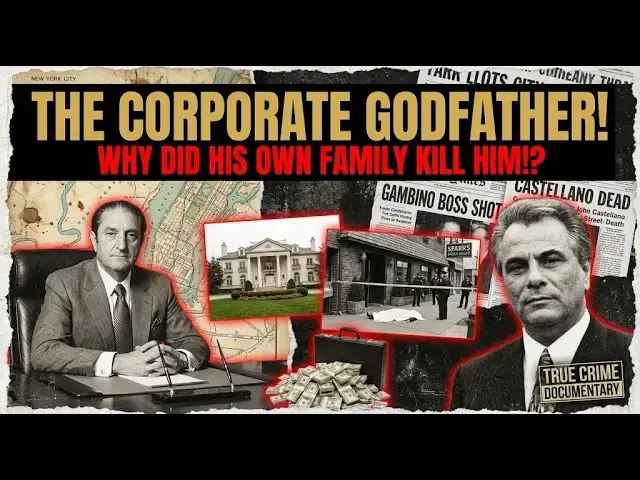
A cold sidewalk in Manhattan, six bullets, and the end of an empire.
Paul Castellano wasn't a street thug; he was the CEO of the most powerful crime family in American history. From his seventeen-room Staten Island mansion, he controlled the flow of concrete, food, and labor across New York, generating hundreds of millions of dollars.
But in the world of the Mafia, being a billionaire isn't enough to keep you alive. While Castellano conducted business in suits and fine restaurants, a young John Gotti was watching from the streets, waiting for the moment the 'Pope' showed a single sign of weakness.
This is the untold story of the rise and brutal fall of Constantino Paul Castellano—the butcher's son who transformed the mob into a corporation, only to be devoured by the very violence he tried to escape.
No textbook covers the internal fault lines that led to the Sparks Steak House execution. This is the reconstruction of a power shift that changed the underworld forever.
A chilling reminder that in the mob, your biggest strength is often your fatal flaw.
⚠️ HISTORICAL DISCLAIMER: This documentary reconstructs events from historical records, court documents, oral histories, and investigative journalism. Some dialogue and scenes are dramatized based on documented accounts. Sources listed below.
📚 Sources & Further Reading:
→ Underboss: Sammy the Bull Gravano's Story of Life in the Mafia (Peter Maas)
https://www.amazon.com/Underboss-Sammy-Gravanos-Story-Mafia/dp/0061096644
→ Boss of Bosses: The Fall of the Godfather: The FBI and Paul Castellano (Joseph F. O'Brien)
https://www.amazon.com/Boss-Bosses-Godfather-Castellano-Surveillance/dp/0440212294
→ Mob Star: The Story of John Gotti (Gene Mustain)
https://www.amazon.com/Mob-Star-Story-John-Gotti/dp/0025883704
→ The Gotti Tapes (FBI Surveillance Records/National Archives)
https://www.archives.gov/
→ Mafia: The Government's Secret File on Organized Crime (United States Department of Justice)
https://www.justice.gov/
🏷️ Hashtags:
#TrueCrime #MafiaDocumentary #PaulCastellano #JohnGotti #GambinoFamily #CrimeHistory #SparksSteakHouse #TheGodfather
-~-~~-~~~-~~-~--~-~~-~~~-~~-~--~-~~-~~~-~~-~-
⚠️ Content Disclaimer:
This video is created for educational and informational purposes only. We do NOT glorify, promote, or encourage any form of criminal activity.
All visuals, audio, and materials used in this video are either:
✔ Created using AI tools, or
✔ Sourced from royalty-free platforms with valid licenses.
No copyrighted content belonging to others has been used without permission.
❤️ Support the Channel:
If you enjoy learning about real-life crime stories, history, and social issues, don't forget to:
✔ Like the video
✔ Subscribe to the channel
✔ Share your thoughts in the comments
Your support helps us keep creating more valuable content!
🔧 Tools I Use to Grow This Channel:
I personally use vidIQ to optimize my videos, find trending keywords, and grow my YouTube channel faster. Try it for free and see the difference!
💼 Contact & Copyright:
If you believe any part of this video violates your rights, please contact me directly via YouTube. I fully respect copyright laws and will respond promptly.
-~-~~-~~~-~~-~--~-~~-~~~-~~-~--~-~~-~~~-~~-~-
-
Show More Show Less View Video Transcript
0:08
they buried Paul Castellano on a Thursday
0:11
modest ceremony closed casket
0:14
for reasons that were obvious to anyone
0:17
who'd seen the photographs
0:19
his wife didn't attend his mistress did
0:23
the newspapers called it
0:24
the most brazen mob hit since Albert
0:26
Anastasia was gunned down in a barber's chair
0:30
nearly 30 years earlier and in a way
0:33
the parallels were almost poetic
0:36
Anastasia had been murdered for being too violent
0:40
too reckless too unpredictable
0:42
Casalano was murdered for the opposite
0:45
he was too careful too clean
0:48
too far removed from the men who bled for him
0:52
the events depicted in this documentary are real
0:56
the dialogue you'll hear has been reconstructed
0:59
from court transcripts FBI surveillance recordings
1:03
and published accounts
1:05
from individuals who were present
1:07
where the historical record is silent
1:10
we've used informed interpretation to bridge the gaps
1:15
every effort has been made to stay faithful
1:18
to the documented facts
1:20
to understand how a man worth an estimated $50 million
1:25
ended up face down on a Midtown sidewalk
1:28
with six bullets in his body
1:30
you have to go back not to 1985
1:34
not even to 1976 when he took the throne
1:39
you have to go back to a butcher shop in Brooklyn
1:42
because that's where this story
1:43
and Paul Castellano actually began Constantino
1:48
Paul Castellano was born on June 26th, 1915
1:53
in the Bensonhurst section of Brooklyn
1:56
his father Giuseppe
1:58
was a butcher a quiet man by most accounts
2:02
he ran a small shop kept his head down
2:05
and had connections to the local Mangano crime family
2:09
that he never discussed in front of his children
2:12
or so the family story goes
2:14
young Paul was not the kind of kid who ran the streets
2:18
he didn't hustle he didn't fight
2:20
he dropped out of school in the eighth grade
2:23
which wasn't unusual for the time
2:25
and went to work in his father's shop
2:27
cutting meat wrapping orders
2:30
learning the rhythms of a small business
2:33
the margins the waste
2:35
the customers who paid on time and the ones who didn't
2:39
it was ordinary work and Paul
2:41
by every account from that era
2:43
was an ordinary young man
2:45
but there was one thing about Paul Castellano
2:48
that was anything but ordinary
2:51
his older sister Katherine
2:53
had married a man named Carlo Gambino
2:56
Carlo Gambino
2:58
if you know anything about the American Mafia
3:01
you know that name and if you don't
3:03
here's what matters for this story
3:06
Carlo Gambino was by the early 1960s
3:10
the most powerful
3:11
organized crime figure in the United States
3:14
he ran the family that bore his name
3:17
with a combination of strategic patience
3:21
and ruthless calculation
3:23
that made his rivals look like amateurs
3:26
he rarely raised his voice
3:28
he almost never ordered violence
3:30
when money could solve the
3:32
problem instead and he had survived every power shift
3:36
every federal investigation
3:39
and every betrayal for more than three decades
3:42
Carlo Gambino looked at his brother in law
3:45
and saw something familiar
3:47
Paul was quiet Paul was patient
3:50
Paul understood money that was enough
3:53
by the early 1960s
3:55
Castellano had risen within the family
3:58
not through violence
3:59
others handled that not through fear
4:02
he didn't inspire the kind of dread that men
4:05
like Anastasia or later
4:07
John Gotti would
4:10
he rose because Carlo Gambino trusted him
4:14
and in LA Cosa Nostra trust from the right person
4:17
was worth more than 100 soldiers
4:20
Caselano's specialty was business
4:23
legitimate business or at least
4:25
business that looked legitimate from certain angles
4:29
he moved into the poultry industry
4:32
through a company called Dial Poultry
4:35
he established a near monopoly on chicken distribution
4:39
to supermarkets and butcher shops
4:42
across the New York metropolitan area
4:45
if you bought chicken in Brooklyn or Queens
4:49
in the 1970s there was a reasonable chance
4:52
Paul Castellano's operation had touched it somewhere
4:56
along the supply chain he also moved into construction
5:01
concrete the garment district
5:03
he had interests in trucking companies
5:06
food distribution networks and real estate
5:10
some of these ventures were straightforward
5:13
others involved bid rigging
5:15
labor racketeering and the kind of price fixing
5:19
that would later attract significant
5:21
federal attention
5:22
but here was the thing about Casalano's approach
5:26
and this is the detail that would eventually matter
5:29
more than any other he kept the street at arm's length
5:33
he didn't socialize with the soldiers and the capos
5:37
the way a traditional boss was expected to
5:41
he conducted business in offices
5:44
in restaurants with tablecloths
5:46
in the conference room of his Staten Island mansion
5:50
he dressed like a corporate executive
5:52
he talked like one too
5:55
the men who worked the corners
5:57
who ran the gambling operations
5:59
who handled the enforcement
6:01
they noticed on October 15th, 1976
6:06
Carlo Gambino died in his bed of a heart attack
6:10
he was 74 he'd been in declining health for years
6:14
and the family had known this moment was coming
6:17
what they didn't know
6:19
or rather what many of them refused to accept
6:22
was Carlo's final decision regarding succession
6:26
Carlo Gambino in the last years of his life
6:30
had made it clear to the people closest to him
6:33
that he wanted Paul Castellano to succeed him
6:36
as boss of the Gambino crime family
6:39
not Aniello della Croce Delacroix
6:43
the underboss not any of the powerful capos
6:46
who had spent decades building their reputations
6:49
on the street Paul Castellano
6:52
the butcher's son the businessman
6:55
the brother in law this decision
6:58
according to several accounts
7:00
from former members and FBI informants
7:03
was not universally welcomed
7:05
Annielo de LA Cruz was in almost every measurable way
7:10
the opposite of Paul Cassellano
7:12
where Cassellano was reserved
7:15
de LA Cruz was volcanic
7:17
where Cassellano avoided the street
7:20
de LA Cruz owned it he was a feared enforcer
7:23
a man who had earned his position
7:25
through decades of violence
7:27
and loyalty the soldiers loved
7:29
him the capos respected him
7:32
he was by the traditional metrics of the Cosa Nostra
7:36
the obvious choice
7:38
but Carlo Gambino didn't operate by traditional metrics
7:43
he operated by his own
7:45
there are differing accounts of how the transition
7:48
unfolded what is generally accepted is this
7:52
Castellano took the top position
7:55
Delacroix retained his role as underboss
7:58
and a deal was struck
8:00
or at least an understanding reached
8:03
that would attempt to keep both factions satisfied
8:06
the family would be divided in practice
8:09
if not in name
8:10
Casellano would control the white collar operations
8:14
construction the unions
8:17
the business interests
8:18
that generated the majority of the family's revenue
8:22
de LA Cruz
8:23
would maintain authority over the street crews
8:26
the gambling the loansharking
8:29
the traditional rackets that kept the soldiers fed
8:32
and the Karpos loyal on paper
8:35
it was a reasonable arrangement
8:37
in practice it was a fault line
8:40
the first years of Castellano's reign were
8:43
by most measures successful
8:46
the Gambino family under his leadership
8:48
generated enormous revenue
8:51
estimates vary
8:53
but federal investigators would later suggest
8:56
that the family's annual income
8:59
during this period exceeded $500 million
9:03
that figure if accurate
9:05
would have made the Gambino family
9:07
one of the most profitable
9:09
criminal enterprises in American history
9:12
Cassellano himself lived accordingly
9:15
his home which became known in law enforcement circles
9:19
and eventually in the press as the White House
9:23
was a 17 room mansion on Tot Hill in Staten Island
9:27
it sat on a Hilltop it had a swimming pool
9:31
manicured grounds and a
9:33
view of the surrounding neighborhood that
9:35
according to one former associate
9:38
made you feel like you were visiting a head of state
9:41
and in a sense you were
9:43
Casalano conducted almost all of his business
9:47
from that house Carpos came to him
9:50
they drove up the hill
9:51
they sat in his dining room or his study
9:54
they discussed business and they left
9:58
he rarely went to the social clubs
10:00
where the soldiers gathered
10:02
he rarely attended the kind of informal sit downs
10:05
that had been the backbone of family governance
10:08
for generations he was running the Gambino family
10:12
the way a CEO runs a corporation
10:15
and for a while the profits were so enormous
10:18
that nobody complained loudly enough to matter
10:22
but money in LA Cosa Nostra
10:24
has never been the only currency
10:27
respect is a currency loyalty is a currency
10:31
the feeling that your boss understands your world
10:34
knows your name
10:35
would stand beside you if things went wrong
10:38
that is a currency
10:40
and Paul Castellano was spending none of it
10:43
the soldiers on the street began to talk
10:46
the conversations were quiet at first
10:49
held in social clubs and in cars and on sidewalks
10:53
where they believed no one was listening
10:55
the FBI as it turned out
10:58
was often listening
11:00
federal agents had planted listening devices
11:03
in multiple locations connected to the Gambino family
11:07
including eventually Castellano's own home
11:11
the complaints followed a pattern
11:13
the boss doesn't come around
11:16
the boss doesn't know what we do
11:18
the boss takes his cut
11:20
but never gets his hands dirty
11:22
the boss cares more about his chicken business
11:25
than about the guys on the street
11:27
and then there was the matter of drugs
11:30
this is where the fault line widened
11:32
into something irreparable
11:34
Paul Castellano had issued a directive
11:37
and this is documented in multiple sources
11:41
including FBI transcripts
11:43
and testimony from cooperating witnesses
11:46
that no member of the Gambino family
11:49
was to be involved in narcotics trafficking
11:52
the penalty he made clear
11:54
was death no warnings
11:57
no second chances you deal drugs
12:00
you die the reasoning was partly strategic
12:04
drug trafficking attracted intense federal attention
12:08
the sentences were long
12:10
the pressure to cooperate was immense
12:12
every drug dealer arrested was a potential informant
12:16
a potential crack in the wall of silence
12:19
that protected the entire organization
12:22
but the reasoning was also
12:24
some argued personal
12:27
Casellano
12:28
didn't want his family associated with the drug trade
12:31
because it was messy it was street level
12:35
it was beneath the image he was constructing
12:38
the problem was simple and devastating
12:41
the drug trade was enormously profitable
12:44
cocaine in particular
12:46
was flooding into New York in the late 1970s
12:50
and early 1980s and the money was staggering
12:54
hundreds of thousands of dollars a week
12:57
for soldiers and Karpos
12:59
who were earning modest incomes
13:01
from traditional rackets
13:03
the temptation was overwhelming
13:06
and many of them gave into it
13:08
among the crews most deeply involved in the drug trade
13:13
was the one LED by a capo from Queens
13:15
named John Gotti Gotti
13:18
we need to talk about Gotti
13:20
John Joseph Gotti junior
13:22
was born in the Bronx in 1940
13:24
and raised in the streets of East New York
13:27
and Ozone Park Queens
13:30
he was everything Castellano was not
13:33
loud where Castellano was quiet
13:36
flashy where Casellano was reserved
13:39
connected to the street
13:40
in a way that Casellano hadn't been in decades
13:43
if ever Gotty was a Delacroix man
13:47
his loyalty his respect
13:49
his entire career trajectory
13:51
ran through Annieello Della Croce
13:54
not through the boss
13:55
sitting in the Hilltop mansion on Staten Island
13:58
and this alignment was not merely personal
14:01
it was philosophical Gotti believed in the old ways
14:05
the social clubs the visible presence
14:09
the idea that a boss should be among his men
14:12
not above them he also believed
14:15
and this is where the story turns
14:17
that Castellano's drug ban was hypocritical
14:21
because while Castellano publicly prohibited narcotics
14:25
certain members of Gottis Crew
14:28
including his close associate Angelo Ruggiero
14:32
R U G
14:32
G I E
14:33
R O
14:34
were deeply involved in heroin trafficking
14:37
and there were whispers never fully substantiated
14:41
but persistent enough to matter
14:43
that Casellano himself
14:45
was receiving money from drug connected operations
14:48
through intermediaries
14:50
while maintaining his public prohibition
14:53
whether that was true or not
14:55
the perception was corrosive
14:58
meanwhile the FBI was building its case
15:01
in 1983
15:03
federal agents had obtained authorization to wiretap
15:07
Angelo Ruggiero's phone the resulting recordings
15:11
hundreds of hours of conversations
15:14
captured detailed discussions of heroin deals
15:17
distribution networks and
15:19
the flow of drug money within the Gambino family
15:23
these tapes became in the language of the street
15:27
a death sentence waiting to be delivered
15:30
Casellano Learned about the tapes
15:32
he demanded to hear them Delacroix
15:35
who was aware of the recordings and their contents
15:38
stalled he knew that
15:40
if Castellano heard what was on those tapes
15:43
Ruggiero and potentially others in Gotti's crew
15:46
would be killed under the boss's own drug ban
15:50
this standoff continued for months
15:52
then years
15:54
it became a slow burning crisis within the family
15:58
a test of loyalty and authority
16:00
that neither side could resolve without violence
16:03
or capitulation and then Delacroix got sick
16:07
Anielo Delacroix was diagnosed with cancer
16:11
his health deteriorated through 1984 and into 1985
16:17
as he weakened
16:18
the buffer between Casellano and the street crews
16:21
began to dissolve Delacroix had been the pressure valve
16:26
he absorbed the frustrations of the soldiers
16:30
he translated between Casellano's corporate world
16:34
and the reality of life on the street
16:36
without him
16:38
there was nothing between the two sides but resentment
16:41
there's something else that needs to be mentioned here
16:44
because it mattered to the men who were watching
16:48
during this period
16:49
Paul Castellano was involved in a personal situation
16:53
that in the world of LA Cosa Nostra
16:56
was viewed as a profound sign of weakness
16:59
he had begun an affair with his family's Colombian
17:02
housekeeper Gloria Olarte O l a R t
17:07
the relationship was
17:08
according to FBI surveillance and later testimony
17:12
quite open within the household
17:15
Cassellano's wife Nina
17:17
was reportedly aware the household dynamic had shifted
17:21
in ways that the men who visited the White House
17:24
could not ignore in traditional Mafia culture
17:28
a boss's personal life was expected to project strength
17:32
stability and control
17:35
a man who couldn't manage his own household
17:37
was not a man who could manage a family
17:40
of 200 soldiers and 20 carpos
17:44
that was the thinking fair or not
17:47
it's what the men on the street believed
17:49
accounts suggest that Casalano's behavior
17:52
during this period became increasingly erratic
17:55
in certain ways he was distracted
17:59
he made decisions that seemed
18:01
to the carpos who reported to him
18:04
disconnected from the realities they were facing
18:07
court documents indicate that
18:09
he was spending significant time
18:11
and family resources on personal matters
18:14
while operational concerns went unaddressed
18:18
the exact sequence of what happened next
18:22
the conversations the meetings
18:24
the moment when the decision shifted from frustration
18:28
to conspiracy accounts differ
18:31
what is known is that by the fall of 1985
18:36
a group of Gambino family members
18:38
centered around John Gotti
18:41
had begun actively
18:42
planning the assassination of their boss
18:45
this was not a small decision
18:47
in the rules of LA Cosa Nostra
18:50
killing a boss without the approval of the commission
18:53
the governing body of the five New York families
18:57
was one of the gravest violations imaginable
19:00
it had happened before Joe Colombo was shot in 1971
19:06
Albert Anastasia was killed in 1957
19:10
but each instance had carried enormous consequences
19:14
for the men who ordered it
19:16
Gotti knew the risks
19:17
according to later testimony from Sammy the Bull
19:21
Gravano Gravi
19:23
a H no
19:24
who would become the most significant
19:26
Mafia informant in American history
19:29
Gotti weighed those risks
19:31
and decided they were acceptable
19:34
the alternative as Gotty reportedly saw it
19:38
was waiting for Castellano to hear the Ruggiero tapes
19:42
and order his entire crew eliminated
19:45
whether that fear was justified is debatable
19:49
whether it was sincerely felt is not
19:52
the men around Gotty believed
19:54
they were acting in self preservation
19:56
as much as ambition
19:58
Delacroix died on December 2nd, 1985
20:02
he was 71 he died of lung cancer
20:06
at Mary Immaculate Hospital in Queens
20:09
Casellano did not attend the wake
20:12
that decision whatever the reason behind it illness
20:16
security concerns indifference
20:19
landed like a slap across the face of every man
20:22
who had loved Annie
20:24
hello Delacroix
20:25
and in the world they inhabited
20:27
that kind of disrespect had a very specific consequence
20:31
fourteen days later
20:33
Paul Castellano and his driver and underboss designate
20:37
Thomas Bilotti Bill aht
20:40
arrived at Spark's Steakhouse
20:42
on East 46th Street in Manhattan
20:45
it was December 16th, 1985
20:49
the time was approximately 5:45 in the evening
20:54
the dinner reservation was for six
20:57
they never made it inside
20:59
as Casalano stepped out of his black Lincoln Town Car
21:03
three men in long trench coats and fur
21:06
Russian style hats approached from the sidewalk
21:09
the disguise was simple
21:11
but effective in the winter crowd
21:13
they moved quickly
21:15
the first shots hit Casalano before he could react
21:19
he fell backward against the car
21:21
then onto the sidewalk
21:23
Thomas Bilotti was killed moments later
21:26
on the driver's side six bullets struck Castellano
21:30
multiple shots to the head
21:32
the medical examiner would later note the precision
21:36
this was not a panicked attack
21:39
it was an execution
21:40
performed by men who had rehearsed across the street
21:44
sitting in a car with a clear view of the entrance
21:47
to Spark's Steakhouse John Gotti watched it happen
21:52
that detail Gottie watching from across the street
21:56
comes primarily from the later testimony
21:59
of Sammy Gravano
22:01
who claims he was in the car with Gottie
22:04
Gravano would eventually testify
22:07
that Gotty wanted to see the hit with his own eyes
22:10
whether this was about ensuring the job was done
22:13
or about something deeper
22:15
the need to witness the moment power changed hands
22:19
only Gotty knew and Gotty
22:21
to the end of his life denied involvement entirely
22:25
the aftermath moved quickly
22:28
within days John Gotti was
22:30
installed as the new boss of the Gambino crime family
22:34
there was no vote there was no debate
22:37
the men who might have objected
22:39
understood the implications of the scene
22:42
outside Spark's Steakhouse
22:44
power had been transferred
22:46
in the most ancient and unambiguous way possible
22:50
Gottie became almost overnight
22:53
the most famous mob boss in America
22:56
the media called him the Dapper Don
22:59
for his expensive suits and public swagger
23:02
they called him the Teflon Don
23:04
when three successive trials ended in a quittal
23:08
he held court at the
23:09
Rave Night social club in Little Italy
23:12
greeting admirers posing for photographs
23:16
behaving like a celebrity
23:18
in a world that had traditionally valued invisibility
23:22
above everything else
23:23
and here's the irony that no one talks about enough
23:27
John Gotti destroyed the Gambino family
23:30
faster and more thoroughly
23:32
than any federal investigation ever could have
23:36
his visibility attracted exactly the kind of attention
23:40
that Carlo Gambino had spent a lifetime avoiding
23:44
and that Castellano for all his faults
23:47
had also tried to minimize
23:50
the FBI targeted Gottie with unprecedented resources
23:55
surveillance wiretaps
23:57
informant recruitment and in 1991
24:01
the wall finally broke Sammy Gravano flipped
24:05
the underboss of the Gambino family
24:07
became a government witness
24:09
his testimony
24:10
combined with years of surveillance evidence
24:13
resulted in Gotty's conviction in 1992 on 13 counts
24:19
including murder
24:20
racketeering and obstruction of justice
24:23
he was sentenced to life in prison
24:25
without the possibility of Parole
24:28
Gotty died in prison on June 10th in 2,002
24:33
he was 61 throat cancer
24:36
but that's Gotty's story
24:38
and this documentary is about the man he replaced
24:41
Paul Castellano
24:42
was 69 years old when he died on that sidewalk
24:46
he had LED the Gambino family for nine years
24:50
during that time the family had generated more money
24:54
than at any other point in its history
24:57
he had diversified its operations
25:00
professionalized its management structure
25:03
and kept the kind of street level violence
25:06
that attracted law enforcement
25:08
to a relative minimum and none of it saved him
25:12
the lesson of Paul Casellano if
25:14
there is one and reasonable people can disagree
25:18
is not that he was wrong about the money
25:20
he wasn't the business model he built was
25:24
from a purely financial standpoint brilliant
25:27
his mistake if you can call it that
25:30
was believing that the model was enough
25:33
that profit could replace loyalty
25:36
that efficiency could substitute for presence
25:39
that a criminal empire could be governed
25:41
like a legitimate corporation
25:43
without the leader ever acknowledging
25:45
the fundamental nature of what it actually was
25:49
LA Cosa Nostra is not a corporation
25:52
it never was
25:54
it is an organism built on personal relationships
25:57
perceived respect and the implicit threat of violence
26:02
remove any one of those elements
26:04
and the structure doesn't reform
26:06
it collapses or it devours the man at the top
26:10
Casellano removed all three
26:13
he replaced relationships with transactions
26:17
he replaced respect with revenue
26:19
he replaced the threat of violence
26:21
with the threat of financial exclusion
26:24
and in doing so he created a vacuum
26:27
that a man like John Gotti was born to fill
26:31
some historians have argued
26:32
that Casalano was ahead of his time
26:35
that his vision for organized crime
26:38
less visible more profitable
26:41
insulated from prosecution
26:44
was ultimately
26:45
the direction the Mafia would need to move to survive
26:49
and there's evidence for that argument
26:51
the families that have endured the longest
26:54
into the 21st century are
26:57
by and large
26:58
the ones that adopted exactly the kind of low profile
27:02
business first approach that Casalano championed
27:07
but being right about the
27:08
future doesn't help you
27:10
if you can't survive the present
27:12
there's a final detail worth noting
27:15
after the shooting Casalano's body lay on the sidewalk
27:19
outside Sparks Steakhouse
27:21
for some time before being removed
27:24
photographs from the scene show him on his back
27:27
overcoat open blood pooling on the concrete
27:31
his wallet was still in his jacket
27:33
fourteen hundred dollars in cash untouched
27:37
nobody took the money not the shooters
27:40
not the bystanders
27:42
not the dozens of people who walked past
27:44
in the minutes before police secured the scene
27:47
fourteen hundred dollars for a man who spent a decade
27:51
chasing hundreds of millions
27:54
that was what he had on him at the end
27:56
it just sat there on the cold sidewalk
27:59
next to a man who had believed
28:01
genuinely believed
28:02
that money was the answer to every question
28:05
the street would ever ask
28:07
the file is closed but the question it raises is not
28:11
when a man builds an empire on profit
28:14
and forgets that empires are held by people
28:18
what exactly did he build
28:20
more stories coming subscribe
#Arts & Entertainment