Up next in 10

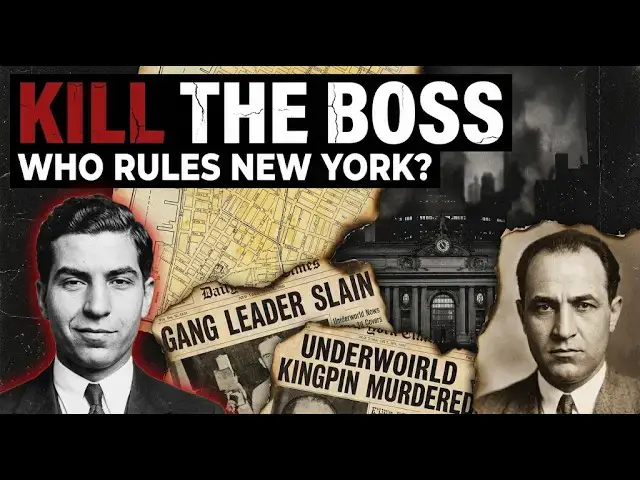
On September 10, 1931, the most powerful man in the American underworld was assassinated in his Manhattan office. But this wasn't just a hit—it was a corporate restructuring that would define organized crime for the next century.
This video explores how Lucky Luciano dismantled the "Old World" dictatorship of Salvatore Maranzano and replaced it with a brutal, efficient Board of Directors known as "The Commission." We dive into the Castellammarese War, debunk the myth of the "Night of the Sicilian Vespers," and analyze how Luciano applied modern business principles to crime long before business schools taught them.
Unlike the feudal warlords before him, Luciano realized that a system built on one man is destined to fail. By killing the "Caesar," he built a "Senate" that could survive anything—even the federal government.
Timestamps:
00:00 The Death of the Emperor
02:45 Enter Lucky Luciano
05:25 Old World vs. New World
07:11 The Castellammarese War
09:30 The Fatal Flaw of "Boss of All Bosses"
11:51 The Assassination of Maranzano
12:30 Debunking the "Sicilian Vespers" Myth
13:40 The Commission: A Board of Directors
16:20 Efficiency Over Ethnicity
21:40 Why Systems Beat Dictators
25:15 The Legacy of 1931
Sources & Further Reading:
- Bonanno, Joseph. "A Man of Honor: The Autobiography of Joseph Bonanno." Simon & Schuster.
- Critchley, David. "The Origin of Organized Crime in America: The New York City Mafia, 1891–1931." Routledge.
- Dash, Mike. "The First Family: Terror, Extortion, Revenge, Murder, and the Birth of the American Mafia." Random House.
- Raab, Selwyn. "Five Families: The Rise, Decline, and Resurgence of America's Most Powerful Mafia Empires." St. Martin's Press.
#History #TrueCrime #LuckyLuciano #TheMafia #BusinessStrategy
-~-~~-~~~-~~-~--~-~~-~~~-~~-~--~-~~-~~~-~~-~-
⚠️ Content Disclaimer:
This video is created for educational and informational purposes only. We do NOT glorify, promote, or encourage any form of criminal activity.
All visuals, audio, and materials used in this video are either:
✔ Created using AI tools, or
✔ Sourced from royalty-free platforms with valid licenses.
No copyrighted content belonging to others has been used without permission.
❤️ Support the Channel:
If you enjoy learning about real-life crime stories, history, and social issues, don't forget to:
✔ Like the video
✔ Subscribe to the channel
✔ Share your thoughts in the comments
Your support helps us keep creating more valuable content!
🔧 Tools I Use to Grow This Channel:
I personally use vidIQ to optimize my videos, find trending keywords, and grow my YouTube channel faster. Try it for free and see the difference!
💼 Contact & Copyright:
If you believe any part of this video violates your rights, please contact me directly via YouTube. I fully respect copyright laws and will respond promptly.
-~-~~-~~~-~~-~--~-~~-~~~-~~-~--~-~~-~~~-~~-~-
-
Show More Show Less View Video Transcript
0:04
they buried him like one
0:08
September 10th, 1931 a Wednesday afternoon in Manhattan
0:14
Salvatore Maranzano sat in his office
0:16
on the ninth floor of the New York Central Building
0:19
Grand Central Terminal hummed beneath him
0:22
trains arrived trains departed
0:26
the ordinary machinery of a city
0:28
going about its business
0:30
Maranzano had chosen this office carefully
0:33
the address impressed people
0:35
it was above a transportation hub
0:38
a place of movement and connection
0:40
he had business cards printed
0:42
they read real estate he was not in real estate
0:46
six months earlier this man had crowned himself
0:49
the supreme ruler of organized crime in America
0:53
he had won a bloody war
0:55
he had gathered every major crime boss in the country
0:58
into a single room and he had given himself a title
1:01
no one had ever held before
1:03
boss of all bosses Cappo di tutti capi
1:07
now before we go further
1:09
a quick word this story involves real
1:12
historical events and real people
1:14
some details are drawn from court records
1:17
and firsthand accounts
1:19
others come from sources whose reliability
1:22
historians still debate where facts are disputed
1:25
we'll say so
1:27
this is history told as accurately as the record allows
1:31
back to that office
1:32
Maranzano expected visitors that afternoon
1:36
he had been tipped off
1:37
or so he believed that the IRS was sending agents
1:41
tax trouble routine
1:44
he told his bodyguards to let them through
1:46
four men arrived they wore suits
1:49
they carried badges they were not from the IRS
1:52
what happened next took less than two minutes
1:55
the four men drew pistols and knives
1:58
Maranzano fought according to most accounts
2:01
he fought hard it didn't matter
2:03
he was stabbed six times and shot four
2:06
the men walked out of the building
2:08
past the secretaries past the elevator operator
2:11
into the crowds of Park Avenue
2:14
they disappeared and just like that
2:16
the boss of all bosses was gone
2:19
but here's the thing this was not a random hit
2:22
it wasn't personal revenge
2:24
it wasn't even a simple power grab
2:27
what happened on September 10th
2:29
was the final move in a reorganization
2:32
so complete so deliberately planned
2:35
that some historians
2:37
have compared it to a corporate merger
2:39
the old model was being dissolved
2:41
a new one was taking its place
2:44
and the man behind it was 34 years old
2:47
his name was Charles Luciano
2:50
most people called him lucky
2:52
he hated the nickname but he understood something
2:55
most men in his world never grasped
2:57
it didn't matter what they called you
3:00
it mattered what you built
3:01
to understand what Luciano built and why it lasted
3:05
you have to understand what came before
3:08
you have to understand the old world
3:10
the one Maranzano came from
3:13
the one Luciano burned down
3:15
Salvatore Maranzano was born in 1886
3:19
in the town of Castellammare del Golfo Sicily
3:23
a small port town beautiful
3:26
poor and completely controlled by the Sicilian Mafia
3:30
but Maranzano wasn't a typical mafioso
3:34
he was educated he had studied for the priesthood
3:37
he read Latin he was obsessed
3:40
genuinely obsessed with the Roman Empire
3:43
Julius Caesar Augustus the structure of the legions
3:48
the idea that one man could command an empire
3:51
through a rigid hierarchy of loyalty
3:54
he arrived in America in 1927
3:57
not as a refugee as a conqueror
4:00
he came with a specific mission
4:02
from the old Sicilian boss
4:04
Don Vito Ferro
4:05
to take control of organized crime in New York
4:08
and by that point New York needed taking
4:12
the city's criminal landscape was a mess
4:15
prohibition had flooded the underworld with money
4:18
bootlegging was enormously profitable
4:21
but there was no order gangs overlapped
4:24
territories shifted weekly
4:26
men killed each other over truckloads of whiskey
4:29
at the top sat Giuseppe Masseria
4:32
people called him Joe the boss
4:35
he was the most powerful
4:36
Italian crime figure in New York
4:39
Stocky crude
4:40
enormously greedy he demanded tribute from everyone
4:44
but Joe the boss had a problem
4:46
he couldn't see past his own plate
4:48
he ate at the same restaurant every day
4:51
he surrounded himself
4:52
with loyalists from his specific region of Italy
4:56
he distrusted anyone who wasn't Sicilian
4:59
or wasn't the right kind of Sicilian
5:01
and he absolutely refused to work with non Italians
5:05
in a city where Jewish gangsters
5:07
controlled major bootlegging operations
5:10
where Irish politicians ran the waterfront
5:13
where alliances crossed every ethnic line imaginable
5:17
Masseria's tribalism was more than an insult
5:21
it was bad business
5:23
this is where Luciano enters the picture
5:26
and to understand him
5:27
you have to forget every movie you've ever seen
5:30
Charles Luciano was born Salvatore Lucania in 1897
5:35
in the Sicilian mining town of Lerchara Friddi
5:39
his family came to New York in 19 o 6
5:43
he grew up on the Lower East Side
5:45
the streets were a laboratory
5:47
and Luciano's education happened on those streets
5:51
his closest friends growing up were not Sicilian
5:54
they were not even Italian
5:56
Meyer Lansky was Jewish from Grodno
5:59
in what is now Belarus Benjamin Siegel Bugsy
6:03
though no one called him that to his face
6:05
was Jewish from Brooklyn Frank Costello was Calabrese
6:09
not Sicilian Vito Genovese
6:12
came from a completely different part of Italy
6:14
these were his people not because of blood
6:18
because of brains by the mid 1920s
6:21
Luciano was a rising force under Masseria
6:24
he was earning he was reliable
6:27
but he was also watching he saw Masseria shake down men
6:31
who could have been allies
6:33
he saw him start wars over pride
6:35
he saw him refuse deals with Lansky's operation
6:38
because Lansky was Jewish
6:41
and Luciano kept his mouth shut
6:43
he watched he Learned and he waited
6:46
but what few people understood at the time
6:48
was that Luciano was already thinking
6:51
in a completely different language
6:53
not Italian not English
6:56
corporate when Maranzano arrived in New York
6:59
and began consolidating power among
7:02
the castellammese faction
7:04
the inevitable happened war
7:07
the Cassilamess War 1930 to 1931
7:11
most accounts say it lasted about 14 months
7:15
dozens were killed maybe more
7:17
the exact body count is still debated
7:20
on one side Masseria
7:22
on the other Maranzano
7:24
and in the middle watching both sides bleed Luciano
7:28
he was technically loyal to Masseria
7:31
he was Masseria's lieutenant
7:33
but he was already talking to Maranzano's people
7:36
he was also talking to Lansky
7:39
he was also talking to men in Chicago
7:41
in Cleveland in Detroit
7:44
Luciano was running a negotiation
7:46
that neither side fully understood
7:49
here's the calculation he made
7:51
both Masseria and Maranzano were the same man
7:55
in different suits both wanted total control
7:59
both built their power on regional loyalty
8:02
and personal tribute
8:03
both would eventually squeeze everyone beneath them
8:07
the old way
8:08
one king at the top would always produce war
8:11
because there would always be someone who wanted
8:13
the crown what if you got rid of the crown entirely
8:17
but wait if Luciano was already thinking this way
8:21
why didn't he just walk away from both sides
8:24
why stay in a war because he needed the war
8:27
he needed both bosses to exhaust themselves
8:30
he needed the old guard to discredit the old model
8:34
and he needed to be the man who ended it
8:36
April 15th, 1931 Tax Day
8:41
also the day Joe the boss died
8:43
Luciano invited Masseria to dinner at new over
8:46
Villa Tamaro a restaurant on Canai Island
8:50
they ate they played cards
8:52
according to the most repeated version of the story
8:55
Luciano excused himself to the bathroom
8:58
while he was gone four men walked in
9:01
Vito Genovese Albert Anastasia
9:04
Joe Adonis and most likely Bugsy Siegel
9:08
20 shots Masseria fell face down on the floor
9:12
he was still holding his cards
9:14
some accounts say he held the ace of spades
9:16
that detail is almost certainly invented later
9:20
it's a good story too good
9:22
the kind of detail that gets added in the retelling
9:25
what is certain Masseria was dead
9:28
and Luciano had arranged it
9:30
Maranzano was thrilled his rival was eliminated
9:34
and Luciano had done it for him
9:36
Maranzano summoned every significant Italian crime
9:40
figure in the region according to Joe Banano
9:44
who was there the meeting took place in a large hall
9:48
estimates ranged from 300 to 500 men
9:52
Maranzano stood before them and announced the new order
9:56
he divided New York into five families
9:59
he appointed the bosses Luciano Gagliano
10:03
Profaci Mangano and Maranzano himself
10:07
then he made his real announcement
10:09
above all five families above every boss
10:12
above every structure there would be one supreme leader
10:15
him Capo di tutti I capi
10:18
he drew the entire organizational chart
10:21
from the Roman Empire bosses were like generals
10:24
captains like centurions soldiers like legionaires
10:29
and at the top one emperor
10:30
the room applauded
10:32
or at least the room appeared to applaud
10:34
Luciano sat and listened and he understood everything
10:38
what Maranzano had done
10:40
was replace one dictatorship with another
10:43
he'd given it a fancier name
10:45
he'd wrapped it in Roman history
10:46
and old world tradition
10:48
but the structure was identical to Masseria's
10:52
one man at the top everyone else pays up
10:55
disagree and die
10:57
and Luciano already knew something else
10:59
according to multiple sources
11:02
including informant Joe Valachi
11:03
Years later Maranzano was already compiling a hit list
11:08
the names reportedly included Luciano himself
11:12
also Genovese also Costello
11:15
also Lansky who wasn't even Italian
11:18
Maranzano wanted the crown
11:20
and he wanted to eliminate anyone
11:22
smart enough to take it from him
11:24
Luciano didn't panic he moved
11:27
he made contact with Lansky
11:29
he made contact with Jewish gangsters
11:32
in the Brownsville neighborhood of Brooklyn
11:34
a group known as Murder Incorporated
11:37
though that name came from the press later
11:40
he found four men who could pass as government agents
11:43
they could walk into Maranzano's office
11:46
without raising suspicion
11:48
the plan took less than five months to execute
11:51
September 10th four men
11:54
fake badges six stab wounds
11:57
four bullets
11:58
the boss of all bosses was dead on his office floor
12:01
and the title died with him
12:04
now this is where most documentaries would end
12:07
the assassination the dramatic climax
12:10
the old king is dead the new king rises
12:14
but the assassination was not the point
12:16
what happened in the 48 hours after Maranzano's death
12:20
that was the revolution
12:22
there's a story that's been repeated
12:24
in nearly every Mafia history book
12:27
the night of the Sicilian Vespers
12:30
supposedly on the same night Maranzano was killed
12:34
forty or even 60 old line
12:37
Sicilian bosses were murdered across the country
12:40
a simultaneous nationwide purge
12:43
it's a great story
12:45
it's also almost certainly exaggerated
12:48
historians like David Kitchley and Mike Dash
12:51
have investigated this claim extensively
12:54
they found evidence of perhaps
12:56
three or four killings that can be plausibly connected
13:00
the idea of a coordinated 40 man purge
13:04
it appears to be a myth that grew with each retelling
13:07
what actually happened was more subtle and honestly
13:11
more impressive Luciano didn't need to kill 60 men
13:15
he needed to change the rules
13:17
within days of Maranzano's death
13:20
Luciano called a meeting not just Italians everyone
13:24
Lansky was there
13:26
so were representatives from Jewish operations
13:29
across the northeast according to some accounts
13:32
figures connected to Irish operations were consulted
13:35
though they likely weren't in the room
13:37
Luciano made an announcement simple clear
13:41
devastating to the old guard
13:43
there would be no boss of all bosses
13:45
not now not ever
13:46
the title was abolished the concept was abolished
13:50
no single man would rule over all the families
13:54
instead there would be a commission
13:56
think about that word he didn't call it a council
13:59
he didn't call it a brotherhood
14:01
he called it a commission
14:02
the language of business of governance
14:05
of institutions the commission
14:07
would include the bosses of the major families
14:10
New York's five Chicago
14:12
Buffalo and others depending on the source
14:15
they would meet they would vote
14:17
disputes would be arbitrated
14:19
not settled with guns
14:21
each family would govern its own territory
14:24
each boss was sovereign within his domain
14:27
but matters that affected multiple families
14:30
wars expansion
14:32
new rackets those required commission approval
14:36
it was in essence
14:37
a board of directors
14:39
let me be specific about why this was radical
14:42
because it's easy to underestimate
14:44
in Sicily the Mafia operated on a feudal model
14:48
you swore loyalty to a specific boss
14:51
that boss owned you his word was absolute
14:55
power flowed in one direction
14:57
downward and the only way to advance
14:59
was to wait for the man above you to die
15:02
or to kill him yourself
15:04
Maranzano brought that model to America
15:06
and simply scaled it up one emperor
15:10
absolute filthy
15:11
the Roman Empire reborn in New York Tenements
15:15
Luciano looked at that model and saw its fatal flaw
15:18
it was fragile one man at the top means one bullet
15:22
ends the entire system
15:24
every ambitious captain is a potential assassin
15:28
every succession is a potential war
15:30
the structure eats itself
15:33
what Luciano proposed
15:34
was something that had never existed
15:36
in organized crime
15:38
a system that didn't depend on any single person
15:41
under the old model when the boss died
15:44
chaos followed under the new model
15:47
when a boss died the commission oversaw the succession
15:51
orderly predictable stable
15:54
under the old model ethnic loyalty was everything
15:58
under Luciano's system
15:59
the operation looked completely different
16:02
Italian longshoremen unloaded the cargo
16:05
Jewish accountants managed the finances
16:08
Irish politicians provided cover
16:11
it didn't matter where your grandfather was born
16:14
it mattered what you could do
16:16
this was not idealism let me be clear about that
16:20
Luciano wasn't some progressive thinker
16:23
pursuing Equality he was a criminal pursuing efficiency
16:27
he looked at Masseria's tribalism and saw waste
16:31
talented men excluded because of their bloodline
16:34
profitable partnerships rejected because of prejudice
16:38
revenue lost to stupidity
16:40
and he looked at Maranzano's empire model
16:44
and saw a different kind of waste
16:46
resources spent on maintaining one man's ego
16:49
energy devoted to tribute and ceremony
16:52
a system where the smartest move was always betrayal
16:56
Luciano's genius
16:58
and it's uncomfortable to use that word
17:01
for a man responsible for enormous suffering
17:04
was organizational
17:06
he separated the role from the person
17:08
in Maranzano's system the boss was the system
17:12
remove the boss and everything collapses
17:16
in Luciano's system the boss was an executive
17:19
serving at the pleasure of the board
17:22
the system continued regardless of who sat in the chair
17:25
this is the same principle
17:27
that makes modern corporations durable
17:30
the CEO can be fired the company survives
17:34
Luciano applied that principle to crime in 1931
17:39
decades
17:39
before business schools would formalize these ideas
17:43
for legitimate enterprise
17:45
but wait if this system was so rational
17:48
so efficient
17:49
did it actually work for a remarkably long time
17:53
yes the commission functioned with modifications
17:56
for roughly 50 years from 1931 until the major R I
18:02
C O
18:02
prosecutions of the 1980s
18:05
half a century through World War 2
18:08
through the KEF over hearings
18:10
through the Appalachin meeting disaster
18:13
through Kennedy and Hoover
18:14
and everything between the five
18:17
families Maranzano designated
18:19
though they changed hands many times
18:22
retained their basic structure into the 21st century
18:26
that's not an accident that's architecture
18:29
when Joe Banano tried to make himself a supreme boss
18:32
in the 1960s the commission shut him down
18:36
when Carmine Galante overreached in the 1970s
18:41
the commission authorized his removal
18:43
the system policed itself
18:46
not perfectly not without violence
18:49
but with a stability that the old model never achieved
18:53
there's another piece of this
18:54
that rarely gets discussed
18:56
the night Maranzano died
18:58
Luciano didn't just abolish a title
19:01
he abolished a philosophy
19:03
Maranzano's world view was hierarchical
19:06
and backward looking
19:07
he believed power came from tradition
19:10
from lineage from the old country
19:13
he insisted that only full
19:14
blooded Sicilians could be made members
19:17
he conducted initiation ceremonies in Sicilian dialect
19:22
he burned holy cards and demanded blood oaths
19:26
Luciano kept the rituals
19:27
he was smart enough to understand
19:29
their psychological value
19:31
men who take blood oaths feel bound
19:34
ceremony creates loyalty that contracts cannot
19:38
but he gutted the substance behind them
19:40
under Luciano the oath was a management tool
19:44
not a spiritual covenant you went through the ceremony
19:47
because it kept soldiers loyal
19:50
you maintained the hierarchy
19:52
because it kept operations clean
19:54
but the actual power the real decisions
19:57
happened in rooms where the ceremony didn't reach
20:00
rooms where Lansky sat at the table
20:03
where the money was counted by whoever counted it best
20:06
where efficiency outranked tradition every single time
20:10
some of the old Sicilian bosses grumbled
20:13
of course they did but what could they say
20:16
the system was making everyone rich
20:19
prohibition was ending
20:21
but Luciano had already diversified gambling
20:24
labour racketeering
20:26
loan sharking narcotics
20:29
though
20:29
the commission would officially forbid drug dealing
20:32
later
20:32
a ban more honored in the breach than the observance
20:36
the money was extraordinary
20:38
and money has a way of settling philosophical disputes
20:42
let me step back for a moment
20:43
and be honest about something
20:45
it's tempting to tell this story as a kind of triumph
20:49
the smart
20:50
modern thinker defeats the backward traditionalist
20:53
the businessman beats the emperor
20:56
progress wins that framing is seductive
20:59
it's also dangerous Luciano's system was more efficient
21:03
at doing terrible things his organizational innovation
21:08
allowed the Mafia to embed itself
21:10
more deeply in American institutions
21:13
unions construction
21:15
garbage hauling the waterfront politics
21:18
the commission didn't reduce violence
21:21
it managed it
21:22
it made violence purposeful rather than chaotic
21:26
men still died families were still destroyed
21:29
communities were still bled dry by loan sharks
21:33
and Protection rackets
21:34
what Luciano built was a better machine
21:37
not a better world
21:39
and yet the organizational achievement is real
21:43
it happened and understanding how it happened
21:45
tells us something important
21:47
not just about crime about power itself
21:51
consider what Luciano understood at 34
21:54
that most legitimate business leaders
21:57
spend entire careers learning
21:59
centralized power is brittle
22:01
distributed power is resilient
22:04
ethnic homogeneity limits your talent pool
22:07
diversity of skills matters more than purity of blood
22:11
ego is expensive a leader who needs
22:14
a title is weaker than one who holds power without one
22:18
systems outlast
22:19
individuals build for the next generation
22:23
not for your own glory
22:25
Luciano never called himself boss of all bosses
22:28
he was simply the chairman
22:30
first among equals when he was eventually convicted
22:34
on prostitution charges in 1936
22:38
charges many historians believe were
22:41
at least partly manufactured by prosecutor
22:44
Thomas Jeffrey the system continued without him
22:48
he ran things from prison for years
22:50
then from exile in Italy after the war
22:54
the details of Operation Underworld
22:56
the alleged wartime deal between naval intelligence
23:00
and the mob are still debated by historians
23:03
what's clear is that Luciano's deportation in 1946
23:08
didn't collapse the structure
23:10
because the structure didn't need him
23:12
that was the whole point Maranzano wanted to be Caesar
23:16
Luciano wanted to be the Senate
23:19
that's the difference
23:20
that's the entire story in two sentences
23:23
Caesar is dramatic Caesar is powerful
23:27
Caesar gets a month named after him
23:29
but Caesar gets stabbed on the floor of the chamber
23:32
he built the Senate endures
23:35
Luciano understood that maybe not in those words
23:39
maybe not consciously but in his actions
23:42
in every structural decision he made
23:44
in those 48 hours after Maranzano's death
23:48
you can see a mind that grasps
23:50
something essential about how power actually works
23:53
it doesn't sit in a chair
23:55
it sits in a system
23:57
the commission met for the first time in its full form
24:00
shortly after Maranzano's death
24:03
the exact date is uncertain
24:05
late 1931 probably
24:08
the attendees likely included Luciano Lansky
24:12
Costello Genovese Joe Adonis
24:15
Louis Lepke
24:16
Buchalter and representatives from other cities
24:19
they established rules
24:21
or rather they established principles
24:24
no family interferes in another family's business
24:27
disputes go to the commission
24:29
before anyone reaches for a gun
24:31
new members must be approved
24:33
and the most important rule of all
24:36
the one that kept the machine running for decades
24:39
no one is above the commission
24:41
no one that rule was tested many times
24:45
it was bent it was sometimes broken
24:48
but it held more or less
24:50
until the FBI Learned how to use Rico statutes
24:53
to dismantle the families
24:55
from the top down the system didn't fail from within
24:59
it was attacked from without
25:01
by prosecutors
25:02
who understood its structure well enough to target it
25:06
and that too is a testament to the design
25:09
it took
25:09
the full power of the federal government to break
25:12
what a 34 year old crime boss built
25:15
in a few weeks
25:17
Luciano died in Naples on January 26th, 1962
25:22
heart attack at the airport
25:24
he was 64
25:26
he had spent the last 16 years in Italian exile
25:29
still giving orders still consulted on major decisions
25:33
still connected to the machine
25:35
but the machine didn't mourn him
25:38
it kept running just as he designed it to
25:41
the five families persisted
25:43
the commission persisted the principles persisted
25:47
through Genovese's attempted power grab
25:50
through Banano's war through Colombo's rallies
25:53
through Gottis ego and Gravano's betrayal
25:57
the structure bent it never broke
25:59
from within there's a question worth asking
26:02
why does this matter it matters
26:04
because what Luciano did in 1931
26:07
wasn't unique to crime
26:09
it was a universal insight about organizations
26:13
every institution faces the same choice
26:16
build around a person or build around a principle
26:19
the cult of personality or the strength of structure
26:23
Caesar or the Senate most organizations
26:26
businesses governments
26:28
movements choose Caesar it's easier
26:30
it's more exciting one visionary leader
26:33
1 clear authority one person to follow
26:36
and it works until that person dies or goes to prison
26:41
or loses their mind or simply gets old
26:44
then everything collapses
26:46
and someone has to rebuild from nothing
26:49
Luciano chose the other path not because he was humble
26:53
he wasn't not because he didn't want power
26:55
he did he chose it because he was
26:58
above all else practical
27:00
he wanted something that would outlast him
27:02
and he got it
27:03
the file on Salvatore Maranzano was closed
27:06
the day he died case listed as unsolved
27:10
no one was ever charged
27:12
the file on Charles Luciano runs to thousands of pages
27:17
across multiple federal agencies
27:19
surveillance reports wiretap transcripts
27:23
deportation records intelligence assessments
27:27
but the most important thing he ever did
27:29
isn't in any file it was an idea
27:33
a reorganization a 48 hour window
27:36
in which one man looked at a broken system
27:39
and replaced it with something that worked
27:41
not something good something that worked
27:44
the distinction matters it always does
27:47
if this story made you think differently about power
27:50
about systems
27:52
about the difference between a king and an institution
27:56
consider subscribing we tell these stories
27:59
because they are not really about the Mafia
28:02
they're about how the world actually operates
28:05
there's more to come
28:06
the chair at the head of the table is still overturned
28:10
no one has picked it up no one needs to
#Arts & Entertainment