
Pregnancies shadowed by fear as miscarriage haunts Palestinian women in Gaza.
Aug 10, 2026
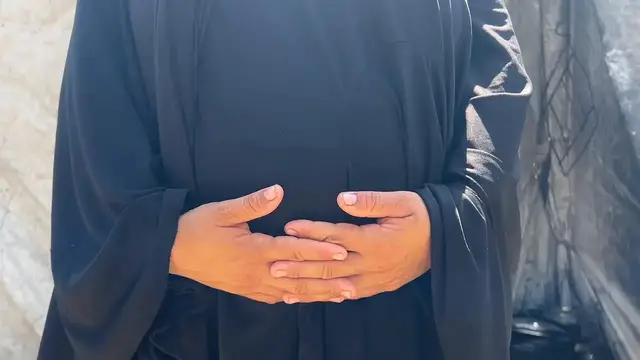
SHOTLIST: GAZA STRIP, PALESTINE (AUG. 6, 2026) 1. VARIOUS OF TENTS IN GAZA CITY OF GAZA STRIP 2. SEVEN MONTHS PREGNANT HADEEL AL-MADANI SITTING WITH HER CHILDREN IN TENT (TWO SHOTS) 3. VARIOUS OF AL-MADANI HOLDING PILLS IN HER HAND 4. VARIOUS OF AL-MADANI DOING HOUSEHOLD CHORES 5. VARIOUS OF AL-MADANI SPEAKING (Arabic) 6. VARIOUS OF EIGHT MONTHS PREGNANT DOAA AL-NAJJAR AND HER FAMILY SITTING IN THEIR TENT 7. VARIOUS OF AL-NAJJAR DOING HOUSE HOLD CHORES 8. VARIOUS OF AL-NAJJAR STANDING AND HOLDING HER BELLY 9. VARIOUS OF AL-NAJJAR SPEAKING (Arabic) 10. VIEW OF TENTS FROM WINDOW 11. VARIOUS OF EXTERIORS OF DAMAGED AL-HELOU INTERNATIONAL HOSPITAL 12. PREGNANT WOMEN WAITING IN HOSPITAL (TWO SHOTS) 13. TIGHT SHOT OF BROCHURES ON WALL 14. IYAD ABU HOSAIRA, HEAD OF HOSPITAL’S OBSTETRICS AND GYNECOLOGY DEPARTMENT SPEAKING (Arabic) (TWO SHOTS) 15. EXTERIOR OF DAMAGED AL-HELOU INTERNATIONAL HOSPITAL GAZA STRIP, PALESTINE - AUG. 6: With a seven-month pregnancy weighing heavily on her body, Palestinian woman Hadeel al-Madani lifts a water gallon and moves around inside her tent, carrying out daily tasks that Israel’s genocidal war has turned into exhausting burdens that fuel fears for her unborn child. Laundry, cooking, washing dishes and cleaning the living space were once simple tasks that took little time. Today, they require hours of effort that start from fetching and carrying water, to washing clothes by hand, and lighting fires to cook food. Palestinian women in Gaza perform these tasks under harsh humanitarian conditions, amid summer heat trapped inside tents made of poor-quality plastic fabric, turning them during the daytime into places almost impossible to live in. The hardship has been worsened by the continued power outage since Israel began its genocidal war on Oct. 8, 2023. For pregnant women, the effects go beyond daily exhaustion. Fears are growing over the loss of unborn children amid repeated displacement, malnutrition, difficulty accessing medical care, heavy physical labor and extreme heat inside tents. Figures from Gaza’s Health Ministry show 3,958 miscarriages were recorded in the first half of 2026, at a rate of 208.5 cases per 1,000 live births, compared with 64 cases per 1,000 live births in the second half of 2025, which is a 3.3-fold increase. - Fear for the unborn Madani lives with constant anxiety over her fetus as she spends her days doing exhausting work without running water, electricity or cooling in a life she describes as “tragic” inside the tents. In one corner of her tent, she checks the medicines she keeps among her few belongings, fearing they may be affected by the intense heat trapped inside the shelter or by rodents hiding among the items and in the tent soil. “Our life is difficult. We cannot adapt. Life is tragic and very hard for pregnant women in tents,” Madani told Anadolu. “I fear my child may have deformities or problems because of the harsh conditions and the heat,” she said. “Sometimes the weather outside the tent is cooler than inside it.” - Birth surrounded by fear In another tent, Palestinian woman Doaa al-Najjar is waiting to give birth within days after entering the ninth month of pregnancy, while suffering health complications caused by the living conditions in the tent. “The heat of the tent affects me severely and raises my body temperature,” Najjar told Anadolu, saying she is often forced to seek medical treatment. Najjar said she went to a health clinic last Thursday after feeling her temperature rise, raising fears that she could be suffering from a health problem that might affect her fetus. “I feel afraid for the pregnancy, and I’m affected by these conditions,” she said. “I’m waiting for the baby to come safely.” Najjar compares her current pregnancy with pregnancies before the war, saying that before the war, pregnant women had food, peace of mind and basic needs. Today, she cannot find anything needed for her expected newborn, no suitable living conditions, no bed, no clothes, no diapers and no milk. Although her delivery is approaching, Najjar is still thinking about how to secure these supplies while her family struggles to provide basic daily needs. She is also haunted by the fear of rodents and insects and the possible danger they pose to her baby, especially without a raised bed that could protect the child. “I fear for him from mice, rats, insects and the heat of the tent,” she said. “He needs a bed that protects him from them.” Palestinians in Gaza are living through a severe economic collapse after most lost their jobs during Israel’s genocidal war, which pushed them into poverty and made them dependent on international food, relief and medical aid. Those supplies remain sharply limited due to strict Israeli restrictions on crossings, as Israel reneges on obligations under the ceasefire agreement in effect since October 2025 to allow agreed quantities of aid
Show More Show Less #news