Up next in 10



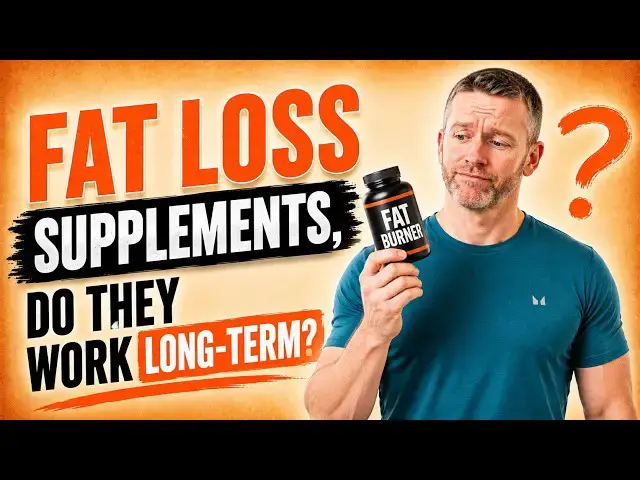
Do fat loss supplements actually work long-term?
Fat burners, metabolism boosters, appetite suppressants, and weight loss supplements often promise faster results, but how much difference do they really make to body fat and sustainable weight loss?
In this video, expert nutritionist Dr Richie Kirwan breaks down the science behind fat loss supplements, explaining what they can realistically do, their limitations, and why nutrition, calorie intake, and lifestyle remain the biggest factors for long-term fat loss.
Key Facts:
No legal over-the-counter fat loss supplement can replace a consistent calorie deficit.
Some ingredients may have small effects on energy expenditure or appetite, but this doesn't guarantee meaningful fat loss.
The effects of stimulant-based fat burners can diminish as your body develops tolerance.
Supplements marketed as "fat burners" often contain combinations of caffeine and other stimulants.
Sustainable fat loss depends primarily on nutrition, activity, training, sleep, and maintaining an appropriate calorie deficit.
A supplement that produces a small short-term effect isn't necessarily an effective strategy for maintaining weight loss long-term.
FAQ:
Q: Do fat burners actually work?
A: Some ingredients may produce small increases in energy expenditure or reductions in appetite, but their overall effect on fat loss is generally modest compared with diet and activity.
Q: Can fat loss supplements help you lose weight without a calorie deficit?
A: They cannot bypass energy balance. Long-term fat loss ultimately requires you to consume less energy than your body expends over time.
Q: Does your body get used to fat burners?
A: Tolerance can develop to some stimulant effects, particularly with ingredients such as caffeine, potentially reducing some of their noticeable effects over time.
Q: Are fat burners necessary for getting lean?
A: No. You can successfully lose body fat without using fat burners or weight loss supplements.
Q: What's most important for long-term fat loss?
A: A sustainable calorie deficit alongside adequate protein, resistance training, regular physical activity, sufficient sleep, and dietary habits you can maintain over time.
#myprotein #wheyprotein #protein #nutrition
*********************************
Myprotein is Rated Excellent on Trustpilot
🔔 Subscribe to our channel: https://www.youtube.com/user/MyproteinUK?sub_confirmation=1
📲 Download the Myprotein app: https://myprotein.onelink.me/IYeO/o2erh9hb
The UK & Europe's Number 1 Online Sports Nutrition Brand, Myprotein.
Show More Show Less View Video Transcript
0:00
Fat loss supplements, they're
0:02
everywhere. Thermogenic this, metabolism
0:04
boosting that, fat burner, fat blocker,
0:07
fat incinerator, they all have one thing
0:10
in common. They promise a lot.
0:12
So, today we're going to look at what
0:14
the science actually says because some
0:16
of these supplements do have some real
0:19
science behind them. And some of them
0:21
have real risks behind them, too.
0:27
How's it going, guys? My name's Richie
0:28
Kirwan. I'm a registered nutritionist,
0:30
researcher, and university lecturer in
0:31
nutrition and exercise physiology. In
0:33
this video, I'm going to go through nine
0:35
of the most commonly marketed natural
0:37
fat loss supplements one by one and tell
0:39
you honestly what the evidence says
0:42
about each one. To do that, I'm mainly
0:44
going to be drawing on a single review
0:46
paper that looked at all of the best
0:48
available research on these supplements
0:51
in people with obesity from 2006 to
0:53
2016. It's titled The Safety and
0:56
Effectiveness of Commonly Marketed
0:58
Natural Supplements for Weight Loss in
1:00
Populations with Obesity: A Critical
1:02
Review of Literature from 2006. It's one
1:04
[music] of the more rigorous and honest
1:06
pieces of work in this area, and the
1:08
conclusion it reaches is probably not
1:11
[music] what you're expecting. But,
1:12
before we get into the individual
1:14
supplements, let me just say this up
1:16
front. Nothing in this video is a
1:18
substitute for good diet and regular
1:20
exercise. Not even close.
1:23
That's just the reality of what the
1:25
evidence shows. And by [music] the end
1:26
of this video, you'll understand exactly
1:29
why I'm saying this. Before we get into
1:31
the supplements themselves, it helps to
1:32
understand what researchers actually
1:34
consider to be meaningful weight loss.
1:37
The FDA in the United States, for
1:39
example, requires that a weight loss
1:40
drug produce at least 5% more weight
1:44
loss than a placebo after 1 [music] year
1:46
of treatment before it can be approved.
1:48
That might not sound like a huge amount,
1:50
but it's actually a pretty meaningful
1:52
clinical threshold. It's the kind of
1:54
loss that starts to produce real
1:56
reductions in the risk of things like
1:57
type 2 diabetes and cardiovascular
1:59
disease. I mention this because as we go
2:02
through each supplement, the numbers you
2:04
hear might sound small
2:07
>> [music]
2:07
>> because they are. And that context
2:09
matters a lot when you're deciding
2:11
whether something is worth taking.
2:13
Right, let's get into it. First up is
2:15
something called bitter orange, also
2:17
known as citrus aurantium.
2:20
Or if you've ever eaten a proper British
2:22
marmalade, worst type of jam ever by the
2:24
way, those are Seville oranges, [music]
2:27
which are the same thing. The extract is
2:29
taken from the peel and its main active
2:31
ingredient is a compound called
2:33
synephrine. So, synephrine is a
2:35
stimulant and if that rings alarm bells,
2:39
it should. Bitter orange essentially
2:41
stepped into the spotlight after another
2:43
stimulant called ephedra was banned in
2:45
the early 2000s
2:47
>> [music]
2:47
>> following serious safety concerns,
2:49
including reports of cardiac events and
2:51
even some deaths. Synephrine has a
2:54
similar mechanism of action to
2:56
ephedrine, stimulating the nervous
2:58
system in a way that is supposed to
3:00
increase metabolic rate and promote fat
3:02
breakdown. So, does it work? Well,
3:05
here's the thing. The review I mentioned
3:07
found that between 2006 and 2016,
3:09
>> [music]
3:09
>> not a single study was published
3:12
examining whether bitter orange actually
3:13
causes weight loss in people with
3:15
obesity.
3:16
Not one.
3:17
So, in terms of efficacy, we genuinely
3:19
have nothing to go on. What we do have
3:21
is a case study of a patient who took
3:23
bitter orange and ended up in the
3:25
emergency room with kidney [music]
3:26
and respiratory failure. Now, a single
3:28
case study is not enough to condemn a
3:30
supplement outright and a separate
3:33
safety trial in 75 people over 60 days
3:36
reported no adverse events at all. But,
3:39
given that bitter orange has essentially
3:41
replaced a banned substance, has a
3:44
similar mechanism of action and has zero
3:47
weight loss evidence to its name, the
3:49
risk-reward calculation there
3:52
isn't a great one. Now, next is
3:54
something more of you will have heard of
3:56
before.
3:57
Carnitine, specifically L-carnitine.
4:00
This one actually has a pretty
4:02
compelling mechanism
4:04
on paper. Carnitine is a compound that
4:06
your body produces naturally and it's
4:08
found in foods, too, particularly in red
4:10
meat. Its job in the body is to
4:12
transport fatty acids into the
4:14
mitochondria, the energy-producing
4:16
engines of your cells. So, the logic
4:18
goes like this: [music] the more
4:20
carnitine, the more fat transported, the
4:23
more fat burned.
4:25
Sounds reasonable, right? The problem is
4:26
that having a logical mechanism [music]
4:29
and actually producing meaningful weight
4:30
loss in the real world are two very
4:33
different things. The review I mentioned
4:35
found just one study on carnitine that
4:37
met their criteria and it showed no
4:40
significant difference in weight loss
4:42
compared to placebo.
4:44
Pretty damning for a supplement with
4:45
such a long [music] history. However,
4:48
since that review was published, the
4:49
picture has become slightly more
4:52
nuanced. A more recent meta-analysis,
4:54
pooling data from dozens [music] of
4:56
randomized controlled trials, have found
4:57
that L-carnitine supplement does produce
5:00
a small but statistically significant
5:03
reduction in body weight. The reduction
5:05
was around 1 kg compared to placebo,
5:07
with the effect being most [music]
5:09
consistent in people who are overweight
5:11
or obese
5:13
and when combined with other lifestyle
5:15
changes, which is very much worth
5:17
bearing in mind. But, here's something
5:19
else worth bearing in mind.
5:21
Around 1 kg over weeks to months of
5:24
supplementation, with a lot of
5:27
variability between studies,
5:28
>> [music]
5:29
>> and no significant effect on things like
5:31
waist circumference or body fat
5:33
percentage in many of the studies. So,
5:35
yeah, [music] there may be a modest
5:36
signal there, but whether that
5:38
translates into something actually
5:40
meaningful for most people is a very
5:44
different question.
5:45
It's also worth pointing out that if you
5:47
meat regularly, your carnitine levels
5:49
are probably already okay.
5:51
Your body makes its own carnitine, too.
5:53
So, the idea that supplementing extra
5:56
will push fat burning into some higher
5:57
gear isn't really well supported by the
6:00
overall [music] evidence. Moving on to
6:02
one that most people have probably never
6:04
heard of. Coleus forskohlii is a plant
6:07
from the mint family native to India.
6:09
And it's been used in traditional
6:11
Ayurvedic medicine for centuries. The
6:14
root of the plant contains a compound
6:15
called forskolin, which has attracted
6:18
interest for a range of health effects,
6:21
including weight loss. The proposed
6:23
mechanism involves forskolin activating
6:25
an enzyme called adenylate cyclase,
6:28
which increases levels of a molecule
6:30
called cyclic AMP in cells. Cyclic AMP
6:34
is often elevated in an energy deficit,
6:36
so can tell other systems that the body
6:39
needs energy. The idea is that if cyclic
6:41
AMP is higher, it might promote the
6:43
breakdown of stored fat and increase
6:46
lean body mass. As mechanisms go, it's
6:48
actually fairly well established at a
6:50
cellular level, and some animal studies
6:52
have shown interesting effects on fat
6:54
cell size and glucose metabolism. The
6:56
human evidence, however, is a lot less
6:59
impressive. The overall body of clinical
7:01
research on Coleus forskohlii for weight
7:03
loss is small.
7:04
The best available studies, including
7:06
the one examined in the review, are
7:07
randomized controlled trials that
7:09
consistently find no significant
7:12
difference in weight loss between the
7:14
Coleus forskohlii group and the [music]
7:16
placebo group. Any reductions in waist
7:18
or hip circumference that do appear seem
7:21
to be due to the calorie deficit
7:22
participants were following, rather than
7:24
to the supplement itself. One older
7:26
study in men did report some changes in
7:29
body composition and testosterone levels
7:30
with forskolin, [music]
7:32
but the evidence base remains way too
7:34
limited and inconsistent to draw firm
7:37
conclusions. At this point, there are
7:39
just not enough high-quality human
7:41
trials to [music] recommend it
7:43
prophylactically. There were also some
7:44
adverse events reported across studies.
7:47
Some participants had mild
7:48
gastrointestinal symptoms, specifically
7:51
loose stools, which resolved within a
7:53
few weeks, but doesn't sound [music] all
7:55
that fun to be honest. Next up, chromium
7:58
is an essential trace mineral that your
8:00
body needs in small amounts. You get it
8:02
from food, particularly whole grains,
8:04
[music] meat, and broccoli. Uh and it's
8:07
been studied since the 1970s for its
8:09
role in helping insulin work properly in
8:12
the body.
8:13
And it's that insulin connection that
8:15
led to its popularity as a weight loss
8:16
supplement. The proposed mechanism is
8:18
like this.
8:19
Because chromium supports insulin's
8:21
action, and insulin plays a central role
8:24
in regulating fat storage and
8:25
metabolism,
8:26
the thinking was that supplementing with
8:28
chromium, specifically in a highly
8:30
absorbable form called chromium
8:32
picolinate, might improve the body's
8:35
ability to burn fat and reduce appetite.
8:38
It sounds possible, right? It's also the
8:40
kind of logic that can sound a lot more
8:42
convincing in a marketing brochure than
8:44
it does [music] in a clinical trial. The
8:46
review I mentioned looked at seven
8:48
studies on chromium picolinate, [music]
8:50
and the majority found no statistically
8:52
significant effect on body weight.
8:54
One meta-analysis, pooling data from 10
8:56
randomized controlled trials, did find a
8:58
small, significant reduction in body
9:01
weight of around 1.1 kg compared to
9:04
placebo. But, the authors themselves
9:06
stated that the result was heavily
9:08
dependent [music]
9:09
on a single trial, which is never a good
9:11
sign with a meta-analysis.
9:14
And the clinical relevance of that
9:16
effect was, in their words, [music]
9:18
debatable. More recent research in
9:19
people with type 2 diabetes specifically
9:22
found no significant effect of chromium
9:24
supplementation on body weight, BMI, or
9:27
waist circumference [music]
9:28
at all. Where the picture gets slightly
9:30
more interesting is with insulin
9:32
sensitivity.
9:33
There is some evidence that chromium
9:35
picolinate may have modest in people who
9:39
are insulin resistant, potentially
9:40
improving blood glucose regulation. But,
9:42
[music]
9:43
that's a metabolic health finding, not
9:45
fat loss finding. And it's most relevant
9:48
to a very specific clinical population,
9:51
rather than the general gym-going
9:53
public. In terms of safety, chromium
9:55
picolinate is generally well tolerated
9:57
at the doses used in supplements. A
9:59
handful of participants across different
10:00
trials did withdraw due to side effects
10:02
including nausea and vertigo, but these
10:04
weren't common. The picture here is
10:06
fairly clear.
10:07
Chromium picolinate might do something
10:10
very small for body weight in certain
10:12
individuals, but there is not enough
10:14
evidence to recommend it as a meaningful
10:16
fat loss supplement. Now, a lot of you
10:19
have probably heard of conjugated
10:20
linoleic acid [music] or CLA. It's a
10:23
type of fatty acid that's found
10:24
naturally in meat and dairy products
10:25
from ruminant animals like cows and
10:27
sheep.
10:28
So, [snorts] if you eat beef, lamb, or
10:30
full-fat dairy, you're probably getting
10:32
some CLA in your diet. It became popular
10:34
as a supplement largely on the back of
10:36
some impressive results in animal
10:38
studies, where it considerably reduced
10:40
body fat. The human data, however,
10:41
[music] has been a different story. The
10:44
proposed mechanisms are actually pretty
10:45
interesting. CLA is thought to influence
10:48
fat metabolism by promoting the
10:50
breakdown of stored fat, reducing fat
10:53
cell formation, and potentially
10:55
increasing the amount of energy burned
10:56
at rest. There are two main forms of CLA
10:58
used in supplements, and they appear to
11:00
work through different pathways, which
11:02
added a layer of complexity to
11:03
interpreting the research. [music] The
11:05
review I mentioned examined 11 studies
11:07
on CLA in people with obesity, and the
11:09
majority found no significant difference
11:12
in weight [music] loss between the CLA
11:14
and the placebo groups. Where weight
11:15
loss did appear greater in CLA [music]
11:17
groups, it tended to occur in studies
11:19
where participants were also following
11:21
calorie restriction or exercise
11:23
programs. [music]
11:23
And that makes it very difficult to
11:25
separate the effect of the supplement
11:27
from the effect of the lifestyle change.
11:28
To be honest, that's a problem in a lot
11:31
of supplement research. More recent
11:33
meta-analyses paint a slightly more
11:35
complicated picture.
11:37
If you pull data from multiple
11:38
randomized controlled trials, some
11:40
analyses do find small but statistically
11:43
significant reductions in body weight,
11:44
fat mass, and body fat percentage
11:46
>> [music]
11:46
>> with CLA supplementation. That said,
11:49
we're talking about reductions of around
11:51
0.3 to 0.5 kg in body weight on average.
11:55
That's less than the weight of a pound.
11:57
And more importantly, when researchers
11:59
restricted their analyses to only
12:01
quality trials, the fat loss effects
12:03
mostly disappeared.
12:05
That's a red flag worth paying attention
12:08
to. There is one mildly interesting
12:10
finding worth mentioning.
12:12
A more recent meta-analysis found that
12:14
CLA combined with exercise may produce
12:17
greater reductions in body fat compared
12:19
to exercise alone without a significant
12:21
effect on body weight. That could
12:23
suggest a modest body composition
12:25
benefit when used alongside [music]
12:27
training. Though the effect sizes are
12:29
small and a lot more research is needed.
12:32
On the safety side, most adverse events
12:34
reported have been gastrointestinal
12:35
[music]
12:36
and minor to be honest, occurring in
12:39
similar rates to placebo groups.
12:40
However, there is a concern specifically
12:43
around one of the CLA forms, the T10 C12
12:48
form, which some research has linked to
12:51
increased insulin resistance and markers
12:53
[music] of liver stress at higher doses.
12:55
This is worth keeping in mind since many
12:57
CLA supplements contain a mixture
12:59
[music] of both forms without clearly
13:01
specifying the ratio. The overall
13:03
verdict on CLA is that any effect on fat
13:05
loss is
13:06
>> [music]
13:06
>> very small, inconsistent, and unlikely
13:09
to be practically meaningful for most
13:11
people. The animal data looked
13:12
promising, the human data just hasn't
13:16
delivered.
13:17
Right, this is one of the more
13:19
interesting ones. Partly because you've
13:22
almost [music] certainly eaten the
13:23
source of this supplement without
13:24
knowing. Capsinoids are compounds found
13:26
in chili peppers. Capsaicin is the one
13:29
most people have heard of. It's what
13:30
gives chili peppers [music] their heat.
13:33
Capsinoid supplements typically contain
13:35
capsaicin or another non-spicy capsinoid
13:38
or a combination of both. The mechanism
13:40
for how they work is actually pretty
13:42
well understood at a physiological
13:43
level.
13:44
Capsaicin binds to receptors which are
13:46
found in sensory nerve cells throughout
13:48
the body, including in the gut.
13:50
Activating these receptors can stimulate
13:52
thermogenesis, meaning the body produces
13:54
more heat, which burns more energy.
13:57
There's also some evidence that
13:58
capsaicin and capsinoids can activate
14:00
brown adipose tissue, the type of fat
14:02
that actually burns energy rather than
14:04
just storing it. On top of that, it may
14:07
have a mild appetite-suppressing effect
14:10
as well.
14:11
On paper, this is actually one of the
14:13
more interesting fat loss mechanisms of
14:15
any supplement we've looked at so far.
14:17
So, what does the evidence actually
14:19
show?
14:20
The review I mentioned examined two
14:21
randomized controlled trials on
14:22
capsinoids specifically. In both of
14:24
them, participants lost a similar amount
14:26
of weight to those in the placebo group.
14:29
In one study, both groups [music] lost
14:31
around 0.5 to 0.9 kg over 12 weeks with
14:35
no significant difference between them.
14:37
In the other study, both groups lost
14:38
more weight, in the range [music] of 4.7
14:40
to 5.3 kg. But, and it's a big butt,
14:44
that study also prescribed [music]
14:46
an 800 calorie per day deficit. So
14:49
again, it's pretty hard to argue that
14:51
the supplement was responsible for much
14:53
better results. The broader evidence
14:55
base on this is more interesting,
14:57
though.
14:57
A number of meta-analyses have shown
14:59
that capsaicin and capsinoids do
15:01
slightly increase energy expenditure and
15:04
fat oxidation in humans. For example,
15:06
one recent analysis estimated the
15:08
increase in energy expenditure at
15:10
somewhere around [music]
15:11
50 to 70 calories per day in people who
15:14
are overweight. Not a lot, but again,
15:16
statistically [music]
15:18
real. A separate meta-analysis found
15:20
that capsinoid consumption before meals
15:22
significantly reduced [music] calorie
15:24
intake during those meals. The problem
15:26
is when researchers look specifically at
15:28
body weight and fat mass as outcomes
15:29
across trials, and let's face it,
15:31
[music] these are the outcomes that
15:32
people actually care about,
15:34
the effects are much smaller and often
15:37
not statistically significant at all.
15:39
The gap between increasing thermogenesis
15:41
in a lab and actually losing meaningful
15:44
amounts of body fat in the real world
15:46
turns out to be pretty damn big. As for
15:49
side effects, the most common ones are
15:51
gastrointestinal again, which honestly
15:53
isn't surprising given what happens when
15:55
you eat too much spicy food. So, in
15:57
summary, capsaicinoids have a really
15:59
interesting mechanism, a genuine effect
16:02
on energy expenditure, but annoyingly
16:04
very little effect on actual body
16:06
weight. Next up is psyllium, which is
16:08
actually one [music] of my favorite
16:10
supplements, but for its health
16:12
benefits.
16:13
It's a type of soluble dietary fiber
16:15
that we get from the husks of seeds from
16:17
a plant called plantago [music] ovata.
16:19
You've actually probably seen it sold
16:21
under brand names like Metamucil, and
16:22
it's been used for decades as a
16:24
treatment for constipation.
16:26
Already sounds super sexy, right?
16:29
Well, more recently, [music] it's been
16:31
marketed as a weight loss supplement,
16:32
too. So, let's see if its reputation is
16:35
deserved. [music]
16:36
The mechanism for this one is pretty
16:38
straightforward.
16:39
When psyllium comes into contact with
16:41
water, it forms a thick, viscous gel in
16:44
the gut. That gel slows down the rate at
16:46
which food leaves your stomach, which
16:48
promotes a feeling of fullness and
16:50
reduces how quickly nutrients, including
16:52
glucose, are absorbed into the
16:54
bloodstream. The idea is that if you
16:56
feel fuller for longer, you eat less,
16:59
and over time, that adds up to weight
17:01
loss. So, it's a satiety-based mechanism
17:04
rather than a thermogenic one, which
17:06
makes it quite different from a lot of
17:08
the other supplements we've talked
17:10
about. The review I mentioned looked at
17:12
three studies on psyllium. Two of them,
17:14
both randomized controlled trials,
17:15
actually found significant reductions in
17:18
weight compared to control groups.
17:19
[music] The third study wasn't
17:21
randomized and also had participants
17:23
following lifestyle modifications. It
17:25
showed even more impressive results, but
17:27
the lack of a proper control group makes
17:29
it pretty hard to [music] know what
17:31
caused the actual result. The broader
17:33
evidence for psyllium is a bit more
17:35
mixed. One meta-analysis with data from
17:37
22 randomized control trials found no
17:40
significant effect on body weight, BMI,
17:42
or waist circumference overall. That's
17:43
it. A more recent and focused
17:45
meta-analysis specifically looking at
17:47
psyllium taken before meals [music] in
17:50
overweight and obese people found an
17:52
average reduction in body weight of
17:54
around 2.1 kg over roughly 5 months.
17:59
So, that suggests that timing might
18:01
matter quite a bit with psyllium, which
18:03
makes sense. Besides fat loss, there's
18:05
actually much more consistent and robust
18:08
research showing psyllium lowers LDL
18:11
cholesterol and improves blood glucose
18:13
regulation. So much so that it's an
18:15
approved ingredient for
18:16
cholesterol-related health claims in
18:18
several countries. So, psyllium might
18:21
still be worth considering for some
18:23
people who are more concerned with
18:25
metabolic health. The most common side
18:27
effects were things like bloating and
18:29
loose stools, which again is pretty
18:31
normal for any significant increase in
18:33
dietary fiber intake. A big practical
18:36
note [music] is that psyllium has to be
18:38
taken with enough water because
18:40
otherwise, it'll try to absorb the water
18:42
from your digestive system, which
18:44
[music] you don't want happening. Right,
18:47
here's another one you probably never
18:48
heard of. But, if you've ever eaten
18:49
konjac noodles or seen those slightly
18:52
translucent rubbery noodles in Asian
18:54
grocery stores that seem to have almost
18:56
no calories, then you already know about
18:59
glucomannan. It's another soluble
19:02
dietary fiber extracted from the root of
19:04
the konjac plant, which has been [music]
19:05
used in Asian cooking and traditional
19:07
medicine for thousands of years. In
19:09
Japan and China, it turns up in all
19:11
sorts of foods, including [music]
19:12
noodles, tofu, and jellies. As a
19:14
supplement, it's been very heavily
19:16
marketed for weight loss, and this one
19:19
might actually have some of the more
19:20
interesting evidence of anything we've
19:23
looked at in this video. Again, the
19:24
mechanism is a lot like psyllium.
19:26
Glucomannan is [music] really viscous,
19:29
meaning when it absorbs water, it forms
19:31
a very thick gel in the stomach. In
19:33
fact, it's one of the most viscous
19:34
dietary fibers known. [music] That gel
19:36
slows down gastric emptying, keeps you
19:39
feeling full, and blunts the rise in
19:40
blood glucose after a meal. So again,
19:42
it's mostly a satiety-based [music]
19:44
mechanism. But the viscosity of
19:46
glucomannan is a lot higher than most
19:49
other fibers, which is why some
19:50
researchers think it might be more
19:52
effective than something like psyllium
19:54
for weight management. The review I
19:55
mentioned found six studies on
19:57
glucomannan, [music] and the results
19:58
were kind of all over the place.
20:00
Some found small but significant
20:02
reductions in weight, but others found
20:04
no significant difference compared to
20:06
the placebo at all. One important
20:07
pattern that emerged was that a
20:09
specific, higher viscosity form of
20:12
glucomannan called PGX seemed to do a
20:15
lot better than standard [music]
20:16
glucomannan. One study actually showed
20:19
weight loss of around 1.6 to 2.7 kg more
20:23
than the placebo group over 6 to 12
20:25
months. So the form of the fiber seems
20:27
to matter quite a bit here. The broader
20:29
evidence has become a bit more
20:31
encouraging since that review.
20:33
A more recent meta-analysis found a
20:35
significant reduction in body weight of
20:37
just under 1 kg compared to placebo. A
20:40
separate analysis looking specifically
20:42
at higher dose supplementation of at
20:43
least 5 g per day [music] for at least
20:46
12 weeks found average weight reductions
20:48
of around 3 kg. That's actually a bit
20:51
more meaningful than most of what we've
20:53
seen so far today.
20:54
>> [music]
20:54
>> Worth noting though is that
20:55
heterogeneity across the studies was
20:57
high, and that just means that the
20:58
results vary quite [music] a lot. So we
21:00
should interpret them with caution.
21:02
Basically, that means we can't be
21:04
completely sure of the effect. Besides
21:07
fat loss, glucomannan has pretty solid
21:09
evidence for reducing LDL cholesterol
21:11
and improving fasting blood glucose
21:12
levels, too, just like psyllium. Similar
21:14
side effects, too, with bloating, loose
21:17
stools, [music] and the like. And just
21:19
like psyllium, it's really important to
21:20
take glucomannan with plenty of water
21:21
>> [music]
21:22
>> because if it starts expanding before it
21:23
gets to your stomach, that's going to
21:25
cause problems you really don't want to
21:27
deal. And here we are, the one you've
21:30
probably all been waiting for.
21:32
Green tea extract is without question
21:35
the most studied supplement on this
21:37
entire list when it comes to weight
21:38
loss. So, it actually has the most
21:41
evidence behind it. So, let's see if it
21:43
lives up to the hype. You already know
21:45
green tea. It's one of the most consumed
21:47
drinks in the world, made from the
21:48
leaves of the Camellia [music] sinensis
21:50
plant, the exact same plant that makes
21:52
you black tea and oolong tea.
21:54
The difference is that green tea leaves
21:56
aren't fermented, which preserves their
21:57
polyphenol content. Green tea extract is
21:59
essentially a concentrated form of those
22:01
polyphenols, particularly a compound
22:04
called epigallocatechin
22:05
or EGCG, which is the [music] main
22:08
active ingredient people are after. The
22:10
mechanism here is different from the
22:12
fiber-based supplements we just talked
22:13
about. EGCG works primarily by
22:16
inhibiting an [music] enzyme that
22:17
normally breaks down noradrenaline, a
22:19
hormone involved in stimulating fat
22:22
breakdown and thermogenesis. So, when
22:24
you take green tea extract,
22:26
noradrenaline stays active for longer,
22:28
[music] which is supposed to ramp up fat
22:30
oxidation and increases the amount of
22:32
energy you burn at rest. Green tea also
22:35
naturally contains caffeine. So, the two
22:37
compounds work together synergistically,
22:39
which is why caffeinated green tea
22:41
extract tends to outperform the
22:43
decaffeinated version in studies, which
22:45
we'll get into. So, what does the
22:46
evidence actually show?
22:48
The review I mentioned looked at 15
22:50
studies on green tea extract in people
22:52
with obesity, which is a lot more
22:54
[music] than any other supplement on
22:55
this list.
22:57
And once again, the results were kind of
22:59
all over the place. About half of the
23:01
studies found significant weight loss in
23:03
the green tea extract groups, and about
23:05
half didn't. The studies showing the
23:07
biggest weight losses, sometimes 5 or
23:10
even 11 kg, were also the ones
23:12
prescribing calorie deficits. So again,
23:15
[music] you really can't attribute those
23:17
results to the supplement alone. The
23:19
studies that had people just maintaining
23:21
their normal diet without restricting
23:22
calories showed much more modest
23:25
results, in the range of 1 to 2.5 kg at
23:28
most. Another thing worth noting, the
23:30
higher quality studies in the review
23:32
tended to be the ones showing no
23:34
significant effect. So that's definitely
23:37
worth paying attention to. Outside of
23:39
the review, the broader evidence base
23:41
does somewhat support a modest weight
23:44
loss effect. Multiple meta-analyses find
23:46
[music] that green tea extract produces
23:48
roughly 1 to 1.3 kg more weight loss
23:51
than placebo over around
23:53
>> [music]
23:53
>> 12 weeks. That's statistically real,
23:56
it's just not the kind of effects people
23:58
are hoping for. Besides weight loss,
24:00
green tea extract does have some pretty
24:02
decent evidence for other health
24:04
benefits. There's reasonably consistent
24:07
data showing it lowers LDL cholesterol,
24:09
reduces blood pressure, and may improve
24:11
blood glucose levels. It's also one of
24:13
the most potent antioxidants in the
24:15
supplement world, so there are genuine
24:17
health reasons someone might take it,
24:20
even if spectacular fat loss
24:22
isn't one of them. Now, and this is
24:24
really important, I need to talk about
24:27
safety, because this is where green tea
24:29
extract stands [music] apart from
24:31
everything else we've discussed today.
24:33
And not in a good way. Drinking green
24:35
tea as a beverage [music] is safe.
24:37
Billions of people do it every day, and
24:39
there's no credible evidence linking
24:41
regular green tea consumption to liver
24:43
damage.
24:45
In fact, quite the opposite.
24:47
Concentrated green tea extract
24:48
supplement, however, are a different
24:50
story. There are well-documented cases
24:53
of liver injury, including some cases of
24:55
acute liver failure linked to high-dose
24:58
green tea extract supplements. The US
25:00
Pharmacopoeia classifies green tea
25:02
extract as a well-established cause of
25:04
clinically apparent liver injury.
25:07
The European Food Safety Authority,
25:09
EFSA, concluded that doses above 800 mg
25:12
of EGCG per day from [music] supplements
25:15
significantly increases liver enzyme
25:17
markers. The EU has now introduced
25:19
mandatory warning labels on green tea
25:21
extract supplements as a result.
25:23
The risk also seems to be unpredictable
25:25
and [music] partially genetic, meaning
25:28
most people taking it at normal doses
25:30
won't experience [music]
25:31
any problems at all. But, some
25:33
individuals are significantly more
25:34
susceptible than others.
25:35
>> [music]
25:36
>> And there's no easy way to know in
25:37
advance which category you fall into.
25:40
What does seem to increase the risk is
25:42
taking it on an empty stomach, taking it
25:44
at high doses, and interestingly, taking
25:46
it during calorie restriction, which is
25:48
exactly when most people would [music]
25:50
be taking it for weight loss.
25:53
That's a pretty uncomfortable irony.
25:55
So, green tea extract may have the
25:57
strongest fat loss evidence of
25:59
everything on the list, but it's
26:01
definitely not a dramatic effect.
26:04
On top of that, it does come with some
26:06
[music] real safety considerations that
26:08
mean it's not something to take casually
26:10
[music] at high doses. So, we've just
26:12
gone through nine of the most commonly
26:14
marketed natural fat loss supplements,
26:16
and if you've been paying attention,
26:18
fair play if you have, there's a pretty
26:20
clear pattern. A lot of them have no
26:22
meaningful evidence at all.
26:24
A few have potentially real but very
26:26
small effects, and even the best studied
26:29
of them, green tea extract, might,
26:31
[music] in the best of circumstances,
26:33
produce maybe 1 to 1.5 kg of additional
26:37
weight loss over [music] around 3
26:39
months. So, nothing particularly
26:41
impressive.
26:42
Now,
26:44
compare that to what diet and exercise
26:46
[music] actually does. A well-designed
26:48
lifestyle intervention combining calorie
26:50
restriction and regular [music] physical
26:52
activity can lead to substantially more
26:55
fat loss over the same time frame
26:57
[music]
26:58
with long-term
27:00
health benefits that go way beyond the
27:02
number on the scales. There is simply no
27:05
supplement on this list that comes
27:07
anywhere close to that.
27:10
Not one. And [music] look, I'm not
27:11
saying that to be preachy. The evidence
27:13
just doesn't support much weight loss
27:16
benefit to these supplements. The review
27:18
we looked at today was pretty blunt
27:20
about this. On top of that, none of the
27:22
supplements we examined came [music]
27:24
close to meeting the efficacy standards
27:26
required for a pharmaceutical weight
27:28
loss drug to be approved.
27:30
None of them.
27:32
Now, if there's one practical takeaway
27:33
from today beyond just don't waste your
27:35
money, it's this. The two [music]
27:36
supplements with arguably the most
27:38
interesting evidence, psyllium and
27:40
glucomannan,
27:41
are both just fiber. High viscosity,
27:44
appetite-suppressing, gut
27:46
health-supporting dietary fiber. And the
27:48
reason that's interesting is that most
27:50
people in the UK and other Western
27:52
countries consume far less fiber than
27:55
they should. The recommended intake is
27:56
around 30 g per day for adults, and the
27:58
average person in the UK gets about half
28:01
of that. So, before you spend money on a
28:04
fat loss supplement, it might be worth
28:06
asking whether you're eating enough
28:08
vegetables, legumes, whole [music]
28:10
grains, fruit, and other fiber-rich
28:12
foods. Because simply increasing your
28:14
dietary fiber intake could do more for
28:17
your appetite control and weight
28:19
management than the vast majority of
28:21
these supplements.
28:22
>> [music]
28:22
>> And it'll do a lot more for your
28:24
long-term health, too. So, that's it. If
28:27
you have any more questions about these
28:29
supplements, let me know in the comments
28:30
below, and remember to like the video
28:32
and subscribe to the Myprotein YouTube
28:33
channel for more great, evidence-based
28:36
nutrition information.
Sports