Up next in 10



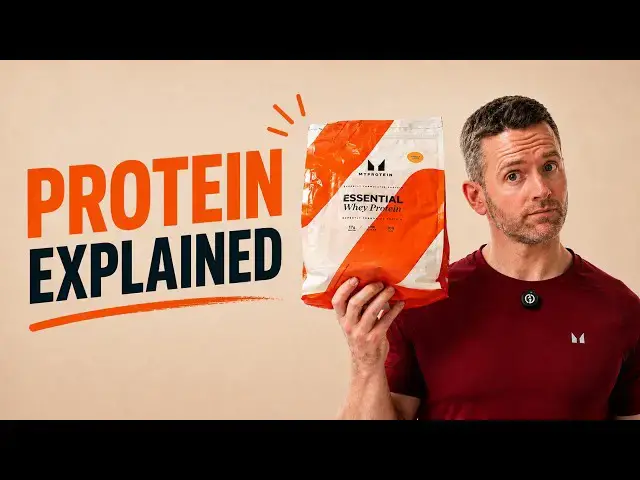
Expert nutritionist Dr Richie Kirwan explains what whey protein is, how it’s made, and whether it’s actually necessary for building muscle and improving your nutrition.
In this video, we’re going to take an in-depth look at one of the most popular supplements in the fitness industry and uncover the science behind whey protein.
Dr Richie Kirwan answers some important questions like, what exactly is whey protein? How is it different from other protein sources? Is whey protein better than getting protein from whole foods? And who can actually benefit from using it?
With so much marketing and misinformation surrounding supplements, it can be difficult to separate fact from fiction. Richie breaks down the evidence on whey protein, explaining its nutritional value, how it supports muscle growth and recovery, and whether it deserves a place in your diet.
Whether you're trying to build muscle, lose fat, improve your recovery, or simply understand more about nutrition, this video will help you make a more informed decision about whey protein.
Show More Show Less View Video Transcript
0:00
What is whey [music] protein? What does
0:01
it actually do? How much do you need?
0:03
And is it really better than other types
0:05
of protein? Let's talk about that.
0:09
>> [music]
0:11
>> How's it going, guys? My name's Richie
0:13
Kirwan. I'm a registered nutritionist,
0:15
nutrition researcher, and a university
0:17
lecturer in nutrition. Whey protein is
0:19
one of the most popular supplements in
0:20
the world, especially for people who go
0:22
to the gym, play sport, or are trying to
0:25
improve their body composition. Even
0:26
though it's so widely used, there's
0:29
still plenty of confusion about what
0:31
whey protein actually does, how much you
0:33
need, and whether it has any advantage
0:35
over normal food. So, first of all, what
0:38
actually [music] is whey protein? Whey
0:40
is one of the main proteins found in
0:42
milk. The other one being casein.
0:44
When milk is turned into cheese, the
0:46
casein protein forms the solid cheese,
0:48
and the liquid that separates out is
0:50
called whey. This whey contains a
0:52
mixture of proteins that can be filtered
0:54
and dried to produce whey protein
0:56
powder. For years, whey was considered a
0:58
waste product, and dairies actually had
1:00
to have it disposed of.
1:01
Just think of all those wasted gains.
1:04
Then they realized that whey contains
1:05
whey proteins, which are really high
1:08
quality. And that's how whey became the
1:10
multi-million dollar industry it is
1:11
today. So, remember, the next time
1:13
someone tells you whey isn't natural,
1:15
just tell them it's as much part of the
1:17
cheese-making process as the cheese
1:19
itself. Whey protein is considered a
1:21
high-quality protein because it contains
1:23
all of the essential amino acids that
1:24
your body needs, including a high amount
1:27
of leucine, an amino acid that plays a
1:29
major role in stimulating muscle protein
1:32
synthesis. Muscle protein synthesis is
1:34
the process your body uses to repair and
1:36
build muscle tissue. And this process is
1:39
constantly happening in the background.
1:41
You're actually doing it right now,
1:43
while you're watching me.
1:45
Cheeky monkey. The amount of muscle you
1:46
have depends on the balance between
1:49
muscle protein synthesis and muscle
1:51
protein breakdown. When synthesis is
1:53
greater than breakdown, muscle grows.
1:55
And when breakdown is greater than
1:57
synthesis, muscle is lost. Now, even
1:59
though this is a video about nutrition,
2:01
I have to be honest with you that the
2:03
main stimulus that increases muscle
2:05
protein synthesis has nothing to do with
2:06
nutrition at all.
2:08
It's resistance training.
2:09
But protein intake is still important
2:12
because it provides both the signal for
2:14
MPS and the amino acid building blocks
2:17
needed to build new muscle tissue. One
2:20
of the reasons whey protein is so
2:21
popular is that it's digested quickly
2:24
and leads to a rapid rise in amino acids
2:25
in the blood, especially leucine.
2:28
Leucine helps to activate a signaling
2:29
pathway called mTOR, which plays an
2:31
important role in starting muscle
2:33
protein synthesis. Because whey contains
2:35
a lot of leucine and is absorbed
2:37
quickly, it can stimulate muscle protein
2:39
synthesis very effectively. Especially
2:41
when you take it after resistance
2:42
training. Now, that said, this doesn't
2:45
mean that whey protein is the only
2:46
protein that works. Other high-quality
2:49
protein sources like milk, eggs, meat,
2:51
fish, soy, and microprotein also contain
2:54
all the essential amino acids and can
2:56
support muscle growth when total protein
2:58
intake is high enough. Now, a lot of
3:01
early research showed that whey protein
3:03
stimulates muscle protein synthesis
3:04
slightly more than some other protein
3:06
sources when the dose of protein is
3:08
relatively small. Say around 20 g.
3:11
There are probably a few reasons for
3:13
this, but it's mainly because whey is
3:16
digested really quickly and contains a
3:18
high amount of leucine. But when people
3:21
consume larger amounts of total protein,
3:23
say around 30 or 40 g per meal, the
3:26
difference between whey and other
3:28
proteins becomes much smaller. And
3:31
overall protein intake becomes much more
3:33
important [music] than the exact type of
3:35
protein that you use. This means that
3:37
whey protein is useful, but it's not
3:40
magic. The most important factor for
3:41
muscle growth is getting enough total
3:43
protein across the day.
3:45
And a whey protein supplement can help
3:47
with that. With all this talk of whey,
3:49
you probably want to know how much to
3:51
take. Well, if we look at big
3:53
meta-analyses where they combine the
3:55
results of multiple resistance training
3:57
studies, researchers have worked out
3:59
that around 1.6 g of protein per
4:01
kilogram of body weight per day is
4:03
enough for most people to maximize
4:05
muscle growth. So, for a 70-kg person,
4:07
that's a minimum of 112 g of protein.
4:10
That said, some individuals may benefit
4:12
from slightly higher intakes, and as
4:14
long as someone is eating a balanced
4:15
diet with plenty of fruits, veggies,
4:18
whole foods, and all that other good
4:19
stuff, eating more than that isn't a
4:21
problem.
4:22
It also probably helps if protein intake
4:24
is spread across the day rather than
4:26
eaten all in one meal. Research suggests
4:29
that consuming roughly 0.3 to 0.4 g of
4:32
protein per kilogram of body weight per
4:33
meal as a minimum across several meals
4:36
per day is enough to maximize muscle
4:38
protein synthesis for most people. So,
4:40
for a 70-kg person, that's a minimum of
4:43
28 g of protein at each meal. This is
4:45
why 30 g is often used as a general rule
4:48
of thumb for protein intake per meal.
4:50
Remember, the higher quality the
4:51
protein, the less you probably need to
4:53
stimulate muscle protein synthesis. So,
4:55
if you're eating lower quality proteins
4:57
like certain plant proteins, for
4:59
example, you just need to eat more to
5:01
have the same effect on muscle growth.
5:03
Just to be clear, spreading protein
5:05
across meals probably helps because it
5:07
helps people get more protein overall
5:09
during the day. We actually have
5:11
evidence that taking really big doses of
5:13
protein in a single meal, like 100 g of
5:15
protein,
5:16
can stimulate muscle protein synthesis
5:18
for up to 12 hours afterwards. This
5:21
evidence supports the fact that you
5:23
probably don't need to have multiple
5:25
meals a day, and that you can reduce it
5:27
down a little bit so you're not spending
5:29
your entire day cooking or eating.
5:31
Another common belief is that you have
5:32
to take whey protein immediately after
5:34
training, otherwise you lose all of your
5:36
gains.
5:37
That's definitely not true. People used
5:39
to think that there was a short period
5:41
after a workout when you just needed to
5:43
have protein or you wouldn't get any
5:44
benefits.
5:46
That was called the anabolic window. But
5:48
now we know that you don't have to have
5:50
protein straight away and that your
5:52
total daily protein is probably much
5:55
more important. So, having protein at
5:58
any time after your workout is a good
6:00
idea. But trying to eat some protein
6:02
within a few hours of training might be
6:04
useful. In fact, you can probably
6:05
benefit from the muscle protein
6:06
stimulating effect for up to 48 hours
6:10
after a training session. So,
6:11
stimulating it multiple times a day
6:14
may be a good idea. Another thing worth
6:16
mentioning is that some people also
6:17
worry about whether whey protein is safe
6:19
for long-term use. If that's you or
6:22
someone you know, remember this. Whey is
6:24
simply a milk protein and for healthy
6:27
individuals, there's no evidence to
6:29
suggest that normal use has any
6:31
problems. Like any protein source,
6:33
extremely high intakes aren't necessary,
6:36
but using whey protein to help meet your
6:37
daily protein needs is safe for healthy
6:40
people. So, what's the bottom line? Whey
6:41
protein is a high quality, convenient
6:43
source of protein that can help the
6:45
amount of daily protein needed to
6:47
support muscle growth, recovery and
6:49
performance. It may have a small
6:50
advantage over other protein sources at
6:52
lower doses because it's digested
6:54
quickly and contains a lot of leucine,
6:56
but when total protein intake is high
6:57
enough, the difference between whey and
6:59
other high quality proteins becomes much
7:01
smaller. If you're already getting
7:03
enough protein from normal food, you
7:04
probably don't even need whey protein at
7:06
all. But if you struggle to reach your
7:09
protein target, whey protein can be a
7:12
simple and effective way to help get you
7:13
there. As always, if you have any
7:15
questions about whey protein, drop them
7:17
in the comments below and remember to
7:18
like and subscribe to Myprotein YouTube
7:20
channel for more great evidence-based
7:22
nutrition information.
Sports