Up next in 10



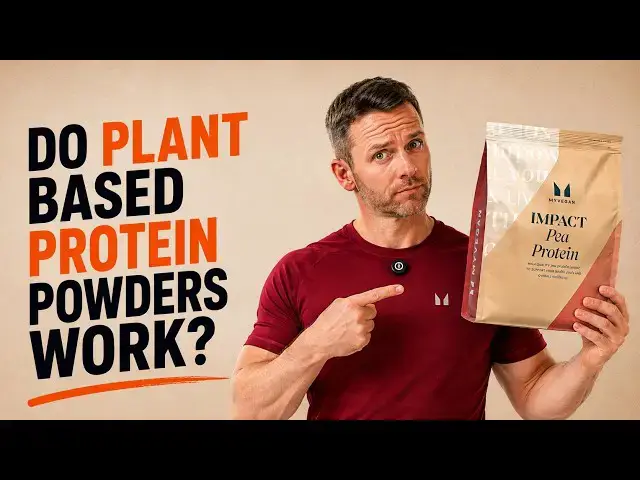
Expert nutritionist explains what plant protein powders are, how they compare to other protein supplements, and whether they’re an effective option for supporting your health and fitness goals.
In this video, we’re going to take an in-depth look at plant protein powders, including how they’re made, what nutrients they provide, and whether they can help support muscle growth and recovery.
Dr Richie Kirwan answers some important questions like, are plant protein powders as effective as whey protein? Do they contain all the essential amino acids your body needs? And what should you look for when choosing a high-quality plant-based protein supplement?
There’s a lot of confusion surrounding plant protein powders, and Richie is going to break down the science behind them so you can make more informed decisions about your nutrition and supplementation.
Show More Show Less View Video Transcript
0:00
What are plant-based protein powders? Do
0:02
they actually work for building muscle?
0:03
And are they as good as other types of
0:05
protein? Let's talk about that.
0:11
How's it going, guys? My name is Richie
0:12
Kirwan. I'm a registered nutritionist,
0:14
nutrition researcher, and university
0:16
lecturer in nutrition. Plant-based
0:18
protein powders have become really
0:20
popular over the last few years,
0:21
especially with people who follow a
0:22
vegetarian or vegan diet, or who just
0:25
want an alternative to animal-based
0:26
protein powders like whey, casein, or
0:28
egg. But, there's still a lot of
0:30
confusion about whether plant proteins
0:32
are actually as good for muscle growth,
0:34
and whether you can build the same
0:35
amount of muscle without using animal
0:37
protein.
0:38
So, first of all, what actually is a
0:41
plant-based protein powder? Most
0:42
plant-based protein powders are made
0:44
from foods like peas, rice, soy, hemp,
0:47
or blends of different plant sources.
0:49
That said, there's a lot of research
0:51
happening in the plant protein space,
0:53
and we're starting to see proteins from
0:54
corn, potatoes, microprotein, and even
0:57
rapeseed. The protein is extracted from
0:59
the whole food, filtered, and dried into
1:02
a powder, similar to what happens when
1:03
we extract whey protein from milk. This
1:05
means you end up with a concentrated
1:08
source of protein without most of the
1:10
carbohydrate, fat, or fiber that would
1:12
normally come with the whole food. This
1:14
is important because when we talk about
1:16
muscle growth, the amount of protein you
1:18
eat is only one part of the story. The
1:20
type of protein, how easily it's
1:22
digested, and how many essential amino
1:24
acids it contains also makes [music] a
1:26
big difference. And this is where plant
1:28
protein powders can be really beneficial
1:30
for people following a plant-based diet.
1:33
So, muscle growth depends on a process
1:35
called muscle protein synthesis. This is
1:37
the process your body uses to repair and
1:40
build muscle tissue, and it's constantly
1:42
happening in the background. The amount
1:44
of muscle you have depends on the
1:46
balance between muscle protein synthesis
1:48
and muscle protein breakdown.
1:49
When synthesis is greater than
1:51
breakdown, muscle grows.
1:53
And when breakdown is greater than
1:54
synthesis, you lose muscle. Resistance
1:57
training is the main stimulus that
1:59
increases muscle protein synthesis, but
2:01
protein intake is also essential because
2:03
it provides both a signal to start the
2:05
process and the amino acids needed to
2:08
build new muscle tissue. One of the
2:10
reasons some people think plant protein
2:12
is not as good as animal protein [music]
2:14
is because many plant proteins contain
2:16
lower amounts of certain essential amino
2:19
acids, especially leucine, which plays a
2:21
key role in stimulating muscle protein
2:23
synthesis. Animal proteins like whey,
2:25
milk, eggs, meat, and fish usually
2:28
contain all of the essential amino acids
2:30
in high amounts and they're generally
2:31
very easy to digest because they don't
2:33
contain the fiber of whole plant foods,
2:36
which isn't really an issue in plant
2:38
protein powders, but we'll get to that
2:39
later. Now, some plant proteins are
2:42
lower in one or more essential amino
2:44
acids and if you eat them from whole
2:45
foods like beans or grains, they can
2:47
also be digested a little more slowly,
2:49
which can reduce the rise in amino acids
2:51
in the blood after a meal.
2:53
This doesn't mean plant protein can't
2:55
build muscle. They absolutely can. It
2:58
just means that in some cases, you may
3:00
need to eat a slightly larger amount of
3:01
protein or use a higher quality plant
3:03
protein source to get the same effect.
3:06
And just in case you don't believe me,
3:07
there is a lot of research to prove
3:10
plant-based protein powders are
3:11
effective. When researchers look at
3:13
resistance training studies as a whole,
3:15
the most important factor for muscle
3:16
growth is total daily protein intake,
3:19
not whether the protein comes from
3:20
plants or animals. Large systematic
3:23
reviews of training studies, where they
3:24
look at the results of multiple studies
3:26
together, show that around 1.6 g of
3:29
protein per kilogram of body weight per
3:31
day is enough for most people to
3:33
maximize muscle growth. Although some
3:35
individuals may benefit from slightly
3:37
higher intakes. It also seems to help if
3:38
protein intake is spread across the day
3:40
rather than eaten in one meal.
3:42
Research suggests that consuming roughly
3:44
0.4 g of protein per kilogram of body
3:46
weight per meal across several meals per
3:48
day is enough to maximize muscle protein
3:51
synthesis, again, for most people. That
3:54
works out at something like a minimum of
3:56
30 g of protein per meal for a 70 kg
3:59
person. So, where does plant protein
4:01
powder fit into all of this? Because
4:02
plant protein powders are isolated from
4:04
the original food, they're usually
4:06
easier to digest than whole plant foods,
4:09
and they contain a higher concentration
4:11
of protein per serving. This means they
4:13
can produce a faster rise in amino acids
4:15
in the blood compared with eating the
4:16
same amount of protein from whole plant
4:18
foods, which can help stimulate muscle
4:20
protein synthesis more effectively. This
4:22
is one of the reasons protein powders,
4:23
whether they come from milk or plants,
4:25
can sometimes produce a stronger rise in
4:27
amino acids per gram of protein than
4:29
whole foods, assuming somebody has a
4:32
otherwise low total protein intake. For
4:34
example, in a recent study, researchers
4:36
from Luke Van Loon's research group in
4:38
the Netherlands compared two meals that
4:39
contained the same amount of protein and
4:42
the same number of calories, with one
4:44
based on animal foods and one based
4:45
entirely on plant foods. The plant-based
4:47
meal was made up of whole foods like
4:49
quinoa, chickpeas, soybeans, broad and
4:52
the meat-based meal was made up of lean
4:53
ground beef, string beans, potatoes, and
4:55
applesauce for some reason. Even though
4:57
the meals were matched for total
4:58
protein, the animal-based meal led to
5:01
higher amino acid levels in the blood
5:03
and a greater muscle protein synthesis
5:04
response after the meal. One of the
5:07
reasons for this is something we call
5:08
the food matrix. Whole plant foods often
5:11
contain fiber and other compounds that
5:13
slow digestion and reduce the amount of
5:16
amino acids that become available to the
5:17
muscle after a meal. It doesn't mean
5:19
they don't get to the muscle, it just
5:21
means they take a little bit longer to
5:22
get there. This doesn't mean that plant
5:24
proteins can't support muscle growth.
5:26
They absolutely can. But, it does help
5:28
explain why protein isolates, including
5:30
plant-based protein powders, can be very
5:33
useful. Because the protein has already
5:34
been separated from the rest of the
5:36
food, it's digested more easily,
5:38
absorbed more efficiently, and can
5:40
produce a stronger anabolic response.
5:42
It's also worth pointing out that the
5:43
study was done in older people with an
5:45
average age of 72.
5:47
We know that older people don't have as
5:49
strong an anabolic response to eating
5:51
protein as young people. So, it might be
5:53
the case that we wouldn't see such a
5:55
difference in the younger people.
5:57
Another thing people often ask is
5:58
whether plant protein powder is as good
6:00
as whey protein.
6:01
In many cases, when total protein intake
6:04
is high enough, the differences between
6:05
protein sources become much smaller when
6:08
talking about muscle protein synthesis.
6:10
Here's the thing.
6:11
We know that a 20 g dose of high-quality
6:13
protein like whey is enough to almost
6:15
maximally stimulate muscle protein
6:17
synthesis in young, healthy people.
6:19
Adding more protein won't increase it
6:21
much further because MPS has an upper
6:23
limit. We also know that the amount of
6:25
leucine in a protein has a big role to
6:26
play in how much protein you need to eat
6:29
to stimulate muscle protein synthesis to
6:31
the max. This is called the leucine
6:33
threshold. Lower leucine in some plant
6:35
proteins may explain why plant proteins
6:37
in smaller amounts aren't as good as
6:40
whey, for example. So, what if you eat
6:42
more plant protein in order to get more
6:45
leucine?
6:46
Well, that changes things a little.
6:48
Studies that use larger doses of vegan
6:50
powders like 33 g of soy or 24 g of rice
6:54
protein and similar amounts of whey,
6:56
respectively, show no difference in
6:59
muscle growth after a few months of
7:00
resistance exercise. In fact, a super
7:03
interesting study that was published
7:04
recently showed that 30 g of wheat
7:06
protein was able to stimulate muscle
7:08
protein synthesis to the same amount as
7:10
30 g of milk protein. Wheat is known for
7:14
being a very low-quality protein. But,
7:16
it turns out that if you eat enough of a
7:19
lower-quality protein, it can still help
7:21
to stimulate muscle protein synthesis as
7:23
much as a better-quality protein like
7:25
whey.
7:25
This is why so many studies with low
7:27
doses of protein, something like 20 g,
7:30
show whey to be better than vegan
7:32
proteins. This is why so many studies
7:34
with lower doses of protein, something
7:36
like 20 g, show whey to be better than
7:38
vegan proteins.
7:39
But, all you need to do is use more. A
7:41
lot of research has also been done
7:43
lately on something called microprotein,
7:45
which is derived from a type of fungus.
7:47
One study showed that high doses of
7:48
microprotein, around 32 g, stimulate
7:50
muscle protein synthesis as much or more
7:53
than the same amount of milk protein.
7:55
Another study showed that after 3 days
7:57
of a completely plant-based diet
7:59
supplemented with microprotein,
8:00
participants had the same level of
8:02
muscle protein synthesis as a group that
8:04
ate meat and dairy. The thing is, both
8:06
diets were high in protein with 1.8 g of
8:09
protein per kilogram of body weight per
8:11
day. Like I mentioned earlier, research
8:13
hints that 1.6 g of protein per kilogram
8:15
of body weight seems to offer the
8:16
maximum benefit for muscle growth
8:18
regardless of whether you get that
8:20
protein from animals or plants. What was
8:21
really impressive is that this
8:22
experiment was in older adults who often
8:25
need more protein to stimulate muscle
8:27
protein synthesis. And just to hit that
8:28
point again, if we're looking at real
8:31
outcomes like muscle mass and strength,
8:33
studies comparing high-quality plant
8:35
protein like soy and animal proteins
8:37
alongside resistance training over a few
8:39
months show that both lead to similar
8:42
increases in muscle mass and strength.
8:45
So, let's say that again. Soy and animal
8:47
protein have the same effect on
8:49
increasing muscle mass and strength if
8:51
done alongside a resistance exercise
8:54
program. Now, obviously, some of you may
8:57
be thinking, do I need a protein powder
8:58
at all? And that's a really valid
8:59
question. Obviously, I always recommend
9:02
a food-first approach to nutrition as in
9:05
try to get everything you need in your
9:06
diet from your food.
9:08
But you should also be open to
9:09
supplementing if you need it. For
9:11
example, vegans might want to consider a
9:12
protein powder because for some it can
9:14
be a little harder to get enough protein
9:16
on a vegan diet compared to an
9:18
omnivorous diet that includes meat,
9:19
eggs, fish, and dairy. Just to back this
9:21
up, the EPIC Oxford study showed that
9:23
vegans in the UK on average ate only 77
9:26
g of protein daily compared to 96 g in
9:29
omnivores. Now, obviously, this is the
9:31
general population and not gym goers who
9:34
make a serious effort to to eat plenty
9:35
of protein, but it does show us that
9:37
vegan protein powders might be a good
9:39
option for vegans who want to get more
9:41
protein into their diet conveniently.
9:44
So, at the end of the day, don't worry
9:46
too much about the type of [music]
9:48
protein you're getting.
9:49
If you're eating enough protein overall,
9:52
and you're training properly, you can
9:54
absolutely build muscle using
9:56
plant-based protein powders. So, I hope
9:58
that clears things up about plant
9:59
proteins. If you have any questions,
10:01
remember drop them in the comments, and
10:03
like and subscribe to the Myprotein
10:04
YouTube channel for more great
10:06
evidence-based nutrition information.
Sports