Up next in 10



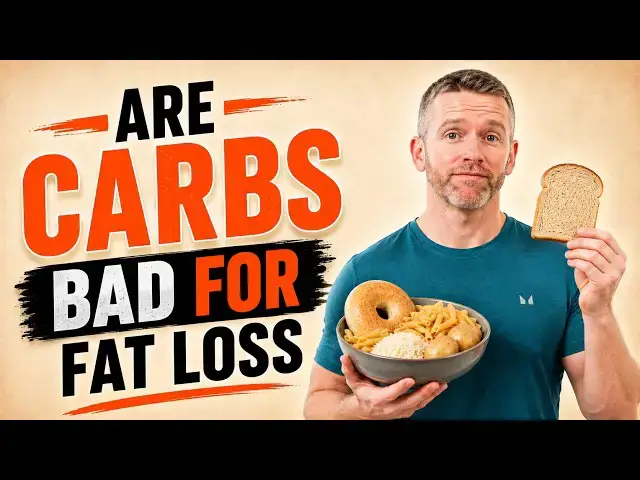
Are carbs bad for fat loss? Learn whether carbohydrates actually make you gain body fat, if you need to cut carbs to lose weight, and what really matters when creating a successful calorie deficit.
In this video, expert nutritionist Dr Richie Kirwan breaks down the science behind carbohydrates and weight loss, explaining why carbs aren't automatically fattening and whether low-carb diets have an advantage for fat loss.
Key Facts:
Carbohydrates do not automatically cause body fat gain.
Fat loss requires a consistent calorie deficit over time.
You can eat carbohydrates and still successfully lose body fat.
Carbohydrates provide an important source of energy, particularly for exercise and high-intensity training.
Low-carb diets can help some people lose weight, but they still rely on creating a calorie deficit.
Choosing high-fibre, nutrient-dense carbohydrate sources can help with fullness, nutrition, and training performance.
FAQ:
Q: Are carbs bad for weight loss?
A: No. Carbohydrates can absolutely be part of a successful fat-loss diet as long as you're maintaining an overall calorie deficit.
Q: Do carbs make you gain fat?
A: Eating carbohydrates does not automatically cause fat gain.
Consistently consuming more calories than your body uses is what drives increases in body fat over time.
Q: Do I need to cut carbs to lose weight?
A: No. Reducing carbohydrates is one way some people lower their calorie intake, but it isn't a requirement for fat loss.
Q: Is a low-carb diet better for fat loss?
A: Not necessarily. When calories and protein are appropriately controlled, low-carb diets don't have a unique fat-loss advantage simply because they contain fewer carbohydrates.
Q: What carbs should I eat when trying to lose fat?
A: Foods such as whole grains, potatoes, fruit, vegetables, beans, and other high-fibre carbohydrate sources can all fit into a balanced fat-loss diet.
#myprotein #wheyprotein #protein #nutrition
*********************************
Myprotein is Rated Excellent on Trustpilot
🔔 Subscribe to our channel: https://www.youtube.com/user/MyproteinUK?sub_confirmation=1
📲 Download the Myprotein app: https://myprotein.onelink.me/IYeO/o2erh9hb
The UK & Europe's Number 1 Online Sports Nutrition Brand, Myprotein.
Show More Show Less View Video Transcript
0:00
Everyone knows that eating too many
0:01
carbs makes you fat, right? It's why
0:03
low-carb diets have become so popular.
0:05
It's why bread is usually the first
0:06
thing to go when someone goes on a diet,
0:08
or why people still act like eating a
0:09
bowl of rice is basically a crime
0:11
against their waistline. But, are carbs
0:14
actually the problem? Or have we been
0:16
blaming the wrong thing this whole time?
0:22
>> [music]
0:22
>> How's it going, guys? My name is Richie
0:23
Kirwan. I'm a registered nutritionist,
0:25
researcher, and university lecturer in
0:26
nutrition and exercise physiology. In
0:28
this video, we're going to look at what
0:30
the evidence actually [music] says about
0:32
carbohydrates and fat loss. We'll go
0:34
through why carbs became public enemy
0:36
number one, what the science actually
0:38
shows, and whether you need to fear the
0:40
bread basket or not. To understand why
0:42
carbs got such a bad name, you need to
0:45
go back a few decades. From the 1970s
0:48
through the 1990s, [music] dietary fat
0:50
was the villain.
0:51
The idea was that eating fat made you
0:53
fat. Governments ran with this idea.
0:56
Food companies ran with it even faster,
0:57
and suddenly everything was low-fat.
1:00
Fat came out of food, and to make it
1:02
taste like something other than
1:04
cardboard, sugar and refined
1:05
carbohydrates went in. But, obesity
1:08
rates kept [music] climbing anyway.
1:10
And people started looking for a new
1:12
explanation. Enter the
1:14
carbohydrate-insulin model.
1:16
The idea is a little something like
1:17
this. You eat carbs, your blood sugar
1:20
rises, your body releases insulin, and
1:22
insulin promotes fat storage. So, if
1:25
carbs drive insulin, and insulin drives
1:28
fat gain, then carbs are the root cause
1:30
of weight gain. Cut the carbs, lower the
1:33
insulin, lose the fat. Seems [music]
1:35
like a super clean, simple, and logical
1:38
explanation, right? And to be fair, the
1:40
mechanism behind the idea is real.
1:42
>> [music]
1:43
>> Carbohydrates do raise insulin, and
1:45
insulin does play a role in fat storage.
1:47
[music]
1:48
The problem is the conclusion being
1:49
drawn from that mechanism, that carbs
1:51
therefore cause obesity, just doesn't
1:54
hold up when you test it in the real
1:57
world, and we have tested it a lot. But,
2:00
before we get into the evidence, let's
2:01
talk about some real-world [music]
2:03
population data. Because this is where
2:05
carbs cause obesity argument starts to
2:08
fall apart very quickly. According to a
2:11
2024 analysis published in The Lancet,
2:13
which pulls data from over 3,600
2:16
studies across 200 countries, around 16%
2:20
of adults worldwide were obese [music]
2:22
in 2022, a number which has more than
2:24
doubled since 1990. So, obesity is
2:26
clearly a growing public problem. But,
2:29
it's not growing evenly. Japan has one
2:31
of the lowest obesity rates of any
2:33
developed country in the world at less
2:36
than 5% of the population. Compare that
2:38
to the UK at around 28% or the United
2:40
States at 40%. That's a massive
2:43
difference. Now, here's the interesting
2:44
part.
2:46
Japan also has one of the highest
2:48
carbohydrate intakes of any [music]
2:49
developed nation. Because carbs make up
2:52
about 57 to 60% of total energy intake
2:54
based on Japan's [music] National
2:56
Nutrition Survey data. On the other
2:57
hand, adults in the US get around 46 to
3:00
47% of their energy from carbs, and the
3:02
[music] UK is pretty similar. So, the
3:03
developed country with one of the
3:05
highest carbohydrate intakes has a
3:07
fraction of the obesity rate of
3:09
countries eating a lower proportion of
3:11
carbs. Now, it's also worth pointing out
3:12
that the average Japanese person
3:14
consumes on average around 240 fewer
3:16
calories per day than the average
3:18
American. [music] And that, as we'll
3:20
see, is going to help explain what's
3:23
going on. To really understand why the
3:25
carbs cause obesity argument doesn't
3:27
hold up, I want to take you back to the
3:29
1940s. Because there's a story from that
3:31
era that I think is pretty cool, and it
3:33
directly goes against everything the
3:35
low-carb world would have you believe.
3:37
Walter Kempner was a physician working
3:39
at Duke University in North Carolina.
3:41
He'd been developing a treatment for
3:42
patients with severe high blood pressure
3:44
and kidney disease, conditions that in
3:45
those days were often a death sentence.
3:48
All of these patients also had
3:50
overweight or obesity, and today we'd
3:51
class them as having metabolic [music]
3:53
syndrome. The treatment he came up with
3:55
was, to put it mildly, unusual. He put
3:58
his patients on a diet that was almost
4:00
entirely white rice and a little fruit.
4:02
That's it.
4:04
White rice, fruit, fruit juice, and a
4:07
little sugar, funnily enough. No meat,
4:08
no dairy, very little salt, and almost
4:10
[music] no fat. Over 90% of the calories
4:13
on this diet came from carbohydrates. If
4:16
you handed this meal plan [music] to
4:17
most people in the fitness world today,
4:19
they'd have it straight back to you and
4:20
tell you it was going to send their
4:21
insulin sky-high and make them gain
4:23
[music] weight. But, something
4:24
unexpected happened. Not only did
4:26
patients' blood pressure improve
4:28
dramatically, they also lost significant
4:31
amounts of body weight, consistently
4:34
across hundreds of patients, published
4:36
across multiple studies throughout the
4:38
late 1940s [music]
4:40
and into the 1950s. Now, Kemper wasn't
4:43
trying to create a weight loss diet.
4:44
[music]
4:45
That was more of a side effect, but a
4:46
side effect that was hard to ignore.
4:48
[music] The diet, built almost entirely
4:51
on carbohydrates, the very macronutrient
4:52
that supposedly drives fat storage and
4:54
weight gain, was producing reliable,
4:57
meaningful weight loss in real patients.
4:59
And the reason,
4:59
>> [music]
5:00
>> when you think about it, is actually
5:01
pretty straightforward. By stripping the
5:03
diet down to such a narrow [music] range
5:05
of foods, patients ended up eating far
5:08
fewer calories overall. Not because of
5:11
anything biochemically special about
5:13
rice or because of insulin, which would
5:15
have spiked temporarily after every
5:17
meal, [music] and not because of any
5:19
metabolic tricks, either. Just fewer
5:21
calories in than out. So, the rice diet
5:24
is a pretty cool story, but it was done
5:27
a long time ago, and Kemper wasn't
5:29
running controlled experiments. So,
5:31
let's look at what happens when you test
5:33
this a little more scientifically. One
5:36
of the best controlled studies comparing
5:37
high-carb and low-carb diets was run by
5:39
Kevin Hall at the National Institutes of
5:41
Health in the US. His team took 19
5:44
people with obesity and put them in a
5:46
metabolic ward, meaning they lived in
5:48
the research facility and every single
5:50
calorie they ate and [music] burned was
5:53
monitored with incredible precision.
5:55
Both groups ate the same number of
5:57
calories and the same amount protein.
5:59
The only difference was the ratio of
6:02
carbohydrates to fat. So, what happened?
6:05
Well, the low-carb group saw their
6:07
insulin drop by over 20% exactly as the
6:10
carbohydrate-insulin model would
6:11
predict. Their fat burning also
6:14
increased significantly. But, here's
6:16
where it gets interesting.
6:18
When the researchers calculated how much
6:20
of that fat burning was actually coming
6:21
from body fat as opposed to the fat they
6:24
were eating from their diet, the
6:26
low-carb [music] group was burning
6:27
around 53 g of body fat per day. On the
6:31
other hand, the high-carb, low-fat group
6:33
was burning 89 g of body fat per day.
6:36
So, despite lower insulin and despite
6:39
higher fat burning overall, the low-carb
6:41
group was actually burning less body fat
6:44
than the high-carb group. explanation
6:46
for this [music] is the low-carb group
6:47
were eating more fat and had to burn
6:50
through that, too. [music] Then, there's
6:52
the DIETFITS trial run by Professor
6:53
Christopher Gardner at Stanford
6:55
University in the US, which is one of
6:56
the largest and most rigorous
6:58
free-living diet studies ever conducted.
7:00
Over 600 participants were randomly
7:02
assigned to either a healthy low-fat or
7:04
a healthy low-carb diet for a full year.
7:07
And the result? Both groups lost a very
7:09
similar amount of weight. The low-carb
7:11
group lost around 6 kilos and the
7:12
low-fat group lost around 5.3 kilos.
7:15
That's a difference of about 700 g over
7:17
a year, which isn't statistically
7:18
significant and which could easily be
7:21
explained by differences in water loss
7:23
since we know low-carb diets cause
7:25
greater water loss early [music] on. So,
7:27
again, no major differences between
7:28
low-carb and low-fat. And it's not just
7:31
these two studies. A major meta-analysis
7:34
published in The Lancet, which pulled
7:36
results from 53 studies involving over
7:39
68,000 [music]
7:41
participants, found that low-fat,
7:43
high-carb diets, and other dietary
7:45
approaches, including low-carb, produced
7:48
almost identical amounts of weight loss
7:51
over 12 months. So, the evidence, when
7:53
you look [music] at it in its totality,
7:55
is really, really consistent. It doesn't
7:57
matter much whether the calories come
7:59
from carbohydrates or fat. What actually
8:02
matters is how many calories are
8:04
consumed overall. Now, at this point,
8:06
some of you are probably thinking,
8:07
"Okay, fine. Maybe carbs in general
8:09
aren't the problem, but what about
8:11
sugar?" Because sugar is different,
8:13
right? Fructose in particular gets a lot
8:15
of attention because, unlike glucose,
8:17
it's metabolized [music] primarily in
8:18
the liver, and at high doses in animal
8:21
studies, it can cause all kinds of
8:23
metabolic [music] problems. So, the idea
8:25
is that sugar causes weight gain through
8:28
some sinister mechanism that operates
8:30
completely separately from calories. It
8:33
sounds logical, right? So, let's look at
8:35
what the evidence actually shows. A
8:37
systematic review and meta-analysis
8:38
published in the Annals of Internal
8:40
Medicine by Sievenpiper et al. looked
8:42
specifically at what happens to body
8:44
weight when you feed people high amounts
8:46
of fructose in controlled conditions.
8:48
They pooled the results of 41 controlled
8:50
feeding trials in total. In 31 of those
8:52
trials, fructose was swapped in for
8:54
other carbohydrates while keeping total
8:56
calories the same. So, what happened?
8:58
[music]
8:59
Essentially, no difference in body
9:01
weight whatsoever. Fructose, when it
9:03
wasn't adding extra calories to the
9:05
diet, didn't cause weight gain. Now, in
9:08
the other 10 trials, participants were
9:10
given fructose on top of their normal
9:12
diet, providing excess calories. [music]
9:15
And in those trials, people did gain
9:17
weight. Big surprise, right? Now, here's
9:19
something pretty interesting.
9:21
The dose of fructose being used in those
9:23
trials were between 104 and 250 g of
9:28
pure fructose per [music] day. Table
9:29
sugar is roughly 50% fructose. So, the
9:32
lower end of that range is equivalent to
9:34
eating the fructose from around 52 tsp
9:37
of sugar every single day on top of
9:40
everything else you normally eat. That's
9:42
just not a realistic diet. These are
9:45
studies specifically designed to
9:47
force-feed people a huge amount of
9:49
fructose and even then
9:51
>> [music]
9:51
>> the weight gain seen was around half a
9:53
kilogram, an amount entirely consistent
9:57
with just eating too many calories
10:00
regardless of where those calories come
10:02
from. The authors of the review were
10:04
pretty clear about the conclusion, too.
10:05
>> [music]
10:06
>> Fructose doesn't appear to cause weight
10:07
gain when it replaces other
10:09
carbohydrates in the diet. When it does
10:11
lead to weight gain, it's because of the
10:13
extra calories, not [music] anything
10:14
biochemically unique about fructose
10:17
itself. So,
10:18
if carbs aren't uniquely fattening and
10:21
if cutting carbs doesn't produce any
10:23
specific metabolic advantage, why do so
10:25
many people lose weight on low-carb
10:27
diets?
10:28
Because they clearly do. The answer is
10:30
actually pretty straightforward and it
10:32
comes back to the same thing we keep
10:34
returning to throughout this video.
10:36
Calories. When people go low-carb, they
10:39
typically cut out a huge range of foods
10:41
all at once. That's [music] a
10:42
significant chunk of what many people
10:45
eat on a daily basis [music] and unless
10:47
these foods are carefully replaced with
10:49
something else,
10:51
calories drop. Not because of anything
10:53
special about carbohydrates, but simply
10:55
because the overall variety of food
10:58
available to eat has been dramatically
11:00
restricted. This is sometimes called
11:02
spontaneous calorie reduction and it's
11:05
well documented in research. It's also,
11:07
incidentally, exactly the same reason
11:09
other restrictive diets work, whether
11:12
that's low-fat, vegan, or
11:14
>> [music]
11:14
>> any other approach that cuts out a
11:16
significant category of food. The
11:18
dietary pattern changes, the calorie
11:20
intake drops, and people lose weight.
11:22
There's also a protein effect worth
11:24
mentioning here. Low-carb diets tend to
11:26
[music] be higher in protein and protein
11:28
is by far the most satiating
11:30
macronutrient. It keeps you feeling
11:32
fuller for longer and reduces overall
11:35
appetite. So, people on low-carb diets
11:37
often end up eating
11:38
>> [music]
11:38
>> less without consciously trying to,
11:40
which again leads to a calorie deficit.
11:42
Now, don't get me wrong. Low-carb diets
11:44
are a perfectly valid tool for fat loss.
11:48
If cutting carbs helps you eat less and
11:50
stick to a diet, then it's a good
11:52
strategy for you. But, it works because
11:54
of the calorie deficit it creates, not
11:56
because of anything magical happening
11:59
with your insulin. So, we've established
12:01
that carbs don't cause fat gain, that
12:02
calories are what actually drive it, and
12:04
that any diet works primarily by
12:06
creating a calorie deficit. But, here's
12:08
something that doesn't get talked about
12:09
nearly enough in this debate. And I
12:11
think it's one of the most practically
12:13
useful things in this entire video. Some
12:16
carbohydrate-containing foods are
12:17
actually among the best tools you have
12:20
for controlling your appetite [music]
12:21
and making a calorie deficit easier to
12:24
sustain. And that comes mostly down to
12:26
fiber. Fiber is technically a
12:28
carbohydrate, but it can't be digested
12:30
by the enzymes in our gut.
12:31
>> [music]
12:32
>> And that indigestibility is exactly what
12:34
makes it so useful. A systematic review
12:35
of randomized controlled trials
12:37
published in Obesity Reviews found that
12:39
higher dietary fiber intake consistently
12:41
[music]
12:42
reduced appetite, energy intake, and
12:44
body weight. The effect was particularly
12:46
strong for viscous fibers, the kind that
12:48
absorb water and form a gel in your gut,
12:51
slowing digestion and keeping you fuller
12:53
for longer. [music] You can find viscous
12:55
fibers in foods like oats, barley, rye,
12:57
beans, and lentils.
12:59
All of which are, of course,
13:01
high-carbohydrate foods. Think about
13:03
what a bowl of porridge does for your
13:04
hunger compared to the same number
13:06
[music] of calories coming from a slice
13:07
of white bread. Both are mostly carbs,
13:09
but the fiber in the oats slows
13:11
digestion, creates volume in your
13:13
stomach, and blunts hunger in a way that
13:15
[music] refined carbs simply don't. Now,
13:18
that's not a reason to avoid sugar
13:20
entirely, but it is a really good reason
13:22
to think carefully about where the
13:24
majority of your carbs are coming from.
13:26
Whole grains, legumes, fruits and
13:28
vegetables are all carbohydrate-rich
13:30
foods that also happen to be high fiber,
13:32
relatively low in energy density, and
13:35
genuinely good at keeping hunger under
13:37
control. So, these aren't foods that
13:39
make fat loss harder. If anything,
13:41
they're foods that make it easier,
13:43
especially if you combine them with lean
13:45
protein [music] to really max out the
13:47
satiety effect. And one last thing about
13:50
carbs that's worth mentioning, [music]
13:51
they can really help with how you
13:53
perform in the gym. You don't need them
13:55
by any means to lift weights, but they
13:57
can make lifting weights feel a little
13:58
bit easier and a little more pleasant,
14:00
to be honest. Considering most people
14:02
who are trying to lose weight are
14:03
probably exercising pretty regularly,
14:05
too. Making the whole experience a
14:07
little more pleasant [music] by having
14:08
some carbs is probably a good idea. So,
14:11
after all that, I hope you've realized
14:13
that the question shouldn't be, are
14:15
carbs bad for fat loss? The more useful
14:17
question is, which carbs
14:19
>> [music]
14:19
>> and in what context can help with fat
14:21
loss? And the evidence suggests that
14:23
whole food, high fiber carbohydrate
14:25
sources can [music] be some of your best
14:27
allies when it comes to managing your
14:30
weight long-term.
14:31
>> [music]
14:31
>> If you have any questions about carbs
14:32
and fat loss, let me know in the
14:33
comments below. And if you found the
14:35
video useful, make sure to hit the like
14:36
button and subscribe to the Myprotein
14:38
YouTube channel for more great,
14:39
evidence-based nutrition information.
#Sports