Up next in 10

👉 Unlock Deep Insights with Data-Driven Badminton Analytics: https://app.getgoodatbadminton.com
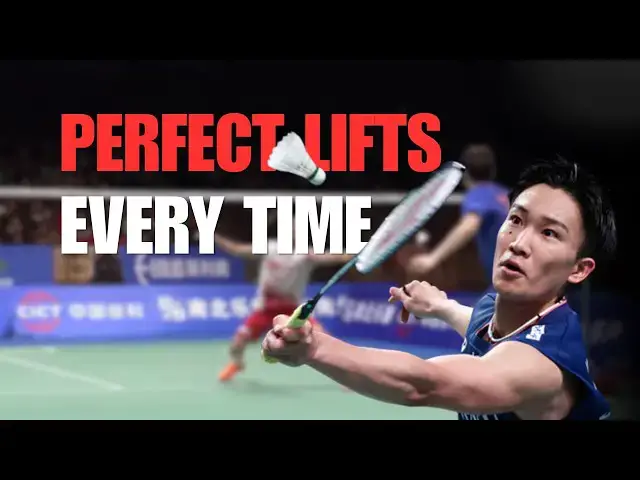
Kento Momota mastered one of the most important shots in badminton: the push/lift. In this video, we break down the 3 key ideas as to what makes a push effective, accuracy, shot speed, and deception. And why it’s a critical skill for all players. By analyzing Momota’s grip, footwork, timing, and follow-through, you’ll understand how he maintains control, consistency, and unpredictability in rallies.
Kenichi Tago’s Videos:
https://www.youtube.com/watch?v=LoZZT8abSGs
Viktor Axelsen’s Push:
https://www.youtube.com/watch?v=4C5_4Jn10V8
🤝 Our Sponsors & Partners
Get Exclusive NordVPN deal here ⬇️ https://nordvpn.com/getgoodatbadminton
It’s risk-free with Nord’s 30-day money-back guarantee! ✌️
📚 Must-Read Books For Athletes
Rising Strong by Brene Brown ➡️ https://amzn.to/4cBFeAR
Ego Is The Enemy by Ryan Holiday ➡️ https://amzn.to/3GbhjvK
Can’t Hurt Me by David Goggins ➡️ https://amzn.to/3Y5YXm3
Atomic Habits by James Clear ➡️ https://amzn.to/3Y6xssC
The Power of Now by Eckhart Tolle ➡️ https://amzn.to/4lHAfmm
As an Amazon Associate, I earn commission from qualifying purchases.
📱 Check Out Our Socials
Check out our blog: https://getgoodatbadminton.com/
Facebook: https://www.facebook.com/getgoodatbadminton
Twitter: https://twitter.com/ggatbadminton
Instagram: https://www.instagram.com/getgoodatbadminton
Pinterest: https://www.pinterest.ca/getgoodatbadminton
Chapters:
0:00 Intro
1:19 What Makes A Push Good?
3:52 Momota's Grip
5:00 Fundamental Technique
5:28 What Momota Does Before The Contact
11:14 What Momota Does After The Contact
13:33 GGAB App
14:13 Conclusion
14:51 Outro
Affiliate Disclosure:
Some of the links in this description may be affiliate links, which means we may earn a small commission at no additional cost to you if you choose to make a purchase through them. We only recommend products or services that we personally use and believe in. Thank you for your support!
Show More Show Less View Video Transcript
0:00
If you were given a wish,
0:02
and it could grant you any skill from
0:03
any player,
0:05
a normal answer would probably gravitate
0:07
towards something like Lee Zii Jia's
0:08
smash.
0:10
And of course, there's nothing wrong
0:11
with that. Who wouldn't want a smash?
0:14
But the pusher lift is probably one of
0:16
the most, if not the most important
0:18
skill for all badminton athletes, and
0:20
here's why.
0:22
The push is an incredibly versatile shot
0:25
that can be used in many ways.
0:27
It can act as a neutral shot to maintain
0:30
your position in the rally, a defensive
0:32
shot that gives you more time, or an
0:34
attacking shot to load pressure on your
0:36
opponents.
0:37
But it's also an extremely difficult
0:39
shot to master.
0:41
It's one of those shots where there's
0:42
little margin for error,
0:44
because it's a shot where you have to be
0:45
precise with both the amount of power
0:48
and racket angle of your swing, and can
0:50
often be played on difficult shots like
0:51
the spin net.
0:53
That's why in this video,
0:55
we will be taking a deep dive into the
0:57
push,
0:58
answering questions like, "What makes a
1:00
push good?" and taking a closer look at
1:03
how Kento Momota,
1:05
one of the players that had arguably the
1:07
best pushes in the world,
1:09
makes his pushes good through his grip,
1:12
follow-through, his footwork, and things
1:15
like his tracking of the shuttle.
1:19
And to know what Momota does for his
1:21
pushes,
1:22
it's important to note what actually
1:24
makes a push good in the first place.
1:26
A push can generally be described in
1:28
three qualities:
1:29
accuracy,
1:31
shot speed, and how deceptive it is.
1:34
The simplest way, and probably the most
1:37
telling way of knowing if your push is
1:38
good,
1:40
is to see where it's landing.
1:42
Obviously, if your push is half court
1:43
and short, it's not that great,
1:46
because your opponent can easily kill
1:48
it.
1:51
However, if you can consistently make it
1:53
land well between the back lines, then
1:55
it's already pretty good. Now, push it
1:57
more towards the corners.
1:59
And there,
2:00
you have an accurate push
2:02
that can move your opponent around.
2:05
But, this is just the first of three
2:06
things that make a push good.
2:08
The second aspect is the shot speed.
2:10
Having shot speed behind a push,
2:13
or any shot for that matter, is crucial
2:15
in restricting your opponent's game
2:18
and letting you play your own game.
2:20
If you don't know already,
2:22
shot speed is how fast the shuttle
2:24
initially flies off your strings.
2:27
Fast shot speed puts heavy pressure on
2:29
your opponents by making it infinitely
2:31
more difficult for them to react.
2:33
Many people will try to increase their
2:35
shot speed by making their swing bigger,
2:37
but these two are not related in the way
2:39
you might think.
2:41
You will probably find that the higher
2:42
level you go,
2:43
the faster the shots get,
2:45
and the smaller the swings become.
2:48
However, this does not mean you should
2:49
make your swing smaller by all means,
2:52
especially if you don't have the
2:53
fundamental technique for the push
2:54
master first.
2:56
The swing naturally becomes shorter when
2:57
the athlete learns to utilize their
2:59
wrist and fingers to speed up the shot
3:02
instead of relying on bigger movements
3:03
like the entire arm and shoulders,
3:06
which in turn will actually make your
3:08
swing more deceptive.
3:10
The shorter your contact is with the
3:11
shuttle, the more deceptive it becomes.
3:13
And what this enables the athlete to do
3:17
is to hold their contact with the
3:18
shuttle for longer
3:20
without showing any key movements
3:23
to shots that may be dead giveaways
3:25
as to what shot they're playing.
3:28
That means a good push comes down to
3:30
three key things: accuracy, speed,
3:33
and deception,
3:34
which most top players have already.
3:37
But, what separates player from player
3:39
is their consistency
3:40
to pull off these pushes.
3:42
And one of the players that could
3:43
produce all three qualities in his
3:45
pushes most consistently was Kento
3:47
Momota.
3:48
Today, we'll study some of the the
3:50
Momota does for his pushes,
3:52
starting with his grip.
3:54
Momota's grip for his pushes is the
3:55
standard forehand and backhand grip.
3:58
The reason we want to mention the grip
3:59
is because many of the top players have
4:01
slight deviations in their grip,
4:03
but still end up producing good push
4:04
quality, mentioned by Axelsen here.
4:07
>> Here, like this.
4:08
Some people they like to have the thumb
4:10
here. I like to have it on the, you
4:12
know, the more flatter part here.
4:13
>> It's difficult to give specificities on
4:15
what grip each player uses,
4:17
as it's very difficult to tell without
4:19
seeing it up close in person, but it's
4:21
important to note that the grip is not
4:22
always the same for every backhand or
4:24
forehand shot.
4:26
For example,
4:27
Momota will switch to the bevel grip to
4:29
play his backhand spin net,
4:31
but have a standard backhand grip for
4:33
his backhand push.
4:35
And so, the key takeaway about the grip
4:38
is not that you have to copy Momota's
4:39
grip exactly to replicate his push
4:41
quality, but more so that you need to
4:44
find a comfortable grip
4:46
that allows you to use your fingers and
4:48
wrist in a way to make the push
4:51
accurate,
4:52
fast,
4:53
and deceptive.
4:55
It just happens that the comfortable
4:56
grip for Momota is the standard forehand
4:58
and backhand grip. The same goes with
5:00
how the pros contact the shuttle. Many
5:02
of them may have slight deviations, but
5:04
their fundamental technique are mostly
5:05
the same.
5:07
For example,
5:08
Momota executes the contact of the
5:10
shuttle relatively the same to other top
5:12
pros.
5:13
The wrist and fingers enable forearm
5:15
pronation,
5:16
which is what gives the shuttle its shot
5:18
speed. And you will find that the
5:20
technique is the way it is
5:22
because of more than a century of
5:23
optimizing and trying to find the
5:25
technique that provides the best
5:26
results.
5:28
But it's Momota's actions before the
5:30
contact and after the contact
5:32
that often differ from other pros.
5:34
Before his contact with the shuttle,
5:37
Momota doesn't extend his elbow right
5:38
away,
5:39
and instead
5:41
keeps it in a relaxed position by his
5:43
side.
5:45
This might seem odd because many coaches
5:47
will tell their students to reach the
5:48
racket out and extend the elbow first to
5:52
be able to reach the shuttle earlier.
5:56
It's not wrong.
5:57
Pro players will extend their arm right
5:59
away with their elbow higher like Peter
6:01
Gade or even Shi Yuqi in some scenarios.
6:09
What this does is allow the athlete to
6:11
suddenly catch their opponent by
6:12
surprise
6:14
by breaking their natural rhythm to the
6:15
shuttle
6:16
which is especially useful when they
6:18
want to speed up the pace of the game.
6:23
However,
6:25
Momota almost never chooses to use this
6:27
approach because his style revolves
6:29
around capitalizing on his opponent's
6:31
mistakes rather than focusing on
6:33
creating opportunities for himself.
6:36
So, the key idea in his approach
6:39
is that it needs to both give him
6:40
control over his shots
6:42
while simultaneously allowing him to
6:44
save energy
6:45
and maintain his rhythm in the rally.
6:50
That's why he will almost always choose
6:51
to approach the shuttle in a natural and
6:53
very relaxed manner
6:55
because it gives him more control of the
6:56
shuttle
6:58
by allowing him to transfer his weight
7:00
through to the racket
7:02
in the most efficient way possible.
7:07
And when you look at Momota's approach
7:08
to the shuttle
7:10
what you will notice is that he's
7:11
raising his racket to contact the
7:13
shuttle after his foot has been planted
7:16
allowing him to have more control of his
7:18
weight transfer.
7:20
The lunge coming before his racket raise
7:22
gives him more control in slowing down
7:23
his forward momentum.
7:26
And from there he can manipulate
7:27
individual elements of his swing like
7:29
his fingers or wrist to change the shot
7:32
plane.
7:33
This increased control of weight
7:34
transfer is why Momota can consistently
7:37
play great quality shots across all
7:39
playing conditions.
7:40
And it also makes Momota's pushes hard
7:42
to read.
7:44
The increased capability to adjust each
7:45
limb's force generation and motion
7:47
individually makes it so that he can
7:49
produce a huge variety of shots.
7:52
He can take speed out of the weight
7:53
transfer in his core and elbow.
7:55
And then suddenly speed up his forearm
7:58
and fingers to find the needed balance
7:59
for speed, angle,
8:02
and placement.
8:04
With an outstretched arm,
8:06
there isn't as much room to tune your
8:07
force generation at each muscle group.
8:10
Which is why slight variations like
8:12
faster playing conditions or pressure
8:13
that makes you stiffer
8:15
will suddenly make the shuttle
8:17
impossible to control.
8:21
Take the deltoid muscle, for example.
8:23
When your arm is outstretched and high,
8:26
this muscle will already be flexed,
8:29
reducing your capability to move your
8:30
elbow.
8:42
Additionally,
8:43
because Momota almost always approaches
8:46
the shuttle in the same relaxed manner
8:48
and changes his shot at the last second
8:50
with his wrist and fingers,
8:53
his preparation almost reveals nothing
8:55
about the shot he's going to play.
8:58
But this may raise a question.
9:00
How is Momota able to prepare his swing
9:02
so late
9:03
and change his shot without putting
9:05
pressure on himself?
9:08
The answer actually has less to do with
9:09
what he's doing with his racket
9:11
and more to do with his movement.
9:14
The reason why Momota is able to raise
9:15
his racket so late is because of his
9:18
body position on court and his ability
9:19
to speed up and slow down his footwork.
9:23
Momota's body position on court is
9:24
already extremely low to the ground,
9:26
so he can afford to let the shuttle drop
9:28
a little more to get better contact
9:29
timing with the shuttle.
9:31
Other players who stand taller on court
9:33
cannot afford to let the shuttle drop so
9:35
low before they contact it
9:37
because then they sacrifice a lot of
9:38
power and control over the shuttle.
9:41
If your natural position on court is
9:42
very upright,
9:44
you're forced to bend or reach at the
9:45
last moment if you're late to the
9:47
shuttle.
9:48
That sudden movement makes it very
9:49
difficult to keep your vision stable.
9:52
This is actually something that Kenichi
9:54
Tago mentioned in his video before.
9:56
In this video, he mentioned how the
9:58
vision cannot move from up to down, but
10:00
can go from down to up. And the reason
10:03
for this is a matter of your body
10:04
position on court. But if you're already
10:07
low and balanced,
10:08
you don't need to make those large
10:09
adjustments.
10:11
You can track the shuttle with your eyes
10:13
instead of your body and maintain that
10:15
stable gaze right before contact.
10:18
So, the key idea here is that stable
10:20
body position
10:22
leads to stable vision.
10:24
The second reason why Momota is able to
10:26
raise his racket late
10:28
is also something that Tago talked
10:29
about.
10:31
Momota is extremely good at exploding
10:32
out of the center
10:34
and then controlling his speed when he
10:35
moved to the shuttle.
10:37
That ability to speed up and slow down
10:40
is exactly what allows him to reach the
10:42
shuttle early,
10:43
but also not lose control over his shot.
10:47
So, although Momota contacts the shuttle
10:48
the same as the rest of the pros, it's
10:50
everything leading up to the contact.
10:53
His relaxed approach,
10:55
body position,
10:56
his gaze that tracks the shuttle before
10:58
he hits, and ability to control his
11:00
movement that allows him to time the
11:02
shuttle better, stay balanced, and
11:05
remain deceptive.
11:06
This is what allowed Momota to stay
11:08
consistent and deceptive. However, this
11:10
only explains what happens leading up to
11:12
the contact.
11:14
To fully understand the push, we also
11:16
need to look at what happens after it.
11:19
The follow-through after contact is an
11:20
important part of control,
11:22
and you'll see it across a lot of
11:23
sports, badminton, basketball, even
11:26
golf.
11:27
It plays a big role in consistency,
11:29
accuracy, and how efficiently energy is
11:32
transferred into the shot.
11:34
And a lot of the time, the
11:35
follow-through can actually tell you how
11:37
the shuttle was struck.
11:39
But for the push specifically,
11:41
Momota's follow-through isn't really
11:43
about adding more power
11:44
and more about control.
11:46
Momota prioritizes shot quality and the
11:48
fluidity of his motions,
11:51
which makes his follow-through smooth
11:53
and gives the impression that he is
11:54
guiding the shuttle.
11:57
Which can be different from many
11:58
high-level players
11:59
who will often prioritize the suddenness
12:01
of their shots.
12:04
Of course, there are good and bad things
12:05
for both.
12:06
While prioritizing the suddenness of the
12:08
shot can make the shot harder to react
12:10
to, it requires an explosive swing and
12:12
contact with the shuttle,
12:15
which forces a sharp redirection in the
12:16
shuttle.
12:18
You can often see the result of this in
12:20
their follow-through.
12:21
When the shot is hit explosively,
12:24
the racket tends to turn over.
12:26
And because it often sacrifices the
12:28
shot's height and accuracy,
12:30
it is easily punishable by the opponent
12:32
if they're ready.
12:35
Momota's pushes, on the other hand,
12:38
are less sudden, but he has better
12:39
control over the height and accuracy.
12:42
And you can also see when Momota wants
12:43
more control
12:45
because his follow-through looks as if
12:46
it's guiding the shuttle.
12:50
On a side note,
12:52
Momota's control and accuracy in his
12:53
pushes played a huge role in making him
12:56
one of the few players who were able to
12:58
beat Viktor Axelsen
13:00
because he was able to place them
13:01
outside of a tall player's reach.
13:04
So, while Momota's pushes don't put as
13:06
much pressure on his opponents than the
13:08
extremely sudden pushes,
13:10
they restrict his opponent's options
13:13
while keeping him in rhythm and ready
13:15
for the next shot.
13:17
It's hard to say if one technique is
13:19
actually better than the other.
13:22
However,
13:23
what can be definitively said
13:25
is that the more you practice a
13:27
technique
13:28
given that it is fundamentally correct
13:30
the more consistent and effective it
13:32
becomes.
13:33
And if you want to see if you're
13:34
actually improving
13:36
you should check out
13:38
the GGAB app.
13:40
This is an app we're building to help
13:41
players integrate deep badminton
13:43
analytics into their game so that they
13:44
know where exactly their weaknesses and
13:46
strengths are.
13:48
We are currently in the beta phase and
13:50
we have just released the long-awaited
13:52
automatic shot tracking feature plus a
13:54
completely revamped manual editor.
13:57
And what you can expect to come out next
13:58
includes the ability to compare your own
14:01
gameplay with pros
14:03
and improved AI-powered analytics.
14:10
Now, the content in this video were
14:12
ultimately just observations of Momota's
14:14
technique
14:15
and not a blueprint that needs to be
14:17
copied exactly.
14:18
Because beyond the basic swing
14:21
the best players are trying to develop
14:22
their own feeling for the shots.
14:25
So, instead of trying to replicate
14:26
someone's swing 100%
14:28
focus on mastering the basics.
14:31
Make the push accurate, fast and
14:34
deceptive.
14:35
Then develop your own timing
14:37
rhythm and control within the shot to
14:40
improve consistency.
14:43
If you like this video don't forget to
14:45
hit the like and subscribe buttons if
14:46
you want to see more of this type of
14:48
content. And as always, thanks for
14:50
watching.
Sports