Up next in 10



The history of pasta can be told, in some ways, through the many pasta shapes that have been created over the years.
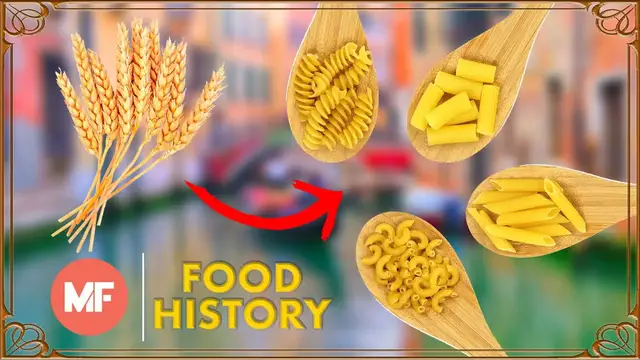
Macaroni. Spaghetti. Lasagne. How did we get all of these different (and delicious) shapes of pasta? On today's episode of Food History, we'll be exploring the stories of various pasta shapes. Which pasta is named after an Italian pop singer, and which is named for an unfortunate choking accident?
Food History is a series from Mental Floss where we dive deep into the culinary stories that lead to the food on our plates. If you have an idea for a dish, cooking technique, or cuisine that you'd like us to explore in a future episode, tell us in the comments.
And for the origins of many other foods, check out our episode of the List Show https://www.youtube.com/watch?v=4mTpr...
Don't miss a video! Subscribe NOW: https://www.youtube.com/@MentalFloss?sub_confirmation=1
About Mental Floss:
Mental Floss is where curious people come for trivia-tastic information. Mental Floss produces lists of fun facts, debunks common misconceptions, and tells untold stories from history, science, culture and more.
Website: http://www.mentalfloss.com
Twitter: http://www.twitter.com/mental_floss
Facebook: https://facebook.com/mentalflossmagazine
Copyright Notice: This video and YouTube channel contain dialog, music, and images that are property of Mental Floss. You are authorized to share the video link and channel, and embed this video in your website or others as long as a link back to this YouTube Channel is provided.
2025 Mental Floss
The Delicious History of 14 Pasta Shapes | Mental Floss
https://www.youtube.com/@MentalFloss
Show More Show Less View Video Transcript
0:00
Strancatura is a type of pasta from Calabria in southern Italy
0:03
It's a bit like linguine with a few notable differences. It's slightly darker, has a rougher texture, and for much of its history, it was illegal
0:11
So how did it go from contraband commestable to irregular in some of the world's finest restaurants
0:17
Hi, I'm Justin Dodd. Welcome to Food History. Strancatura is one of many pasta varieties with a fascinating backstory
0:24
But before we dive into that, let's talk about the origins of pasta itself
0:30
Most people know the story of Italian explorer Marco Polo bringing noodles back from China
0:39
It's a fun story, but it's also pretty inaccurate. Pasta was already popular in Italy by the time Marco Polo made his famous voyage to China at the end of the 13th century
0:48
And while the Chinese may have been enjoying noodles for thousands of years before pasta first landed in Italy
0:53
that doesn't necessarily mean the dish took a direct route from one country to the other
0:58
Some historians credit pasta's arrival in Italy to the Arabs. When Arab groups brought pasta to Italy, it's likely they also shared their technique for drying it
1:06
which they developed as a preservation method on long journeys. This early Arabian pasta found its way to Greece as well
1:12
The ancient Greek word for ribbon is itrion, and some experts think this is related to the Arabic word for noodle, itria
1:18
Lasagna, one of the earliest known pasta shapes, traces its origins to ancient Rome by way of ancient Greece
1:24
Today, lasagna is the wide, flat noodle used to make lasagna, the cheesy, tomato-y dish that's
1:31
popular with many foodies and 100% of cats who hate Mondays. In a pre-Garfield world, lasagna
1:37
called laganon in ancient Greece and laganum in Rome, looked pretty different. As I covered in
1:42
our episode on ketchup and mustard, the tomato didn't come to Europe until the 16th century
1:47
and some interesting ingredients were used in proto-lasagna before its arrival. One early recipe from the late 4th or early 5th century cookbook Apicius called for a sauce of
1:55
cooked sow's belly, raisin wine, and the breasts of fig peckers to be layered between thin pancakes
2:01
A lasagna recipe from the 14th century Italian cookbook Liber de Coquina looks a little more
2:06
familiar with instructions saying to layer grated cheese and spices in with pasta. No mention of
2:12
fig pecker breasts. How odd. Whatever the provenance, Italians embrace pasta and not just because it
2:18
taste good. The region's climate makes it the perfect environment for growing durum wheat
2:22
the primary ingredient in pasta along with eggs or water. Dough made with durum wheat flour
2:28
or semolina, has a high gluten content that allows it to be stretched into different shapes
2:33
And when semolina paste is dried, it has a long shelf life. Durum wheat also sets Italian pasta apart from Asian noodles. Noodles from Asia are traditionally
2:41
made with rice flour, and even wheat noodles like those found in some Chinese dishes
2:44
use a different variety of wheat than durum. So if pasta is from Europe and noodles are from Asia
2:52
what does that make vermicelli? Well, depending on the recipe being used, you could fairly put it
2:56
into either camp, but it first emerged as a pasta in Italy roughly six centuries ago
3:01
One of the first mentions of vermicelli comes from The Art of Cooking Sicilian Macaroni and
3:05
Vermicelli, a recipe book compiled by 15th century culinary giant Martino da Coma. Martino cooked for
3:11
the Duke of Milan and Cardinal Ludovico Trevisan, who was a close advisor to the Pope Trevisan opulent banquets helped raise Martino profile He regarded as one of the first celebrity chefs in Western culture In addition to pioneering the modern cookbook he gave us incredible recipe titles like How to Determine Whether a Cow
3:30
Udder is Good and How to Dress a Peacock with All Its Feathers so that when cooked
3:35
it appears to be alive and spews fire from its beak. I wish I had made those up, but all the
3:40
credit goes to Martino. Incidentally, you want to look for a reddish color in your not-too-fatty
3:45
udder, and the trick to posthumous peacock fire is raw cotton doused in alcohol. Vermicelli is a
3:51
long, thin pasta, and its name literally translates to Little Worms. Instead of rethinking this poor
3:56
branding choice, Westerners decided to apply the name to any Asian noodle that looked similar
4:02
The thin noodles are used in dishes like pho and bun bohue, but don't expect to see the word
4:06
vermicelli on menus in Asia. It isn't used in these dishes' countries of origin. A variety of
4:11
regional names for long skinny noodles are used instead. The other pasta shape mentioned in the
4:15
title of Martino da Coma's cookbook is macaroni. The name macaroni has a somewhat disputed etymology
4:22
but here is one interesting explanation that makes a good bit of sense. In Euripides Heraclite
4:27
which tells the story of Heracles' children, you know Heracles, right? Big, strong guy
4:31
Greek equivalent of the Roman Hercules? Well, one of Heracles' daughters is Macaria. Demophon
4:37
the king of Athens, announces that an oracle has told him the only way to save the city
4:41
is to sacrifice a maiden from a noble father. Pretty convenient that the oracle didn't tell
4:46
Demophon that the city needed to sacrifice its king, but that's neither here nor there
4:51
Macaria offers herself up as the noble-born maiden, thus winning herself a glorious death
4:57
Because Greek mythology is nothing if not messy, there's an account of another makaria in the Souda
5:02
an encyclopedia of sorts of the ancient world. This makaria is said to be Hades' daughter
5:07
and she is, interestingly, also connected to a blessed death. So how does all of this tie into pasta
5:14
Well, Greeks used the word makaria to describe food made from barley, perhaps because barley dishes were a common part of funerals in ancient Greece
5:21
Even today, the meal that's served after a Greek Orthodox funeral is called a makaria
5:25
If this explanation is to be believed, macaroni as we know it today evolved from macaria
5:31
a dish made of barley flour. When the Greeks established the colony of Neapolis, present day Naples, they encountered
5:37
a barley-based dish made by the locals and called it macaroni. Or uh, macaria
5:43
Sometime between then and Crafts Blue Box, the grain used to make the dish became durum
5:48
wheat and the name became macaroni. For some Italians and many Italian Americans, macaroni or its regional variant eventually
5:55
just became a catch-all term for any type of pasta. However the name came about, macaroni eventually and happily met its famous culinary match
6:03
In Forma of Curie, a 14th century cookbook written by King Richard II's chefs, a recipe
6:08
for macarons calls for grated cheese and melted butter layered between the pasta
6:13
Another version of macaroni and cheese can be found in the classic Roman dish cacio e pepe
6:18
Its name translates to cheese and pepper, and that's a fairly comprehensive list of all
6:22
of its ingredients, alongside some starchy pasta cooking water and the pasta itself, which
6:27
is traditionally tonarelli. I am now quite hungry, so it might be a good time to ask, what is your favorite pasta dish
6:34
Mine carbonara just anything carbonara or even carbonara adjacent Let us know yours in the comments so we can all get inspired to eat too many carbs for dinner tonight And for breakfast tomorrow probably
6:45
Back to Tonarelli. It looks a bit like spaghetti, but it generally has squared off rather than rounded edges
6:51
De Queccio, an international pasta producer originally from the Abruzzo region of Italy, east of Rome
6:56
calls Tonarelli the Lazio version of macaroni a la chitarra. A chitarra is a device used to make pasta
7:02
It translates to guitar, and if you look at one, you'll see why. Its many wires make it look just about ready for the most ambitious Van Halen cover band ever
7:10
but they're actually used to push thin sheets of raw pasta dough through, cutting the flat sections into thin strips in the process
7:17
What about our misbegotten macaroni from earlier, Strancatura? Well, it was originally made by sweeping up scraps from pasta factory floors and turning them into dough
7:27
The resulting product had a sour taste and a porous surface that was actually perfect for clinging to pasta sauce
7:33
It was also essentially impossible to regulate. Because its composition was determined by whatever scraps were collected
7:38
from the factory floor on a given day, it could contain whole wheat flour, rye, semolina
7:44
authorities worried about a lack of consistency and questionable hygiene. This meant that for years, the only way to get Strankatura
7:51
was to buy it off the black market. By the way, if you haven't seen our episode about the history of ramen
7:56
check it out to learn the Yakuza crime syndicate's role and making illegal bowls of noodle soup available
8:02
Sorry for the self-promotion, but how many chances am I going to get to throw one instance
8:06
of black market wheat noodles to another? Anyway, today, Strancatura is made in much cleaner conditions
8:13
Manufacturers use the part of the wheat grain with the most fiber to recreate the dark color
8:17
while a bronze mold called a dye gives it that uneven surface
8:21
Once the dirt was removed from the equation, both Italy's government and its Michelin-starred
8:25
chefs could get on board. The origins of many older pasta shapes are hard to trace
8:30
Both Bologna and Modena lay claim to tortellini, but no one really knows where the stuffed ring-shaped
8:35
pasta comes from. According to one legend, the recipe was created by an innkeeper from Castelfranco Emilia
8:41
an Italian town that sits between Bologna and Modena. When the Roman goddess Venus checked into his inn one day—you know, as Roman goddesses
8:48
are wont to do—the innkeeper spied on her through the keyhole in her door and caught
8:52
a glimpse of her navel. The sight inspired him to rush to the kitchen and invent the belly button-shaped dumpling
8:58
now known as tornellini. Here's hoping that the true origin story is not nearly as creepy
9:04
Spaghetti is arguably the most famous pasta to come out of Italy, and its early history
9:08
is also not that clear. We know the name means little strings in that spaghetti is the plural form of the singular
9:13
spaghetto, which by the way, yeah, you heard that right, one spaghetti strand is called
9:17
a spaghetto. The implications for what this means when referring to a single spaghetti-o truly boggle
9:23
the mind. Spaghetti was being made in Sicily by at least the 1100s, but it wouldn't achieve ubiquity
9:28
until it arrived in the United States centuries later. In the late 19th and early 20th centuries, spaghetti was one of few Italian ingredients
9:36
available stateside. The millions of Italians immigrating to America at this time also had access to meat and canned
9:42
tomatoes, which is how spaghetti and meatballs became a staple of Italian-American households
9:47
and restaurants. Pedantic gourmands will tell you that actual Italians would never eat the two dishes together
9:53
and they're probably right, but the story of pasta and meatballs isn quite that simple In Abruzzo for instance a traditional dish pairs pasta with palatine which are a type of small meatball basically According to David
10:05
Gentilcore, as early as 1632, a comic theater character says that he dreams of a big dish of
10:11
macaroni with meatballs on top. Whatever opinions Italians might have towards the specific spaghetti
10:16
and meatballs combination, I'm more inclined to see it as the peanut butter and jelly of pasta
10:21
Two great tastes that go great together. I cannot, however, endorse peanut butter and jelly pasta... ...yet
10:29
You might be surprised to learn how relatively new a lot of pasta shapes are
10:33
Penne was invented in 1865 when Italian pasta maker Giovanni Battista Capuro
10:37
made a machine that cut thin tubes of pasta dough at an angle. He patented his penne machine on March 11th of that year
10:44
which makes penne one of the few pastas with a verifiable birthday. Cavatappi didn't arrive on the scene until the 1960s
10:50
That's when the Italian pasta brand Barilla introduced a new tubular corkscrew-shaped pasta called Celentani
10:57
The name is referenced to Adriano Celentano, an Italian pop singer whose energetic stage presence earned him the nickname Molleggiato, or springs
11:05
Barilla writes on its website, As the shape resembles a coiled spring, it all made sense
11:10
The name Cavatappi was actually coined later as a generic term for the pasta shape, as Celentani was trademarked by Barilla
11:16
Let's do some rapid-fire pasta etymology or Pasta-mology if you will. Nope, I thought about it. I hate that I said that just forget it
11:25
Gemelli means twins and even though just one strand of pasta is used to create it
11:28
it does have a bit of a double helix thing going on. It's kind of like when I prop up my own clothes on the bed so that I can remember what it feels like to hug someone
11:37
You know what forget that I said that too. I'm not doing well today. Mafaldine is said to have been named after the beautiful hair of an Italian princess, Mafalda of Savoy
11:46
Though the shape likely predated the princess, it did make a good story for the early 20th
11:50
century renaming, but saying it looked like hair? Come on, that's a little ridiculous
11:56
Orachiete means little ears, and I don't have a follow-up about that, but it is very cute
12:03
Strozzopretti means priest chokers or priest wranglers, and is supposedly named after an
12:07
unfortunate priest who ate them too quickly. Less cute. Not every pasta shape has had a lasting cultural impact
12:14
In 1983, Boiello, a pasta manufacturer owned by Barilla, commissioned legendary Italian
12:19
car designer Giorgetto Giorgiaro to invent a new pasta for them. His creation, dubbed Murile, was designed to be both delicious and aesthetically appealing
12:28
Each piece had two tubes instead of one, with grooves on the inside to get more sauce in
12:32
each bite. While innovative, the pasta also cooked unevenly, and it went out of production shortly after
12:38
it debuted. The French pasta producer Panzani tried a similar experiment in 1987 when it hired French
12:43
designer Philippe Starck to create his own pasta shape. His mandala pasta was basically
12:48
reimagined rigatoni. It had a panel in the middle to keep it from collapsing and extra
12:53
thick walls to make it harder to overcook. Unfortunately, mandala went the way of merile
12:58
And you know what they say when your mandala goes the way of merile. Well, it's not good
13:05
Don't forget to post those favorite pasta dishes in the comments and tune into Mental
13:09
floss every Wednesday at 3 p.m. Eastern for new episodes. Pasta, and I say this with an
13:14
appropriate level of shame, la vista, baby
#education