Up next in 10



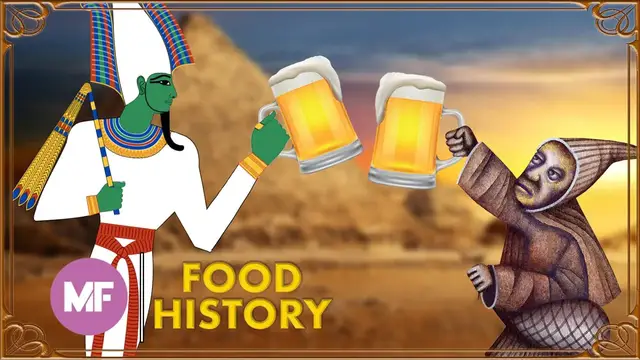
The history of beer dates back to the ancient Sumerians and features the Egyptian god Osiris, Catholic monks, and maybe even a witch or two. Thousands of years of practice led to the frosty mug on your table today.
Food History is a series from Mental Floss where we dive deep into the culinary stories that lead to the food on our plates. If you have an idea for a dish, cooking technique, or cuisine that you'd like us to explore in a future episode, tell us in the comments.
Subscribe to Mental Floss so you never miss an episode:
https://www.youtube.com/channel/UCpZ5qUqpW4hW4zdfuBxMSJA?sub_confirmation=1
And for the origins of many other foods, check out our episode of the List Show https://www.youtube.com/watch?v=4mTpr...
Don't miss a video! Subscribe NOW: https://www.youtube.com/@MentalFloss?sub_confirmation=1
About Mental Floss:
Mental Floss is where curious people come for trivia-tastic information. Mental Floss produces lists of fun facts, debunks common misconceptions, and tells untold stories from history, science, culture and more.
Follow Mental Floss:
Website: https://www.mentalfloss.com/
Mental Floss Facebook: https://www.facebook.com/mentalflossmagazine
Mental Floss Instagram: https://www.instagram.com/mental_floss/
Mental Floss TikTok: https://www.tiktok.com/@mental_floss
Mental Floss X: https://twitter.com/mental_floss
Mental Floss Discord: https://discord.io/mentalfloss
Copyright Notice: This video and YouTube channel contain dialog, music, and images that are property of Mental Floss. You are authorized to share the video link and channel, and embed this video in your website or others as long as a link back to this YouTube Channel is provided.
2025 Mental Floss
Food History: Beer | Mental Floss
https://www.youtube.com/@MentalFloss
Show More Show Less View Video Transcript
0:00
In 1814, Mewke's Horseshoe Brewery was the victim of some very bad luck, or maybe just
0:05
poor engineering. At the time, massive storage vats were in vogue in London's breweries
0:10
and when one of these large vats burst at the Horseshoe Brewery, it led to over 100,000 gallons
0:16
of beer flooding the surrounding area in a veritable brew-nami. The surge led to the collapse
0:22
of two nearby buildings and the loss of eight lives. Over the years, rumors even popped up that
0:27
unconscientious ale lovers had flocked to the scene of the accident to consume the runaway
0:31
beverage. Yikes. Now, contemporary accounts suggest there's not much substance to those
0:36
rumors, but it's easy enough to see why people would believe them. People really like beer
0:42
Behind water and tea, it's thought to be the third most widely consumed drink on Earth
0:47
It helps shape civilization as we know it, and I'm not just talking about those commercials where
0:51
the guys say, what's up? No, I didn't want to say it that way. It's embarrassing. I have to
0:57
What's that? Perhaps it shouldn't be surprising that the story of the world's most widely consumed
1:05
intoxicating beverage is shrouded in legend and half-truths. Was beer brewed to make water potable
1:12
When did hops enter the picture? And what do the Budweiser frogs have in common with Captain Jack Sparrow
1:18
The short answers respectively are no, the ninth century at the latest, and Gore Verbinski
1:23
but the long version is more fun. Let's get started. Hi, I'm Justin Dobb
1:34
Welcome to Food History. As we talked about in our last episode, ancient Sumerians were cultivating grains thousands
1:40
of years ago. But we didn't actually get into what those possibly first sedentary people were doing
1:45
with the grains they grew. And there's actually some debate on the matter. According to one theory, the grains were used to make beer before bread ever entered the picture
1:54
The discovery of ancient tools potentially designed for beer brewing supports this
1:58
That would mean beer was part of the origin of agriculture, which is arguably what allowed
2:02
humans to build civilizations, which led to the development of new technologies which
2:07
made it possible to brew even more beer. Man, that is some Inception-level history stuff
2:14
In 2018, archaeologists from Stanford announced they had evidence that people in what is now
2:18
Israel were brewing something like beer around 12,000 years ago, which they noted predates
2:24
the appearance of domesticated cereals by several millennia in the Near East
2:28
The archaeologists speculated that it was likely a thin gruel, possibly consumed
2:32
for religious purposes. Beer, by the way, is any fermented alcoholic beverage made with cereal
2:38
grains such as wheat or barley. There was a time when beer and ale were considered two different
2:43
beverages, with beer defined by the presence of hops, but we're going to proceed with more
2:47
modern usage, where the two words are basically interchangeable. We'll get to hops pretty soon
2:52
though. By which I mean in about 11,000 years? Early beer was likely made by crushing up grains
2:58
heating them gradually in water, then possibly baking them, and then steeping them again
3:03
This process encourages fermentation. Grains contain starches, and heating up grains help
3:08
break these starches down into their simple sugar components. Fermentation happens when yeast microbes consume these sugars and convert them into alcohol flavor compounds and carbon dioxide It sometimes said that Louis Pasteur discovered yeast in the mid but that a little misleading Sure single organisms like
3:26
yeast are invisible to the naked eye, but when millions or billions congregate in the beer-making
3:31
process, they can be seen and manipulated. In Richard Unger's Beer in the Middle Ages
3:36
and the Renaissance, he points to several indications that brewers began to intuit the
3:40
vital role of yeast hundreds of years before Pasteur's time. Rather than relying on wild
3:45
yeast in the air, a 15th century brewer in Munich received permission to use a specific
3:50
source of yeast from the bottom of his brew. In 16th century Norwich, England, brewers recognized the value of skimming off excess
3:56
yeast for use in bread making and further brewing. They actually donated some of that yeast to charities
4:02
Even without Pasteur's experiments defining the biological processes that result in living
4:06
yeast turning glucose into ethanol—what he dubbed alcoholic fermentation—people evidently knew that fermentation made beer bubbly, flavorful, alcoholic, and generally
4:17
much more fun to drink than plain barley water. Beer was among the Sumerians' most influential contributions to the world, right behind written
4:26
language and informal number system. The Sumerians knew they had come up with something big
4:31
They even had a goddess of beer and brewing named Ninkasi. In the year 1800 BCE, a hymn was written for Ninkasi and it doubled as a beer recipe
4:40
As it was written in song, the recipe was easy for the average beer drinker to memorize
4:44
if they didn't know how to read. It's also the oldest beer recipe ever discovered
4:48
Here's an excerpt. Ninkasi, you are the one who handles the dough with a big shovel
4:53
You are the one who waters the malt set on the ground. You are the one who soaks the malt in a jar
4:59
The waves rise, the waves fall. You are the one who spreads the cooked mash on large reed mats
5:05
Coolness overcomes. If the Sumerians penned a similarly poetic cure for hangovers, it has not been discovered yet
5:12
The ancient Egyptians were also fanatical about their beer. They believed that beer-brewing knowledge was a gift from the god Osiris, and they incorporated
5:20
the drink into their religious ceremonies. It infiltrated other parts of Egyptian culture as well
5:25
Beer was so common that the laborers who built the Pyramids of Giza were given daily rations
5:29
of 1 and 3rd gallons, or about 10 pints of the stuff
5:33
It was also served at celebrations, where over-imbibing was not only accepted but encouraged
5:39
As far as etiquette was concerned, leaving a party when you could still walk straight was the Egyptian equivalent of not finishing your meal
5:45
Man, these guys know how to party. But one compound that's found in virtually all beer today took a while to enter the picture
5:52
That would be hops, the ingredient that gives beer its bitter, floral taste
5:56
Though it's more noticeable in IPAs, the vast majority of beers depend on hops to balance
6:01
out their sweetness. And hops, by the way, isn't the name of the plant, it's the name of the flower, or cone
6:07
that comes from the plant. The plant itself is called Humulus Lupulus, which means climbing wolf in Latin
6:13
During the Middle Ages, Catholic monks supported themselves by selling homemade goods like
6:17
cheese, mustard, and in some cases, beer. These monks were likely the first people to make beer with hops
6:24
In the mid-800s, a German abbot from the monastery of Corve in Germany referred to the use of
6:29
hops in brewing. Shoutout to YouTube commenter Timo Kramer for mentioning this abbot Adelaard of Corby
6:35
in the comments in our last episode sending our fact checker down a hoppy rabbit hole trying to pinpoint whether the reference was made from Corv in present Germany or Corvie in present France
6:47
Either way, as Timo pointed out, the abbot was cousins with Charlemagne
6:52
Our next episode is all about candy corn. If you want to be featured in it, drop a fact below about the, let's just say, polarizing
6:59
treat in the comments. Anyway, hops. A few hundred years after that first written reference, German abbess and eventual Catholic
7:06
saint, Hildegard of Bingen wrote in her book Physica Sacra that hops make the soul of a
7:12
man sad and weigh down his inner organs. Okay, but you say that like it's a bad thing, Hildegard of Bingen
7:18
According to beer scholar William Bostwick, her description was actually so scathing that
7:23
it helped launch a beer war between Catholics and Protestants. Partly inspired by Hildegard, Catholics ditched hops and fully embraced groot, which was the
7:32
mixture of herbs and aromatics used to flavor most early beers. This made hoppy beer anti-Catholic, so naturally, Protestants claimed it as their own
7:41
Martin Luther himself was even a proponent of the beverage. During the Reformation in the 16th century, the rise of Protestantism helped boost hops' profile in Europe
7:50
Hops had another advantage in the beer wars. The ingredient contains beta acids that delay spoilage and act as a natural preservative
7:57
Monks weren't aware of this property when they first added hops to beer, and when it did become clear centuries later, that was the final nail in Groot's coffin
8:05
Beer was a popular drink of the lower classes from ancient times through the Middle Ages
8:10
but there's some confusion as to why. You may have heard that peasants drank beer every day because it was more sanitary than
8:17
the water they had access to, and it makes a certain amount of sense
8:21
Brewing generally involves boiling the unfermenting beer, or wort. This would, theoretically, kill off pathogens
8:28
Once fermentation takes place, the alcohol itself would presumably provide further disinfection
8:32
But while it's hard to say that beer was never looked at as a healthier alternative
8:36
to water, the theory doesn't stand up to much scrutiny as it relates to the Middle Ages
8:41
The truth is that clean water wasn't that hard to come by, even in poor communities
8:46
People could get free water from wells and streams, and some places like London even
8:50
had cisterns by the 13th century. A more likely explanation for beer's popularity with poor and working-class people is that
8:58
Beyond its intoxicating effects, it was viewed as a cheap source of nutrition
9:03
If you were a worker in the Middle Ages, an afternoon pint provided a measure of hydration
9:07
and quick calories at the same time, though I don't recommend using that same logic
9:12
to justify drinking on the job today. Nah, I'm just kidding. It's a fake beer
9:18
It's a cartoon. Come on, it's 11.30 in the morning. Who do you think I am? Today, the craft brewing industry skews heavily male, but women have likely been making beer
9:26
for thousands of years. Female brewers during the 16th and 17th century may even have given rise to some of the iconic
9:33
imagery around witches. From the cauldrons they brewed in to the pointy hats they wore to attract customers to the
9:40
cats they kept to deal with grain-loving rodents, some writers have drawn a line connecting alewife
9:45
entrepreneurs in what would eventually become witchy iconography. While it's difficult to source accusations of witchcraft levied at Brewsters, there does
9:53
seem to be overlap in assertions of duplicitousness, for example, perhaps as a method to drive
9:58
women out of a field that was quickly becoming dominated by men For good and ill beer making took some big steps forward during the Industrial Revolution Emerging technologies like steam power and refrigeration led to a tastier more consistent
10:13
and easier-to-brew beverage. Industrialization and globalization also paved the way for the widespread consolidation of
10:20
the modern beer industry. When Anheuser-Busch & Bev acquired SAB Miller for more than $100 billion in 2016, the resulting
10:27
conglomerate contained over 500 beverage brands and accounted for over a quarter of global
10:33
beer market sales, according to market research from Euromonitor International. Many of the craft beers you know may very well belong to a conglomerate like this. Because
10:43
these giant beer makers are also giant beer distributors, with a big say in what brands
10:48
end up on store shelves, critics accuse them of reducing competition from independent producers
10:53
and potentially stifling consumer choice. InBev would presumably argue that their scale and history in the industry allows them to
11:01
operate more efficiently, and honestly, I'm a bit out of my depth to weigh in, but I do
11:06
think it's interesting to note that you could buy a bottle of Budweiser or a bottle of Goose
11:11
Island Bourbon County Stout and be supporting the same bottom line. Which seems as complicated and good a time as any to ask, what's your favorite beer
11:20
State your preference proudly in the comments below. Remember, I'm not here to yuck anybody's yum, unless your yum is the phrase yuck your yum
11:28
which, let's face it, is objectively off-putting. And because beer is so context-dependent, tell me what situation you would enjoy your
11:36
coif of choice. Put me down for a Miller High Life The Champagne of Beer watching Jeopardy at my favorite bar
11:42
do or dive. Although full disclosure, I'm more of a cider guy
11:47
I can't wrap up without following through on that complete throwaway line I had up top
11:51
about the Budweiser frogs. If you're not familiar with them, it means you're younger than me
11:56
or that you live in a country whose popular culture isn't shaped by advertising campaigns
12:01
launched during the Super Bowl. During 1995's Big Game, a commercial featuring the three talking
12:06
amphibians Bud, Wise, and Err aired, and for some reason, Americans fell in love
12:12
That spot was directed by Gore Verbinski, who would go on to direct the American remake of
12:17
The Ring and the first three Pirates of the Caribbean films. The Frogs were brought to life
12:22
by artists at Stan Winston's studio, the same legendary company that helped create the dinosaurs
12:27
in Jurassic Park and the Terminator's titular cyborg. That's five combined Academy Awards and
12:33
billions in box office success, all in the service of selling a beer whose chief selling point, as
12:39
far as I can tell, is…it's beer. Mass-produced beer made from hops, grains, and yeast is standard
12:45
today, but the brews of the past haven't disappeared completely. Resurrecting ancient beer recipes has become a popular pastime among homebrewers
12:54
Even some commercial breweries have joined the trend. New Belgium makes Groot Ale, and Dogfish Head collaborated with the Molecular Archaeologist
13:02
to recreate a beer based on a residue collected from what may have been King Midas' tomb
13:07
But the truth is, no matter what beer you reach for, you'll be drinking something that connects you to the very beginnings of civilization
13:14
Thanks for watching and cheers
education