Up next in 10



Mermaids, Vampires, and Leprechauns are some of the most widely known mythical creatures, but where did these legendary beings come from? In this episode of The List Show, Erin McCarthy (@erincmccarthy) walks us through the origins of thirteen mythical beasts. The Atlantic's fascinating story on the mystery seeds: https://www.theatlantic.com/science/archive/2021/07/unsolicited-seeds-china-brushing/619417/ In case you forgot, The List Show is a trivia-tastic, fact-filled show for curious people. Subscribe here for new Mental Floss episodes every Wednesday: https://www.youtube.com/channel/UCpZ5qUqpW4hW4zdfuBxMSJA?sub_confirmation=1 Don't miss a video! Subscribe NOW: https://www.youtube.com/@MentalFloss?sub_confirmation=1 About Mental Floss: Mental Floss is where curious people come for trivia-tastic information. Mental Floss produces lists of fun facts, debunks common misconceptions, and tells untold stories from history, science, culture and more. Website: http://www.mentalfloss.com Twitter: http://www.twitter.com/mental_floss Facebook: https://facebook.com/mentalflossmagazine Copyright Notice: This video and YouTube channel contain dialog, music, and images that are property of Mental Floss. You are authorized to share the video link and channel, and embed this video in your website or others as long as a link back to this YouTube Channel is provided. 2025 Mental Floss The Real Origins of 13 Mythical Creatures | Mental Floss https://www.youtube.com/@MentalFloss
Show More Show Less View Video Transcript
0:00
In the 4th century BCE, Greek physician Tizias described a strange animal. It was large
0:05
fast, and strong, with a white body, a red head, and dark blue eyes. It also had a roughly
0:10
two-foot-long horn, white on the bottom and black in the middle with a crimson-red tip
0:16
growing from its forehead. Catching the creature was nearly impossible, unless it could be
0:20
cornered near its young. Then it wouldn't flee, but instead, Tizias wrote, would
0:26
but with their horns, kick, bite, and kill many men and horses. They are at last taken
0:30
after they have been pierced with arrows and spears, for it is impossible to capture them alive.
0:36
Teezius called the animal a wild ass, but today we consider this passage the first written
0:40
description of a unicorn. Hi, I'm Erin McCarthy and this is The List Show. Today we're unraveling the origins
0:45
of all kinds of mythical creatures, from vampires to cyclops and beyond. Let's get started
0:56
Single-horned creatures occur in folktales, some of them thousands of years old
1:01
in cultures around the world. In European accounts, the unicorn is a white
1:04
horse- or goat-like animal with cloven hooves and a long, spiraled horn
1:08
Similar creatures are found in Asian folktales, including, depending on the particular depiction
1:13
the chilen, a deer-like animal with the scales of a dragon and, at times, a single horn
1:18
For quite some time, people believed unicorns weren't actually myths, but real-life animals
1:23
Pliny described an animal he called monoceros, or single horn, which he wrote had
1:28
the head of the stag, the feet of the elephant, and the tail of the boar
1:31
while the rest of the body is like that of the horse. It makes a deep blowing noise and has a
1:36
single black horn which projects from the middle of its forehead. Later, Marco Polo, who believed
1:41
he had laid eyes on the creatures himself, wrote that unicorns were very ugly brutes to look at
1:46
and could be found wallowing in mud and slime. In the 1500s, Conrad Gessner featured a description
1:52
and illustration of the animal in an edition of his natural history text, History of the Animals
1:56
in English. Like Tizias and Pliny before him, he based his account on descriptions from explorers
2:02
not an actual specimen or animal that he saw himself. But for people of the Middle Ages
2:06
there was no doubt that these animals were real. Sailors and merchants even peddled long
2:10
white, spiraled horns that they said came from the creatures. Drinking from cups made of the
2:15
horns was said to protect against disease and poison. The belief that unicorns were real
2:19
persisted until the 18th century. But as travelers made their way into increasingly far-off lands and
2:25
found no actual unicorns, that started to change. Today, scientists believe that the early descriptions
2:30
of unicorns were real animals that explorers had no reference for at home, including oryxes and
2:34
rhinos. Those unicorn hordes probably came from rhinos or narwhals—whose horn is actually a big
2:39
old tooth, by the way. Hans Christian Andersen's Little Mermaid—and the exceptionally more cheerful
2:45
Disney cartoon she inspired, is probably the most famous merperson of all time. But tales of half
2:50
human, half fish creatures go back as far as ancient Mesopotamia, and are present in legends
2:54
from cultures around the world. Slavic mythology, for example, has the Rusalka, which is said to be
3:00
the spirit of a virginal woman or an unbaptized child. Tales from Western, Central, and Southern
3:04
African cultures feature Mamiwata, a water spirit that is often portrayed as part mermaid
3:09
part snake charmer. These myths, incidentally, might themselves have been influenced by Anderson's
3:14
famous story. Depending on where she's coming from, a mermaid might represent good luck
3:19
fertility, or the dangerous and unpredictable nature of the ocean. So for sailors, spotting
3:23
one of the creatures could either be a good sign or a bad one. When Christopher Columbus saw what
3:28
he believed to be a group of mermaids, he said that they were not so beautiful as they are painted
3:33
though to some extent they have the form of a human face. Rude. Spoiler alert, they weren't
3:38
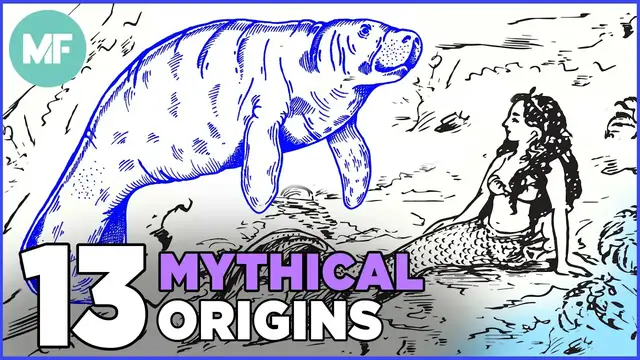
mermaids. They were manatees. Scientists suspect the sea cows and their relatives, as well as seals
3:43
are responsible for most mermaid sightings reported by sailors. Whatever you do, don't
3:48
confuse mermaids with sirens. Though they have been conflated, they're not the same thing
3:52
Sirens were half-women, half-bird creatures from Greek mythology that ruthlessly lured sailors to
3:57
untimely deaths with their song. According to Britannica, one theory is that these creatures
4:01
seem to have evolved from an ancient tale of the perils of early exploration
4:06
combined with an Asian image of a bird woman. Anthropologists explain the Asian image as a soul
4:11
bird, i.e. a winged ghost that stole the living to share its fate
4:15
Enough with the stories about vengeful half creatures who lure men to their deaths just because Let talk about a spirit from South Asian folklore who has a very good reason for what she does In Malaysia a woman who has endured suffering during death whether it occurs in childbirth
4:29
or at the hands of a man, is sometimes said to become a spirit called Pantheonic. Dressed all
4:34
in white, with long dark hair and smelling with the frangipani flower, the Pantheonic wanders at
4:39
night, exacting revenge by, in some versions of the tale, disemboweling a man with her nails
4:45
Then she eats his guts. As Charlene Tio, who wrote the novel Ponte, inspired by the spirit, told Vice
4:50
the Panthianic mimics vulnerability and seeming gentility through her high-pitched baby cries and frangipani scent
4:56
But try and take advantage of her, and she'll suck your eyeballs out. In other words, don't mess with her
5:02
The Indonesian counterpart of this mythical being is the Kuntilanic. But it's difficult to say where the stories first arose
5:08
Related spirits pop up in Bangladesh, India, and Singapore, for example. There's an Indonesian city named Pantheonik, but unfortunately for our purposes, that doesn't
5:16
necessarily provide an explanation for the myth. The city actually takes its name from the spirit and not the other way around
5:21
According to legend, the area was infested with the ghosts until the city's founder
5:25
and his men drove them out. One thing we do know is that horror movies helped spread these stories
5:31
Movies and TV shows about Pantheonik have been made since at least the 1950s
5:35
If you, like me, are a fan of the Underworld film series, then this next fact is for you
5:39
And no, I'm not joking. Those movies are good and this is a hill I will die on
5:44
As it turns out, the werewolf might be as old as, well, literature itself
5:48
One version of the epic of Gilgamesh features a story about a woman who turned a former paramour
5:52
into a wolf. Men who turned into wolves also popped up in the mythology of ancient Rome and
5:56
Greece. As Tanika Kuzman pointed out in a piece for the conversation, Herodotus wrote about a
6:01
tribe of people from Eastern Europe who, he was told, transformed into wolves at certain times
6:06
of the year. According to Kuzman, Using wolfskins for warmth is not outside the realm of possibility for inhabitants of
6:12
such a harsh climate. This is likely the reason Herodotus described their practice as transformation
6:17
Of course, underworld fans like me probably refer to werewolves as lichens, which comes
6:21
from the term lycanthrope, a person who suffers from lycanthropy. In other words, someone who
6:27
believes they are a werewolf. Stories about demons that survive by sucking the bloody life
6:31
force from humans have been around for millennia, but modern vampires are way more recent than you
6:36
probably think. In fact, the word vampire only pops up in the English written record around the
6:40
turn of the 18th century. Perhaps the earliest extant reference actually referred to vampires
6:45
metaphorically in the context of business practices, suggesting the concept was already
6:50
familiar to readers. Deborah Much writes in The Modern Vampire and Human Identity that
6:54
Western Europeans became interested in the phenomenon of the vampire during the late 17th
6:59
and early 18th centuries, as reports emerged from Eastern Europe of a series of vampire epidemics
7:04
So what was causing these epidemics of vampirism? Modern science has some ideas, most of them leading back to real-life diseases
7:12
Porphyria causes light sensitivity. Rabies is associated with biting and hypersensitivity to things like strong aromas
7:18
Like, for example, garlic. And, as Justin talked about in our food history episode about nachos, the introduction of
7:25
corn into European diets around this time may have played a role in spreading vampire myths
7:30
Europeans who ate the un-nixtamalized version of the grain often ended up with dietary deficiencies
7:34
leading to widespread bouts of pellagra. One symptom of that disease is also light sensitivity
7:40
Decomposition may also have played a role. The bodies of suspected vamps were often dug up
7:45
and as the skin shrinks during decomposition, it would have appeared as though the hair and
7:49
nails of the deceased had continued to grow after death. This may have led to the assumption that
7:53
the corpse wasn't quite so dead after all. Eastern Europe was going through extreme social
7:57
and cultural upheaval at the time, which, as we discussed in our episode about mass hysteria
8:02
is a prime driver for these kinds of epidemics. These days, pop culture depictions of vampires
8:06
show the creatures being created by a bite. Sometimes, the mutual drinking of blood is
8:11
necessary. Bites were certainly a part of traditional vampire lore as well, but they
8:15
weren't the only way to create a bloodsucker. In certain myths, all it took for someone to rise
8:19
again was for an animal to jump over the corpse. In Slavic regions and in China, it was usually a
8:23
dog or a cat doing the jumping. But in Romania, a bat flying overhead was said to reanimate a dead
8:28
body. While I'm out here airing all of my movie-related hot takes, the original Buffy movie
8:33
was awesome Paul Reubens aka Pee Herman as a one vamp Rutger Hauer as the master Lothos a cameo by a young Ben Affleck That yellow leather jacket So good Buffy TV fans are we Team Angel or Team Spike Discuss in the
8:50
comments below. Team Riley, come on. Thanks to pop culture, we tend to think of zombies
8:59
as undead flesh eaters that are especially hungry for brains. We have George Romero's
9:04
Night of the Living Dead to thank for some of that, but not the bit about brains. That
9:08
comes from the 1985 movie Return of the Living Dead, in which zombies were said to snack
9:12
on gray matter because it took away the pain of being dead. That is all a far cry from
9:17
the zombies' Haitian origins. According to folklore, zombies are dead bodies revived
9:21
by voodoo priests called bokors. Once out of the grave and reanimated, the zombie is
9:25
under the bokors' control. The slave trade may have brought these beliefs from West Africa
9:30
to Haiti, but once in the New World, they evolved. In fact, as journalism professor and farewell Fred
9:35
Voodoo, a letter from Haiti author Amy Wilentz wrote in a New York Times op-ed in 2012
9:40
zombies are a New World phenomenon that arose from the mixture of old African religious beliefs and
9:45
the pain of slavery. It's an understatement to say that the lives of enslaved people were
9:50
horrifically brutal. For most, death was the only way out. According to some Afro-Caribbean
9:56
traditions, a natural death allowed their now-free souls to return to Africa, or more specifically
10:01
Longini, or Guinea. Mike Mariani writes in The Atlantic that the original brains-eating fiend
10:07
was a slave not to the flesh of others, but to his own. Though suicide was common among enslaved
10:12
people, those who took their own lives wouldn't be allowed to return to Longini. Instead, they'd
10:17
be condemned to skulk the Hispaniola plantations for eternity. Undead slaves at once denied their
10:22
own bodies and yet trapped inside them. Soulless zombies. As horrific as that mythology is, it's worth pointing out that for some, zombies aren't
10:30
a myth at all but a real phenomenon. And there is at least one documented case that seems to support this belief
10:36
In May 1962, a man named Clairvius Narcisse, who was suffering from a mysterious illness
10:42
died in a hospital in Haiti. His death certificate was signed by two doctors and he was buried
10:47
But in 1980, he came back to his hometown and approached his sister, saying that he
10:52
had been turned into a zombie following an inheritance dispute with his brother
10:55
He described hearing his sister weep at his bedside after his death and recounted being buried
11:00
Narcisse's story is studied and featured in ethnobotanist Wade Davis's book The Serpent
11:04
and the Rainbow, which posits that zombies are created using powders laced with tetrodotoxin
11:09
a poison that can cause paralysis derived from the gonads of pufferfish
11:14
While writing this script, I learned the hard way that Googling the phrase leprechaun origins
11:18
will not get you what you need to know about where leprechauns come from, but instead everything
11:22
you never knew you needed to know about the 2014 movie Leprechaun Origins
11:26
Sorry I have no hot takes on this movie because I've never seen it, but for what it's worth
11:31
the Hollywood Reporter panned it, accusing the film's title character of having no devilish
11:35
charm at all. Anyway, I followed the research rainbow right to a pot of gold, aka a piece on irishcentral.com
11:42
by Sean Reid, an employee at the National Leprechaun Museum in Dublin
11:46
Reid writes that the first time a leprechaun appears in the written record seems to be the old Irish tale The Saga of Fergus MacLeddy
11:52
Fergus was the king of Ulster, and according to legend he was taking a snooze on the beach
11:57
when some water sprites called Lucrepane came out of the ocean and tried to drag him in
12:01
The shock of the cold water woke Fergus up. He captured the sprites and made them a deal
12:06
He'd set them free if they granted him three wishes. They agreed and the leprechaun tale was born. Maybe
12:14
Some sources look further back. In 2019 there were headlines around the globe connecting leprechaun legends to ancient Rome
12:20
A team from the Cambridge University and Queen's University Belfast discussed the Luperchi
12:24
a group who probably ran around the ancient city naked during the Lupercalia festival
12:29
We do support cardiovascular health at Mental Floss, but I have some questions about…support
12:34
In the 5th century CE, St. Augustine mentioned the Luperchi in an aside while talking about
12:38
lake that supposedly temporarily turned people into wolves. The authors of that 2019 paper think
12:44
that this got misread in Ireland to suggest that the Luperci themselves weren't humans
12:49
Over time, the paper posits, the wolves were dropped from the story and the group became
12:53
associated with a different water sprite that was thought of as being very small. That all may have
12:58
been combined to eventually create the modern leprechaun By the way these days leprechauns are usually portrayed as crafty cobblers who love gold pranks and the color green But in early tales they actually preferred to wear red
13:11
Like many of the creatures on this list, accounts of dragon-like beings go way back
13:15
They show up as giant serpents in Mesopotamian art, appear in the realm of the dead in ancient
13:20
Egyptian mythology, spit venom in ancient Greek tales, and symbolized good fortune in
13:25
Chinese folklore. Interestingly, according to Smithsonian Magazine, these myths evolved independently around the world
13:31
One theory for why that is is that real-life animals, from dinosaur fossils to Nile crocodiles
13:36
to whales, were misidentified in a pre-Google world. Speaking of whales, they may have served as inspiration for more than just dragons
13:44
One part of them, anyway. At least some of the sea monsters spotted by sailors throughout history were likely whale
13:49
penises, which can, after all, be upwards of 8 feet long. If there's anything we've learned so far, it's that many mythological creatures probably
13:57
had a basis in real animals. Cyclops, the famous one-eyed giants of Greek mythology, might be another example
14:03
They may have been inspired by the discovery of bones belonging to a relative of the modern-day elephant
14:08
These creatures were up to 15 feet tall, had 4.5-foot-long tusks, and their skulls featured
14:14
a single, prominent hole. Today we know that hole was for the animal's trunk, but ancient Greeks may have believed
14:19
it was for one huge eye. That being said, many experts are unconvinced, with classics professors Mercedes Aguirre
14:26
and Richard Buxton pointing out that theories like this often have satisfyingly logical
14:31
explanations but lack tangible evidence. Similar to the cyclops, griffins — creatures commonly described as having a lion's body
14:38
eagle's head, and wings — may have been inspired by the bones of protoceratops dinosaurs
14:43
which had beaks and long shoulder bones that might have been confused for wings
14:47
Their skeletons have been found in the Gobi Desert, where, according to Greek mythology
14:51
guarded their hordes of gold. That's the theory posited by folklorist Adrian Mayer
14:56
who told the New York Times in 2000 that, I have discovered that if you take all the places of Greek myths, those specific locales
15:03
turn out to be abundant fossil sites. But there is also a lot of natural knowledge embedded in
15:07
those myths, showing that Greek perceptions about fossils were pretty amazing for pre-scientific
15:12
people. As with the Cyclops origin story, though, the story makes a certain amount of sense, but it
15:17
seems to lack rock-solid evidence. Paleontologist Mark Witten points out that, though certain key
15:22
features of griffins would show up in protoceratops fossils, plenty of other parts of those fossils
15:27
would be difficult to connect to the myths. Finally, let's wrap up by talking about a
15:32
couple of mythological cats. If you thought we were getting out of this video without talking
15:36
about cats... The Scottish Highlands are said to be home to the cat she, or fairy cat
15:46
a dog-sized feline with a white patch on its chest. According to legend, the cat she can steal
15:51
the souls of the recently deceased. But the people of the Highlands had at least one powerful tool at
15:56
their disposal to distract the cat she. And yeah, it's catnip. Many think this critter is inspired by
16:01
the very real Scottish wildcat, or possibly the Kellis cat, which may or may not be a hybrid between
16:07
the Scottish wildcat and black cats. There's also a coo-she, or fairy dog, in the Highlands
16:12
and this creature will come after you even if you're alive. Point to the fairy cat for waiting till you're dead
16:18
Perhaps my favorite mythological creature comes from Icelandic folklore. The Jóla Cúturin, or Yule cat, is a giant black cat
16:25
And when I say giant, I mean bigger than a house. It basically exists to get kids to do their chores
16:30
According to tradition, children who have finished all their work and done all their chores before Christmas will be rewarded with new clothes
16:37
If they're lazy, they won't get new clothes, but they will get eaten by the Yule Cat, who goes around Iceland on Christmas night looking
16:44
through windows for fancy new duds. This myth may have come about as a way to encourage productivity
16:48
during the winter months. In pre-industrial Iceland, when chores needed to get done before
16:53
the holidays, the Yule Cat might have served just as a handy reminder of the importance of doing
16:58
your work on time. I, personally, prefer to think there's a real giant cat terrorizing the children
17:03
of Iceland. And yes, I did get a photo with a giant Yule Cat statue on my holiday trip to Iceland
17:08
and yes, I am obsessed with this creature. My toxic trait is looking at the Yule cat and thinking
17:13
I could make that kitty love me. What mythological creature would you have featured in this list
17:18
Pop a note about its origins, or just a fun fact, in the comments below
17:23
We'll see you next time
education