Up next in 10



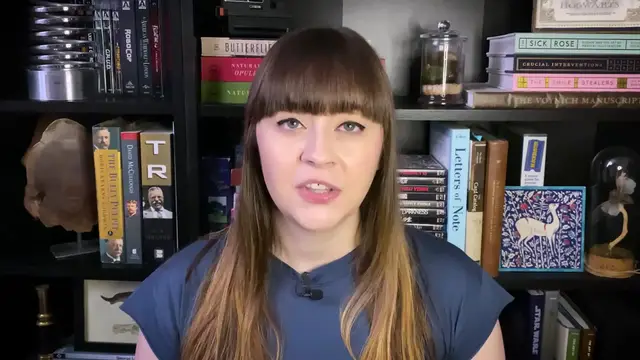
Who was Dolly Parton talking to when she wrote "I Will Always Love You?" And which power pop ballad was originally written for a vampire musical? You'll learn the answers to those questions and more as Erin (@erincmccarthy) discusses the unlikely origins of 12 popular songs.
This episode of The List Show dives into the strange stories behind pop songs, from the real-life tragedies that led to catchy tunes to the time an imperfect translation gave Britney Spears a hit.
In case you forgot, The List Show is a trivia-tastic, fact-filled show for curious people.
For more of the stories behind the music you know, check out our article on The Strange Origins of 17 Popular Songs: https://www.mentalfloss.com/article/598583/bizarre-origins-behind-popular-songs
Subscribe here for new List Show episodes the first and third Wednesday of each month: https://www.youtube.com/channel/UCpZ5qUqpW4hW4zdfuBxMSJA?sub_confirmation=1
Don't miss a video! Subscribe NOW: https://www.youtube.com/@MentalFloss?sub_confirmation=1
About Mental Floss:
Mental Floss is where curious people come for trivia-tastic information. Mental Floss produces lists of fun facts, debunks common misconceptions, and tells untold stories from history, science, culture and more.
Website: http://www.mentalfloss.com
Twitter: http://www.twitter.com/mental_floss
Facebook: https://facebook.com/mentalflossmagazine
Copyright Notice: This video and YouTube channel contain dialog, music, and images that are property of Mental Floss. You are authorized to share the video link and channel, and embed this video in your website or others as long as a link back to this YouTube Channel is provided.
2025 Mental Floss
12 Unlikely Origins of Popular Songs | Mental Floss
https://www.youtube.com/@MentalFloss
Show More Show Less View Video Transcript
0:00
Did you know that Elton John's 1972 song Rocket Man was based on a short story by Ray
0:04
Bradbury, author of Fahrenheit 451? Hi, I'm Erin McCarthy, editor-in-chief of Mentalfloss.com, and welcome to The List Show
0:11
from my living room. According to co-writer Bernie Taupin, many people assumed that Rocket Man was inspired
0:16
by another hit song about an astronaut, David Bowie's Space Oddity, released in 1969
0:21
But it actually harkened back to The Rocket Man from Ray Bradbury's 1951 short story
0:25
collection The Illustrated Man. The story is narrated by Doug, a young boy whose astronaut father leaves for three-month
0:31
stints in space. While the song is sung from the astronaut's perspective, it matches the story's themes
0:37
pretty closely. Both men, for example, yearn for their families while in orbit and struggle with the feeling
0:42
that they're leading two separate lives. The spacesuit worn by Bradbury's character probably wasn't as glamorous as Elton John's
0:48
typical stage gear, though. And that's just the first of many surprising and sometimes strange origins of popular songs
0:54
that I'm going to share with you today. After music producer Clive Davis listened to the as-yet-unreleased first record of a
1:08
novice rock and roller from New Jersey, he had some feedback. There were no hits, he told the musician
1:14
Nothing that could be played on the radio. So Bruce Springsteen rushed home to Asbury Park and churned out two more tracks, Spirit
1:20
in the Night, which he wrote on the beach, and Blinded by the Light, which he wrote on his bed with the help of a good old-fashioned rhyming dictionary
1:26
Featuring phrases like curly-whirly and brimstone-baritone-anticyclone-rolling-stone, it's basically one big edgy nursery rhyme
1:34
Or rather, a really tough tongue twister that's taken me about four takes to get right
1:38
Today there's even an indie pop band called Go-Kart Mozart, after another memorable expression
1:43
from the song. The album, Greetings from Asbury Park, New Jersey, was released by Columbia Records in
1:48
January 1973, with Blinded by the Light as the very first track
1:52
And it did become a hit played all over the radio. Just not Springsteen's version
1:57
Three years after its debut, London-based rock group Manfred Mann's Earth Band recorded
2:01
a cover of the song that catapulted to the top of the Billboard Hot 100 in February 1977
2:06
The next time you find yourself humming the Bangles' Manic Monday at the beginning of a busy week, you can thank Prince
2:11
Not only did he give us decades worth of dance bops and unparalleled guitar solos, he also
2:16
penned the anthem for every bleary-eyed employee wishing their Sunday had never ended
2:20
It all started when Prince showed up to a Bangles concert in 1984 and asked to perform
2:25
their single Hero Takes a Fall with them. They were happy to oblige
2:29
Bangles lead singer Susannah Hoffs later told NPR, quote, "...it was truly mind-blowing
2:34
It was almost like his guitar was just part of his body. There was no disconnect.
2:38
That same year, Prince was helping his female pop trio Apollonia 6 put together their first
2:43
and only album, which was supposed to include Manic Monday. But after recording a demo with them, he decided the song wasn't a good fit
2:50
and it stayed on the cutting room floor for two years. When he offered it to the Bangles
2:53
it was clear he'd found the perfect fit. Hoffs, who still has the cassette tape that Prince first played for them, said, quote
2:59
"...we were smitten with the song." The Bangles released it as their first single
3:02
from their second album, Different Light, and it soon climbed to the number two spot
3:06
on the pop charts. It never dethroned the reigning number one of the time, though. That
3:10
song? KISS by Prince. The Purple Rain rocker wrote more than a few songs that became mega-hits for other artists
3:17
in the 80s and 90s, including Chaka Khan's I Feel For You
3:20
Sinead O'Connor's Nothing Compares To You, and Celine Dion's With This Tear
3:24
Back in the 60s Carole King was also cranking out hit after hit With the help of her then Jerry Goffin King wrote Some Kind of Wonderful for the Drifters One Fine Day for the Chiffons
3:35
and The Loco-Motion, which was supposed to be for D.D. Sharp. King and Goffin modeled
3:39
their locomotive-inspired track after Sharp's 1962 smash hit Mashed Potato Time, but for
3:44
some reason the collaboration never came to be. Carole King, for her part, suggested that
3:49
Sharp's record label wasn't interested in buying songs from outside talent. What is clear
3:53
is that the songwriters gave the locomotion to their babysitter. Really. The duo had hired a young Eva Boyd in 1961 on a recommendation from the music group The
4:01
Cookies, and her job interview ended up being an unofficial music audition, too. When she
4:06
mentioned she could sing, her future employers invited her to perform a little something on
4:09
the spot. King told NPR in 2003, quote, We thought, oh, this is cool. She's got a really great voice. Make note to self
4:16
Boyd sometimes sang on demos for them, and she recorded the vocals for the locomotion
4:20
demo, too. When Sharp turned it down, music producer Don Kirshner, whom King and Goffin
4:25
worked for, proposed that they give the song to Boyd, which they did. Though the lyrics
4:29
imply that the locomotion is a line dance, King and Goffin didn't come up with one
4:33
while composing it. That was all Eva, or Little Eva, as she came to be known. As King recalled
4:37
in her memoir A Natural Woman, Little Eva invented the corresponding dance moves for
4:42
publicity appearances. The locomotion ascended the charts in the 60s, and again in the 70s
4:47
yet a third time in the 80s. The success of Grand Funk Railroad's 1972 version and Kylie
4:52
Minogue's late 80s rendition pretty much proves that a ride on the locomotion is a one-way
4:57
ticket to the top. About two years after Minogue's locomotion chugged all over the world, a 40-year-old
5:02
Billy Joel was brainstorming song ideas in the studio when he met John Lennon's son
5:06
Sean, accompanied by a friend who had just turned 21. The young man was complaining about
5:10
how 1989 was a terrible time to be 21, and an empathetic Joel shared similar feelings
5:15
about having come of age during the political unrest of the late 1960s and early 70s
5:20
His new acquaintance didn't seem to feel like the situations were comparable, telling Joel that it was different for him because, quote, you were a kid in the 50s, and everybody
5:28
knows that nothing happened in the 50s. Didn't you ever hear of, like, the Korean War, Joel responded
5:34
The Suez C Crisis? He started jotting down all the events that had happened in his lifetime thus far, from
5:39
1949 to 1989, and the song We Didn't Start the Fire quickly took shape
5:44
As for whether The Piano Man will ever write a sequel for his rapid-fire history lesson
5:48
chances aren't great. He's talked openly about how dull he thinks the melody is, comparing
5:53
it to a dentist's drill and a mosquito buzzing around in your head
5:57
If We Didn't Start the Fire is the stuff of history, Total Eclipse of the Heart is
6:01
the stuff of legend. And not just any legend. Long before it became the magnum opus of 80s
6:07
ballad belter Bonnie Tyler, the tune was intended as a vampire love song. Composer Jim Steinman
6:12
told Playbill that its original title was Vampires in Love. He was working on a musical
6:17
adaptation of Nosferatu at the time because nothing screams Broadway potential like German
6:22
expressionist horror. Steinman is probably best known for Penny Meatloaf's entire 1977
6:27
album Bat Out of Hell, which, ironically, has nothing to do with vampires. Tyler, blown
6:33
away by the title track off Meatloaf's album, asked her record label to put her in touch
6:36
with Steinman, who agreed to work with her. At that point, Total Eclipse of the Heart
6:41
was only half-written and still called Vampires in Love, so Steinman finished it up and handed
6:46
it over to his new collaborator. Though the Nosferatu production never saw the light of day, Steinman did end up getting
6:51
a different vampire musical onto the Broadway stage Dance of the Vampires loosely based on Roman Polanski 1967 film The Fearless Vampire Killers Act II opened with an eerie emotional number that most of the audience had likely heard
7:05
before. Yeah, it was total eclipse of the heart. Tyler's powerhouse ballad isn't the only classic with a Transylvanian backstory. Aerosmith's
7:14
Walk This Way was inspired by a scene from the 1974 Mel Brooks film Young Frankenstein
7:19
In it, a creepy servant named Igor, played by Marty Feldman, meets Gene Wilder's Dr
7:24
at the train station and utters, Walk This Way, as he hobbles down the stairs
7:29
Joe Perry had already come up with the riff, and Steven Tyler had started on the lyrics
7:33
but they were still looking for a funky refrain to tie it all together
7:36
Most of the band thought Walk This Way had the ideal vibe, and they convinced Tyler to
7:40
center the song around it. Though Tyler did borrow the phrase, he didn't go so far as to embody the spirit of the spooky
7:46
spoofy henchman. Walk This Way is rife with thinly veiled innuendo, and David Johanson of the New York Dolls even
7:52
said it was one of the raunchiest songs he ever heard on the radio, according to Perry
7:56
who took it as a compliment. Like Walk This Way, most of the Bee Gees song titles have a nice ring to them. Think Stayin
8:02
Alive or How Deep Is Your Love? New York Mining Disaster 1941, on the other hand, sounds more
8:07
like something you'd find in the pages of a history textbook than at the top of the music charts. But there's a reason you never learned about that particular mining disaster
8:15
in school. Because it never happened. In early 1967, bandmates and brothers, Barry and Robin
8:20
Gibb were sitting in a dark, echoey stairwell at London's Polydor Records, when they came
8:25
up with a song about a man trapped in a dark, echoey mine. According to Maurice Gibb, the lyrics were also inspired by a catastrophic mining disaster
8:32
in Aberfan, Wales that had occurred just a few months earlier. According to Barry, they chose New York for the titular disaster of their song because
8:39
quote, the name New York is just a little more glamorous than Southampton Mining Disaster
8:44
1941. New York held just a little bit more glamour for record buyers
8:49
It's also possible that the group wanted to distance the song a bit from the source material
8:53
since the UK was still reeling from the very recent tragedy. Whatever the case, the song kick-started the Bee Gees' international career
9:00
Their success may have been related to the fact that some of their songs were quite reminiscent
9:03
of another popular band from the era, the Beatles. Some fans thought the Bee Gees actually were the Beatles, and their band name was Code for
9:11
the Beatles group. If you spent the year 1999 with Britney Spears' debut album on repeat in your portable CD
9:17
you know as well as I do that the album and its titular track are called Baby One More Time
9:22
not Hit Me Baby One More Time. Spears' record label made the title more ambiguous because they
9:27
were worried young listeners would think the teenage pop star was singing about, or even condoning, domestic abuse. It was composed by Swedish songwriters Rami and Max Martin
9:36
who reportedly thought that Americans lying for Call Me was Hit Me rather than Hit Me Up
9:42
In other words, Spears should be saying Hit Me Up Baby One More Time. Less catchy, sure
9:47
but less questionable, too. The phrasing didn't seem to have any impact on the song's success, though
9:52
It sat on the Billboard Hot 100 chart for 32 weeks, a personal record for Spears
9:57
And without the error, the song may have never even landed in her lap in the first place
10:01
Before offering it to Spears, Rami and Martin had tried to give it to TLC, who passed
10:05
In 2013, T-Boz told MTV News, quote, I was like, I'm not saying hit me, baby
10:11
Another song with unintentionally dark undertones is The Tears of a Clown by Smokey Robinson
10:16
and The Miracles. At a Motown Christmas party in 1966, Stevie Wonder gave Robinson a fully recorded instrumental
10:22
track and asked him for help coming up with some lyrics for it. When Robinson listened to it the opening notes immediately reminded him of a circus So he decided to base the song on the story of a lovelorn clown named Pagliacci that he had heard as a kid Robinson explained that quote loved him and then he went back to his dressing room and he was very
10:39
sad, because he had all this love, but he did not have the love of a woman.
10:43
The narrator of The Tears of a Clown follows that same pattern of acting upbeat in public
10:48
and succumbing to his sorrow behind closed doors. Robinson even mentions Pagliacci in the song, singing
10:53
Just like Pagliacci did, I try to keep my sadness hid. And that isn't even the first time Robinson penned a couplet along those lines
11:00
A couple years earlier, he had co-written, My smile is just a frown turned upside down, which included the line
11:06
I only laugh to fool the crowd. Just like Pagliacci did, I'll keep my sadness hid
11:11
Clearly, something in the story of Pagliacci spoke to Robinson, but he may have misremembered a few key details about the story
11:17
He might have also chosen to exclude some details to avoid crafting a more macabre pop song
11:22
Pagliacci is an Italian opera that was composed by Ruggiero Leoncavallo. It premiered in 1892
11:29
Pagliacci actually means clowns in Italian. In the opera, a man named Canio performs a clown
11:34
act with his wife, Netta. As Netta's rumored affair reaches the ears of her jealous husband
11:39
he becomes more and more enraged, and the story culminates with Canio murdering Netta and her
11:44
lover on stage. It makes for a more dramatic tale, but it is harder to dance to. Fastball frontman
11:51
Tony Scalzo knows exactly how morbid his inspiration was for 1998's The Way
11:56
He wrote the song after hearing about Lila and Raymond Howard, an elderly couple who
12:00
had gone missing on their way to a local fiddling festival in Texas
12:04
Two weeks after their disappearance, police located their Oldsmobile at the bottom of a roadside cliff in Arkansas, a few hundred miles from their destination, and confirmed
12:12
that they had died in the crash. According to some reports, Raymond had recently suffered a stroke and Lila had been showing
12:18
signs of Alzheimer's disease, leading officials to assume they had simply gotten lost
12:23
The Way imagines a happier story for the ill-fated couple, where the road that they walk on is
12:28
paved in gold, and it's always summer, they'll never get cold. The victim's family members were touched by what they considered a tribute to their parents
12:36
One of Leela's grandsons told KVU, quote, I was just blown away
12:40
I couldn't believe somebody would do something like that for my grandma. Powerful
12:44
Very powerful. I Will Always Love You is an iconic breakup song, but songwriter Dolly Parton wasn't
12:49
thinking of a romantic relationship when she wrote it. She was trying to split up with
12:53
her duet partner, Porter Wagoner. After spending seven years as a regular on a syndicated television
12:58
show, Parton was ready for the next phase in her career. She knew Wagoner wouldn't
13:02
take the news well, so she decided to deliver it in the best way she knew how—by singing
13:07
it. She later explained to CMT, quote, It's saying, Just because I'm going don't mean I won't love you
13:12
I appreciate you and I hope you do great, and I appreciate everything you've done
13:16
but I'm outta here." When Parton performed the song for him, he said it was, quote
13:20
"...the prettiest song he'd ever heard," and told her that she could leave, as long
13:24
as she let him produce the record, which she did. Parton's version hit number one on the country music charts in 1974, but it was Whitney Houston's
13:32
version for her 1992 film The Bodyguard that turned it into the song that won't die, in
13:36
Parton's words. thank Whitney for making me a lot of money with it," she said at a concert in 2008
13:42
Our next episode is all about puberty. Unlike actual puberty, it will only last about 10
13:47
minutes, but things might still get a little awkward. If you want to be featured in that video, leave a comment below with a fun, PG-rated fact about adolescence, inhuman beings, or
13:56
other animals. Make sure to check back every Wednesday at 3pm for new Mental Floss videos
14:00
We'll see you then
education