Up next in 10



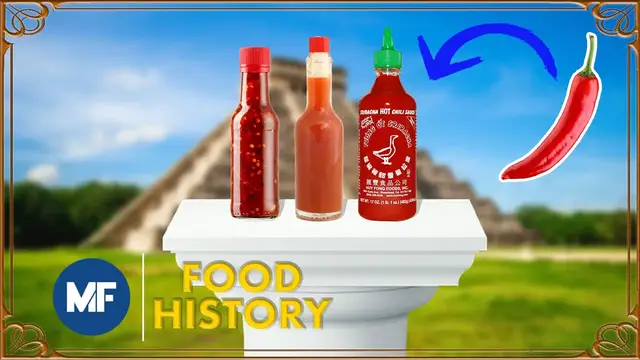
Hot sauce has been around for thousands of years. How did we go from medicinal chili sauce used by the Aztecs to Sriracha and Tabasco? Food History is a show all about... well, the history of food. Join host Justin Dodd as he brings you the stories of how your favorite meals ended up on your plate. Today, we're talking hot sauce. Can YOU handle this spicy food staple? ----------------------------- Don't miss a video! Subscribe NOW: https://www.youtube.com/@MentalFloss?sub_confirmation=1 About Mental Floss: Mental Floss is where curious people come for trivia-tastic information. Mental Floss produces lists of fun facts, debunks common misconceptions, and tells untold stories from history, science, culture and more. Website: http://www.mentalfloss.com Twitter: http://www.twitter.com/mental_floss Facebook: https://facebook.com/mentalflossmagazine Copyright Notice: This video and YouTube channel contain dialog, music, and images that are property of Mental Floss. You are authorized to share the video link and channel, and embed this video in your website or others as long as a link back to this YouTube Channel is provided. 2025 Mental Floss Food History: Hot Sauce | Mental Floss https://www.youtube.com/@MentalFloss
Show More Show Less View Video Transcript
0:00
Do you know how long humans have been enjoying hot sauce? Can you tell your piri-piri from
0:04
your pebre? Hot sauce, as a broadly defined condiment, is enjoyed around the world today
0:10
but it originated in the Americas. We'll likely never know who the first people were to mash up
0:15
chili peppers into a liquid. There are candidates ranging from Bolivia to Mexico. But we do know
0:21
that people in Central and South America have been making hot sauces for thousands of years
0:25
And it wasn't always looked at as just a tasty condiment. Both the Aztecs and the Maya valued
0:30
hot peppers for their medicinal properties. Sore throats, stomach aches, asthma, and colds
0:36
were just some of the ailments chili products were thought to remedy. Today, we know that hot sauce isn't a cure-all for most medical problems
0:43
but it can be used as a painkiller. Chili peppers contain a number of capsaicinoids
0:48
chief among them capsaicin, which mimic the sensation of heat when they touch our sensitive tissues
0:53
Once you endure the initial burn, consuming capsaicin lets loose a rush of endorphins
0:58
in your brain, which in turn triggers an anti-inflammatory reaction throughout most of your body
1:03
This is why medical professionals have experimented with using capsaicin as a pain reliever
1:08
It's also why the ancient Aztecs used drops of chili pepper sauce to relieve tooth pain
1:13
As for the best way to relieve chili pepper pain, we're still figuring that out
1:22
Hi, I'm Justin Dodd. Welcome to Food History. For millennia, humans have prized hot peppers
1:28
for the same mouth-scorching properties they evolved to keep hungry animals away. Which
1:33
brings up an interesting question, actually. Why would a fruit evolve to avoid being eaten
1:38
Isn't that a big part of how they're spread? The key here may be which animal is eating
1:43
the plant in question. When small mammals eat peppers, they tend to destroy the seeds
1:47
with their teeth and ruin the plant's chances for propagation. Birds, on the other hand
1:51
don't have teeth, thankfully, so they can consume peppers and disperse their seeds intact
1:57
Birds also have different taste receptors than mammals. Capsaicin doesn't deter them the way it
2:02
would a rat. Peppers may have evolved to discourage mammals, but not birds. Along the way
2:08
they seem to have made themselves particularly appealing to people. Hot sauce allows us to apply the taste of peppers to just about anything. When they weren't dabbing
2:16
hot sauce on sore teeth, ancient Mesoamericans enjoyed it with corn tortillas. This early version
2:21
of the condiment was likely a simple paste consisting of ground peppers water and possibly some herbs Though they didn have access to the onions or garlic often used to flavor modern hot sauces they refined the taste by cultivating new pepper strains By the time Spanish conquistadors arrived in the Americas
2:38
many of the varieties we know today, like anchos, jalapenos, and cayenne
2:42
were already part of the region's cuisine. Peppers were one of the most exciting discoveries
2:46
transatlantic explorers brought back with them to Europe. They were flavorful, cheap to grow
2:52
and adaptable to new climates. Spaniards borrowed the Nahuatl word chili from the Aztecs. The name
2:57
pepper came from the plant's similarity to black pepper, which was the main source of spice
3:02
in Europe's pre-Columbian food. Before the Colombian exchange, there wasn't anything quite
3:07
like hot peppers growing outside of the Americas. Chiles completely transformed the cuisines of
3:12
many places they reached. They arrived in Asia via Portuguese traders—probably in the early 1500s—and
3:18
And they were an instant hit. Thanks to their affordability and appealing taste
3:22
chili peppers quickly replaced black pepper as the primary spice throughout much of that continent
3:27
Like the ancient Americans, Asian cooks began mashing their peppers with liquids
3:30
and other flavorings to make them into versatile sauces. These condiments were a little bit funkier than what the Aztecs were dipping their tortillas into
3:38
Thailand became the birthplace of Nam Prick, which combines peppers with ingredients like fish sauce or fermented shrimp paste
3:45
Out of Indonesia came hundreds of varieties of a crushed chili condiment called sambal
3:50
In Korea, the fermented pepper paste gochujang is such a staple that there's actually a spice
3:54
in a scale called the gochujang hot taste unit. Africa was also introduced to hot peppers by way of the Portuguese, and many cultures
4:01
there embrace the affordable flavor bombs. One of the most prevalent hot sauces in southern Africa is piri piri, which is ranga for pepper pepper
4:10
The condiment is made from African bird's eye chilies, a pepper strain cultivated on the
4:14
continent, and other ingredients like lemon, vinegar, garlic, oil, and herbs. Angola, Namibia
4:20
and Mozambique are just a few of the countries where it's popular. European colonization and
4:24
global trade also transformed hot sauce in the pepper's birthplace. Spicy condiments that are
4:28
enjoyed in the Americas today include Chilean pebre, made from tomatoes, onions, and chilies
4:33
and garlicky Mexican hot sauces, like the kind that brands like Cholula and Tapatio sell
4:38
According to data from Instacart, Cholula is the most popular hot sauce in America
4:43
But it's not the oldest product of its kind. Back in 1807, ads appeared in a Massachusetts
4:49
newspaper for a pepper sauce, which some sources have proclaimed the first commercial hot sauce
4:54
in the U This is a bit tricky to pin down though Food historian Charles Perry doesn think this product would have likely been a hot sauce at all but rather one of several pepper vinegar ketchups for doctoring your food that began to appear around that time
5:08
The methods likely used to make the sauce wouldn't have extracted much, if any, of the capsaicin in the peppers, according to Perry, and New England diets
5:16
at the time were generally averse to spicy heat. Perry speculates that rich Brits sailing to and
5:21
from the Caribbean in the early 19th century might have put some hot peppers in a bottle of sherry
5:26
a treatment that might have begun as an anti-scurvy medicinal sauce. Soon enough, as Perry outlines it
5:32
it became a way to add a bit of flavor to tasteless ship food, and people began developing
5:36
a taste for the spicy condiment. Whatever the origin, before the 1800s were over
5:41
a number of bona fide American hot sauce brands started popping up, including at least one
5:45
you've likely heard of. Tabasco company founder Edmund McElhenney began selling a fermented
5:51
vinegar-based pepper sauce in bottles in the late 1860s. He named the sauce Tabasco after the type
5:57
of chili it was made from, which itself was named after its state of origin in Mexico
6:02
To get the sauce on the tables of as many people as possible, McElhenney sold it in bulk to
6:06
restaurants and hotels rather than directly to consumers. The ubiquity of the condiment in the
6:12
hospitality industry made it familiar to the public, and soon it became the dominant name
6:16
in the hot sauce market. The company was founded in Louisiana, but by the 1870s, Tabasco had
6:21
spread throughout the U.S. and Europe. The Tabasco Company claims that McElhenney invented
6:26
Tabasco sauce, but the condiment's origins are up for debate. Two decades before McElhenney bottled his first hot sauce, Colonel Monsel White came
6:34
up with a similar concoction on his Louisiana plantation. He also grew Tabasco chili peppers
6:39
and had the crops preserved by boiling them with vinegar. In 1850, the New Orleans Daily
6:45
Delta wrote that his sauce possesses in a most concentrated and intense form all the qualities
6:50
of the vegetable, and that a single drop of the sauce will flavor a whole plate of soup or other
6:55
food. Some believe that white should be credited with Tabasco sauce's invention. It's possible that
7:01
McElhenney, a fellow Louisianan, even acquired the seeds he used to grow his peppers from the
7:06
kernel. The McElhenney family counters that there's little evidence for this assertion
7:11
and points to substantial differences between the sauces. White apparently did not ferment
7:16
his product, for example. But regardless of who made the first true Tabasco sauce, it
7:21
was McElhenney who turned the recipe into an international brand Sriracha is another massive name in the hot sauce world The version most Americans know with the green nozzle and the little rooster on the label comes from David Tran the founder of Hui Phong Foods
7:36
Born in Vietnam, Tran first started selling his chili sauce in 1975
7:40
At the end of the decade, he and his family fled their homeland on board a Taiwanese freighter ship named the Hui Phong
7:46
which roughly translates to gathering prosperity. In the United States, Tran eventually started selling his hot sauce again
7:52
this time to immigrants from Southeast Asia looking for a taste of home
7:56
For his recipe, he drew inspiration from a type of hot sauce from the town of Sriracha in Southeast Thailand
8:02
Tran combined red jalapenos with vinegar, sugar, and garlic for a thicker, sweeter hot sauce than most Americans were used to
8:09
Hui Fong's Sriracha sauce was a relatively quiet success for decades, but it really exploded in the mid-2000s
8:16
In the 2010s, its branding was slapped on everything from potato chips to beer to cars
8:21
Sriracha mania may have passed its peak, but it still ranks number three on the list of
8:26
America's favorite hot sauces, beating Tabasco. Some adventurous eaters treat hot sauce consumption as a competition
8:32
There's an entire scale dedicated to measuring the heat of pepper-based products
8:37
Pharmacist Wilbur Scoville came up with what would become Scoville Heat Units while attempting
8:41
to make a heat-producing ointment in 1912. SHUs originally measured how much a spicy food would need to be diluted to neutralize
8:49
its capsaicin content, but nowadays scientists generally use high-performance liquid chromatography to identify where a given product falls on the scale. Tabasco sauce clocks in at around
8:59
2,500 to 5,000 SHUs, while Mad Dog 357 Plutonium No. 9, possibly the world's hottest hot sauce
9:07
reaches 9 million Scoville heat units. I would surely have a panic attack if I ate even a drop
9:12
of that, so I'm going to stick to my sriracha, thank you very much. If you ever find yourself
9:16
venturing into the high end of the Scoville scale or are inexplicably a guest on Hot Ones
9:21
dairy may be able to provide some relief. Casein, a protein in milk, binds with capsaicin and carries
9:27
it away from your sensitive taste buds. Your other option is to build a tolerance for spicy foods
9:32
By repeatedly subjecting your taste buds to capsaicin, you can desensitize your nerve endings
9:37
Experts recommend doing this by gradually introducing spice to your diet until you're
9:42
consuming it on a regular basis. But past the certain heat threshold, the only thing that will
9:47
heal your mouth, just like a broken heart, is time. Our next episode is about one of my favorite
9:52
dishes, Pad Thai. If there's anything specific you want to know about this delicious peanutty dish
9:57
drop a question in the comments. Thanks for watching
#education