Up next in 10



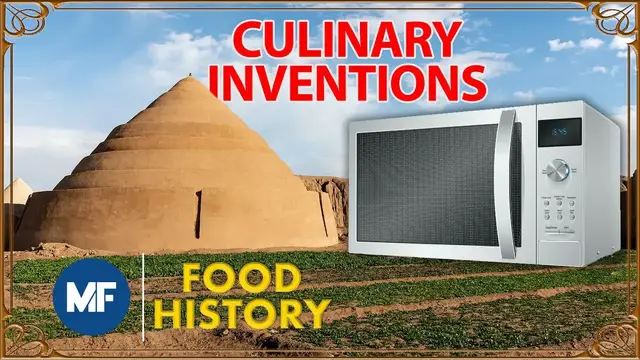
Food history is a combination of slow, gradual evolution and sudden disruption. The course of food history can be changed by climate change or war, but it can also be changed by innovation from enterprising individuals. Who "invented" sliced bread? How did the microwave oven come to be? And what genius gave us the spork? Justin Dodd answers those questions and more in the latest episode of Food History.
Food History is a series from Mental Floss where we dive deep into the culinary stories that lead to the food on our plates. If you have an idea for a dish, cooking technique, or cuisine that you'd like us to explore in a future episode, tell us in the comments.
Don't miss a video! Subscribe NOW: https://www.youtube.com/@MentalFloss?sub_confirmation=1
About Mental Floss:
Mental Floss is where curious people come for trivia-tastic information. Mental Floss produces lists of fun facts, debunks common misconceptions, and tells untold stories from history, science, culture and more.
Website: http://www.mentalfloss.com
Twitter: http://www.twitter.com/mental_floss
Facebook: https://facebook.com/mentalflossmagazine
Copyright Notice: This video and YouTube channel contain dialog, music, and images that are property of Mental Floss. You are authorized to share the video link and channel, and embed this video in your website or others as long as a link back to this YouTube Channel is provided.
2025 Mental Floss
10 Inventions That Changed Food History | Mental Floss
https://www.youtube.com/@MentalFloss
Show More Show Less View Video Transcript
0:00
The wok is one of the most versatile and influential cooking instruments ever invented
0:04
and the Chinese have been using it for up to 3,000 years. The metal pan is distinguished by its
0:10
traditionally rounded bottom and large surface area, which makes it possible to braise, boil
0:16
steam, and stir-fry foods all in one place. Another benefit of the kitchen tool is something
0:20
called wok hei. This Cantonese term was translated to breath of the wok by food writer Grace Young
0:27
and it's used to describe the unique seared flavor the pan imparts to food
0:31
When a wok reaches super high temperatures, it zaps excess moisture from the ingredients
0:36
and promotes caramelization to create more concentrated flavors. The first woks were likely used for boiling and making stews, with stir-frying only becoming
0:45
popular after iron woks were introduced during the Song Dynasty roughly a thousand years ago
0:51
Iron is a relatively poor conductor of heat, which actually makes it better at retaining
0:56
heat when it does reach the right temperature. Hot iron doesn't cool down quickly as more
1:00
ingredients are added to the pan. This is essential to making a crispy stir-fry
1:06
Today, many woks are made from carbon steel or even aluminum, which tend to be lighter
1:10
but you can still count using one as a workout. Hi, I'm Justin Dodd. Welcome to Food History
1:16
Today we're looking at inventions that shaped the culinary world as we know it. So grab your
1:22
cotton candy machines and your zucchini spiralizers, and let's get started. Spoiler alert, neither of those made the cut
1:35
Fire is often cited as one of the most important discoveries in human history, and for good reason
1:40
As we discussed in our episode on the most important foods of all time
1:44
fire had a huge impact on human development. You can watch that video to learn all about it
1:49
But even as people began to cook, there was a lot that they couldn't easily achieve with
1:54
an open flame, like evenly cooking food at controlled temperatures. For that, they needed ovens
2:01
The earliest ovens date back 30,000 years to Central Europe, and they looked pretty different
2:06
from what you have in your kitchen at home. They consisted of a large pit dug into the earth, lined with heat-conducting stones
2:13
Hot coals or ash provided consistent heat to the food, and a layer of dirt on top kept
2:18
that heat contained. These earth ovens cooked food slowly at low temperatures, breaking them
2:24
down and making the nutrients easier to absorb. From Maori hangi to New England clam bakes
2:30
underground ovens are still used for celebratory feasts around the world today
2:34
though what we cook with them has changed a bit over the millennia
2:38
Bones discovered near ancient earth ovens indicate that mammoth was the main course at some of the first barbecues And I don know why but mammoth sounds delicious Humans have invented a lot of tools to heat food since those early earth ovens After the emergence
2:53
of wood-fired brick ovens in ancient times, gas ovens and electric stoves appeared in the 19th
2:59
century. But the biggest recent leap in cooking technology may be the microwave oven. Raytheon
3:05
company engineer Percy LeBaron Spencer was visiting a lab testing microwave-producing magnetrons
3:11
in 1945 when he noticed that the candy bar in his pocket had melted. His dry cleaning bill ended up
3:18
being a pretty small price to pay for the flash of inspiration he had that day. As the story goes
3:24
Spencer sent out for some uncooked popcorn, and when it popped in front of the active magnetron
3:29
Spencer realized that microwave radiation could be used as a quick and convenient heat source for
3:35
cooking. Later that year, he filed a patent for the microwave oven. For ancient cooks, finding a
3:40
to keep fresh food cold became just as important as cooking it. The Chinese practiced rudimentary
3:46
refrigeration 3,000 years ago by collecting ice and storing it. In the following centuries, the
3:52
Egyptians, Indians, Greeks, Hebrews, and Romans all developed ways to chill food and drinks
3:58
either by harvesting snow and ice or making it themselves. The most impressive ancient refrigerator
4:04
may be the Yakshals of Persia. Developed around 400 BCE, these pointed domes were designed to keep
4:11
ice frozen in a hot desert climate. Water from a nearby aqueduct would feed a chamber dug deep
4:17
into the cool sand beneath the structure. These ice houses sometimes featured wind-catching
4:21
mechanisms that diverted breezes underground where they would be chilled. Badgir is still
4:27
used in desert architecture in Iran today. In addition to preserving food, Persians used
4:32
refrigeration to make delicious desserts. Traditional frozen treats like sharbit and faladeh are products of the yakshals of ancient Persia. Preservation is a major theme of food
4:43
history's biggest breakthroughs. When modern canning was invented in the early 1800s
4:48
eating nutritious meals on long journeys or during hard winters became more feasible
4:53
But perhaps just as important as canning is the invention that made cans easier to use
4:59
Believe it or not, the can opener came nearly five decades after the first metal cans
5:04
Before that, people literally had to chisel away at their containers to get dinner. Animals
5:10
While he may not have been the very first person to create a can opener, some sources cite the UK's
5:15
Robert Yates, American inventor Ezra J. Warner may be the world's most influential can opener
5:21
inventor. Put that on a mug. Warner patented his design for an early can opener in 1858
5:28
It featured a blade sharp enough to penetrate the lid and a guard to protect the outside of the can By sawing the tool in a circle users could remove the lid without a hammer and chisel Warner design never went mainstream
5:41
but it was used by soldiers during the Civil War. Some grocers also used it to pre-open cans
5:47
for customers. Can openers underwent various updates until the 1920s, when Charles Arthur
5:52
Bunker debuted a device that uses a cutting wheel and a turnable knob. With a tool that made them
5:58
easy to open, canned goods officially went from survival food to convenience item
6:03
The cheese grater is another tool that makes life in the kitchen easier, and it's older than you
6:08
might think. According to the Oxford Companion to Cheese—my personal favorite Companion to Cheese��
6:13
Mesopotamians in the 3rd millennium BCE had perforated bowls that might have been used to
6:19
grate sun-dried cheese. A Hittite text from a millennium later includes a term that can be
6:24
translated to grated cheese. By the 9th century BCE, there are clear descriptions and archaeological
6:30
finds of cheese graters from the Greek and Roman civilizations. Homer's Iliad actually
6:35
refers to what may be a candidate for the oddest cocktail in history. Wine, grated goat
6:41
cheese, and barley meal. Baaah! Drop a name for this abominable and oddly intriguing cocktail
6:47
in the comments below, and we'll see how long it takes for it to pop up at some hip
6:51
Brooklyn Speakeasy. The invention of sliced bread is considered a high watermark for human
6:56
ingenuity. But when exactly did pre-cut loaves become standard? In 1928, Iowa inventor Otto
7:03
Rohiter filed a patent for a machine that sliced entire loaves of bread at once. Not everyone saw
7:09
the genius in his idea, however. Bakers worried that slicing bread in-house would cause it to go
7:14
stale faster or even fall apart. To prevent this, Rohiter recommended holding the slices together
7:20
with pins, which added an annoying hurdle to an item that was meant to be convenient
7:25
Eventually, Roeder found a buyer for his machine in the Chillicothe Baking Company in Chillicothe
7:30
Missouri. The company was set to debut Clean Made Slice Bread on July 7, 1928. The day before
7:38
the Constitution Tribune published a glowing endorsement. The paper also ran an ad calling
7:43
the product the greatest forward step in the baking industry since bread was wrapped. That
7:49
That copy is believed to be the origin of the phrase, the greatest thing since sliced bread
7:54
That means, since sliced bread is a quantifiable length of time, and if you're watching this
7:59
in 2021, that length is about 93 years. 29 years BSB before sliced bread, Scientific American wrote up an early blurb about the
8:08
humble egg carton. While it's difficult to definitively say who invented it—the device wasn't actually
8:14
patented until 1928 this note from 1899 says that Robert J Barkley of Kansas had created a carton designed to contain a dozen eggs and to obviate the necessity of counting and of the danger of breaking the eggs by frequent handling
8:29
Sadly, there doesn't seem to be much more info out there about Barkley except that he died in 1905
8:35
with his local newspaper noting that although the public has been somewhat slow in adopting
8:39
egg cartons for general use, they are destined to someday be used everywhere. You're gosh dang
8:46
right. Thank you for your service, Barkley. Early forks and spoons have been traced back
8:51
to ancient Egypt, but the spork wouldn't appear until much later. American doctor Samuel W. Francis
8:57
received a patent for his spoon-fork-knife hybrid in 1874. This was just one of his many creative
9:05
inventions. Other ideas he came up with included a matchbox that ignited internally in a cane with
9:10
an inner compartment for bus money. Francis' new utensil wouldn't take off until the 1950s
9:16
when Hyde W. Ballard trademarked the name spork, and the Plastic Revolution made it easy to
9:22
manufacture. Francis died in 1886 without knowing that his clever eating tool would become
9:27
his greatest legacy. I should also mention, while Francis' proto-spork seemed to usher in the modern
9:33
spork era—long may its reign last—our always wonderful fact-checker Austin Thompson did point
9:39
us towards this ancient Roman utensil. As Austin said, it's not a spork, but it's not not a spork
9:46
Hard to argue with that. Cling wrap is one of the most useful things to have in your kitchen, and it was invented by accident
9:53
In 1933, a lab worker named Ralph Wiley at Dow Chemicals was cleaning equipment being used to
9:59
develop dry cleaning products when he saw that a thin plastic film had formed inside a vial
10:04
The material naturally adhered to surfaces while blocking water and oxygen molecules
10:09
Officially called polyvinylidene chloride, Wiley's boss John Riley named the plastic Saran, supposedly after his wife Sarah and his daughter Anne. The new product had many applications
10:20
Dow Chemical first developed it as a spray that protected military fighter planes from the
10:25
elements. Later, it was used to make car upholstery and military combat boots. It wasn't until 1949
10:31
that Dow Chemical got rid of Saran's off-putting odor and green color and applied its protective
10:37
qualities to food. Today, saran wrap is actually polyethylene, which may not be as clingy as
10:43
the original material, but has environmental benefits and is probably healthier for use
10:48
with food. Maybe saran wrap wasn't as revolutionary as the first oven or refrigerator, but it
10:54
has saved countless leftovers in the decades since, and I think that's worth celebrating
10:59
Hey, you know what? Put that on a mug too! below. We'll see you next time
#education