Up next in 10

The Surprising Stories of Sesame Street - Mental Floss Scatterbrained | Mental Floss
Aug 14, 2026


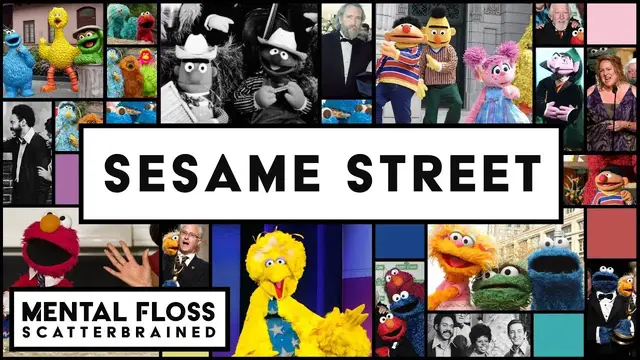
Scatterbrained is a new trivia show in which different hosts do a deep dive into one topic. Today, we're learning all about Sesame Street - from the muppets who star in the show to the humans who created them!
Subscribe for new episodes of Scatterbrained every other Wednesday!
Follow our hosts on Twitter:
John Green: @johngreen
Amanda Suk: @sukiestyles
Becca Scott: @thebeccascott
Elliott Morgan: @elliottcmorgan
Dani Fernandez: @msdanifernandez
Mike Rugnetta: @mikerugnetta
----
Don't miss a video! Subscribe NOW: https://www.youtube.com/@MentalFloss?sub_confirmation=1
About Mental Floss:
Mental Floss is where curious people come for trivia-tastic information. Mental Floss produces lists of fun facts, debunks common misconceptions, and tells untold stories from history, science, culture and more.
Website: http://www.mentalfloss.com
Twitter: http://www.twitter.com/mental_floss
Facebook: http://www.facebook.com/mentalflossmagazine
Store: http://store.mentalfloss.com/ (enter promo code: "YoutubeFlossers" for 15% off!)
Copyright Notice: This video and YouTube channel contain dialog, music, and images that are property of Mental Floss. You are authorized to share the video link and channel, and embed this video in your website or others as long as a link back to this YouTube Channel is provided.
2025 Mental Floss
The Surprising Stories of Sesame Street - Mental Floss Scatterbrained | Mental Floss
https://www.youtube.com/@MentalFloss
Show More Show Less View Video Transcript
0:00
Hi, welcome to Metal Floss Video. Today we're going to talk about Sesame Street
0:03
Maybe we'll even tell you how to get there. Actually, I shouldn't promise that
0:06
because we aren't going to tell you how to get there, but let's get started. We might as well start at the beginning. Many of your favorite Sesame Street Muppets once looked
0:23
quite different from how they do now. Some of them even had different names. Like Cookie Monster? In 1966, Jim Henson was hired to create a snack food commercial for three different general foods, wheel, crowns, and flutes
0:36
He created three characters, the wheel stealer, the crown grabber, and the flute snatcher
0:41
The wheel stealer is the one you'd recognize today as Cookie Monster, who debuted on Sesame Street in 1969
0:48
As for the snack commercial, it never actually aired, but the character did also star in an IBM training video and a Frito-Lay commercial during the 1960s
0:56
it's good to know that even Jim Henson wasn't above selling out a little bit. We can also thank food commercials for Big Bird
1:02
Henson drew a design for a tall walking bird for a Stouffer's Food commercial in 1963
1:07
That commercial also never happened, but this was the jumping off point for Big Bird
1:12
In season one of Sesame Street, the feathers looked a little more shaggy than they do now
1:15
In fact, Carol Spinney, who played Big Bird from the beginning, once said
1:19
"'He didn't look too keen. I thought he was one of the ugliest things I'd ever seen.'
1:23
Oscar the Grouch, meanwhile, was orange during the first season of the show, and magenta in an early sketch design
1:29
In the second season, he was green, and thereby doomed me to a childhood full of Oscar the Grouch jokes
1:36
Partly because my last name was Green, and partly because I was just perpetually filthy
1:41
Sesame Street explained the color change by saying that Oscar took a trip to swamp mushy muddy where he turned green
1:47
Oscar has since clarified, Actually, I'm still orange. If I ever took a bath, you'd see that. This is mold and moss
1:54
The Count used to have some different supernatural skills. He first appeared on Sesame Street during its fourth season in 1972
2:00
and in his debut episode, he used hypnotism to stun Burton Ernie
2:05
Nowadays, he's much nicer. If he can hypnotize his friends, he chooses not to
2:09
But Elmo's history is probably the most mysterious of any character on this list
2:12
Carol Spinney, who I mentioned earlier, claimed that he performed a version of Elmo during the early 1970s
2:18
but no design for the puppet existed until the late 70s. Also, some sources say that Elmo was originally known as Baby Monster
2:26
but that's a name that was used for various Muppets over the years as well as young Lady Gaga fans
2:31
Regardless, Elmo became a regular character in the 1980s and gained his signature voice in 1984
2:37
Mr. Snuffleupagus has been around since 1971, and his appearance hasn't changed too much over the years
2:43
although he did used to have yellow eyes. His identity is what changed
2:46
so originally Snuffleupagus only shared the screen with Big Bird. The audience didn know if he was an imaginary friend or not and sometimes people in Big Bird life would kind of doubt that he had this shaggy elephantine best friend Some of the people behind the scenes however worried that communicated that people in Big
3:02
Bird's life didn't believe him when he was telling the truth, which might suggest
3:06
to a child that grown-ups wouldn't believe their reports of serious incidents
3:11
And so in 1985, all of Sesame Street met Mr. Snuffleupagus. It's really beautiful, actually
3:16
Big Bird imagined him into reality. Short story time. In April of 2002, Elmo testified before the House Appropriations Subcommittee on Labor, Health and Human Services and Education
3:31
Republican Congressman from California, Randy Duke Cunningham, asked Elmo to do so
3:36
The goal was to convince the subcommittee to allot $2 million in federal funding for music research as well as instruments for schools
3:43
for schools. So, Elmo put on a suit and a red tie. Looking sharp. Then he sat next to
3:49
a friend, Joe Lomond. Lomond was the president and CEO of International Music Products Association
3:56
which had previously teamed up with Sesame Street to create music-oriented programs for
4:00
children. Lomond did a lot of the heavy lifting, but Elmo chimed in. Like, he said that music
4:05
helped him learn the alphabet, thanks to the ABC song. Apparently he plays the violin too
4:11
guy and he claimed to get a 1550 on his sats that's higher than what i got but then he said
4:17
he was kidding hey can elmo get in trouble for lying in front of a congressional committee
4:21
and after lamont said that children who get a music education are less likely to be involved
4:26
in gangs elmo concurred saying elmo is in the music program and elmo isn't in a gang a compelling
4:34
case ultimately in 2003 congressman cunningham announced that 225 000 worth of funding
4:41
had been approved for research on music and the brain. Good job, Elmo
4:48
There are some non-Muppets who have helped make Sesame Street the powerhouse show that it is
4:53
So let's learn about a few of them. Joan Ganz Cooney co-founded the Children's Television Workshop
4:59
That's the non-profit organization that created Sesame Street. Her granddaughter's first words were Big Bird
5:05
And she has a Presidential Medal of Freedom. Her children's television workshop co-founder was Lloyd N. Morissette
5:11
He was particularly inspired by his three-year-old daughter, Sarah, who loved television
5:16
Her memorization of TV jingles may have sparked the initial idea that children could be educated through songs on Sesame Street
5:23
John Stone worked on the show for decades, and we can thank him for helping create Big Bird and Cookie Monster
5:29
It's said that he had something to do with getting Jim Henson on board Sesame Street
5:33
They worked together on a Cinderella project in the 1960s. Stone wasn't a fan of the words to the Sesame Street theme song. He thought they were cliche
5:42
The song was composed by Joe Raposo He wrote many other Sesame Street songs as well as the theme songs to The Electric Company and Three Company the current executive producer of the show is carolyn parentae she started as a production
5:57
assistant in the 1990s so if you're looking for a job on sesame street maybe that's the place to
6:02
start the actress loretta long has played susan since the very beginning apparently the auditioning
6:08
process for the show wasn't totally organized john stone actually once called casting completely
6:14
haphazard, but Loretta Long got the gig after singing I'm a Little Teapot. There
6:19
were kids watching and they stood up to sing along, so she was cast. Will Lee
6:23
played the local grocer Mr. Hooper. The actor died in 1982 and the creative team
6:28
decided to have the character pass away as well. They met with child psychologists
6:33
to ensure that they addressed everything properly. The episode was called Farewell
6:37
Mr. Hooper and Carol Spinney has said, I think it was one of the best things we
6:41
ever did. Which brings me to the final fact, also sad and also involving Carol Spinney
6:47
We've mentioned Jim Henson a couple times so far. He was hugely important in creating
6:52
the Muppets who live on Sesame Street, and he passed away in 1990. Carol Spinney made
6:57
an appearance at the funeral as Big Bird. He sang Kermit's famous song, Bein' Green
7:02
It's on YouTube if for some reason you want to be the saddest you've ever been
7:05
Hey guys, I'm back! Anyway, let's dive right in. You don't have the longest-running children's TV show without a few rumors popping up over the years
7:16
so now it's time for a couple Sesame Street misconceptions. You could have guessed that
7:21
Jim Henson's death apparently sparked rumors that Sesame Street was going to kill off a beloved character, Ernie
7:26
This was after the Farewell Mr. Hooper episode, so a Sesame Street death wasn't unheard of
7:30
According to Snopes, people heard that Ernie would either die of a disease or have a traffic accident
7:35
But none of that was ever in the plans. Snopes traced the rumor getting out of control to the Manchester, New Hampshire Sunday News
7:43
A college student had heard the rumor, so he wrote a letter to the editors, which got published totally snowballing the whole thing, which is why it's important not to gossip
7:52
Speaking of Ernie, there's a misconception that he's named after a character from It's a Wonderful Life, along with Bert
7:57
In the film, there's a police officer named Bert and a cab driver named Ernie
8:01
Jerry Jewell, a head writer for the Muppets, once took it upon himself to correct this rumor in writing
8:07
He recalled a conversation with John Stone, who you'll remember from earlier had a lot to do with the creation of Sesame Street characters
8:13
Jewell wrote, Stone assured me that Ernie and Bert were named one day when he and Jim were studying the prototype puppets
8:20
They decided that one of them looked like an Ernie and the other one looked like a Bert. The movie character names are purely coincidental
8:26
And the cookie monster is not the veggie monster. In 2005, there was a lot of news coverage about Cookie Monster giving up his cookie habit for vegetables
8:34
Ronald McDonald even made a statement saying, Kudos to Cookie Monster for trying new things
8:39
It's very nice of Ronald. But here's the truth. The show did spend some time in season 36 focusing on healthy eating and exercise That included having Cookie Monster eat fruits and vegetables but his name remains the same and he still loves cookies He did participate in a new
8:54
song, A Cookie is a Sometime Food, but I don't see anything too controversial about that, but you let
8:59
me know if I'm wrong. We're going to finish up with a scientific study about Sesame Street
9:06
The paper is Early Childhood Education by Massive Open Online Courses, Lessons from Sesame Street
9:12
written by Melissa S. Kearney and Philip B. Levine, and it was published in 2015 by the National Bureau of Economic Research
9:19
The authors of the paper argue that Sesame Street was the first MOOC
9:23
so they wanted to find out if a child being exposed to Sesame Street at a young age
9:27
affected their life, from education level to employment. So how did they do this decades after the fact
9:33
Well, it turns out that TV technology in 1969 wasn't perfect. Shocking, I know, but good for science
9:40
And in 1969, the show primarily aired on ultra-high frequency channels, and UHF is a signal that
9:47
many TVs at the time didn't get. Most got very high frequency instead
9:52
Just physical distance to the transmission meant that other households didn't get Sesame Street
9:57
Without getting into too much detail, all you need to know is that two-thirds of the population in the US lived in a location with access to Sesame Street at first
10:05
The researchers could yze which households were physically able to watch the show
10:10
So they found data for those who were preschool age in 1969, then they used the 1980, 1990
10:17
and 2000 US censuses to see where these kids ended up. The 1980 census data told them whether the child was in school, graduated, or in a grade
10:29
they should be, given their age. They found exposed cohorts of students with better reception capabilities to Sesame Street
10:35
were more likely to be attending a grade that is appropriate for their age
10:39
This effect was particularly pronounced for boys, black, non-Hispanic children, and those
10:43
living in economically disadvantaged areas. The 1990 census data was used to see whether they dropped out of high school, graduated
10:50
or went to college. And the 2000 data was to see whether they were employed, had an hourly wage, or in poverty
10:57
But there wasn't statistically significant evidence that early exposure to Sesame Street
11:01
was correlated with a difference in education level or job outcomes. The researchers concluded that Sesame Street is the biggest yet least costly early childhood
11:11
intervention in US history
11:36
Thank you
#education