Up next in 10



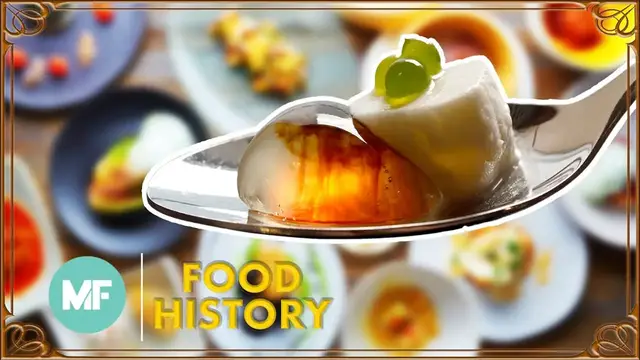
Molecular gastronomy is the fusion of food, art, and science. But how did we go from respectable culinary scientists to exuberant table-side pyrotechnics? On today's episode, we're talking to author and historian Dr. Harold McGee about the fascinating history of molecular gastronomy. Was it an important part of food history, or an elitist misstep? Food History is a show all about... well, the history of food. Join host Justin Dodd as he brings you the stories of how your favorite meals ended up on your plate. Today, we're talking molecular gastronomy. Special thanks to Dr. Harold McGee (author of On Food And Cooking: The Science And Lore Of The Kitchen) for chatting with us for this episode. ----------------------------- Don't miss a video! Subscribe NOW: https://www.youtube.com/@MentalFloss?sub_confirmation=1 About Mental Floss: Mental Floss is where curious people come for trivia-tastic information. Mental Floss produces lists of fun facts, debunks common misconceptions, and tells untold stories from history, science, culture and more. Website: http://www.mentalfloss.com Twitter: http://www.twitter.com/mental_floss Facebook: https://facebook.com/mentalflossmagazine Copyright Notice: This video and YouTube channel contain dialog, music, and images that are property of Mental Floss. You are authorized to share the video link and channel, and embed this video in your website or others as long as a link back to this YouTube Channel is provided. 2025 Mental Floss Food History: Molecular Gastronomy w/ Dr. Harold McGee | Mental Floss https://www.youtube.com/@MentalFloss
Show More Show Less View Video Transcript
0:00
The most iconic dish Spanish chef Ferran Adria made at his restaurant El Bouilly in Catalonia
0:05
was deceptively simple, a morsel resembling a green olive served on a spoon. When guests put
0:12
that sphere into their mouths, it melted into a liquid explosion of concentrated olive flavor
0:18
The dish was a trick of chemistry. Adria added olive juice, which contains calcium
0:23
to alginate. The substance, typically found in seaweeds, can rearrange its structure to form
0:29
strong chains in the presence of certain chemicals. And when substances containing calcium are
0:35
submerged in a sodium alginate solution, a water-insoluble gel-like membrane forms. The substance maintains a round, droplet shape in a process known as reverse spherification
0:46
When Adria dropped his olive puree into sodium alginate for a few minutes, what came out
0:51
were perfect olive-shaped and intensely olive-flavored quasi-liquid olives. Bouillee closed in 2011, but the shockwaves this edible science experiment sent through
1:02
the food world are still in some ways being felt today. Was molecular gastronomy a necessary
1:08
culinary breakthrough or an elitist misstep? What does molecular gastronomy even mean? I mean
1:14
isn't all gastronomy made up of, you know, molecules? Break out your agar-agar and polish
1:20
off your centrifuge, because today we're looking at the controversial beginnings of molecular
1:25
gastronomy, and even speaking to Dr. Harold McGee about its surprisingly storied history
1:30
Let's get started. Hi, I'm Justin Dodd. Welcome to Food History. Molecular gastronomy is synonymous with modernist
1:43
cuisine today, but its origins date back centuries. According to food historian Gilly
1:48
Lehman, medieval and Renaissance chefs were scientists of a sort. They often incorporated
1:53
contemporary medical beliefs into their dishes and were known to use the new science around them
1:58
to contribute to their culinary pyrotechnics. And I'm not using that last word figuratively
2:04
The 15th century manuscript of the Vivendier has a well-nigh unmakeable and almost certainly
2:10
deadly recipe to, quote, make that chicken sing when it is dead and roasted. It involves stuffing
2:16
the chicken with sulfur and mercury, heating it, and then further manipulating the bird so that air
2:22
escapes and somehow mimics the sound of a chicken. You know, like every diner wants
2:27
In the 17th century, French physicist Denis Papin created what was termed a digester. A diner from
2:33
the Royal Society who had gone to check out the invention wrote that it made
2:37
the hardest bones of beef itself and mutton as soft as cheese. Papin had invented the ancestor
2:43
of the modern pressure cooker. In the 1700s, exciting new discoveries from the field of
2:48
chemistry were applied to the culinary arts. French chemist Antoine Beaumet invented a method
2:53
to measure the specific gravity of liquids now known as the Beaumet scale. Specific gravity is
2:59
also called relative density, which is a good indication of its meaning. It compares the density
3:04
of substances to a reference material, which, when measuring liquids, is usually water. For years
3:10
Beaumet's method was an important tool in many areas of food production, from brewing beer to
3:15
winemaking. It's since been largely supplanted by the simplified Brick scale, but even today
3:21
there are vintners who will use a Bomet measurement to estimate the level of dissolved
3:25
solids in their grape juice. That gives them a good idea of the sugar content in the juice and
3:30
by extension, the potential alcohol levels in their finished wine. If we think of winemaking
3:35
as half art and half science, Bomet helped push the science part of the equation forward
3:40
Bome is also the namesake for the Bome egg, which can be made by submerging a whole egg
3:46
in alcohol for about a month. Over time, the ethanol seeps through the pores of the shell
3:51
and coagulates the egg inside, effectively cooking it with no heat required. Whether this single egg
3:57
will get you properly buzzed, that's for you to find out. Preparing a Bome egg feels closer to
4:02
modern molecular gastronomy than simply frying one in a pan, but it's a little bit hard to
4:07
to articulate why. After all, the change an egg goes through when exposed to heat is a
4:12
molecular one, too. For that matter, so is curing meat, fermenting vegetables, almost
4:17
every other form of food preparation humans have been practicing for millennia This makes molecular gastronomy tricky to define Herv Thys is a scientist and magazine editor and one of the pioneers of the field as we discuss later in this video Thies distinguishes between molecular cookery and
4:34
molecular gastronomy. In his understanding, molecular cookery involves using new techniques and science to make better food and should be considered an art rather than a science
4:44
Molecular gastronomy, on the other hand, is the scientific discipline of understanding cooking
4:49
Even Thies admits, though, that there isn't any one universally accepted definition of the term
4:55
When people think of molecular gastronomy today, they're usually thinking of the intersection of
4:59
food, science, and even theater that was exemplified at restaurants like El Bouilly
5:04
And that has its own antecedents in culinary history. French chef and cookbook author Marie
5:09
Antoine Carême became famous for experimenting with the presentation-forward cooking style in
5:14
in the early 19th century. It didn't feature the chemical wizardry that's essential to modern
5:19
molecular gastronomy today, but it did bring together art and science in the form of edible
5:25
architecture. Creations he's credited with, like the choux pastry puff tower known as croquembouche
5:30
were meant to be a feast for the eyes as well as the palate. Kerem constructed other centerpiece
5:35
desserts to resemble ancient structures like temples and pyramids. He summed up his attitude
5:41
in one of his cookbooks, writing, I want order and taste. A well-displayed meal is enhanced 100
5:47
in my eyes. The haute cuisine pioneered by Kerem was a hit in the dining rooms of the wealthy, but
5:53
he didn't intend for his style of cooking to be exclusive. In the several cookbooks he authored
5:58
in his lifetime, he shared instructions for pulling off complicated cooking techniques
6:02
in a home kitchen. According to Eater, his were the first cookbooks to use the phrase
6:07
you can try this for yourself at home. Carem may have inadvertently laid the groundwork for one
6:12
strand of what would become molecular gastronomy, but it would take a long time for the term itself
6:17
to arise. In 1988, cooking school instructor Elizabeth Caudry-Thomas and physics professor
6:23
Ugo Valdre met in Italy and agreed on the potential value of a workshop focused on the
6:28
science of food. At that time, new scientific advancements in the culinary arts were generally
6:33
the domain of industrial food manufacturers. They weren't viewed as tools for home or restaurant
6:39
chefs. The idea, sparked by Kadri Thomas, eventually became the Orice Workshops, which began in Sicily
6:44
in 1992. This is where the term molecular gastronomy first appeared publicly, according
6:50
to Dr. Harold McGee, who eventually became one of the workshop's co-organizers. The original posters
6:55
publicizing the event advertised an international workshop on molecular and physical gastronomy
7:01
But the blend of science and cooking discussed that these conferences was different from the theatrical, innovative style of fine dining that rose to prominence in the coming years
7:11
The purpose was really to understand traditional cooking, the science of foods that have been traditionally prepared in restaurants and were considered the height of the art of cooking
7:22
As for why the word molecular was chosen in the first place, it was all about timing
7:27
Molecular biology was a trendy field in the early 90s, and even people outside the scientific community were hearing about it
7:34
Kadri Thomas recruited Oxford physicist Nicholas Kurty to be the workshop's director
7:39
Irv A. Thies also signed on. Kadri Thomas's contributions didn't stop at the conception stage, though
7:45
Once the event was up and running, she led several workshops, including a blind tasting of tomatoes with various kinds of salts
7:52
and another blind tasting comparing foods prepared in a microwave versus conventional cooking methods
7:56
Though she was integral to the endeavor, her role has often been overlooked, with media highlighting
8:02
Tee's and Curti's contributions instead. We asked Dr. McGee to reflect on why that is
8:07
There was the professional hierarchy. There are professors of physics, and then there are
8:13
cooking school teachers. And the hierarchy back then and still now, I'm sure, was pretty clear
8:22
and then also the world of cooking back then and the world of science back then and still were dominated by men
8:30
There were, to my recollection, no women cooks, no women chefs invited to this meeting
8:38
Elizabeth was always there to make things happen, to introduce people to each other
8:44
Just a wonderfully warm welcoming presence I think actually probably felt more comfortable behind the scenes than on stage but that doesn excuse the fact that all along her contribution was really neglected
9:00
I don't think the workshop would have taken place without her. The goal of that initial workshop
9:05
was to bring together chefs, writers, and scientists to discuss four areas of interest
9:10
What was already understood about the science of cooking, how a better understanding of science
9:14
could improve existing cooking methods, the benefits of developing new kinds of cooking
9:19
techniques and ingredients, and whether approaches used in industrial food processing could be
9:24
adapted to smaller kitchens. Though these summits are sometimes thought of as the birthplace of modern molecular gastronomy
9:31
they weren't a forum for chefs to brainstorm whimsical dishes for $300 tasting menus
9:36
Rather, the participants were more concerned with the practical applications of science
9:41
on the broader culinary scene. At the same time as the Ariche workshops, Ferran Adria was pioneering the foam and eyedropper style of cooking that's more commonly thought of as molecular gastronomy today
9:52
What we were doing in the Ariche meetings was along the same lines, you know, part of the zeitgeist in the culinary world, classic French cooking that then became standard international hotel cooking
10:07
You just followed a book, the Escoffier playbook. In the 1960s in France, along with the Nouvelle Romance, the new novel, the new movies, and so on, there was also a movement for the new cooking, Nouvelle Cuisine
10:24
I see what happened in Spain as kind of the explosive outgrowth of something that really began in the 60s in France
10:34
And in particular with this one guy, Ferran Adria, who was just, you know, he was the Gaudi of cooking
10:42
He just had a completely new way of thinking about things, an approach that would, in the end, really benefit from a scientific understanding of food and cooking, which is, I think, why the science of food and cooking, or one of the reasons that the science of food and cooking, became of such general interest
11:04
What he had done was taken ingredients and completely transformed them physically
11:09
And that just changes the experience of eating, because, you know, you look at a leaf of lettuce, you know what it's going to taste like
11:15
But you look at a green blob, you have no idea until you put it in your mouth
11:19
Those flavored foams made with whipped cream canisters were so sensational that they led to a spate of knockoffs
11:26
often perceived to be covering up for subpar cooking. In a piece by Jeremy Rapanich for Rob Report, the chef Alex Stupak likened the use of once-daring
11:35
techniques by lesser chefs to the pyrotechnics at a KISS concert. Take that away, take your face
11:41
paint away, and you suck. Whoa, shots absolutely fired at KISS and at my high-concept restaurant
11:48
Detroit Rock Sous Vide. After taking over El Bouilly as head chef, Adria launched his own
11:53
series of culinary workshops centered around developing new menus. The restaurant was open
11:58
for six months out of the year, and for the other six months, he led his team of chefs in
12:02
experimenting with new cooking techniques and translating them into finished dishes. This combination of meticulous, empirical experimentation and total artistic freedom
12:11
may be at the heart of molecular gastronomy, and it led to El Bouye being named best restaurant in
12:17
the world by Restaurant Magazine five times throughout the 2000s. At the same time
12:22
a new class of chefs were expanding the bounds of cooking in their own restaurants
12:26
At The Fat Duck in Bray, England, British chef Heston Blumenthal, who actually attended the last
12:31
two Ariche workshops, put a mad scientist spin on haute cuisine. One of his influential trademarks
12:37
was the use of liquid nitrogen in cooking. With a boiling point of negative 321 degrees Fahrenheit
12:44
the substance allows chefs to bring ingredients to freezing cold temperatures in seconds
12:49
One reason frozen food gets a bad rap is the propensity for ice crystals to form and disrupt
12:54
an item cellular structure. The bigger the crystals are, the more the texture of the
12:59
food changes. But when food freezes quickly, these crystals are smaller and the structure
13:03
of the ingredients remain intact. Blumenthal used the principle when developing nitro-poached
13:08
green tea and lime mousse a palate cleanser served at the fat duck flash table side American chef Wiley Dufresne is considered another pioneer of molecular gastronomy At his New York restaurant WD50 which closed in 2014 one of the signature dishes was a
13:25
deconstructed eggs benedict. It consisted of sous-vide egg yolks, Canadian bacon wisps, and
13:31
fried hollandaise. The last component was apparently the trickiest to perfect. Dufresne and his team
13:37
pulled it off by adding gelatin to the sauce so it could be cut into portions and adding starch to
13:42
to protect the egg yolks in the hollandaise from high heat, thus preventing them from scrambling
13:47
Today, Dufresne's passion for tinkering has taken him in a seemingly different direction
13:52
running his own donut shop and pop-up pizzeria here in New York City. But these humble foods are
13:57
in the end, no less the products of food science than noodles made with methylcellulose, or indeed
14:04
pizza pebbles, a deconstructed dish that was once on the menu of WD-50. Dufresne even gave a lecture
14:11
at Harvard in 2021 about his quest for pizza dough perfection, touching on topics like gluten
14:16
levels, cold fermentation, and manipulating carbon dioxide. Man, these chefs are so much smarter than
14:22
I am. Perhaps the other American chef most commonly associated with molecular cuisine
14:27
is Grant Ackett's. It's not hard to see the influence of chemistry in the menu of his Chicago
14:32
restaurant, Alinea. The famous translucent pumpkin pie is made by setting concentrated
14:37
pumpkin pie stock and clear gelatin. And perhaps even more so than some of his peers
14:43
Ackitt celebrates the artistic side of molecular cooking as well. Like Kerem two centuries before
14:48
him, he prioritizes serving a well-displayed meal that takes heavy inspiration from the art world
14:54
A famous dessert course at Alinea is literally painted onto the table to resemble an abstract
14:59
art piece. A different dessert features edible invert sugar balloons filled with actual helium
15:04
guests are encouraged to inhale, calling to mind Karem's whimsical pastry towers
15:09
but cranked up to 11. In a 2021 article for Inside Hook
15:13
Akats explains the emotional part of molecular gastronomy that bounces out the cold science, writing
15:34
ways. These chefs are credited with shaping molecular gastronomy, but they haven't all
15:40
embraced the label. Some of them have outright rejected it. When discussing the phrase
15:45
Heston Blumenthal told The Guardian, molecular makes it sound complicated, and gastronomy makes it sound elitist. Farhan Adria has expressed similar sentiments
15:54
and instead refers to his style of cooking as deconstructivist. Akitz prefers progressive
15:59
American. Other names that have been tossed around to describe a science-based approach
16:04
defined dining include avant-garde, modernist, and experimental cuisine. I suggested funky yummy time, but this was rejected. None of these terms have succeeded in replacing
16:14
molecular gastronomy in the cultural lexicon. Sure, the phrase originated with the workshop
16:19
That had nothing to do with liquid olives or sugar balloons, and maybe the word molecular is
16:24
both too broad and too specific to describe the cuisine it's associated with. But it's apt in its
16:30
own way. The futuristic name points to the crucial role science plays in creating deliciousness
16:35
and to the possibilities unlocked by experimentation. Ingredients are physical and chemical materials, and when we cook we transform them from one state
16:46
into another. And those transformations are governed by the laws of physics and chemistry
16:52
So anytime you cook an egg, you're doing physics and chemistry both
16:59
And the more we understand about what it is we're exactly doing when we cook in the kitchen
17:06
the better we can control those processes and come up with the results that we want
17:12
The label may be a little over the top, but in a fun and sometimes frustrating way
17:18
that was the case with much of the food served at the most innovative restaurants of the 2000s
17:22
Thanks for watching Food History, and a special thanks to Dr. Harold McGee. Getting the chance to hear his thoughts on this moment in culinary history
17:29
is honestly one of the coolest things we've gotten to do while making this series so far
17:34
If you have an idea for a future episode of the series, or a bucket list level food world luminary we should talk to
17:40
drop us a suggestion in the comments below. Thanks for watching
education