Up next in 10



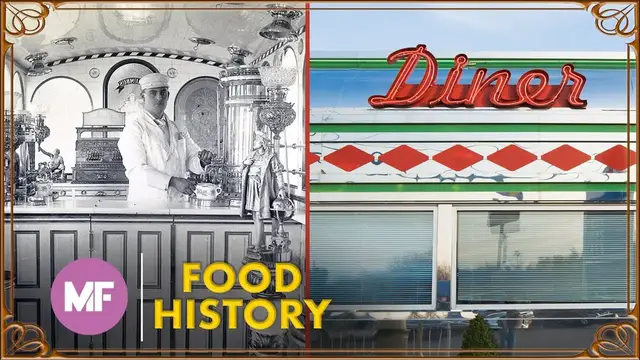
Diners are an American culinary staple. What other place can you get pancakes, a martini, and a triple-decker sandwich? But, where does the word "diner" come from? And why do many diners look like old silver train cars?
On today's episode, we're breaking down the history of the diner. While many people associate them with the 1950s and 1960s, we're going all the way back to the 19th century to explore the real origins of this beloved culinary institution.
Food History is a show all about... well, the history of food. Join host Justin Dodd as he brings you the stories of how your favorite meals ended up on your plate.
Special thanks to Sarah Lohman for writing this script, check out her book here!
https://www.amazon.com/Eight-Flavors-Untold-American-Cuisine/dp/1476753954
Don't miss a video! Subscribe NOW: https://www.youtube.com/@MentalFloss?sub_confirmation=1
About Mental Floss:
Mental Floss is where curious people come for trivia-tastic information. Mental Floss produces lists of fun facts, debunks common misconceptions, and tells untold stories from history, science, culture and more.
Follow Mental Floss:
Website: https://www.mentalfloss.com/
Mental Floss Facebook: https://www.facebook.com/mentalflossmagazine
Mental Floss Instagram: https://www.instagram.com/mental_floss/
Mental Floss TikTok: https://www.tiktok.com/@mental_floss
Mental Floss X: https://twitter.com/mental_floss
Mental Floss Discord: https://discord.io/mentalfloss
Copyright Notice: This video and YouTube channel contain dialog, music, and images that are property of Mental Floss. You are authorized to share the video link and channel, and embed this video in your website or others as long as a link back to this YouTube Channel is provided.
2025 Mental Floss
The Diner's Surprising History | Mental Floss
https://www.youtube.com/@MentalFloss
Show More Show Less View Video Transcript
0:00
From the painting Nighthawks to Seinfeld, New York City diners are an intrinsic part of American
0:05
pop culture. If you live in the U.S., you probably have a diner that's special to you
0:10
whether it's a 24-hour spot that you drank coffee and ate french fries in as a teen
0:14
or a mom-and-pop shop where your family went for Sunday breakfast, where, if you're like me
0:19
you always ordered the exact same thing. Where did these restaurants made of chrome and neon
0:24
originate? We're going to trace diner dining from their lunch wagon ancestors to
0:28
we-are-happy-to-serve-you takeout cups. And talk about how diner culture might disappear. Hi, I'm Justin Dodd. Welcome to Food History. Diners began as mobile food wagons that would
0:46
come out at night to serve simple meals to workers on the third shift. They were literal wagons
0:52
carts pulled by horses. Although street food vendors have existed as long as cities have
0:57
Most had simple setups and sold only one kind of food. Pies and baked potatoes were popular choices, no complaints here, and they operated during
1:04
the day. The first nighttime food wagon, as far as anyone knows, was started by Walter Scott in Providence
1:10
back in 1872. Scott sold sandwiches, coffee, and pies out of his repurposed horse-drawn wagon
1:17
Scott's mini restaurant on wheels was so successful that he quit his day job as a printer
1:22
Soon, many other New England entrepreneurs mimicked Scott's business model. businesses were called lunch wagons. They were essentially late 19th century food trucks. They
1:32
could pull up to multiple businesses in a day or stay put at one known location. The food was
1:37
prepared inside over simple stoves or stored in ice boxes and served out a window to customers on
1:42
the street. Manufacturers opened up that specifically built or retrofitted the wagons
1:47
They were decorated with fancy lettering and murals and had an overhang to keep customers dry
1:52
or shaded in inclement weather. In 1887, one entrepreneur added inside seating. The lunch
1:59
wagons became rolling restaurants, which sounded like a lot of fun and very dangerous. This concept
2:05
spread quickly with an assist from the temperance movement. If you were a hungry night worker and
2:10
all that was open was a saloon, that's probably where you'd go. But lunch wagons provided a
2:15
zero-proof option for cheap coffee and a sandwich. Eventually, these wagons started getting so popular
2:20
they extended their hours outside of the night trade, which put these lightly taxed operations
2:25
in competition with normal restaurants for the morning rush. Faced with upset restaurateurs
2:31
saloon owners, and people angry with the wagons clogging up increasingly busy streets
2:36
cities that had been perfectly fine with nighttime wagons started clamping down on
2:41
daytime operations. Wagon owners started parking on private property where they could set for hours
2:46
without incurring the wrath of local municipalities. Now, with more or less permanent locations
2:51
these night lunch wagons started turning into lunch cars. Then in the 1920s, they'd become known as dining cars
2:58
which was eventually shortened to, drumroll please, diners. The seating was often a simple counter with stools
3:06
designed so that customers didn't stay too long. One manufacturer, Jerry O'Mahoney, was based in New Jersey
3:12
and shipped cars to clients all over the country O dining cars were pretty much fully stationary In this way he sometimes credited with inventing The Diner a prefabbed restaurant inspired by railroad cars
3:24
Other companies would sometimes actually outfit decommissioned railroad cars with a kitchen
3:28
and indoor seating. O'Mahoney was one of the first diner manufacturers in New Jersey, but
3:33
not the last. Through the 20th century, New Jersey was the leading maker of diners. About
3:38
about 95% of all prefab diners were built in the state. Diners were shipped worldwide
3:44
They could even be sent back to the factories for updates and repairs. But many of these buildings
3:49
stayed local. To this day, New Jersey is known as the diner capital of the world
3:54
with more than 500 active diners in the state. But a spot called Casey's in Natick, Massachusetts
4:00
is America's oldest continually operating diner. It started out as a lunch wagon in the 1890s
4:06
The current structure was built in 1922 by the Worcester Lunch Car Company. It's been family-owned
4:12
for four generations and still serves breakfast, lunch, and dinner, as well as a tempting assortment
4:17
of pies. Honestly, though, any pie is going to tempt me. Buttery crust, delicious fillings, oh yeah
4:25
I'm getting closer every day to becoming a cartoon bear. While lunch wagons started in cities, diners thrived in the suburbs. Post-World War II
4:33
many white Americans left cities to move to suburbs and places like Long Island
4:37
Diners literally followed them. Especially for white men that had served in the military
4:42
government programs made buying a home accessible. The idealized American Dream made a white picket fence and a yard the ideal. At the same time, redlining—housing policies
4:53
that reinforced segregation, as well as other financial embargoes placed against people of color
4:58
forced many families to stay in urban neighborhoods. Diners were rarely an exception to this divided norm, whether due to Jim Crow laws or de facto
5:05
segregation that arose from geographical and socioeconomic differences. Think of the diner's
5:11
cousin, the lunch counter, and the role sit-ins at them played in the civil rights movement
5:15
What diners were able to bridge, to an extent, was a socioeconomic divide within racially
5:21
segregated communities. They often occupied a geographic fringe between the city and the suburbs
5:26
catering to people in both spaces. The fact that they could attract factory workers and
5:31
office professionals, families, and solo diners alike speaks to their wide-ranging appeal
5:37
Their prevailing racial segregation, though, hints toward the limitations of food as a uniting force
5:43
Since diners were designed as portable structures, the dining cars were loaded onto trucks and
5:47
shipped to the burbs. But diners had to evolve once they arrived. They no longer served just
5:52
rough-and-tumble male overnight workers, they needed to fit into the family-oriented model
5:57
of post-war America. The diner's interiors were redesigned to match the era's conception of a
6:02
chic modern home, including Formica countertops, porcelain tiles, leather booths, wood paneling
6:08
and terrazzo floors, as Joan Russell wrote for Pace magazine. These were the same materials that
6:13
appeared in many of the new bungalows of the suburban middle class. The old counters and stools
6:18
remained, but booths and tables were added for group seating, appealing to families
6:23
Many diners still remained open 24 hours a day, though, to serve their original clientele
6:28
In time these spaces became a refuge for teenagers a gathering place for those too young to go to bars and too heavily involved in high school theater to be invited to parties Just me The diners of the 1950s were made from silvery sleek modern metal railroad
6:43
cars. Some were built as freestanding buildings, but they still had shiny, stainless steel exteriors
6:49
neon signs, and a space-age appearance. But if we're getting technical, these would properly be
6:54
called coffee shops. The term diner technically referred to factory-built, prefabbed restaurants
6:59
from dining cars that were shipped to a location. In modern America, of course
7:04
coffee shop has taken on a different meaning, generally applying to something like a Starbucks
7:09
and diner has become sort of the catch-all name for these family-owned, often round-the-clock
7:13
restaurants. The American Northeast still has the highest concentration of traditional diners
7:18
in the country, with 2,000 spread out over New England. But it nearly wasn't meant to be
7:24
In the 1960s, the increasing spread of chain restaurants led to a diner decline
7:28
So, what saved it? Well, if you've ever lived in the New York City area, you might remember that at
7:34
one time it seemed like every diner was owned by a Greek family. Anarchist poet and Greek-American
7:40
historian Dan Georgiakis theorized that the tradition was born from the Kaffaneon, a traditional
7:45
Greek gathering space for men to drink coffee and ouzo in Annis Apertif, while gabbing about the day
7:52
Boys being boys drinking coffee and gossiping? Come on, you love to see it. When Greek immigration
7:58
to New York started picking up at the turn of the 20th century, these coffee shops came as well
8:03
opening in Greek neighborhoods. Although there may be a thematic connection between these spaces and
8:07
the Greek diners of the late 20th century, it was a second wave of immigrants that largely came after
8:12
1965 that made Greek-owned New York diners iconic. Food businesses are traditionally one of the most
8:18
common ways new immigrants begin to build a life in America. According to WBUR, the National
8:25
Restaurant Association found in 2016 that 29% of restaurant and hospitality businesses
8:30
are immigrant-owned, compared to just 14% of all U.S. businesses. A food business doesn't take a ton of money to start and doesn't necessarily require
8:38
a complete mastery of English to run. The employees are often from the same country
8:43
if not the same town, so there's a cultural community with shared language
8:48
religion, and social traditions. In the case of Greek diners, new immigrants often started
8:52
in the back washing dishes and worked their way up from busboy to cook to waiter until they had
8:58
enough money to buy a diner of their own. Both the menus and the interior design of New York's
9:02
Greek diners are considered iconic. The menus can be bafflingly long, encompassing dishes as far
9:08
ranging as pancakes to lobster tails, omelette to spaghetti, moussaka to matzo ball soup
9:15
famous oversized muffins to duck a la ranch. As New York Times writer Deana Kleiman noted on the
9:20
1991 menu of the Harvest Diner in Westbury, Long Island. One Manhattan diner boasts 220 menu items
9:28
You have to satisfy everyone, Harvest Diner owner Charles Sava told The Times
9:33
If a new menu item appeared in one restaurant, it usually wasn't long before it appeared in others
9:37
In a continual race to set each diner apart, owners not only added menu items but lavish or
9:42
tacky, depending on your perspective, interior decorations like chandeliers dripping in faux
9:48
crystal flowing draperies Greek statues fountains and flashing LED light shows Even the graphic design of these spaces has had a cultural impact Heck the blue and white takeout coffee cups often printed with We Are Happy to
10:01
Serve You, a Greek key pattern and other Hellenic visuals, have become so iconic that MoMA design
10:07
stores sell ceramic versions of this classic cup. In the first decades of the 21st century
10:13
Greek diner owners began to retire and sell off their businesses to newer generations of immigrants
10:18
people from South Korea, Bangladesh, Central America, and more. With the rising cost of real estate in the tri-state area, though
10:25
some diners are being priced out of existence. Some classic establishments have been torn down for luxury high-rises
10:32
Others have been displaced by drugstore chains or banks. Surviving diners face competition from restaurant franchises
10:38
And those problems existed before the COVID-19 pandemic, which stopped most of us from dining out
10:44
More than half of New York City's diners have closed in the last 25 years
10:48
419 were opened in 2019. The full effects of the pandemic are not yet known. Jeremiah Moss
10:54
author of the blog Vanishing New York, summed up many New Yorkers' wistful sentiments when he wrote
10:59
It seems the longer you live in New York, the more you love a city that has vanished
11:03
But many New York City's stalwarts stubbornly remain. B&H Dairy, a kosher dairy restaurant in
11:09
the East Village that opened in 1938, is currently owned by an Egyptian man and a Polish woman
11:14
and a staff of people from all over the world who wear shirts that boast, Hala, por favor
11:19
One of the oldest continually operated diners in New York is Namwa Tea Parlor
11:24
a dim sum shop on Doyer Street that opened in 1920. When you think of diners, your mind might not go straight to dumplings and chicken feet
11:31
but this New York institution suggests the expanse of culinary traditions that can fit under the ever-evolving diner label
11:38
Its classic interior hasn't been significantly updated since the 1960s and has the tile floor, formica tables and counters, chrome stools, and red vinyl booths of a classic diner
11:50
It was started by immigrants, offers affordable fare, and, though it's emerged as a destination for tourists, remains enmeshed in its community
11:58
In a nod to its New York identity, its Namwa Kwae outpost even introduced the Baugal back in 2017
12:05
combining the beloved Baobun with the equally esteemed bagel. For New Yorkers, these diners are places of community and sometimes of celebrity
12:13
After all, Seinfeld made the facade of Tom's Restaurant in Morningside Heights iconic
12:19
They are family-owned businesses and sometimes refuges for found families. New York City and the country at large is ever-changing
12:26
It's hard to say if the diner will survive the next transition, so if you're lucky enough to have a family-run diner in your city or town
12:34
make sure to kick them some business. Start a new pancake tradition
12:37
end up there after a long night just like when you were a teen, or give yourself a break from
12:42
doing dishes on a Sunday morning at a place where you can order hash browns, chicken fingers
12:47
and a martini all from the same comfortable booth. These institutions deserve to see another
12:52
generation sit at their counters. And don't forget about the pies. We're going to start 2023 making
12:58
food history episodes all about beloved dishes. If you have one you'd like us to cover in the
13:03
coming year, drop it in the comments below
#education