Up next in 10



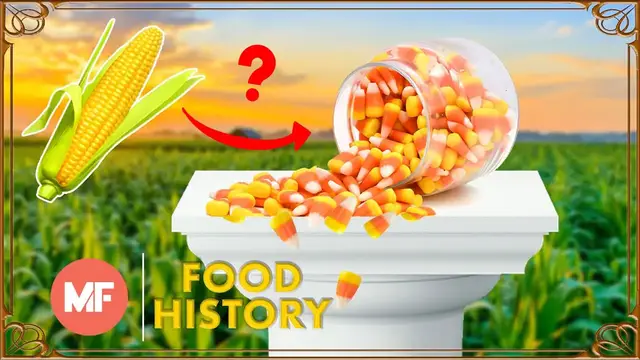
Candy corn is a divisive Halloween treat. Some like it, others absolutely hate it. Where do you stand?
The history of candy corn takes us on a fascinating journey, including a detour through the invention of corn syrup, all the way to the origins of trick-or-treating. How did this simple novelty treat become associated so heavily with October?
Food History is a series from Mental Floss where we dive deep into the culinary stories that lead to the food on our plates. If you have an idea for a dish, cooking technique, or cuisine that you'd like us to explore in a future episode, tell us in the comments.
And for the origins of many other foods, check out our episode of the List Show https://www.youtube.com/channel/UCpZ5qUqpW4hW4zdfuBxMSJA?sub_confirmation=1
Don't miss a video! Subscribe NOW: https://www.youtube.com/@MentalFloss?sub_confirmation=1
About Mental Floss:
Mental Floss is where curious people come for trivia-tastic information. Mental Floss produces lists of fun facts, debunks common misconceptions, and tells untold stories from history, science, culture and more.
Website: http://www.mentalfloss.com
Twitter: http://www.twitter.com/mental_floss
Facebook: https://facebook.com/mentalflossmagazine
Copyright Notice: This video and YouTube channel contain dialog, music, and images that are property of Mental Floss. You are authorized to share the video link and channel, and embed this video in your website or others as long as a link back to this YouTube Channel is provided.
2025 Mental Floss
How Candy Corn Became a Halloween Staple | Mental Floss
https://www.youtube.com/@MentalFloss
Show More Show Less View Video Transcript
0:00
This year, CandyStore.com surveyed 20,000 customers and determined that candy corn was
0:05
America's least favorite candy. Case closed? Not so fast. A separate report from the same
0:11
site back in 2017 found that it's the top Halloween candy in at least six states, according
0:16
to sales data. How much of the candy corn that's sold each year actually gets eaten
0:20
remains unknown. Hi, I'm Justin Dodd. Welcome to Food History. Whether you view a piece
0:25
of candy corn as a nostalgic treat or a cloying nugget of disappointment, you can't deny
0:30
its place in the United States' Halloween season. The pattern of white, orange, and
0:35
yellow has practically become synonymous with the holiday. But how did that happen
0:39
What is candy corn actually made of? And how many subscribers will we lose if I admit
0:45
I don't think candy corn's that bad? Let's find out
0:55
Most accounts of candy corn's history pinned its invention to the 1880s
0:59
During that decade, George Renninger, an employee of the Wonderluck Candy Company in Philadelphia
1:03
had the idea to mold so-called buttercream into the shape of a corn kernel
1:07
Though the exact recipe is unknown, the main ingredients in his buttercream were probably
1:11
sugar and corn syrup. You know corn syrup, right? It's that syrup, uh, made from corn
1:18
We should probably just do a thing. In the early 1800s, a German-born chemist named Gottlieb Kirchhoff heated starch and
1:28
sulfuric acid to create glucose syrup. Basically, the acid helped break down the chain of joined-together molecules comprising
1:35
starch into individual glucose molecules, along with some other compounds. That's essentially how corn syrup is made today, although enzymes are sometimes used
1:45
in place of, or in addition to, acids to facilitate that breakdown
1:50
The starch in corn comes from the plant's endosperm, the tissue that nourishes the developing plant
1:55
When the starch is isolated and broken down, the resulting corn syrup inhibits the crystallization
2:00
of sugar and provides a smoother texture to many sweet treats. So candy corn does contain corn, or at least the syrupy sugar derived from corn
2:10
Renninger's buttercream was a chewy substance that could be molded into any shape, making
2:14
it a cheap alternative to marzipan, which was generally made from sugar, egg whites
2:19
and ground almonds. And corn kernels likely weren't the first shape Renninger's buttercream took. Inspired
2:24
by nature Renninger made miniature chestnuts turnips and pea pods out of the confection But it was his candy corn distinguished by three stripes painstakingly poured by hand that would eventually become a sensation During his initial tinkering Renninger conducted some interesting market research As his grandson
2:42
Ken told the Palm Beach Post back in 2000, the elder Renninger would sometimes throw
2:46
the proto-candy corn towards the family's chickens. When the chickens finally started coming after the corn, Ken Renninger said, he knew he had
2:55
the perfect shape. If he had the chickens fooled, then he had the right thing.
2:59
Well, I mean, that is just a savvy business strategy for any industry. Fool the chickens
3:04
fool the world. You guys remember Heroes? Man, that show really went off the rails after
3:08
season one. Anyway. By 1898, Golitz, known today as Jelly Belly, was replicating Renninger's recipe and producing
3:14
candy corn on a much larger scale. Back then, it was sometimes also known as Chicken Feed
3:20
That may seem like an odd marketing choice, but the name made perfect sense at the time
3:25
Though corn has a long and storied history in the Americas—which we touched on in our
3:29
episode about nachos—by the late 19th century, a lot of people in the United States viewed
3:33
corn primarily as feed for livestock. Sure, people were eating cornbread and johnny cakes and even those newfangled corn flakes
3:41
but in 1917 it was estimated that out of 2.7 billion bushels of corn produced in America
3:46
86.3% of that was for animal feed, and less than 4% was for human consumption
3:52
The other 10%? Corn sweaters. Don't quote me on that last one
3:57
Despite the potentially less-than-appetizing associations, chicken feed was a hit. It became a common sight at candy stores, and Golitz had trouble keeping up with demand
4:06
Due to its signature pattern, candy corn was extremely difficult to produce in the days
4:11
before factory equipment did most of the work. Workers called runners had to carry buckets known as streamers that contained up to 45
4:19
pounds of the sugar and corn syrup mixture down a conveyor belt laden with candy trays
4:25
The runners would pass the streamers over the trays, allowing a small stream of liquid
4:28
to drip into the mold. Candy corn consists of three layers, of course
4:33
Generally the white tip, orange middle, and yellow top. Back then, workers had to repeat this process with each color to make a single piece of candy
4:42
lot of work, but how else would we know which end to bite off first? For those of you wondering
4:47
43% of people report eating the white part of a candy corn first, and 10% start with
4:52
the yellow end. 47% admit to eating the whole thing at once like an animal
4:57
Whether the different layers taste different or not is a matter of some debate. Though
5:01
some blind tests online suggest certain tasters can differentiate between the layers Vox claims that the only difference between each section is the artificial coloring The amount of labor required to make candy corn look like candy corn made it impractical
5:15
to manufacture year-round. According to Slate, candy makers started limiting the production season to March through November
5:21
which helped link candy corn to autumn in the harvest season. But it wasn't until the 1950s that candy corn—or any mass-produced candy, for that
5:29
matter, became a big deal during Halloween. Some historians claim antecedents of trick-or-treating
5:34
in the ancient Celtic festival Samhain, but the tradition as we know it today has been practiced
5:39
for less than a century in the United States. In fact, if you saw a masked kid going door-to-door
5:44
asking for handouts in late 19th century America, it was more likely to be Thanksgiving time
5:49
That tradition apparently grew out of a rather mean-spirited mimicry of poor Massachusetts
5:54
its residents who would go door-to-door asking something for Thanksgiving? The practice grew and
6:00
eventually drew such ire that some New Yorkers were known to heat up so-called red pennies on
6:05
their stoves and throw them onto the streets to burn the fingers of children who bent down to pick
6:10
them up. Yikes! No wonder we get such a bad rap here in New York. We are monsters. So how did
6:16
Halloween trick-or-treating begin? A number of theories have been suggested. Some say that the
6:21
door-to-door tradition was a way to connect communities, while others put more emphasis
6:25
on the trickery. One account of a Halloween in 1923 commented that
6:30
"...the usual battalion of children covered all sections of the town, demanding treats
6:34
or else suffering the dire penalty of tricks for refusal." Just four years later, a different paper reports that young, heavily-disguised children were
6:43
walking door-to-door demanding trick or treat, explaining, To treat was to be untricked, and the youthful holdup men soon returned home bowed down with
6:52
treats. At that time, kids could likely expect to bring home nuts, coins, and homemade baked goods—not
6:58
exactly the type of stuff that excites trick-or-treaters today. Enter the candy companies
7:04
Through clever marketing, they had made Easter and Christmas major candy-buying events
7:07
and they were looking for an opportunity to push their products in the fall
7:11
Halloween was a no-brainer. People were already looking for treats to give to trick-or-treaters
7:16
and all the manufacturers had to do was downsize their offerings into bite-sized packages and
7:21
slap some Halloween branding on the label. They also didn't need to do much to rebrand candy corn for the holiday
7:27
The treat was already associated with the season, it came in festive fall colors, and
7:31
it was the perfect size for handing out to trick-or-treaters. Halloween transformed candy corn from an agriculture novelty candy to a seasonal staple The candy industry now produces roughly 35 million pounds or 9 billion kernels of candy corn a year There
7:47
are even different types for different holidays, like red and green reindeer corn for Christmas
7:51
and pink and red cupid corn for Valentine's Day, as if the Roman god is some kind of animal. But
7:57
the vast majority of candy corn is sold in the weeks leading up to Halloween
8:01
Fortunately for candy makers, mass-produced candy corn is no longer poured by hand
8:05
In modern factories, machines create molds for the candy by making triangular indents
8:10
and sheets of cornstarch. These cornstarch molds then pass under automated nozzles that
8:15
deposit the candy corn's layers. The three colors are still layered separately
8:19
but because it's machines doing the work instead of humans, it's much less time consuming
8:23
The production process has been updated, but the actual recipe hasn't changed much over
8:32
the years. Candy corn still starts with a slurry of sugar and corn syrup mixed in a large vat
8:38
To create its smooth, creamy mouthfeel, candy makers add fondant, an icing made of sugar
8:43
and corn syrup, and marshmallow, also made of sugar and corn syrup, plus gelatin for texture
8:50
Gelatin is a protein made from the collagen of animal bones, skin, and connective tissue
8:55
This gives it thickening properties, but also means your candy corn is not vegan-friendly
9:01
Even if you can find candy corn that leaves gelatin off the ingredients list, it may still
9:04
contain something called confectioner's glaze. That's a nice word for lacresin, a secretion produced by some species of insects native
9:12
to Asia. It gives candy corn the glossy coating. So if you've ever had candy corn and thought, hmm, this kind of tastes like something an
9:20
insect secreted, you weren't entirely wrong. What is candy corn supposed to taste like anyway
9:26
The answer isn't plain sugar, and despite corn syrup being a main ingredient, it's
9:30
not supposed to taste like corn, either. According to Jelly Belly, the company that popularized the candy more than a century ago
9:37
candy corn is a wonderful blend of creamy fondant, rich marshmallow, and warm vanilla notes
9:43
Combined, these flavors create the distinct candy corn flavor. The texture is as important as the flavor
9:50
Our candy corn is creamy and smooth, never coarse. It should be like biting into butter
9:56
If you're not on Team Candy Corn yet, just think of it as a morsel of marshmallow butter
10:01
the next time you're offered one this Halloween. And if that doesn't appeal to you, maybe just stick to chocolate
10:07
Can you imagine if they were this big? What a nightmare
#education