Up next in 10



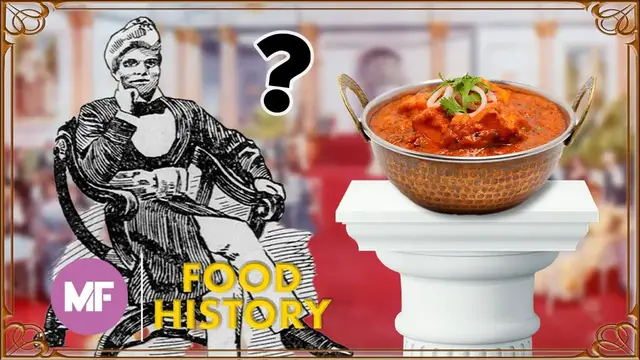
Who really was Prince Ranji Smile? This mysterious chef dazzled America at the turn of the century with his delicious curry and bombastic personality. He was in newspapers all across America for his cooking AND gossip-fueled personal life. So why don't we know his name anymore? Food History is a show all about... well, the history of food. Join host Justin Dodd as he brings you the stories of how your favorite meals ended up on your plate. Today, we're talking Ranji Smile, an immigrant chef who changed the world of cooking. Let's dig in. Check out Sarah Lohman's Book, Eight Flavors: The Untold Story of American Cuisine below: https://www.amazon.com/Eight-Flavors-Untold-American-Cuisine/dp/1476753954 Mayukh Sen's piece about Ranjie Smile: https://www.vox.com/the-highlight/22158105/ranji-smile-celebrity-chef-indian-food-sarah-lohman ----------------------------- Don't miss a video! Subscribe NOW: https://www.youtube.com/@MentalFloss?sub_confirmation=1 About Mental Floss: Mental Floss is where curious people come for trivia-tastic information. Mental Floss produces lists of fun facts, debunks common misconceptions, and tells untold stories from history, science, culture and more. Website: http://www.mentalfloss.com Twitter: http://www.twitter.com/mental_floss Facebook: https://facebook.com/mentalflossmagazine Copyright Notice: This video and YouTube channel contain dialog, music, and images that are property of Mental Floss. You are authorized to share the video link and channel, and embed this video in your website or others as long as a link back to this YouTube Channel is provided. 2025 Mental Floss Food History: "Prince" Ranji Smile | Mental Floss https://www.youtube.com/@MentalFloss
Show More Show Less View Video Transcript
0:00
When I say celebrity chef, who do you think of? Anthony Bourdain? Rachel Ray? Maybe Julia Child
0:08
If so, you might be surprised to learn that America's first celebrity chef was, by many
0:12
accounts, Prince Ranji Smile, a Muslim immigrant from the city Karachi in modern-day Pakistan
0:19
Smile came to New York City in 1899 and made a name for himself as a talented chef
0:23
media darling, and womanizer. Smile loved his adopted country and, in some ways
0:30
it loved him, but he was still denied citizenship because of his race. He eventually left the States
0:35
and disappeared from the historical record. Was Smile really the first celebrity chef
0:40
and what can his story tell us about American attitudes towards so-called ethnic food? Let's
0:47
dig in. Hi, I'm Justin Dodd. Welcome to Food History. Today's episode was written by food
0:58
historian Sarah Lohman, inspired by a chapter in her book, Eight Flavors, The Untold Story
1:03
of American Cuisine. Check it out if you eat up interesting gastronomical history
1:08
Ranji Smile wasn't the first famous chef. Marie-Antoine Carême was a French chef in
1:13
the early 19th century who became internationally famous as a caterer to royalty. Charles Ranhofer
1:19
was the head chef at Delmonico's in New York City in the second half of the 19th century
1:23
rising to fame by putting dishes like Lobster Newberg and Baked Alaska on the map
1:29
But for much of world history, chefs were confined to the kitchen
1:33
Smile elevated his profession. He saw himself not just as a chef, but as an educator
1:38
spreading the gospel of real Indian cuisine through the U.S. And he paired his culinary talents with the tabloid-ready, bombastic personality
1:46
that kept him in the papers and the public eye. Ranji Smile was born May 11, 1879
1:52
It's unlikely Smile was his birth name, and he purposely obscured the details of his early life
1:58
At different times, he claimed to be the son of a wealthy merchant and the fifth son of the Emir of Balochistan
2:04
Karachi was a cosmopolitan port city controlled by the British, and it may have been there that Smile began his career as a chef
2:12
It's not impossible that cooking for the British soldiers and civil servants may have inspired him to emigrate to England
2:18
Before Smile was 20 years old, he had made his way to London and was cooking in its finest hotels
2:23
first the Savoy, then its grandiose neighbor, the Hotel Cecil. The Cecil, an enormous luxury hotel opened in 1896, was the largest in Europe at the time with over 800 rooms
2:36
A centrally located tourist destination, it touted itself as the choice of foreign dignitaries
2:41
and also as ideal for traveling Americans, saying in advertising that, American requirements are understood and catered for. There was a first-class American bar as well
2:51
as American chairs. Whatever that means. It seems that Smile got his nickname in the kitchens of
2:58
these London hotels. In 1899, retired Lieutenant Colonel turned food writer Nathaniel Newnham
3:04
Davis noted that when he poked his head into the grill room, Smiler, the curry cook, appeared
3:10
instantly. Because I talk a little bad Hindustani, Smiler has taken me under his protection and
3:16
thinks that I should not go to the Savoy for any other purpose than to eat his curries
3:21
Let's take a little tangent to discuss the cuisine that Smile was cooking. Curry is an
3:26
anglicized word, maybe invented by the British during their occupation of India or adapted from
3:31
the Portuguese who came before them. But the most plausible explanation for the word's English
3:36
etymology is offered by cookbook author Julie Sahani in her book, Classic Indian Cooking
3:42
She explains that the term likely came from kari, a fragrant leaf used in a spice blend
3:47
in South Indian cooking. The spice blend made from kari and other spices was called kari poti
3:52
The word kari got changed to curry, and the rest is history. Today, kari leaves are often called
3:59
curry leaves Sahani goes on to say that among the English Indian middle class The word curry became so popular that in due course a simple everyday dish called salan spicy thin gravy was renamed curry As a result
4:14
chicken and spicy gravy, which for centuries was known as mergi ka salan, came to be called chicken
4:19
curry or curry. When British men who had served or traded in India returned to England with their
4:25
families, they often imported their taste for Indian cuisine. In some cases, they brought their
4:30
Indian servants and cooks back with them to the UK. In others, they may have hired an Indian cook
4:35
in Britain. By the end of the 18th century, curries could also be had at local coffee houses
4:41
The Cecil appealed to retired army men and civil workers who had spent their careers in India by
4:46
serving curry. The trend traveled across another ocean, coming to America in the cookbooks clutched
4:52
to the bosoms of many a homesick English immigrant wife. The manuscript of New Hampshireite Catherine
4:58
in Moffat Whipple, which dates to around 1776, contains a recipe for an apple curry soup
5:04
Apples were often used in Western curries to replace unavailable exotic fruits like mangoes
5:10
The Virginia Housewife, written by Mary Randolph in 1824, gives us the first printed American
5:16
curry recipes. Randolph says, Curry powder is used as a fine-flavored seasoning for fish, fowl, steaks, chops
5:23
veal cutlets, hashes, minces, alamodes, turtle soup, and in all rich dishes
5:28
gravies, sauce, etc., etc. She gives recipes for a catfish curry, as well as veal fillets
5:35
baked leg of mutton, ragu of veal breast, calf's feet fricassee, all kicked up a notch with curry
5:41
powder. Because Americans had developed a taste for curry and the perceived exoticism of the Indian
5:46
subcontinent, restaurateur Louis Sherry poached Smile from the kitchen of the Cecil to come work
5:52
in New York City in 1899. Lieutenant Colonel Newnham Davis noted in an update to his book
5:58
Smiler has now, I am told, gone to America to make his fortune
6:02
Sherry's restaurant was so fancy it was considered the rival to Delmonico's. Both were on trend with
6:08
the 400, the gilded age name for the most important and wealthy men and women in New York society
6:15
Sherry's became well known for extravagant-themed dinners, like a multi-course meal served on
6:20
horseback in the private dining room. Incredible. Sherry had an interest and knack for bringing the exotic to New York City. He wanted to introduce
6:29
authentic Indian food to an American audience. When Smile arrived in New York City, he was
6:33
described as short but very handsome. Sounds like someone I know. He wore a closely-shaped beard
6:39
had a dazzling white smile, and was always immaculately dressed. Always cool and confident
6:45
He spoke English with a soft, lilting accent. A chef from India, women go wild over him, screamed the headline of the New York Letter
6:52
in 1899. The article is a brilliant, if dated, piece of food writing describing the experience
6:59
of enjoying one of Smiles Curry's at Sherry's. It made the rounds in American newspapers all across the country AP style and was republished
7:07
as far away as Iowa. You look over the Indian menu with the sort of dread and trembling of what's to come
7:13
the journalist wrote. Soon Joe, the name smile used when he first arrived, arrives immaculately arrayed in a heavy
7:20
white linen India costume with a broad smile which shows all his gleaming teeth and with the
7:26
little seductive manner that pleases the public so much he lays before you a silver dish. As he
7:31
removes the cover, you feel that life is not all a weary dream and you become less skeptical
7:36
on Indian dishes in general. I'm feeling a little hot. Is it hot in here? When dining at Sherry's
7:43
you could order from the Indian menu a la carte or order a multi-course dinner
7:48
Smile had a knack for marrying his food to a compelling narrative. As he once said
7:53
the American public must be entertained as well as fed. And while some of the purported details
7:59
of his own life, replete with royal parentage and high-stake ransoms, might seem unlikely
8:04
contemporary media were at least at first happy to report his outlandish claims as fact But it would be a mistake to think Smile was all style no substance He made all his own curry powders and pastes from scratch He told reporters he would like to someday publish a
8:20
cookbook and tour the country teaching Americans how to make a proper curry. Unfortunately, it
8:25
doesn't appear that this cookbook came to be. Based on existing documents, in fact, it seems
8:30
likely that Smile was illiterate, only able to sign his own name. And although he could have worked
8:35
with a partner to produce his book, the project did not come to fruition. If it had, it's far
8:41
less likely his name would have been forgotten for so many years. Smile stayed at Sherry's for
8:46
two years, then briefly opened his own restaurant called the Omar Khayyam, possibly New York City's
8:51
first Indian restaurant, on Fifth Avenue between 33rd and 34th Streets in Manhattan
8:57
only a couple blocks from where I'm sitting right now. Smile also chose to petition for
9:01
American citizenship in 1903. It wasn't a requirement in the early 20th century. There
9:06
were very few immigration laws and no papers required to work. Citizenship was a choice for
9:12
those who wanted to fully embrace their adopted country. But it was a choice that was only
9:16
available to some. When Smile petitioned for citizenship, America's immigration policy was
9:21
still guided by laws put into place in 1790, where only a free white person was eligible for
9:28
citizenship. In 1870, the law was amended to include aliens of African nativity and to persons
9:34
of African descent. But if you were Hindu, as immigrants from India were referred to regardless
9:39
of their actual religion, a state judge would decide if he thought you were white or black
9:44
and eligible for citizenship. Smile's citizenship petition was rejected, likely because of the color of his skin. In 1904, Smile left New York and went on tour
9:54
He spent summers cooking in touristy Atlantic City. The Washington Post reported Smile was soon to be joined by his young bride
10:01
Princess Ranji Smile, formerly Ms. Rose Schluter of Philadelphia. The two were never actually married
10:08
In 1910, he applied for a marriage license to a different woman, Anna Marie Davidson, but seemed to have never gone through with it
10:16
In 1912, he was engaged to aspiring Broadway ingenue Violet Ethel Rochlitz
10:21
Rochlitz was called undeniably pretty in the press, and a ravishing image of her appeared
10:26
while she toured with Smile in Boston. She clearly had a flair for the dramatic, peering out from
10:31
under an enormous hat with sleepy, sultry eyes. She credited her husband's cooking for making her
10:38
more beautiful and seems to have converted to Islam. Clearly, Smile was having a grand old time
10:43
enjoying national celebrity status while touring with beautiful women. His stints at summer resorts
10:49
and promotional events let him make an income while avoiding the grueling pace of a hotel kitchen
10:54
But New York was one of the few states that did not have anti-miscegenation laws
10:59
criminalizing interracial marriage. And based on federal laws at the time, Rochlitz could have lost her own status as a citizen because she married a non-citizen
11:08
In 1916, Violet died of heart failure. For Smile, it was the start of more difficult times to come
11:15
When Smile lived the life of a celebrity on the East Coast, more and more Indians from Punjab were attempting to enter the U.S. via Angel Island on the West
11:22
Coast. Their arrival sparked a national debate about immigration from India. Between 1899 and
11:29
1914, nearly 7,000 Indians immigrated to California. They came to the West Coast to
11:34
work in lumberyards and railroads. Many of them were agricultural workers, migrating as the crops
11:40
ripened. These laborers aspired to own their own lands and farms. They were often married
11:46
but had come without their families. H.A. Millis, who was a superintendent of Immigration Commission
11:52
investigation, said, the Hindus are regarded as the least desirable, or better, the most undesirable
11:58
of all the Eastern Asiatic races which have come to share our soil. California politicians wanted
12:04
to keep Punjabi men out, but there was no national law that said you could stop them from entering
12:10
Immigration officials began to exploit the laws that were available, calling for the deportation
12:15
of immigrants afflicted with contagious diseases and those who might become a public charge A public charge was a person thought likely not to be able to find work and would need financial aid from the government From 1911 to
12:28
1915, 54.6% of Indian immigrants were barred from entering the United States and subsequently
12:34
deported. This was the highest rate of any immigrant group. In 1917, what's sometimes called
12:41
the Asiatic Barred Zone Act officially barred immigration from virtually all of Southeast Asia
12:46
and the Middle East. Although the U.S. denied Indian men like Smile a chance to become citizens
12:51
or even the chance to immigrate at all, Americans were still obsessed with the romance of the exotic
12:57
Orient, however hazily defined. At the dawn of World War I, one of the big music hits was
13:03
Down in Bombay. Where the girls are nice, the record sang, they eat curried rice full of red
13:09
hot spice in India far away down in Bombay. Smile wasn't a citizen, but as a resident
13:16
he still had to fill out a draft card. Smiles listed him as living in New York City with a
13:21
woman named May Smile. They weren't married at the time, but would be by 1918. In 1920
13:27
Smile lived at a new address in Harlem and with a new woman, Rebecca Smile. The census says Rebecca
13:33
came from Pennsylvania, and she is listed as black. Smile was also listed as black
13:38
As a racial minority in the U.S., Smile often juggled multiple identities. His draft card had
13:43
labeled him in the language of the day as Oriental. In 1922, Smile was featured in the New York Hotel
13:49
Review, a prominent trade magazine, in an article entitled The Chef, the King of the Kitchen. His
13:55
full-length photo is central in the page, handsome, at 40-some years old, in crisp kitchen whites
14:01
and a turban. To either side of him are images of prominent French chefs working in New York
14:06
America has given no attention to the development of a school of cookery of its own, declares the
14:11
author Mary Pickett, but has imported its cooks from all parts of the world, and when the American
14:16
culinary school is finally developed, it will have embodied in it the good points of the culinary art
14:22
of all the world. Pickett understood, if only in a limited way, that immigration would become the
14:27
secret ingredient of American cuisine. When cooks emigrated to this country and brought their recipes
14:33
and traditions with them, those dishes would often evolve and adapt into something new—the diverse
14:38
complex, extraordinary cuisine of the United States. After Prohibition was ratified in 1919, though, the restaurant industry faced a difficult time
14:48
Even today, restaurant profits are generally heavily reliant on the sale of alcohol
14:53
The loss of income massacred the fine dining industry in New York in the 1920s
14:57
In fact, Smile's old employer, Sherry's, closed in 1919 shortly after Prohibition was ratified
15:04
It was a tough time for chefs like Smile to find a job and make a living. This hardship may have affected his decision as he reached his 50th birthday to leave America
15:14
In 1929, Smile boarded a steamship bound for England. He was alone, no wife or children by his side, despite his many well-publicized relationships
15:23
When he arrived in Southampton, he gave his destination address as the Hotel Cecil, his old employer
15:29
He may have been returning to a job there. Many chefs and bartenders worked abroad during Prohibition
15:35
but he could have just been passing through on his way back to Karachi
15:39
Either way, that's the last we know of Smile, and there are no further records to indicate how he may have lived the rest of his life
15:45
and how he may have died. Perhaps he left the States because he was angry
15:50
deflated by the laws that marginalized him and other immigrants from India
15:54
Perhaps he just wanted to retire in the country where he was born. After Smile left, his legacy was largely forgotten
16:00
In recent years, his story is finally being brought to light by South Asian American scholars
16:05
like Vivek Bald and Mayuk Sen, whose work we've linked to down below
16:09
He was also covered in Sarah's book, as I mentioned up top. We put a link to eight flavors down in the description, too
16:15
Smile's story is just one of many, as she traces some of the ingredients that came to define
16:20
American cuisine. If you have an idea for a dish, person, or cuisine that we should cover in a future episode
16:25
drop it in the comments down below. Thanks for watchin', and I'll see you next time
#education