0:00
While cultures around the world have fried dough for centuries, the ring-shaped treat
0:03
with a hole in the middle may not have appeared until 1847. That's when an American sailor named
0:09
Hanson Gregory later claimed he came up with the culinary innovation. As he tells it, donuts in those days were just solid hunks of dough, and when they were crispy
0:18
on the outside, they'd still be raw in the center. He was working aboard a lime-trading schooner at
0:23
age 16 when he had the idea to remove the middle of the cake altogether. Using the lid of a tin
0:29
pepper box, he cut into the middle of that donut the first hole ever seen by mortal eyes
0:34
as he dramatically told the Washington Post nearly 70 years later. When he got to land
0:39
he went home to Maine and showed this new donut method to his mother. Her ring-shaped donuts
0:44
became a local sensation, and the world of deep-fried pastries would never be the same
0:48
Hi, I'm Justin Dodd. Welcome to Food History. Humans first started frying dough thousands of
0:59
years ago. One of the earliest records of the marriage between oil and dough appears in the
1:04
Bible. Leviticus 7, verse 12 mentions possibly fried cakes mingled with oil of fine flour as
1:11
an acceptable offering to God. The ancient Greeks and Romans enjoyed fried cakes with honey
1:16
and different versions of the sweet treat eventually spread throughout Europe. But all that fried deliciousness is problematic for tracing the history of the donut
1:24
because there are just so many possible origins. Traditionally, the dish has been traced to Dutch cuisine
1:29
When Dutch immigrants arrived in New York City, formerly known as New Amsterdam, they brought food from the Netherlands with them
1:35
One popular recipe was olle cooks, or oil cakes, which were made by frying lumps of dough and pork fat
1:42
Alternatively, they were called ole bolen, or oil balls in English. An early connection between oil balls and doughnuts is in Washington Irving's 1809
1:51
book, A History of New York from the Beginning of the World to the End of the Dutch Dynasty
1:56
The sleepy, hollow author wrote of balls of sweetened dough fried in hogs fat and called
2:01
doughnuts or ollycooks While the most widely accepted version of the American doughnut history points to this Dutch provenance not all food historians are convinced Some think doughnuts come from an English fried dough
2:13
They could be a delicious amalgam of English, Dutch, and German fried carb traditions
2:18
No matter what, it's probably for the best that we stop calling them oil balls
2:25
While it's clear where the first half of the term comes from, the nut in doughnut is a little more mysterious
2:31
Some etymologists think it's a reference to the original shape of the snacks, which
2:35
were small and round like nuts, before they gained their distinctive whole
2:40
Another theory posits that the nut comes from literal nuts, or at least culinary nuts, like
2:45
almonds and pecans. To solve the problem of undercooked dough in the middle of their oily cakes, Dutch cooks
2:50
sometimes stuffed them with ingredients like nuts. The rise of the ring-shaped donut made this unnecessary, but the trick may have had a lasting
2:57
impact on the dessert's name. By the early 1900s, many donut purveyors had shortened the name to D-O-N-U-T. Today, this
3:06
alternate spelling is nearly as common as the original, but it didn't get to be that
3:09
way overnight. The version starting with D-O-U-G-H maintained this domination until around 1950
3:16
when the simplified word began to steadily increase in popularity. The first Dunkin
3:21
Donuts opened in Quincy, Massachusetts that same year, and the business went with the
3:25
the snappier spelling of donut for its name. The growth of the chain in the latter half
3:30
of the 20th century correlates with the shorter words upswing, though now that Dunkin' has
3:35
dropped the donuts from its title, the older spelling may be poised for a comeback
3:39
As of 2020, there were more than 18,000 donut shops in the U.S., but they weren't immediately
3:45
embraced around the country. The fried treats were largely considered a Yankee food throughout
3:49
the 19th century, and it took a stint overseas in the 1910s for them to earn their all-American
3:55
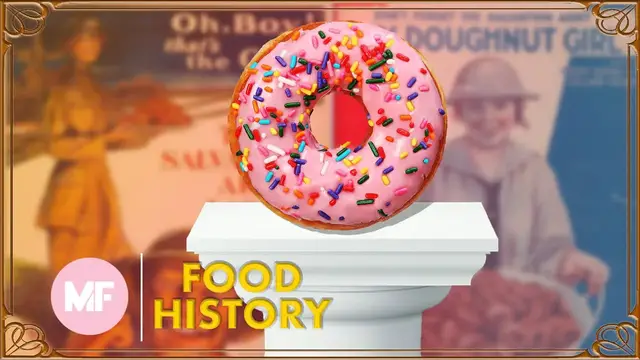
reputation. During World War I, the Salvation Army sent 250 volunteers to France to provide
4:01
snacks and supplies to US troops stationed there. The female volunteers had planned to bake cakes
4:06
and pies for soldiers on the front lines There was just one problem Ovens became harder to access the closer they got to the battlefield But they did have pans at their disposal which they could fill with lard and heat over a fire Switching their focus to donuts was a no
4:22
The volunteers had all the ingredients they needed to make donuts, plus the equipment to fry them in
4:27
When it was time to shape the sweet morsels, they took a page from Hanson Gregory's book and used what they had on hand
4:33
They rolled out the dough with juice bottles and shell casings. They cut the donuts with empty baking powder cans and punched out the holes using part
4:40
of a broken coffee maker. The women, who came to be known as Donut Lassies, were so dedicated to their work that they
4:46
were willing to risk their lives. In her book The War Romance of the Salvation Army, Evangeline Booth, the daughter of the
4:52
Salvation Army's founders, recounts one volunteer's response when she was told to stop serving
4:57
donuts to troops under fire. She said to the regiment leader, Colonel, we can die with the men, but we cannot leave them
5:04
Booth, by the way, eventually became the General of the Salvation Army
5:08
World War I soldiers developed a taste for fried dough that they brought home with them
5:12
Following the war, the association between donuts and the military helped cement the
5:16
snacks' place in the country's cuisine. And because the ingredients needed to make them were adaptable and affordable, frying
5:22
donuts during hard times was seen as patriotic. According to the National World War I Museum and Memorial in Kansas City, Missouri, Crisco
5:30
published recipes for wartime donuts that called for swapping valuable lard for their
5:35
vegetable shortening. Donut lassies are also the reason we have two National Donut Days. In 1938, the Salvation
5:41
Army declared the first Friday in June to be National Donut Day as a way of promoting
5:46
its charity work. The second National Donut Day is celebrated on November 5, and its origins
5:51
are less clear. Because it falls so close to Veterans Day on November 11, some historians
5:56
suspect it was born from the pastry's ties to the military as well. Or maybe we all just wanted
6:01
another excuse to eat some fried dough. Donut history in America varies by region. While Dunkin
6:06
has dominated the East Coast for decades, it's never really been able to take off on the West
6:11
Coast. The chain's absence gave smaller donut shops in California a chance to thrive, and an
6:16
entrepreneur named Ted Noy definitely took advantage of that opportunity Noy arrived in Southern California in 1975 as a refugee from Cambodia He tried his first donut shortly after immigrating
6:28
to the U.S. It reminded him of the round, fried pastries called Nom Kong served out of street
6:33
carts back home. He decided he would make his living off the confections. He did this by
6:38
becoming a trainee at a donut chain called Winchell's, taking over his own store
6:42
and eventually buying a second donut shop called Christie's. Under his ownership
6:46
Christie's grew into a local successful chain. He leased his acquisitions to other Cambodian
6:51
refugees in the area looking to get started in business. Noi sponsored many of the refugees
6:56
personally before setting them up with housing, loans, and their own stores to run
7:00
Giving other refugees a leg up wasn't just a nice thing to do. It also turned out to be a
7:04
pretty good business move. By 1985, Noi owned around 60 shops and had earned millions of dollars
7:10
through his sugary empire. The Donut King's impact on the industry can still be seen today
7:15
Decades later, many of Southern California's independent doughnut shops are still owned
7:20
by Cambodian immigrants and their descendants. Noy is also responsible for the prevalence of pink
7:25
doughnut boxes. He told the Los Angeles Times in 2017 that either he or his former business partner
7:30
Ning Yen had ordered the color early in his career because they were looking for a cheap alternative
7:35
to the standard white boxes. Their supplier, Wesco, offered them pink boxes at a discount
7:41
and customers quickly grew accustomed to the distinctive packaging. Ring-shaped donuts are an American invention, but sweetened, fried dough is consumed around the globe
7:50
In Israel, it's estimated that over 15 million jelly-filled donuts known as sufganiyot
7:55
are eaten in the weeks around Hanukkah. In China, they enjoy crispy golden sticks
8:00
called yotiao. Churros are consumed in many countries, and the French enjoy light dough
8:05
fritters called pet du nun, or nun's farts. Suddenly, oily balls don't sound too bad
8:12
Thanks for watching Food History. Our next episode is all about gummy bears
8:16
Comment below with your favorite color, or let us know if you think they all taste the same
8:21
Now, if you don't mind, I think it's finally time for some all-American fried dough
8:27
Mmm. Now that's freedom