Up next in 10


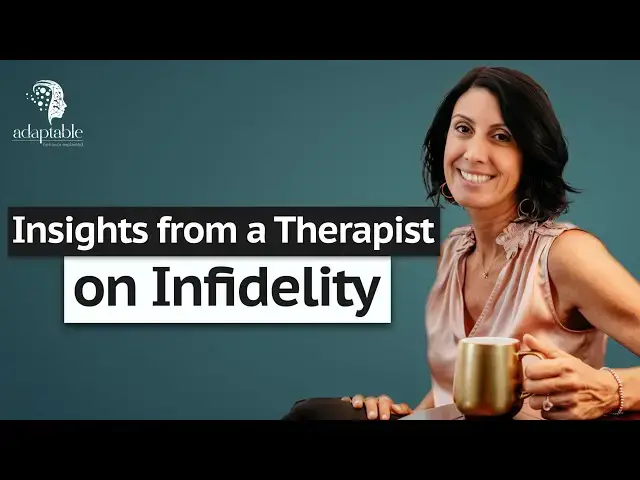
Welcome to Adaptable | Behavior Explained! Why do people cheat? Is it about love, attraction, or something deeper? In this video you get to here from a licensed therapist, break down the common reasons behind infidelity, exploring emotional, psychological, and situational factors. Whether you're looking to heal from betrayal or understand human behavior better, this conversation sheds light on the complexities of relationships and trust.
💡 Topics Covered:
- Emotional disconnect and unmet needs
- Thrill-seeking and impulsivity
- Statistics
- Relationship patterns and past trauma
- How to navigate and rebuild trust after infidelity
📌 Don’t forget to like, subscribe, and share this video if it resonates with you. Together, we can create healthier relationships and better understanding.
I'm Kelly O'Horo, Attachment based EMDR Therapist, EMDRIA Consultant, and Advanced Trainer. I'm a mom of 5, Nonna of 5, wife, and a healer. I have the honor of spending my workdays walking along side people while they brave their healing journeys. I try to live with the generous assumption that we're all doing the best we can with what we know. Therapists are teachers for the "life stuff" and "emotional vocabulary" that may not have been learned due to gaps in our care givers capabilities. In the last 15 years I've learned that people are freaking amazing, resilient, and inspiring. Most importantly, we are hardwired for connection and for healing!
I hope to bring an authentic, compassionate, and unpolished approach while we explore a variety of topics such as parenting, marriage, relationships, dating, trauma, attachment, adoption, depression, addiction, anxiety, and love! There's a why for all behaviors and an explanation that makes perfect sense as emotion is at the root of it all.
-- Links --
https://linktr.ee/kellyohorolpc
https://youtu.be/rLnARKekvgo
https://www.emdria.org/find-an-emdr-therapist/
Show More Show Less View Video Transcript
0:06
hi everyone I'm Kelly ooro and this is
0:09
adaptable Behavior explained hi there
0:12
thanks for joining us today on adaptable
0:15
I'm Kelly ooro and I'm happy to share
0:17
with you this really hard topic today
0:20
that we're going to talk about uh which
0:22
is infidelity I've had several requests
0:25
in the comment sections on previous
0:27
relationship episodes to do a show on
0:29
this so um hopefully this uh can help
0:32
you out infidelity is a really tough
0:35
topic but it's pretty common and so
0:37
today we're going to discuss why people
0:39
can be unfaithful uh the steps that are
0:42
needed to reconcile if that's the
0:43
decision and the experiences both people
0:46
might be going through upon Discovery or
0:49
disclosure uh we're going to talk about
0:51
statistics and potential outcomes for
0:53
marriages that face this Challenge and
0:55
so let's go ahead and get started so the
0:58
first thing we're going to talk about
0:59
are reasons that people are Unfaithful
1:01
and there's many uh infidelity is really
1:05
painful and it's complex and
1:07
understanding the reasons behind it h
1:09
can be you know maybe the first step
1:11
toward healing whether you decide to
1:13
stay with a person or not uh here are
1:16
some common reasons why people might be
1:18
unfaithful and this can be helpful for
1:20
someone who who has been unfaithful as
1:23
well as for the person who experienced
1:25
the Betrayal so the first that might be
1:28
hard to hear is a lack of Love sometimes
1:31
people feel a lack of emotional
1:33
connection or love or Intimacy in their
1:36
primary relationship they've lost
1:38
connection their lives have gotten so
1:41
busy the stressors that are outside of
1:43
the marriage become insurmountable and
1:45
they don't feel that they're in
1:46
connection with their partner and they
1:49
don't feel like they're moving through
1:50
life and the hard things in life with
1:52
their partner so let me give you an
1:54
example of a client uh let's let's call
1:56
her Sarah she feels emotionally
1:58
neglected by her husband who was really
2:01
often preoccupied with work she felt
2:03
like she was an item on his checklist
2:05
and so she begins seeking some emotional
2:08
fulfillment through an affair with a
2:10
co-worker who gave her the attention
2:12
that she was so longing for and craved
2:15
and so when you think about this it
2:17
starts out with a with a deficit in her
2:19
own experience in her marriage now I'm
2:22
not saying that this is an excuse of
2:23
course we need to know we're having that
2:25
issue and we need to address it with our
2:28
partner with a therapist because
2:30
otherwise we create um potential damage
2:33
in our marriage or in our relationship
2:35
by by finding that connection and
2:37
attention outward another reason that
2:40
some people have an affair uh is because
2:42
of their desire for variety oftentimes
2:44
boredom or desire for a new experience
2:47
can lead to infidelity so again these
2:50
are not good excuses these are just
2:52
potential reasons that that start uh
2:54
someone on this path so let me talk
2:57
about another client let's let's call
2:58
him John um he admits that he cheated
3:01
because he felt his marriage had become
3:03
monotonous boring there was never
3:05
anything new and the excitement of the
3:08
new relationship made him feel alive
3:10
again well this doesn't have to be the
3:12
solution because if you're noticing this
3:14
feeling of uh monotony or boredom you
3:18
know we want to encourage you to go to
3:20
your partner and say we need to find
3:21
some ways to spice this up and there's
3:23
so many tools and tricks and books and
3:26
you know things that you can find to
3:28
create more spice and intention to liven
3:31
up the experience of intimacy in your
3:34
marriage another reason that people
3:37
might have an affair are perhaps low
3:39
commitment maybe they're just someone
3:41
who don't necessarily see the um the
3:44
commitment in being with someone and so
3:47
that lack of commitment in the
3:49
relationship or to the relationship can
3:51
make infidelity more likely so let's say
3:55
for example uh we'll call her Lisa she
3:58
enters into her marriage uh with doubts
4:00
and she never fully knows that or uh
4:03
admits that to herself or certainly to
4:05
her partner so she's not really fully
4:07
committed at the beginning of the
4:09
experience so then an opportunity for an
4:11
affair arises she doesn't feel that same
4:13
level of betrayal that someone who is
4:16
more committed to their partner might
4:18
feel and again this isn't a
4:20
justification the damage is going to be
4:22
just as painful because that's not
4:25
necessarily the Assumption of the
4:26
partner that's being betrayed another
4:28
reason might be situational factors
4:30
sometimes PE people uh have experiences
4:33
like being away from their partner for
4:35
long periods of time or under the
4:37
influence of a substance like alcohol
4:40
can lead to a lapse in judgment or
4:42
prefrontal lobe um you know thinking
4:45
irrational decision decision- making and
4:47
there can be that lapse of judgment that
4:49
can lead to infidelity so for example if
4:52
someone Works frequently um out of town
4:55
finds themselves in situations where
4:57
they're lonely they're disconnected did
5:00
from their family so during a trip maybe
5:02
they have a one night stand after they
5:04
had a heavy night of drinking this can
5:06
be potentially easier to move through
5:09
because it wasn't as premeditated and it
5:11
can be perhaps easier for someone to get
5:14
to forgiveness and understanding if this
5:15
was the reason so these reasons can be
5:18
helpful to understand often times what I
5:21
have seen in my practice and partly
5:23
because people will come in wanting to
5:26
stay together and reconcile and they're
5:28
really looking for the underlying reason
5:30
that caused them to behave in this way
5:32
in the first place because they don't
5:33
want to be a hurtful person um often
5:36
times at the root of that is self-esteem
5:38
issues so someone with low self-esteem
5:40
might seek that validation through
5:42
infidelity they don't know how to ask
5:44
for what they need they don't know that
5:45
they deserve connection and so they tend
5:48
to if something falls into their lap in
5:51
a more easy way they they feel better
5:54
about themselves from the attention for
5:57
example a client struggles with
5:58
self-worth and found that attention from
6:01
someone outside of their marriage made
6:03
them feel more desirable and valued and
6:06
because of the Gap in their own sense of
6:08
self-worth and self-esteem that was too
6:11
um hard to avoid or to not lean into
6:14
again working on those self-esteem
6:17
issues and ultimately their trauma
6:18
issues and their attachment issues from
6:20
before the U relationship are going to
6:23
be necessary to overcome propensity to
6:27
do something like that again we can't um
6:30
expect Behavior to change if we don't
6:31
look at why the behavior happen
6:33
attachment injuries from previous trauma
6:36
for me almost always predicate why
6:40
someone would would step out of their
6:41
marriage because they don't have uh the
6:43
same sense of values uh they don't
6:45
believe they're worth behaving in
6:47
certain ways and that's almost always
6:49
from previous attachment injuries these
6:52
past trauma uh injuries and attachment
6:54
they significantly impact behavior in
6:57
relationships um and that can look like
7:00
so much external validation or really
7:02
withdrawing and holding um self small
7:05
and so th those things especially when
7:10
when uh experiencing historical
7:11
abandonment or neglect so talk about a
7:14
client who experienced childhood
7:16
abandonment they had a difficult time
7:18
trusting their partner his unresolved
7:20
trauma led him to seek comfort and
7:22
validation outside of his marriage and
7:24
so understanding some of these reasons
7:26
can help both Partners address their
7:28
underlying issues ues in their
7:30
relationship and ultimately potentially
7:33
help get to forgiveness and and
7:36
understanding and building back of trust
7:39
so let's say that you do find out your
7:42
partner is having an affair or they
7:43
disclose this and you decide you want to
7:46
reconcile so we want to talk about the
7:48
steps that are likely going to happen
7:51
after infidelity uh and Reconciliation
7:54
after infidelity is challenging but it
7:56
is possible if there's commitment and
7:58
effort from both Partners we can't have
8:01
one partner uh have to do all the heavy
8:03
lifting it won't work so some essential
8:06
steps that are part of the
8:08
reconciliation and I have to say a
8:10
little disclosure here I have had
8:12
couples that have massively better
8:14
relationships after reconciling after
8:17
infidelity because of all the hard work
8:18
they were willing to do to get past that
8:21
and more often than not they see there
8:22
were a lot of injuries in the
8:24
relationship even before the infidelity
8:26
took place and so it's often times
8:29
really helpful to do the work and get
8:31
through it if that's the desire but
8:33
again you're going to need to know that
8:34
there's a lot of steps that take place
8:36
and it's not an easy road so open
8:38
communication is first and foremost
8:41
learning how to be transparent honest
8:44
and in order to rebuild that trust is
8:47
absolutely critical or crucial and if
8:48
that doesn't become part of how we learn
8:51
to engage with one another there's not a
8:53
chance that uh trust can be rebuilt so
8:56
one couple I worked with let's call them
8:58
Jessica and Tom uh they found that
9:00
regular honest conversations about their
9:02
feelings uh helped them to rebuild trust
9:05
so they scheduled weekly check-ins to
9:07
discuss their progress and then they
9:08
were able to have a platform to discuss
9:11
any lingering uh concerns that they
9:13
hadn't addressed throughout their busy
9:14
work weeks and that gave them more
9:17
understanding about the foundation of
9:19
their connection so again communication
9:21
is key and that's really the lapse of
9:24
all infidelity there was a gap in
9:26
communication about what was going on in
9:28
the person that um that that partook in
9:32
their indiscretion accountability is
9:34
everything the partner who cheated has
9:37
to take full responsibility for their
9:38
actions without excuses understanding
9:41
the why is fine but it can't be part of
9:44
their accountability so after an affair
9:47
um taking full responsibility ending the
9:50
contact with the other person agreeing
9:53
to be transparent about whereabouts
9:55
maybe even allowing Partners to track
9:58
locations is part of rebuilding trust um
10:02
with with a partner and so we need to
10:04
understand that this is a normal part
10:06
about rebuilding trust there's really
10:08
not um going to be comfort in the
10:11
partner that was betrayed without a lot
10:13
of this forgiveness is key and uh when I
10:17
was early in my counseling days I I saw
10:20
this picture that I thought was so uh
10:22
such a good visual representation of
10:24
forgiveness because it's an action that
10:26
requires a lot of understanding that you
10:29
know when we're on let's let's use an
10:32
example for like a fish hook if I'm on
10:35
um on the hook with unforgiveness I am
10:38
behind the person that hurt me on this
10:41
hook and so I first have to let them off
10:43
the hook before I'm going to be able to
10:45
get off myself of the pain and get out
10:47
of the stuckness and so it's it's an
10:50
action that requires intention it
10:52
requires a lot of work um and it's a
10:54
critical part of the healing process so
10:57
let me give you an example client Laura
10:59
struggles to forgive her husband but
11:01
through therapy through allowing herself
11:04
to process her emotions she gradually
11:07
Works towards forgiveness for uh her
11:09
partner and ultimately for herself and
11:12
some of the parts that she was dealing
11:14
with related to you know how didn't I
11:16
know it was going on where did I fall
11:18
short why wasn't I good enough and all
11:21
of that noise that was in her own head
11:23
um helped her get to a place of
11:25
forgiveness for herself in the parts
11:27
that she was really beating herself up
11:29
for and that is really essential for
11:32
reconciliation as one of the steps to um
11:35
building back uh a relationship and
11:37
potential connection this is not a fast
11:41
experience so the next tip is that
11:43
patience is required it takes time both
11:46
Partners have to be patient it can take
11:49
years to re rebuild trust and if you're
11:52
uh both willing to do the work I assure
11:54
you it can happen so let me give you an
11:57
example um let's call a Maria and Alex
12:00
uh they understand that healing doesn't
12:02
happen overnight they commit to being
12:04
patient with each other acknowledge that
12:06
they're setbacks and as part of the
12:08
process and realize that they're both
12:10
willing to dig in and continue whatever
12:12
that takes both individual therapy um
12:15
couples therapy and and a lot of
12:18
accountability and transparency as part
12:20
of that rebuild and I'm not sure it's
12:24
very easy to get through this without
12:25
professional help you've got to have a
12:27
third objective party to help help you
12:29
get through this it's so so painful in
12:32
experience so seeking therapy can
12:34
provide guidance and support and so uh I
12:38
would say because uh Affairs tend to be
12:41
so traumatic we want to make sure we're
12:43
dealing um with a therapist who's
12:45
trained in trauma therapy uh I
12:48
specifically endorse EMDR therapy IM
12:51
movement desensitization and
12:53
reprocessing it will help address the
12:55
body the trauma that gets stuck it helps
12:58
reprocess traumatic memories images
13:01
imaginal images that are usually part of
13:04
the emotional distress that comes from
13:08
having been involved in a in a
13:09
relationship where there was a fair so I
13:12
I can tell you that I've had a couple in
13:14
my case load where um there's there's
13:17
trauma injuries from both the infidelity
13:20
um like the the loss of time spent with
13:23
the partner in connection the
13:26
understanding of what we thought the
13:27
relationship looked like the the um the
13:30
the trauma over all the times that a
13:33
person said something and then they
13:35
weren't being honest and so the uh the
13:39
the betrayals over and over all the
13:42
little betrayals of of the lies that
13:44
took place in order to allow the
13:45
infidelity to happen uh for the person
13:48
who was betrayed a lot of self-image
13:50
issues related to um good enough and
13:54
body image and you know comparing of the
13:58
person that the affair happens with so
14:00
all of those pieces are really traumatic
14:02
and so having individual trauma therapy
14:05
uh for both parties is essential because
14:07
that behavior like I said is often times
14:10
rooted in in an unresolved trauma
14:12
experience or attachment deficit or
14:14
fracture from childhood and so that's
14:17
where the inability to talk about or
14:19
speak up or or get their needs met or
14:22
respectfully end a relationship that is
14:25
um that is not meeting the needs and and
14:27
work has been done and and people can't
14:29
overcome that so all of those things are
14:31
going to be the better way to address it
14:34
um and we learn more of this in in our
14:36
work couples therapy specifically EFT or
14:40
emotion focused couples therapy I highly
14:43
highly recommend that can help focus on
14:45
rebuilding trust helping to gain earned
14:48
secure attachment back in the
14:50
relationship after the infidelity uh is
14:53
experienced and and all of those things
14:56
are really often times needed uh in
14:58
order order to rebuild and gain a
15:00
connection or sense of trust um back in
15:04
the relationship so next we're going to
15:06
talk about um experiences that happen
15:09
for people upon the disclosure or the
15:11
discovery so finding out about
15:14
infidelity can trigger a wide range of
15:17
emotions and reactions and so I want to
15:19
talk a little bit about what both people
15:21
might experience um because it's a
15:25
painful and it's a volatile time often
15:27
times so many times there's an emotional
15:30
roller coaster so the Betrayed partner
15:32
might experience intense emotions like
15:35
anger sadness confusion and they might
15:37
totally shut down avoid uh denial being
15:41
in shock all of these things might be
15:43
part of what happens after finding out a
15:45
betrayal has happened so let me give you
15:48
an example uh let's call her Anna uh she
15:51
discovers her husband's affair she feels
15:54
this Whirlwind of emotions from intense
15:56
anger to deep sadness um and indecision
16:00
often within the same day and so that
16:03
experience leads her to really feel a
16:07
sense of um confusion about what she
16:09
even wants to do another thing that
16:12
might happen is the detective work and
16:14
so the Betrayed person might start
16:16
feeling the need to verify the truth by
16:18
checking phones locations emails and
16:21
other records again how extensive was
16:24
the Betrayal and trying to ultimately
16:26
gain a sense of control uh which often
16:29
is an illusion uh because the feelings
16:33
of finding this out are so powerless so
16:35
after finding out about a liar of
16:38
betrayal like this the compulsion to
16:40
check things regularly um to try to self
16:44
sooth or seek reassurance and
16:46
transparency can be part of a behavior
16:48
that follows uh discovering about an
16:51
infidelity so it's very normal another
16:54
feeling or a set of feelings that often
16:57
happen following disc cing up um
17:00
infidelity are shame and regret the
17:02
Unfaithful partner often feels intense
17:04
shame intense regret um if they do love
17:08
their partner but they've had this
17:09
indiscretion there's a lot of confusion
17:12
often times about why they behaved in
17:14
the way they did they can be overwhelmed
17:17
with that shame and regret they can
17:19
become really defensive because of that
17:22
because the guilt of hurting their
17:24
partner uh is so profound if there's
17:26
children involved now the children
17:28
potentially find out there's that sense
17:31
of major change in the relationship and
17:33
what this person may have meant to their
17:35
children and how that can change and so
17:39
it's it's really overwhelming as well
17:41
for a partner that loves their partner
17:43
while um having been involved with a
17:46
betrayal or of infidelity there's also
17:49
something that happens after so there's
17:52
this kind of infidelity stress disorder
17:54
it's not an actual disorder but it's
17:56
basically part of an acute stress reac
17:58
action that is really similar to PTSD uh
18:02
where there's a lot of anxiety
18:03
depression uh because now their
18:05
relationship that they thought they had
18:08
the um the truth about where it really
18:11
stands is now part of it and so for
18:15
example in in a in one couple both Lisa
18:18
and her husband experience anxiety
18:20
depression following uh following the
18:23
revelation of her Affair requires
18:26
professional support to manage these
18:28
symptoms and ultimately we go back
18:30
through all of the things that have to
18:33
take place in the rebuild if they decide
18:35
to stay together so it's not an easy
18:38
fight but it can be really rewarding and
18:40
beautiful if both parties are willing to
18:43
go through the steps in order to gain uh
18:46
rebuild trust and and connection so now
18:49
let's talk about statistics and
18:50
potential outcomes because a lot of
18:52
people want to know that they say you
18:53
know what are the likelihood that my
18:55
husband and I are going to make it after
18:57
finding this out so so the survival rate
19:00
uh studies show that between 60 and 75%
19:03
of couples stay together after an affair
19:05
is discovered so many couples like Sarah
19:08
and John chose to work through their
19:10
issues and rebuild their relationship
19:12
they find new ways to connect and to
19:14
strengthen their bond and ultimately the
19:16
repair uh of overcoming this this
19:19
fracture in their marriage builds their
19:22
relationship um to be even stronger so
19:25
divorce rates um among infidelity
19:29
approximately 20 to 40% of divorces cite
19:32
infidelity as a primary reason so for
19:34
couples like Emily and mark the Betrayal
19:37
was too significant to overcome leading
19:39
to a decision to part ways I've also
19:42
seen um and this is really sad where the
19:45
person who is betrayed they are
19:47
unwilling to go do the work and so even
19:49
when the betraying partner is willing to
19:51
do the work to look at the why and to
19:53
try to overcome and to change their
19:54
behavior the person who was uh who was
19:58
um cheated on they are not willing to go
20:00
do the work to get past it because they
20:02
weren't the one that created the problem
20:04
in the first place and so there can be a
20:06
stubbornness or a willfulness that
20:07
prevents them um and also a desire to
20:10
just protect themselves and not go
20:12
through that um pain of the healing
20:14
process and so we have to have both
20:17
people willing to do the work in order
20:19
to overcome the pain from infidelity
20:22
long-term outcomes couples who work
20:25
through infidelity can emerge stronger
20:27
with a deeper understanding and
20:29
commitment and I have seen this several
20:30
times on my case load for people who are
20:32
willing to commit and work through
20:34
things and their relationships are far
20:36
better after the months of uh months or
20:39
even years of therapy and hard work they
20:41
found their relationships were even
20:43
stronger and more resilient than before
20:45
the affair which makes a lot of sense
20:47
the affair likely wouldn't have happened
20:49
if the relationship was in a good tact
20:52
so while infidelity is a significant
20:54
challenge it doesn't have to mean the
20:56
end of a relationship it's an uphill
20:58
back battle it is painful but with
21:00
effort and understanding the right
21:03
supports and the willingness to work
21:04
hard couples can rebuild trust and
21:07
create a stronger Bond so thank you so
21:10
much for joining us on today's episode
21:12
on infidelity it is a difficult topic I
21:15
know but understanding the reasons
21:17
behind it the steps to reconcile and
21:20
potential outcomes hopefully can provide
21:22
you some hope and help move you in the
21:25
direction that you need to go for your
21:26
own life and if you are someone you know
21:29
is struggling with infidelity remember
21:31
that professional help is available and
21:33
likely really necessary so thank you so
21:36
much for tuning in um until next time
21:39
take care keep working towards healing
21:41
and understanding in your relationships
21:43
and don't forget to lead with love
21:45
because it'll never steer you wrong and
21:47
that includes for self not just other
21:50
[Music]
22:02
you
22:07
[Music]
Mental Health
People & Society
Troubled Relationships
Counseling Services