Up next in 10

What if healing isn’t about stopping the behavior but understanding what it helped someone survive?
Jun 21, 2026

What if healing isn’t about stopping the behavior but understanding what it helped someone survive?
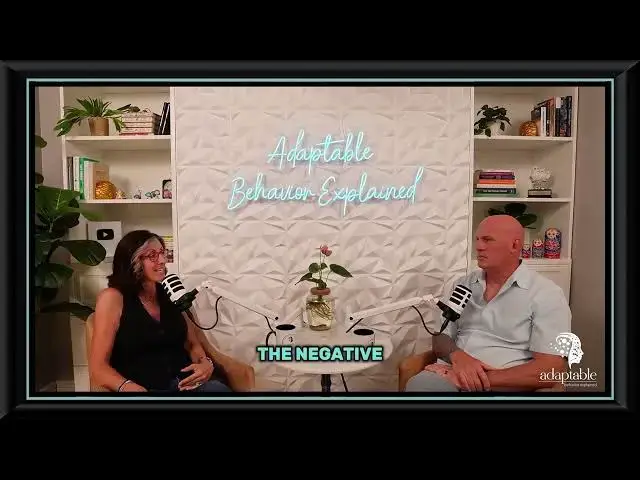
In this episode, we explore addiction through a different lens, looking at trauma, emotional pain, and nervous system patterns beneath the surface.
Watch the full episode here: https://youtu.be/DWy9Ghxi7hA
#AdaptableBehaviorExplained #AddictionRecovery #TraumaHealing #MentalHealth #healingjourney
Show More Show Less View Video Transcript
0:00
Which is classical conditioning.
0:01
>> there's that, but but I think when you
0:03
think about like we cannot just focus on
0:05
abstinence and behavioral change and
0:08
white-knuckling it or controlling
0:10
behavior because it misses the most
0:12
important part, which is
0:14
really getting to the underlying reason
0:16
that someone needs to use in the first
0:18
place. And if we don't address the
0:20
environments that we are in, we don't
0:22
address helping people have the kind of
0:25
care and connection and support they
0:27
need, addressing people with more
0:30
compassion,
0:32
curiosity, understanding. Those are the
0:35
things that we're often missing in
0:37
treatment centers, in the addiction
0:40
model, and in family systems when we
0:42
talk about this.
0:43
>> As practitioners, I think that's often
0:44
what we miss in the interviewing uh in
0:47
conceptualization component. Just tell
0:49
me about the the best time
0:51
>> Right.
0:52
>> when you got high or drunk or did this
0:53
thing.
0:54
>> And it gets locked in.
0:55
>> And it gets locked in, but
0:56
>> does.
0:57
>> and and not even from like a a protocol
0:59
perspective, but from a curiosity
1:01
perspective of how did this enter your
1:03
life and tell me all the good things
1:05
about it because the the narratives will
1:08
emerge.
1:09
>> Sure.
1:09
>> And then it's about, okay, how do we
1:10
find productive ways
1:13
or more adaptive ways to get that need
1:15
met without the classic substance.
1:19
>> hard even when we figure that out, it's
1:21
very hard to get those positive feelings
1:23
that are state-dependent and
1:25
behaviorally coupled uncoupled without
1:28
doing, honestly, some damn on it. They
1:30
just don't want to uncouple because it's
1:32
like pathway works, pathway works, brain
1:35
goes that way, what fires together wires
1:37
together, and it's just something that I
1:38
see so frequently.
1:40
But but what and I'll talk about this
1:42
more in our next episode, but one thing
1:44
that I I love so much when I get to do
1:47
this work with somebody is when
1:48
somebody's truly ready. They're like, I
1:50
get it, I see it, the natural
1:52
consequences do not the negative natural
1:54
consequences are not strong enough to
1:56
override the positive feelings that have
1:58
been coupled in the behavior. And so I
2:00
just I get it. I see it. I just don't
2:02
want it to win. And And you know, when I
2:04
get to do that work with people and who
2:06
are truly like ready to not have it have
2:08
such a stronghold on their choices,
2:10
it uncouples so much faster than trauma
2:13
memories uncouple. It's fascinating.
2:16
>> Yeah. I'll give you an I'll give you an
2:17
example
2:18
that was
2:19
pretty profound for me was was working
2:22
with a client. I get brought into an
2:24
intensive. So he's seen a bunch of
2:25
different clinicians who all had
2:27
different perspectives.
2:29
And And also habits,
2:32
right? Of Of Of habits and how they
2:35
viewed behavior and conceptualized cases
2:37
and how they treated it. And I kind of
2:38
came in as a newbie into this
2:41
the situation. And there was a
2:44
middle-aged male, very financially
2:46
successful, very professionally
2:47
successful,
2:49
beautiful family, you know, from all the
2:51
key indicators.
2:53
And
2:55
identified as a cocaine addict.
2:58
And so his MO was everything's really
3:02
great, and then all of a sudden out of
3:04
nowhere he goes and does like a 3-day
3:06
bender.
3:07
And just blows his life up, and then
3:11
the the family requires that he do
3:13
something about it, and then he spends
3:14
all, you know, months and months and
3:15
months. He'll either go to some level of
3:17
treatment or care.
3:19
>> cycle.
3:19
>> Well, that's what I That's what I That's
3:22
where I was like, "Hey, if if I can, you
3:24
know, I'm I'm curious cuz we kind of
3:26
looked at, you know, what do you get out
3:27
of this behavior? What are you seeking?"
3:29
And what I proposed was I don't think
3:32
you're addicted to cocaine. I think
3:33
you're addicted to chaos.
3:35
>> And he needs to fix the problem because
3:36
>> There's a part of him, right? There was
3:38
a part of him that was so anxiously
3:42
pursuing perfection and stability and
3:45
balance. And when it was so balanced,
3:49
he There There a part of him that had to
3:51
blow it up so that he could fix it.
3:54
>> Have something to do.
3:54
>> Have something to do.
3:56
>> Wow.
People & Society