Up next in 10


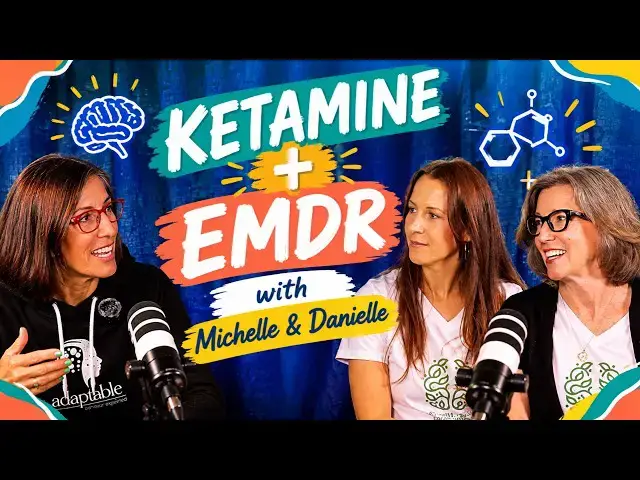
Welcome to Adaptable | Behavior Explained! In this episode, Ketamine-Assisted EMDR: Innovation at the Intersection of Healing, Kelly talks with Michelle and Danielle at the EMDRIA conference about ketamine-assisted EMDR, exploring the thoughtful questions, possibilities, and considerations surrounding innovation in trauma treatment and healing.
I'm Kelly O'Horo, Attachment based EMDR Therapist, EMDRIA Consultant, and Advanced Trainer. I'm a mom of 5, Nonna of 5, wife, and a healer. I have the honor of spending my workdays walking along side people while they brave their healing journeys. I try to live with the generous assumption that we're all doing the best we can with what we know. Therapists are teachers for the "life stuff" and "emotional vocabulary" that may not have been learned due to gaps in our care givers capabilities. In the last 15 years I've learned that people are freaking amazing, resilient, and inspiring. Most importantly, we are hardwired for connection and for healing!
I hope to bring an authentic, compassionate, and unpolished approach while we explore a variety of topics such as parenting, marriage, relationships, dating, trauma, attachment, adoption, depression, addiction, anxiety, and love! There's a why for all behaviors and an explanation that makes perfect sense as emotion is at the root of it all.
-- Links --
https://linktr.ee/kellyohorolpc
https://youtu.be/rLnARKekvgo
https://www.emdria.org/find-an-emdr-therapist/
Show More Show Less View Video Transcript
0:06
Hi everyone. I'm Kelly O'Hora.
0:09
And this is Adaptable, Behavior
0:11
Explained. Hello everyone and welcome to
0:13
a special live edition of Adaptable.
0:15
We're here today at Emindria surrounded
0:17
by clinicians who are constantly asking
0:20
one important question. How can we help
0:22
clients who still aren't finding relief?
0:25
And as our understanding of trauma
0:28
broadens, we understand more about the
0:30
brain, the evolution of our learning
0:32
happens. Many therapists are becoming
0:34
curious about emerging approaches that
0:37
may help people who remain stuck despite
0:39
years and years of therapy, medication,
0:42
or traditional interventions.
0:44
Few topics have generated more
0:46
discussion, excitement, caution, and
0:48
curiosity than the intersection of EMDR
0:51
and ketamine-assisted psychotherapy.
0:53
This topic is a very passionate one for
0:55
me because of being a KAP-trained
0:57
provider myself and the powerful
0:59
differences that I've seen.
1:01
Uh please check out the playlist on this
1:03
topic if you're interested in this. But
1:05
today's guests are at the forefront of
1:07
this conversation. We have with us today
1:10
Michelle Troffa and Danielle Chicone.
1:13
They are the founders of
1:14
ketamine-assisted EMDR Therapy Institute
1:18
and they are an organization dedicated
1:20
to training clinicians in the
1:21
integration of ketamine-assisted
1:23
experiences and EMDR therapy, my
1:25
personal passion. Their work explores
1:28
how these approaches may complement one
1:30
another while maintaining a strong
1:31
commitment to clinical ethics, safety,
1:34
and trauma-informed care. Whether you're
1:36
deeply familiar with ketamine-assisted
1:38
work or simply curious about what this
1:40
emerging treatment model looks like in
1:42
practice, today's conversation is
1:44
designed to help clinicians better
1:45
understand both the opportunities and
1:47
the responsibilities that come with this
1:49
approach because they are serious. Um
1:52
Michelle, Danielle, welcome and I'm
1:55
happy to have you on Adaptable today at
1:57
Emindria.
1:58
>> Thank you so much for having us, Kelly.
2:00
We appreciate this.
2:01
>> Thank you, Kelly. Yeah.
2:02
>> And we're going to have a little bit of
2:03
a move the mic cuz we only brought one
2:05
for the for the podcast studio here, but
2:08
I'm more than excited to have you both
2:10
with us. So, apologies for having to be
2:12
a little logistically
2:14
less smooth than maybe we would have
2:16
been in the studio. So, let's start at
2:18
the beginning. For somebody who's never
2:20
encountered it before,
2:22
what actually happens in a
2:23
ketamine-assisted EMDR session?
2:26
>> Uh
2:27
wow, that's a big question. Let me let
2:29
me think about that.
2:30
>> From the client's perspective, what
2:31
might this look like?
2:33
>> From the client's perspective, I think
2:35
it looks a lot like just a regular EMDR
2:38
session, quite frankly. Um
2:41
our protocol stays within the framework
2:44
of the standard EMDR protocol.
2:47
And really, we've we've just modified it
2:49
in a way that that allows the client to
2:52
self-administer a low dose of ketamine.
2:55
That seems to really do the trick.
2:57
I'm so sorry.
2:58
The process itself. Yeah, what do you
3:00
think it looks like?
3:01
>> Yeah, actually, like Michelle saying,
3:04
sometimes between we're kind of watching
3:06
the session and you didn't see the part
3:07
where the person self-administered the
3:09
ketamine, you might not even
3:11
know that it's a ketamine-assisted
3:12
session. You know, we we focus on the
3:14
low dose, right?
3:16
So, it's really kind of a gentle, soft
3:19
opening
3:19
>> Okay.
3:20
>> during whatever processing.
3:22
Um
3:23
you know, so it's not a big psychedelic
3:25
experience. It's not an overwhelming
3:27
experience. It's kind of a gentle
3:30
opening to sort of enhance the process.
3:33
Okay.
3:34
>> Okay.
3:34
>> Yeah.
3:35
>> Every innovation usually begins with
3:37
solving a problem or something that
3:39
you've seen as an issue that
3:42
that needs refinement. What made you
3:44
think to bring ketamine
3:47
and EMDR together in the first place? Or
3:49
what gap were you trying to close for
3:51
clinicians or for people?
3:52
>> I really remember so vividly exactly the
3:55
client with whom I was working when I
3:58
thought this might be a smart idea. I
4:00
had been trained maybe a prior,
4:03
in just like the more traditional, I
4:04
guess, cap, the the psychedelic
4:07
ketamine assisted psychotherapy. And I
4:10
had I mean, I have a subset of clients
4:13
which like always for whom just being in
4:15
EMDR is not quite enough. And this one
4:17
client
4:18
had some really profound early childhood
4:21
trauma. And one memory in particular
4:23
that was really
4:25
a
4:26
real
4:27
Yeah, a touchstone memory that she just
4:30
there was so much avoidance around. And
4:32
And we both
4:34
knew that she needed to go there in
4:36
order to get relief from her symptoms.
4:38
But there was so much avoidance, there
4:40
were so many psychological defenses
4:42
um that just wouldn't let us access that
4:44
memory.
4:45
Um
4:46
we had done some psychedelic sessions
4:48
with higher dose cap. And
4:50
you know,
4:52
it was there was some movement there,
4:54
but
4:55
when I became comfortable enough to
4:57
start, I guess, getting curious about
4:59
what it might look like to do EMDR while
5:02
we were doing the ketamine process.
5:04
She was really suffering at that point.
5:06
And so she was on board to do the trial
5:08
with her. And so
5:10
we of course consulted the the medical
5:12
provider, the prescriber, you know,
5:14
making sure to stay in our lane, that
5:15
this was what we were thinking thinking
5:17
about. And when when we finally did a
5:20
session where the low dose ketamine was
5:22
incorporated into the processing,
5:26
it was unbelievable.
5:30
She finally She finally could start to
5:33
approach the memory that we just
5:35
couldn't access.
5:36
And
5:37
I I still get goosebumps about it. And
5:39
it was
5:40
it was just transformative. She was like
5:42
the material finally started to move.
5:45
And she finally started to get relief.
5:47
And
5:48
And things really quickly unfolded
5:50
>> That anxiolytic
5:51
>> aspect of the
5:53
medicine
5:55
just to just turn down that fear a
5:57
little bit is so powerful
5:59
and I mean, I know that I experience
6:00
with having it self, but then upping the
6:03
ante to like get through the resolution
6:04
of that information while being in that
6:07
space. And so, it's like
6:08
>> With with total awareness.
6:10
>> Right.
6:10
>> Right.
6:11
>> And then, when I started to do this now
6:14
with a few other clients, and I started
6:15
to see similar results, I thought,
6:18
I need to keep this happening.
6:21
And then, at that point,
6:25
>> So, one of the questions that a lot of
6:27
the EMDR therapists are asking is,
6:30
what changes, you know, what does
6:32
ketamine do that allows EMDR to land
6:35
differently than it might in a
6:36
traditional EMDR session?
6:39
>> Yeah, I think there is kind of two
6:41
categories I would think about. What
6:43
happens sort of in the brain, sort of
6:45
the neuroscience of it, and then what
6:47
happens to the
6:48
Like, what is the person's experience?
6:50
So,
6:51
from the kind of neuroscience
6:53
perspective,
6:54
you know, it creates more
6:55
neuroplasticity,
6:57
so, the opportunity for learning, you
6:59
know, more kind of psychological
7:01
flexibility, right,
7:03
which, of course, is
7:04
super helpful for EMDR when you're
7:06
trying to process and adapt the
7:07
information.
7:08
Um, and then, subjectively,
7:11
you know, people report
7:12
feeling more open, more like you're
7:14
mentioning, kind of brain to video game,
7:16
right? Less fear,
7:20
So, a lot of times [cheering], the
7:21
person in their head wants to go there,
7:23
but their body just does not permit it.
7:25
>> Oh, no control.
7:26
>> Right.
7:27
>> And so, you know, they'll come, and
7:28
they'll start the session.
7:29
>> Right.
7:29
>> Okay, I want to go to this memory. I
7:31
know this is important. You try to light
7:33
it up. You try to go there, and
7:36
>> Right.
7:36
>> it stalls out. Right. So, with the
7:38
ketamine, it kind of helps them stay in
7:41
You know, we always use this phrase now,
7:43
it helps make the unbearable bearable.
7:45
>> Right.
7:46
>> Oh, I love that.
7:47
>> It kind of really, which is what we need
7:49
to go.
7:50
>> Any I tell people, anything that we can
7:52
do to make this experience, well, not
7:55
getting worse,
7:56
>> Yeah.
7:56
>> more tolerable,
7:58
>> Yes.
7:59
>> exactly.
8:00
>> It's not a band-aid on a broken ankle.
8:03
>> Not a quick fix. It's still hard work.
8:05
>> You know, it's not
8:07
I think so much in our culture
8:09
everything is about the cutting it off.
8:11
I just want to take it. I don't want to
8:12
have to go there. I don't want to have
8:14
to
8:14
do the work. And I think this just makes
8:17
the work
8:19
more
8:20
approachable,
8:22
you know, more compassionate. It's like
8:25
when I started doing Suboxone
8:27
Yeah, morality seems like a deep thing
8:29
and I'm like
8:31
[laughter]
8:32
if you don't need to
8:34
Well, it's actually what I was
8:37
It's not like taking a benzodiazepine,
8:40
right? You're not like sedating people
8:42
because of the
8:43
trauma, right? It's just really
8:44
interesting that the combination
8:46
And we didn't
8:47
cut them off, for sure. They're feeling,
8:49
they're going through it, right? So,
8:50
it's not like it's just sort of
8:52
Um, yeah, cutting them off. Is that That
8:54
would
8:55
You have to feel it to heal it. You need
8:57
the access, but maybe it doesn't need to
8:58
be such an abrupt cut, you know?
9:00
Right. Okay. Which just elicits those
9:02
defenses that are so adapted to what
9:05
they went through, but they're no longer
9:07
serving them for the healing process.
9:08
And they're so frustrated when they
9:09
finally decide to do this, which makes
9:11
so much sense. So, with that in in some
9:14
way, when you're thinking about what is
9:15
appropriate,
9:17
how do we decide as therapists like
9:18
which which clients do I think this
9:20
would be appropriate for?
9:22
Um, and which ones would not be
9:24
necessarily appropriate? You know, how
9:25
do you
9:26
explain that to clients,
9:28
to to them?
9:30
Yeah.
9:31
Um
9:32
Yeah, I think I mean, there's there's
9:34
both of them. Both of them are also the
9:36
psychological and the medical, of
9:38
course.
9:39
stay in our lane and leave that
9:41
determination ultimately I think to the
9:42
medical provider.
9:44
Although, I mean, we do know that like
9:46
for instance, um
9:47
you know, uncontrolled hypertension
9:50
Right.
9:51
cardiac issues That's primarily Yes,
9:54
pregnancy is in our nursing. Thank you.
9:56
Yes, it put my mind at ease. Although,
9:57
18 years or 18 hours after
9:59
administration, it's out of your
10:01
bloodstream if you're nursing.
10:03
That's what I was told.
10:05
60 hours later you're good to go.
10:07
How long do you think it's safe Yeah, I
10:09
mean, I'm I'm not a pre-prescriber, so
10:10
you should check with doctors about
10:12
that. Don't quote me on that, but that's
10:14
what I've been told so
10:16
Yeah, I mean, I think that there's some
10:17
mixed research about that. I think from
10:19
my perspective, it's probably better to
10:21
just think of it as a contraindication,
10:23
but again, that's that's up to the
10:26
you know, to prescribe in that fashion,
10:28
but I think from a psychological
10:30
perspective, like a client who might be
10:32
bipolar one with a history of psychosis,
10:35
mania, schizophrenia, or something like
10:37
that, it's probably worth a
10:38
contraindication.
10:40
Um uncontrolled substance use disorders,
10:44
DID, someone who might be maybe kind of
10:47
far on the dissociative scale, but so
10:49
those would be people that I wouldn't
10:51
certainly I wouldn't start with anybody
10:53
like that. I mean, I'm going to give a
10:54
case presentation on Sunday and
10:56
>> Okay.
10:56
>> when we give our presentation, I'll put
10:58
about a client who did actually I mean,
11:01
she had a lot going on including highly
11:03
dissociative when we first started our
11:05
work, but yeah, that's not somebody that
11:07
I would start with.
11:08
I think like the client that I've
11:10
mentioned that I first started
11:12
exploring this work with is sort of a
11:14
perfect example of a candidate that
11:16
would be a great fit, someone who has
11:18
like really some very rigid
11:21
you know,
11:22
someone who's really highly
11:24
defended
11:25
>> Has a lot of avoidance protection.
11:27
>> A lot of yeah, a lot of from an IFS
11:29
language like the
11:31
really
11:32
intense manager parts that that really
11:34
are preventing access to the material
11:36
that we want.
11:38
So,
11:40
people who show up with highly avoidant
11:44
adaptations would probably be the people
11:46
that might benefit most of these
11:48
sessions.
11:50
>> Yeah, I would say kind of along those
11:52
lines, but you know, people that are
11:53
very much in their heads, right? Keeping
11:55
it real cognitive, intellectual, that
11:57
kind of which
11:58
I can be that way, right? Like I'm a I'm
12:00
a good example. I do great with standard
12:02
EMDR, but it stays pretty cognitive,
12:04
right? It's helpful, it's great, right?
12:06
But with the low dose of ketamine, it
12:08
really takes it more to body and feeling
12:10
and all
12:11
>> So, I think for people that kind of
12:12
struggle to get up
12:14
>> Okay. know that's
12:20
So, the broader conversation around
12:22
psychedelic assisted
12:23
therapies are really becoming, you know,
12:26
a high to hot topic.
12:29
Um what do you wish people better
12:30
understood about the differences between
12:33
ketamine assisted EMDR and wider
12:36
psychedelic therapy conversations?
12:39
>> Well, this particular approach is
12:41
psycholytic. So,
12:44
you know, there's kind of a
12:45
differentiation between the psychedelic
12:46
approaches and psycholytic, which is
12:49
been
12:50
translated as mind loosening. But, it's
12:52
okay.
12:53
>> You go ahead.
12:54
>> Our podcast too called loosening up.
12:55
>> Okay.
12:56
>> It's not about sort of losing control,
12:59
losing your ego, you know, forgetting
13:02
who you are or where you are, right?
13:03
>> It's not about ego dissolution. It's
13:05
about kind of just a soft
13:07
>> A softening of dissociation.
13:10
Yeah, actually at this dose, I wouldn't
13:12
really call it a dissociative.
13:14
>> Okay.
13:14
All right.
13:15
>> I mean, it's more of kind of an
13:16
empathogen and an anxiolytic.
13:18
>> Okay.
13:19
>> But, I really wouldn't actually
13:21
characterize it as dissociative.
13:23
>> that way, but it's almost like
13:24
>> Well, it's classified that way, but I
13:25
mean
13:26
>> of Benadryl,
13:27
you know, you took a sip of cough syrup.
13:29
Just because there is alcohol in it,
13:31
doesn't mean it is
13:34
You know, it it has alcohol, yet with a
13:36
sip of your cough syrup, you're not
13:38
>> Yeah.
13:38
>> in the same state as if you had alcohol.
13:40
>> Yeah.
13:41
>> So, yeah. So, this is a much more gentle
13:43
approach, right?
13:43
>> Right, versus
13:45
>> psilocybin, even MDMA, which actually
13:47
has
13:48
some kind of similar properties. It's
13:50
more intense, right? It lasts a lot
13:51
longer.
13:52
>> Right.
13:52
>> Ketamine doesn't last very long.
13:54
>> Right.
13:54
>> That's kind of a nice
13:56
nice piece about it, right? In the
13:57
context of psychotherapy. So,
13:59
>> Um it it's not about like letting go and
14:01
losing control.
14:02
>> Sure.
14:02
>> In fact, we talk about that a lot
14:04
because I think especially clients who
14:06
have a lot of trauma,
14:07
they don't want to do they don't want to
14:09
surrender and let go.
14:10
>> Sure.
14:11
>> I make a point of that.
14:12
>> Yeah.
14:13
>> Back to your question about
14:14
dissociation, I will say
14:17
I think that there's a very mild, you
14:20
could call it a dissociative effect, but
14:22
really I think what it what it
14:24
facilitates in my experience is the
14:26
ability to have
14:27
dual awareness.
14:28
And so I think
14:30
the dose is low enough where you can
14:32
maintain dual awareness, so you have
14:34
like this witness consciousness, if you
14:36
will, and then you have the
14:38
consciousness of what happened in the
14:40
past. So those two things can be held
14:41
together.
14:42
>> Memory density is not compromised by the
14:45
sensory density in when you think of the
14:48
teeter-totter of the doorway of this
14:49
space. Like we need to have both access.
14:52
>> Right.
14:52
>> And so this allows for both is what I'm
14:54
hearing you say.
14:55
>> Yes. And so maybe you could say that
14:57
there's some mild
14:59
dissociative effect, but really it's the
15:01
capacity to have dual awareness, right?
15:03
Because if the client is just completely
15:04
absorbed in the traumatic material,
15:07
>> Or too much here, we can't even get
15:09
affected access cuz they're like, "No.
15:13
>> Yeah. So
15:15
So the dose is low enough that you can
15:17
maintain that dual awareness, where
15:19
there's still a present moment now.
15:22
Consciousness. Um, and also, I have to
15:24
say to Danielle's point about the
15:26
intellectualizing,
15:28
I think, and you know, there's a lot of
15:29
theoretical reasons why this might be
15:31
the case. But, but when that, like, the
15:34
default mode network sort of quiets
15:36
down, which which I think is that
15:38
network in the brain that's responsible
15:40
for, like, all the internal chatter and,
15:42
you know, the narrative of our
15:43
autobiography and sense of self, that
15:45
um,
15:46
that what we see is when that chatter,
15:48
that internal chatter starts to quiet
15:50
down,
15:51
that sometimes a lot of unconscious
15:53
material will come up,
15:55
and a lot of it will also be really
15:56
important,
15:57
right? Which is interesting cuz it's all
15:59
generational.
16:00
>> Totally.
16:00
>> Yeah.
16:01
>> Yeah.
16:03
We're we're way back. [laughter]
16:05
>> Right. Yeah, totally. In fact, Danielle
16:07
has been talking about maybe doing a
16:08
course uh that we'll be working on soon
16:11
about working on
16:13
on pre-verbal material like that.
16:16
>> I love that. Well, that kind of is a is
16:17
a nice segue to the next question that I
16:19
have for you and that's where do we
16:21
stand right now with research specific
16:23
to K A E M D R and where do you see the
16:26
gap that needs to be filled filled so
16:28
that we can have more
16:30
credibility in general?
16:32
>> What a great question. Thank you so much
16:34
for asking that.
16:36
I don't know whether you know this or
16:37
not, but, well, this is one of the
16:39
things that Danielle and I connected on
16:41
initially: is that when, when both of us
16:44
were seeing
16:45
sort of independently at that point she
16:47
was on the west coast, I was on the east
16:48
coast when we were starting to see these
16:50
clinical results. We were both thinking
16:52
well we want to understand what's really
16:54
going on
16:55
and
16:56
I guess two years ago we started to
16:59
look at some of the client data from my
17:01
clients that I was doing research with
17:03
in Washington D.C.
17:05
And we actually wound up doing a
17:06
retrospective clinical chart. So it
17:08
wasn't a randomized clinical trial we
17:10
didn't have a control group. You know
17:12
there were a lot of things that
17:13
you know weren't
17:14
you know say what the limitations of
17:16
that study were. But we did see
17:18
in this retrospective clinical chart
17:20
that it did go through an IRB
17:23
review and and got published in the
17:25
European Journal of Psychotraumatology.
17:28
It was published in December of 2025. So
17:30
we did have a peer reviewed study that
17:33
was published.
17:34
>> It's like taking all of the things we
17:35
know anecdotally that we didn't have a
17:37
way to say I I don't have a research
17:39
paper that says this but I can tell you
17:41
what I saw for 10 years. And it it's
17:43
real.
17:44
>> Oh yeah. Yeah.
17:45
Yeah I mean actually what prompted us to
17:48
even try to publish that is there was
17:49
nothing there was nothing in the
17:50
literature right? And which is we're
17:53
like there's there's got to be something
17:55
that somebody start this church you know
17:58
field.
17:59
And so you know we're we're
18:01
we're private practice clinicians right?
18:03
We're not we're not researchers really
18:05
sure but we wanted to contribute
18:07
something to do what's great. So
18:08
hopefully kind of inspire larger studies
18:12
>> for sure and it comes to like let's try
18:14
something and solve that.
18:16
Let's be brave and afraid at the same
18:17
time.
18:17
>> And this is where the research starts.
18:19
Right? It's got to start somewhere.
18:20
Right? So our hope is that this will
18:22
kind of inspire you to try larger
18:24
trials. But, yeah, there's there's
18:25
really not anything out there besides
18:28
what we've published so far. So,
18:30
>> So, please we we encourage people to
18:32
build on what we've done.
18:33
>> Let's let's let's include that link. Get
18:35
it over to me and we'll put it in the
18:36
show notes.
18:36
>> All right.
18:38
>> Yeah.
18:40
>> As as interest in this work grows, so
18:42
does the need for responsible
18:43
implementation of our craft. What
18:46
ethical guardrails should politicians be
18:49
familiarized with or what should they do
18:52
responsibly before they embark on any of
18:54
this kind of work?
18:56
>> I would say probably the the most
18:57
important thing is to really understand
18:59
the the different
19:01
the difference between what the
19:02
therapist is responsible for and what
19:05
the prescriber is responsible for. So, I
19:06
say
19:08
understanding the the the scope of
19:09
practice, right? In this approach, the
19:12
therapist, unless they are a trained
19:14
medical provider, which most aren't, you
19:16
know, they are not
19:18
they're not administering it, they're
19:20
not even touching them. They're not
19:22
telling them what I want to do with it.
19:23
They're working really closely in
19:25
collaboration with the provider
19:27
who will, you know, determine the
19:29
eligibility, the dose,
19:32
So, it's really, really important that
19:33
the therapist knows to stay in their
19:34
lane, right? To stay within their scope
19:36
of competence.
19:37
Um because I think it's easy for that
19:40
for that line to get [clears throat]
19:41
crossed,
19:42
>> And when our clients put us in a power
19:44
of trusted position without our doing
19:46
And we have to be really
19:48
>> And the client really needs to
19:49
understand that these questions are for
19:51
me, these questions are for the other
19:53
person or for the other provider. So, I
19:55
think that's really important. And then
19:56
I I would probably put this in the
19:58
category of ethics, which is having your
20:00
own experiences, right? Like I think
20:03
personally,
20:05
going through this yourself and
20:07
experiencing it is going to help you
20:11
>> It's a first step for
20:12
>> Yeah.
20:13
>> I always tell my my [laughter]
20:14
therapists that I train
20:16
in and also in my practice,
20:18
I'm not going to ask my clients to go
20:19
somewhere I wasn't brave enough to go
20:21
myself.
20:23
Yeah, because I don't think it's
20:25
I
20:27
And it's tough with this because you
20:28
know there will be some therapists that
20:30
maybe like you or
20:31
some reason
20:32
>> Sure.
20:32
>> They can't be therapists
20:34
and and I you know I want to be
20:36
sympathetic to people but really like I
20:37
think to do this well
20:43
>> Well, it's something to talk about and
20:43
also calming our nervous system when you
20:45
see things like that happen in your
20:47
client and not having it make you jumpy
20:48
or anything.
20:49
>> You really learn to trust yourself.
20:54
>> Um
20:55
Yeah, I think
20:57
if it's okay, I'll go ahead and disclose
20:59
that one of the things that Danielle and
21:01
I have in common when we came to this
21:02
work together and bonded with those that
21:05
were bonded with recovery.
21:06
So, we're both in long-term recovery,
21:09
and I think both of us came to this work
21:11
very...
21:13
And so, I think there are there might be
21:16
people who are in recovery themselves,
21:18
or maybe a client and say,"Oh,
21:20
you know,
21:21
recovery,"or you know, certainly if it's
21:23
uncontrolled, or if there's a specific
21:25
reason why you might have a broken
21:27
arm, you're aware of that. But,
21:29
but I do think that this work, at least
21:31
for me on both sides, and I think
21:33
for our clients as well.
21:34
>> And to the point that you were making
21:35
earlier
21:36
>> To me I think a lot of
21:38
addiction or substance use or addictive
21:40
disorders in general are about getting
21:42
rid of or away from what's difficult and
21:44
it's this
21:44
>> We want to numb ourselves from what's
21:46
difficult.
21:46
>> Sure.
21:47
>> And this allows us to actually move
21:48
towards what is difficult.
21:50
>> And we don't need to run away from that
21:52
pain that drives the addictive choices.
21:56
That makes sense.
21:56
>> I I noticed that even in my own
21:59
counseling experience, you know, I would
22:01
be having too many glasses of wine here
22:02
and there or
22:03
whatever that isn't really aligned with
22:05
the values that I say I have.
22:09
And I noticed after I went through it, I
22:11
poured a glass of wine and I didn't
22:13
I didn't want it.
22:15
And it was just so interesting because
22:16
I've seen that too with my clients where
22:18
they're
22:20
People are afraid of that and I think
22:22
that's an important
22:23
piece of this too is that
22:24
that actually ends up better
22:26
when you don't have so much fear about
22:31
>> Well, and I I used to work at a at IAP
22:34
in addiction
22:35
treatment center.
22:37
And what I saw there was actually
22:39
and what I saw there was actually what
22:40
led me to keep on my phone, which is
22:43
that really I wanted to support them
22:49
there was some underlying trauma.
22:52
Right.
22:54
But also, I, I think one of the point
22:55
that I want to make around that is that
22:57
one of the things that happens
22:59
is that
23:00
there's, there's evidence to suggest
23:03
that, that neuroplasticity and the,
23:07
the changes in the brain that happen
23:09
that allow people to learn to take
23:10
place,
23:11
also, I think, gives us
23:14
just some additional,
23:16
just the need for the client clinician
23:19
to be really mindful of direction we're
23:22
not making too,
23:25
you know, to be really mindful.
23:28
And so, I think that, that, that
23:29
neuroplasticity and the openness of the
23:32
client, that's really kind of puts the
23:34
focus on us as clinicians to really
23:36
Yeah, just be really
23:38
mindful
23:39
of
23:40
client autonomy as well. So it's you
23:42
know,
23:44
>> That demand characteristic of over
23:46
functioning is way in the way of the
23:47
client's autonomy.
23:49
>> Right.
23:49
>> Which I I find to be one of the biggest
23:51
pieces of countertransference especially
23:53
in in the work therapists
23:56
It's their over functioning desire to
23:57
help save where they couldn't save and
23:59
the responsibility they're taking on to
24:01
do that for them which is not ours to
24:03
do.
24:04
>> Yeah, actually can I say something about
24:05
that? Something we talk about a lot in
24:07
our trainings is that I think not only
24:09
does it help the client kind of relax
24:12
and get some of their parts to relax,
24:14
and that does
24:15
it sort of, even though the therapist is
24:17
not the one solving the problem; but at
24:18
the same time, you learn to kind of
24:21
step back a little bit.
24:21
>> Letting go
24:22
right?
24:23
>> You really start to I mean obviously
24:25
that's important right in the ER too but
24:27
you really can see the client's
24:30
internal,
24:32
you know, healing intelligence, right?
24:33
And and I think even more so than with
24:35
standard EMDR, this helps therapists go,
24:38
"Okay, I don't have to
24:40
fix them."I think it those those parts
24:43
of me that might say,"Well, I need to
24:45
fix or over-function"can relax and I can
24:48
let the client do
24:50
trust the process,
24:51
right? So, I've noticed that in myself
24:53
and the clinicians that we train, right?
24:55
They're kind of like It's actually
24:56
really so much. [laughter]
24:59
>> Yeah. Well, when you don't have so many
25:01
parts that are talking for protection.
25:04
>> Yeah. There is less pressure
25:06
>> to be creative, yeah?
25:08
You know, curious about
25:10
>> And they're settled down.
25:11
>> There's just kind of an energy in the
25:13
room, you know, of like
25:15
none of us have to work so
25:16
>> Right. I love that.
25:24
So, this
25:26
institute is pretty big in this
25:27
institute
25:28
and obviously have encountered a lot of
25:30
therapists that
25:32
How many you guys have trained so far?
25:33
>> About about 500-ish, yeah. Across the
25:36
US, we've got people in UK,
25:39
>> Wow.
25:39
>> Canada,
25:40
>> Poland, Poland, Wow.
25:41
>> Brazil,
25:42
>> That's exciting.
25:43
>> We somehow reached a bunch of Lithuania,
25:44
yeah, we somehow reached a bunch of
25:46
therapists.
25:46
>> So, so what surprised you the most about
25:49
teaching and mentoring therapists who
25:51
are learning to integrate this in their
25:54
EMDR practice?
25:56
>> I'll I'll say a couple words and then
25:57
I'll give you your thoughts. I mean,
25:59
honestly, I think it's, you know,
26:01
you see that some people don't have the
26:03
fundamentals of EMDR strong enough,
26:05
right? We always say,"Take EMDR is only
26:08
as strong as your your foundational
26:10
EMDR."It's
26:12
right? So, if people don't kind of have
26:14
that down,
26:15
then yes, this will probably help in
26:17
some way, but you really need to have
26:19
those So, I think something we
26:21
encountered which we weren't
26:22
particularly expecting was people that
26:25
need
26:26
some
26:27
you know,
26:27
>> refreshers on your fundamentals
26:29
>> and do know like be confident with your
26:32
practice.
26:32
>> Like just in terms of like treatment
26:34
planning case conceptualization
26:36
>> See that in consultation.
26:37
>> That's That's actually probably the the
26:39
biggest thing because we don't At least
26:41
in our introductory course we didn't go
26:43
into depth about that. We just released
26:44
a new course
26:46
about a month ago that's all about that.
26:48
That was one thing that kind of took me
26:49
by surprise was oh okay before you add
26:52
this in
26:53
you got to get some of those bases down.
26:54
And do you feel comfortable to kind of
26:55
send them
26:57
to a refresher if you find
26:58
>> that again let's hit me done that. Yeah.
27:00
>> We've done that so that's another
27:02
ethical guideline
27:03
>> that you have
27:03
>> taken on.
27:04
>> Yep and we you know we have both
27:05
consultants so we've also you know
27:08
we've taken some of the certification
27:10
to just kind of get their EMDR basics
27:11
down but
27:13
but yeah that was one thing that I
27:14
wasn't
27:15
I wasn't really thinking about when we
27:17
rolled all this out.
27:18
>> Wait a minute they should know what
27:19
they're doing before they Wait a minute
27:20
there's some people that kind of need
27:22
some more you know foundational skills
27:24
before they add this in.
27:27
>> I mean I think
27:29
really because you know the the research
27:31
would indicate that that what ketamine
27:34
does again we don't know really what's
27:36
happening in this blood those ranges but
27:38
certainly in the higher those ranges
27:39
with ketamine
27:40
there's a lot of research that would
27:42
suggest that it would enhance the
27:43
process of memory reconsolidation.
27:46
And so if you have that perspective it's
27:48
so important to know what the past
27:50
present and future actually is.
27:52
Like what is it that the client is
27:53
struggling with now?
27:55
Like what is it that happened in the
27:57
past and being really
27:58
>> clear
27:59
>> on the on the AIP
28:01
conceptualization
28:03
>> Right. Because if what you're doing is
28:04
is trying to facilitate memory
28:06
reconsolidation and we think that
28:07
ketamine is assisting that process a lot
28:10
of different reasons
28:11
then really being clear on what that
28:12
past present and future actually is.
28:14
>> So why and from what
28:17
>> Right. Right.
28:18
Yeah you need to be clear on what you're
28:20
doing.
28:22
>> Especially if you're doing EMDR
28:24
you need to have a lot of knowledge in
28:26
that
28:27
area of
28:27
your hypothesis.
28:33
>> I'm going to add one more thing. Sure. I
28:34
guess maybe one more thing I'll add
28:36
having talked to a lot of
28:38
students and then doing the experiential
28:42
taking the medicine and doing their own
28:44
work.
28:45
There's a lot of people that are very
28:45
scared of this, right? But what's cool
28:48
is that when they have the experience
28:50
they realize it's really not scary,
28:52
right? You know, so to kind of watch
28:54
people go from oh my gosh, this sounds
28:56
crazy. I don't think I could ever
28:57
actually do this or implement this and
29:00
then they go through the process. And
29:01
then they realize
29:02
oh,
29:03
I can totally do this. It's totally
29:04
doable. That's been really cool. And
29:06
that sounds almost like the takeaway you
29:08
would want people to have.
29:11
And if they had one thing to know
29:13
watching this this episode or just their
29:15
curiosity
29:17
don't be so afraid. Get the training,
29:20
know what you're doing, have the
29:22
experience but if you are a solid EMDR
29:24
therapist it actually won't be that hard
29:26
to
29:27
learn. Get the training, you want to
29:29
have the experience, you want to know
29:30
the science. But actually
29:34
very very cool.
29:36
Well, I'm so glad that you guys hopped
29:38
over here from your own very busy booths
29:40
and to chat with us for a little bit. I
29:42
know that our listeners will be glad to
29:44
have it and I appreciate having it as
29:45
part of the playlist because we didn't
29:47
have this topic and nobody better to
29:49
have this topic conversation with than
29:51
the two of you so I appreciate that very
29:53
much. And one thing that I really love
29:56
about this conversation especially
29:58
because it's an area that I'm
30:00
passionate about is that it invites us
30:02
to approach the innovation with
30:04
curiosity and responsibility. You guys
30:06
having those clinical ethical
30:08
guardrails.
30:09
And as trauma therapists we're always
30:11
looking for ways to help our clients
30:13
heal more efficiently, more effectively,
30:15
with less pain.
30:17
Especially those who've been working so
30:19
hard with us and they are just stuck and
30:21
they're so helpless in this desperate
30:23
place.
30:24
And so at the same time conversations
30:26
like this remind us that we
30:28
can be creative, we can learn and as
30:31
long as we practice our clinical
30:32
judgment, we get the trainings that we
30:34
need.
30:36
It leaves space for these essential new
30:39
approaches to
30:40
for us to be more effective with our
30:42
clients. So,
30:44
so thank you so much.
30:45
For those of us here at Amare it's an
30:47
exciting opportunity to explore what
30:49
might be possible while remaining
30:51
grounded in our principles that guide us
30:53
and drove us to come here. Um and that
30:55
drive us
30:57
to always have good treatment. So, thank
30:59
you guys again for sharing your
31:00
expertise, your experiences, and your
31:03
perspective on where this work is
31:04
heading. I hope you see more research.
31:06
And thank you everyone for joining us
31:09
live at Amare and for our listeners
31:10
around the world. And if you enjoyed
31:13
this topic and want to hear more about
31:15
it, please let us know and make sure to
31:17
subscribe so that you can see more about
31:19
what's coming up in our field um and
31:21
other just adaptive information that you
31:23
might need as well as your clients. And
31:25
again, I thank you so much for tuning
31:27
in. So, until next time, don't forget to
31:29
leave with love. It'll never steer you
31:31
wrong.
31:32
>> I don't ever slow up.
31:34
No, I don't take [ __ ] I got [music] no
31:35
love for the fake [ __ ] Want to play
31:38
tough and want to hate this. I'll never
31:40
slow up.
31:42
I don't ever slow [music] up. No,
People & Society