Up next in 10


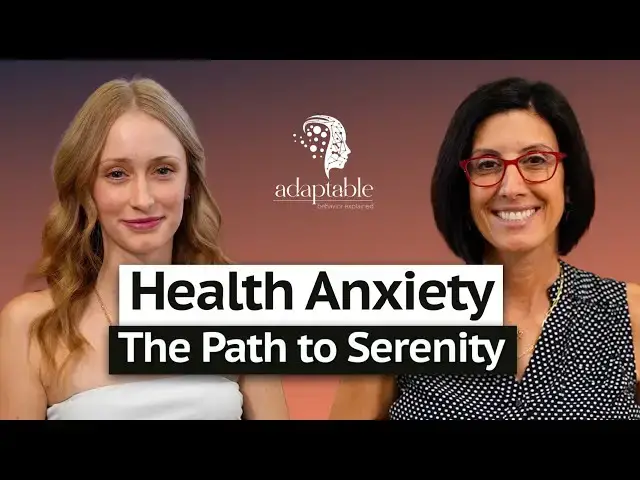
Welcome to Adaptable | Behavior Explained! A little bit of concern about your health is normal, and even healthy! If you have health anxiety, worries about your health can take over your life and cause you a lot of distress. It is thought that between 1 and 10 people out of every 100 will experience health anxiety every year. Fortunately, EMDR therapy is a great tool to use for such cases. Let's dive in with Taylor O'Horo and talk more about it.
I'm Kelly O'Horo, Attachment based EMDR Therapist, EMDRIA Consultant, and Advanced Trainer. I'm a mom of 5, Nonna of 5, wife, and a healer. I have the honor of spending my workdays walking along side people while they brave their healing journeys. I try to live with the generous assumption that we're all doing the best we can with what we know. Therapists are teachers for the "life stuff" and "emotional vocabulary" that may not have been learned due to gaps in our care givers capabilities. In the last 15 years I've learned that people are freaking amazing, resilient, and inspiring. Most importantly, we are hardwired for connection and for healing!
I hope to bring an authentic, compassionate, and unpolished approach while we explore a variety of topics such as parenting, marriage, relationships, dating, trauma, attachment, adoption, depression, addiction, anxiety, and love! There's a why for all behaviors and an explanation that makes perfect sense as emotion is at the root of it all.
-- Links --
https://linktr.ee/kellyohorolpc
https://youtu.be/rLnARKekvgo
https://www.emdria.org/find-an-emdr-therapist/
Show More Show Less View Video Transcript
0:07
hi everyone I'm Kelly ooro and this is
0:10
adaptable Behavior explained hi
0:13
everybody thanks for tuning in to
0:14
adaptable I'm happy to have you here and
0:16
we're going to talk about health anxiety
0:19
uh and I have With Me Taylor aoro who
0:22
has been so brave to be part of the show
0:25
today and she's going to share with us a
0:27
little bit about her personal experience
0:29
about health anxiety and what it's been
0:31
like for her so Taylor thank you so much
0:33
for being here thanks for having me I
0:35
appreciate it so to kick us off we're
0:37
going to talk just a little bit from a
0:39
counselor's perspective what is health
0:41
anxiety so it's seen as a condition
0:44
where a person experiences excessive
0:46
worry about having or acquiring a s a
0:49
serious illness the anxiety can
0:51
typically be accompanied by specific set
0:54
of uh problematic thoughts beliefs and
0:57
behaviors they might include dysfunction
1:00
beliefs so this is holding beliefs that
1:03
all bodily Sensations are due to
1:05
underlying diseases uh and that diseases
1:08
are common and are dangerous and uh it's
1:12
like thinking every time that your car
1:14
makes a noise it's about to break down
1:16
there can be catastrophic thinking where
1:18
we imagine the worst case scenario
1:20
related to our health like having severe
1:22
illness and then being unable to cope
1:25
with a disease so imagine always
1:28
assuming that uh a raincloud means a
1:31
flood is coming and it's going to wipe
1:32
out your house it can accompany safety
1:35
behaviors which engages in things like
1:37
uh whatever they have to do to alleviate
1:39
anxiety like excessive Googling of
1:41
symptoms web mding things to seek
1:44
reassurance uh and avoiding medical
1:47
appointments or obsessively going to
1:49
medical appointments to get
1:51
reassurance uh it can be body vigilance
1:54
so being hyper aware of bodily
1:56
Sensations that leads to
1:57
misinterpretation of benign system
2:00
and thinking that they're catastrophic
2:02
like it's akin to hearing a strange
2:03
noise in your house and immediately
2:05
thinking that it's an intruder so Taylor
2:08
thank you so much for joining us we're
2:10
going to dig in a little bit to those
2:11
topics and we're going to figure out
2:14
what it's like for a lay person who's
2:16
not yet a therapist although likely soon
2:18
to be a therapist with your school
2:21
trajectory but what it's been like for
2:23
you and um maybe you can tell us a
2:25
little bit first an introduction of you
2:28
and then um I'll KCK us off with your
2:30
first question so I'm Taylor I just
2:33
finished my bachelor's in psychology
2:35
congratulations it was such an awesome
2:36
feat so awesome and so now I'm looking
2:39
to apply for my MERS to go um get my
2:42
mental health counseling degree probably
2:45
through UOP most likely so I'm hoping to
2:47
start that in the fall um and so yeah
2:50
that's just a little bit about me yeah
2:52
and you're an advocate of of mental
2:54
health work you've been you've been
2:56
working here as our marketing specialist
2:58
administrative coord Ator at infin for a
3:01
long time so you get firsthand knowledge
3:03
around mental health everything and all
3:07
of your friends or therapists so it's my
3:10
friends my in-laws like both you and Pat
3:13
so there's really no getting around the
3:16
the therapist skew of things um so thank
3:19
you so much for sharing that with us and
3:21
you know you have been so amazingly
3:23
Brave in your own personal Journey about
3:25
attending therapy yourself for how many
3:27
years has it been close to 10 I okay um
3:31
I think if I were to be honest though
3:32
and say consistently probably like four
3:36
and and understanding health anxiety as
3:38
you do what um can you tell us a little
3:42
bit about your personal background and
3:43
maybe some ideas you have that have
3:45
contributed to health anxiety in general
3:48
yeah so when I was little my mom got
3:52
diagnosed with a super rare form of
3:54
cancer um and it usually happens in
3:58
adults that are like six D and up so
4:00
it's not typical on a 47-year-old or 40y
4:04
old I guess I should say and so most of
4:06
my childhood was spent in hospitals um
4:10
Cancer Centers which are just so tragic
4:12
and so sad um many many doctor's
4:16
appointments just I will never forget
4:18
the White Walls I'm like white walls
4:20
just to me I'm like everywhere right
4:22
that's how hospitals are it's just very
4:24
blank and so yeah a lot of time right a
4:28
lot of time and watching her suffer
4:30
through that illness yeah I always say
4:34
um I kind of wish it was something that
4:35
took her out faster right cuz I think
4:37
the worst part is watching someone
4:39
suffer over a long period of time right
4:42
like that's way more tragic than you
4:44
know maybe a heart attack where they
4:46
went you know and although it's shocking
4:49
and tragic uh watching someone slowly
4:52
decline is so painful and helpless super
4:55
yeah and how old were you when she
4:57
eventually passed I was nine so I was
5:00
like 2 months away from being 10 okay so
5:02
almost 10 all right and so for you when
5:05
you think about the topic of health
5:06
anxiety from a logical perspective I
5:08
imagine it makes perfect sense to you
5:10
that this is how yes your anxiety shows
5:13
up but what's what what's health anxiety
5:15
for you what's it look like for you it
5:17
encompasses a lot of things um I would
5:20
say health anxiety for me is a little
5:23
bit thinking that everything is
5:25
something so um it's I have a Freckle
5:30
but it's not a freckle it's you know
5:32
it's skin cancer and now I'm at the
5:34
dermatologist and obviously I don't do
5:36
that as much anymore I've way
5:39
way I guess alleviated that but that's
5:43
definitely what it was for me for a
5:45
while everything was something MH and
5:46
that's so painful and overwhelming
5:49
because you know I can remember when you
5:51
were in that phase and and I didn't
5:53
really know what was going on and I mean
5:55
I could I could connect the dots that
5:58
you know we we we learn what we live and
6:00
you watched your mom suffer your whole
6:02
childhood and then ended up losing her
6:04
and so I imagine that eventuality is
6:07
like this is how we go this is what
6:08
happens and so watching you go through
6:11
that was really hard because one it cost
6:14
you a lot of time and money to go to a
6:16
doctor every week you know and and
6:18
you're so young and there's like very
6:20
low likelihood that something WR so
6:21
healthy for the most part and you take
6:23
better care of yourself than than most
6:25
people I've ever met so cuz I'm so
6:28
anxious about it reasons right sure um
6:32
what were some of the triggers that
6:33
intensified your health anxiety
6:35
especially after such that significant
6:37
loss at such a young age sleep um
6:41
because a lot of the stuff that happened
6:43
with my mom typically happened at night
6:45
for some reason or another it just
6:47
always hit at the midnight so um a lot
6:51
of it was like sleep if I go to sleep
6:53
something bad's going to happen so I'm
6:55
not a very good sleeper still to this
6:57
day um so much it was also having kids
7:02
that became a trigger just because now I
7:05
have attachment to somebody that I don't
7:06
want to lose and so everything that was
7:10
wrong with them like I was at the doctor
7:12
with them it was there was a lot of food
7:15
it was a trigger like I have to eat
7:17
these certain foods CU they can't be
7:19
cancer inducing or you know contribute
7:21
to illness or sickness in one way or the
7:23
other so that definitely was probably
7:28
the most of my triggers for the start of
7:30
it and that increase really I think that
7:33
the other angle that I remember seeing
7:34
was when you had kids it wasn't just
7:36
what's wrong with them but what happens
7:38
if something's wrong with me yes and
7:40
there was a lot of that worrying about
7:42
others yeah that showed up I remember
7:44
that you know even if if I have the the
7:46
slightest thing you know you know you go
7:50
straight to oh my God you need to go get
7:52
that checked out because like there's no
7:54
chance I'm losing you I can remember
7:57
like I'm like yeah it's time to just
7:59
skin check we I'm going to be okay I
8:01
know I'm always like put your sunscreen
8:03
on yeah yeah I know you're really
8:04
conscientious about those things it's so
8:07
important to recognize those triggers
8:09
over the years what are some of the
8:10
things that you've done to address or
8:12
alleviate some of those triggers so EMDR
8:16
obviously a lot of EMDR um I've done
8:20
some
8:20
intensives um cap that was an amazing
8:25
experience for those of you who don't
8:26
know that's ketamine assisted
8:28
cyclotherapy so there's an autonomic
8:30
nervous system reset if you're
8:32
interested in that topic I have two
8:33
shows about that in the channel um
8:36
because it's a fascinating phenomenon
8:38
and so effective I mean I've seen a huge
8:40
difference in you since that for sure no
8:42
I think that definitely switched a lot
8:45
of things also just accepting that
8:48
sometimes you have to be on medication
8:49
sure um but I also work with a natural
8:52
paath so I take whatever supplements and
8:55
do my annual blood checks to make sure
8:57
everything's okay um
9:00
I like I do all my physical exams like
9:02
I'm pretty proactive proactive with do
9:05
you feel like you go to the doctor still
9:08
unreasonably or where you think in fact
9:11
I was like I think I'm three years out
9:12
on a dermatologist check like I should
9:15
go do that um so no I don't think I'm
9:19
quite as nervous as I used to be so I
9:21
appreciate your cander about seeking
9:23
professional help uh and your your uh um
9:27
vulnerability about that can you talk a
9:29
little bit more about the therapeutic
9:30
experience specifically for you as it
9:33
relates to health anxiety so some of our
9:35
viewers can understand what they might
9:36
even talk about with a therapist and and
9:39
how the therapist helps to unwind some
9:41
of that so when I go into my therapist
9:44
um and I know there's something
9:46
bothering me right like I might have an
9:47
ailment it might be my neck hurts or um
9:50
I have a cyst or I have something um we
9:53
typically go in and we start by figuring
9:57
out what the target is
10:00
and then we go through all the scales
10:02
and I never remember the numbers ever
10:05
I'm like can you repeat which one's high
10:06
and low um and then we do EMDR on it and
10:10
a lot of it is like sometimes I have to
10:13
mix some sematic work in there okay so
10:17
she'll have me like squeeze a pillow
10:18
while I'm holding the buzzies while
10:20
she's doing the thing with the little
10:23
with the wand wand yeah can you give us
10:25
an example of something that you uh had
10:28
as a itic presentation and then you
10:30
addressed it and maybe even how it
10:32
connected or what it was connected to do
10:33
you feel comfortable sharing something
10:35
like that yeah I had for a long time TMJ
10:40
super bad so and I had it one-sided and
10:44
it just always was on the left side and
10:46
I went in and I addressed it um and what
10:50
we ended up finding out was it was like
10:51
another part so it was like kind of a I
10:54
had two parts I had my right side and my
10:56
left side oh and this side was like
10:58
trying to keep me kind of more obsessed
11:01
with the you know rumination and the
11:04
negative thought cycle interaction and
11:06
this part was like no we're safe to like
11:07
move on from that now oh so we had a
11:09
part that was really aversive to Letting
11:11
Go yep so in how that shows up in the
11:14
body is it's really tight yep bracing
11:17
yeah it's bracing but this side never
11:19
had any pain and everything bad happened
11:21
on that side interesting and so once we
11:23
addressed that and that was very many
11:25
sessions um I don't really have it as
11:28
bad anymore that's awesome yeah I think
11:31
so few people understand how much the
11:33
body is informing us about an emotional
11:37
uh information that's unresolved and
11:39
just part of our story of protection and
11:41
defense and it's really uh wonderful
11:44
when a client is open to us getting
11:47
curious about what it might be holding
11:49
and how we can work to together to help
11:51
you let it go well and I became obsessed
11:53
with that Louise hey heill your body
11:55
book so now because I think that it also
11:59
somehow helped me to not feel like
12:01
everything was something when I could
12:03
connect an emotion to a physical ailment
12:05
so when I could go you know I have a
12:07
stomach ache what does that mean and I
12:08
go to the L Louise hey handbook and it's
12:10
like you know avoidance or whatever it
12:12
is and I'm like okay it helps me know
12:14
like where where the unhealed part is
12:18
that needs some work right but you hit
12:20
the believe button that there's a
12:21
connection to it you you're at the point
12:23
so far along in your therapy not that
12:25
it's an ailment that actually is
12:27
pointing you to some issue disease or
12:29
otherwise but that there's just data you
12:32
know and I like to tell my clients that
12:34
whatever's happening in my body is just
12:36
data it's not bad it's not good it's
12:38
just connected to something and and it's
12:40
you know our emotions are chemical it's
12:42
not separate so it's not as if our body
12:44
is um doing something separate and apart
12:47
from what our brain tells it to do it's
12:49
the computer so I mean it's all
12:50
connected and so I think it's really
12:52
inspiring that you're so quickly like I
12:53
wonder what it means I I have a headache
12:55
I wonder what was going on that I was
12:57
not paying attention to or where I got
12:59
or triggered and that made more sense
13:01
too after I took that Health psychology
13:03
class okay and it was just basically
13:06
going through the psychology of how
13:09
stress and depression and all these
13:12
different mental health problems
13:14
actually really affect our body and that
13:16
was so fascinating because I was like
13:18
okay now if I have to have my one bill
13:20
be therapy I'll do it cuz I'm bought in
13:23
like I see it now right well and it's
13:26
it's like the body does keep the score
13:29
so if I don't heal these things it's
13:31
it's a self-fulfilling prop prophecy
13:33
it's like you're going to make yourself
13:35
sick with all of the worry about
13:36
potentially becoming sick in the
13:38
impending doom that likely will not
13:41
happen given how great you take care of
13:43
yourself so yeah that's that's so true
13:46
and it had to be so different because I
13:48
grew up in a Family household where like
13:49
we did not talk about our feelings um so
13:54
I kind of learned to compartmentalize
13:56
like up here but my body was like the
13:58
messenger and when things would go wrong
14:00
like I just remember right when my mom
14:03
died all of a sudden I had eczema
14:05
allergies asthma and I was like oh my
14:07
body just fractured could not handle
14:11
handle yeah just in that whole year and
14:14
I was like oh my gosh yeah and all those
14:17
things are oftentimes at Bay with you
14:20
but then when something stressful arises
14:22
in your life you get a flare up of
14:24
something exactly right and so it's the
14:26
body you know if you think about a lot
14:27
of those things being autoimmune related
14:29
and you think about stress as you know
14:34
something that our body goes threat
14:36
danger and so when you think of the
14:38
system being so overwhelmed and taxed
14:41
like when your mom passed away and all
14:43
and the aftermath of that I mean your
14:45
dad was never the same and your school
14:47
life was never the same I mean nothing
14:48
was ever the same again after your mom
14:50
passed and so that inundation and
14:53
overwhelm of just constant Str stress is
14:56
just reeks havoc on the body when Hy you
14:59
know having a
15:01
hypochondria well is it health anxiety
15:03
so having a parent with health anxiety
15:06
and having a f it almost seems kind of
15:08
like a disease because it's it really
15:10
does run through the family and so what
15:12
I didn't know as a kid but what I
15:14
understand now is that my dad's whole
15:15
side of the family is just and including
15:17
him right they're just very health
15:20
anxious and so I try to be really
15:23
careful now because I do not want to
15:24
pass that to my kids and and
15:27
unfortunately you know so of some of the
15:29
Early times in their lives like you were
15:31
still really fraught with so much of
15:33
that and so and even though you were
15:35
aware and it was you were working so
15:37
hard you know they watched mom be
15:39
worried about whatever you know and so
15:42
there's going to be some propensity but
15:44
likely with their the Next Generation
15:46
it'll get better and better and that's
15:48
that's the goal right is that we can
15:50
that we can be better but we do we learn
15:52
yeah we learn what we live and so I
15:55
think that uh it's beautiful and strong
15:57
and brave of you to continue to do the
15:59
work so that it doesn't show up quite so
16:00
noisily and that your Offspring you know
16:03
they are like Mom used to be this kind
16:05
of way but she's not anymore you good
16:07
now yeah and then they they can see that
16:09
change so what resources or support
16:12
would you recommend for our viewers who
16:14
are maybe in the early stages of wanting
16:16
to address you know things related to
16:19
having health anxiety I would say get an
16:22
EMDR therapist that would be my first
16:25
stop Googling stop Googling stop webing
16:28
I do not Google anything now I'll tell
16:30
my husband will you Google this for me
16:32
because he can appropriately look at
16:34
Google right offer some discernment
16:35
right not me it's you know you have a
16:38
headache so you have a brain tumor and
16:39
I'm like that's it I knew it you know
16:41
it's over it's over like planning my own
16:43
funeral so that for sure um there's a
16:47
girl I really like on Instagram it's I
16:50
think it's healthcore anxiety and she
16:53
also has a podcast called the health
16:55
anxiety chicks I think it's health
16:57
anxiety chicks but she talks a lot about
17:00
it and she kind of normalizes how we all
17:03
have this Collective thing and a lot of
17:04
the fears are the same and it kind of
17:06
makes it feel so much like okay if all
17:08
these people have this the chances that
17:10
I'm one in a million is probably very
17:12
low you know so it normalizes that
17:14
there's a a group think piece and she
17:16
does like great posts where she's like
17:18
unclench your jaw you do not have a
17:19
brain tumor like she does like you know
17:22
she's very positive too so I like that
17:24
that's great so there's a resource uh
17:26
what things do you do personally that
17:28
help in Ure the best stability that you
17:30
can related to you know Health diet
17:33
exercise you know whatever you do to try
17:35
to manage and maintain just the most
17:38
basic aside from therapy and all the
17:40
things you mentioned there yeah so while
17:43
I've taken up cold plunging at your
17:45
house so I've been doing that at least
17:47
11 minutes a week it was awful today
17:49
though yeah um it felt so cold for some
17:52
re F my
17:54
toes I was like this hurts um so I've
17:57
taken that up I've
17:59
definitely tried to decrease the amount
18:02
that I socially drink right I've
18:04
definitely tried to decrease the amount
18:06
of caffeine I've had people don't
18:08
understand how much of a stimulant
18:10
caffeine really UPS the anxious you know
18:13
it just it does yeah my natural path was
18:15
like try just green tea it's cleaner a
18:18
little bit better for your mental health
18:20
yeah overall healthier probably yeah
18:22
that's that's awesome and um and you
18:25
know I would like to also say exercising
18:27
is really important so so if even if
18:30
it's just a long walk it's really
18:31
beneficial to keeping that body moving
18:34
and calming things down and get out in
18:36
the sun yeah the sun keeping that
18:37
vitamin D up super important so just to
18:40
wrap up here what would be something
18:42
that you want to make sure our viewers
18:45
know about this journey related to
18:47
health anxiety um before we part ways
18:50
today I would say there's hope it can
18:53
change it does get better um and it does
18:57
take work and you have to be very
18:58
patient because it doesn't happen
19:01
overnight so and you have to be patient
19:03
with yourself and you have to be patient
19:05
with others who might uh run run lower
19:09
patience and tolerance with you because
19:10
it's been a long standing thing and they
19:13
understand maybe more about what it is
19:15
then you do because it's happening to
19:16
you and in you so um understanding that
19:19
it impacts the people around you and
19:21
having Grace for them while they are
19:23
patient while you work through things I
19:25
think is another and being compassionate
19:26
with yourself too right absolutely
19:29
having a lot of compassion for how hard
19:31
it is yeah well I appreciate you being
19:33
here so much it's such a hard topic uh
19:36
to talk about you've been incredibly
19:37
vulnerable and honest and open with us
19:39
and I can't thank you enough for that so
19:41
thank you so much thanks yeah so thank
19:43
you so much for tuning in today if you
19:46
would like more information about health
19:47
anxiety please check out that Instagram
19:50
that Taylor talked about and uh there
19:53
are also other resources and of course
19:55
seek therapy it's very helpful and right
19:58
recognizing that most things have an
20:00
underlying cause and we learn what we
20:02
live and so this is just one
20:03
manifestation of how anxiety can look
20:06
and I hope that until we meet again that
20:09
you lead with love it'll never steer you
20:11
wrong
20:12
[Music]
#Mental Health
#Anxiety & Stress
#People & Society
#Counseling Services