Up next in 10



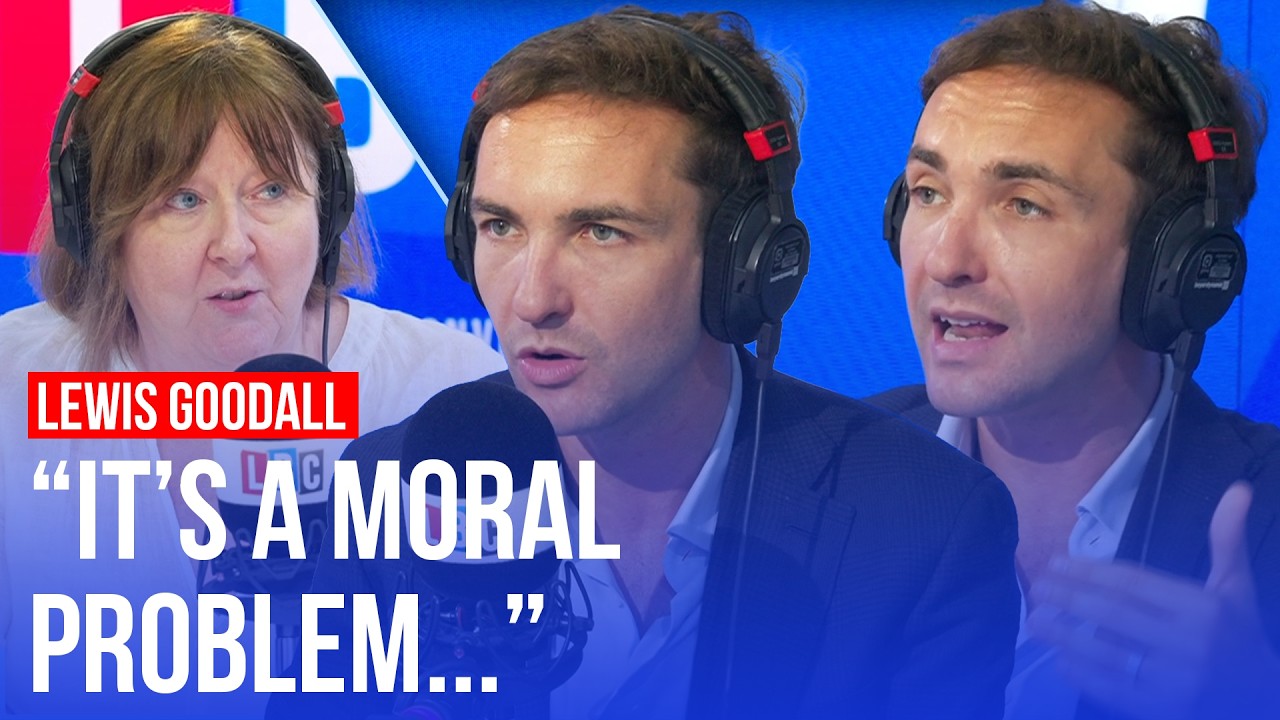
Shelagh Fogarty is joined by Lewis Goodall, one of the co-hosts of the Global podcast The News Agents, after the NEET report written by Alan Milburn was released. Lewis describes an 'inversion of the population pyramid in the UK', and explains the economic problems that may cause. Listen to the full show on the all-new LBC App: https://app.af.lbc.co.uk/btnc/thenewlbcapp #lewisgoodall #shelaghfogarty #politics #ukpolitics #neet #uknews #LBC LBC is the home of live debate around news and current affairs in the UK. Join in the conversation and listen at https://www.lbc.co.uk/ Sign up to LBC’s weekly newsletter here: https://l-bc.co/signup
Show More Show Less View Video Transcript
0:00
There are things that we are doing that we collectively cannot afford to do
0:04
and that morally as well, it's not just an economic problem, that morally we cannot afford to do
0:08
One of those things is to allow 1 million, going up to 1.25 million, maybe beyond that
0:14
of young people who are in the prime of their lives to sit and languish in a situation
0:21
where they are not fulfilling everything that they might be. And that is, as I say, an economic problem
0:25
but it's also a moral problem for us to allow them to do it
0:28
And I think the reason, one of the reasons, I think, Sheila, frankly, that this problem has been a sleeper problem for too long, and we talk about it, we talk about it on LBC, but generally speaking, I think it's fair to say, it has not received the attention that it should, is because we are part right now, and we are experiencing in a way I don't think people reckon with enough, of something that has never happened before in the history of our country or anywhere else, which is that we are inverting the population pyramid
0:54
We are doing something that has never happened, which we are going to be
0:58
We're well underway in this process now. We are flipping the demographics upside down
1:03
You go back to 1900, barely 3% of the population was aged 75 or over
1:09
You flip forward over a century later, you go through to the projections for the middle of this century
1:14
you're going to be talking about 20, 30% of the population being in that age bracket
1:19
Meanwhile, younger people, and we've already at this point, we are now already with the British demographic pyramid
1:25
we're already at the point where older people outnumber younger people. We're at the point where deaths are going to outnumber births
1:31
and we're already there. We are going the way of Japan where, to put it bluntly
1:35
we're going to be selling more adult nappies than we are baby nappies. We are witnessing the greification of our societies at pace
1:43
And as a result, I think, we are not nearly as cognizant. If this had been happening in the 1960s or the 1970s, 1980s
1:49
maybe even the early 2000s, where young people are a much more significant proportion
1:53
of the workforce and the overall population, I think this issue would have received greater urgency than it has
2:00
But as a result of, frankly, the lessening of the political power
2:05
and the demographic power of younger cohorts, their problems, their tribulations, their concerns
2:11
just fall further and further and further down the agenda. I think you're right. And there's been an acceptance
2:16
almost like a sort of mantra in our politics, hasn't there, that, well, young people don't vote
2:20
They don't vote. And that's not good enough. No and they are mobilising more I think And by the way it not just an either because as well I not just sort of just saying oh well you know pitting generations against each other Older generations are deeply deeply concerned about this stuff It their kids it their grandkids it their great
2:35
You know, they want them to have the sort of life chances, the sort of opportunities that they enjoyed
2:41
They usually want them to have better opportunities. That's the whole thing. You want your kids and your grandkids to have a better life than you yourself had
2:47
But frankly, at the moment, I think it is true to say, and I think Milburn's report is part of this and exactly correctly alights upon some of these themes
2:55
The social contract that we have experienced certainly since the end of the Second World War, which is precisely that, that each generation leaves the one below it a little bit better off
3:06
It is not just fraying. I think it's evaporated. I think it's gone
3:10
No one's made that decision. It's not a conscious thing that anyone in particular does
3:15
it's a series of structural forces demographic forces the reshaping society and a thousand
3:21
thousand thousand micro decisions that either politicians take or we as individuals take
3:26
which result in that situation but the result is the same and we've got to do something about it
3:31
and isn't it interesting how in the space of what less than six months a lot less than six months
3:37
actually alan milburn and his team have been able to come up with really solid revealing data and
3:43
And in the next six months, he'll come up with what he says is the solution, the prospectus to fix this, which will take time, but it needs to be done
3:51
I think, well, I certainly agree with that. You sound like you agree with that. And yet something about the last 20, 30, even 40 years, but let's stick to the 20 years that he kept referring to in his speech today
4:03
We seem to have lost the art of building and sustaining a country, don't we
4:08
well i think it is it is that she it's that you've got to think about what the social contract is
4:14
and what it means and look i think as well before you build it and i think as well some of this also
4:18
reflects something that's been happening in recent years which is i think a coarsening of
4:23
our national debate and a narrowing of our national debate because insofar as this issue
4:27
often has come up hitherto how is it often articulated and framed in quite a bit of the
4:32
press in particular and even among politicians young people they're work shy they're snowflakes
4:37
they don't really want to work. They don't believe in work. They've all got conditions
4:41
They've all got mental health problems. They're COVID, you know, et cetera, et cetera, et cetera. And although, of course, there may be a kernel of truth about a particular issue or to say that
4:49
maybe mental health the way that it treated and talked about maybe we have got a slight problem in the system where we just sending people to sit on these benefits too long rather than employment You can have that conversation but let get real Let get real
5:03
What we're already looking at and what we're facing down, as I say, are some of the biggest structural and economic changes that we have ever seen
5:12
I've already talked about the graification of our society, of the fact that old people will outnumber and are outnumbering young people
5:17
That has profound changes. we're seeing incredibly important and and transformational changes in the nature of the
5:25
labor force we're seeing automation we're seeing ai never mind the idea of young people being uh
5:32
not being able to get a job as a result of ai half the time not even able to get an interview
5:36
as a result of ai rather or rather they're sat there and you hear this all the time sheila and
5:41
any person who presents on this station hears it because you hear it all the time but it's amazing
5:44
how little it actually suffuses into the conversation. A number of young people, when you and I are applying for a job
5:50
you can at least be reasonably assured if you're going to get an interview, it's with a person, you might be able to wow and impress
5:55
Now you're talking to a chatbot. You get feedback. And the thing is, I think one of the most striking things about Melbourne's report
6:01
and this, to be honest, it's not great in a way, it reveals something that's always true, which is that class matters and it still matters
6:08
is that the thing about NEATS is that I think historically, it was a problem for other people's children
6:12
i.e. people in the work in working class or maybe to use that horrible phrase occasionally called
6:17
the sort of underclass as well um this is now becoming a big middle class problem yeah the
6:22
number of particularly in terms of automation we're already seeing it we're seeing it in the united states they're always slightly ahead of us but you know all of the the sort of early data
6:29
that is coming in is showing this now ai which i'm not just sort of writing off and saying i'm not
6:33
being a luddite about it there are obviously tremendous opportunities involved and some new jobs will be created but the number of traditionally middle class professions entry-level professions
6:41
I'm talking about law, I'm talking about accountancy, I'm talking about even tech jobs, the sort of things
6:47
that actually, again, part of the social contract what was our social contract based upon? It was always
6:52
if you do the right thing, if you work hard at school if you get your qualifications you'll get on. The problem will be if you don't
6:58
the truth is now, as uncomfortable it is to say, that basic assumption is no longer
7:04
necessarily the case and it's not all the people in those professions by the way who are losing their jobs
7:08
it's the young people who are never being hired in the first place as of the automation
7:14
That automation is probably unstoppable, but it means that as a society, in terms of our
7:19
politics we have to think about what we do about it and what other opportunities we create You mentioned AI We haven even really started to feel yet have we on all of it No we are in the foothills of it And this is where I would take objection in a way
7:32
to what Blair said about it. So what Blair said yesterday, I mean, Blair is sort of right, but I also think that he's been out of politics for too long
7:39
that he's also, you know, basically wrong. When he says that the technology revolution led by developments in AI
7:45
will change everything, I mean everything. OK, we can probably go along with that
7:49
But then he says there is no point in debating whether this technological revolution is a good thing or a bad thing
7:54
Just know that it's a thing. In fact, it's the thing. Now, that is a profound mistake, I think, politically
7:59
because it is the purpose of politics and democratic politics for us as citizens, as a society
8:07
to contest, debate, deliberate, and then decide how we want this technology to affect our lives
8:13
and what mitigations we might want to put in place to take the roughest edges off it
8:19
If you don't do that... Which we didn't do with social media. Which we didn't do with social media
8:24
So the point is that if there is no point... It was fatalistic, that line, wasn't it
8:28
It's almost a sort of form of technological nihilism, really. It's a sort of fatalistic..
8:32
And the problem is that is exactly how Blair used to talk about globalisation
8:36
Famous speech he made in 2005, the Labour Party conference. He says, you know, don't bother debating globalisation
8:42
You might as well debate whether summer follows spring. What happens? Actually, it's totally wrong
8:48
the intervening or the preceding 20 years then actually show us that globalization
8:52
maybe it can't be stopped, but it can be changed. And anyone will ask Ukraine and what's happened in Russia
8:57
Or how we engage with it can be shaped. And what happens is that if mainstream politicians say things like that
9:03
a whole group of populist forces come along and go, no, I will stop globalization or I will stop AI
9:09
So if you just have this kind of fatalistic politics where you just basically go
9:12
look, democratic politics can't change any of this. don't be surprised if voters turn to other salesmen and saleswomen in the political arena
9:21
arena who say that they can it's a fascinating subject i could talk about it for hours because
9:26
it is so good thing you've got a show on every day for three hours from monday to friday from
9:30
one till four you know what i'm gonna yeah i'm gonna do it i've been doing it i'm gonna continue
9:34
doing it but i think it was so interesting wait till ai us i know it's coming uh there's nothing
9:39
we can do we might as well lay down and welcome to your favorite app show with your favorite avatar
9:42
It's true, it's the heart and soul of it. Of course. Well, that's what we tell ourselves, isn't it
9:47
It's the truth, I'm telling you. People, people who need people. Okay, well, when we're just Futurama heads in jars
9:54
I'll remind you of what you just said
news